


Transmission slipping in one gear is usually a more localized fault, while slipping in all gears usually points to a broader pressure, fluid, or internal wear problem. That difference matters because the slip pattern itself is one of the strongest early clues a driver can use before paying for a teardown or chasing the wrong transmission slipping fix.
The first thing most car owners need is a simple way to sort symptoms into patterns. A repeatable flare on the same shift often suggests a gear-specific problem, while weak pull, delayed engagement, and RPM rise across several ranges more often suggest a system-wide fault. That is why the article starts with the comparison before moving into the causes.
The next issue is symptom quality. Drivers often describe slipping, hesitation, engine flare, harsh shifting, shudder, or poor acceleration as if they were all the same. They are not. Some symptoms point to a clutch pack, some point to fluid pressure, and some are not transmission slip at all. Scan data and codes for slipping diagnosis also become more useful once you understand what the vehicle is doing on the road.
A final point is urgency. Some cases begin as a maintenance problem, but others can escalate into loss of drive if the warning signs are ignored. Introduce a new idea: once you know how the pattern, feel, and operating conditions fit together, diagnosing one-gear versus all-gears slipping becomes much more logical and much less guesswork. ([fordservicecontent.com](https://www.fordservicecontent.com/Ford_Content/vdirsnet/OwnerManual/Home/Content?ProcUid=G1601738&Uid=G1601735&buildtype=web&countryCode=USA&div=f&languageCode=en&moidRef=G548949&userMarket=USA&vFilteringEnabled=False&variantid=2940))
Is transmission slipping in one gear the same as slipping in all gears?
No, transmission slipping in one gear is not the same as slipping in all gears because the fault scope, likely causes, and repair path are usually different.
To better understand that difference, look at where the symptom repeats and whether it stays tied to one shift event or follows the vehicle through multiple ranges.
What does slipping in one gear usually indicate?
Slipping in one gear usually indicates a localized problem in the parts that apply or control that gear. In a conventional automatic, that can mean a specific clutch pack, band, shift solenoid, valve body passage, or speed-sensor-based control error tied to that ratio. When the same flare happens during the same 2-3 shift, or only when first gear pulls away under load, the pattern points to a narrower problem rather than a whole-unit failure. Hyundai’s 2024 transmission bulletin explicitly groups incorrect-ratio DTCs such as P0731 through P0736 and P0730 under transmission clutch slip diagnosis, which is a good example of how one ratio can point technicians toward a particular in-gear fault. ([static.nhtsa.gov](https://static.nhtsa.gov/odi/tsbs/2024/MC-10253275-0001.pdf))
That matters because a gear-specific slip often stays repeatable. The driver may notice one bad upshift, one weak downshift, or one RPM flare at the same speed every day. The rest of the transmission may still feel acceptable. That does not make it minor, but it does make the pattern more targeted. In real diagnosis, technicians compare commanded gear, actual ratio, engine speed, and output speed to confirm whether the problem is isolated to a specific range. That is where scan data and codes for slipping diagnosis become more meaningful than guesswork.
What does slipping in all gears usually indicate?
Slipping in all gears usually indicates a broader problem such as low fluid, degraded fluid, hydraulic pressure loss, pump weakness, severe heat damage, or widespread internal wear. When the vehicle revs up but does not pull well from takeoff, then continues to feel lazy, soft, or delayed through several gears, the symptom is no longer tied to one ratio. It becomes a system pattern.
Ford owner-manual guidance is useful here because it directly links slipping or slow shifting with fluid-level checks and warns that both underfill and overfill can create shift and engagement concerns or damage. Ford also states that low fluid should be corrected immediately and, in some applications, says not to drive if the fluid level is below the minimum range. That supports a core diagnostic rule: when multiple gears feel weak, pressure and fluid condition rise to the top of the suspect list. ([fordservicecontent.com](https://www.fordservicecontent.com/Ford_Content/vdirsnet/OwnerManual/Home/Content?ProcUid=G1601738&Uid=G1601735&buildtype=web&countryCode=USA&div=f&languageCode=en&moidRef=G548949&userMarket=USA&vFilteringEnabled=False&variantid=2940))
An all-gears pattern also tends to worsen with heat, towing, stop-and-go use, or repeated acceleration because the whole system is under load. In practical terms, slipping everywhere usually means you should think “global supply or global wear” before you think “one bad gear element.”
What is transmission slipping and how does it feel while driving?
Transmission slipping is a mismatch between engine speed and wheel-driving force in which RPM rises, engagement softens, or the car fails to accelerate as expected for the gear selected.
Specifically, slipping matters because the way it feels tells you whether you are dealing with a true transmission event, a control issue, or a symptom that only mimics slip.
What are the most common signs of transmission slipping?
The most common signs are rising RPM without matching road speed, delayed engagement into Drive or Reverse, a flare between shifts, weak acceleration, and shifts that feel drawn out instead of crisp. Some drivers describe it as the car “revving but not grabbing.” Others feel a pause, then a soft catch. In a one-gear case, the flare often happens at the same point every time. In an all-gears case, the whole vehicle can feel tired, vague, or unwilling to move with normal authority.
You may also notice a burnt smell, especially after repeated slipping, because friction materials and overheated fluid generate heat quickly. A vehicle that used to move off cleanly may now need more throttle. A highway pass may create a big RPM jump with little extra speed. Those are classic drivability clues because the engine is making speed, but the transmission is not transferring it efficiently.
Can transmission slipping happen without a warning light?
Yes, transmission slipping can happen without a warning light because early fluid, pressure, and clutch-control problems do not always trigger a code immediately.
However, the lack of a warning light should not make you dismiss the symptom. The transmission can still be losing capacity before the control system sees a fault severe enough or consistent enough to set a DTC.
That point shows up in real-world service information. Ford’s owner-manual material tells drivers to check fluid or seek service if the transmission slips or shifts slowly, even before discussing fault codes, and Volkswagen’s recall notice shows why warning lights matter later in the failure chain: once pressure loss becomes severe enough, the warning light appears and clutch engagement can be affected. In other words, some slipping begins as a “feel” issue before it becomes a “light on” issue. ([fordservicecontent.com](https://www.fordservicecontent.com/Ford_Content/vdirsnet/OwnerManual/Home/Content?ProcUid=G1752342&Uid=G1774388&buildtype=web&countryCode=USA&div=f&languageCode=en&moidRef=G548949&userMarket=USA&vFilteringEnabled=False&variantid=6257))
Which clues help diagnose slipping in one gear vs all gears?
The best clues are repeatability, temperature, load, shift point, and whether the slip stays tied to one ratio or appears across several ranges.
Next, use those clues as a sorting method: same gear every time suggests localization, while multi-gear weakness suggests a broader hydraulic or internal problem.
Which driving patterns point to a single-gear problem?
A single-gear problem usually repeats in the same operating window. The car may slip only on the 2-3 upshift, only in first gear from a stop, or only during a kickdown into one specific range. The symptom may be sharp enough that you can almost predict it by speed and throttle position. That kind of repeatability is valuable because it narrows the diagnosis.
A localized issue can also show up as one abnormal ratio code rather than a general performance complaint. Hyundai’s bulletin is helpful because it ties specific incorrect-ratio DTCs to specific gears, reinforcing the logic that one slipping ratio is often a controlled, measurable event rather than a vague complaint. ([static.nhtsa.gov](https://static.nhtsa.gov/odi/tsbs/2024/MC-10253275-0001.pdf))
Another clue is how the vehicle behaves outside the problem gear. If first, second, and fourth feel normal but third flares under load, that is not the same story as a transmission that feels weak everywhere. The narrower the symptom window, the more likely a single gear element, its hydraulic path, or its control logic is involved.
Which driving patterns point to an all-gears transmission problem?
An all-gears transmission problem usually shows up as weakness from launch to cruise rather than one repeatable bad shift. The vehicle may hesitate going into Drive, feel soft pulling away, flare on more than one shift, or require more throttle than usual across the board. If the car slips hot, slips cold, slips uphill, and slips on light throttle as well as heavy throttle, the pattern is broad.
Fluid-related issues support that logic. Ford’s guidance says slipping or slow shifting should trigger a fluid check, while separate Ford materials warn that both low and high fluid levels can cause shift or engagement concerns and possible damage. That makes broad slip patterns especially important because improper fluid level and heat affect the whole hydraulic system, not just one ratio. ([fordservicecontent.com](https://www.fordservicecontent.com/Ford_Content/vdirsnet/OwnerManual/Home/Content?ProcUid=G1601738&Uid=G1601735&buildtype=web&countryCode=USA&div=f&languageCode=en&moidRef=G548949&userMarket=USA&vFilteringEnabled=False&variantid=2940))
When the symptom is broad, the diagnosis also broadens. You start thinking about pump pressure, fluid aeration, overheated fluid, worn friction material throughout the unit, or mechanical wear that is no longer isolated to one clutch application.
What causes transmission slipping in one gear only?
There are four common groups of one-gear slipping causes: gear-specific friction wear, hydraulic circuit faults, shift-control problems, and ratio-sensing or calibration issues.
More specifically, each group affects one applied ratio more than the others, which is why the slip stays localized instead of spreading everywhere right away.
Can a bad solenoid or valve body cause one-gear slipping?
Yes, a bad solenoid or valve body can cause one-gear slipping because that gear may depend on a specific pressure command or fluid passage to apply its clutch element correctly. If the solenoid sticks, leaks, or commands poorly, or if the valve body routes pressure incorrectly, one ratio can flare while the rest of the unit still functions fairly normally.
This is one reason electronic and hydraulic diagnostics matter. A technician may compare commanded pressure, shift timing, solenoid performance, and actual speed-sensor feedback. If the transmission control module asks for one ratio and the input-to-output relationship does not match only in that range, the problem can look strongly gear-specific even before the unit is opened. That is also why scan data and codes for slipping diagnosis are so useful in modern transmissions.
Can worn internal parts cause slipping in one gear?
Yes, worn internal parts can cause slipping in one gear because one clutch pack, band, drum, or sealing component can lose holding ability before the rest of the transmission fails. That is common in aging automatics: one friction element starts to lose capacity under load, especially when hot, and the driver notices one repeated flare.
The danger is progression. A localized slip does not always stay localized. Extra heat from repeated flare damages fluid and friction surfaces, which can spread wear into neighboring circuits or other clutch applications. So even if the pattern begins as “only third gear slips,” delaying repair can turn a narrower transmission slipping fix into a full rebuild discussion.
What causes transmission slipping in all gears?
The main causes of slipping in all gears are low fluid, overheated or degraded fluid, widespread clutch wear, pump or pressure loss, and major internal damage.
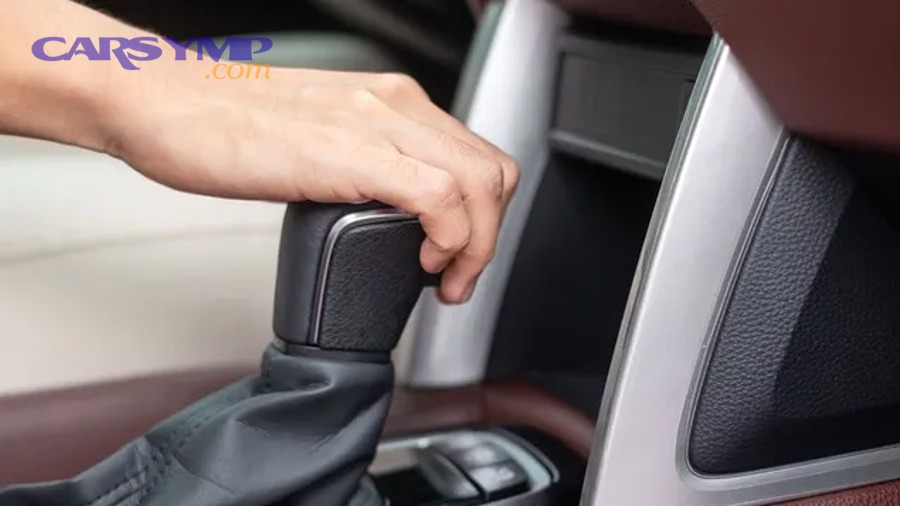
Besides that, some units also suffer from control-side issues that reduce line pressure broadly enough to affect multiple shifts, not just one.
Can low or burnt fluid cause slipping in all gears?
Yes, low or burnt fluid can cause slipping in all gears because the transmission depends on the right fluid level, viscosity, friction properties, and hydraulic pressure to apply clutches throughout the unit. When the fluid is low, aerated, overheated, or badly degraded, the whole system loses confidence and consistency.
Ford owner-manual guidance is direct on this point. It says the transmission does not consume fluid, that slipping or slow shifting should prompt a fluid check, and that fluid below the minimum range can damage the transmission. Ford also warns that fluid overfill can create shift and engagement concerns and possible damage. Those statements reinforce a key lesson for car owners: Preventing slipping with proper fluid service is not a slogan; it is a real durability strategy because both underfill and overfill can upset operation. ([fordservicecontent.com](https://www.fordservicecontent.com/Ford_Content/vdirsnet/OwnerManual/Home/Content?ProcUid=G1752342&Uid=G1774388&buildtype=web&countryCode=USA&div=f&languageCode=en&moidRef=G548949&userMarket=USA&vFilteringEnabled=False&variantid=6257))
Burnt fluid is especially important because it is both a symptom and a contributor. A dark, scorched-smelling fluid often means the transmission has been running hot. Heat lowers fluid performance, increases wear, and weakens clutch holding power. That is why broad slip often gets worse after towing, mountain driving, traffic, or repeated hard acceleration.
Does all-gears slipping mean the transmission is failing?
Yes, all-gears slipping often means the transmission is failing, but not always for the same reason or at the same speed.
However, the reason to take it seriously is that broad slipping suggests the problem has moved beyond one small ratio event and into the transmission’s overall ability to apply clutches safely and consistently.
Sometimes the solution is still straightforward: correct fluid level, proper-spec fluid, filter service where applicable, cooler issues, or external leaks. Sometimes the damage is already internal and expensive. The dividing line is how long the slipping has been present, whether the fluid is badly overheated, whether warning lights or incorrect-ratio codes are stored, and whether the vehicle is losing drive in more than one operating condition.
A strong caution comes from Volkswagen’s recall language on insufficient transmission oil pressure. In that case, the manufacturer warned that if the warning light was ignored and the vehicle kept being driven, the clutch might not engage and sudden loss of power to the wheels could result. That does not mean every slipping car is a recall case, but it does show how serious pressure loss can become when the symptom is broad and ignored. ([static.nhtsa.gov](https://static.nhtsa.gov/odi/rcl/2019/RCRIT-19V866-9383.pdf))
How can car owners tell transmission slipping from engine hesitation or misfire?
Transmission slipping usually raises RPM without matching vehicle speed, while engine hesitation or misfire usually interrupts power production, shakes, stumbles, or cuts output before it reaches the transmission.
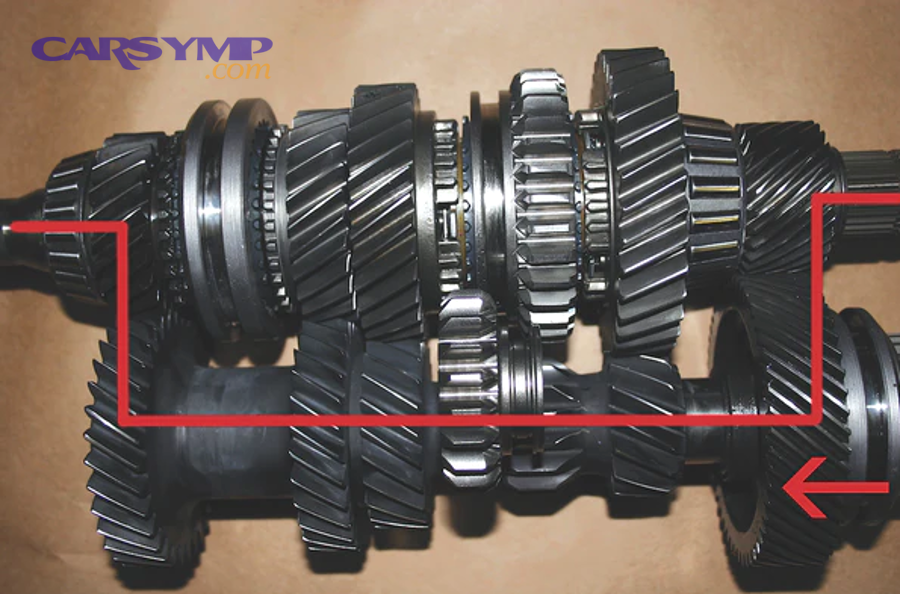
To better understand the difference, focus on where the energy is being lost: in transmission transfer or in engine combustion.
Is high RPM without acceleration a transmission clue or an engine clue?
High RPM without acceleration is more often a transmission clue because the engine is clearly making speed, but the vehicle is not gaining road speed in proportion. That pattern fits clutch slip, poor apply pressure, or ratio loss better than it fits a classic engine misfire.
An engine problem tends to feel different. Misfire causes roughness, shaking, popping, weak combustion pulses, and an uneven pull. The tachometer may not flare smoothly; instead, the engine may stumble or labor. A slipping transmission feels more like the engine is freewheeling for a moment before the drivetrain catches.
That said, you should still test rather than assume. Modern cars can mask symptoms well, and one problem can overlap another. A poor engine can load the transmission oddly, and a transmission fault can make the car feel weak overall. That is why road-testing with live RPM, throttle, input/output speed, and stored codes is the cleanest way to separate the two.
What symptoms are often mistaken for transmission slipping?
Several symptoms get misread as slip. Torque converter shudder, traction-control intervention, delayed throttle response, limp mode, and CVT judder can all confuse drivers. Subaru’s 2024 bulletin is a good reminder because it specifically addresses CVT chain slip, judder, shudder, and hesitation concerns together. That means not every driveline complaint should be labeled “slipping” until the pattern is confirmed. ([static.nhtsa.gov](https://static.nhtsa.gov/odi/tsbs/2025/MC-11012257-0001.pdf))
A practical rule helps here. If the symptom is a repeated vibration or rumble at light throttle near lockup, think torque converter or converter clutch before you assume an in-gear slip. If the car feels like it flares on one shift or several shifts, think transmission ratio control. If it bucks, cuts out, or shakes under load, think engine first. Careful symptom wording saves time and money.
Should you keep driving if the transmission is slipping?
No, you should not keep driving a slipping transmission except for the shortest, safest movement needed to prevent danger or reach proper diagnosis, because heat, wear, and loss of drive can escalate quickly.
More importantly, the decision should be based on severity: mild historical flare still needs service, but active loss of engagement is a stop-driving issue.
Can driving with a slipping transmission make the damage worse?
Yes, driving with a slipping transmission can make the damage worse because every flare creates extra heat and friction loss. The clutch or chain element that is already struggling slips longer, the fluid gets hotter, and debris circulates through the unit. What may have started as one slipping ratio can turn into widespread damage.
This is why many delayed repairs become expensive repairs. Car owners often keep driving because the car still moves. But motion is not the same as healthy operation. A transmission that barely grabs is not “fine”; it is burning margin. The longer it does that, the less likely a small transmission slipping fix will stay small.
According to Ford owner-manual guidance, low fluid can damage the transmission, and overfill can also create shift or engagement concerns and possible damage. Those warnings show that continuing to drive through abnormal operation is not neutral; it increases the chance that a manageable condition becomes a mechanical failure. ([fordservicecontent.com](https://www.fordservicecontent.com/Ford_Content/vdirsnet/OwnerManual/Home/Content?ProcUid=G1752342&Uid=G1774388&buildtype=web&countryCode=USA&div=f&languageCode=en&moidRef=G548949&userMarket=USA&vFilteringEnabled=False&variantid=6257))
When should a car owner stop driving and get the transmission checked?
You should stop driving and get the transmission checked when the vehicle delays going into gear, loses drive, flares severely, bangs after a flare, shows a warning light, leaks fluid, smells burnt, or becomes unsafe in traffic. If the car cannot pull into traffic normally, cannot back up reliably, or suddenly free-revs, it is beyond “monitor it for now.”
Volkswagen’s recall notice offers a concrete safety example: insufficient transmission oil pressure can trigger a warning light, and if ignored, clutch engagement may fail with possible loss of power to the wheels. That is exactly why severe slipping is not just a repair issue; it can become a safety issue. ([static.nhtsa.gov](https://static.nhtsa.gov/odi/rcl/2019/RCRIT-19V866-9383.pdf))
In short, gentle driving does not solve internal slip. It only reduces load temporarily. If the symptom is active, consistent, or worsening, diagnosis should happen now, not after the next long commute.
What related transmission factors can refine a slipping diagnosis?
Four related factors refine the diagnosis: temperature behavior, torque converter behavior, transmission design, and scan-tool evidence.
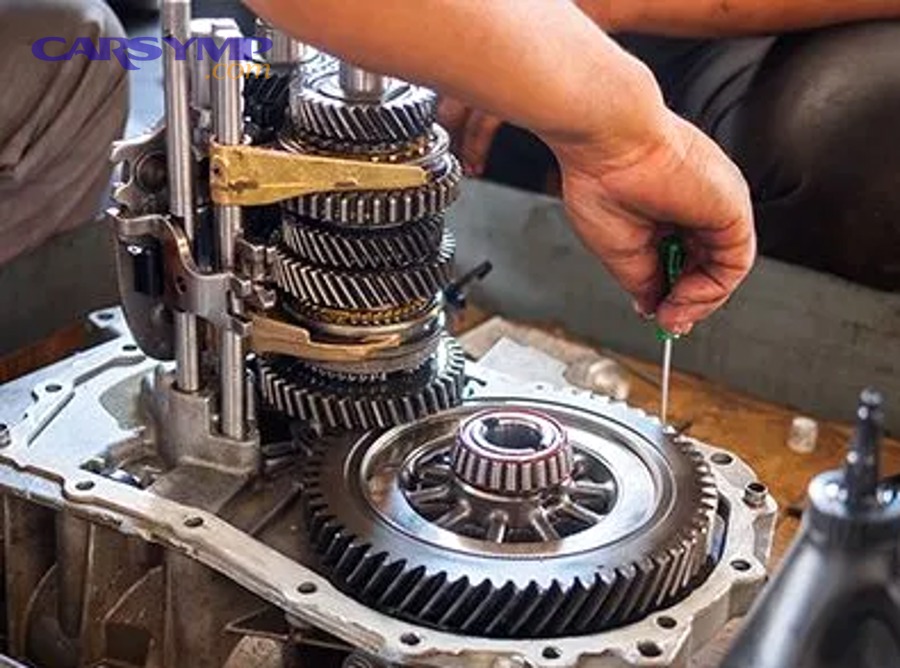
Below, these factors deepen the diagnosis after the main one-gear versus all-gears comparison is already clear.
Does slipping only when hot change the diagnosis?
Yes, slipping only when hot changes the diagnosis because heat changes fluid behavior, seal performance, and clutch holding ability. A transmission that works acceptably cold but slips after 20 to 30 minutes often points to wear, sealing loss, or fluid breakdown that becomes obvious once the unit reaches operating temperature.
Ford’s fluid-check procedures highlight how temperature-sensitive transmission evaluation is by specifying normal operating ranges when checking fluid and warning that overheating can affect fluid level readings and operation. That does not prove every hot-only slip has the same cause, but it does show why thermal conditions matter in diagnosis. ([fordservicecontent.com](https://www.fordservicecontent.com/Ford_Content/vdirsnet/OwnerManual/Home/Content?ProcUid=G1752342&Uid=G1774388&buildtype=web&countryCode=USA&div=f&languageCode=en&moidRef=G548949&userMarket=USA&vFilteringEnabled=False&variantid=6257))
A hot-only pattern also changes repair urgency. It often means the unit is compensating when cold and failing once viscosity drops and clearances matter more. Drivers sometimes misread that as “it only acts up occasionally,” when in fact it is a classic wear clue.
Is torque converter shudder different from gear slipping?
Yes, torque converter shudder is different from gear slipping because shudder is usually a vibration or rumble during converter clutch apply, while slipping is a loss of ratio holding or delayed clutch engagement inside the transmission. The two can feel similar to non-specialists, but they are not the same event.
Shudder often appears at steady throttle and moderate speed. Gear slip usually shows up as RPM flare, delayed pull, or a soft shift event. Subaru’s bulletin grouping of chain slip, judder, shudder, and hesitation concerns is useful because it reflects how closely these complaints can overlap in customer language while still requiring different diagnostic paths. ([static.nhtsa.gov](https://static.nhtsa.gov/odi/tsbs/2025/MC-11012257-0001.pdf))
This distinction matters because the wrong fix wastes money. A converter problem is not repaired the same way as one slipping clutch pack. That is another reason to avoid treating every driveline complaint as a generic “bad transmission.”
Can automatic and CVT transmissions show slipping clues differently?
Yes, automatic and CVT transmissions can show slipping clues differently because a stepped automatic usually slips in a discrete gear or shift event, while a CVT may show chain slip, flare, shudder, or hesitation without the same fixed gear feel. Subaru describes its Lineartronic CVT as a pulley-and-chain system rather than a traditional stepped gearset, which explains why CVT complaints can feel more like ratio drift or judder than a classic 2-3 flare. ([subaru.com](https://www.subaru.com/vehicles/compare-crosstrek-vs-outback.html?))
That difference matters for interpretation. In a conventional automatic, “third gear slips” can be a meaningful driver description. In a CVT, the more useful description may be “RPM rises and the car hesitates when warm” or “it shudders under light acceleration.” The diagnostic logic stays the same, but the symptom language changes with design.
Can a scan tool confirm whether slipping is gear-specific?
Yes, a scan tool can often confirm whether slipping is gear-specific because live data and stored codes can show whether commanded ratio, actual ratio, speed-sensor readings, and pressure-related information fail in one range or across several. This is one of the most efficient ways to move from a symptom story to a real test result.
Hyundai’s incorrect-ratio bulletin is a strong example because it explicitly frames P0731, P0732, P0733, P0734, P0735, P0736, P0729, P076F, and P0730 as transmission clutch slip diagnosis categories. Subaru’s bulletin also ties chain slip, judder, and hesitation diagnosis to DTC-related reference material. Together, those documents show how modern diagnosis increasingly connects road symptoms to control-module evidence rather than driver feel alone. ([static.nhtsa.gov](https://static.nhtsa.gov/odi/tsbs/2024/MC-10253275-0001.pdf))
This is also the right place to be careful with shortcuts. Additives for slipping transmission: risks should be part of the conversation before anyone pours a bottle into the unit hoping to avoid real diagnosis. Ford explicitly warns not to use supplemental transmission fluid additives, treatments, or cleaning agents because they can affect operation and damage internal components, and in some manuals the warning adds that resulting damage may not be covered by warranty. In practice, that means proper diagnosis, correct fluid, and mechanical repair beat chemical guesswork almost every time. ([fordservicecontent.com](https://www.fordservicecontent.com/Ford_Content/vdirsnet/OwnerManual/Home/Content?ProcUid=G1601738&Uid=G1601735&buildtype=web&countryCode=USA&div=f&languageCode=en&moidRef=G548949&userMarket=USA&vFilteringEnabled=False&variantid=2940))
According to Ford owner-manual guidance and current service bulletins from Hyundai and Subaru, the safest path is straightforward: verify the symptom pattern, verify fluid condition and level with the correct procedure, read the codes, compare commanded versus actual behavior, and then decide whether the problem is gear-specific or system-wide. That sequence is the foundation of a credible diagnosis and the best chance of choosing the right repair before more damage occurs. ([static.nhtsa.gov](https://static.nhtsa.gov/odi/tsbs/2024/MC-10253275-0001.pdf))