


A slipping transmission is one of the most disruptive mechanical failures a driver can experience — and one of the easiest to misdiagnose. At its core, transmission slipping means the gearbox is failing to maintain a consistent connection between the engine and the drivetrain, causing the vehicle to lose power unexpectedly, surge in RPM without accelerating, or shift erratically between gears. Recognizing this condition early is the difference between a manageable repair and a complete gearbox replacement.
The warning signs of a slipping transmission span both the physical sensations you feel through the steering wheel and seat, and the audible and olfactory signals your vehicle produces under stress. Drivers commonly report a sudden surge in engine revs with no corresponding increase in speed, hesitation when pulling away from a stop, or the unsettling feeling of the car “falling out of gear” while cruising at highway speeds. These symptoms are not random — they follow a predictable pattern rooted in identifiable mechanical causes.
Once you suspect your gearbox is slipping, a structured diagnostic approach allows you to confirm the problem before spending money on unnecessary repairs. From a basic transmission fluid check to a controlled road test and OBD-II scanner reading, there are several reliable methods available to both professional technicians and informed car owners working in their own driveway.
Understanding what causes those symptoms is equally important. Low or degraded transmission fluid, worn clutch plates, a failing solenoid, damaged gear bands, or a compromised torque converter are the most frequent culprits. Each cause produces a slightly different symptom profile, which means correct identification leads directly to a more targeted and cost-effective transmission slipping fix. Below, this guide walks through every layer of the problem — from first symptoms to final repair decision.
What Is a Slipping Transmission and How Does It Affect Your Vehicle?
A slipping transmission is a mechanical condition in which the gearbox fails to hold a selected gear consistently, causing intermittent loss of engine-to-wheel power transfer — resulting in RPM spikes, hesitation, and unpredictable acceleration. This definition applies to both automatic and manual gearboxes, although the specific failure mechanisms differ between the two.
To better understand the full impact, it helps to start with what a healthy transmission does. The gearbox serves as the mechanical bridge between your engine’s rotating crankshaft and the driven wheels. It selects the appropriate gear ratio to match vehicle speed and engine load, ensuring that power is delivered smoothly and efficiently. When that bridge becomes unreliable — slipping between states of engagement and disengagement — the driver loses predictable control over vehicle acceleration, and the transmission components themselves begin to accumulate heat and wear at an accelerated rate.
Is a Slipping Transmission Dangerous to Drive With?
Yes, driving with a slipping transmission is dangerous, for at least three critical reasons: unpredictable loss of acceleration control, risk of sudden complete disengagement at speed, and progressive thermal damage that accelerates total gearbox failure.
Specifically, the danger of a slipping transmission is not just mechanical — it is a real-time safety hazard. When a gearbox slips unexpectedly on a highway on-ramp or during an overtaking maneuver, the engine revs without producing forward thrust, leaving the driver with no responsive power at the exact moment it is most needed. Beyond the immediate road safety risk, the friction heat generated by a slipping clutch pack or band can rapidly degrade transmission fluid, turning a moderate repair job into a complete rebuild or replacement. Continuing to drive with a confirmed slip is therefore not a matter of tolerance — it is a progressive failure that compounds cost and risk with every mile.
What Does “Gear Slipping” Actually Feel Like While Driving?
Gear slipping feels like a sudden, momentary disconnection between pressing the accelerator and the car moving forward — often accompanied by a noticeable RPM surge on the tachometer without a corresponding increase in vehicle speed.
More specifically, drivers describe several distinct sensations depending on the severity and cause of the slip. In mild cases, the car may hesitate for one to two seconds when shifting from first to second gear before “catching” and continuing normally. In more advanced cases, the transmission may feel as though it has dropped into neutral mid-corner, producing a free-revving engine sound with zero drive force. A burning smell from beneath the vehicle or a faint whine from the transmission tunnel often accompanies these events, confirming that internal friction components are overheating. These sensory details are important — they help narrow down the specific component at fault before any physical inspection begins.
What Are the Most Common Symptoms of a Slipping Transmission?
There are six primary symptom categories associated with a slipping transmission: abnormal RPM behavior, delayed or missed shifts, unexpected neutral drops, difficulty shifting, warning lights, and unusual sounds or smells — each indicating progressive levels of internal gearbox deterioration.
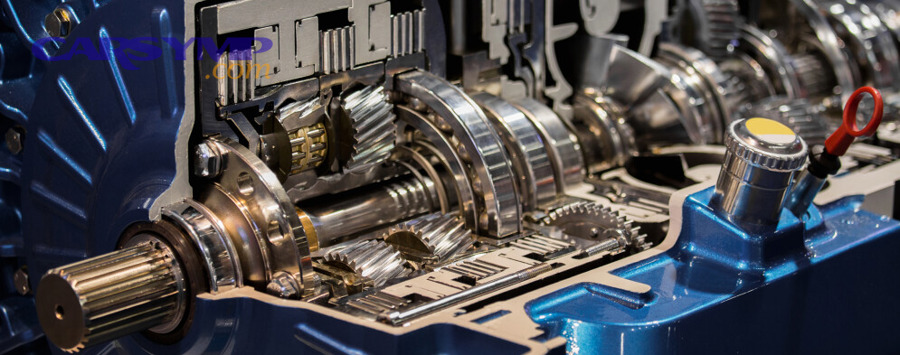
The symptom profile of a slipping gearbox builds over time. Early-stage slipping may be subtle enough to dismiss as normal vehicle behavior, which is precisely why understanding the full range of warning signs matters. The table below summarizes the most recognizable symptoms, their likely severity, and the system most likely responsible.
| Symptom | Severity Level | Most Likely Cause |
|---|---|---|
| RPM surge without acceleration | Moderate–High | Worn clutch packs or low fluid |
| Delayed engagement from stop | Low–Moderate | Low fluid pressure or solenoid fault |
| Unexpected neutral feeling while driving | High | Broken gear band or clutch failure |
| Difficulty shifting manually | Moderate | Worn synchros (manual) or solenoid fault (auto) |
| Check Engine Light illuminated | Variable | TCM fault code triggered |
| Burning smell from transmission | High | Overheated fluid due to slipping friction |
This table provides a quick-reference framework for mapping what you experience in the driver’s seat to a probable internal cause — which is the first step in any accurate diagnosis.
What Are the Physical and Performance Warning Signs of Transmission Slipping?
The most immediately noticeable physical and performance warning signs of transmission slipping include: engine RPM climbing without vehicle acceleration, a hesitation or “pause” when the transmission should engage a gear, unexpected shifts into a higher or lower gear without driver input, sluggish throttle response from a standing start, and the check engine light activating on the instrument cluster.
For example, RPM flare is one of the earliest and most reliable indicators. When the transmission slips between gears, the clutch pack momentarily releases its hold, allowing the engine to rev freely before catching again. This produces a brief but clear spike on the tachometer — often climbing to 3,000–4,000 RPM during what should be a smooth 1–2 gear transition at low speed. Drivers who notice this pattern repeatedly, particularly in the same gear change sequence, have a strong and specific early warning that the transmission requires immediate attention.
What Sounds and Smells Indicate a Slipping Gearbox?
A slipping gearbox produces two primary audible and olfactory warning signals: a high-pitched whine or humming sound from the transmission tunnel, and a sharp, acrid burning smell — both of which indicate that internal friction components are slipping under load and generating excess heat.
In addition to these two primary signals, some drivers report a clunking or thudding noise when the transmission eventually engages after a slip event. This sound results from the abrupt re-engagement of a clutch pack or band that has momentarily lost hydraulic pressure. The burning smell, meanwhile, is almost always caused by degraded transmission fluid that has been superheated by repeated slipping friction. Fresh automatic transmission fluid has a clean, slightly sweet smell; burnt fluid smells harsh and acrid, and often appears dark brown or black on the dipstick — a clear diagnostic signal that the slipping has been occurring for some time.
How Are Automatic Transmission Slipping Symptoms Different from Manual Gearbox Slipping?
Automatic transmission slipping is primarily driven by hydraulic and electronic failure — worn clutch packs, failed shift solenoids, or low fluid pressure — while manual gearbox slipping is almost exclusively caused by a worn friction clutch disc that fails to fully engage between the flywheel and pressure plate.
However, the driver experience of slipping differs significantly between the two. In an automatic transmission, slipping often feels involuntary and unpredictable — the car shifts at the wrong time, or loses drive without any input from the driver. In a manual transmission, slipping typically presents as the engine revving higher than expected when releasing the clutch pedal, particularly under load such as climbing a hill or accelerating hard in a high gear. The clutch pedal may also feel “high” — engaging very near the top of its travel rather than in the middle — which is a hallmark indicator of a worn clutch disc approaching the end of its service life.
How Do You Test a Transmission for Slipping?
Testing a transmission for slipping involves three main diagnostic methods — a fluid condition check, a structured road test, and an OBD-II scanner reading — which together can confirm slipping, identify its severity, and point toward the most likely mechanical cause.
Each of these methods serves a specific diagnostic purpose. The fluid check reveals whether hydraulic pressure loss is contributing to the slip. The road test reproduces the symptom under controlled conditions and narrows down which gear or operating state is affected. The scanner reading captures any fault codes stored by the Transmission Control Module (TCM), providing electronic confirmation of the failure. Used together, these three tools give a complete picture of the gearbox’s condition without requiring disassembly.
How Do You Perform a Transmission Fluid Check and Color Test?
Performing a transmission fluid check involves locating the transmission dipstick (typically labeled with a red or orange handle near the rear of the engine bay), pulling it with the engine warmed up and in Park, and evaluating the fluid’s level, color, and odor against the following standard reference scale.
The Low fluid slipping diagnosis steps follow a simple but precise sequence. First, park the vehicle on level ground and run the engine for five to ten minutes to bring the transmission to operating temperature. Pull the dipstick, wipe it clean, reinsert it fully, and withdraw it again for a clean reading. The fluid level should fall between the two marks on the dipstick. Next, observe the fluid’s color: bright red indicates healthy fluid; pink or light brown suggests mild oxidation; dark brown indicates significant degradation; black fluid with a burnt smell confirms severe overheating and internal damage. Finally, rub a small amount between your fingers — healthy fluid feels slightly slippery, while degraded fluid feels gritty or thin. Any reading outside the “bright red, correct level, no odor” baseline warrants further investigation before driving.
What Are the Step-by-Step DIY Tests to Diagnose a Slipping Gearbox?
Diagnosing a slipping gearbox at home follows a four-step procedure: fluid condition check → controlled road test → stall speed assessment → RPM monitoring during shift events — with each step progressively confirming or ruling out the most common causes.
To begin, complete the fluid check described above. Next, conduct a structured road test in a safe, low-traffic environment. Accelerate moderately from a standstill and observe whether the tachometer rises smoothly and proportionally with vehicle speed, or whether it spikes ahead of speed (indicating slip). Pay specific attention to the 1–2 and 2–3 shift points, as these are where clutch-pack slipping most commonly manifests. If an automatic transmission with a torque converter is suspected, a stall speed test — where the vehicle is held on the brake at full throttle for no more than three to five seconds — can reveal whether the torque converter is slipping by comparing the RPM reached against the manufacturer’s specified stall RPM range. Always refer to the vehicle’s service manual for the correct stall RPM specification before performing this test.
Can an OBD-II Scanner Detect a Slipping Transmission?
Yes, an OBD-II scanner can detect a slipping transmission in most modern vehicles, because the Transmission Control Module actively monitors gear ratios, solenoid response times, and fluid temperature — and stores diagnostic trouble codes when any of these parameters fall outside specification.
Specifically, Scan data and codes for slipping diagnosis typically fall within the P0700–P0799 range of transmission-specific fault codes. Common codes associated with slipping include P0730 (Incorrect Gear Ratio), P0740 (Torque Converter Clutch Circuit Malfunction), and individual solenoid codes such as P0750–P0770. Beyond stored codes, a live data stream from the OBD-II scanner can show real-time transmission fluid temperature, input and output shaft speed ratios, and solenoid duty cycles — all of which can confirm a slip event even when the driver cannot reproduce the symptom on demand. A scanner does not replace a mechanical inspection, but it dramatically narrows the diagnostic field before any component is removed or replaced.
What Are the Most Common Causes of Transmission Slipping?
There are five primary causes of transmission slipping: low or contaminated transmission fluid, worn clutch packs, broken or stretched gear bands, a faulty shift solenoid, and torque converter failure — each responsible for a distinct pattern of symptoms and requiring a different repair approach.
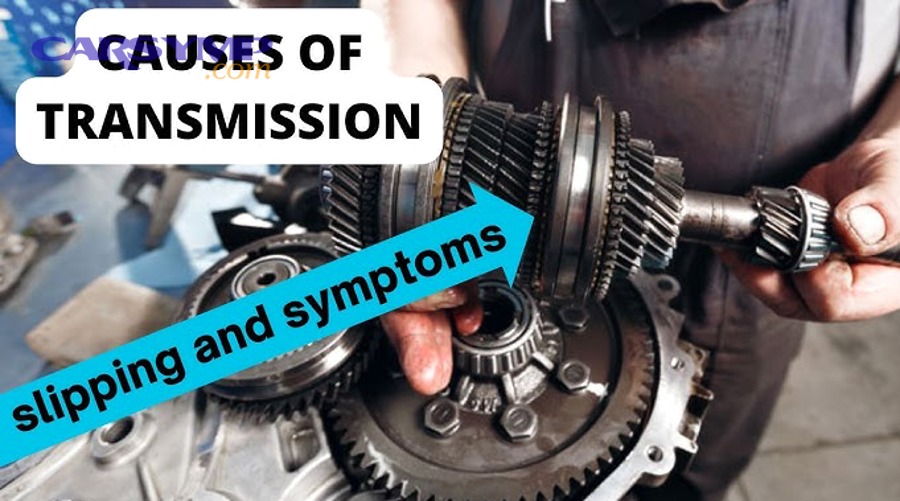
Understanding the cause is not just academic — it directly determines the cost and complexity of the transmission slipping fix required. A fluid change costs under $250 in most cases; a full rebuild can exceed $3,500. Accurate cause identification prevents unnecessary parts replacement and ensures the correct repair is performed the first time.
How Do Low or Contaminated Transmission Fluid Levels Cause Slipping?
Low or contaminated transmission fluid causes slipping by reducing the hydraulic pressure available to engage clutch packs and operate shift solenoids — meaning the gearbox cannot develop the clamping force needed to hold a gear under load.
Transmission fluid performs four simultaneous functions: hydraulic pressure medium, lubricant, coolant, and friction modifier for clutch surfaces. When fluid level drops — due to a leak at the pan gasket, cooler line, or input shaft seal — there is simply less fluid available to build pressure in the valve body. This causes soft, incomplete clutch engagement, which presents as the classic slip-and-surge symptom under acceleration. Contaminated fluid (oxidized, water-contaminated, or carrying metallic debris) is equally damaging because it alters the fluid’s viscosity and friction coefficient, making clutch engagement unpredictable even at correct fluid levels. Regular fluid service intervals — typically every 30,000 to 60,000 miles depending on manufacturer specification — are the primary preventive measure against fluid-induced slipping.
What Mechanical Failures Lead to Gear Slippage?
Three primary mechanical failures lead to gear slippage: worn clutch friction discs that can no longer generate sufficient clamping force, broken or stretched gear bands that fail to hold planetary gear sets in position, and failed shift solenoids that cannot direct hydraulic fluid to the correct clutch circuit at the right moment.
In addition, torque converter damage is a fourth and often overlooked mechanical cause. The torque converter’s lock-up clutch — which creates a direct mechanical coupling between engine and transmission at highway speeds — can wear or fail in a way that closely mimics traditional gear slipping. Drivers with torque converter slippage often notice symptoms most prominently at 40–60 mph during light throttle cruising, which is when the lock-up clutch is most actively engaged. Distinguishing torque converter slippage from clutch-pack slippage is important because the repair approach, cost, and parts involved differ significantly between the two.
What Should You Do When You Identify Transmission Slipping Symptoms?
When transmission slipping symptoms are confirmed, the correct course of action follows a four-step priority sequence: stop driving unnecessarily → check and correct fluid level immediately → run an OBD-II scan for fault codes → consult a qualified transmission specialist to assess internal damage before authorizing repairs.
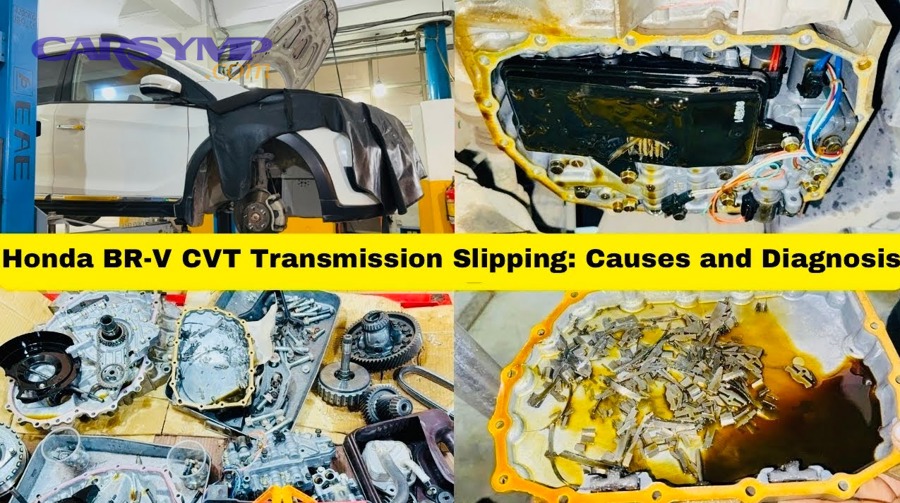
This sequence prevents additional damage while gathering the diagnostic information needed to make an informed repair decision. Acting on symptoms immediately — rather than waiting for the problem to worsen — is consistently the most cost-effective approach. A transmission that slips only on the 1–2 shift and shows clean fluid may require nothing more than a solenoid replacement. The same vehicle driven another 5,000 miles with the fault unaddressed may arrive at the workshop with burnt fluid, scored clutch surfaces, and a damaged valve body — tripling the repair cost.
Should You Repair or Replace a Slipping Transmission?
Repairing a slipping transmission wins on cost for vehicles with localized failures (solenoid, fluid, single clutch pack), while replacement is optimal for high-mileage transmissions with widespread internal damage — and a rebuilt unit offers the best balance when the original failure is extensive but the vehicle itself retains significant value.
The repair-versus-replace decision depends on three factors: the age and value of the vehicle, the extent of internal damage revealed during inspection, and the availability of quality rebuilt units for that specific transmission model. As a general rule, if the cost of repair exceeds 50–70% of the vehicle’s current market value, replacement or a rebuilt unit becomes the more financially rational choice. For newer vehicles under warranty or with low mileage, targeted repair of the confirmed failed component is almost always the correct path.
How Much Does It Cost to Fix a Slipping Transmission?
The table below outlines the typical cost range for each level of transmission slipping fix, from basic fluid service through to full replacement — allowing owners to benchmark repair quotes against standard industry pricing.
| Repair Type | Typical Cost Range | Best For |
|---|---|---|
| Fluid drain and refill | $100–$250 | Fluid-induced slipping, early-stage cases |
| Solenoid replacement | $150–$400 | Solenoid fault codes confirmed by OBD-II |
| Clutch pack replacement | $500–$1,200 | Worn friction discs, moderate internal wear |
| Transmission rebuild | $1,500–$3,500 | Widespread internal damage, multiple failures |
| Remanufactured unit (installed) | $2,500–$5,000 | High-mileage transmission, better warranty |
| New OEM transmission (installed) | $4,000–$8,000 | Late-model vehicles, dealer warranty required |
It is worth noting that labor costs vary significantly by region and vehicle type. Rear-wheel-drive vehicles with accessible transmission mounting typically incur lower labor charges than front-wheel-drive or all-wheel-drive platforms, where the gearbox is more deeply integrated into the drivetrain.
What Are the Special Cases and Advanced Scenarios of Transmission Slipping?
Beyond the standard symptoms and causes covered in the main diagnostic framework, transmission slipping also presents in several specialized scenarios — including CVT-specific behavior, the distinction between slipping and shuddering, cold-weather performance degradation, and the activation of limp mode — each of which requires a distinct diagnostic lens to interpret correctly.
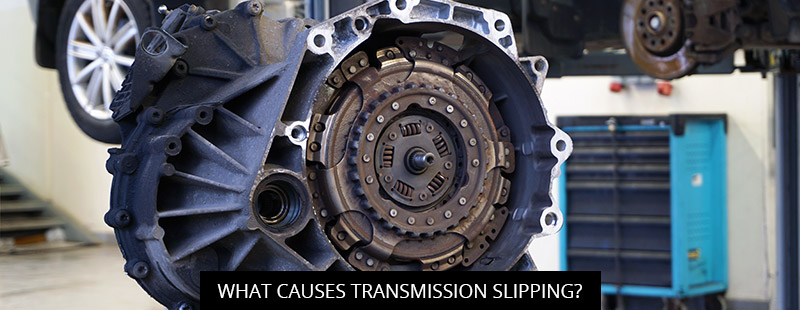
These advanced scenarios matter because misidentifying them leads to incorrect repair decisions. A driver who confuses torque converter shuddering with clutch-pack slipping, for example, may authorize an expensive rebuild when a fluid flush and conditioner treatment would have resolved the issue. Similarly, a transmission that only slips in sub-freezing temperatures is pointing to a very different failure mode than one that slips consistently at operating temperature.
How Does a CVT Transmission Slip Differently from a Traditional Automatic?
A CVT (Continuously Variable Transmission) slips differently from a traditional automatic because its power transfer relies on a steel belt or chain running between two variable-diameter pulleys — rather than discrete clutch packs and gear bands — meaning its slipping symptoms present as a sustained, rubbery surge rather than a sharp, momentary RPM spike.
Specifically, CVT slipping is most commonly caused by belt or pulley wear, degraded CVT fluid that has lost its specific friction coefficient, or a failing stepper motor that controls pulley diameter ratio. Drivers with a slipping CVT often describe the sensation as the engine “floating” disconnectedly above the expected power curve — the vehicle accelerates, but the relationship between engine note and road speed feels elastic and inconsistent. CVT fluid is a specialized product and must never be substituted with standard ATF, as doing so rapidly degrades the belt contact surfaces and accelerates the exact slipping behavior it is meant to prevent.
What Is the Difference Between Transmission Slipping and Transmission Shuddering?
Transmission slipping involves a loss of gear engagement — the gearbox fails to hold a ratio and power transfer drops — while transmission shuddering is a rapid vibration caused by the torque converter lock-up clutch engaging and releasing repeatedly, producing a characteristic judder felt through the chassis at specific speeds.
The practical distinction is important for diagnosis. Slipping typically occurs during acceleration or at shift points; shuddering most commonly occurs at steady-state cruising speeds between 35–50 mph under light throttle — precisely the operating window where the torque converter lock-up clutch activates. Shuddering often responds to a transmission fluid flush with a fresh fill of the manufacturer-specified fluid, particularly if the fluid has lost its friction modifier additives. Slipping, by contrast, rarely resolves with a fluid change alone if the underlying clutch or band wear is already established.
Why Does a Transmission Slip Worse in Cold Weather?
A transmission slips worse in cold weather because low ambient temperatures increase transmission fluid viscosity, reducing its ability to flow rapidly through the valve body and build hydraulic pressure quickly — which means clutch packs and bands receive delayed or incomplete engagement during the first minutes of operation.
This is why many drivers report intermittent slipping that disappears once the vehicle reaches normal operating temperature. Thin or degraded fluid is particularly susceptible to cold-weather viscosity changes, making this symptom a useful diagnostic indicator: if slipping only occurs when cold and resolves completely once warmed up, the fluid condition and level should be the first investigation priority. Transmission seals also contract in cold temperatures, temporarily increasing leak rates at gaskets and shaft seals, which can reduce fluid level enough to cause pressure-related slipping until the seals expand back to their operating dimensions.
What Is Limp Mode and How Is It Related to a Slipping Gearbox?
Limp mode — also called “safe mode” or “fail-safe mode” — is a protective operating state activated by the Transmission Control Module (TCM) when it detects a fault severe enough to risk damaging the gearbox or drivetrain, locking the transmission into a single fixed gear (usually second or third) to allow the vehicle to be driven slowly to a workshop.
Limp mode is directly connected to transmission slipping because it is often the TCM’s response to detecting an abnormal gear ratio — precisely the condition that slipping creates. When the TCM’s input and output shaft speed sensors register that the transmission is not achieving the expected ratio for a commanded gear, it flags a fault code, illuminates the check engine light, and engages limp mode to prevent further damage. From a diagnostic standpoint, limp mode activation is a strong confirmation that an active transmission fault is present. The stored fault codes retrieved during limp mode — particularly P0730 (Incorrect Gear Ratio) and associated solenoid codes — provide the most targeted starting point for identifying whether the slip originates from a hydraulic, electronic, or mechanical failure within the gearbox.