


To make the result last, you’ll combine AC drain cleaning with a simple check for moisture traps (wet carpet, a saturated HVAC box, or debris around the cowl) so the system dries normally after each drive.
Besides removing odor, clearing the condensate path can reduce window fogging, protect electronics from water intrusion, and prevent the passenger footwell from getting damp over time.
Tiếp theo, “Giới thiệu ý mới”: you’ll learn how to confirm a clog, unclog safely without damaging the evaporator core, and prevent the smell from returning in humid or rainy conditions.
Why does a clogged AC drain line create a musty smell in the cabin?
A clogged AC drain line causes odor because trapped condensate stays warm and wet inside the HVAC case, letting microbes grow and releasing that smell into the air stream. To begin, the key is understanding how the drain clogs and where the odor actually forms.
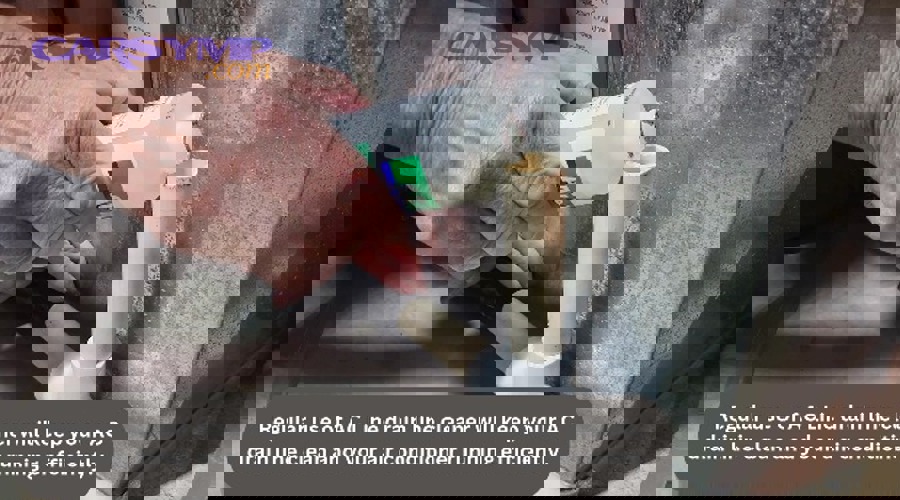
Most vehicle A/C systems pull humidity from the air as it passes over the cold evaporator core. That water is supposed to drip into a tray (part of the evaporator housing) and exit through a small rubber or plastic drain tube. When that exit is restricted, water pools in the bottom of the HVAC box.
Cụ thể, the “musty” odor is usually not refrigerant—it’s a biofilm: a slimy layer of bacteria and mold that forms on constantly damp surfaces such as the evaporator fins, the drain pan, and the lower plastic housing. When you turn the fan on, air picks up volatile compounds from that biofilm and carries them through the vents.
Common reasons the drain path clogs include:
- Dust + pollen paste that washes off the evaporator and settles in the drain pan.
- Leaf debris entering the cowl area and breaking down into small fragments.
- Algae/mold growth that narrows the tube from the inside.
- Kinked or collapsed rubber drain elbow that pinches shut under heat.
- Sealant/foam deterioration from aging HVAC case components.
However, not every “stale” smell is a clog—some odors come from a dirty cabin filter, a wet carpet, or a heater core seep—so your next step is confirming the drain is actually restricted before you start blasting air or poking tools into the housing.
How can you tell if the AC drain is clogged before you start?
You can usually confirm a clogged drain by checking for missing drip water under the car, damp carpet, or a sloshing sound from the HVAC box after using A/C. Next, you’ll verify the symptom safely so you don’t treat the wrong cause.
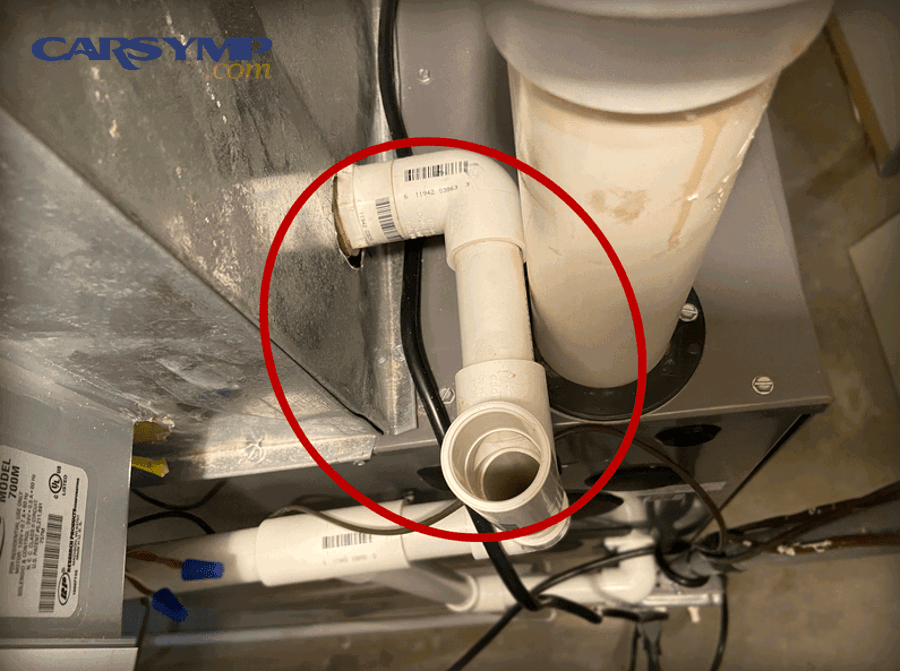
Use this quick confirmation routine:
- Run the A/C for 10–15 minutes on a humid day (or with recirculation on). Park on level ground.
- Look under the passenger side (often near the firewall area) for a steady drip. A healthy system typically leaves a small wet spot or drip trail.
- Check the passenger footwell for damp carpet or a wet insulation pad. Water intrusion here strongly suggests drain restriction or a disconnected drain.
- Listen for slosh when turning or stopping—water trapped in the HVAC case can sound like movement behind the dash.
- Sniff test timing: odor that spikes right at startup of the fan, then fades, often points to microbial growth on wet evaporator surfaces.
To illustrate further, a drain clog is more likely if you see fogging windows when you switch from A/C to heat, or if the odor is strongest after the car sits overnight (water stays trapped and stagnates). In contrast, if you always get airflow that smells dusty even with A/C off, you might be dealing with intake debris or a cabin filter issue.
Below is a practical comparison to help you decide whether you’re chasing a drain restriction or something else.
| Symptom | More consistent with drain clog | More consistent with other causes |
|---|---|---|
| No water dripping under car after 15 min A/C use | Yes (especially in humid weather) | Possible if climate is very dry |
| Wet passenger carpet / damp insulation pad | Yes (blocked or disconnected drain) | Also possible from windshield/cowl leak |
| Odor strongest at fan start, then improves | Often (biofilm on wet surfaces) | Can also be cabin filter or intake debris |
| Sweet smell with oily film on windshield | Usually No | Possible heater core seep |
| “Chemical” smell and weak cooling | Usually No | Possible refrigerant issue or compressor problem |
Once you’re reasonably confident the drain is restricted, the next link in the chain is choosing tools that clear the line without puncturing the drain pan or damaging the evaporator core.
What tools and supplies are safest for AC drain cleaning?
The safest tools for AC drain cleaning are gentle suction, low-pressure air, and flexible non-metal probes that won’t pierce plastic or evaporator fins. After that, you’ll match the method to your access point—under the car or from the HVAC case.
Recommended toolkit (pick what fits your situation):
- Wet/dry vacuum with a small hose adapter (best for pulling debris out without pushing it deeper).
- Low-pressure compressed air (regulated) or a hand pump/bulb blower (use short bursts only).
- Flexible plastic zip tie (trimmed smooth) or a soft nylon line to gently “tickle” the clog.
- Catch pan + towels to manage sudden water release under the dash or under the car.
- HVAC-safe foaming evaporator cleaner (optional, but useful when odor persists after unclogging).
- Nitrile gloves + eye protection because drain water can be grimy and can spray unexpectedly.
- Flashlight and a small inspection mirror to locate the drain nipple.
Avoid these common mistakes:
- Metal coat hangers or screwdrivers: they can puncture the drain pan or tear foam seals inside the HVAC case.
- High-pressure air blasting: it can blow sludge onto the evaporator fins, spread biofilm, or pop a hose connection inside the dash.
- Harsh household bleach poured into the drain: it can damage plastics, rubber, and interior materials, and fumes are unpleasant in a closed cabin.
To make the next step smoother, locate the drain exit first. On many cars it’s a short rubber elbow protruding through the firewall on the passenger side. If you can reach it under the car, you can clear the clog with minimal disassembly—so the following section focuses on a step-by-step method that works for most vehicles.
How do you unclog the AC drain line step-by-step to stop smell?
The most reliable way is a gentle three-step process—locate the drain, pull the blockage with suction, then confirm flow—so you unclog the line and stop the smell without damaging the HVAC box. Below is the exact sequence to follow.
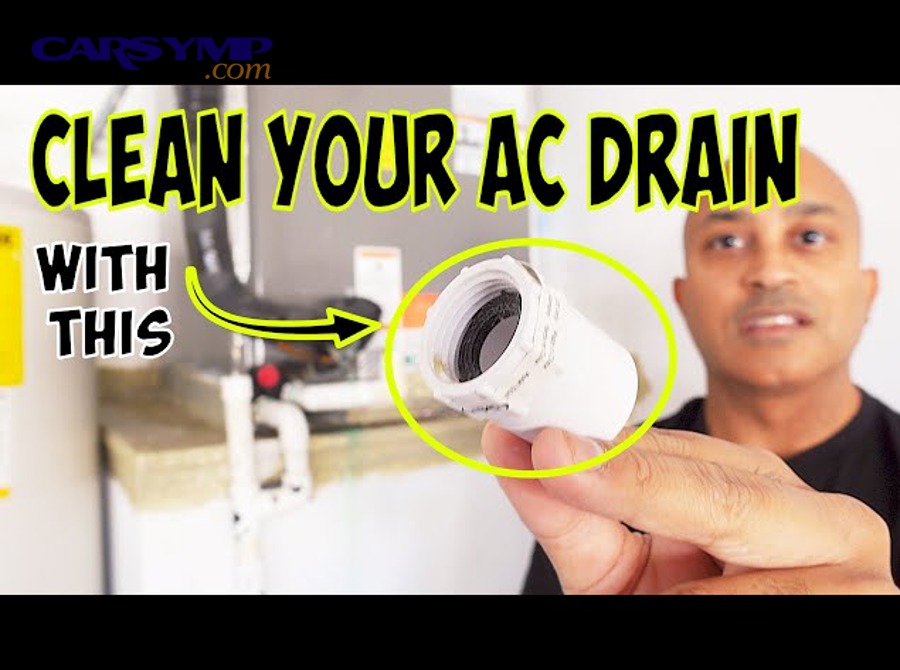
Step 1: Identify the drain exit point
Under the car, look near the passenger-side firewall for a small rubber tube or elbow. Some models have a plastic nipple. If a splash shield blocks access, remove only what you must and keep fasteners organized.
Step 2: Prepare for sudden release
Place a catch pan under the drain and keep towels ready. If the HVAC case is full, clearing the clog can dump a surprising amount of water at once. That release is a good sign—because it means trapped water is finally leaving.
Step 3: Use suction first (preferred)
Fit the wet/dry vac hose to the drain outlet as best as you can (even a loose seal helps). Run the vacuum for 20–40 seconds. This approach tends to pull debris out rather than pushing it deeper into the case.
Step 4: If needed, use a soft probe gently
If suction doesn’t restore flow, insert a smooth, flexible plastic zip tie only a short distance—just enough to break surface sludge at the opening. Do not force it. The goal is to open a pathway so suction can do the real work.
Step 5: Use low-pressure air in short bursts (optional)
Apply very short bursts of low-pressure air at the outlet while watching for drainage. Keep pressure modest and avoid sustained blasts. If you hear gurgling and then see a flow of dirty water, stop and let it drain.
Step 6: Confirm the fix
Run A/C again for 5–10 minutes and verify a steady drip under the car. Also check that the passenger carpet stays dry. If odor improves but doesn’t disappear, it usually means you cleared the water trap but still have microbial residue on the evaporator and housing.
Step 7: Dry-out verification
Turn off A/C but leave the fan running for 1–2 minutes. If the smell is dramatically reduced on the next start, you’ve removed the main moisture driver.
Now that drainage is restored, the next link is removing the odor “source film” that remains on internal surfaces—because unclogging alone doesn’t always eliminate the musty compounds embedded in biofilm.
How do you flush and disinfect the HVAC drain area without damaging parts?
You can reduce persistent odor by using an HVAC-safe foaming cleaner that coats the evaporator and drain pan, loosens biofilm, and then drains out through the cleared tube. Next, you’ll apply it in a way that avoids electronics and interior mess.
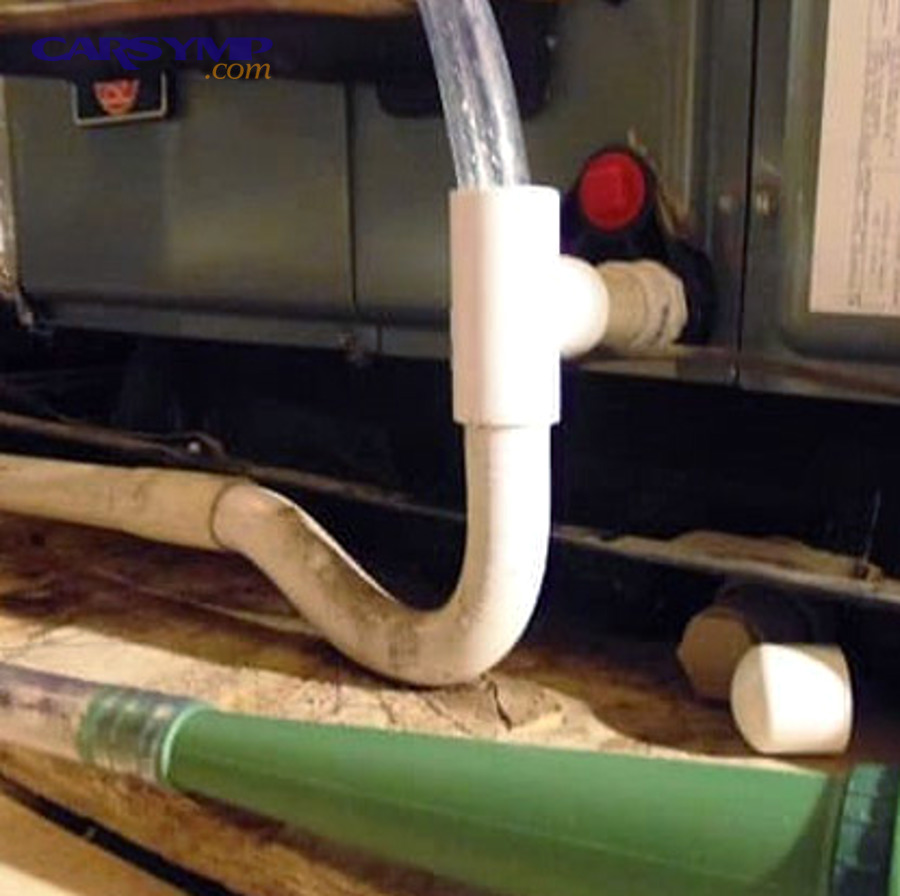
Why foam works: a foaming evaporator cleaner expands into fins and crevices, clings long enough to break down grime, and then collapses into liquid that exits the drain. That makes it better than simply spraying a perfume into the vents, which only masks odor temporarily.
Safe application approach (general method)
- Choose an access path: many cleaners can be applied through the blower motor opening, the cabin filter slot, or a dedicated service port (varies by vehicle).
- Protect the interior: place towels under the glovebox area and keep the catch pan under the drain outlet.
- Apply foam as directed: fill the evaporator housing area, not the dashboard vents. Let the foam dwell so it can work.
- Let it drain fully: you should see the cleaner exit under the car through the drain you just cleared.
- Ventilate and dry: run the fan (A/C off) for several minutes to dry the evaporator surfaces.
Important cautions
- Do not flood electrical connectors or control modules under the dash; aim foam into the HVAC air path, not into wiring pockets.
- Avoid using strong household disinfectants not intended for HVAC plastics; they can degrade foam seals and create lingering fumes.
- If you have asthma or chemical sensitivity, ventilate well and consider wearing a mask—odor treatments can irritate airways.
To make the result more durable, you also want to improve “dry-down” behavior after each drive. That’s where prevention and habits matter, which leads directly to the next section.
How do you prevent the smell from coming back after unclogging?
You prevent odor recurrence by keeping the drain clear, reducing moisture time on the evaporator, and limiting debris intake—so microbes don’t get the damp environment they need. After that, small habit changes can have a surprisingly big effect.
Practical prevention checklist:
- Run “fan-only” before parking: during the last 1–2 minutes of a drive, turn A/C off but leave the fan on. This helps evaporator surfaces dry faster.
- Use fresh air periodically: constant recirculation can keep humidity trapped in the cabin and HVAC case; mixing in outside air can help in many climates.
- Keep the cowl area clean: remove leaves and debris from the windshield cowl so they don’t get pulled into the intake and break down into sludge.
- Fix water leaks quickly: a wet carpet or soaked insulation pad can feed odor even if the drain is clear.
- Check drain drip regularly: occasionally confirm you see water dripping under the car when A/C runs on humid days.
- Use a quality cabin filter: it reduces dust load entering the HVAC box, lowering the “food source” for biofilm.
Cụ thể hơn, microbes thrive when the evaporator stays wet for long periods—such as short trips in humid weather where you park immediately after running A/C. The fan-only dry-out step reduces that moisture window.
Also, if you frequently park under trees, debris management becomes a bigger part of odor prevention. In those cases, drain restrictions can happen more often, so periodic inspection is worth the few minutes.
However, even with good habits, some cars are more prone to odor due to HVAC design (evaporator placement, insulation, drain size). When odor keeps returning quickly, it’s time to look for deeper issues or get professional help—so the next section explains when DIY should stop.
When should you stop DIY and have a technician inspect the system?
You should stop DIY if water is pouring into the cabin, the odor persists after cleaning and drying, or you suspect an HVAC case seal or component fault that requires disassembly. Next, you’ll use clear “go/no-go” signs to avoid causing damage.
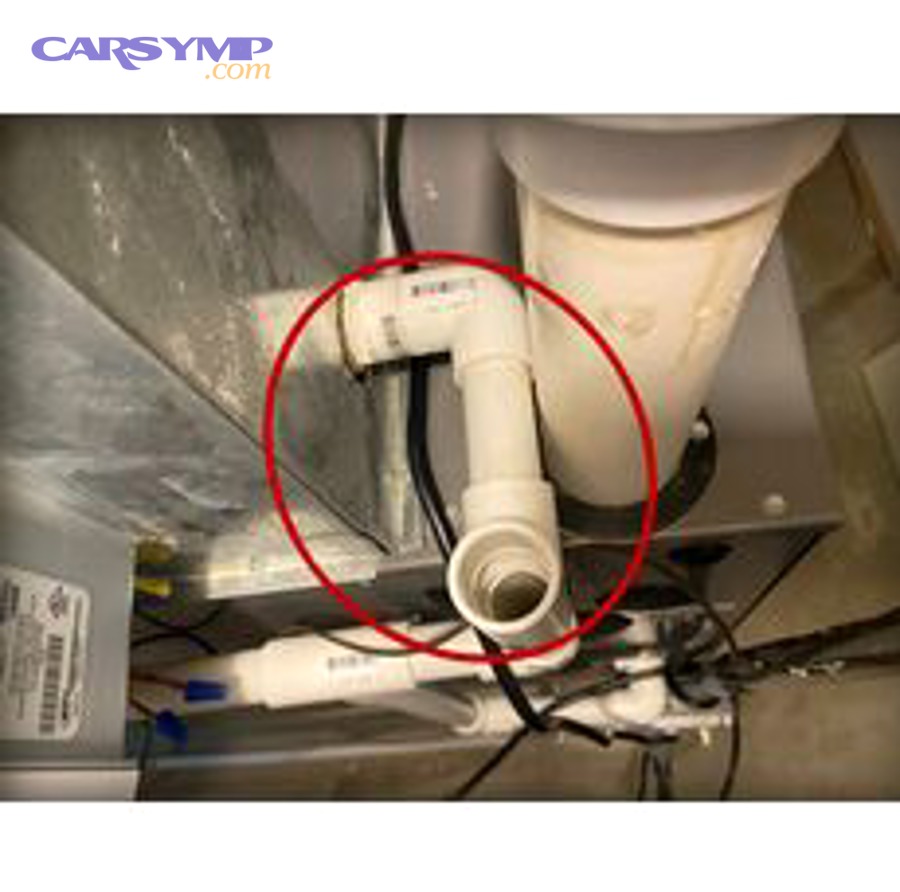
Seek professional diagnosis if any of these apply:
- Passenger floor stays wet even after the drain appears to flow—this can indicate a disconnected drain, cracked drain pan, or case seam leak.
- Repeated clogging within weeks—suggests heavy debris ingestion, algae growth, or a design/fitment issue that needs a more thorough cleaning.
- Electrical issues near the footwell (blower intermittency, warning lights) after water intrusion—water and wiring do not mix.
- Sweet smell or oily film that hints at heater core leakage (different repair path than drain cleaning).
- Uncertain access—if the drain is buried above heat shields or requires significant underbody removal, a shop may be safer.
In a shop setting, technicians can remove the blower motor or access panels, inspect the evaporator housing for sludge, confirm drain integrity, and apply professional-grade cleaners more evenly. They can also confirm whether the evaporator temperature and airflow are normal—because poor airflow can keep surfaces wet longer and worsen odor formation.
Before moving into related odor checks, here’s a practical video that demonstrates the general idea of clearing condensate drainage and cleaning the evaporator area. Watching a full walkthrough can help you visualize drain location and safe tool handling.
Contextual Border: You’ve now handled the core path—confirm clog, clear the drain, and remove residual biofilm. Ngoài ra, the remaining step is to rule out “look-alike” odor causes that can mimic a drain clog even when drainage is fine.
What other odor checks matter if the drain is clear but the smell remains?
If the drain is flowing but the smell remains, you should check intake debris, filter loading, moisture in soft materials, and humidity-triggered odor patterns so you don’t chase the wrong repair. After that, a targeted fix becomes straightforward.
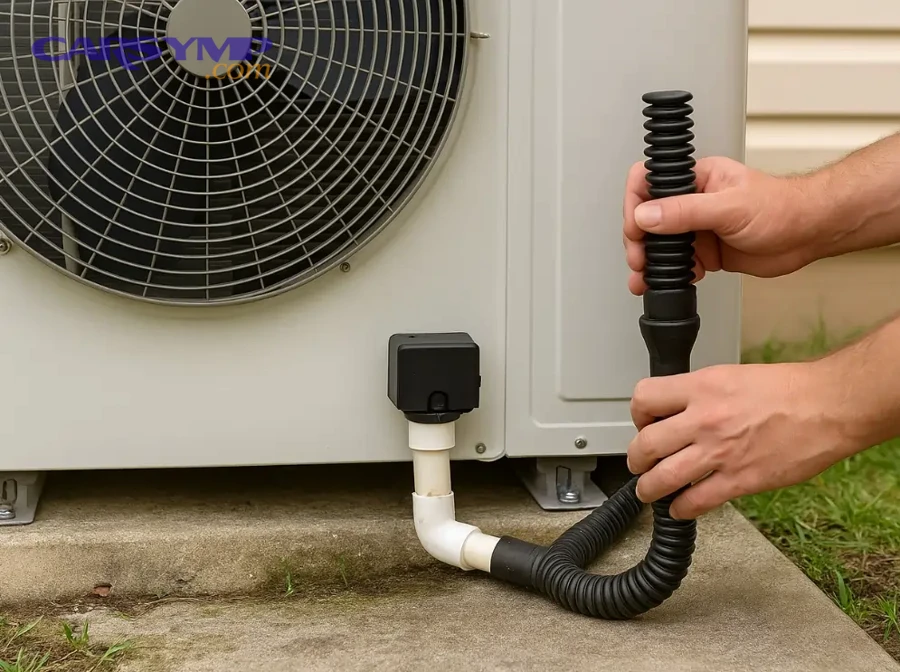
How can intake debris and biofilm mimic a drain clog smell?
Intake debris can create a similar musty odor because organic material breaks down in the cowl and HVAC intake, then gets damp and smells when airflow starts. Next, remove leaves, rinse the cowl area if safe, and ensure the intake screen and seals are intact.
For many drivers, the true “AC bad smell fix” is a combination: clear the drain so water exits, then stop new organic debris from entering the intake in the first place. If you park under trees, this step is especially important.
When does the cabin filter become the main odor source?
A loaded cabin filter can become the dominant odor source when it traps moisture and dust, creating a stale smell even if the evaporator is relatively clean. After that, replacing the filter and cleaning the filter housing often produces an immediate improvement.
In practice, Cabin air filter replacement for odor is one of the most cost-effective steps because it reduces both smell and dust load. Just be sure to also inspect for water intrusion around the filter housing, since a wet filter will smell again quickly.
Why does odor sometimes appear after rain or humid weather?
Odor that spikes after rain or high humidity often happens because ambient moisture raises condensation load, slows drying, and amplifies any existing microbial film—even if the drain is open. Next, improve dry-out habits and verify there’s no cowl leak feeding extra water into the HVAC box.
If you’re tracking patterns, Odor after rain or humid weather diagnosis should include checking the windshield cowl drains, door seals, and any damp carpet padding that can “re-release” odor into the cabin when warmed by sunlight.
What are the most likely musty odor causes if drainage is normal?
If drainage is normal, the most likely causes are microbial residue on the evaporator fins, a damp cabin filter, wet carpet padding, or a small heater core seep—each producing a distinct smell signature. After that, you can choose the right targeted treatment instead of repeating drain clearing.
To keep your troubleshooting tight, treat “Musty AC smell causes” as a short list: wet surfaces in the air path, damp soft materials, or coolant-related leaks. Once you identify which bucket you’re in, the fix becomes more predictable and less trial-and-error.
Summary tie-in: Unclogging the condensate drain is often the fastest way to stop that stale A/C odor, but the best results come from pairing drain restoration with cleaning residue and preventing new moisture traps. Tóm lại, if the smell returns quickly, shift your focus to intake debris, filter condition, and humidity-driven patterns rather than repeatedly forcing the drain.