


An AC diagnostic fee is what you pay to identify the root cause of weak or warm air—not to “guess-and-replace” parts. In most shops, the goal is simple: confirm the failure mode, document evidence, and map the cheapest path to cold air again without creating new problems.
If you’re searching for AC diagnosis cost, the most useful answer is not just a dollar range—it’s what that fee includes, what it excludes, and which inspection steps turn a vague symptom into a clear repair plan.
Drivers also want to avoid common traps: paying twice for the same checks, approving recharge work before a leak is confirmed, or replacing components without verifying pressures, airflow, and electrical control.
To begin, “Giới thiệu ý mới”: the fastest way to save money is to understand the inspection sequence shops follow and how to read the estimate you’ll get at the end.
How much is the AC diagnosis cost, and what does the diagnostic fee cover?
The AC diagnosis cost is typically a flat or semi-flat charge that covers technician time, initial testing, and documentation, not the final repair. Next, it helps to separate “paying for certainty” from “paying for parts.”
Specifically, one widely cited benchmark lists an average A/C Diagnosis range of $122–$179 (labor-only estimate), while consumer-facing repair guides often show separate ranges for diagnosis and common A/C fixes.
According to research by RepairPal from its Fair Price Estimator, in October 2025, the estimated average cost for an A/C diagnosis was $122–$179, emphasizing that taxes/fees and location can shift the total.
What the fee usually covers:
- Interview + symptom verification (when it happens, idle vs driving, after rain, only at startup, etc.).
- Basic visual inspection of accessible A/C components and obvious damage/leaks.
- Performance check (vent temperature behavior, compressor command/engagement clues, condenser fan behavior).
- Foundational measurements that guide the next step (pressure checks, electrical checks, scan data as needed).
- Written findings and a recommended plan: repair first, then recover/evacuate/recharge if needed.
What it often excludes (unless bundled): refrigerant recovery/recharge, UV dye injection, extended intermittent-fault tracing, and component replacement.
What inspection steps should happen before any gauges or refrigerant work?
Before advanced tools, a proper A/C inspection begins with a structured preliminary inspection: look for mounting issues, damage, modifications, and oil staining that can signal refrigerant leaks. After that, the technician verifies system performance with the A/C operating.
To illustrate, the ASE A7 training manual describes starting with a preliminary inspection and evaluation of performance, then a detailed visual check list—drive belt condition/tension, compressor mounts/brackets, clutch hub/pulley condition, wiring/connectors, fuses/breakers, leaks at hoses/lines/fittings, and blocked/damaged condenser or evaporator fins.
According to research by ASE from its A7 Heating and Air-Conditioning training material, in December 2015 (PDF publication date shown on host site), A/C diagnosis begins with preliminary inspection and performance evaluation, listing visual checks such as belt condition, wiring, fuses, hose/fitting leaks, and condenser/evaporator fin condition.
Practical step-by-step (what “good” looks like):
- Confirm the complaint: warm air, intermittent cooling, foggy windows, odor, or noise pattern.
- Check airflow first: blower strength, mode door behavior, and cabin filter restriction (airflow problems can mimic refrigerant problems).
- Visual sweep under hood: belt, clutch area, obvious oil residue, damaged condenser, missing caps on service ports, broken connectors.
- Listen + observe: unusual noises on clutch engagement can steer diagnosis (bearing, internal damage, pressure issues).
- Decide the next measurement: pressures, scan data, or electrical tests—based on what the preliminary step revealed.
This ordering matters because it prevents paying for recharge or parts before confirming the real constraint (airflow vs refrigerant circuit vs electrical control).
Which tests usually justify the diagnostic fee during the first hour?
The tests that “earn” the fee are the ones that narrow the fault tree quickly: vent temperature behavior, fan operation, compressor control signals, and pressure patterns that match common failure modes. Next, technicians select targeted checks rather than blanket replacement.
In many shops, those checks are structured to answer three questions: Is the system moving air? Is the refrigerant circuit cycling correctly? Is the compressor being commanded and able to build pressure?
According to research by Kelley Blue Book from its Fair Repair Range guide, in 2025 (page version shown), diagnostic and repair pricing is commonly separated—diagnosis is treated as its own line item before parts-and-labor repair ranges are quoted.
Common “first-hour” checks (and what they reveal):
- Vent temperature trend at idle and at 1,500–2,000 rpm: helps distinguish airflow problems from weak compression or condenser airflow limits.
- Condenser fan operation: if airflow across condenser is poor, high-side pressure can spike and cooling drops.
- Compressor engagement + sound: grinding/knocking/clicking can indicate clutch bearing or internal issues.
- Basic leak indicators: oily residue near fittings/hoses, UV dye traces if previously used.
- Quick scan data (when applicable): A/C request, pressure sensor readings, fan commands, and related faults.
At the end of this phase, a trustworthy shop should be able to say: “We have enough evidence to proceed to leak testing,” or “The control side isn’t commanding the compressor,” or “Pressures suggest a restriction.”
How do pressure readings and “abnormal patterns” guide the next inspection step?
Pressure readings are valuable because they convert symptoms into measurable states—low charge, restriction, airflow limitation, or weak compression each tends to produce a different pattern. Next, the technician confirms the pattern with a second, independent clue (temperature split, fan behavior, or control signal).

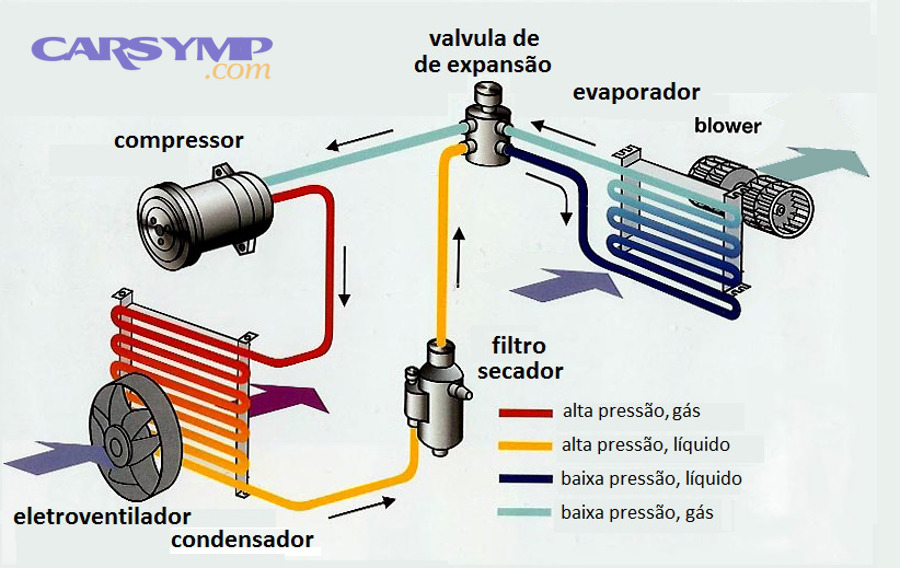
To understand the logic, think in “systems”: the compressor creates pressure difference, the condenser rejects heat, the expansion device drops pressure, and the evaporator absorbs heat. When one stage fails, pressure and temperature clues usually show up in the neighboring stage.
According to research by SAE International from its SAE J2727 standard, in November 2020, “refrigerant emission charts” are standardized to estimate system emissions under defined assumptions—reinforcing that correct interpretation of pressures and system behavior depends on controlled conditions rather than guesses.
Field-friendly interpretation (high-level, not a substitute for service manuals):
- Low-side low + high-side low: often points to low refrigerant charge or compressor not pumping; confirm with clutch engagement and leak clues.
- Low-side low + high-side high: can suggest restriction (expansion device or condenser flow issue); confirm with temperature difference across components.
- Low-side high + high-side high: can point to condenser airflow problems or overcharge; confirm with fan operation and condenser cleanliness.
- Erratic cycling: may be pressure sensor inputs, control logic, or borderline charge that changes with rpm/ambient temperature.
The key “móc xích” is this: pressure readings don’t end the diagnosis—they tell you which confirmation test to run next.
What are the most common leak-check methods, and when should each be used?
There are several main leak-check methods—visual oil tracing, UV dye inspection, electronic detection, and pressure/vacuum integrity testing—chosen based on how fast the leak likely is and where evidence already points. Next, shops combine methods to reduce false positives.
According to research by the European Commission from its Climate Action-commissioned leakage report (Öko-Recherche), in November 2003, measured mobile A/C refrigerant losses were summarized with average annual leakage values in grams per year—supporting why small leaks can take time to show clear performance failure and why method choice matters.
Leak-check options (how shops pick):
- Visual + oil residue: fastest; best when hoses/fittings show oily staining. Works well as the first pass.
- UV dye + blacklight: helpful for slow leaks; especially when prior dye is present (the ASE material notes dye may appear as color in the sight glass for certain systems).
- Electronic leak detector: good for pinpointing; needs controlled airflow to avoid false readings.
- Pressure/vacuum integrity tests: used when the system is opened or when confirming no gross leaks before recharge work.
A good diagnostic write-up will say which method was used, where the leak was suspected, and what evidence was found (photos are even better).
Later, when you compare estimate lines, you may see related recommendations that tie into Cost to fix AC leak vs recharge only—and that’s exactly where a thorough leak-check prevents paying repeatedly for refrigerant without solving the loss.
How do legal and safety rules change what a shop can do during inspection?
Yes—legal and safety rules directly change the inspection flow because shops must avoid releasing refrigerant and must use proper recovery procedures before opening the system. Next, that compliance affects labor time, equipment steps, and what you’ll see itemized.
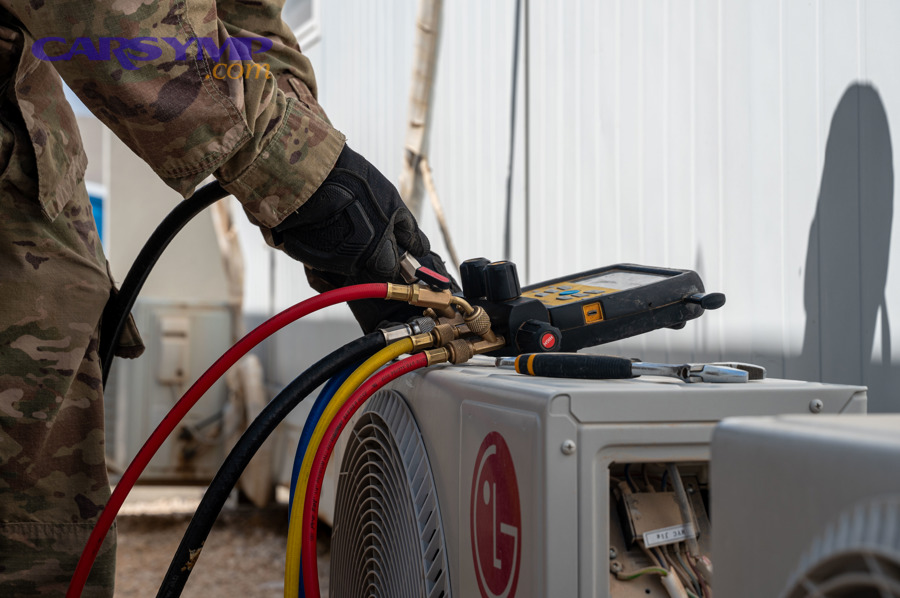
According to research by the U.S. Environmental Protection Agency from its MVAC servicing regulatory requirements, in 2015 (page publication shown as ~10.5 years prior), Section 608 prohibits intentional release (venting) of refrigerants during maintenance, servicing, repair, or disposal—including motor vehicle A/C systems.
What this means in practical inspection steps:
- No “cracking a line” just to “see if there’s pressure.” Proper recovery equipment is used when the circuit must be opened.
- Controlled procedures for identifying, recovering, storing, and handling refrigerant—especially important with newer refrigerants and system designs.
- Documentation may appear on invoices, especially when recover/evacuate/recharge is performed.
If your quote includes “recover/recycle,” that is often part of doing the job legally and safely—not just an upsell. And when you’re assessing the total AC repair cost, this compliance step is one reason shop service differs from informal “top-off” attempts.
Why do diagnostic fees vary between dealer and independent shops?
Diagnostic fees vary because different shops invest differently in scan tools, OEM information, technician specialization, and warranty administration time. Next, understanding the business reason helps you judge value instead of focusing only on the number.
Think of two cost drivers: capability (tools + training) and time uncertainty (intermittent faults, multiple systems, hard-to-access components). Dealers may be faster for OEM-specific control and calibration issues; independents may be more cost-effective for straightforward leak repairs and component replacement.
According to research by ASE from its Section 609 refrigerant recovery and recycling program book, in August 2024, venting is prohibited for MVAC systems with limited exceptions, reinforcing the need for certified processes and equipment—one factor that contributes to shop overhead and fee differences.
How to judge the fee fairly:
- Do they state the outcome? A good diagnosis ends with a clear finding, not just “needs recharge.”
- Do they show evidence? Pressure readings, scan data snapshots, dye traces, or photos of a damaged condenser.
- Is the fee applied to repair? Many shops credit the diagnostic fee if you approve the repair (policy varies).
This is also where “Warranty and parts quality impact on price” shows up: dealers may streamline warranty routes, while independents may offer multiple parts-quality tiers that change total cost after diagnosis.
What should a written A/C inspection report include so you can compare quotes?
A useful inspection report should include the complaint, test conditions, observed results, and the recommended next action in a way that another shop could understand. Next, that transparency is what prevents duplicate charges and confusion.
Before you approve work, look for these elements:
- Vehicle details: year/make/model/engine, refrigerant type (where known).
- Symptom conditions: idle vs driving, ambient temperature context, recirculation vs fresh air setting.
- Measured data: vent temperature trend, whether fans operated, whether compressor was commanded/engaged, and what pressures or sensor values were observed.
- Evidence: leak location notes, oily residue location, UV dye presence, damaged fins, loose connector, blown fuse, etc.
- Decision logic: why the shop recommends leak repair, electrical repair, restriction checks, or controlled recharge.
According to research by ASE from its A7 material, in December 2015, diagnosis emphasizes preliminary inspection and performance evaluation, including visual checks for leaks and component condition before proceeding to performance tests—supporting the expectation of documented steps rather than guesswork.
Below is a table that helps you quickly see what a solid “diagnostic” line item typically includes versus what is usually separate.
| Item on estimate | Usually included in diagnostic fee | Often separate (additional charge) |
|---|---|---|
| Symptom verification + basic inspection | Yes | No |
| Basic performance check (vent temp behavior) | Often | No |
| Pressure pattern check / baseline readings | Sometimes | Sometimes (if extended) |
| Electronic leak detection / UV dye tracing | Sometimes (quick check) | Often (full leak hunt) |
| Recover / evacuate / recharge | No | Yes |
| Component replacement + system flush | No | Yes |
FAQ about A/C diagnostics and inspection fees
These FAQs answer the most common “yes/no” and “what next” questions drivers ask after they receive a diagnostic quote. Next, use them to decide whether to authorize more testing or move straight to repair.
Is it worth paying a diagnostic fee before any repair?
Yes—because it reduces the risk of paying for the wrong repair, prevents repeated refrigerant top-offs, and creates a documented baseline you can compare across shops. Next, the best value comes when the report includes measured evidence and a clear decision path.
Can a shop diagnose A/C problems without connecting gauges?
Sometimes yes—for airflow, fan control, obvious leaks, or electrical command issues, a technician can narrow the cause through inspection and scan data. Next, if the fault remains ambiguous, pressures and temperature comparisons typically become necessary for confirmation.
Should a recharge be done during diagnosis?
Not always—if a leak is suspected, recharging first can waste money and may hide the real failure mode. Next, many shops prioritize leak confirmation and system integrity checks before authorizing a full recharge procedure.
How can I avoid paying for diagnosis twice?
Bring the first shop’s measurements, request a copy of readings and notes, and ask the second shop what additional information they need before repeating steps. Next, a detailed report makes it easier for another technician to continue rather than restart.
Contextual border: Up to this point, you’ve focused on what the diagnostic fee covers and the inspection sequence that produces a trustworthy conclusion. Next, we’ll cross the boundary into rarer scenarios—cases where the same symptom takes longer to prove because the A/C system is intertwined with advanced controls and unusual failure patterns.
What rare factors make A/C diagnostics take longer than expected?
Rare factors include intermittent control faults, contamination from wrong oil or moisture, and modern vehicle integrations that blur the line between HVAC and engine/EV thermal control. Next, recognizing these cases helps you approve the right kind of diagnostic time instead of random parts.
How do data communication and sensor issues complicate diagnosis?
Some A/C problems are not “mechanical” at all: the compressor may be healthy, but the system isn’t being commanded due to sensor plausibility checks, network communication faults, or control-module logic. Next, this is where scan-tool data and OEM procedures matter most.
According to research by ASE from its A7 task list, in December 2015, diagnostics can include “data communication issues that affect A/C system operation,” implying the inspection may extend beyond hoses and pressures into networked controls.
Why does contamination (moisture or wrong lubricant) change the inspection plan?
Contamination can mimic low charge and can damage components after recharge; technicians may need to confirm oil type, moisture presence, and restriction symptoms before approving recharge. Next, this is why some invoices include evacuation time and additional checks instead of a simple refill.
In the ASE A7 material, incorrect lubricant interactions are noted as a potential cause of foggy sight-glass appearance and system damage, which can turn a “quick check” into flush-and-repair planning.
When do intermittent leaks require a different proof strategy?
Intermittent leaks can disappear during a short visit; a shop may use UV dye history, repeated inspections, or longer observation to capture evidence. Next, this is where paying for a documented leak-proofing approach is cheaper than repeating recharges.
According to research by the European Commission from its leakage rates report, in November 2003, average annual leakage was quantified in grams per year, supporting why slow losses may not produce dramatic symptoms immediately and can require patient detection methods.
How do system design and access difficulty increase labor variability?
Some vehicles require more disassembly to access condensers, evaporators, or lines, which increases the time needed to confirm the root cause and plan the repair. Next, this is where your estimate can shift significantly once the diagnosis identifies which component family is involved—especially when considering “Compressor vs condenser vs evaporator cost comparison” after the fault is proven.
And once the diagnosis identifies the failing component and leak source, your total cost becomes a function of parts choice, labor access, and how the shop structures its warranty—exactly why diagnosis and repair are best evaluated as a connected chain, not isolated numbers.