


If your car A/C is blowing warm, the cheapest-looking option is often a recharge. But when the system is leaking, “recharge-only” is usually a temporary refill—not a lasting fix—and the long-run cost can be higher than repairing the leak once.
In this guide, you’ll learn how to tell whether you’re paying for a short-lived cool-down or a real repair, what typical services include, and how labor, parts access, and refrigerant type change the final bill.
You’ll also see practical price logic: why a small seal leak can be inexpensive, why an evaporator leak can be a wallet-breaker, and how diagnostics prevent you from buying refrigerant twice.
To connect everything, here’s the key idea: Giới thiệu ý mới—the difference between “refill” and “repair” is not just the refrigerant; it’s the time, procedure, and certainty behind the diagnosis.
Is a recharge-only service a real fix for a leaking A/C system?
No—recharge-only is not a real fix when there’s an active leak, because it restores pressure temporarily without stopping refrigerant loss, it can hide the true failure point, and it may lead to repeated refills that cost more than a single proper leak repair. Tuy nhiên, it can be appropriate when the system was recently opened for a repair and needs the correct charge, or when the leak is verified and already repaired.
To start, it helps to understand what “recharge-only” really does: it adds refrigerant (and sometimes oil/dye) to bring pressures back into a normal operating window so vent temperatures drop. Cụ thể, that’s symptom relief—not root-cause removal.
Why a leak makes recharge-only a short-term solution
A leak means the system is not sealed, so refrigerant escapes over time, cooling performance fades again, and the compressor may suffer from improper oil circulation. Để minh họa, even if the A/C blows ice-cold today, you may be back to warm air next week if the leak is significant.
According to a professional service perspective, the “fix” is stopping loss and restoring the system to the correct charge. That requires leak detection, confirming the leak location, replacing the failed part or seal, evacuating the system, and recharging by weight.
When recharge-only can be reasonable
Recharge-only can make sense when the system was opened for a known repair (like a condenser replacement) and is now sealed, or when a shop confirms there is no meaningful leak and you’re correcting an undercharge from a prior service error. Ngược lại, if no one checked for leaks, you’re guessing—and guessing is expensive in automotive A/C.
A quick “reality check” you can do before paying
Ask one question: “Will you verify the system holds vacuum and/or passes a leak check?” If the answer is no, you’re likely buying a refill, not a solution. Bên cạnh đó, if the shop will not quote diagnostics separately, you may not know what you paid for until the cold air disappears.
How much does recharge-only usually cost, and what are you paying for?
Recharge-only pricing is usually driven by shop labor time plus refrigerant and shop supplies; most professional services also include an evac-and-recharge procedure rather than “top-off” guessing. Tiếp theo, you’ll see what the number typically covers—and what it often doesn’t.
What “professional recharge” typically includes
A proper service usually includes recovering remaining refrigerant, pulling a vacuum to remove air and moisture, and recharging the system to the manufacturer’s specified weight. Cụ thể hơn, vacuum time matters because moisture can freeze at the expansion device and because air reduces cooling efficiency and elevates pressures.
The service may also include a basic performance test (vent temperature, pressure readings, compressor engagement) and a visual inspection of obvious leaks. However, it may not include deeper leak diagnosis, dye inspection, nitrogen pressure testing, or component-level confirmation unless explicitly listed.
Typical recharge-only price ranges you’ll encounter
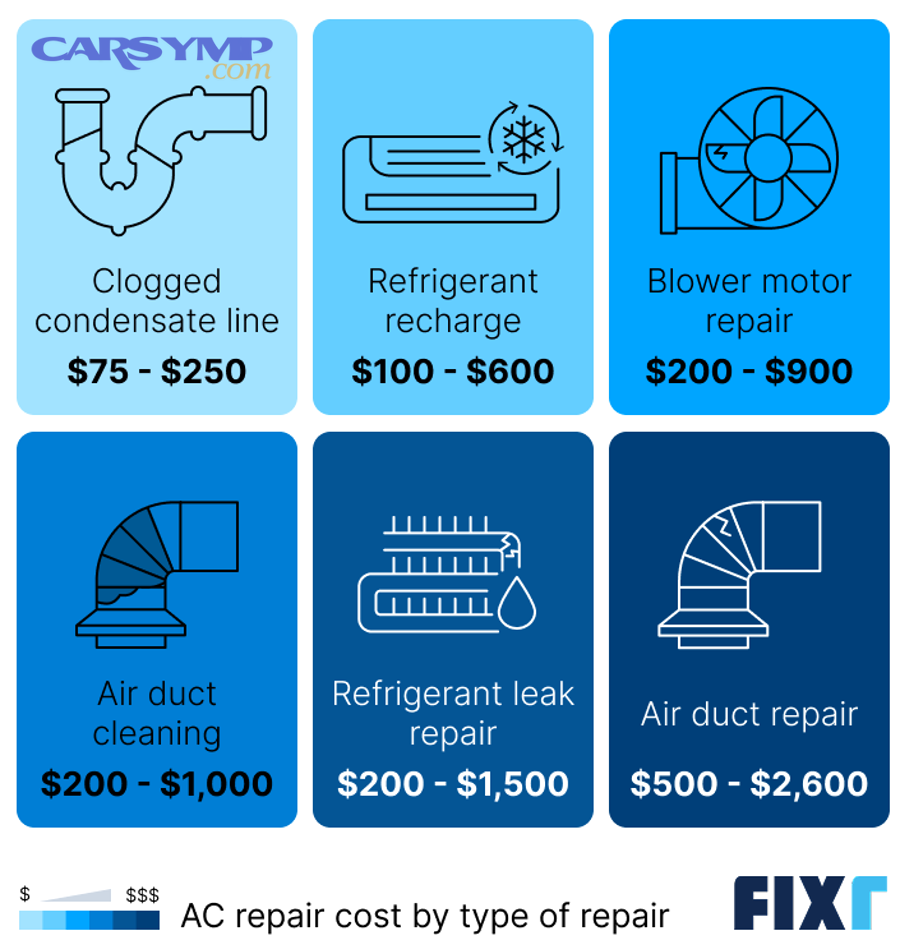
Pricing varies by vehicle and region, but professional recharge services often land in the few-hundred-dollar range because labor and procedure time are significant even when the refrigerant amount is modest. Cụ thể, a shop must recover and handle refrigerant properly, which adds equipment time and compliance steps.
The same job can cost more if the system is completely empty (suggesting a larger leak), if additional checks are needed, or if your vehicle uses a more expensive refrigerant type.
The “DIY can and gauge” price can look low, but it often lacks accurate charging by weight, doesn’t remove moisture, and increases the risk of overcharge—so the apparent savings can evaporate quickly if cooling performance is still poor.
The key cost decision is not “cheap vs expensive,” but “measured service vs guesswork.” Hơn nữa, a recharge that includes correct evacuation and charging is usually more defensible than a blind top-off.
A supporting data point to anchor expectations
Theo nghiên cứu của RepairPal từ Cost Estimator, vào October 2025, the average professional A/C recharge cost was reported in the $263–$344 range, emphasizing labor plus parts and local variation.
What does it cost to diagnose and fix an A/C leak compared with recharge-only?
Leak repair usually costs more upfront than a refill, but it can be cheaper over time because it stops repeated refrigerant loss, prevents compressor damage, and restores stable performance. Để hiểu rõ hơn, break the total into two parts: diagnosis and repair—then add evacuation and recharge.
Step 1: Leak diagnosis costs (what you’re buying is certainty)
Leak diagnosis can include UV dye inspection, electronic leak detection, bubble testing on fittings, checking service ports, and sometimes nitrogen pressure testing for elusive leaks. Cụ thể, the goal is to identify the exact failure point so you replace the correct part once.
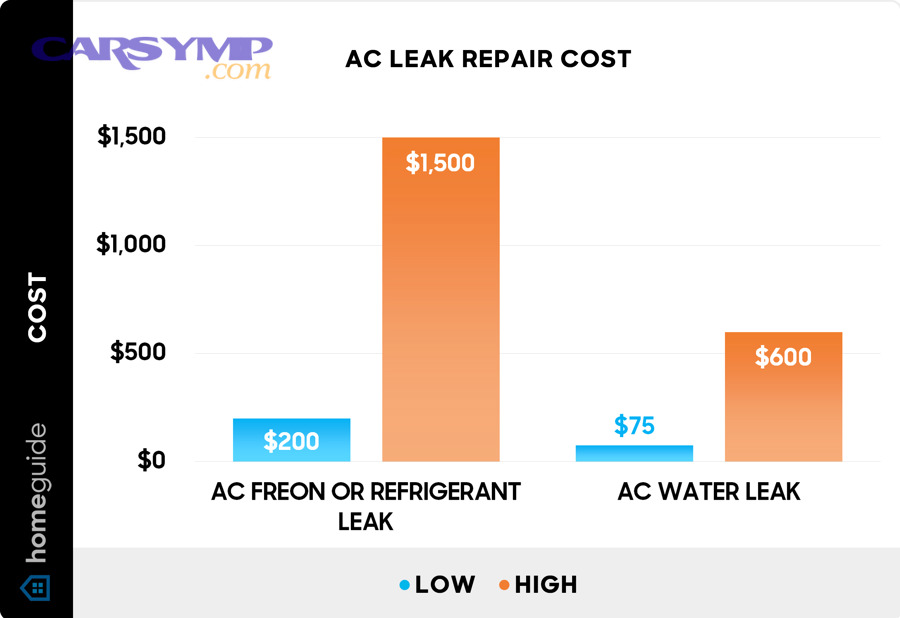
Theo nghiên cứu của RepairPal từ Cost Estimator, vào October 2025, an “air conditioning system leak inspection” was commonly estimated around $122–$179, reflecting labor time and shop expertise.
Step 2: Leak repair costs (the part is often cheaper than the access)
Many A/C leaks are not expensive because the part is pricey—they’re expensive because reaching the part takes time. Ví dụ, a simple O-ring may cost little, but if it’s behind a difficult-to-access component, labor dominates the bill.
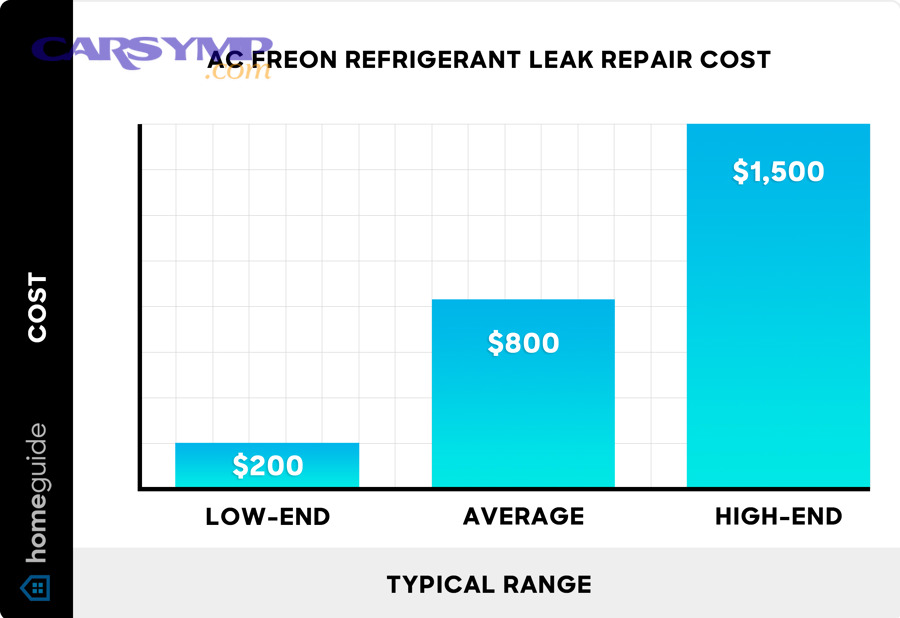
Common repair types include replacing O-rings at line connections, replacing leaking Schrader valves at service ports, replacing damaged hoses/lines, replacing the condenser after impact damage, or repairing compressor seal failures (often by replacing the compressor assembly). In the worst cases, evaporator leaks require dashboard removal, making labor the biggest driver.
Putting the numbers together: recharge-only vs leak repair total
A realistic comparison often looks like this: recharge-only is one bill today, while leak repair is diagnosis + repair + evac/recharge. Tuy nhiên, if the leak is confirmed and small, the “repair total” can still be competitive because you avoid paying for multiple recharges.
To keep this grounded, here is a practical rule: if your A/C becomes warm again within days or weeks of a recharge, you’re likely in leak territory and repeated refills can exceed a proper fix surprisingly fast.
Which A/C leak locations are cheapest to fix, and which are the most expensive?
There are several common leak zones, and your cost depends on whether the fix is a quick seal/valve job, a moderate component swap, or a high-labor access repair like an evaporator. Dưới đây, you’ll see a useful way to group them by “access difficulty.”
Low-cost leak fixes: service ports, simple seals, accessible fittings
These are often the best-case scenario: leaking Schrader valves, accessible O-rings at line connections, or minor seepage that becomes obvious with dye. Cụ thể hơn, you’re paying for diagnosis plus a small part plus a recharge procedure—not a major teardown.
When these are the culprit, you may spend more on proper evacuation and recharge than on the seal itself, which is why accurate diagnosis matters.
Mid-cost leak fixes: hoses/lines and condensers
Hoses and aluminum lines can leak from corrosion, abrasion, or damaged crimps, while condensers often leak after road debris impact. Trong khi đó, these parts are usually more accessible than an evaporator, but the parts can cost more and the job still requires evac-and-recharge.
Theo nghiên cứu của RepairPal từ Cost Estimator, vào October 2025, “air conditioning refrigerant line replacement” was commonly estimated around $940–$1,014 on average, showing how parts cost can dominate when lines are replaced rather than resealed.
High-cost leak fixes: evaporators and compressors
Evaporator leaks are expensive largely because access is difficult; many vehicles require substantial dashboard disassembly. Đặc biệt, labor can exceed parts cost by a wide margin. Compressors can be costly because failures may spread debris or require related parts and careful flushing to protect the new unit.
Theo nghiên cứu của RepairPal từ Cost Estimator, vào October 2025, an A/C evaporator replacement was commonly estimated around $1,254–$1,793 on average, illustrating how labor-heavy “inside the cabin” repairs raise total cost.
This next table helps you visualize what you’re really comparing: it summarizes typical service “buckets” (not exact quotes) and what makes each bucket expensive or affordable.
| Leak Area / Service Type | What Usually Fails | Why Cost Changes | Typical Cost Logic |
|---|---|---|---|
| Service port / Schrader | Valve core seepage | Easy access; diagnosis still needed | Lower parts + standard evac/recharge dominates |
| O-rings at fittings | Hardened seals, disturbed joints | Access varies by vehicle | Labor depends on location; parts are cheap |
| Hose/line | Crimp leak, abrasion, corrosion | Parts can be pricey; routing complexity | Mid to high, especially for long assemblies |
| Condenser | Impact puncture, corrosion | Front-end accessibility varies | Mid-range total + evac/recharge required |
| Compressor / seal | Seal leak or internal damage | May require flushing, drier/expansion service | High total, especially if debris contamination |
| Evaporator | Core leak inside HVAC box | Dash removal labor dominates | Often among the most expensive leak repairs |
How can you tell you have a leak (and avoid paying for refrigerant twice)?
You can’t confirm a leak perfectly without tools, but you can spot strong indicators early: cooling fades quickly after a recharge, oily residue appears on A/C components, the system cycles rapidly, and pressures/vent temps are inconsistent with ambient conditions. Bên cạnh đó, recognizing these signs helps you choose diagnostics before another refill.
Fast fade after a recharge is the biggest red flag
If you get cold air briefly and then lose cooling within days or a couple of weeks, that pattern often indicates an active leak large enough to drain meaningful refrigerant. Cụ thể, refrigerant does not “get used up” in a sealed system—loss implies escape.
Oily film, grime “sticking,” or UV dye traces
Refrigerant oil travels with refrigerant, so leak sites often collect oily residue that traps dust. Để minh họa, a wet-looking spot on a hose crimp, a fitting, or the condenser can be a visual clue. If dye was added previously, a UV light can reveal bright traces at the leak point.
“Car Symptoms” that point away from refrigerant and toward airflow or controls
Not every warm-vent complaint is low refrigerant. Car Symptoms like weak airflow, musty smell, or temperature changing when you adjust the blend control can indicate cabin filter restriction, blower issues, or blend door problems rather than a leak. Ngược lại, strong airflow that is consistently warm on a hot day—especially if the compressor cycles oddly—often returns you to refrigerant/pressure diagnosis.
A video that shows what leak finding looks like in real life
To make the process concrete, the video below demonstrates UV dye leak detection so you can understand what a shop is doing (and what questions to ask about confirmation).
How do you save money on a leak repair without risking bigger damage?
The best way to save money is to spend strategically: pay for accurate diagnostics once, fix the actual leak source, and recharge by weight after a proper evacuation. Quan trọng hơn, avoid shortcuts that increase repeat failures—because repeat failures are where the real AC repair cost grows.
Step 1: Choose a diagnostic approach that matches the symptom timeline
If cooling fades fast, prioritize leak inspection (dye/electronic detection) before paying for another refill. Cụ thể, “recharge first, diagnose later” is often backward when you already have a strong leak pattern.
Step 2: Ask for measurable outputs, not vague assurances
Request numbers and documentation: recovered amount, vacuum hold results, refrigerant weight added, vent temperature at a stated ambient temperature, and which component was confirmed leaking. Tiếp theo, those details reduce the chance you pay twice for the same uncertainty.
Step 3: Avoid stop-leak products unless a professional explicitly recommends them
Stop-leak cans can contaminate recovery equipment and complicate future repairs. Đặc biệt, many professional shops dislike them because they can create expensive downstream problems and may void service warranties.
Step 4: Consider “access-driven” strategy for older vehicles
If an older vehicle needs a dashboard-out evaporator, sometimes it’s smarter to replace related wear items (like the expansion device and seals) while everything is open. Ngược lại, on an easily accessible condenser, it may be more cost-effective to replace only the confirmed leaking part.
Contextual Border
At this point, you know the practical cost difference between a refill and a real leak fix, how diagnosis protects your budget, and which components create “cheap” vs “expensive” outcomes. Ngoài ra, the final price still swings widely based on warranty coverage, parts quality choices, and refrigerant type—so let’s zoom into those high-impact variables next.
How do warranty, parts choices, and refrigerant type change the final price?
These factors don’t change the physics of cooling, but they strongly change the final invoice because they affect labor reimbursement, parts pricing, and service procedure requirements. Hơn nữa, understanding them helps you compare estimates apples-to-apples.
Warranty coverage and shop guarantees can change the “true” cost
Even when two quotes look similar, warranty terms can make one deal far better. Cụ thể, if a shop offers a meaningful warranty on parts and labor, you’re buying risk reduction—not just a repair. This is where “Warranty and parts quality impact on price” becomes real: a cheaper part with weak coverage can cost more if it fails early.
OEM, aftermarket, and remanufactured parts shift the risk curve
For compressors and major components, OEM parts may cost more but can reduce fitment issues and early failure risk. Ngược lại, a lower-priced reman unit might be acceptable for some vehicles but could carry higher comeback risk depending on brand quality and installation practices.
When comparing quotes, ask what’s included: receiver/drier or accumulator, expansion device, system flush, oil specification, and whether the shop will replace all disturbed seals. Missing line items can explain why one estimate is far cheaper—until the system fails again.
Refrigerant type can add cost (especially R-1234yf vs older refrigerants)
Some vehicles use refrigerants that are significantly more expensive and require specialized service equipment, which can raise both material and procedure costs. Cụ thể, cost increases may come from refrigerant pricing, slower service equipment cycles, additional identification steps, and stricter handling requirements.
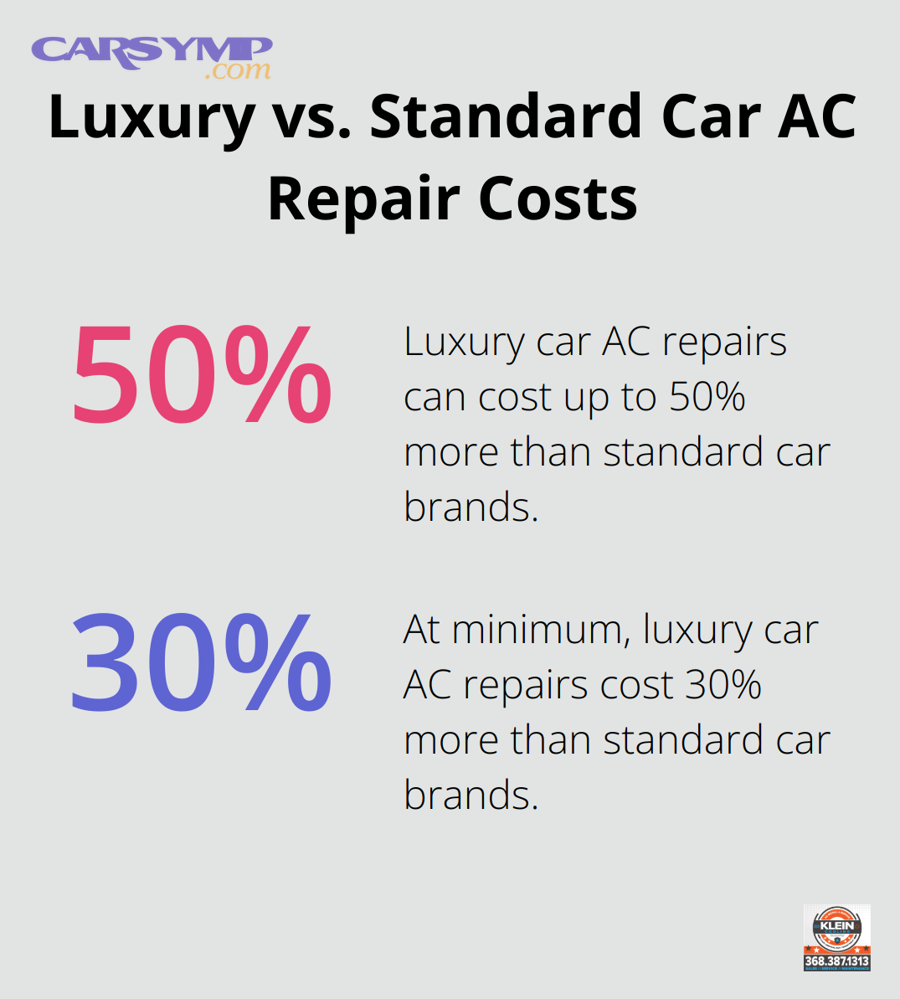
Theo nghiên cứu của MOTOR từ A/C refrigerants service analysis, vào April 2020, reported U.S. pricing was roughly about $6/lb for R-134a versus about $60–$70/lb for R-1234yf, illustrating why the same service can carry a higher materials baseline on newer systems.
Theo nghiên cứu của Center for Climate and Energy Solutions từ climate policy analysis, vào April 2017, wholesale market prices for HFO-1234yf were discussed around $75–$80/kg at the time, highlighting how supply-chain and production complexity can keep costs elevated.
Dealer vs independent shop pricing: what you’re really comparing
Dealers may charge more due to labor rates and OEM part usage, while independent specialists may be more competitive—especially if they focus on mobile A/C work. Tuy nhiên, the best value is usually the shop that provides clear diagnostics, correct charging by weight, and written warranty terms, not simply the lowest number.
Frequently asked questions
Does topping off refrigerant fix an A/C leak?
No—topping off doesn’t fix a leak because it doesn’t restore the system’s seal, it doesn’t remove moisture/air contamination, and it often results in repeat refrigerant loss. Tóm lại, it’s symptom relief unless a leak has already been repaired and you’re correcting a known undercharge.
Why can a “small leak” still cost a lot to repair?
Because labor and access often dominate cost. Cụ thể, a cheap seal located behind a dashboard or buried in a tight engine bay can require hours of disassembly, which is why the same leak type can be inexpensive on one model and expensive on another.
Is leak inspection worth paying for?
Yes, in most leak-suspected cases, because it prevents repeated refills, reduces the chance of replacing the wrong part, and protects the compressor from running undercharged. Như vậy, inspection cost is often “cheap insurance” against the most common waste pattern: paying for refrigerant multiple times.
Can I recharge the A/C myself to save money?
Yes, but it comes with tradeoffs: you may not remove moisture, you may not charge by precise weight, and you can overcharge or misdiagnose the problem. Quan trọng hơn, if the system is leaking, DIY recharge often delays the real repair and can increase total spend.
What’s the most cost-effective way to handle recurring warm air?
Start with diagnosis that can confirm leak presence and location, then repair the confirmed source, then evacuate and recharge correctly. Tổng kết lại, that sequence minimizes repeat costs and stabilizes performance—especially when the warm-air problem returns quickly after a recharge.
Key takeaway: Recharge-only can be cheaper today, but leak repair is often cheaper overall when the A/C loses cooling again within days or weeks—because you stop paying for refrigerant repeatedly and reduce the risk of major component damage.