


Dealer vs independent A/C repair pricing usually comes down to labor rate, parts strategy, and diagnostic depth: dealerships tend to cost more per hour, while independents can be cheaper—but the best value depends on your car, symptoms, and how the quote is built.
To choose confidently, you need a comparison framework: what “higher” buys you at a dealer (OEM parts pipelines, factory scan tools, nationwide warranty support), and where an independent often wins (lower overhead, flexible parts options, faster scheduling, tailored troubleshooting).
Next, it helps to understand why A/C work amplifies price gaps: refrigerant handling, leak diagnostics, component access, and rechecks can turn a small problem into a multi-step job—especially if you pay for repeated “try this first” visits.
Giới thiệu ý mới: below is a practical, apples-to-apples way to compare quotes, decide when the dealership premium is worth it, and avoid paying twice for the same diagnosis.
Is a dealership always more expensive for A/C repairs than an independent shop?
Not always, but dealerships are often pricier for the same A/C outcome because (1) their hourly labor rate is typically higher, (2) they commonly default to OEM parts and higher parts markups, and (3) they operate with higher overhead and brand-mandated service processes.
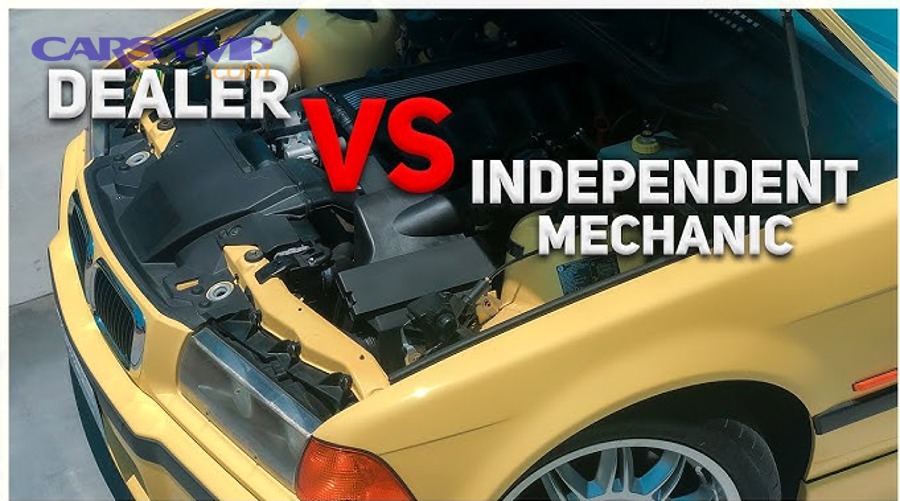
To start, the “dealer premium” is a real pattern in broad repair comparisons: an Automotive Aftermarket Industry Association (AAIA) study cited in March 2009 found dealership repairs averaged 34% higher than independent shops, with some cities showing differences as high as 47%.
However, “always” is the wrong word because A/C pricing can flip when (a) the repair is covered by a manufacturer warranty, (b) the dealer offers coupons or fixed-price specials, or (c) the independent must sublet a dealer-only programming or calibration step that the dealer does in-house.
So the real question isn’t “dealer vs indie = expensive vs cheap.” Instead, ask: Which shop can resolve my symptom with the fewest paid steps, the least risk of repeat visits, and the best warranty protection for my situation? To make that comparison fair, you’ll need to unpack what each quote includes—especially the diagnostic and verification steps.
What are you really paying for at a dealership A/C service department?
You’re paying for factory-aligned diagnosis and standardized execution: dealership A/C service bundles trained brand technicians, access to manufacturer procedures (including bulletins), and a process built around warranty compliance, documentation, and consistent part sourcing.
To understand the pricing, break the bill into three layers: verification (confirm the complaint and operating conditions), root-cause diagnosis (pinpoint leak/airflow/control faults), and repair + validation (install parts, evacuate/charge, and re-test). This is where many quotes become hard to compare if one shop quotes only the “repair” line while the other includes the full chain.

Next, consider the labor-rate and process effect. Edmunds notes dealer labor rates are commonly higher—sometimes by $30 or more per hour—partly reflecting facilities, staffing, and manufacturer-supported infrastructure.
Then there’s the tooling and information pipeline. A/C complaints increasingly intersect with electronic controls, pressure sensors, HVAC actuators, and vehicle-specific software routines. In April 2024, the Auto Care Association reported that 45% of independent shops encounter repairs requiring automaker tools they consider “too expensive,” and those tools can cost upwards of $2,400 on average.
Finally, dealership value often concentrates in two places: complex vehicles (late-model cars with integrated modules) and coverage (repairs tied to factory warranty or manufacturer-backed parts/labor programs). In those cases, the higher sticker price can translate into lower total risk—especially if you travel and want consistent warranty support across locations.
Why can independent A/C repair quotes look so different from one shop to another?
Independent quotes vary because independents optimize differently: some compete on lower labor, others on specialization, and many tailor parts and diagnostic time to your car’s age and your budget—so the same symptom can be scoped in very different ways.
To see this variance in real numbers, a Northwest Automotive Trades Association (NATA) labor-rate survey reported on April 3, 2024 found an Oregon statewide general shop labor rate of about $151, while diagnostic rates ranged widely—from $95 to $239 per hour.
That range matters for A/C because diagnostics are often the “hidden” cost driver. If one shop charges a flat diagnostic fee and another charges time-and-materials diagnostic hours, you can’t compare totals unless you standardize the diagnostic scope (what tests, how long, what deliverable you receive).
Next is the parts model. Independents can offer OEM or aftermarket parts, and they may price parts using different markup policies. In the same NATA survey report, markup on a $100 new OEM part ranged roughly from $105 to $250, and aftermarket markups also showed wide dispersion.
Finally, specialization changes everything. An independent shop that does high-volume A/C work may own better leak-detection tools, have repeatable routines, and diagnose faster—so the “independent” option isn’t automatically cheaper or riskier. It’s more accurate to say independents offer more variance, which can be great if you compare quotes correctly.
How do labor rates, flat-rate times, and diagnostics shape the final A/C bill?
They shape it more than the part price because A/C problems are often time problems: the total depends on how quickly the shop confirms the fault, how many tests are needed, and whether verification requires repeat checks after charging and road-testing.
To connect labor to real-world pay and shop economics, U.S. Bureau of Labor Statistics data shows the median annual wage for automotive service technicians and mechanics was $49,670 in May 2024, and the median annual wage in automobile dealers was higher than in several other repair categories.
Next, think about “flat-rate times.” Many shops estimate jobs using labor guides: if a compressor replacement is assigned X hours, you pay X hours even if the technician finishes faster (or sometimes you pay more if complications arise). This can benefit you when the shop is efficient, but it can feel expensive if the job runs into access issues—like tight packaging that increases disassembly time.
Diagnostics also differs by philosophy:
- Minimum viable diagnosis: confirm low pressure and recharge—fast and cheap upfront, but risky if there’s a leak or restriction.
- Root-cause diagnosis: leak detection, pressure/temperature correlation, and control checks—more upfront cost, but reduces repeat visits.
To anchor expectations for common A/C services, RepairPal’s estimator lists an average A/C recharge cost between $263 and $344, with labor often dominating the line item.
And for larger failures, RepairPal estimates an A/C compressor replacement average between $962 and $1,354 and an A/C condenser replacement between $784 and $922 (not including taxes/fees and location variation).
So when you compare dealer vs independent AC repair pricing, you’re really comparing diagnostic pathway + labor economics. The best quote is the one that buys the right amount of diagnosis, not the one that minimizes it.
Which A/C issues show the biggest price gaps between dealer and independent?
The biggest gaps usually appear when the job combines high labor time, high parts markup, and brand-specific procedures—meaning the dealer’s process and overhead stack up faster than an independent’s flexible approach.
To make this concrete, the table below summarizes common A/C jobs and typical cost bands you’ll often see in estimates, helping you spot where “scope” (what’s included) drives price differences more than the part itself.
| Common A/C job (scope matters) | Typical estimate range (parts + labor) | Why dealer vs independent pricing diverges |
|---|---|---|
| A/C recharge (evacuate & recharge vs “top-off”) | $263–$344 average estimate | Dealer may include more verification steps; independent may offer lower diagnostic time |
| Condenser replacement | $784–$922 average estimate | Parts sourcing and markup differences; labor varies by vehicle packaging |
| Compressor replacement | $962–$1,354 average estimate | OEM vs aftermarket choices; system flushing and related parts can expand scope |
Next, add the “repeat-visit penalty.” Many A/C complaints are intermittent: cold at speed but warm at idle, or cold in the morning but weak in afternoon heat. If the first visit only performs a recharge without finding the leak, you might pay twice—once for a temporary improvement, and again for proper diagnosis and repair. That’s why comparing price without comparing scope is the fastest way to overspend.
Here is where you can safely place the broader context phrases without letting them distort your decision: your total AC repair cost is controlled by diagnosis quality, and the Average AC repair cost by issue shifts dramatically depending on whether you’re paying for a recharge, a leak repair, or a compressor-related job that triggers multiple “while you’re in there” items.
When does paying the dealership price for A/C work actually make sense?
It makes sense when the dealer’s strengths reduce your total risk: warranty coverage, brand-specific complexity, and nationwide repair backing can outweigh higher hourly rates—especially on late-model vehicles with integrated HVAC controls.
To begin, if your car is within factory warranty, a dealership is often the most rational path because warranty work can shift large parts of the bill away from you. Edmunds emphasizes dealer advantage on warranty and the convenience/warranty network effect.

Next, consider tool access and locked procedures. The Auto Care Association’s April 2024 memo highlights that limitations on access to vehicle data and expensive automaker tools create costs and delays for independents, sometimes forcing vehicles back to dealers for specific steps.
That matters in A/C when diagnosis requires deep module interaction, relearns, or manufacturer-specific test routines. If an independent has to sublet that step, you can end up paying the independent plus the dealer. In that scenario, starting at the dealership can lower total cost—even if the hourly rate is higher.
Finally, think in terms of “value per resolved symptom.” If your A/C problem is complex, intermittent, or tied to a known technical service bulletin pattern, a dealer’s standardized workflow can shorten time-to-fix. This is the case where higher labor rate is offset by fewer attempts.
How can you get an apples-to-apples quote from a dealer and an independent?
You can do it with a simple method: standardize scope in writing, ask for diagnostic deliverables, and require a decision point after diagnosis—so you’re comparing the same chain of work rather than two different guesses.
To start, request the quote in three labeled lines:
- Diagnostic step: fee or hourly cap, and what tests are included.
- Repair step: parts + labor, with part type specified.
- Validation step: vent temperature/pressure check, leak recheck, and road-test if needed.
Next, force clarity around common A/C ambiguity:
- Is “recharge” an evacuate-and-recharge, or a quick add? (The difference changes both reliability and cost.)
- What refrigerant and how much? Shops should specify the refrigerant and quantity plan rather than “fill until cold.”
- What happens if a leak is found? Ask whether the diagnostic fee is credited toward repair, and what the next step price looks like.
Then ask for the one thing that protects you from paying twice: a stop point. For example: “Authorize up to one hour of diagnosis. Call me with findings and the repair plan before proceeding.” This is how you prevent scope creep and align both shops to the same decision structure.
If you want a reality check for common numbers, use independent public estimators as anchors: RepairPal’s A/C recharge range ($263–$344) and compressor/condenser ranges help you detect outliers and ask better questions.
How do you reduce total spend without gambling on the wrong fix?
You reduce total spend by targeting the highest-leverage moves: (1) pay once for real diagnosis, (2) control parts choices transparently, and (3) avoid repeated partial services that don’t address root cause.
To begin, prioritize diagnosis quality over the lowest entry price. A cheap recharge that ignores leaks can become the most expensive path if it leads to repeated visits. In broader repair-cost context, Auto Finance News reported in August 2025 that vehicle repair costs were up 43% since 2019, to an average of up to $1,700 per visit in their cited dataset—making repeat visits especially painful.
Next, choose parts intentionally. If you’re outside warranty, ask the shop to quote two options when appropriate: an OEM part and a vetted aftermarket equivalent. This is where Warranty and parts quality impact on price becomes a practical decision: the cheapest part is rarely the cheapest ownership if it fails early or lacks meaningful labor coverage.
Then use timing to your advantage. Dealers often run service specials; independents may have seasonal A/C check packages. Your goal is not to chase discounts blindly, but to buy the right workflow at the right price point.
Finally, set success criteria up front: target vent temperature range (relative to ambient), stable pressures, no short-cycling, and a leak check strategy. When both shops agree on the success criteria, quotes become comparable and outcomes become measurable.
Contextual Border: Now that you can compare core pricing mechanics (labor, parts, and diagnostics), the next section expands into the hidden variables that often decide whether the dealer premium is worth it—or whether the independent option is the better value.
What hidden variables can flip the dealer vs independent value equation?
Hidden variables flip the equation when they change either required tooling, required procedures, or long-term risk—so the “cheaper” shop becomes costlier after rework, delays, or warranty gaps.
Does diagnostic tool access change who is cheaper in the end?
Yes—when repair information or tools are restricted, independents can lose time or sublet steps, which can erase labor-rate savings.
Cụ thể, the Auto Care Association’s April 2024 survey memo reports measurable impact from tool and data limitations, including frequent encounters with automaker tools deemed too expensive and an average tool cost cited as upwards of $2,400.
Can parts markup policy matter more than the hourly labor rate?
Yes—parts pricing policy can outweigh a $20–$40/hour labor difference if the job requires multiple components and the shop applies aggressive markup tiers.
For example, the NATA survey report describes wide variance in how shops mark up parts, including broad ranges on customer pricing for a $100 OEM part and similarly wide ranges for aftermarket parts.
Do technician labor markets and shop staffing affect your A/C quote?
Yes—labor markets influence shop rates and throughput, and technician pay differs by industry segment, which can affect both pricing and scheduling speed.
According to the U.S. Bureau of Labor Statistics, the median annual wage for automotive service technicians and mechanics was $49,670 in May 2024, with higher median pay reported in automobile dealers than in several other categories.
Does warranty coverage change the “best price” more than the estimate itself?
Yes—warranty coverage can turn the dealership option from “expensive” to “cheapest possible” because the manufacturer may pay for the repair, and dealer warranty networks can reduce out-of-town risk.
Edmunds highlights the dealer advantage around warranty work and the broader support structure dealers can provide, which can matter if you travel or want consistent warranty handling across locations.
FAQ
What should I ask first when comparing dealer vs independent A/C pricing?
Ask: “What exactly is included in the diagnostic step, and what is the cap before you call me?” This single question prevents scope creep and makes quotes comparable across shops.
Is it normal that diagnostics cost almost as much as a recharge?
Yes—diagnostics can be the real work when the symptom is intermittent or leak-related. A recharge estimate may look simple, but a correct diagnosis can save you from paying for repeated partial fixes.
Are “cheap recharges” a red flag?
Not automatically, but they are risky if they don’t include evacuating the system, verifying pressures, and checking for leaks. A lower upfront price can become higher total cost if the system leaks and needs repeat service.
Is there a trustworthy public baseline for common A/C jobs?
Public estimators can provide baseline ranges: RepairPal lists an A/C recharge estimate range ($263–$344) and broader ranges for common component replacements like compressors and condensers.
Is there a practical video that helps me understand A/C recharge steps?
Yes—this walkthrough demonstrates a more complete approach to recharging, which helps you understand what “scope” should look like when comparing quotes.