


Common alternator noise causes usually come from two places: mechanical parts (belt, pulley, bearings) and electrical behavior (charging ripple, poor grounds, interference). If you can match the sound to when it happens, you can narrow the fault fast.
Many drivers notice an alternator whine that rises and falls with engine RPM; that specific clue often points to either belt/pulley issues or electrical noise leaking into the audio system.
You may also hear grinding, chirping, rattling, or a squeal that appears only on cold starts or under load—each pattern hints at a different root cause and a different “first check” to perform.
To introduce a new idea, the most reliable path is to treat alternator noise like a symptom map: identify the sound, confirm where it’s coming from, then verify the underlying component with a short set of tests.
What does alternator noise sound like, and when should you worry?
Alternator noise is typically a pitch or scrape that changes with RPM, and you should worry when the sound grows quickly, comes with charging warnings, or is paired with burning smell, smoke, or belt dust.
To begin, listen for a consistent link between engine speed and sound character: if the pitch rises smoothly as you rev, the alternator/pulley path is a prime suspect; if it’s intermittent, think belt slip or an overrun pulley issue.
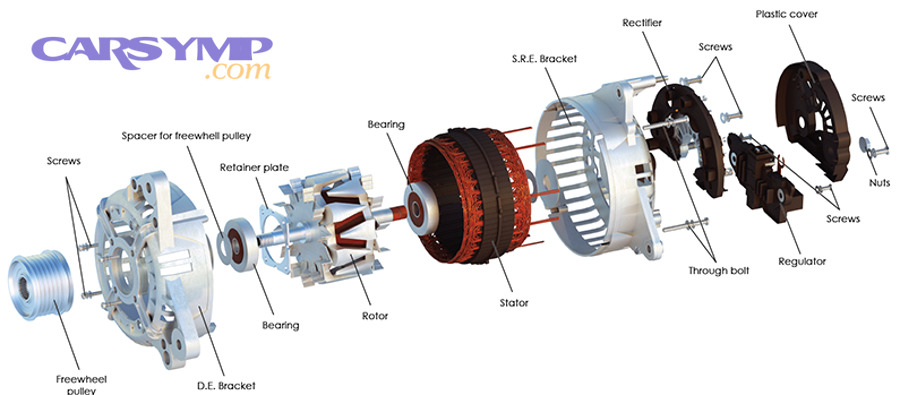
Whine, squeal, grind, or rattle—what each sound often means
Whine usually tracks RPM and can be electrical (charging ripple/diodes) or mechanical (bearing resonance). Squeal often points to belt slip. Grind frequently indicates bearing damage. Rattle can be a loose bracket, pulley clutch, or adjacent accessory.
Next, connect the sound to conditions: does it show up at cold start, only with headlights/defroster on, or only when you turn the steering wheel? That pattern acts like a “filter” that removes many false suspects.
Three red flags that mean “stop diagnosing and protect the engine”
Stop and investigate immediately if you see a battery/charging light, the belt is smoking or fraying, the sound suddenly becomes a harsh metallic grind, or the engine overheats (some vehicles drive the water pump with the same belt path).
In addition, if the noise is loud enough to be heard outside the car over normal idle, treat it as urgent—bearing seizure or belt failure can escalate fast.
Why the location can fool you in an engine bay
Engine bays transmit vibration through brackets and castings, so alternator-adjacent noises can come from an idler pulley, tensioner, A/C compressor clutch, or power steering pump instead.
So, before you blame the alternator, confirm the sound’s center point with a short localization routine later in this guide.
Why does an alternator whine happen—electrical vs mechanical?
An alternator whine happens either because mechanical components resonate (bearings/pulley/belt) or because electrical ripple and poor grounding introduce a high-pitched tone that can even leak into speakers.
Next, separate the “under-hood whine” from the “in-cabin audio whine”: the first is usually mechanical, while the second is often electrical noise entering the audio signal path.
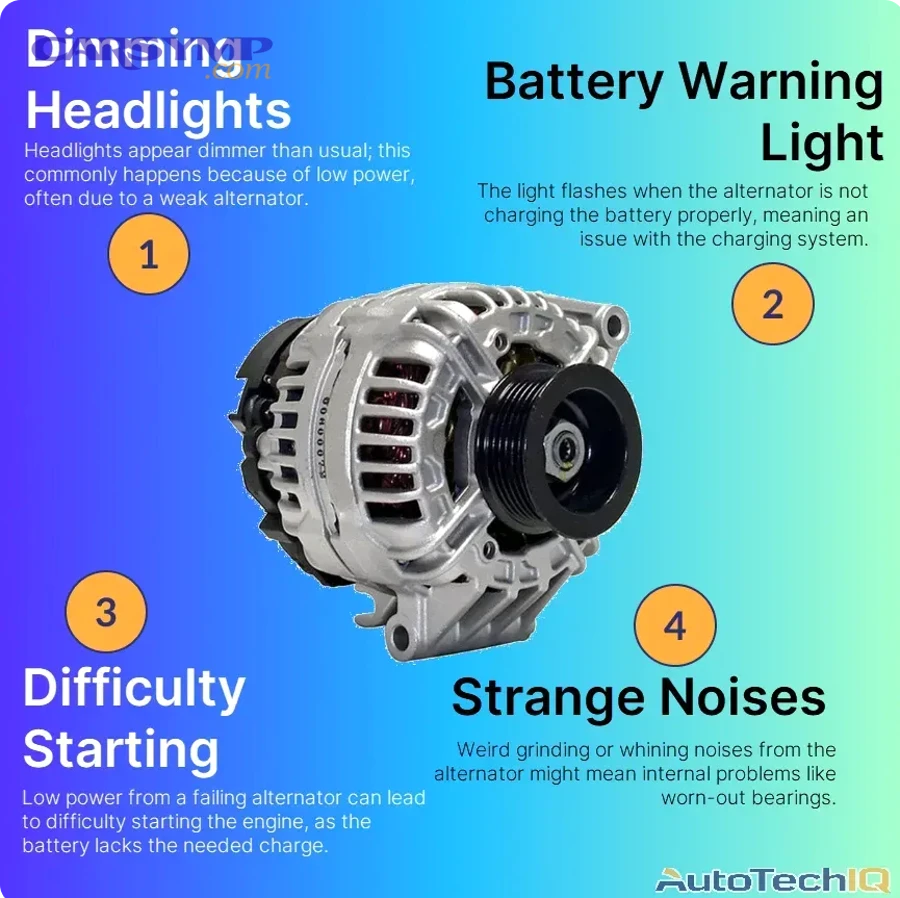
Mechanical whine: resonance from bearings, pulley, and belt path
Mechanical whine commonly comes from the alternator’s front bearing starting to dry out, a pulley clutch (overrun decoupler) beginning to chatter, or belt glazing that causes micro-slip and a “singing” tone.
To illustrate, a bearing whine often gets louder with RPM and may change if you lightly load the alternator (turn on blower + rear defroster) because the belt tension and rotor load shift the vibration pattern.
Electrical whine: ripple, diodes, and grounding paths
Electrical whine can be created by a failing diode trio, rectifier issues, or excessive AC ripple riding on the charging voltage; that ripple can create audible tones, especially if grounding is weak.
However, electrical causes rarely make a strong external “scrape” sound under the hood—when the hood-open sound is clearly mechanical, prioritize belt/pulley/bearing checks.
A quick “two-scenario” test that narrows the category
If the whine is heard mostly through speakers and changes when you unplug an auxiliary audio input or change phone charging setups, suspect electrical interference. If it’s loudest at the alternator case and unaffected by audio settings, suspect mechanical sources.
From there, you can choose the right diagnostic path: electrical validation vs mechanical isolation.
Can a slipping belt create alternator noises?
Yes—belt slip is a common alternator noise cause because a glazed or loose belt can squeal, chirp, or create a high-pitch “sing” as it loses grip on the alternator pulley.
Next, focus on timing: belt noise is most common at cold start, during sudden electrical loads, or when humidity/water changes friction on the pulley surfaces.
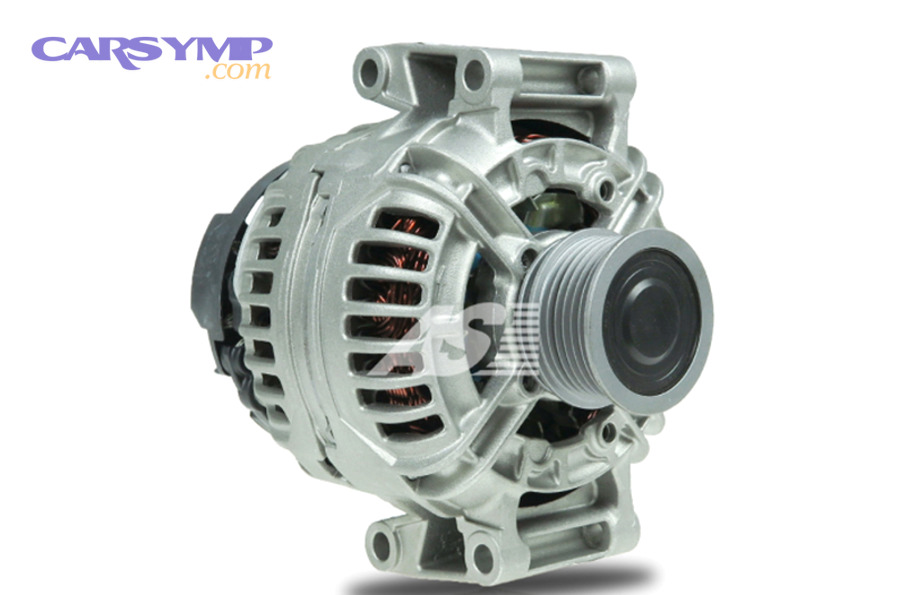
How belt squeal differs from bearing whine
Belt squeal is usually sharper, more “rubber-on-metal,” and can spike when you rev quickly. Bearing whine is often smoother and more constant, like a turbine tone that follows RPM.
So, if your noise fades after a minute of running, belt slip rises on the suspect list because rubber warms and grips better.
Fast belt checks that don’t require special tools
Look for glazing (shiny belt ribs), cracks, missing chunks, or black dust near the alternator pulley. Check for pulley grooves packed with debris and confirm the belt is routed correctly.
In addition, watch the tensioner arm at idle: if it oscillates aggressively, it can indicate belt issues, a failing tensioner, or a decoupler pulley problem transmitting pulses.
Why tension problems can sound like “alternator failure”
A weak tensioner spring can let the belt flutter under load, and that flutter may be loudest near the alternator because the alternator pulley often has a strong torque reaction.
That’s why many “bad alternator” noise reports end up being belt drive problems once you isolate the sound properly.
Are worn bearings the most common alternator noise cause?
Yes—worn alternator bearings are among the most common alternator noise causes, producing a whine that can progress into grinding as lubrication fails and metal surfaces wear.
Next, treat bearing noise as a progression: early whine at certain RPM, then broader whine across ranges, then roughness and grind that may be felt as vibration at the alternator case.
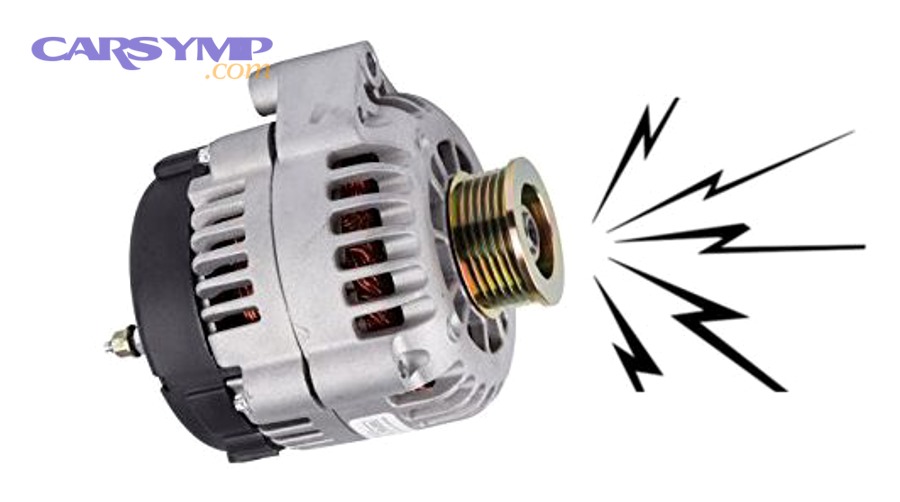
Front bearing vs rear bearing: how the symptoms differ
The front bearing often gets the harshest load from belt tension and tends to complain first. A rear bearing can create a subtler whine but may show up as wobble, pulley runout, or inconsistent noise under changing electrical load.
To understand more clearly, use both hearing and touch: a rough bearing often transmits a faint “buzz” or vibration into the alternator housing you can feel carefully with a hand (avoid moving belts).
What makes bearings fail faster than expected
Heat, belt over-tension, contamination (water, road grime), and misalignment accelerate bearing wear. Frequent short trips can also keep under-hood moisture around longer, which doesn’t help lubrication longevity.
In practice, a vehicle with a slightly misaligned pulley path may chew through bearings repeatedly until alignment is corrected.
Confirming bearing roughness without disassembly
With the engine off, check for pulley wobble and listen for roughness while rotating the pulley by hand. Any gritty feel, notchiness, or lateral play is a strong indicator.
Then, compare that feel to nearby idlers; the “worst” pulley often reveals itself quickly when you rotate each one.
What causes grinding, rattling, or chirping near the alternator?
Grinding usually points to bearing damage, rattling often indicates a loose mount or pulley clutch issue, and chirping commonly comes from belt slip, pulley surface contamination, or a tensioner oscillation problem.
Next, use a grouping approach: identify the sound family (grind/rattle/chirp) and match it to the most likely mechanical subsystem before you chase electrical causes.
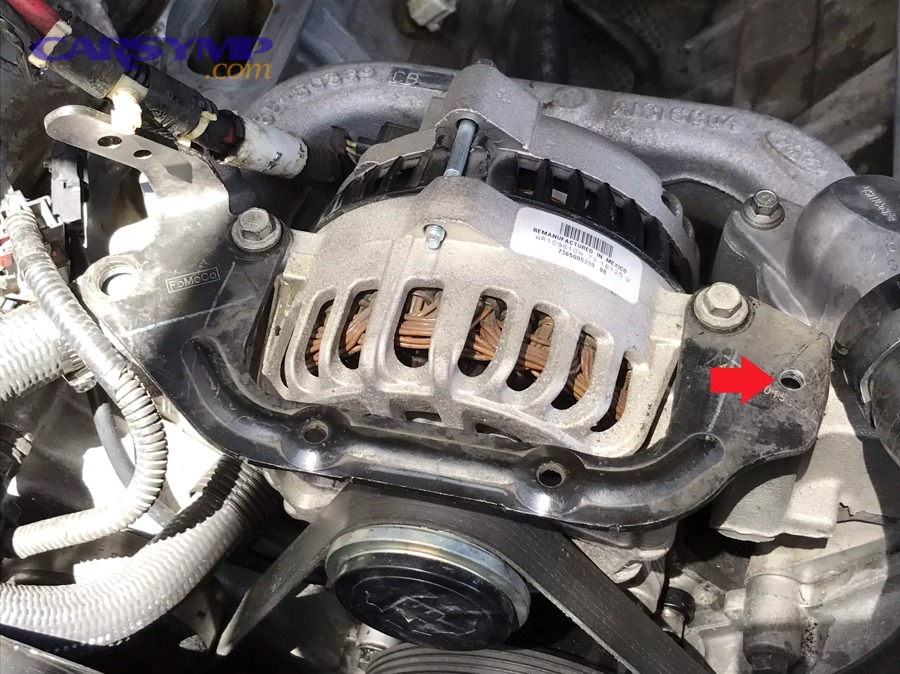
Grinding: bearing collapse, rotor contact, or pulley damage
A true grind can mean the bearing is collapsing or the rotor is contacting internal parts due to excessive play. It can also happen if a pulley is damaged and the belt rides unevenly, creating harsh friction sounds.
So, if the grind is immediate and loud, avoid extended running—catastrophic bearing failure can throw the belt or damage the alternator internally.
Rattling: loose bolts, bracket flex, or overrun pulley chatter
Rattles may come from a slightly loose alternator mount bolt, a cracked bracket, or an overrun pulley that chatters when engine speed drops quickly. You might notice rattling during quick throttle blips or when the engine returns to idle.
To narrow it down, apply gentle pressure to suspected heat shields or brackets with a tool handle (engine off for hands near belts) and check for obvious movement or contact points.
Chirping: belt micro-slip and contaminated pulley surfaces
Chirps often appear as rhythmic squeaks that change with RPM. A tiny coolant/oil leak misting the belt or pulley can create a repeating chirp as the belt passes the contaminated section.
In that case, cleaning the pulley faces and fixing the leak matters as much as belt condition, because contamination can return the noise even with a new belt.
Why do you hear noise through the speakers—alternator whine in the audio system?
Alternator whine through speakers usually happens when charging noise (AC ripple) or poor grounding gets into the audio signal path, creating a tone that rises with RPM even if the alternator itself isn’t mechanically loud.
Next, think of the audio system as an antenna: the more resistance or imbalance in grounds and shielding, the more likely it is to “pick up” alternator-related interference.
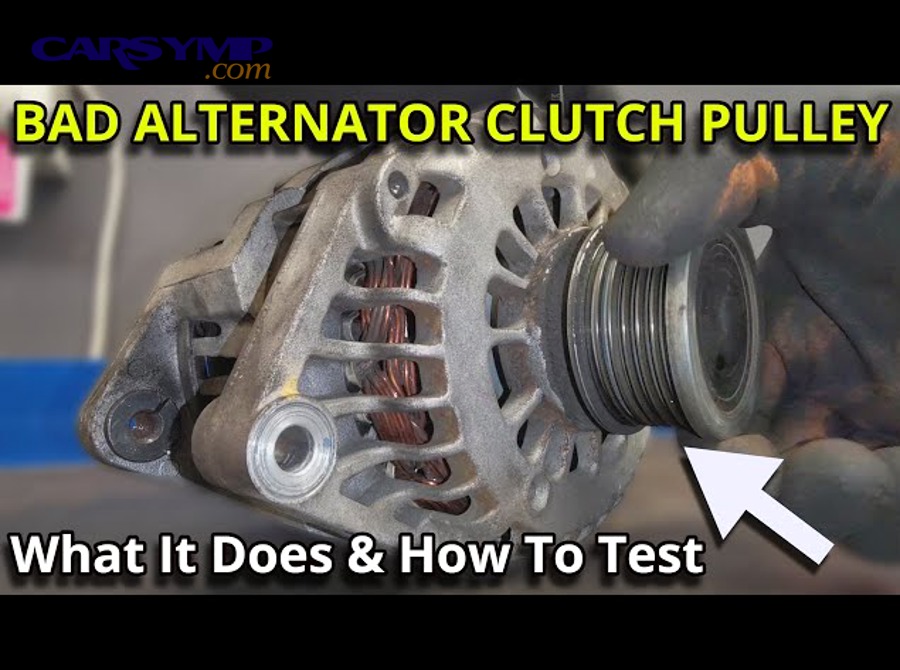
Most common electrical entry points for audio whine
Typical entry points include a weak chassis ground, corroded battery terminals, a poorly grounded aftermarket amplifier, or routed signal cables that run too close to power cables.
For example, if the whine changes when you turn the volume down (but doesn’t disappear), the interference may be entering after the volume control stage, such as at the amp or its wiring.
Simple checks that often reduce or eliminate the whine
Clean and tighten battery terminals, confirm engine-to-chassis ground straps are intact, and verify the head unit and amplifier grounds are solid and connected to bare metal.
Additionally, reroute RCA/signal cables away from power cables, and try a different phone charger or disconnect charging to see if the noise changes significantly.
When the alternator itself is the electrical culprit
If your charging system has excessive ripple due to diode issues, interference can worsen under load (headlights, blower, defroster). In some cases, the whine is most noticeable right after startup when the alternator is recharging the battery aggressively.
That’s when measuring charging ripple and voltage behavior becomes more informative than swapping audio components.
How can you pinpoint the noise quickly without guesswork?
You can pinpoint alternator noise quickly by isolating the sound source, testing the belt drive path, and confirming charging behavior—done in a short sequence that reduces the chance of replacing the wrong part.
Next, follow an order that moves from easiest and safest checks to more specific confirmation steps, so you don’t skip the simple causes that are responsible for many “alternator noise” complaints.
Step 1: Localize the sound with careful listening
Start at idle with the hood open and listen near each accessory: alternator, idlers, tensioner, A/C compressor, and power steering area. Use a mechanic’s stethoscope if you have one, or a long screwdriver as a listening probe on housings (keep clear of moving parts).
Then, do short RPM changes: a bearing whine typically scales smoothly, while belt slip can spike briefly and then fade.
Step 2: Inspect the belt path and pulley alignment
Check belt condition, pulley faces, and tensioner behavior. Look for misalignment signs like belt walking, frayed edges, or uneven wear patterns that indicate the belt isn’t tracking straight.
At this stage, it’s also smart to think ahead: during an alternator replacement, the small extra time spent checking the entire belt drive often prevents the “new alternator, same noise” scenario.
Step 3: Confirm charging behavior before you buy parts
Measure system voltage at idle and under load, and watch for unstable behavior that correlates with the noise. If you suspect electrical interference or diode issues, a dedicated ripple check can be decisive.
For a DIY-friendly approach, Alternator testing with multimeter can help you verify voltage stability and basic charging function—while noting that specialized tools are better for measuring AC ripple precisely.
Step 4: Decide whether to service the belt system at the same time
If the belt is aged, tensioner is weak, or idlers feel rough, plan the service as a bundle rather than piecemeal. That reduces comebacks and prevents new stress on new parts.
In practice, many technicians treat Belt and tensioner check during replacement as a standard reliability step because belt drive issues can mimic alternator faults and shorten the life of the new unit.
When is it safe to drive, and when should you stop?
It’s sometimes safe to drive briefly with mild alternator noise if charging is stable and the belt is healthy, but you should stop if the noise is harsh, rapidly worsening, or tied to belt damage or charging warnings.
Next, use a risk-based lens: mechanical noises that imply imminent belt failure or bearing seizure are higher risk than mild electrical whine that only affects speakers.
Lower-risk scenarios (still worth fixing soon)
If the sound is faint, doesn’t worsen quickly, and you have no warning lights, you may be able to drive to a shop. Audio-only whine without under-hood mechanical harshness often falls into this category.
However, treat “can drive” as “can drive carefully,” because conditions can change as bearings heat up or belt slip increases.
High-risk scenarios that can strand you
Loud grinding, visible belt fraying, smoking, or a battery light are strong reasons to stop. A seized pulley can shred the belt and may disable multiple accessories at once, potentially causing overheating or loss of power steering assist depending on the vehicle.
So, if you notice sudden steering effort changes, temperature rising, or flickering lights paired with noise, prioritize safety and shut down.
What to tell a shop to speed up diagnosis
Describe the sound type, when it appears, and what changes it (electrical load, RPM, cold start, rain). Mention whether it’s under-hood loudness or speaker-only whine.
That clarity often reduces diagnostic time and prevents parts-swapping that doesn’t address the true cause.
Contextual border: Up to this point, you’ve mapped the root alternator noise causes and the fastest ways to confirm them. Next, we’ll expand into less-obvious triggers—rare enough to be missed, but common enough to matter when the basics check out.
Less-obvious alternator noise triggers drivers miss
Less-obvious triggers include overrun pulley decoupler faults, subtle misalignment, contamination patterns, and grounding/installation quirks that create noise without obvious belt damage or bearing play.
Next, treat these as “secondary suspects” that become important when the alternator seems fine but the noise persists.
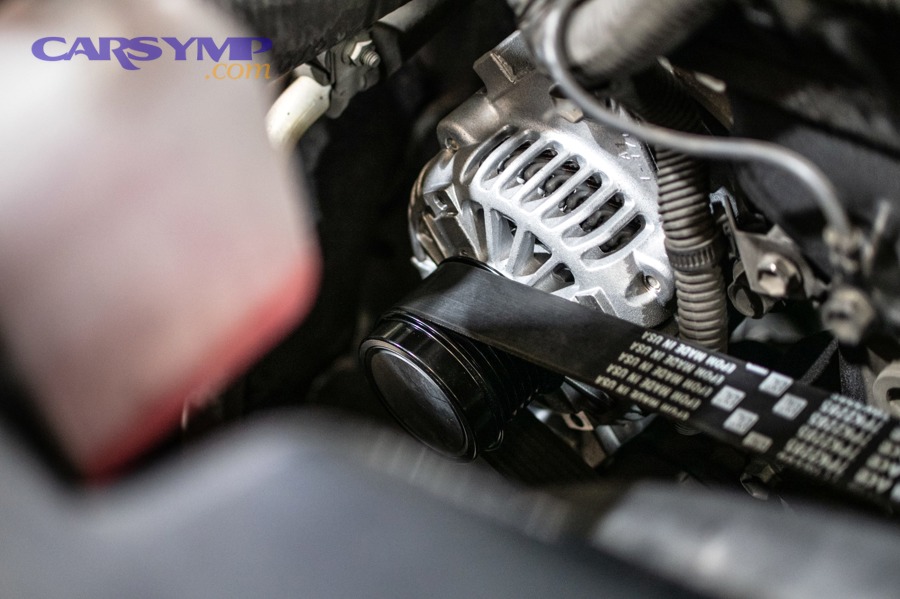
Overrun pulley (decoupler) issues that mimic bearing noise
An overrun pulley is designed to smooth belt dynamics during deceleration. When it starts failing, it can chirp, rattle, or create a whirring tone during RPM drop—often mistaken for alternator bearing failure.
So, if the noise is strongest when you lift off the throttle, consider the decoupler behavior before condemning the entire alternator.
Bracket alignment and torque issues that create vibration paths
A slightly bent bracket or uneven bolt torque can preload the alternator housing, shifting bearing loads and causing early noise. Even a small misalignment can make a belt “sing” under load.
In addition, aftermarket mounts or missing spacers can transmit vibration into the cabin, making a normal alternator sound seem louder than it is.
Contamination and glazing patterns that create repeating chirps
Oil mist, coolant residue, or belt dressing can temporarily quiet noise but often returns it worse by changing friction patterns. A repeating chirp that matches belt speed can be the signature of a contaminated section passing over the pulley.
That’s why cleaning and correcting the source leak is more durable than simply replacing the belt alone.
Ground loops and accessory wiring that amplify electrical tones
Even if the charging system is “good enough” for the car to run, poor grounds can create an electrical environment that amplifies alternator-related tones, especially in modified audio systems.
So, if the whine is mainly in the speakers, treat wiring integrity and grounding topology as part of the root cause—not as an afterthought.
Frequently asked questions about alternator noise
Can a brand-new alternator still make noise?
Yes. A new unit can be quiet yet still seem noisy if the belt drive has misalignment, a weak tensioner, rough idlers, or a failing decoupler pulley. It can also sound louder if mounting or bracket issues transmit vibration differently.
Does alternator noise always mean charging problems?
No. Many common alternator noise causes are purely mechanical and can happen even when charging voltage appears normal. Conversely, electrical ripple can create speaker whine even when there’s no under-hood mechanical noise.
Is it okay to spray water on the belt to test squeal?
It can change belt noise briefly, but it’s not a clean diagnostic method and can mask contamination or tension issues. A better approach is visual inspection, pulley alignment checks, and observing tensioner behavior under load.
What’s the fastest way to avoid replacing the wrong part?
Match the sound to conditions (RPM, load, cold start), localize it at the accessory housings, and validate both belt drive health and charging behavior before you buy parts. That sequence catches the common mistakes early.
If you want a quick reference, the table below summarizes noise types, the most likely causes, and the first confirmation check to run so you can prioritize your diagnosis.
| Noise you hear | Most likely cause | Best first check |
|---|---|---|
|
High-pitch whine (under hood) |
Bearing resonance, pulley/decoupler issues, belt dynamics |
Localize at housings; check pulley play and belt tracking |
|
Squeal or sharp chirp |
Belt slip, glazing, contamination, weak tensioner |
Inspect belt/pulleys; observe tensioner oscillation |
|
Grinding or harsh scrape |
Severe bearing wear, internal contact, pulley damage |
Stop if loud; check pulley roughness by hand (engine off) |
|
Rattle on decel |
Overrun pulley chatter, loose bracket/fasteners |
Check mounts and pulley clutch behavior; inspect hardware |
|
Whine through speakers |
Grounding issues, ripple, wiring layout interference |
Verify grounds; test under load; isolate audio inputs |