


Short, stop-and-go commutes can leave a healthy-looking car feeling unreliable because the battery never gets a true “catch-up” recharge after each start. The result is familiar: weak cranking, dim lights, and a no-start on the one morning you’re already late.
Beyond the inconvenience, repeated partial charging slowly damages lead-acid batteries by encouraging sulfation, which reduces usable capacity and makes the battery act “older” than its calendar age.
In this guide, you’ll learn how to recognize short-trip undercharging, separate it from a real fault, and apply practical fixes—from driving adjustments to safe at-home checks—so your vehicle starts confidently day after day.
Giới thiệu ý mới: Below are the fastest ways to diagnose the pattern and choose the right solution for your exact driving routine.
Why do short trips cause battery charging problems?
Short trips can cause charging problems because the alternator often doesn’t have enough time to replace the energy used during starting—especially with modern electrical loads and frequent stop-and-go driving.
To connect the dots, it helps to think in simple “energy accounting”: every start is a big withdrawal, and short drives may only repay a fraction before you park again.

Cold starts are high draw, and short drives don’t repay the debt
Yes—starting is the biggest single load most drivers create, and it can take meaningful run time for the charging system to restore what was used.
To begin, picture your battery as a buffer: it supplies high current to the starter motor, then the alternator replenishes that energy while also powering the car’s electronics. However, if you shut the engine off too soon, the buffer stays partially depleted—so the next start begins from a lower baseline.
Over many days, that pattern turns into a “creeping” decline in state of charge. Eventually, the battery crosses the threshold where it can’t deliver strong cranking current, even though it may look fine and may test “okay” right after a longer drive.
Partial charging encourages sulfation in lead-acid batteries
Lead-acid batteries naturally form lead sulfate during discharge, but repeatedly leaving the battery undercharged accelerates sulfation and reduces effective capacity.
Next, the key nuance is time at partial state of charge: when the battery is “never quite full,” sulfate crystals can harden, shrinking the active area available for chemical reaction. That means less usable energy and more voltage sag under load.
In practical terms, this is why a battery that’s only a couple of years old can behave like it’s near end-of-life if it lives on short commutes with heavy accessory use.
Modern electrical loads and “smart” charging can worsen the pattern
Short trips in city use often involve lights, defrosters, heated seats, infotainment, and frequent idling—conditions that may limit net charging, even while the engine is running.
Besides that, many newer vehicles manage charging strategically for fuel economy and emissions, which can keep voltage lower at certain times. This is not automatically a defect—but it can make short-trip routines more sensitive to battery health and connection quality.
How can you tell short-trip undercharging from a real electrical fault?
You can tell by looking for a repeatable pattern: the car starts fine after a longer drive or an overnight charge, but struggles after several short runs—unless there are signs of an abnormal drain or charging-system failure.
To move from guessing to knowing, use a quick decision framework: confirm state of charge at rest, confirm charging voltage running, then investigate drains or cable issues only if those basics don’t match expectations.

Clues that point to “routine undercharge”
Yes—routine undercharge is likely when the symptoms are mild-to-moderate and improve dramatically after a longer highway drive or an external charge, without any warning lights.
Specifically, you might notice slower cranking after multiple errands, but normal starts after a weekend trip. You may also notice that the problem gets worse in winter or when you run the rear defroster and blower on high.
Importantly, this pattern often looks like “battery keeps dying” even though nothing is technically “wrong” beyond the driving profile and the battery’s current condition.
Clues that point to charging-system trouble
No—if your charging voltage is outside the typical healthy range at idle, you should treat it as a charging-system issue rather than a driving-habit issue.
To be clear, a healthy system commonly shows roughly 13.8–14.4V at the battery with the engine running, while a resting, fully charged battery is commonly around 12.6V.
If you see persistent under-voltage while running, frequent battery warning lights, or accessory glitches (flickering lights, unstable infotainment), it’s time to test the alternator, regulator, and connections.
Clues that point to an abnormal drain or connection problem
Yes—an abnormal drain or poor connection is likely if the battery loses charge quickly while parked, or if you see heavy corrosion, loose terminals, or heat at the cable ends.
For example, if the vehicle sits overnight and the resting voltage drops sharply, or if a freshly charged battery goes flat in a day without driving, you may be dealing with a parasitic load or a high-resistance connection rather than short-trip routine alone.
How do you test battery and alternator health at home?
You can test battery and alternator health at home by measuring resting voltage, then measuring charging voltage with the engine running, using a digital multimeter and basic safety steps.
To keep it safe and accurate, follow a simple order: measure after the car has been off, then measure while running, then add a quick “load” observation using headlights and blower. That sequence reduces confusion from surface charge and recent driving.
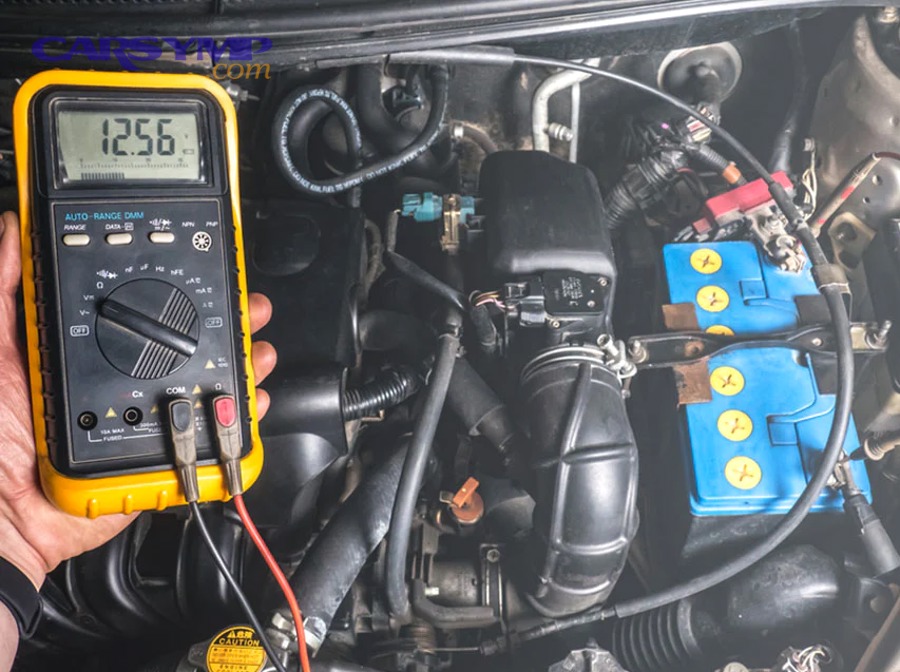
Step 1: Check resting voltage the right way
Yes—resting voltage is your quickest “state of charge” snapshot, and it’s most meaningful after the car has been off long enough to settle.
To begin, park and shut everything off, then wait at least an hour; ideally, test in the morning before the first start. Place the red probe on the positive terminal and black on the negative.
As a practical guide, around 12.6V indicates a fully charged battery, while about 12.2V can indicate roughly half charge in common lead-acid behavior.
Step 2: Check charging voltage at idle
Yes—charging voltage at idle tells you if the alternator and regulator are doing their primary job.
Next, start the engine and measure at the battery terminals again. A healthy charging system commonly reads about 13.8–14.4V at regular idle speed.
If you’re consistently below that, the vehicle may be undercharging. If you’re well above it, you may be overcharging—both of which can shorten battery life.
Step 3: Add a simple load check for real-world confidence
Yes—adding electrical load helps you see whether voltage stays stable when the car is doing what it does in traffic.
Besides that, turn on headlights, rear defroster, and blower fan. Watch whether voltage remains steady and whether lights noticeably dim or flicker. This does not replace professional testing, but it can reveal obvious weakness.
In practice, “Testing battery and charging system at home” works best when you log readings over a few days: morning resting voltage, post-drive voltage, and running voltage with load. Patterns matter more than one number.
What habits help the battery recover on short commutes?
The best habit is to create occasional “recovery runs” long enough for the alternator to restore charge, while reducing unnecessary electrical load during the first minutes after starting.
To make this actionable, treat your weekly routine as a charging plan: if most trips are short, you must intentionally add longer runs or controlled charging, rather than hoping the battery will “figure it out.”

Plan one longer drive regularly (the simplest fix)
Yes—one longer drive can often reverse the slow decline caused by repeated short trips, because it gives the alternator time to replenish the start-up draw.
To begin, aim for a steady, uninterrupted run (think: a longer errand loop or a weekend drive) rather than multiple short hops. However, don’t rely on idling in the driveway as a substitute; idling may not produce strong net charging in many vehicles, and it can be inefficient.
Reduce peak electrical load early in the drive
Yes—reducing load early helps because the battery is most “in debt” right after the start, and every high-draw accessory slows repayment.
For example, if safe, delay heated seats, high blower settings, or power-hungry defrost until you’ve been driving a few minutes. In cold weather, this can be the difference between gradual recovery and gradual decline.
Protect the battery from “partial charge living”
Yes—keeping a lead-acid battery chronically undercharged accelerates sulfation and reduces capacity, which then makes short trips even harder on the system.
To connect the loop, once capacity shrinks, each start uses a larger fraction of what remains—so the same commute that was fine last year becomes unreliable this year. Breaking that loop is the real goal.
When should you use a charger or maintainer instead of “driving it more”?
You should use a charger or maintainer when your routine can’t realistically include longer recovery drives, or when resting voltage shows the battery repeatedly starting the day below a healthy charge level.
To choose correctly, separate two needs: (1) recharging a depleted battery, and (2) maintaining a battery that slowly drifts down because trips are too short.
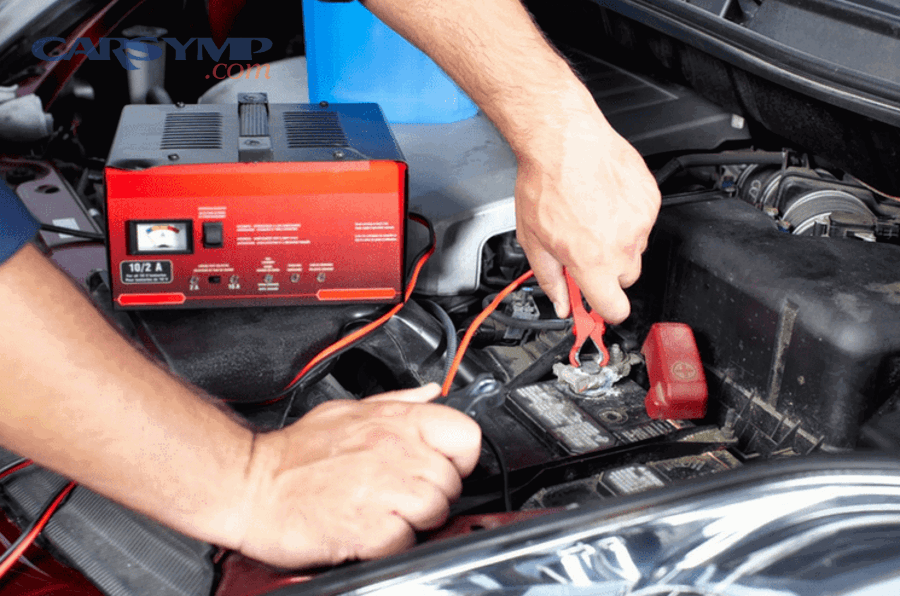
Use a charger to recover, then a maintainer to prevent relapse
Yes—a maintainer is designed to keep a battery topped up automatically, which is ideal for vehicles that don’t get long drives often.
To begin, fully charge the battery (with an appropriate charger and settings), then switch to maintenance mode if the vehicle routinely sits or only does short runs. This is especially useful if you work from home, share a second vehicle, or do mostly local errands.
Watch for warning signs that the battery itself may be degraded
Yes—if the battery takes a full charge but drops quickly afterward, it may have lost capacity or developed internal issues rather than simply being undercharged.
This is where people often say “Battery keeps dying after replacement causes” because the new battery is only the visible change—while the real cause might be undercharging, poor connections, or a drain that never got fixed.
Don’t mask a problem with constant jump-starts
No—repeated jump-starts are not a solution, because they don’t address why the battery is low, and they can hide charging or connection problems until they become no-start failures again.
Instead, treat jump-starting as an emergency step, then immediately measure resting voltage the next morning and verify charging voltage running. That’s how you turn a “random” problem into a predictable diagnosis.
When do cables, terminals, or the alternator need attention?
Cables, terminals, and the alternator need attention when voltage readings are normal on paper but starting is still weak, or when corrosion and resistance prevent current from flowing efficiently.
To bridge diagnosis to repair, remember: even a strong battery and alternator can’t help if the current is blocked by high resistance at the connections.

Clean and tighten connections first (often the cheapest win)
Yes—terminal corrosion can interfere with the ability to conduct electricity, which can mimic a weak battery and reduce effective charging.
To begin, inspect the terminals for white/green buildup, looseness, or damaged clamps. Clean with a proper terminal brush and neutralizing method as appropriate, then tighten securely. However, avoid overtightening soft lead terminals.
Use symptoms + voltage drop logic to decide “When to replace battery cables”
Yes—replace cables when they show physical damage, severe corrosion that returns quickly, heat discoloration, or when you repeatedly see starting problems despite a charged battery and clean terminals.
To be specific, if the engine cranks slowly and the terminals look clean, a cable can still be internally corroded or have a weak crimp. In that case, a professional voltage drop test under cranking load is the most definitive next step.
Alternator or regulator suspicion: confirm with running voltage first
Yes—if running voltage is consistently outside the typical healthy range, you should suspect the alternator, regulator, or control strategy and get a full charging-system test.
Besides that, be cautious about assuming the alternator is “fine” just because the dash light is off; many issues show up as marginal charging that only becomes obvious during short-trip routines.
Contextual Border: from core diagnosis to edge cases and misconceptions
Now that you can identify short-trip undercharging, measure the basics, and correct the most common connection issues, the next step is handling the tricky cases where symptoms persist despite “doing everything right.”
What are the most common edge cases that keep the problem coming back?
The most common edge cases are smart charging behavior, hidden drains during sleep, temperature-driven capacity loss, and batteries that were never fully recovered after deep discharge.
To navigate these, use the same discipline: measure, don’t guess—then match the fix to the pattern you actually see.
Smart charging and “it charges sometimes” confusion
Yes—some vehicles vary charging voltage intentionally, which can make short commutes more sensitive to battery condition and accessory load.
To be practical, if your measured running voltage is sometimes high and sometimes moderate, don’t panic—log it across multiple conditions (cold start, warmed idle, headlights on) and look for consistently poor behavior rather than one-off readings.
Why a new battery still struggles
Yes—persistent issues after replacement often happen because the original cause wasn’t the battery itself, and the new battery is now being drained or undercharged the same way.
This is where the phrase “Battery keeps dying after replacement causes” becomes relevant: common culprits include marginal alternator output, corroded connections, a parasitic draw, or a driving routine that never allows full recovery.
Hidden drains while parked (modules, lights, accessories)
Yes—modern vehicles have normal parasitic loss, but an abnormal drain can flatten a battery quickly if the vehicle sits between short trips.
To begin, if resting voltage drops significantly overnight or over 24–48 hours, schedule a parasitic draw test or isolate aftermarket accessories. However, don’t remove fuses randomly without a plan—measure first, then isolate systematically.
Cold weather magnifies every weakness
Yes—cold reduces available cranking power and slows chemical reaction, so a battery living at partial charge will fail sooner in winter than it would in summer.
In winter, the “recovery run” and maintainer strategy become more valuable, because you’re fighting both reduced capacity and higher starting demand.
Frequently asked questions
Below are the most common questions drivers ask when short commuting meets charging-system reality, along with direct, actionable answers.
How long should I drive to recharge after a normal start?
It depends on temperature, electrical load, and vehicle strategy, but the key is consistency: if you only do short runs, schedule a longer steady drive regularly or use a charger/maintainer.
What numbers should I see on a multimeter?
A commonly cited baseline is about 12.6V for a fully charged battery at rest, and about 13.8–14.4V with the engine running in a healthy charging system.
Is corrosion really enough to cause no-starts?
Yes—corrosion can create high resistance that reduces cranking power and interferes with charging, which can mimic a failing battery.
What’s the safest “short-trip” plan if I can’t change my commute?
Charge the battery fully, then maintain it: use a smart maintainer when parked at home, and confirm your charging voltage is healthy so you’re not masking an alternator issue.
Entity focus: vehicle battery, alternator, regulator, parasitic draw, cable resistance, corrosion, maintainer, partial state of charge.
User intent matched: how-to diagnosis, pattern recognition, prevention strategy, repair thresholds.