


Testing your battery and charging system at home is a practical how-to that uses a few simple checks—resting voltage, cranking voltage, charging voltage, and voltage drop—to pinpoint whether the battery, alternator, cables, or an electrical drain is actually at fault.
Beyond the “does it start today?” question, home testing helps you catch early warning patterns like slow cranking, dimming lights at idle, or a battery that measures fine until it’s asked to work under load.
It also protects your budget and your time by reducing guesswork, so you don’t replace parts blindly when a loose ground strap, a corroded terminal, or a hidden drain is the real culprit.
To start, “Giới thiệu ý mới” you’ll set up a safe, repeatable routine and learn what each measurement means—so your next step is clear whether you’re troubleshooting now or building a quick preventive habit.
What tools do you need to test a battery and charging system at home?
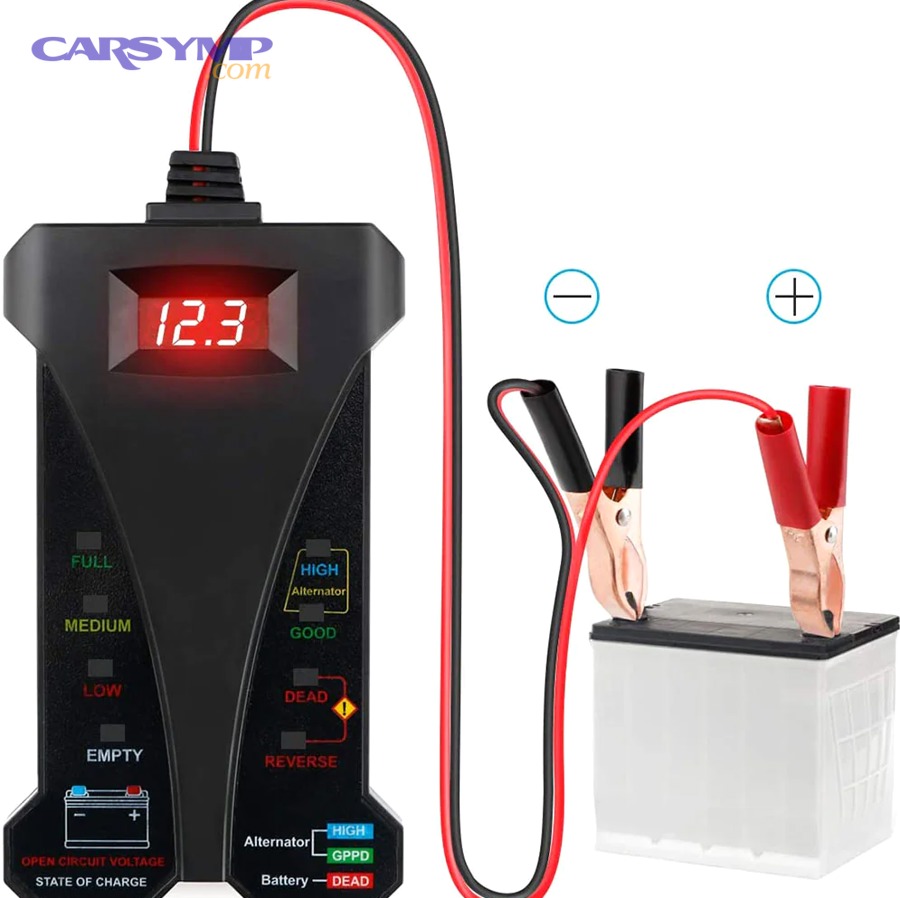
You can test most battery and charging issues at home with a digital multimeter, basic hand tools, and a safe plan for engine-on measurements. Next, you’ll choose add-ons—like a clamp meter or a battery tester—based on how deep you want to diagnose.
Which multimeter features matter most for car electrical testing?
Look for DC volts (20V range or auto-range), AC volts (for ripple checks), and a continuity/ohms mode for cable checks. After that, you’ll use the same meter across multiple tests, so consistency beats fancy features.
To be specific, a basic auto-ranging meter is usually enough for voltage work, while a meter with a min/max capture can help you catch brief cranking dips. In addition, sturdy probes and alligator-clip leads reduce “slip” and make measurements safer around belts and fans.
To understand reliability, remember that cheap probes often cause more “bad readings” than the meter itself. So, upgrade the leads if your readings jump around when you wiggle the probe slightly.
Do you need a dedicated battery tester or load tester?
No, you can get meaningful answers without one, but a battery tester improves speed and confidence under load. Next, you’ll decide based on symptoms: if the car cranks slowly, load testing becomes more valuable.
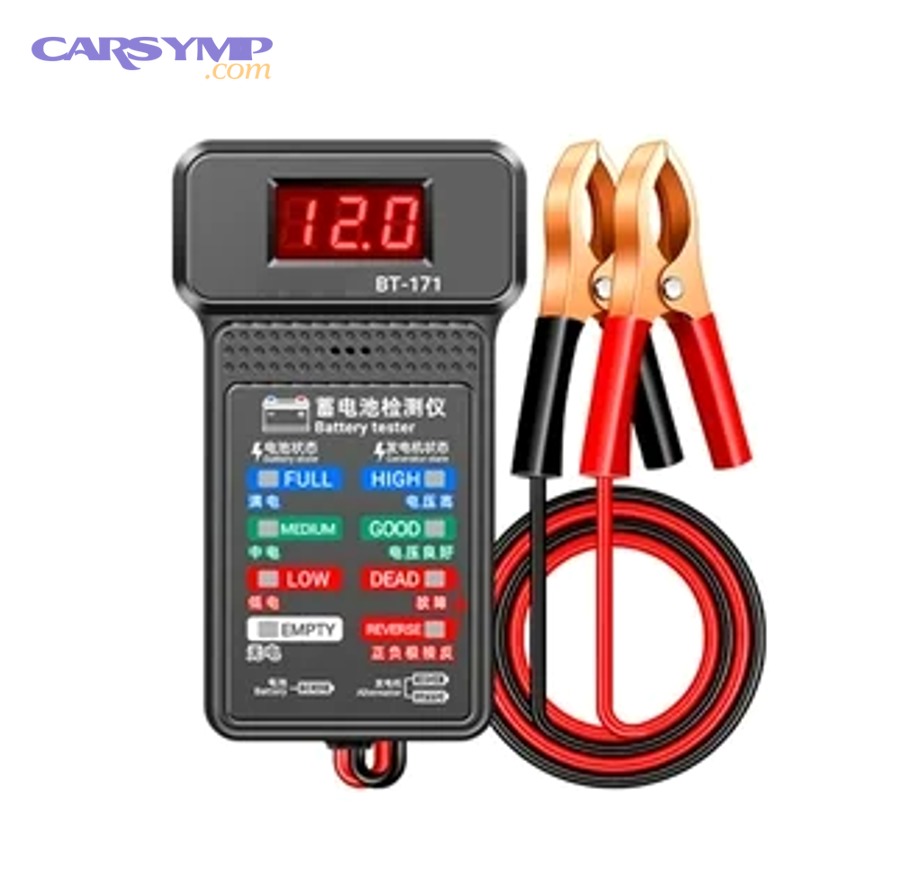
For example, handheld conductance testers estimate battery health quickly and often display “replace/charge/retest” guidance. However, they’re not magic—bad connections and a partially charged battery can still mislead the result.
If you want a low-cost alternative, many auto parts stores will test battery/alternator for free, but the home advantage is repeatability: you can test cold mornings, after short trips, and after sitting overnight—exactly when problems appear.
What safety gear and setup prevents accidents during testing?
You need eye protection, snug clothing, and a plan to keep hands clear of moving parts during engine-on tests. Next, you’ll also prevent sparks by setting meter modes correctly before touching terminals.
Specifically, remove metal jewelry, keep loose sleeves away from the belt area, and route test leads so they can’t fall into the fan. More importantly, never switch a multimeter into current (amps) mode while the probes are across the battery—this can blow the meter fuse or cause a dangerous spark.
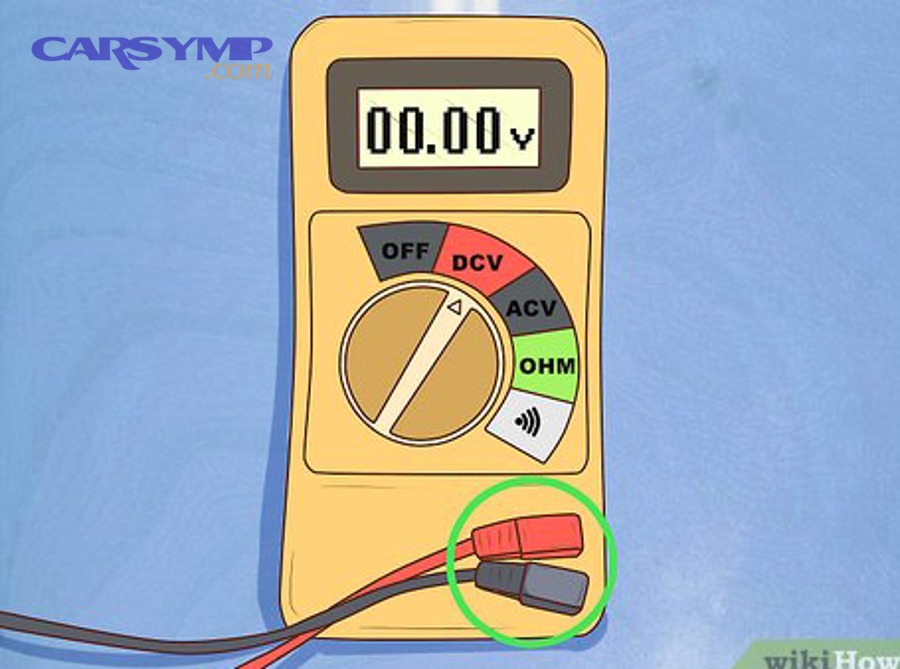
As a simple habit, set the meter to DC volts first, confirm the red lead is in the “V/Ω” port (not the “A” port), and only then touch the battery posts.
How do you check resting battery voltage and what does it mean?
You check resting battery voltage by measuring DC volts across the battery posts after the car has been off long enough for surface charge to settle. Next, you’ll map the number you see to a realistic state-of-charge and decide whether to charge, retest, or move on.
What is the correct method to measure resting voltage?
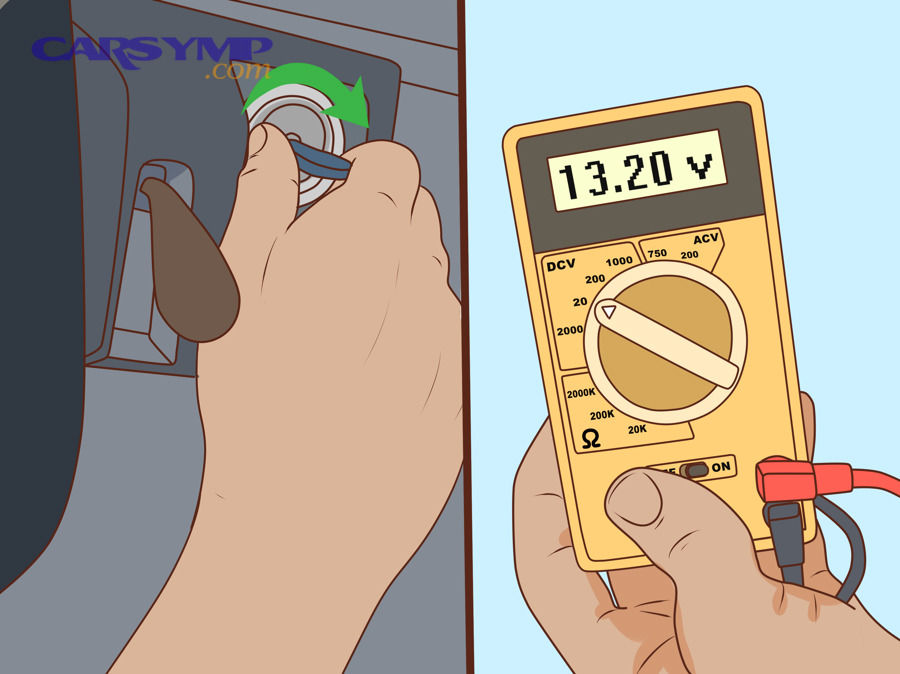
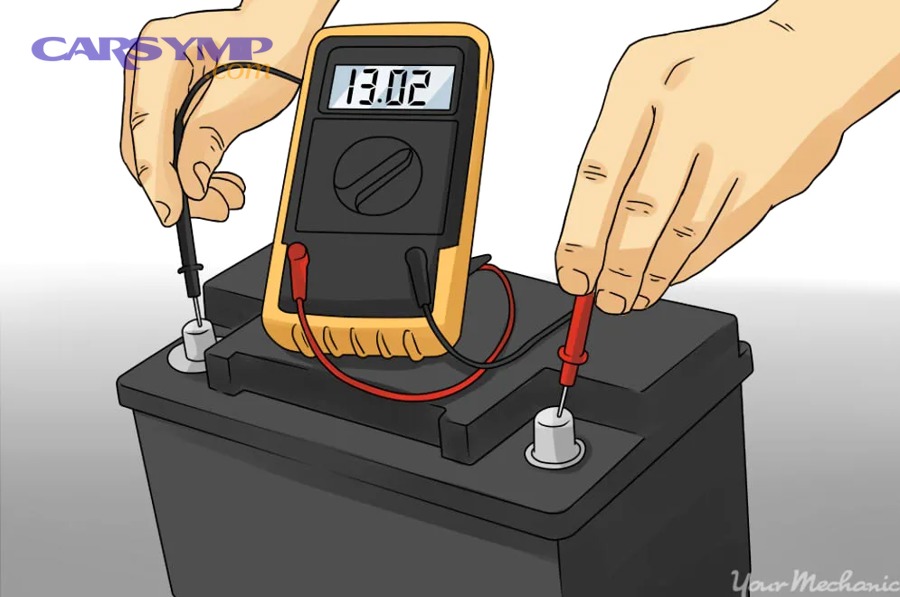
Measure directly on the lead posts (not the cable clamps) with the engine off and headlights off, then record the reading. After that, repeat the same measurement after 10–15 minutes to confirm stability.
To begin, turn the meter to DC volts, touch red to positive (+) and black to negative (–), and read the display. If you just shut the car off, wait at least 15–30 minutes; if you want cleaner data, wait a few hours or measure first thing in the morning.
For consistency, always note the temperature (cold batteries read slightly lower under load) and whether the car was recently driven. This prevents you from mistaking “surface charge” for true capacity.
How do you interpret common resting voltage ranges?
In general, ~12.6V is close to fully charged for many lead-acid batteries, while ~12.2V suggests a significantly lower charge. Next, you’ll treat low voltage as “charge first, then diagnose,” because a discharged battery can mimic other faults.
Below is a quick reference; this table contains typical resting-voltage ranges that help you estimate charge level and decide whether you should charge the battery before deeper alternator or drain testing.
| Resting Voltage (approx.) | Likely Charge Level | What to Do Next |
|---|---|---|
| 12.6–12.8V | High (near full) | Proceed to cranking/charging tests |
| 12.4–12.5V | Moderate | Consider charging; watch for recurring drops |
| 12.2–12.3V | Low | Charge fully, then retest and look for drain/charging issues |
| <12.2V | Very low | Charge ASAP; battery may be sulfating or failing |
What mistakes make resting voltage readings misleading?
The biggest mistakes are measuring on corroded clamps instead of posts, measuring immediately after charging/driving, and ignoring temperature effects. Next, you’ll correct these so your “baseline” is trustworthy.
For example, if you probe the cable ends, corrosion can add resistance and show an artificially low or unstable number. In addition, a battery that just came off a charger can show a higher “surface” voltage that fades quickly—so the first reading looks great and the second looks poor.
To make the test more honest, take two readings: one after the car rests, and one after you turn the headlights on for 30 seconds and then off again. If voltage rebounds oddly or drops quickly, that’s a hint the battery may not be holding charge well.
How can you perform a simple cranking voltage test to spot a weak battery or starter draw?
You perform a cranking voltage test by watching how far battery voltage drops while the starter is cranking the engine. Next, you’ll use that drop—plus cranking behavior—to separate “weak battery” from “cable/connection” problems and excessive starter load.
What are the step-by-step cranking test instructions?
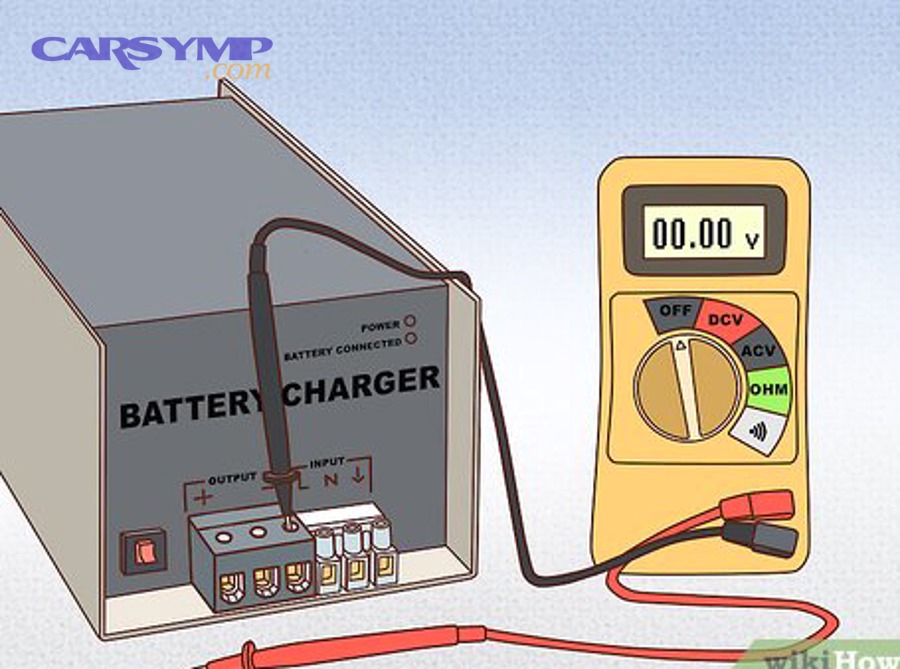
Clip the meter leads to the battery posts, set it to DC volts, and watch the lowest value during a 3–5 second crank. After that, repeat once to confirm the pattern.
To start safely, use alligator clips so your hands aren’t near moving parts. Then have a helper turn the key (or press start) while you watch the meter. If your meter has min/max capture, enable it before cranking so you don’t miss the brief dip.
Don’t crank for long—if the engine doesn’t start within a few seconds, pause and let the starter cool. This keeps your test from creating new problems.
What cranking voltage numbers are “normal” vs suspicious?
Many vehicles stay above roughly 9.6V during cranking under typical conditions, while deeper drops can signal a weak battery, high resistance, or high starter demand. Next, you’ll treat the number as a clue, not a verdict, and cross-check with cable tests.
If the voltage dives hard and the starter sounds slow, the battery may be weak or undercharged. However, if voltage stays fairly high but cranking is still sluggish, that can point toward resistance in cables/grounds or a starter issue drawing abnormal current.
In cold weather, voltage dips more easily, so compare with “feel” and repeatability: a battery that cranks fine warm but fails cold is often near the edge of useful capacity.
How do you tell “weak battery” from “bad connection” during cranking?
A weak battery usually shows a big voltage drop at the battery posts, while a bad connection often shows normal post voltage but poor voltage delivered to the starter. Next, you’ll confirm by doing voltage-drop checks on the positive and ground paths.
To illustrate, if your post voltage drops to a reasonable range but the engine still cranks slowly, measure from the battery positive post to the starter’s main terminal during cranking. A large difference indicates loss along the cable or connection points.
Likewise, measure from the battery negative post to a clean engine block point during cranking. If that drop is high, the ground strap or ground connections are suspect—even if the battery itself is fine.
How do you test alternator charging voltage at idle and under load?
You test alternator charging voltage by measuring battery voltage with the engine running at idle and then again with electrical loads turned on. Next, you’ll use the pattern—stable, rising, sagging, or overcharging—to decide whether the alternator, belt, wiring, or regulator strategy is the issue.
What is a correct “engine running” charging test procedure?
Measure DC volts at the battery posts with the engine idling, then increase RPM slightly and watch for stable charging voltage. After that, apply loads like headlights and the rear defroster to see if the system holds up.
Start the engine and let it settle for 30–60 seconds. Then measure across the battery posts. Next, raise engine speed to around 1,500–2,000 RPM briefly—many alternators charge more consistently above idle, especially with high electrical demand.
Finally, turn on headlights, blower fan, and rear defrost (if available). A healthy system usually maintains a charging voltage in a stable range rather than sagging toward battery-only voltage.
How do you interpret low charge, normal charge, and overcharge readings?
A charging system that stays roughly in the mid-13V to mid-14V range is often working, while values that remain near resting voltage or spike unusually high can indicate faults. Next, you’ll verify with belt condition and ripple testing instead of guessing.
If you see little to no rise above resting voltage, suspect a slipping belt, failing alternator, broken charge wire, blown fuse link, or control issue. On the other hand, unusually high voltage can point to regulator problems or control strategy faults that can damage the battery and electronics.
Because modern vehicles may vary voltage intentionally, focus on symptoms: flickering lights, repeated low battery after driving, warning lights, or a battery that smells hot after long drives.
Which quick checks confirm alternator output without special tools?
You can confirm alternator contribution by turning loads on/off and watching voltage respond, and by checking the main charge connections for heat or looseness. After that, you’ll move to ripple and voltage-drop tests to identify the “why.”
To be specific, note voltage with loads off, then switch headlights and blower on. If voltage collapses dramatically and stays low, output may be weak. Also, carefully feel (without touching moving parts) for overly warm connections at the battery clamp and main charging cable after a short run—excess heat suggests resistance.
For a visual guide to the meter technique, this video walkthrough demonstrates battery and alternator testing with a multimeter in a simple driveway setup.
How do you check for AC ripple to catch alternator diode problems?
You check for AC ripple by switching your multimeter to AC volts and measuring across the battery while the engine runs, because failing diodes can leak alternating current into the system. Next, you’ll combine the ripple result with charging voltage behavior to confirm whether the alternator is electrically “dirty.”

What is the exact ripple test setup with a standard multimeter?
With the engine running, set the meter to AC volts and measure across the battery posts, then compare the reading to a small baseline. After that, repeat with electrical loads on to see if ripple changes.
To begin, keep the probes on the battery posts just like the DC test, but switch the meter to AC. If your meter is auto-ranging, it will settle to a small value; if it isn’t, use a low AC range suitable for small readings.
Turn on headlights and blower to increase alternator output. If ripple rises significantly with load, that’s a stronger clue that diode or stator issues exist rather than a simple idle fluctuation.
What ripple levels are concerning, and how do you avoid false alarms?
Excessive ripple—especially if it’s noticeably higher than a small baseline—can suggest diode problems, but meters vary, so trends matter. Next, you’ll confirm by repeating the test and checking for correlated symptoms like flickering lights or radio noise.
False alarms happen when you probe poor connections or when your meter reads noise inaccurately. So, ensure clean probe contact on the posts and keep test leads stable. Also, don’t confuse brief spikes with sustained ripple—use a steady reading after the meter settles.
If ripple appears high and the battery still goes flat, that combination is meaningful because a diode leak can behave like a drain when the car is off, depending on failure mode.
How does ripple connect to battery life and weird electrical symptoms?
Ripple stresses the battery and can confuse sensitive electronics, creating symptoms that look random. Next, you’ll treat ripple as a “system quality” test: even if the car starts today, the alternator may be damaging the battery over time.
For example, repeated exposure to dirty charging can heat the battery, reduce effective capacity, and shorten lifespan. In addition, some vehicles show subtle issues first—dashboard flicker, intermittent warning lights, or unstable idle when heavy loads cycle on.
That’s why ripple testing is a powerful home step: it helps explain why a new battery can still struggle when the charging source itself is unhealthy.
How do you test battery cables, grounds, and voltage drop without removing parts?
You test cables and grounds at home by measuring voltage drop under load, which reveals resistance that a simple “looks clean” inspection can miss. Next, you’ll isolate whether the positive path, the ground path, or a single connection point is stealing voltage during cranking or charging.
How do you perform a positive-side voltage drop test?
Measure DC volts from the battery positive post to the starter’s main terminal while cranking to reveal loss on the positive cable path. After that, move the probe step-by-step to pinpoint the exact connection that’s dropping voltage.
To begin, place the red probe on the battery positive post and the black probe on the starter’s main power stud (or the end of the positive cable at the starter). Have a helper crank the engine briefly and read the voltage drop.
If the drop is higher than expected, move the black probe upstream: first to the cable end at the battery clamp, then to the fuse link, then to any junction blocks. This “walking” method shows where resistance lives without disassembling everything at once.
How do you perform a ground-side voltage drop test?
Measure DC volts from the battery negative post to a clean engine block point while cranking to reveal ground loss. Next, you’ll compare that to a chassis point to see if the strap or the body ground is the bottleneck.
Place the black probe on the battery negative post and the red probe on a bare metal engine lifting bracket or bolt head. Crank briefly and read the drop. Then repeat with the red probe on a bare chassis point near the battery.
If engine ground drop is high but chassis drop is low, suspect the engine ground strap. If both are high, the battery negative connection or common grounding point may be compromised.
What visual checks actually matter for cables and grounds?
Focus on swollen insulation, heat damage, loose crimps, and powdery corrosion at terminals rather than “looks okay from far away.” Next, you’ll combine visuals with drop tests, because resistance can hide under insulation or inside crimped ends.
To illustrate, a cable can look fine but have internal corrosion that reduces effective conductor area. Also, a clamp that “feels tight” can still have oxidation between lead surfaces, which acts like a resistor under high current.
If you suspect clamp corrosion, clean and retest before replacing parts. A cleaning step is cheap, and it turns a messy symptom into a measurable improvement when the issue truly is connection-related.
How do you find a parasitic draw at home without draining the battery further?
You find a parasitic draw at home by measuring key-off current or voltage drop across fuses in a controlled way, then narrowing to the circuit that stays alive when it shouldn’t. Next, you’ll prevent accidental wake-ups so the reading reflects true “sleep mode” behavior.
How do you prepare the vehicle so modules go to sleep?
Close doors, turn off lights, remove the key, and wait long enough for modules to sleep before taking readings. After that, you’ll avoid opening doors or pressing buttons, because that wakes systems and ruins the baseline.
To make this easier, latch door strikers with a screwdriver so the car “thinks” doors are closed while you access the fuse panels. Also, disable under-hood lights if present, and keep the key fob far enough away to prevent proximity wake-ups.
Depending on the vehicle, sleep time can be several minutes to over half an hour. The key is consistency: wait the same amount each time you retest.
What is the safest way to measure draw with a multimeter?
The safest method for beginners is often not to put the meter in series at high current, but to use fuse-based methods or a clamp meter if available. Next, if you do use series current measurement, you’ll set it up carefully to avoid blowing the meter fuse.
If you use the meter in series, you disconnect the negative cable and place the meter between the battery post and the cable—so all current flows through the meter. This is effective but risky if you accidentally wake the vehicle or turn something on.
A safer alternative is a DC clamp meter that reads current without breaking the circuit. If you don’t have one, you can still narrow problems by checking which fuses change behavior when removed—just do it methodically and note what each fuse powers.
How do you narrow down the exact circuit once you know a draw exists?
Remove one fuse at a time and watch for a meaningful change in the draw reading, then investigate components on that circuit. Next, you’ll confirm by reinstalling the fuse and ensuring the draw returns, which prevents coincidence errors.
To be specific, start with interior fuse panels first (infotainment, modules, interior lights), then move to under-hood fuses (fans, relays). If pulling a fuse drops the draw substantially, you’ve found the branch to explore.
From there, look for common culprits: glove box lights that stay on, aftermarket accessories, failing relays that stick closed, or modules that never sleep due to a network wake signal.
Contextual Border: Up to this point, you’ve covered the core home tests that directly answer whether the battery is charged, whether it can crank, whether the alternator charges cleanly, and whether cables/grounds or drains are stealing power. Next, you’ll extend into modern vehicle edge cases and uncommon failures that can make “normal numbers” still produce real-world problems.
Advanced home diagnostics for modern vehicles and rare failures
Advanced home diagnostics focus on situations where basic voltage tests look acceptable, yet the vehicle still behaves like the system is failing. Next, you’ll learn how smart charging strategies, temperature effects, intermittent drains, and connection pathologies create confusing results—and how to resolve contradictions.

How do smart alternators and ECU-controlled charging change your readings?
Smart charging can intentionally vary voltage, so “steady 14.4V” is not the only healthy pattern on newer cars. After that, you’ll look for behavior-based proof: does voltage rise with load, and does the battery recover after driving?
In many late-model vehicles, the ECU lowers alternator output to reduce engine load and improve fuel economy, then increases output during decel or higher electrical demand. So you may see 12.8–13.3V at times and still be normal—especially right after a full charge or on certain drive cycles.
To verify health, run a controlled test: measure resting voltage in the morning, drive 20–30 minutes with mixed speeds, then measure again after the car rests briefly. If resting voltage improves consistently over days, charging strategy is likely working.
Why do temperature and “short-trip living” make batteries seem worse than they are?
Cold reduces battery output and short trips reduce recharge time, so a battery can test “okay” at rest but fail under real use. Next, you’ll separate capacity loss from lifestyle mismatch by testing after a full charge and after a longer drive.
If you mostly drive short distances, the alternator may never fully replenish what starting took—especially with heated seats, defrosters, and lights. Over time, the battery stays partially charged, sulfation increases, and your morning crank degrades.
This is often the hidden story behind the phrase battery keeps dying: it’s not always a single broken part, but a repeated energy deficit that accumulates day after day until one cold morning exposes it.
How do intermittent drains and “modules not sleeping” fool home testers?
Intermittent drains can appear only after certain events—locking the car, charging a phone, or a module crash—so random testing misses them. After that, you’ll use timing and repeatability: test at the same intervals and look for draws that persist past normal sleep time.
For example, an infotainment unit may fail to sleep after a Bluetooth glitch, or an aftermarket accessory may wake periodically. In those cases, your draw reading might be normal at 10 minutes but abnormal at 45 minutes—or only abnormal after you open and close a specific door.
If you suspect this pattern, log your results with timestamps and note what happened before the battery went flat. That record becomes your “trigger map,” and it’s often the fastest path to a fix.
What should you do when results conflict—good voltage but recurring dead starts?
When results conflict, treat it like a decision tree: confirm battery state-of-charge, then confirm delivery (cables/grounds), then confirm charging quality, then confirm key-off drain. Next, you’ll avoid blind parts replacement by matching the fix to the measurement that fails first.
If the battery was replaced recently yet you still see repeated failures, consider the scenario described by Battery keeps dying after replacement causes: loose terminal fit, poor ground path, undercharging due to short trips, or an intermittent drain that never went away.
If the car won’t start and you’re tempted to jump it, follow a consistent safety routine—How to jump-start safely and what to do next—then immediately retest charging voltage and ripple so you don’t mistake a temporary boost for a solved problem.
Finally, don’t underestimate connection pathology. A battery can test “fine” yet still fail if the current can’t flow through compromised contact surfaces; this is where Corroded terminals and bad ground symptoms becomes the real diagnosis, and cleaning plus voltage-drop confirmation is often the correct first repair.
Frequently asked questions about at-home battery and charging tests
Can I trust voltage alone to judge battery health?
No—voltage is a starting point, but true health is revealed under load and during cranking. Next, combine resting voltage with cranking voltage and a recharge confirmation after driving to avoid false confidence.
A battery can show a decent resting voltage yet have reduced capacity, meaning it collapses under starter demand. That’s why a quick cranking test and a repeatable morning baseline are more predictive than a single midday reading.
Should I test on the battery posts or on the cable clamps?
Test on the posts first because it shows the battery itself, then test on clamps to reveal connection loss. After that, the difference between the two readings becomes diagnostic.
If post voltage is strong but clamp voltage is inconsistent or lower, the issue is often at the connection: oxidation, looseness, or a clamp that doesn’t bite properly. Cleaning and tightening can restore performance without replacing the battery.
Why does my charging voltage change with headlights, defroster, or idle speed?
Because alternator output depends on RPM, load demand, and regulation strategy, especially on modern vehicles. Next, your goal is not a single magic number but stability: voltage should respond predictably and recover rather than sagging progressively.
If voltage drops sharply with loads and doesn’t rebound with slightly higher RPM, suspect weak alternator output, belt slip, or wiring loss. If voltage is erratic alongside flicker, add a ripple test and cable drop checks to complete the picture.
When should I stop DIY testing and get professional diagnostics?
Stop DIY testing when you see dangerous overheating cables, repeated overcharging, burning smells, or you can’t safely access components without risk. Next, bring your recorded measurements to a shop—your notes make professional diagnosis faster and cheaper.
Also, if the vehicle uses complex smart charging and you suspect control-module faults, scan-tool data may be necessary. Even then, your home tests will have already narrowed the possibilities and prevented needless parts swapping.