


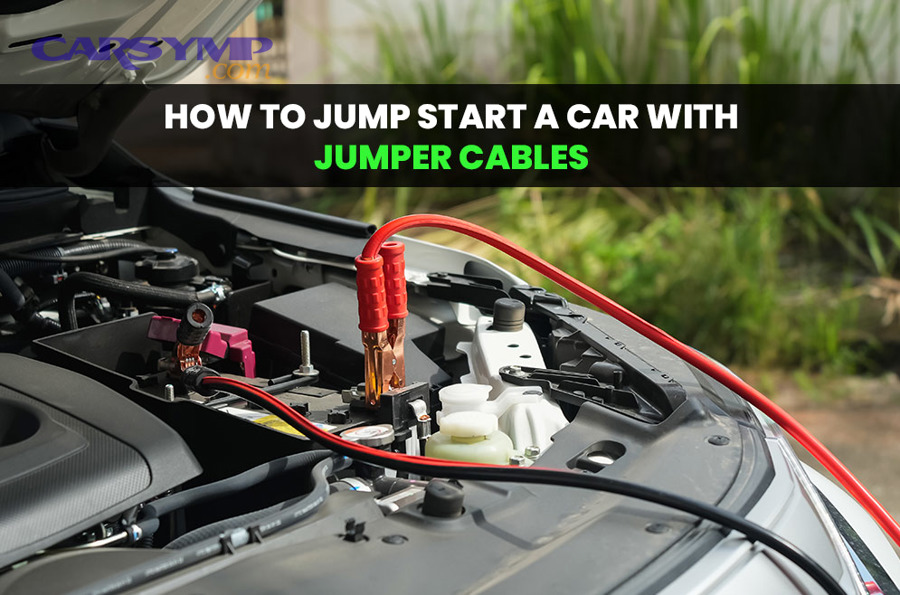
A safe jump-start is a controlled process: you connect in the correct order, minimize sparks near the battery, start the vehicles the right way, and then verify the charging system so the problem doesn’t immediately come back.
After you get the engine running, the next priority is to keep it running and confirm whether the battery was simply discharged or whether the alternator, cables, or a hidden electrical draw caused the failure.
You’ll also learn what to do when the car won’t start even after a proper jump, including quick checks that prevent wasted time, damaged electronics, and repeated roadside breakdowns.
To connect everything into a clear plan, below is a step-by-step procedure followed by a “what to do next” decision path that turns a jump-start from a temporary rescue into a reliable fix.
Is jump-starting a car safe when done correctly?
Yes—jump-starting is generally safe if you follow the correct connection order, avoid sparks at the battery, and stop immediately if you see damage or smell sulfur; however, rushing or reversing connections can create dangerous sparks or battery rupture. To make that safety real, start by understanding the risks and how to reduce them.
Why sparks are the real hazard (and how to reduce them)
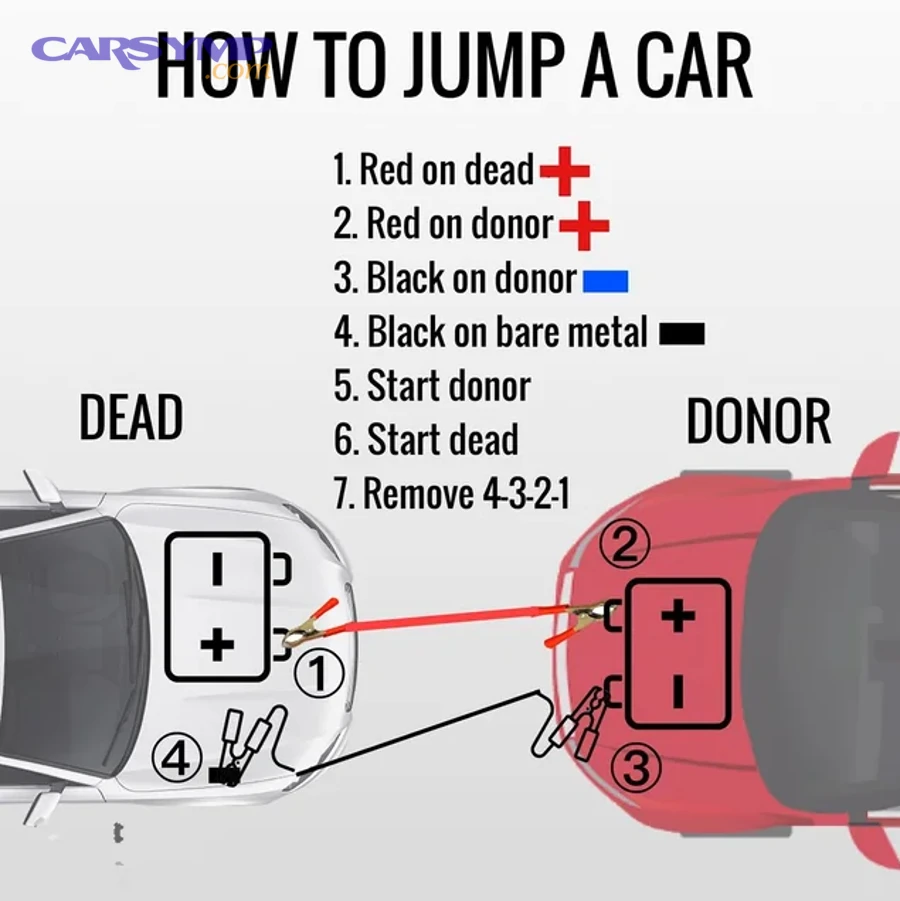
A lead-acid battery can vent flammable gases—especially during charging—so the safest method is designed to keep the final connection (the one most likely to spark) away from the battery itself. Cụ thể, this is why many instructions place the last black clamp on a clean metal ground point on the dead vehicle rather than directly on the negative terminal.
When you should NOT jump-start
Do not jump-start if the battery case is cracked, bulging, leaking, or hot; if there is visible smoke; or if you smell a strong “rotten egg” odor that can indicate dangerous gas release from an overcharged or failing battery. Tiếp theo, if the cables are damaged or the terminals are loose and wobbling, fix those issues first because a poor connection increases heat and arcing.
What to wear and where to stand
Wear eye protection if you have it, keep your face away from the battery area, and stand to the side as you make the final connection and during the first crank attempt. Để minh họa, treat the battery like a pressurized container: rare events can still happen, and small precautions dramatically lower injury risk.
What tools and quick checks do you need before connecting cables?
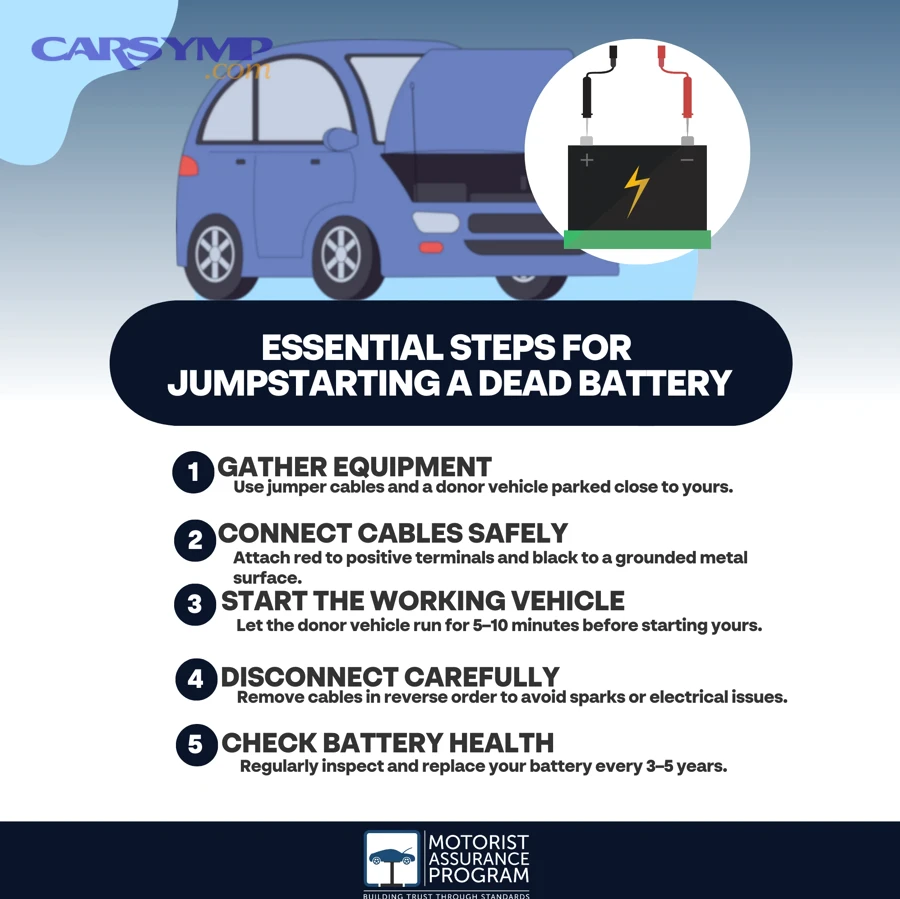
You need proper jumper cables or a jump pack, a safe parking setup, and a 60-second inspection of terminals and labels; this prevents reversed polarity, weak connections, and avoidable sparks. Sau đây is a simple pre-connection checklist that covers the highest-impact safety points first.
Choose the right cables (or jump pack) for the job
Use cables with thick conductors and strong clamps so they carry current without overheating. Cụ thể hơn, longer, thin, bargain cables can work but often cause slow cranking and hot clamps, which increases the chance of slipping and sparking at the terminals.
Confirm battery type and terminal markings
Identify the positive (+) and negative (–) posts on both vehicles, and do not rely on cable color alone if the cables are old or mismatched. Để bắt đầu, find the “+” stamping on the battery case or terminal cover, and locate a solid bare-metal ground point on the dead vehicle (engine block bracket or chassis stud) for the final black clamp connection.
Check for corrosion, looseness, and obvious damage
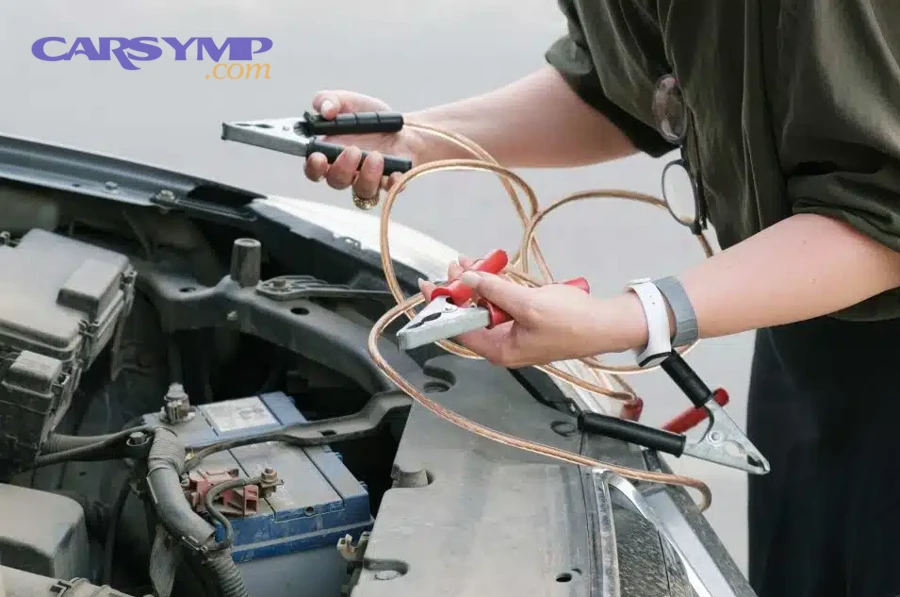
Look for white/blue crust on terminals, frayed cable ends, and clamps that don’t bite; these create resistance that steals cranking power and can heat up fast. Bên cạnh đó, if the terminals spin by hand, tighten them before you attempt a jump so you don’t “fix” the car for 10 seconds and then lose contact again.
Set up the vehicles to avoid movement and short circuits
Park close enough for the cables to reach without stretching, put both cars in Park (or Neutral for manual) with parking brakes on, and turn off lights, HVAC blowers, and accessories. Hơn nữa, keep the cable clamps from touching each other or any metal surface once connected to a battery post.
How do you connect jumper cables safely, step by step?
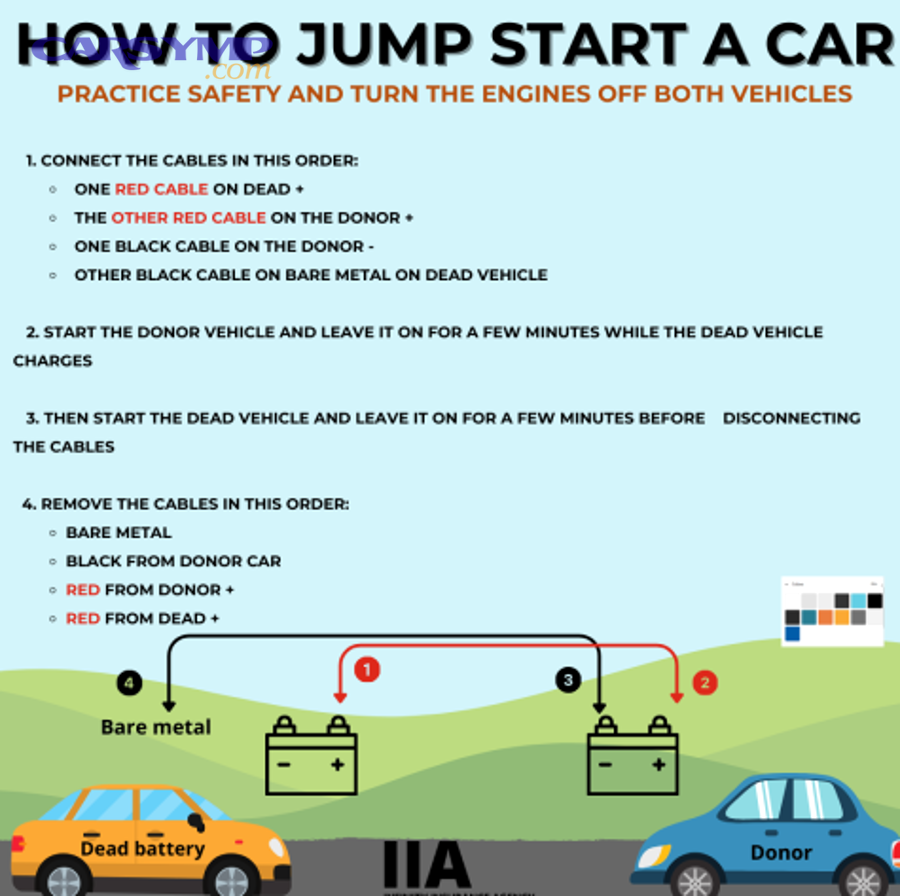
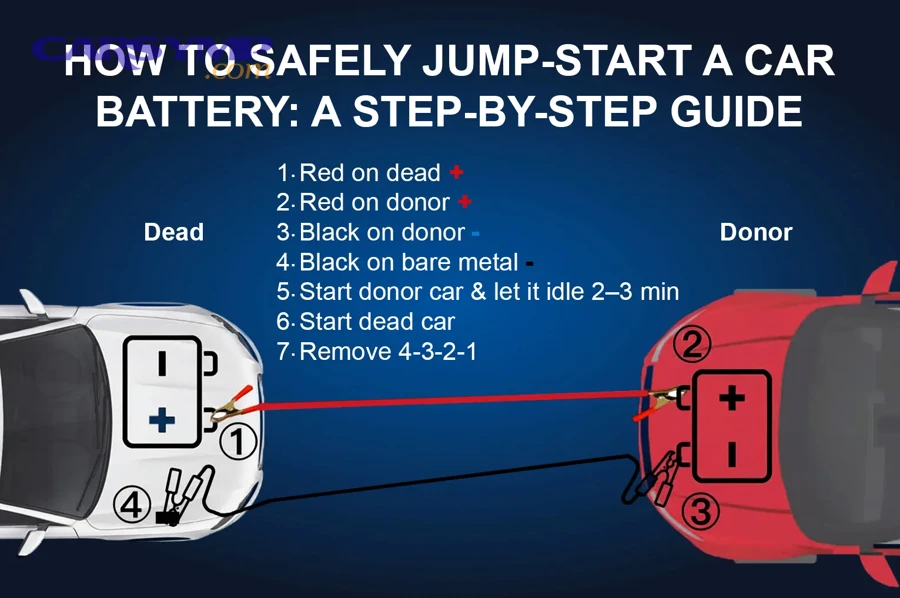
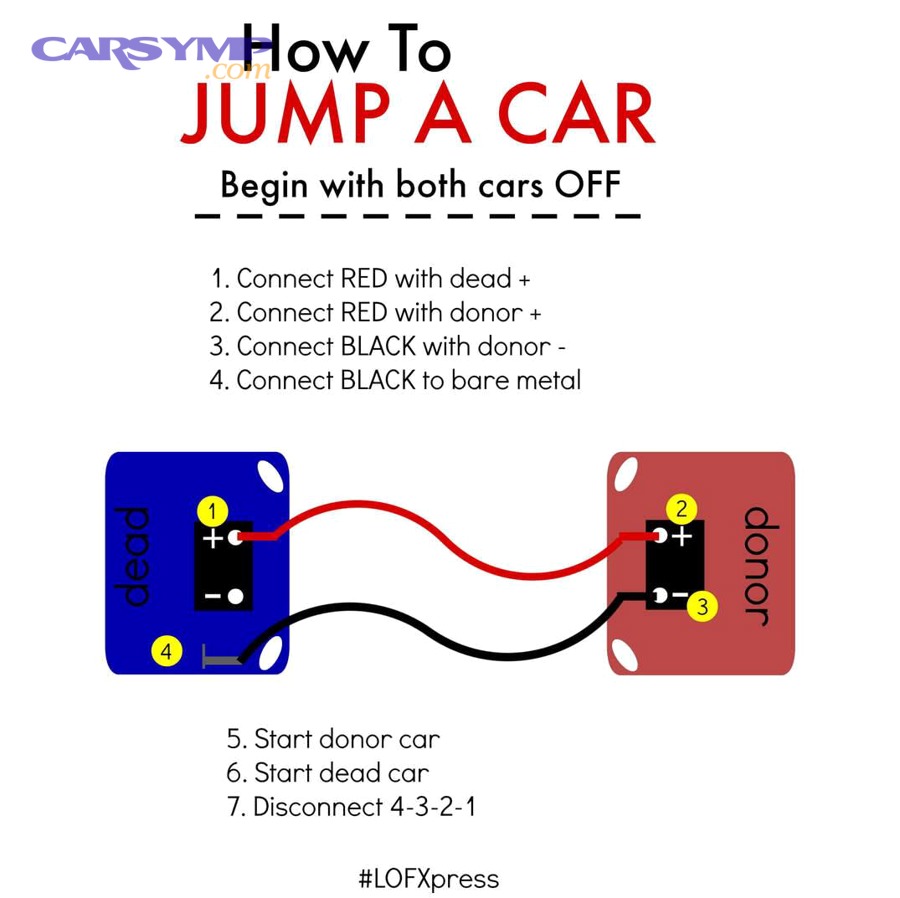
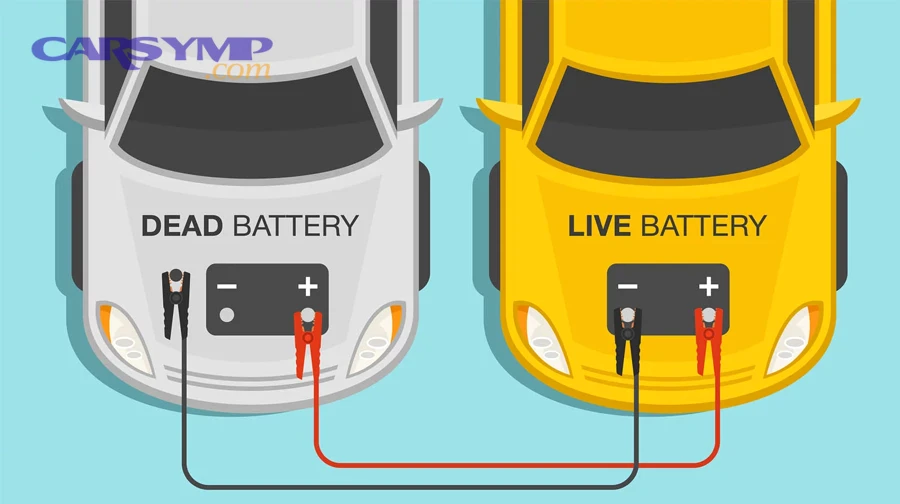
The safest method uses a four-connection sequence: red to dead positive, red to good positive, black to good negative, and black to a metal ground on the dead vehicle; this keeps the final spark away from the battery. Tiếp theo, follow the exact order below without skipping steps.
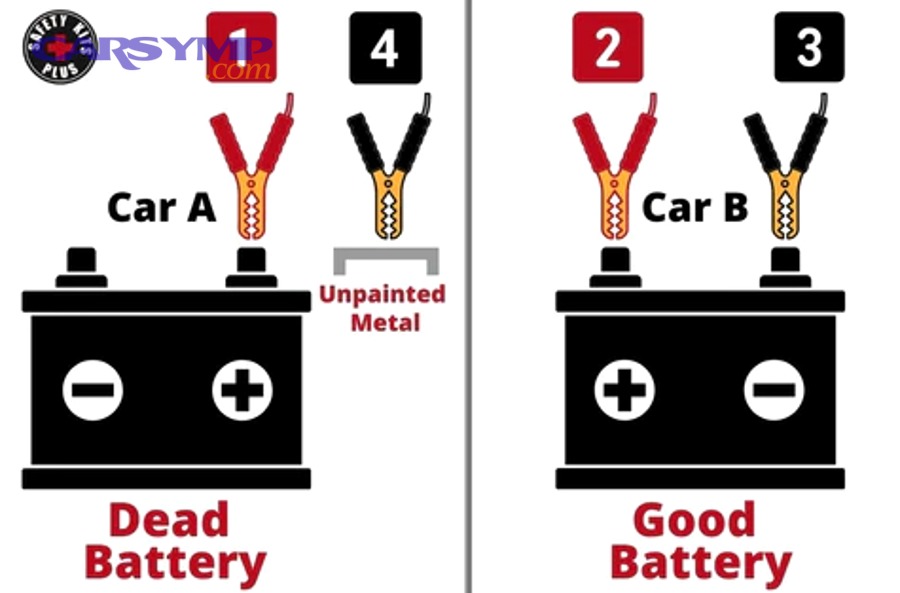
This table contains the safest connection order and the matching “why,” so you can avoid polarity mistakes and reduce spark risk.
|
Step |
Connect Clamp To |
Purpose |
|---|---|---|
|
1 |
Red clamp → Dead battery positive (+) |
Establish correct polarity on the dead vehicle first. |
|
2 |
Red clamp → Good battery positive (+) |
Complete the positive path between batteries. |
|
3 |
Black clamp → Good battery negative (–) |
Prepare the negative return path from the good battery. |
|
4 |
Black clamp → Dead vehicle bare metal ground |
Make the final connection away from battery gases to reduce ignition risk. |
Where exactly to place the final black clamp
Choose a thick, unpainted metal point on the dead vehicle—like an engine lifting bracket, alternator bracket, or a dedicated ground stud—away from the battery and moving belts. Cụ thể, avoid thin sheet metal or painted surfaces because they create resistance and reduce starting power.
How to confirm you didn’t reverse polarity
Before starting anything, pause for a quick visual check: red clamps are on “+” posts, black is on the donor “–” post and dead-vehicle ground, and the clamps are not able to slip into contact with each other. Sau đây, if any clamp feels loose, reseat it—most failed jump attempts are simply poor contact.
How long to “pre-charge” before trying to start
Let the donor vehicle idle for 2–5 minutes before the first crank attempt so the dead battery surface charge recovers enough to stabilize electronics. Hơn nữa, in cold weather or with a deeply discharged battery, wait a bit longer and try short crank bursts to prevent overheating cables and starter components.
How do you start both vehicles without damaging electronics?
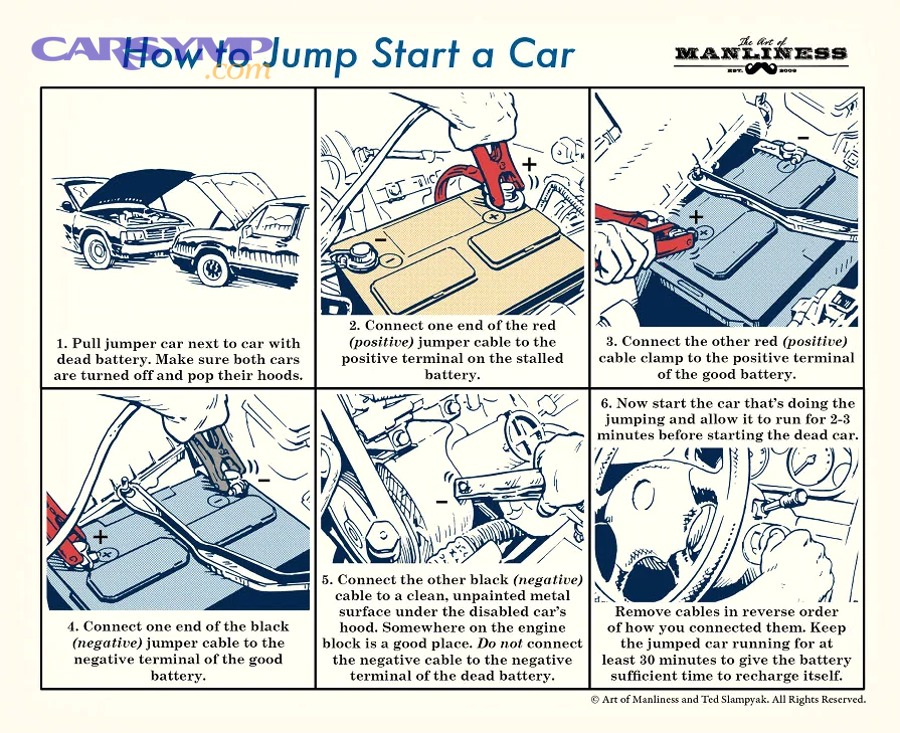
Start the donor vehicle first, keep it idling steadily, then crank the dead vehicle in short attempts; once it starts, let both cars run for a few minutes before disconnecting. Để hiểu rõ hơn, this sequence reduces voltage dips and keeps the revived car from stalling immediately.
Crank technique that protects the starter and cables
Crank for 5–10 seconds, stop for 20–30 seconds, and repeat up to three times rather than holding the key continuously. Cụ thể hơn, long cranking overheats the starter and causes cable clamps to heat up, which can loosen contact and create more arcing.
What to do immediately after it starts
Keep the revived engine at a gentle fast idle for a minute (do not race it), turn off unnecessary accessories, and listen for unstable idle or stalling. Bên cạnh đó, if the engine dies the moment you remove cables later, that’s a strong clue the battery is severely weak or the alternator isn’t charging.
Why you should avoid “revving” to charge faster
Revving is not a reliable or safe way to “force-charge” a dead battery; it can create unnecessary electrical stress and doesn’t guarantee proper battery recovery. Để minh họa, alternators are designed to maintain system voltage, not to rapidly restore a heavily depleted battery like a dedicated charger would.
How do you remove the cables safely after a successful jump?
Remove cables in reverse order, keeping clamps from touching each other or metal surfaces, and maintain engine idle during removal so the revived vehicle stays stable. Tiếp theo, reverse-order removal helps prevent accidental shorts and keeps the last clamp away from the battery area.
Reverse-order removal sequence
Remove the black clamp from the dead vehicle’s ground first, then remove the black clamp from the donor negative post, then remove the red clamp from the donor positive post, and finally remove the red clamp from the dead battery positive post. Cụ thể, this mirrors the risk logic: you disconnect the “spark-prone” side first while keeping the battery-area actions as brief as possible.
What to do if a clamp is stuck
Wiggle gently and break the clamp’s grip without yanking the cable, because pulling can stress the battery post or tear insulation. Ngoài ra, if corrosion is heavy, twisting slightly often frees the clamp more safely than brute force.
How to avoid shorting the clamps together
As each clamp comes off, move it away from the engine bay immediately and place it where it cannot touch another clamp. Quan trọng hơn, a brief clamp-to-clamp contact can create a large spark and can damage sensitive electronics in rare cases.
What should you do next after the car is running?
After a jump-start, you should confirm the vehicle will restart on its own, recharge the battery properly, and diagnose the underlying cause rather than assuming the problem is “fixed.” Sau đây is a practical next-steps plan that prevents the common cycle of repeated dead starts.
Drive vs. idle: which actually helps more?
A moderate drive is usually better than idling because it keeps engine speed above idle and helps the alternator supply stable charge while the battery recovers. Cụ thể, aim for 20–30 minutes of mixed driving if the vehicle feels normal, but remember that a severely discharged battery may still need a dedicated charger to recover fully.
Do a quick “restart test” before you go far
Once the engine has run for a while, shut it off and try restarting; if it struggles or clicks, the battery may be too weak to hold a charge or the connections are still poor. Tiếp theo, if you cannot restart reliably, avoid turning the car off at your destination until you can charge or replace the battery.
Look for charging-system clues on the dashboard
If a battery/charging warning light stays on, the alternator or belt may not be providing proper voltage and you could stall again soon. Hơn nữa, dim headlights, flickering interior lights, or a sudden drop in power steering assist on some vehicles can signal the system is running on battery only.
Use a proper charger if the battery was deeply drained
Jump-starting gets the car running, but it does not fully recharge a deeply depleted battery quickly; a smart charger is often the most reliable way to restore capacity and reduce stress on the alternator. Đặc biệt, this matters for batteries that were drained to the point that the car wouldn’t crank at all.
What if the car still won’t start after a proper jump?
If it won’t start after a correct jump procedure, the cause is usually poor cable contact, a severely failed battery, or a non-battery issue like starter failure or immobilizer lockout; you can narrow it down in minutes. Tiếp theo, use the decision checks below to avoid random part swapping.
If you hear rapid clicking
Rapid clicking typically indicates insufficient voltage at the starter, commonly due to a dead battery, corroded/loose terminals, or weak jumper cable contact. Cụ thể hơn, reseat clamps, clean contact points, and try again with the donor vehicle running at a steady idle.
If you hear one heavy click (or nothing)
A single click can point to a stuck starter solenoid, a failing starter motor, or a battery that collapses under load; no sound can also indicate a safety interlock, blown main fuse, or ignition switch issue. Bên cạnh đó, check that the gear selector is firmly in Park/Neutral and that the dashboard lights come on normally.
If it cranks but won’t fire
Cranking without starting is often not a battery problem—fuel, spark, air, or security systems may be the cause. Ngoài ra, confirm you have fuel, look for a security light indicating immobilizer issues, and consider that a weak battery can sometimes disrupt modern electronic throttle or fuel pump priming.
If it starts only while cables are connected
If the engine runs only with the donor connected and dies when cables are removed, the battery may be unable to buffer voltage or the charging system is not sustaining the vehicle. Quan trọng hơn, this pattern strongly suggests you should test alternator output and battery health before trusting the car for another trip.
What are the most common jump-start mistakes that cause damage?
The biggest mistakes are reversed polarity, clamping black to the dead battery negative as the final connection, letting clamps touch, and trying to jump a visibly damaged battery; these raise risk and can harm electronics. Tiếp theo, learn the “why” behind each mistake so you never repeat it under stress.
Reversed polarity and “instant sparks”
Connecting positive to negative can produce intense arcing and may blow fuses or damage sensitive modules; always verify terminal markings before the second red clamp goes on. Cụ thể, do a final scan for “+” stamps and cable routing before you start either vehicle.
Making the last connection at the battery
The final clamp is the most likely to spark, and placing it on the dead battery terminal increases ignition risk if gases are present. Sau đây, using a remote ground point on the dead vehicle is a widely recommended method because it moves potential sparking away from battery vents.
Using thin, overheated cables
Undersized cables can heat up, soften insulation, and slip off terminals, turning a low-voltage task into a sparking mess. Hơn nữa, if the cable clamps become hot to the touch quickly, stop and switch to better cables or a jump pack rated for your engine size.
Ignoring corrosion and loose grounds
A jump-start can fail even with a strong donor if the dead car’s terminal or ground path is resistive; the starter needs high current, and resistance steals it. Tóm lại, if you see heavy crust or looseness, clean and tighten first—this is often the difference between “no crank” and an immediate start.
Video demonstration: a safe jump-start you can follow visually
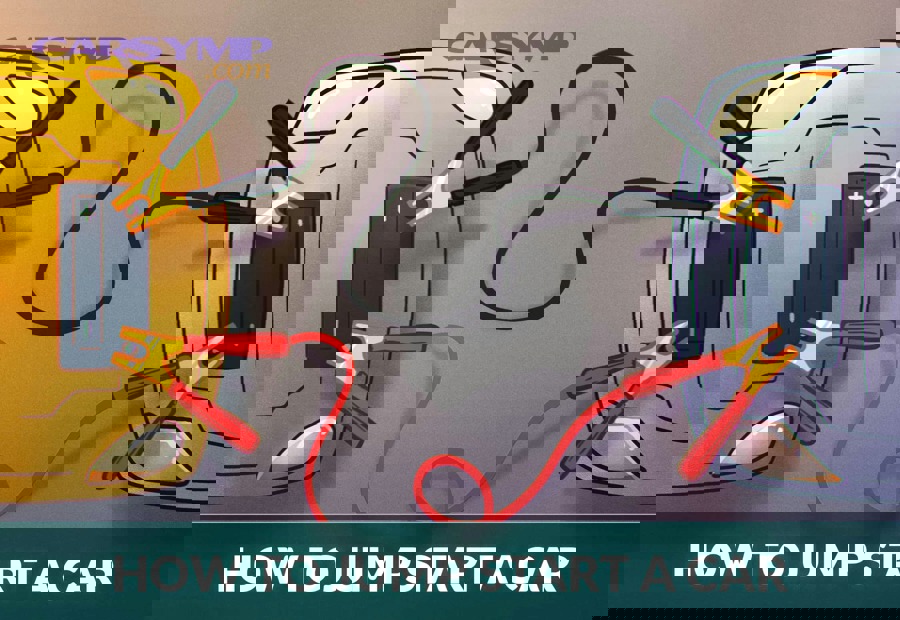
A visual walkthrough helps you match clamp order, ground placement, and removal steps under pressure, which reduces the chance of mistakes. Tiếp theo, watch this demonstration once now, and again briefly if you’re ever doing it roadside.
FAQ: quick answers to common jump-start questions
Yes, most jump-start confusion comes from a few repeat questions about order, timing, and what to do after the engine runs; these answers keep you safe and save time. Sau đây, use them as a rapid checklist when you’re troubleshooting under stress.
Can you jump-start in the rain?
Yes, you can jump-start in light rain if you keep clamps secure, avoid standing water, and prevent clamp-to-clamp contact; the battery system is low voltage, but slipping and shorting are bigger risks when wet. Cụ thể, dry your hands, stabilize your footing, and double-check clamp placement before cranking.
How long should you leave the cables connected after it starts?
Leave them connected for 1–3 minutes with both engines running smoothly, then remove in reverse order so the revived car has time to stabilize. Hơn nữa, if the idle is rough or the engine threatens to stall, wait a bit longer before disconnecting.
Can you jump-start a hybrid or EV?
Many hybrids and some EVs still have a 12-volt auxiliary battery that can be jump-started, but procedures vary and access points may be remote; consult the owner’s manual for the correct terminals. Quan trọng hơn, do not attempt to jump the high-voltage battery system—only the 12-volt system if the manufacturer allows it.
Is it normal to smell something after a jump?
A faint electrical smell can occur briefly, but a strong sulfur or “rotten egg” odor is not normal and can signal dangerous gas release from a failing or overcharged lead-acid battery. Tóm lại, shut down, move away, and seek professional help if that odor is strong or persistent.
Contextual border: At this point, you know how to jump-start safely and how to decide what to do next based on the result. Bên cạnh đó, the most valuable long-term benefit comes from preventing the next dead-battery event—so the final section focuses on causes, patterns, and prevention.
Beyond the jump: how to prevent the next dead-battery incident
You can prevent most repeat jump-starts by identifying whether the battery is worn out, whether the charging system is underperforming, or whether the vehicle has a hidden drain that empties the battery while parked. Tiếp theo, use the patterns below to choose the right fix instead of repeating the same emergency step.
When the same problem keeps repeating after “successful” jump-starts
If the battery keeps dying, treat the jump-start as evidence—not a solution—because repeated depletion shortens battery life and can mask the real cause. Cụ thể, repeated failures often come from: (1) an aging battery with low reserve capacity, (2) alternator output that is borderline, or (3) an electrical load that never fully sleeps (modules, lights, aftermarket devices).
To break the cycle, test battery health (load test or conductance test), verify charging voltage with a meter, and check for unusual drain when the car is off. Hơn nữa, simple habits help: turn off accessories before shutting down, avoid leaving the car parked for long periods without driving, and remove phone chargers or dashcams that stay powered.
How short driving patterns quietly create low-charge batteries
Many “mystery dead battery” cases are really Short trip driving and battery charging issues: the engine starts, runs a few minutes, and shuts down before the alternator can restore what the starter just consumed. Cụ thể hơn, cold weather and heavy electrical loads (defroster, heated seats, headlights) make this worse because they increase the current demand while the battery is trying to recover.
A practical fix is to combine errands into one longer trip, take a weekly 20–30 minute drive, or use a smart maintainer if the car sits often. Đặc biệt, if your lifestyle is mostly short trips, consider proactive battery testing before winter so you don’t get surprised on the coldest morning.
Why dirty connections mimic a “bad battery”
Sometimes the battery is fine, but resistance at the terminals or grounds is the real culprit—classic Corroded terminals and bad ground symptoms can look like a dying battery because the starter cannot get enough current. Cụ thể, a white/blue crust at terminals, a loose ground strap, or a corroded engine-to-chassis bond can cause slow cranking, intermittent no-start, and voltage drop that confuses electronics.
Clean terminals with the correct tools, tighten to spec, and inspect ground straps for fraying or heat damage. Quan trọng hơn, a good jump-start connection can temporarily bypass poor contact—so if the car starts with a jump but struggles later, suspect the terminals and grounds early.
When to replace the battery, cables, or seek professional diagnostics
Replace the battery when it fails a load test, cannot hold charge after proper recharging, or is near end-of-life with repeated deep discharges; replace cables when they are swollen, stiff, heavily corroded, or have damaged insulation. Tiếp theo, if you see charging warning lights, repeated stalling, or voltage that does not stabilize, get the alternator and charging circuit tested promptly.
According to the University of Minnesota’s safety guidance (October 2021), overcharging and failure conditions in lead-acid batteries can produce flammable gases and increase fire/explosion risk, which is another reason to stop “pushing your luck” with a failing unit.
Tổng kết lại, a safe jump-start is a powerful emergency skill, but long-term reliability comes from correcting the root cause—battery health, charging performance, and clean, tight electrical connections.