


Master cylinder leak symptoms usually show up as a brake pedal that feels wrong, braking response that changes from day to day, or warning signals that appear before you can see any wet spots. The key is understanding which symptoms are “early” (subtle but consistent) and which are “severe” (predicting sudden loss of braking power).
Beyond the feel of the pedal, you also want to know what those sensations mean inside the hydraulic system, because different failure paths (external seepage vs internal seal bypass) produce different patterns while driving.
Just as important, you need a clear way to separate master cylinder trouble from other common issues—like air in the system, worn pads, or problems at the wheels—so you don’t replace the wrong part and still have a safety risk.
To introduce a new idea, the safest approach is to map each symptom to urgency, then confirm with a simple, non-invasive inspection before you decide whether to drive, tow, or repair immediately.
What does a master cylinder leak do to braking pressure?
A master cylinder leak reduces or destabilizes hydraulic pressure, so the pedal travel increases and the braking response becomes inconsistent because the system can’t reliably convert foot force into line pressure. Next, it helps to picture where pressure is being lost and why that changes pedal feel.
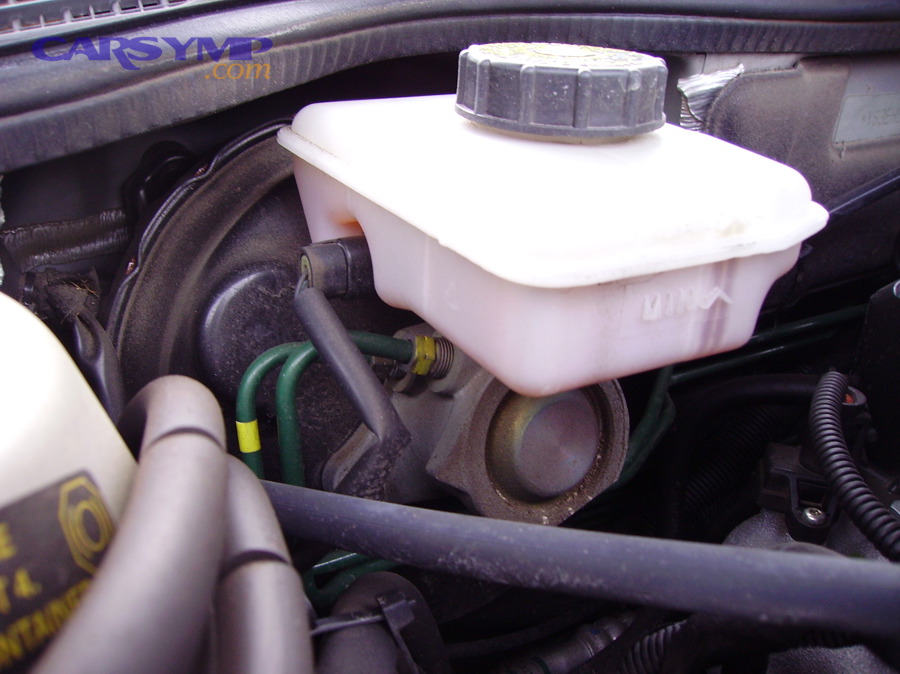
In a healthy brake system, your pedal force pushes a piston (or pistons) in the master cylinder, moving fluid into brake lines. That fluid is effectively “incompressible,” which is why the pedal feels firm when everything is sealed and bled correctly.
When leakage happens, pressure escapes in one of two broad ways:
- External leakage: fluid leaves the system through a damaged seal, cracked reservoir, corroded body, or loose fittings. Pressure drops because there’s less fluid and sometimes air enters.
- Internal leakage (seal bypass): fluid stays inside the master cylinder but slips past worn internal seals from the high-pressure side back to the low-pressure side. You may not see drips, yet pressure still fails to hold.
To understand this more clearly, a cutaway view helps: the piston seals must hold pressure in a chamber. If they don’t, the system can feel “soft” or the pedal can drift even though fluid level looks normal.
Why pressure loss can feel “soft” or “sudden” depending on leak type
External loss often feels progressively softer, while internal bypass can feel normal at first and then fade under steady pressure, because the seal slips more as pressure builds. In other words, the pattern over time is a diagnostic clue.
Cụ thể, an external seep can start with a slightly longer pedal and become noticeably spongy after a few stops, while an internal leak may only show itself when you hold pressure at a stoplight and the pedal slowly sinks.
How dual-circuit masters change the symptom pattern
Most modern cars use a dual-circuit master cylinder, so one hydraulic circuit can partially compensate for the other, but stopping distance still increases and pedal travel often becomes excessive. Tiếp theo, you’ll see why the “early” symptoms matter even when brakes still “work.”
Because there are two circuits, you may get one of these patterns:
- Pedal travel increases but braking remains somewhat effective.
- Front or rear braking feels weaker depending on which circuit is compromised.
- The pedal becomes inconsistent: firm on one stop, soft on the next.
Which master cylinder leak symptoms mean you should stop driving immediately?
Yes—some master cylinder leak symptoms are “stop-now” signs: a pedal that goes to the floor, braking that fades with each press, or any sudden change that prevents normal stopping. Sau đây are the red flags and why they’re urgent.

Think of urgency in terms of “ability to build pressure” and “ability to keep pressure.” If either one fails, the vehicle may not stop in the distance you expect.
Pedal drops to the floor or nearly to the floor
If the brake pedal drops close to the floor with little resistance, the system is not building sufficient hydraulic pressure and you should not continue driving. Để minh họa, this can happen with major external loss or a severe internal bypass that prevents pressure from rising.
- Braking response is delayed or weak.
- You may need to pump the pedal to get any braking.
- Stopping distance can increase dramatically.
Brake pedal fade after repeated stops
If braking gets worse with each press, pressure is being lost faster than it can be restored—often from fluid loss and air entry—so you should pull over safely and arrange a tow. Bên cạnh đó, repeated pumping can temporarily mask the problem, which is dangerous because it encourages continued driving.
Sudden warning light plus a major change in pedal feel
If a brake warning indicator appears and the pedal feel changes sharply at the same time, treat it as a safety event and stop driving until the system is inspected. Quan trọng hơn, warning signals exist to catch low-fluid or pressure problems before a complete failure.
At this point, it’s appropriate to mention the scenario many drivers describe as a brake fluid leak emergency: even if you can still stop, the margin of safety is gone.
Why can the brake pedal sink slowly with an internal leak?
A slowly sinking pedal usually indicates the master cylinder seals are bypassing internally, letting pressurized fluid slip past the piston so pressure cannot be held under steady force. To begin, focus on the “hold test” pattern rather than the first pedal press.
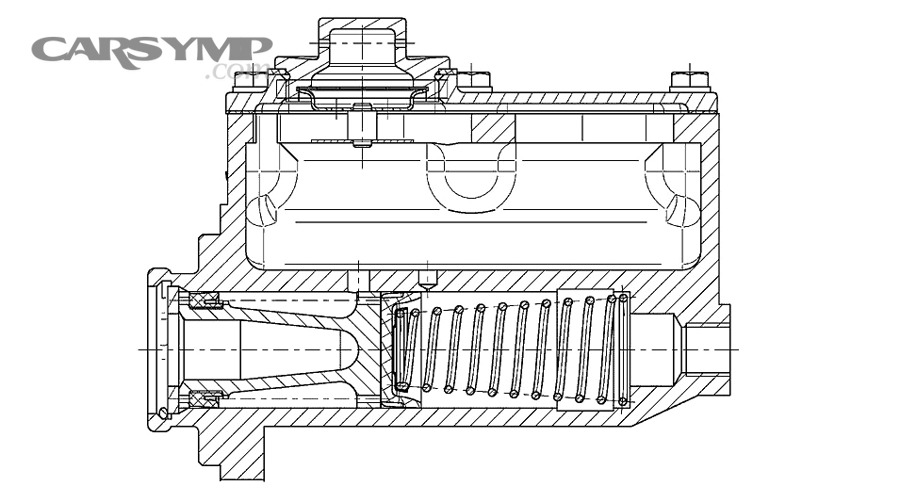
Internal leakage is tricky because it can produce “normal-ish” braking during quick presses, yet fail during sustained pressure (like holding at a red light). That’s why drivers often report the pedal “creeping” down over a few seconds.
What the sinking pedal feels like in real driving
With an internal bypass, the pedal may feel firm at first, then slowly move downward while you keep the same foot pressure. Tiếp theo, you’ll often notice you must press deeper to maintain the same stopping force.
- At stoplights: pedal slowly drops, car wants to creep forward.
- In parking lots: you press farther than usual to stop smoothly.
- On hills: holding the car becomes harder without increasing pedal pressure.
Why pumping sometimes “helps” (and why that can mislead you)
Pumping can temporarily build pressure by moving seals through a different position, but it doesn’t fix the bypass path, so the symptom returns quickly. Ngược lại, a properly sealed master cylinder should hold pressure without needing repeated pumps.
How internal bypass differs from ABS activation or normal pedal movement
Internal bypass is a gradual, steady sink under constant pressure, while ABS pulsation is rapid vibration during hard braking, and normal booster behavior changes pedal feel mostly when the engine starts. Hơn nữa, if the pedal sinks even with the engine off, the master cylinder becomes a stronger suspect.
How can you spot an external leak around the master cylinder and booster?
You can often spot an external master cylinder leak by looking for wetness, paint-damaged areas, or oily residue where the master mounts to the booster or where lines and reservoir connect. Dưới đây is a safe inspection routine that doesn’t require disassembly.
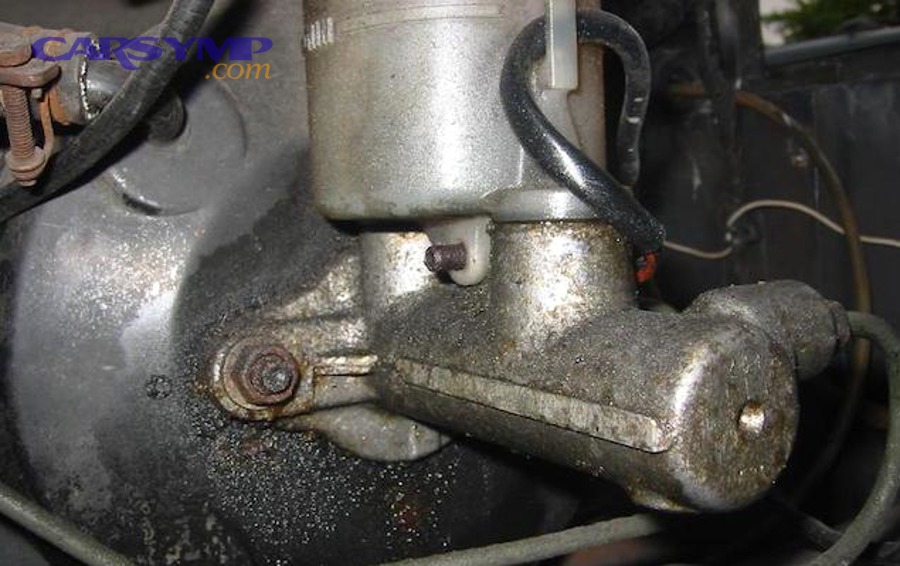
External leaks are usually visible, but grime can hide them. A small seep may collect dust and look like a dark, damp patch rather than a drip.
Leak at the rear seal (master-to-booster area)
If the rear seal leaks, fluid often appears where the master cylinder meets the brake booster, sometimes leaving a wet ring or streaks beneath that joint. Tiếp theo, check for fluid trails running down the booster face.
- Look at the seam between master and booster.
- Check below for drip marks or dampness.
- Smell can help: brake fluid has a distinct chemical odor.
Leak at reservoir grommets, cap, or plastic body
If the reservoir grommets or housing seep, you may see wetness around the reservoir base and staining on nearby components. Cụ thể, plastic reservoirs can crack, and caps can vent fluid if overfilled or tilted during hard maneuvers.
Leak at brake line fittings
Loose or corroded fittings can seep under pressure, leaving wetness around the flare nut area and sometimes a shiny film on the master cylinder body. Để hiểu rõ hơn, inspect with a flashlight and wipe suspected areas with a clean white paper towel to reveal fresh fluid.
When you do find external wetness, pair that discovery with
What warning lights and fluid-level clues point to master cylinder trouble?
Warning lights plus abnormal fluid-level behavior—like dropping level, repeated low-fluid alerts, or fluid that looks contaminated—often point to master cylinder issues when combined with pedal symptoms. Sau đây is how to interpret what you see without jumping to conclusions.
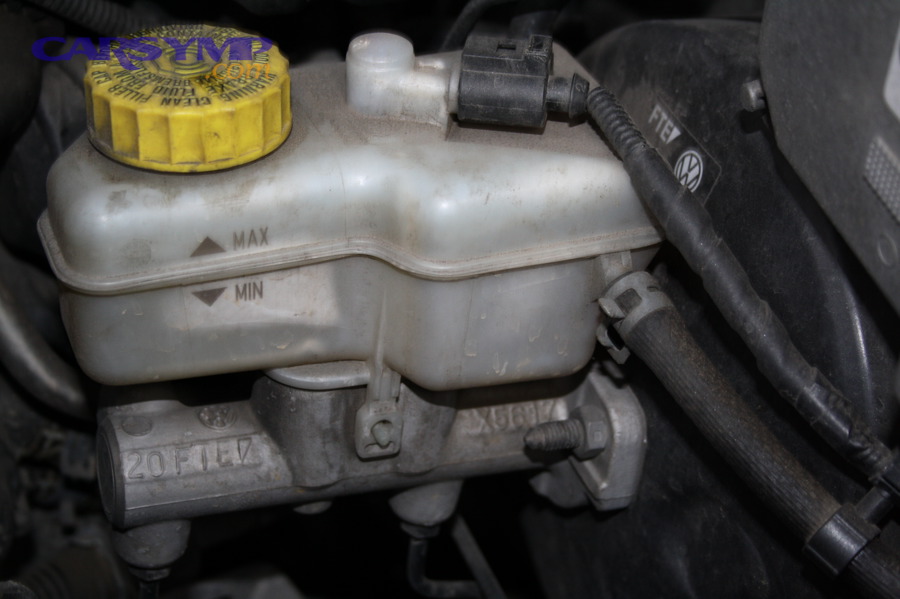
Fluid level alone doesn’t prove the master cylinder is bad, but it strongly influences safety and helps prioritize inspection.
Low fluid level that keeps returning
If the level drops and you repeatedly need to top off, there is an active leak somewhere, and the master cylinder is one possible source—especially if wetness is near the reservoir or booster. Bên cạnh đó, do not treat topping off as a repair; it’s only a temporary safety action to prevent immediate air ingestion.
Contaminated fluid: dark color, debris, or “gel-like” appearance
Dark or debris-filled fluid suggests moisture and corrosion byproducts, which can accelerate seal wear and contribute to internal leakage. Tiếp theo, note that fluid condition also reflects system health: neglected fluid can harm calipers, ABS valves, and the master cylinder.
Warning light behavior that matches symptom timing
If the warning indicator appears during braking or after a few stops, it may reflect fluid slosh in a low reservoir or a pressure imbalance that occurs as the problem worsens. Quan trọng hơn, the combination of light + changing pedal feel is more meaningful than either one alone.
How do you distinguish master cylinder problems from air in lines or wheel-end leaks?
You can distinguish master cylinder issues by pattern: internal master leaks cause a steady sinking pedal under constant pressure, while air tends to cause a springy/spongy pedal that improves temporarily with pumping. Tiếp theo, use symptom grouping to avoid misdiagnosis.
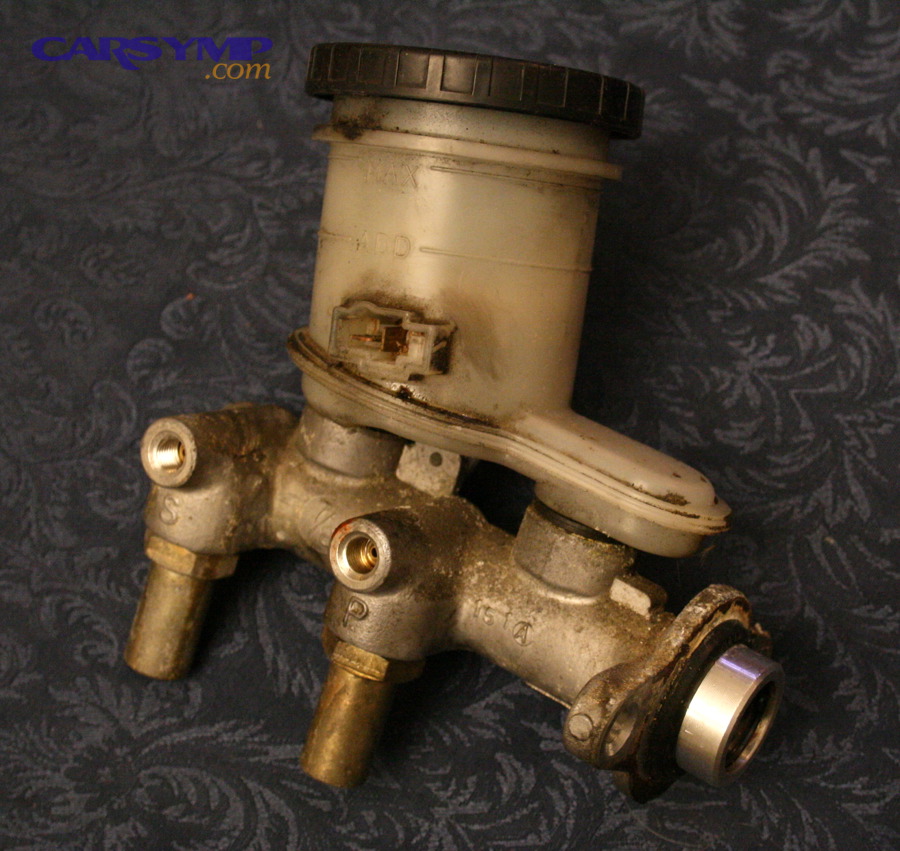
Because multiple brake problems can coexist, you’re looking for the “most explanatory pattern,” not a single clue.
This table helps you separate common symptom patterns and decide what to inspect first.
This table shows symptom patterns, likely causes, and urgency so you can prioritize a safe next step.
| Symptom pattern | Most likely cause | Quick check | Urgency |
|---|---|---|---|
| Pedal slowly sinks while holding steady pressure | Internal master cylinder seal bypass | Engine off, press and hold for 30 seconds | High |
| Spongy pedal that improves after pumping | Air in hydraulic system | Look for recent service, fluid level low, soft pedal rebound | High |
| Wetness at a wheel and fluid level dropping | Wheel-end leak (caliper/wheel cylinder/line) | Inspect inside tire, backing plate, and hose area | Stop-now |
| Firm pedal but poor stopping / pulling | Friction issue (pads/rotors) or seized caliper | Check pad thickness, rotor condition, wheel heat after drive | Medium–High |
| Warning light plus inconsistent pedal travel | Low fluid or pressure imbalance; multiple causes | Inspect reservoir level and scan for codes if available | High |
What “internal leak” means compared to “air in system”
Internal leak means the master cylinder can’t maintain pressure because seals allow fluid to slip past; air in system means compressible bubbles absorb pedal force and create a springy feel. Hãy cùng khám phá a simple check that separates these two patterns safely.
Why wheel-end leaks often show up with visible wetness and faster fluid loss
Wheel-end leaks typically leave obvious wet spots near tires or suspension parts and drop the reservoir level faster because the leak is closer to moving, exposed components. Ngoài ra, you may smell hot fluid or see it flung onto the wheel barrel.
How to perform a safe at-home check before visiting a shop?
You can do a safe at-home check by inspecting fluid level and visible components, then performing a controlled pedal-hold test without driving at speed, which helps confirm whether pressure is being maintained. Sau đây is a step-by-step routine designed to minimize risk.
Safety baseline: If the pedal is already going near the floor, or stopping distance feels unpredictable, do not road-test—use a tow.
Step 1: Check reservoir level and cap area (engine off)
Check the fluid level against the MIN/MAX marks and look for wetness around the cap and reservoir base, because that’s the fastest way to detect active external loss. Tiếp theo, note the fluid color and any debris.
- If level is below MIN: the car may have already drawn air into the system.
- If fluid looks very dark: expect internal wear and possible seal damage.
- If you top off: use the correct spec per the cap/owner’s manual and avoid spilling on paint.
Step 2: Quick visual scan of the master cylinder, booster seam, and lines
Scan the seam where the master meets the booster and check line fittings for moisture, because fresh wetness strongly suggests an external source near the master. Bên cạnh đó, wipe suspected areas and recheck after a few gentle pedal presses.
Step 3: Pedal-hold test (engine off, then engine on)
With the engine off, press the pedal firmly and hold: if it slowly sinks, that pattern supports internal master cylinder bypass; with the engine on, the booster will change pedal effort but it should still hold pressure. Ngược lại, if the pedal is spongy and rebounds, air becomes more likely.
- Engine off: press and hold 20–30 seconds.
- Engine on: repeat once; expect a slight initial drop as booster assists, then stable hold.
- If it keeps sinking either way: treat as high urgency.
Step 4: Decide the next action using risk, not convenience
If you have any severe symptoms, choose towing or mobile repair rather than “driving carefully,” because braking failures are not predictable. Tóm lại, this is where Emergency temporary measures and what not to do matters most: topping off fluid, pumping the pedal, or driving short distances can hide the problem and increase danger.
For a structured response plan, refer back to
FAQ: Common questions about master cylinder leak symptoms
Yes—most common questions have clear, safety-first answers: the master cylinder can fail without visible drips, symptoms can mimic air in the system, and continued driving is risky when pedal travel or consistency changes. Next are practical answers that match real-world search intent.

Can the master cylinder be bad if the fluid level looks normal?
Yes, because internal seal bypass can occur without external fluid loss, keeping the reservoir level roughly stable while pressure still fails to hold. Tiếp theo, use the pedal-hold test pattern to confirm the suspicion.
Does a sinking pedal always mean the master cylinder is failing?
Not always, but it is a strong indicator when the sink is slow and steady under constant pressure, especially if there are no obvious external leaks at the wheels. Ngoài ra, certain ABS/booster faults can confuse the picture, so a scan tool and professional inspection may be needed.
What if the pedal is spongy after recent brake service?
Sponginess after service often points to air in the system or an incomplete bleed, though a worn master cylinder can also struggle once disturbed. Để hiểu rõ hơn, compare “spongy rebound” (air) with “slow sink” (internal bypass) rather than relying on one feeling.
Is it safe to top off and drive to the shop?
Only if the pedal is firm, braking is consistent, and the warning signals are not indicating an active safety issue—otherwise towing is the safer decision. Quan trọng hơn, if you’re experiencing a clear brake fluid leak, topping off may buy minutes, not safety.
What should I tell the shop to speed up diagnosis?
Tell them the exact symptom pattern (sinking under steady pressure vs spongy rebound), whether fluid level is dropping, and where you saw any wetness, because that guides targeted tests. Tiếp theo, ask them to check both external seepage at the booster seam and internal pressure-hold behavior.
Video guide: If you want a visual walkthrough of diagnosis concepts, the video below focuses on master cylinder testing and symptom interpretation.
Contextual Border: From here, we move from symptom identification (macro safety and diagnosis) into a micro-level prevention and longevity focus—how to avoid repeat failures and reduce seal wear over time.
Deep-dive: Preventing repeat master cylinder leaks and premature seal wear
You can reduce repeat master cylinder leaks by controlling contamination, using the correct fluid, and ensuring bleeding practices don’t damage seals, which improves long-term pressure stability and pedal feel. Next, these prevention levers are broken into the few factors that matter most.
Moisture and contamination: the slow damage you don’t feel until it’s late
Moisture and debris accelerate corrosion and seal wear, increasing the chance of internal bypass and external seepage at aged rubber interfaces. Cụ thể, old fluid can carry fine particles that act like abrasives inside the master cylinder bore.
- Keep the reservoir cap area clean before opening.
- Avoid leaving the cap off longer than needed.
- Consider fluid service intervals appropriate for your climate and driving.
Correct fluid specification: DOT type and compatibility discipline
Using the correct brake fluid type matters because incompatible fluid can swell seals or reduce lubrication, leading to early leakage. Tiếp theo, always follow the cap label or owner’s manual rather than guessing based on “what’s available.”
Even when two fluids look similar, their additive packages and compatibility with seals can differ. If you must top off in an emergency, match the correct spec and schedule a proper inspection afterward.
Bleeding practices that protect seals (and what to avoid)
Seal damage can happen if bleeding is done aggressively on a worn master cylinder, because pushing the piston into rarely-used, corroded bore areas can nick seals. Ngược lại, controlled bleeding and proper techniques reduce the chance of turning a borderline part into a failing part.
- Avoid slamming the pedal to the floor repeatedly on older systems.
- Use controlled pedal strokes or appropriate bleeding tools.
- Bench-bleed a new master cylinder when installing to prevent trapped air.
Installation details that prevent external seepage
Correct torque, clean mating surfaces, and proper line seating reduce external seepage at fittings and the booster seam, which helps maintain stable fluid level and pressure. Hơn nữa, verify that grommets and reservoir seals seat correctly and aren’t twisted.
- Inspect line flares for damage before tightening.
- Clean and dry the booster face and mounting area to spot new leaks quickly.
- Recheck for wetness after the first short, controlled test (or after shop testing).