


Clunking and vibration from bushings usually means a rubber or polyurethane joint in your suspension has lost its ability to isolate movement, so metal parts start shifting and transmitting shock into the body.
Many drivers want to know whether the noise is “safe to ignore” or a sign of something that can quickly damage tires, steering stability, or other joints—so the key is matching when the clunk happens to which bushing is loaded at that moment.
Another common intent is narrowing down where to inspect first—front control-arm area, stabilizer bar area, or rear subframe—so you can avoid replacing the wrong parts and paying for repeat alignments.
To connect everything, “Giới thiệu ý mới”: we’ll map the sound and vibration pattern to specific bushing locations, then confirm with quick tests, and end with the most practical next steps for repair planning.
Is clunking and vibration from bushings a real problem or just “normal” suspension noise?
No—clunking and vibration from bushings is not “normal” because it indicates lost damping, excess movement, or metal-to-metal contact that can worsen handling, accelerate tire wear, and overload nearby joints.
To start, the fastest way to judge seriousness is to link the noise to load changes: braking, accelerating, turning, bumps, or speed range.

Three reasons bushings create clunks instead of “soft thumps”
First, the rubber separates from its sleeve or cracks, so the arm shifts abruptly; second, the bushing voids collapse and allow a snap-back under torque; third, the inner sleeve can rotate when it should stay bonded, producing a sharp knock.
Next, once you understand the “snap” mechanism, you can use the same logic to pinpoint which corner of the car is moving too freely.
When the vibration is the bigger clue than the clunk
If vibration appears at a narrow speed band, it often means the bushing is allowing an oscillation that the damper can’t control—especially after hitting a bump or during light braking.
In other words, the bushing is no longer isolating resonance, so you feel steering-wheel buzz, floor pan tremor, or seat vibration.
When you should stop driving and inspect immediately
If the clunk is paired with wandering steering, sudden pull, tire rubbing, or a “knock” when braking hard, treat it as urgent because the suspension geometry may be shifting under load.
After that, a short inspection can prevent a minor bushing failure from turning into a damaged ball joint, tie rod, or tire.
A practical “severity ladder” you can use on the driveway
Light clunk on small bumps = early play; clunk under braking/acceleration = torque compliance failure; repeated clunk plus vibration plus steering drift = advanced movement and likely alignment change.
To make this actionable, the next section breaks down what symptoms map to which bushing group.
Which symptoms point to which bushing location?
There are three main symptom groups: torque-change clunks, bump-impact clunks, and speed-related vibrations—each tends to load different bushing sets in predictable ways.
Next, you’ll use “when it happens” as your diagnostic filter before you touch a wrench.

Clunk when braking or taking off
This pattern usually implicates front lower control arm rear bushings or rear trailing arm bushings because they control fore-aft movement and absorb drivetrain torque reactions.
To illustrate, braking loads the arm backward; acceleration loads it forward—if the bushing has void collapse or separation, you hear a knock at each direction change.
Clunk on small sharp bumps at low speed
This often points to stabilizer bar (sway bar) links or stabilizer bar frame bushings because the bar twists rapidly over single-wheel bumps and can “tap” when the bushing no longer holds it centered.
After that, confirm by listening for a hollow rattle over driveway lips and speed bumps.
Vibration through steering wheel, especially after bumps
Front compliance bushings in the control arm or subframe bushings can allow the wheel to toe in/out momentarily, creating a steering shimmy that feels like imbalance but changes with braking or cornering.
Next, you’ll learn how to separate “wheel balance vibration” from “bushing compliance vibration” using simple tests.
Rear-end shake or “thump + vibration” from the seat area
Rear subframe bushings, trailing arm bushings, or toe-control arm bushings can transmit impact and allow rear steer, which feels like the car shifts sideways slightly over bumps.
To connect the dots, rear bushing issues often show up as instability in crosswinds or during lane changes at highway speed.
How do you confirm bushings are the source and not tires, shocks, or mounts?
The best approach is a three-step check: reproduce the symptom, isolate the load condition, then visually and physically verify bushing movement compared to a known-tight joint.
Next, each quick test below is designed to rule out a common “false positive.”
Road-test patterns that separate bushings from wheel/tire issues
If vibration stays the same while coasting, braking lightly, and accelerating, think wheel balance; if it changes with braking input or throttle transitions, suspect compliance from bushings.
After that, do the same speed on a different road surface; bushing-driven vibration often spikes on rougher texture because the suspension is transmitting more high-frequency energy.
“Brake tap” test for front compliance movement
At a safe low speed, a gentle brake tap that triggers a single clunk can indicate a control arm bushing shifting under sudden load—especially if it happens before the suspension compresses much.
Next, compare left vs right by repeating near a wall with windows down to echo the sound direction.
Pry-bar inspection without damaging components
With the car safely lifted, gently load the bushing with a pry bar: a healthy bushing deflects smoothly and returns; a failed one shows cracking, separation, or a “jump” movement between sleeve and rubber.
To be safe, use controlled force and never pry against thin aluminum edges that can gouge.
Visual tells that correlate strongly with clunking
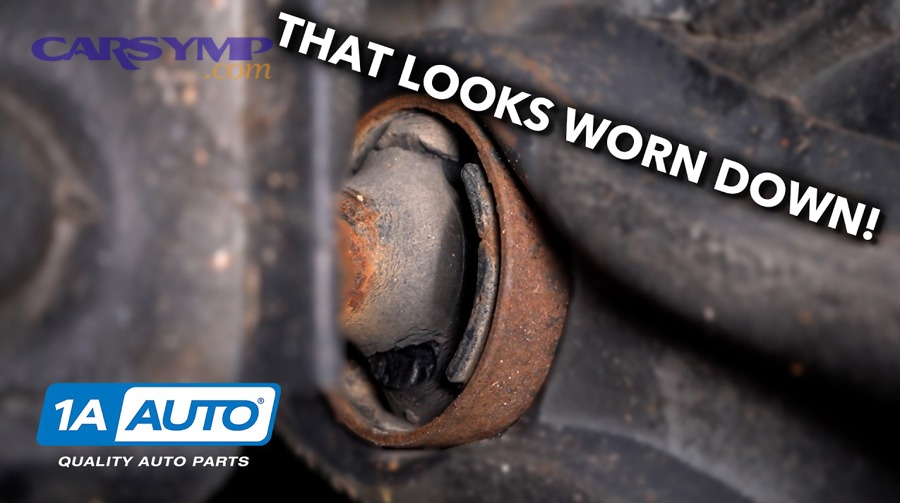
Look for torn rubber, shiny witness marks where metal has been contacting, bushing “walking” out of its bracket, or fluid leakage from hydraulic bushings on some vehicles.
Next, once you see witness marks, you can prioritize which joints are actually moving rather than guessing.
What causes clunking and vibration from bushings in the first place?
Most failures come from age-hardening, contamination (oil/road salt), heat cycling, and repeated high-load events like potholes, curb hits, or aggressive braking that overstress bonded rubber.
Next, understanding the root cause helps you prevent a repeat failure after repair.

Age and ozone cracking vs sudden impact damage
Age/ozone cracking creates gradual looseness and squeaks that evolve into clunks; impact damage creates a sudden change—“it started right after I hit something.”
After that, your timeline becomes a diagnostic tool: slow evolution suggests multiple bushings may be near end-of-life.
Oil contamination and rubber softening
Leaking oil or power steering fluid can soften rubber, making it tear easier and lose its bonded strength, which increases movement and noise.
Next, if you find contamination, fix the leak first or the new bushing can degrade early.
Heat cycling and hardened rubber that transmits vibration
As rubber hardens, it stops isolating small vibrations, so you feel more buzz even before a dramatic clunk appears.
In other words, vibration can be the “early warning,” while clunking is the “late-stage” symptom.
Incorrect torque at ride height
Many suspension bushings must be tightened at normal ride height; if tightened while hanging, the rubber is pre-twisted and tears prematurely.
Next, this detail is crucial to getting a long-lasting fix.
How to pinpoint the corner and the exact bushing with simple checks
Use a how-to sequence with five steps: listen for direction, tie it to load, verify visual wear, check deflection, then confirm by comparing side-to-side.
To begin, the goal is not to “find any play,” but to find abnormal movement that matches the exact symptom you feel.

Step 1: Map the clunk to a driving input
Write down whether it happens on braking, acceleration, turning, or bumps; this narrows the candidate list fast because each input loads different bushings.
Next, you’ll use that map to choose which area to inspect first.
Step 2: Do a side-to-side comparison
If the sound feels left-biased, compare left vs right bushings for tearing and witness marks; uneven wear is common due to pothole patterns and curb contact.
After that, any mismatch in bushing position or rubber integrity becomes your primary suspect.
Step 3: Load the joint in the same direction as the symptom
For brake/accel clunks, load the control arm fore-aft; for bump clunks, load the stabilizer bar and links; for rear instability, load trailing arms and subframe mounts.
Next, matching the force direction is what makes the pry test reliable.
Step 4: Look for “movement plus noise” together
Movement alone can be normal compliance; movement with a click/knock indicates the bushing is slipping or contacting metal.
To connect this to your road-test, the same knock you hear should be reproducible with controlled loading.
Step 5: Confirm with a short re-test after tightening obvious loose hardware
Loose sway bar brackets or link nuts can mimic bushing noise; if you tighten them and the sound changes, you’ve isolated a contributor.
Next, if the sound remains, you’ve strengthened the case for bushing replacement.
How does bushing-related noise affect alignment, tire wear, and handling?
Worn bushings can change toe and caster dynamically under load, which makes the car feel unstable and can create uneven tire wear even if a static alignment “looks fine.”
Next, this explains why many drivers replace parts but still feel vibration until alignment and compliance are both addressed.

Dynamic toe change and feathered tire edges
If a control arm bushing allows the wheel to move rearward under braking, the toe can shift and scrub the tire, leading to feathering and a humming vibration.
After that, even new tires can wear fast if the compliance issue remains.
Why steering feels vague or “delayed”
Bushings act like elastic links; when they’re worn, your steering input first compresses the bushing before the wheel changes direction, so the car feels slow to respond.
Next, this delay often gets worse at highway speed and in crosswinds.
Brake shimmy that looks like warped rotors
Some brake shudder comes from bushings allowing oscillation during braking, so the steering wheel shakes even with good rotors and balanced wheels.
In other words, don’t assume rotors are the only cause of brake vibration.
A short table to connect symptom → likely geometry impact
This table helps you translate what you feel into which alignment behavior is most likely changing under load.
Use it to decide whether an alignment check should be part of your repair plan.
| Symptom | Most likely dynamic change | Common result |
|---|---|---|
| Clunk under braking | Toe/caster shift as arm moves rearward | Pull, instability, feathered wear |
| Vibration after bumps | Transient toe oscillation | Steering shimmy, road texture amplification |
| Rear “wiggle” over uneven pavement | Rear steer from toe-control compliance | Lane-change drift, rear-end looseness |
| Vague steering on-center | Compliance delay before wheel responds | Overcorrection, wandering |
What to expect from repair: process, results, and common mistakes
Repair typically involves replacing the worn bushing or the entire arm, restoring controlled movement and reducing noise, vibration, and dynamic alignment shifts.
Next, choosing the right repair style prevents repeat labor and surprises.

Replace bushing only vs replace the whole arm
Bushing-only replacement can be cost-effective but requires press tools and precision; whole-arm replacement is faster and often includes a new ball joint, reducing risk of incomplete repair.
However, the best option depends on availability, corrosion level, and whether other joints are near end-of-life.
Why post-repair alignment is often necessary
When bushings set the arm’s resting position, changing them can shift toe/caster/camber; an alignment ensures the new tight compliance doesn’t lock in a bad tire-wear pattern.
Next, if your symptoms included pull or feathering, alignment becomes even more important.
Common mistake: tightening at full droop
If bonded rubber bushings are tightened while the suspension hangs, they’ll be twisted at normal ride height, leading to early tearing and a return of clunks or vibration.
After that, the fix is often re-torquing at ride height—something many people miss.
What “good” feels like after a correct fix
Expect sharper steering response, less steering-wheel buzz on rough roads, reduced knock over bumps, and more stable braking feel.
Next, if any vibration remains, it’s time to re-check tires, wheel balance, and mounts—but only after confirming compliance is restored.
When a video can help: quick visual cues for bushing play
A short visual guide can help you recognize the difference between normal elastic deflection and abnormal “jump” movement that creates clunks.
Next, use the video to learn what to look for before you inspect your own car.

Contextual Border
Now that you can diagnose the source and understand how it changes handling, the next section expands into less obvious decision points and edge cases that often determine whether the repair lasts.
Supplementary checks and decision points that reduce repeat clunks
These additions focus on unique failure patterns, vocabulary relationships, and practical decision rules that help you avoid replacing the wrong parts or creating new noise after the repair.
Next, each subsection highlights a “small detail” that commonly makes a big difference.

Hydraulic bushings vs solid rubber: why the symptom can change
Hydraulic bushings can fail internally without obvious external tearing, so you may get vibration and vague handling before you see a dramatic split.
In contrast, solid rubber tends to show visible cracking and can develop a more obvious clunk once separation begins.
Cold-weather vs hot-weather behavior
In cold weather, hardened rubber transmits more vibration and can clunk sooner over bumps; in hot weather, softened rubber can allow more movement under torque, increasing brake/accel knocks.
Next, if your symptom is seasonal, temperature is a meaningful diagnostic clue.
Front vs rear lexical contrast: “clunk” vs “thud” perception
Front bushing failures often sound like a sharp clunk because steering geometry amplifies impact; rear failures often feel like a deeper thud plus a body shake because the cabin floor transmits it differently.
After that, using this contrast helps you avoid chasing the wrong axle.
After-repair NVH trade-offs
Stiffer replacement materials can reduce compliance-related clunks but may increase road feel and vibration; softer designs restore isolation but may wear faster under aggressive driving or heavy loads.
Tóm lại, long-lasting results come from matching the bushing design to how the vehicle is used, then torquing correctly and verifying alignment.
FAQ
Can bushings cause vibration without any clunking?
Yes—early-stage hardening or internal failure can transmit vibration before obvious knocking appears, especially during braking or on rough pavement.
Can a bad shock absorber mimic bushing noise?
Yes—a worn damper allows extra motion that can make existing bushing play louder; however, bushings typically create a distinct load-change knock that shocks alone don’t.
Why does the noise go away temporarily after rain or washing the car?
Moisture can lubricate contact points and reduce audible friction for a short time, but it doesn’t fix the underlying excess movement inside the bushing assembly.
Should you replace bushings in pairs?
Often yes—replacing left and right as a pair maintains balanced compliance and handling; if only one side is replaced, the car can feel uneven under braking or during lane changes.