


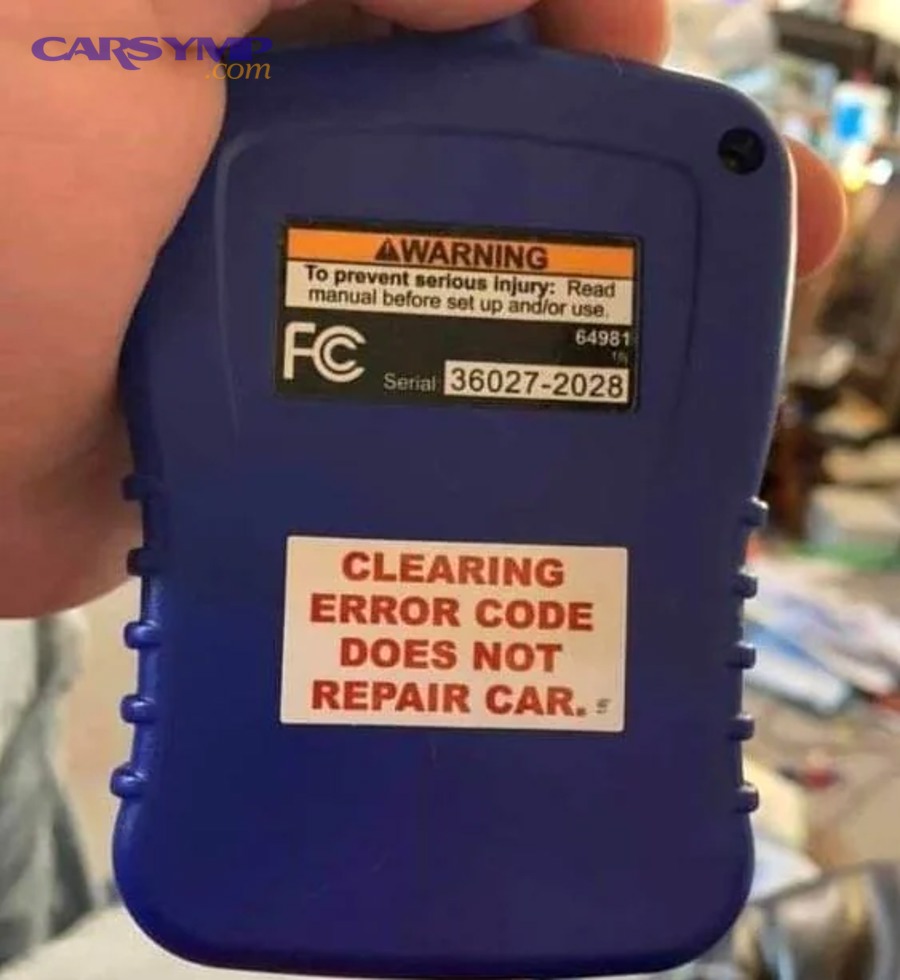
Clear diagnostic trouble codes only when you’re using the reset as a verification step after a real repair, or as a short, controlled test to confirm whether a fault returns; otherwise, clearing codes usually hides the symptom, not the cause.
Many drivers clear codes hoping the light stays off, but that can erase clues (freeze-frame data), reset emissions readiness monitors, and delay a needed fix—especially if the problem affects safety, drivability, or the catalytic converter.
You can still be practical: there are moments when clearing is appropriate, such as after replacing a known failed part or when a shop has completed diagnosis and wants to confirm the result with a road test.
To start, think in decisions—not guesses: when the warning appeared, what the car did right before it, and what risks exist if you keep driving. After đây, we’ll map a clear decision flow so you know when to reset and when to repair first.
Should you clear codes first to “see if it comes back”?
No, you generally shouldn’t clear codes first unless you’re doing a structured test, because it can erase evidence, reset readiness monitors, and delay the real repair while the same fault continues underneath. Next, let’s separate “safe to reset” from “must fix first.”

Why clearing first often backfires
Cụ thể, modern vehicles store more than a light-on signal: they store code type (confirmed/pending), enabling conditions, and freeze-frame snapshots of engine load, temperature, and fuel trim at the moment the fault triggered. Clearing wipes key context that helps you avoid replacing the wrong part.
Besides, many faults are intermittent. If you clear too early, the vehicle may need multiple drive cycles before the fault reappears, which creates a false sense of “it’s gone,” even though the underlying issue is still present.
When a “clear-and-watch” test is actually valid
Để minh họa, if you’ve already inspected obvious basics (loose gas cap, visibly damaged vacuum hose, obvious connector unplugged after recent work) and you’re intentionally verifying whether the issue was a one-time event, a controlled reset can be acceptable.
However, treat it like a test protocol: record the code(s), note the conditions, and monitor whether it returns under the same conditions. In other words, clearing becomes step 2 or 3—not step 1.
What to do before you clear anything
Quan trọng hơn, always capture the information first: scan codes, freeze-frame, and readiness status; then decide. If your scan tool supports it, save a report or screenshot so you can compare “before vs after.”
After that, you can reset in a controlled way only if the risk level is low and you have a plan for what you’ll do if the fault returns.
When is it safe to clear codes after a repair?
Yes, it’s safe to clear codes after a repair when the underlying cause has been corrected, the vehicle runs normally, and you’re using the reset to confirm the fix and speed up confirmation testing. Next, we’ll define what “underlying cause corrected” really means in practice.

Clear codes as a verification step, not a “solution”
Tóm lại, clearing codes is best used to validate that a fix worked: replace a failed sensor, repair wiring, fix a vacuum leak, correct a fuel delivery issue, or address ignition misfires—then reset and confirm the fault does not return.
To keep the flow logical, think of the reset as your “checkpoint.” If the checkpoint stays clean through repeated conditions that previously triggered the fault, you can trust the repair more.
What “fixed” looks like beyond the warning light
Cụ thể hơn, a true fix means the root condition is gone: stable fuel trims, smooth idle, no misfire counters climbing, normal coolant temperature behavior, and no new pending codes forming after cold starts and varied driving.
In addition, if the code was emissions-related, you’ll want readiness monitors to complete normally without the code returning. That’s why it’s smart to check monitor status before and after a reset.
After repairs done by a shop
When a professional repair is completed, clearing codes is typically part of the delivery process—but the best shops also explain whether you need a drive cycle for monitors, and what to watch for in the next few days.
More importantly, ask what evidence led them to the repair decision (test results, smoke test, scope waveform, fuel pressure, etc.) so you’re not just relying on a “light off” outcome.
What risks do you take if you clear codes without fixing the issue?
Clearing codes without fixing the cause can hide an active problem, reset diagnostic evidence, and in some cases increase damage risk—especially with misfires, overheating, fuel/air imbalance, or catalytic converter-threatening faults. Next, we’ll categorize risk so you can decide fast under pressure.

Risk category 1: immediate safety or drivability
If you have stalling, severe shaking, sudden loss of power, overheating, oil pressure warnings, or brake/steering issues alongside a check engine light, clearing codes is the wrong move because it doesn’t remove the hazard. Ngược lại, you should diagnose and correct the condition first.
Also, if the engine enters a limp mode, a reset may temporarily restore power and mask the reason it protected itself—leading you to keep driving while the real fault persists.
Risk category 2: expensive component damage
Misfires and rich-running issues can overheat and damage the catalytic converter. Even if the light turns off after clearing, the underlying cause can still dump unburned fuel into the exhaust.
In that scenario, clearing codes can be financially risky because it encourages “drive it and hope,” which is exactly how small faults become big bills.
Risk category 3: emissions readiness and inspections
Clearing codes usually resets readiness monitors. That matters if you live in an area that checks readiness for inspection or if you need the car to be “inspection-ready” soon.
As a result, resetting right before an inspection can create a new problem: the car may fail readiness even though nothing is “broken” beyond the reset itself.
How do readiness monitors and drive cycles change the decision?
Readiness monitors are the vehicle’s self-tests; clearing codes often sets them back to “not ready,” so your next steps should include completing an appropriate drive cycle and confirming monitors set without the code returning. Next, we’ll turn this into a practical plan you can follow.

Why readiness matters even if the car feels fine
Many emissions faults don’t produce obvious symptoms. That’s why the vehicle uses monitors to evaluate catalysts, oxygen sensors, evaporative emissions, and more. If you clear codes, you may remove the historical “proof” the system used to identify the fault.
Consequently, you’ll need time and varied driving conditions for monitors to complete. If the fault is real, it often returns as a pending code first before the light comes back on.
What to check before and after clearing
Before clearing, note: confirmed vs pending codes, freeze-frame, and which monitors are ready. After clearing, track: when each monitor completes and whether any pending codes appear during the drive cycle.
To keep it simple, treat “pending + monitor incomplete” as an early warning that the issue may be returning—so you can stop and diagnose before it escalates.
Video: practical explanation of resets and readiness
Below is a related video that walks through how clearing codes interacts with monitors and why the light can stay off while a pending fault is still developing.
How do you decide: clear codes now or diagnose and fix first?
You can decide quickly by using a simple triage: if there are severe symptoms or high-risk codes, fix first; if it’s low-risk and you’ve documented data, clearing can be used as a controlled verification step. Next, we’ll make that triage tangible with a decision table.
This table contains a fast decision matrix showing when clearing codes is appropriate versus when you should diagnose and repair before any reset. It helps you avoid wiping clues and prevents “light off, problem still on.”
| Situation | Clear codes now? | Why | Better next step |
|---|---|---|---|
| Severe shaking, stalling, overheating, oil pressure warning | No | High safety and damage risk | Stop driving, diagnose root cause |
| Misfire codes, fuel trim extreme, strong fuel smell | No | Cat converter risk; real fault likely active | Fix ignition/fuel/air cause, then verify |
| Loose gas cap suspected, no drivability issues | Maybe | Low-risk if documented first | Tighten/replace cap, drive and monitor |
| Repair already performed (sensor/wiring/hoses replaced) | Yes | Reset is part of confirmation testing | Clear, complete drive cycle, rescan |
| Inspection coming soon | Usually no | Readiness may reset and fail inspection | Scan monitors first; plan drive cycle |
Use severity and system type, not just the light
Many drivers treat the check engine light as a single problem, but it’s actually a symptom indicator for many systems: ignition, fuel, air, emissions, sensors, and communication networks. Therefore, the “clear vs fix” decision should start with severity and system impact.
As a linking step, once you know the system family, you can choose the right test method instead of guessing.
Document-first rule
Always capture the code(s) and freeze-frame before any reset. If you’re using a basic scanner, write the codes down. If you have an advanced tool, save the report.
Then, and only then, decide whether your reset is a verification step (good) or a concealment step (bad).
Think in “conditions that triggered the fault”
Was it a cold start? Hard acceleration? Long idle? Highway cruise? Rainy day? Knowing the trigger conditions helps you reproduce the fault after a repair and confirms whether clearing actually changed anything.
Tiếp theo, we’ll connect this to a realistic diagnostic approach—especially if you’re unsure whether you need a shop.
What’s the best step-by-step approach before clearing codes?
The best approach is a short workflow: scan and record data, check for urgent symptoms, inspect the most common causes, test the suspected system, then clear only after you’ve corrected or verified a low-risk scenario. Next, we’ll break that workflow into actionable steps.
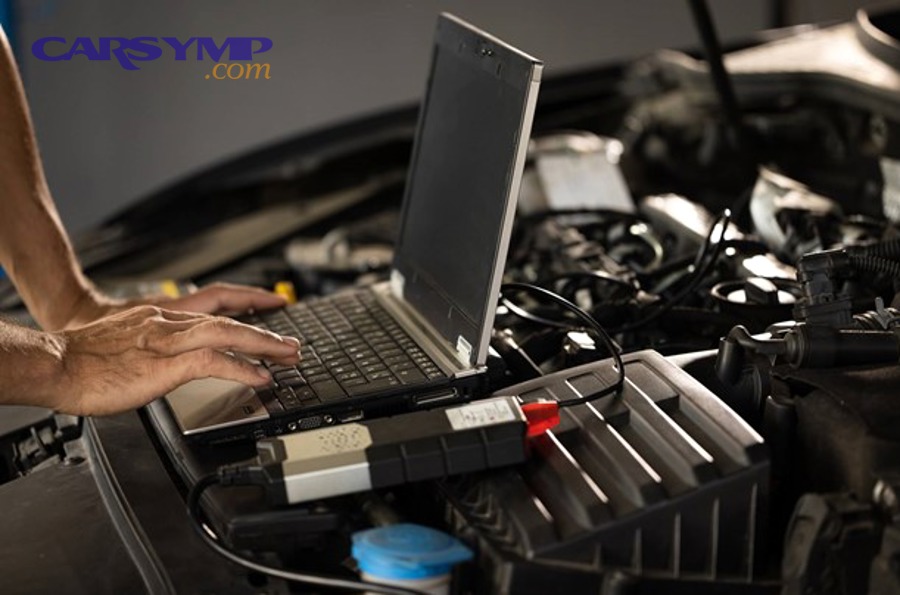
Step 1: scan, record, and classify
Record confirmed and pending codes, freeze-frame, and monitor status. Identify whether the code is powertrain-related (P), body (B), chassis (C), or network (U). This classification hints whether a simple mechanical check is likely, or whether electrical/network diagnosis is needed.
To connect the dots, classification helps you choose tools: smoke test for leaks, multimeter for wiring, fuel pressure gauge for delivery, or scan-tool live data for sensor plausibility.
Step 2: decide if driving is acceptable right now
If the vehicle is overheating, misfiring strongly, losing oil pressure, or has severe drivability issues, the priority is protection—not reset. If it drives normally and the light is steady, you may have time for structured diagnosis.
In the same flow, a flashing check engine light generally indicates an active misfire risk. In that case, stop and diagnose before continuing.
Step 3: perform quick, high-value inspections
Look for loose intake boots, cracked vacuum hoses, unplugged sensors after recent work, damaged wiring near hot exhaust areas, and obvious fluid leaks. Many real faults are physical and visible.
After that, check simple maintenance-related items that commonly trigger codes, such as a loose fuel cap (EVAP) or a dirty/contaminated sensor connector.
Step 4: test the suspected cause, then reset to confirm
If you replaced a part based on evidence (not assumption), then clear the codes and drive under the conditions that originally triggered the issue. If the code does not return and monitors complete, your confidence in the repair goes up.
Here is a natural internal link concept you can reuse across your site’s cluster: this is where a reader typically wants check engine light diagnosis guidance and a symptom-to-system mapping so they don’t confuse correlation with causation.
When should you avoid clearing codes because it affects repair outcomes or warranties?
You should avoid clearing codes when you’re dealing with intermittent faults, warranty documentation, recurring emissions issues, or complex electrical problems, because clearing can remove evidence that speeds diagnosis or supports coverage decisions. Next, we’ll show specific scenarios where patience beats reset.

Intermittent faults need evidence to catch
Intermittent wiring, failing sensors, and temperature-related faults may only trigger under rare conditions. Clearing codes can remove the only trace that pointed a technician toward the correct test path.
Therefore, if your issue is “it happens once a week,” do not reset repeatedly. Instead, keep a log and preserve codes until you’ve captured patterns.
Emissions and inspection timelines
If an inspection is approaching, a reset can create a readiness problem. Better to scan readiness first, then plan diagnosis and a drive cycle so the car can become ready naturally.
To keep your plan smooth, time your reset only when you can complete enough driving afterward to set monitors.
Warranty, extended coverage, and proof
Some warranty claims and shop return visits go smoother when diagnostic data is preserved. If you clear codes, a shop may need to reproduce the issue from scratch, which can cost time and money.
This is also where readers often want a transparent explanation of Diagnosis cost and shop process so they understand what they are paying for and why “just clearing it” rarely counts as a repair.
Contextual Border: from “clear vs fix” decisions to uncommon edge cases
From here, we move beyond the main decision workflow and into less common situations that change the “clear codes vs repair” answer—cases where the same reset action has different consequences depending on the vehicle, the fault pattern, or inspection and repair context.
Supplementary: What uncommon cases change “clear” into a bad idea or a smart test?
There are several edge cases where clearing codes is either especially harmful (because it erases rare diagnostic evidence) or uniquely useful (because it helps confirm a tricky intermittent condition). Next, we’ll outline the most important rare scenarios and what to do instead.

Case 1: network and module communication faults
U-codes and network-related issues can be intermittent and dependent on voltage, moisture, or connector tension. Clearing these can hide a pattern that a technician needs to trace which module dropped off the network and when.
Ngược lại, keep records of when the problem occurs (rain, car wash, cold morning, after battery replacement) and preserve scan reports for comparison.
Case 2: EV/Hybrid and battery-management learning
Some vehicles rely heavily on adaptation and learned values. While clearing codes doesn’t always erase all adaptations, power loss events or resets can affect how quickly the system re-learns. This can complicate short-term fuel economy, idle quality, or battery-management behavior.
So, if your vehicle is hybrid/EV or highly computerized, treat resets carefully and confirm whether a proper service procedure exists for your model.
Case 3: “pending only” codes that never mature
Pending codes can appear briefly when the system sees a borderline reading, then disappear if the condition stabilizes. Clearing aggressively can make you chase noise. Instead, monitor whether the same pending code repeats under similar conditions.
As a linking move, this is where symptom-based readers often search for Car Symptoms patterns like “rough idle only on cold starts” or “hesitation only under load,” because the pattern tells you whether the pending code is meaningful.
Case 4: post-repair confirmation for a hard-to-reproduce issue
In some rare cases, a controlled reset is useful after a targeted repair when the fault was difficult to reproduce. For example, after repairing a chafed wire that only shorted during engine torque movement, clearing and re-testing under the same conditions can confirm success.
To conclude this section, the principle stays the same: reset is a test tool, not a repair tool.
FAQ
This FAQ covers common follow-up questions drivers have after reading about clearing codes versus fixing the underlying issue, including what to watch for after a reset and when to seek professional diagnosis.

Can I clear the check engine light by disconnecting the battery?
Yes, disconnecting the battery can clear some codes and reset the light on many vehicles, but it can also reset readiness monitors, erase learned values, and remove diagnostic evidence. A scan-tool reset is usually more controlled because you can document data first.
Also, battery disconnects can create new issues on some vehicles, such as radio/security resets or temporary drivability changes while the system re-learns.
What if the light turns off by itself—do I still need to fix anything?
Sometimes the light turns off when the system stops detecting the fault for a number of drive cycles, but a stored history or pending condition may still exist. If the same symptom returns, you should scan for stored codes and look for repeated patterns rather than waiting for the light to stay on.
In addition, intermittent issues are often early warnings, not “self-healing” problems.
Can you drive when the check engine light is on?
It depends on severity: a steady light with normal drivability may allow limited driving, while a flashing light or severe symptoms suggests you should stop to avoid damage. If you’re unsure, treat it as a risk decision and scan immediately.
This question is so common that many readers look for a direct explainer titled Can you drive with check engine light on, because the right answer depends on symptoms, code family, and whether the light is flashing.
After clearing codes, how long until monitors are ready again?
There’s no single universal timeline because monitors need specific conditions (cold start, highway cruise, decel, idle time, fuel level range for EVAP) and different cars require different patterns. The best practice is to check monitor status with a scan tool and follow a drive cycle appropriate for your vehicle.
As a practical tip, plan for multiple trips over a few days rather than expecting readiness to complete in a single short drive.
When should I go to a shop instead of DIY?
If the issue involves repeated returns after resets, network/communication codes, complex electrical diagnosis, or high-risk drivability symptoms, a shop with advanced diagnostic tools can save money by preventing parts swapping. Ask for evidence-based testing and a clear explanation of next steps.
In that scenario, the fastest path is usually a structured test plan rather than repeated resets—because the real goal is a confirmed root cause, not just a light that’s temporarily off.