


A clutch kit is a packaged set of wear parts that restores smooth power transfer between your engine and manual transmission, and this guide explains what each component is, what it does, and why it matters when your clutch starts acting up.
Next, you’ll learn what’s “normally included” versus what’s optional in different kits, so you can avoid buying too little (and pulling the transmission twice) or buying parts you don’t actually need.
Then, we’ll connect the parts to real-world decisions—OEM vs aftermarket, stock vs performance, and when a flywheel choice can quietly make or break drivability.
Introduce a new idea: once the basics are clear, you can also spot the small, easy-to-miss details that cause noise, chatter, or premature wear after an install.
What is a clutch kit, and what does it do in a manual transmission?
A clutch kit is a replacement package for the manual-transmission clutch assembly that temporarily disconnects the engine from the transmission so you can start from a stop and change gears without grinding.
To better understand why each part exists, it helps to picture the clutch as a controlled “on/off dimmer” for torque rather than a simple switch.
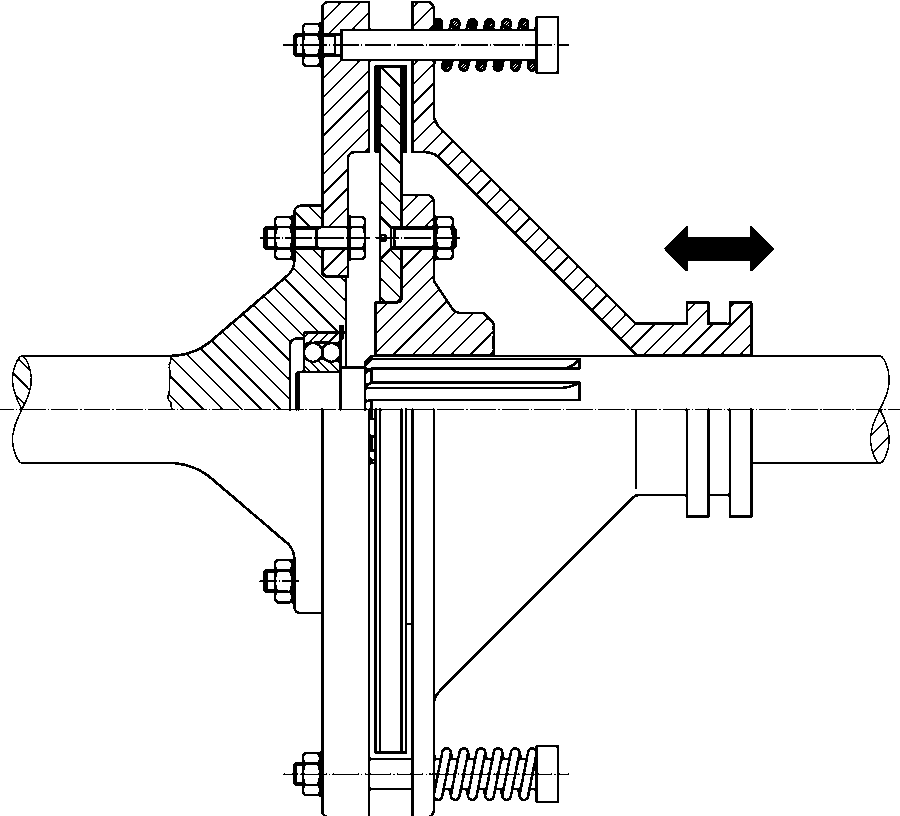
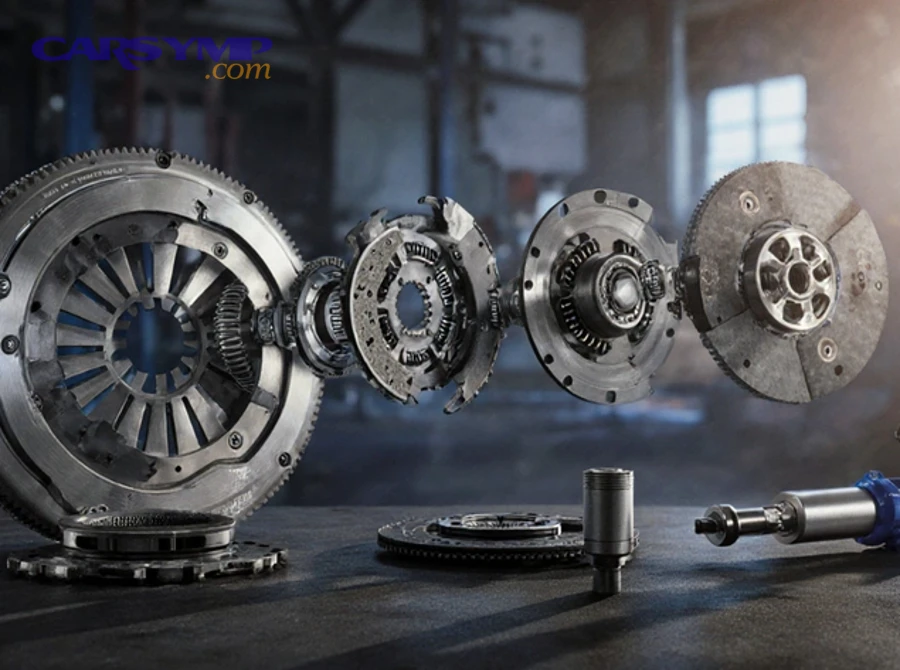
Inside a typical manual drivetrain, the flywheel bolts to the crankshaft and spins whenever the engine runs. The clutch disc sits between the flywheel and the pressure plate. When your foot is off the pedal, the pressure plate clamps the disc so engine torque flows into the transmission input shaft. When you press the pedal, the release mechanism unloads that clamping force so the disc can slip freely, letting you shift.
That “temporary disconnection” is the entire reason a clutch exists—and also the reason clutch kits are sold as a bundle: multiple wear surfaces and bearings work together, so replacing only one worn piece often leaves another weak link behind.
What does “clutch engagement” mean, and why do kits wear out?
Clutch engagement is the moment the pressure plate clamps the clutch disc against the flywheel so torque transfers into the transmission, and clutches wear out because friction and heat gradually thin the disc’s friction lining and fatigue the clamping and release parts.
More specifically, wear accelerates when the disc spends more time slipping instead of locking—common with stop-and-go traffic, towing, holding the car on a hill with the clutch, or repeated high-RPM launches.
A simple mental model is this: every time you slip the clutch, you turn motion into heat at the friction surfaces. That heat changes material properties over time, and the lining slowly loses thickness until the clutch can’t hold torque reliably.
According to a study by University of Zagreb from the Faculty of Mechanical Engineering and Naval Architecture, in 2021, dry clutch friction-plate wear measurements showed a temperature-related transient where the first wear-rate value after a temperature change could be about 100% higher than the stabilized wear rate.
Is a clutch kit the same thing as a clutch assembly?
No— a clutch kit is the boxed replacement parts, while a clutch assembly/system refers to everything involved in clutch operation, including related items like the flywheel, hydraulics or cable linkage, fork, and pedal hardware.
However, the confusion is understandable because some “complete” kits blur the line by adding extra related components such as a pilot bearing, alignment tool, or even a slave cylinder on certain applications.
If you’re planning a full clutch replacement, thinking in “system” terms is safer: you want every critical wear interface (friction + clamping + release + alignment) to be healthy, not just one part.
What parts are in a typical clutch kit?
There are 5 main clutch kit parts you’ll see most often—clutch disc, pressure plate, throw-out (release) bearing, pilot bearing/bushing, and an alignment tool—with the exact mix depending on whether the kit is basic or complete.
Below is how kits are usually packaged, and why the “same car” can have different kit contents at different price points.
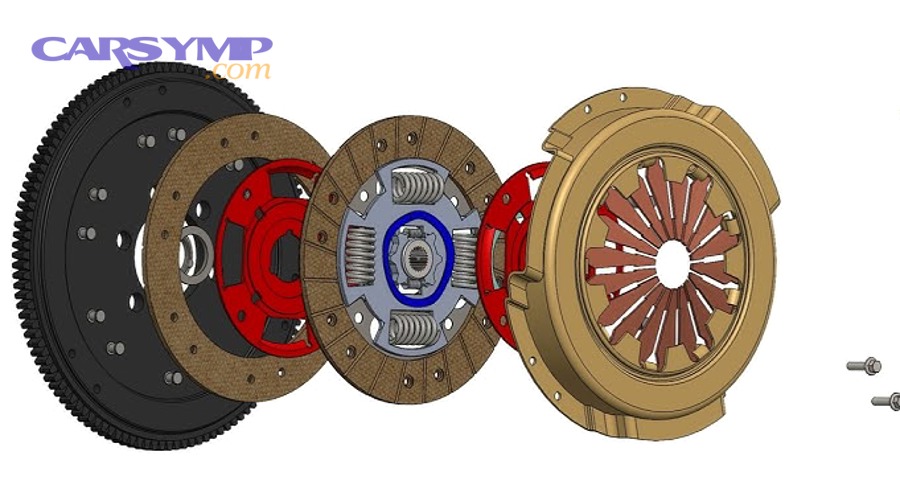
Most shoppers expect a clutch kit to include “everything.” In reality, manufacturers often split offerings into tiers:
- Basic kit: clutch disc + pressure plate (sometimes plus release bearing)
- Standard kit: disc + pressure plate + release bearing
- Complete kit: standard kit plus pilot bearing/bushing and alignment tool
- Extended/vehicle-specific kit: complete kit plus hydraulics (on some platforms) or flywheel (less common)
To make the differences obvious, the table below summarizes what you’re most likely to find in each tier and what each item does.
| Kit tier | Usually included | Why it matters |
|---|---|---|
| Basic | Disc, pressure plate | Restores friction surface and clamp force baseline |
| Standard | Disc, pressure plate, release bearing | Replaces the most common wear trio that works together |
| Complete | Standard + pilot bearing/bushing + alignment tool | Reduces install risk and improves alignment reliability |
| Extended | Complete + select related parts (varies) | Helps avoid repeat labor on known weak links |
Which clutch kit components are “always included” vs “sometimes included”?
The parts that are closest to “always included” are the clutch disc and pressure plate, while the release bearing, pilot bearing/bushing, and alignment tool are the most common “sometimes included” items because designs vary by vehicle and by kit tier.
Specifically, manufacturers know that disc + pressure plate is the core functional pair, but they also know that release and pilot components can be reused on some builds—so they offer different bundles to hit different budgets.
A good rule for DIY planning is:
- If you’re already pulling the transmission, replacing the release bearing is usually worth it.
- Replacing the pilot bearing/bushing is often smart when accessible, because a cheap part can create expensive labor later.
- Using an alignment tool is non-negotiable if you want an easier reinstall.
Do clutch kits include the flywheel?
No, clutch kits usually do not include the flywheel because the flywheel is a separate, higher-cost component that may be reusable after inspection or resurfacing.
However, the flywheel is still part of the “clutch sandwich,” so its surface condition directly affects how smoothly a new disc beds in.
If you’re getting a Clutch replacement cost estimate, note that the flywheel decision is one of the biggest variables: resurfacing is often cheaper than replacement, but replacement may be the better choice if the flywheel is cracked, deeply heat-spotted, out of spec, or a dual-mass unit with internal wear.
What is a clutch disc, and how does it work?
A clutch disc is a friction-lined, splined plate that sits between the flywheel and pressure plate, and it works by converting clamp force into torque transfer through controlled friction until the disc locks to the flywheel.
Next, you’ll see why the disc isn’t just “a flat plate,” and how its internal features affect smoothness, noise, and longevity.
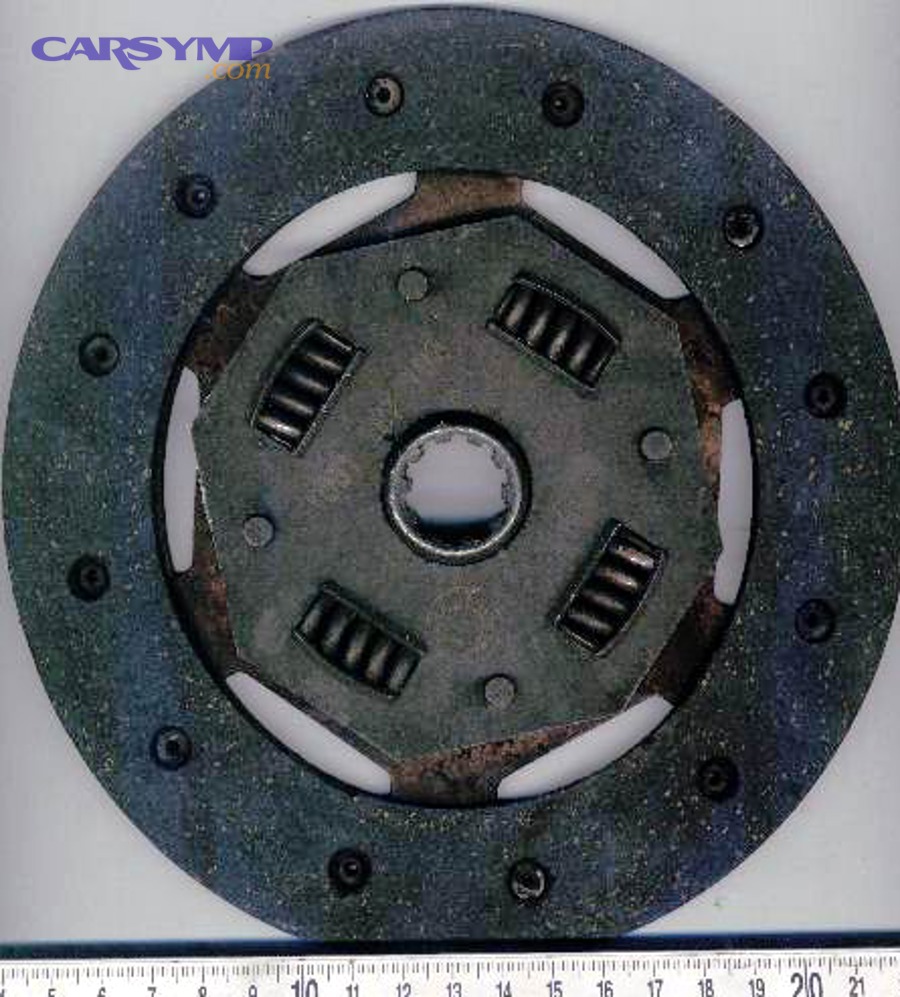
Think of the clutch disc as the part that “touches both worlds.” The outer lining contacts the engine-side flywheel and pressure-plate face, while the inner splined hub mates to the transmission input shaft. During engagement, the disc slips briefly to synchronize speeds. After that, it should hold without slipping.
When a clutch starts slipping under load, the disc is often the first suspect—but it’s rarely the only factor. Clamp force (pressure plate), surface condition (flywheel), contamination (oil/grease), and driver technique all influence whether the disc can hold.
What are the main parts of a clutch disc (friction lining, hub, springs)?
The main parts of a clutch disc are friction lining, steel core plate, splined hub, and (on most street cars) torsional damper springs, each designed to manage grip, alignment, and vibration.
- Friction lining: the “brake pad-like” material that wears down; it creates the coefficient of friction that transmits torque.
- Steel core: structural backbone that keeps the disc rigid enough to clamp evenly.
- Splined hub: the interface that locks the disc to the transmission input shaft.
- Damper springs: absorb torsional pulses from the engine, improving smoothness and reducing gear rattle.
If you’ve ever felt a clutch that engages like a light switch, you’ve experienced what happens when damping and friction behavior aren’t matched well to street driving.
Does a sprung hub clutch disc reduce vibration compared to an unsprung disc?
Yes, a sprung-hub clutch disc reduces vibration compared to an unsprung disc for most street applications because the springs absorb torque spikes, smooth engagement, and reduce drivetrain shock.
However, an unsprung disc can be optimal in narrow cases (certain racing setups) where immediate torque transfer and packaging constraints matter more than comfort.
- Sprung hub: better NVH (noise/vibration/harshness), more forgiving engagement, typically preferred for daily driving.
- Unsprung hub: more direct feel, harsher engagement, can increase chatter and drivetrain stress if used on the street.
According to a study by Dunarea de Jos University of Galati from the Mechanical Engineering Department, in 2024, testing across four clutch friction materials found mean coefficients of friction ranging from about 0.286 to 0.423, showing how friction composition can materially change how a disc behaves under load and temperature.
What is a pressure plate, and what does it do?
A pressure plate is a spring-loaded clamping unit that bolts to the flywheel and squeezes the clutch disc to transmit torque, then releases clamp force when the pedal-actuated mechanism unloads it.
To illustrate how this affects drivability, focus on one idea: the pressure plate controls how hard and how evenly the disc is clamped.
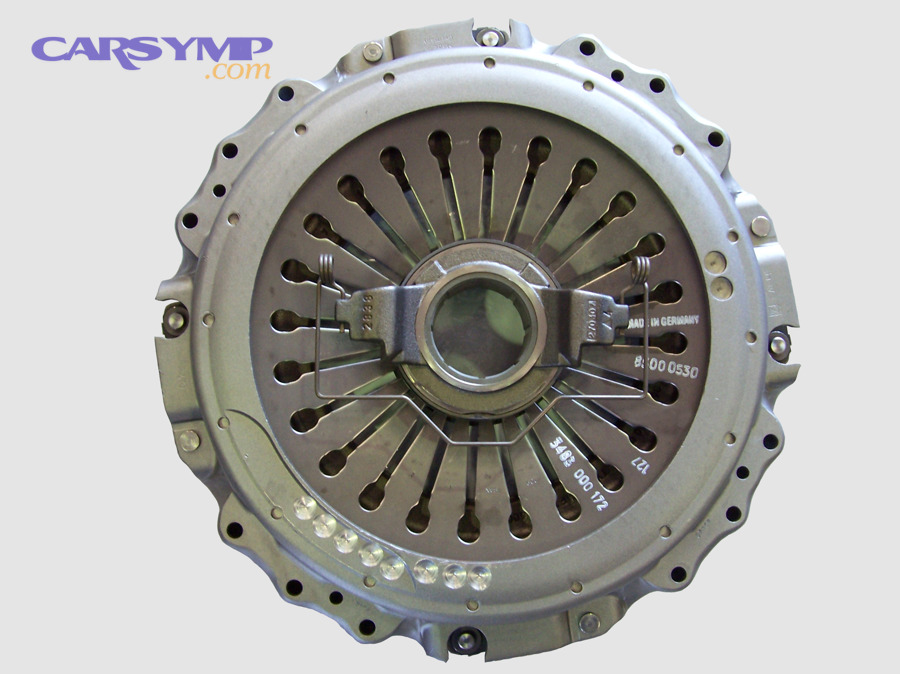
Most modern passenger vehicles use a diaphragm-spring pressure plate. The diaphragm spring acts like a conical spring: clamping force exists when it’s in its “loaded” position, and the release bearing presses on the spring fingers to reduce clamping and allow disengagement.
If the pressure plate loses clamping strength, even a brand-new disc may slip. That’s why disc-only replacements often disappoint—torque holding is a system outcome, not a single-part outcome.
How does the pressure plate create clamping force, and what causes it to slip?
The pressure plate creates clamping force through its spring mechanism (usually a diaphragm spring) that pushes the pressure ring against the disc, and it “slips” when clamp load is insufficient or the mating surfaces can’t generate enough friction.
- Weak or fatigued diaphragm spring (reduced clamp force)
- Hot spots or warping on flywheel/pressure-plate face (uneven contact)
- Contamination from oil or grease (reduced friction)
- Incorrect parts matching (disc material vs clamp load vs engine torque)
If you’re researching Clutch slipping symptoms and tests, the key diagnostic idea is “when does it slip?” Slipping that appears mainly under high gear/high load (like accelerating uphill in a higher gear) often points to clamp/friction limits rather than linkage issues.
Is a “heavy-duty” pressure plate always better for daily driving?
No, a heavy-duty pressure plate is not always better for daily driving because it often increases pedal effort, can narrow the engagement sweet spot, and may increase stress on related parts—even though it can hold more torque.
However, it can be the right choice if you’ve increased engine torque, tow frequently, or repeatedly overheat a stock clutch.
- Higher pedal effort can make stop-and-go driving tiring.
- More aggressive engagement can increase chatter and driveline shock.
- Added stress can shorten life of release components and hydraulics in marginal systems.
What is a throw-out (release) bearing, and why is it critical?
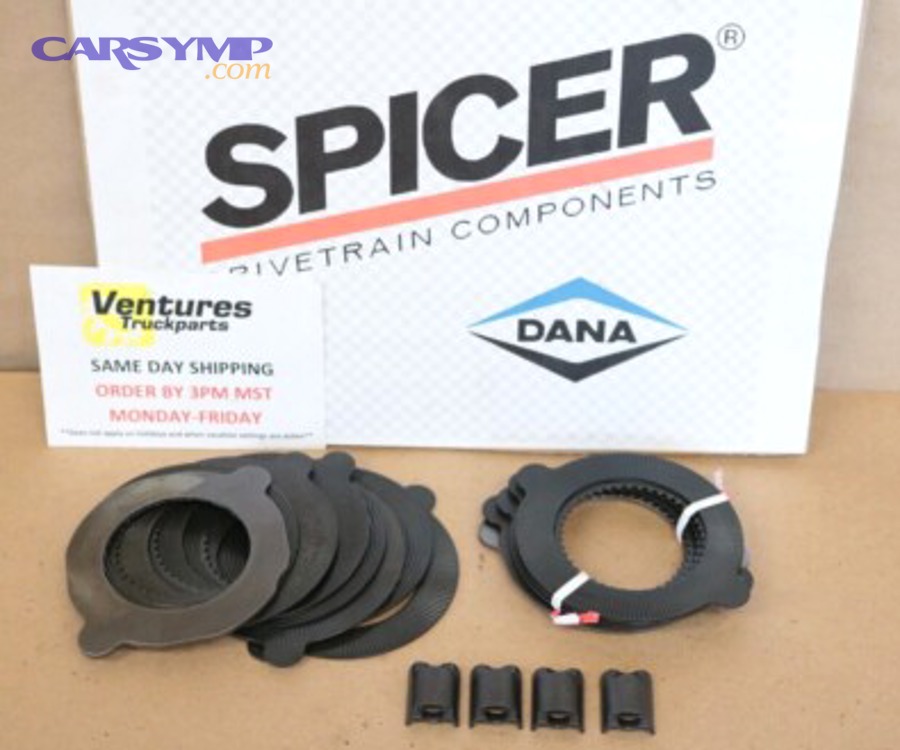
A throw-out (release) bearing is a thrust bearing that transfers pedal-driven force to the pressure plate’s diaphragm spring so the clutch can disengage smoothly, and it’s critical because failure can prevent clean shifts or create constant noise and heat.
Next, you’ll see the simplest symptom patterns that distinguish a release bearing issue from a disc or flywheel issue.
The release bearing lives at the boundary between “moving linkage parts” and “spinning clutch assembly parts.” When you press the pedal, the fork (or hydraulic mechanism) pushes the bearing into the diaphragm spring fingers. That contact happens under load, and it happens repeatedly—so lubrication, bearing quality, and alignment matter.
A worn release bearing doesn’t just make noise. It can also cause partial disengagement, which leads to hard shifting and accelerated synchro wear.
Can a bad throw-out bearing cause squealing only when the pedal is pressed?
Yes, a bad throw-out bearing can cause squealing only when the pedal is pressed because that’s when the bearing is loaded and spinning under thrust against the diaphragm spring.
However, you should still confirm the pattern: noise that occurs only with pedal pressure is a classic release-bearing signature, while noise that changes with vehicle speed or gear selection can point elsewhere.
- Load-dependent contact: the bearing only carries significant thrust during pedal application.
- Speed-dependent spinning: it spins under load when contacting the diaphragm fingers.
- Heat/noise escalation: worn races can howl louder as friction increases.
If your clutch pedal feel changes at the same time—like a rough “gritty” sensation—that further strengthens the case for replacing the release bearing during a clutch job.
What is a pilot bearing or pilot bushing, and do you need to replace it?
A pilot bearing (or pilot bushing) is a small support bearing in the crankshaft or flywheel that centers the transmission input shaft, and you often should replace it because a worn pilot can cause noise, vibration, and shifting difficulties that mimic other clutch problems.
To better understand the “replace it or not” decision, focus on one idea: the pilot bearing’s job is alignment under rotation.
On many vehicles, the pilot bearing supports the input shaft tip so the shaft doesn’t wobble. If it fails, the input shaft can drag or misalign, making disengagement feel imperfect even with a new disc and pressure plate.
Is the pilot bearing/bushing included in most kits, and should you replace it every time?
Yes, many “complete” kits include the pilot bearing/bushing, and you generally should replace it every time you’re already doing clutch work because it’s inexpensive and labor access is the hard part.
However, some applications don’t use a conventional pilot bearing, and some kits omit it—so you should verify your specific drivetrain design.
- Prevent shifting issues: pilot drag can make gear engagement stubborn even with the clutch fully depressed.
- Avoid repeat labor: the transmission has to come out again if it fails later.
- Reduce vibration risk: worn pilot support can amplify driveline chatter and input-shaft bearing load.
If your build includes tricky swaps or nonstandard parts matching, pilot-bearing fitment and depth become even more important, because the input shaft must be supported in the correct location to prevent side loading and premature wear.
How do you choose the right clutch kit for your vehicle and driving style?
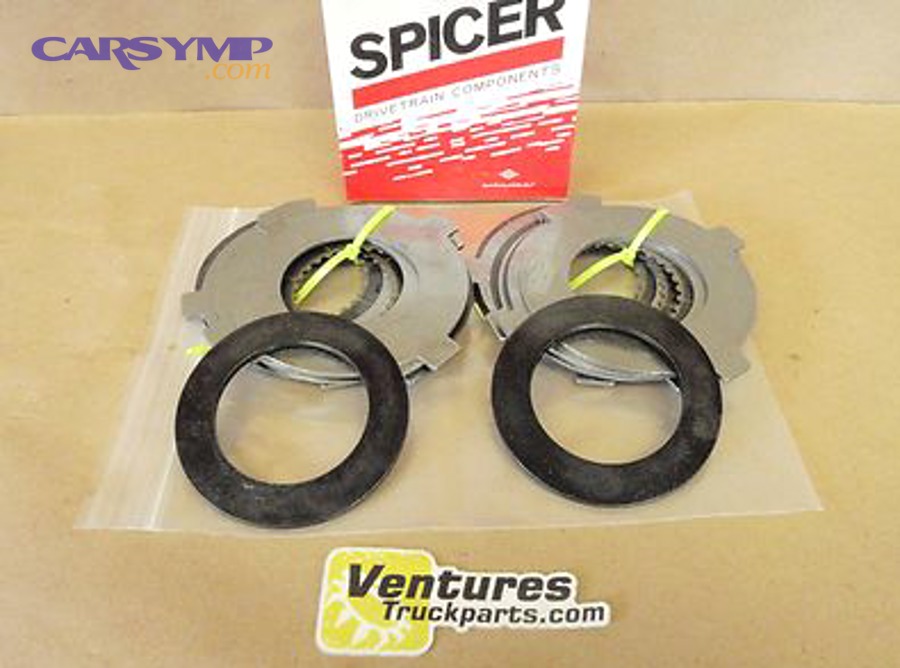
An OEM-style kit wins in daily drivability, an aftermarket equivalent is best for value/availability, and a performance kit is optimal for higher-torque or heat-heavy use, as long as you match the kit to your flywheel type and real driving demands.
Next, you’ll turn “marketing labels” into clear decision criteria you can actually use.
Choosing a clutch kit isn’t about picking the “best” kit—it’s about picking the best match. The right kit holds torque reliably while staying smooth enough for your goals. The wrong kit can hold torque but feel unpleasant, or feel great but slip under load.
OEM vs aftermarket clutch kits: which is better for beginners and daily drivers?
OEM-style kits are usually better for beginners and daily drivers because they prioritize smooth engagement, predictable pedal feel, and low noise, while aftermarket kits can be better when you need availability, price options, or upgraded materials.
However, the quality gap depends on brand, not the word “aftermarket.”
- Prioritize stock-like engagement if you drive in traffic.
- Choose known reputable suppliers with consistent friction materials and clamp specs.
- Avoid aggressive materials unless you truly need them, because they can increase chatter.
If you’re getting a Clutch replacement cost estimate, ask for two line items: one for an OEM-style kit and one for a mild upgrade. The price difference is often smaller than expected, and the drivability difference can be larger than expected.
Stock vs performance clutch kits: what changes in pedal feel, engagement, and longevity?
Stock kits win in comfort and predictability, performance kits are best for holding higher torque and resisting heat, and “hybrid” street-performance kits can be optimal when you want extra holding power without giving up too much smoothness.
Meanwhile, longevity depends more on heat management and driving style than on the word “performance.”
- Pedal feel: performance pressure plates often increase effort.
- Engagement: aggressive materials can feel grabby and shorten the “smooth slip” window.
- Heat tolerance: performance materials typically tolerate higher temperatures before fade.
- Noise and chatter: the more aggressive the setup, the more you should expect NVH tradeoffs.
If you want more torque capacity but still daily-drive, aim for a street-oriented kit that advertises drivability as a design goal, not just torque numbers.
What else should you replace during a clutch job to avoid doing the work twice?
There are 6 common “while-you’re-in-there” items to evaluate during a clutch job—flywheel surface, rear main seal area, release fork/pivot, hydraulics, pilot bearing, and fasteners/hardware—because any one weak link can force repeat labor.

Next, you’ll see which items are truly conditional versus the ones that are cheap insurance.
The labor to remove a transmission is significant, so the smartest clutch job is the one you only do once. That doesn’t mean replacing everything blindly; it means replacing the parts most likely to fail soon or undermine the new clutch.
Should you resurface or replace the flywheel when installing a new clutch?
Resurfacing wins for cost and reuse when the flywheel is within spec and structurally sound, replacing is best when there are cracks, severe heat spots, or dimensional issues, and a new matched flywheel is optimal when converting setups or dealing with a worn dual-mass unit.
However, the correct choice depends on flywheel type and condition, not just budget.
- Resurface if the surface is glazed or lightly heat-spotted and the shop can maintain correct step height (where applicable).
- Replace if there are cracks, deep scoring, excessive runout, or if a dual-mass flywheel shows internal looseness/noise.
- Match if you’re changing clutch type/material and want the best bedding-in outcome.
A dual-mass flywheel is specifically designed to damp torsional vibration, and research and engineering literature commonly emphasize its NVH advantages over single-mass designs.
Do you need an alignment tool, and what happens if alignment is off?
Yes, you need a clutch alignment tool because it centers the clutch disc to the pilot bearing/bushing, and if alignment is off the transmission input shaft may not slide in, or the disc may bind and cause poor disengagement even after installation.
More importantly, proper alignment turns a frustrating transmission install into a controlled, predictable process.
- Transmission won’t seat fully against the bellhousing without force.
- Input shaft splines won’t engage smoothly.
- Clutch may drag, causing hard shifting and early wear.
If you’re dealing with a hydraulic clutch, plan for Clutch hydraulic system bleeding needs as part of the job. Even if the mechanical parts are perfect, air in the system can prevent full disengagement and mimic mechanical problems.
Contextual Border: You now have the complete “core” understanding—what each clutch kit component is, how it functions, and how to choose and bundle parts to avoid repeat labor. Next, we’ll go beyond the basics into easy-to-miss details that cause the most frustration after an install.
What clutch-kit details are easy to miss (and cause problems later)?
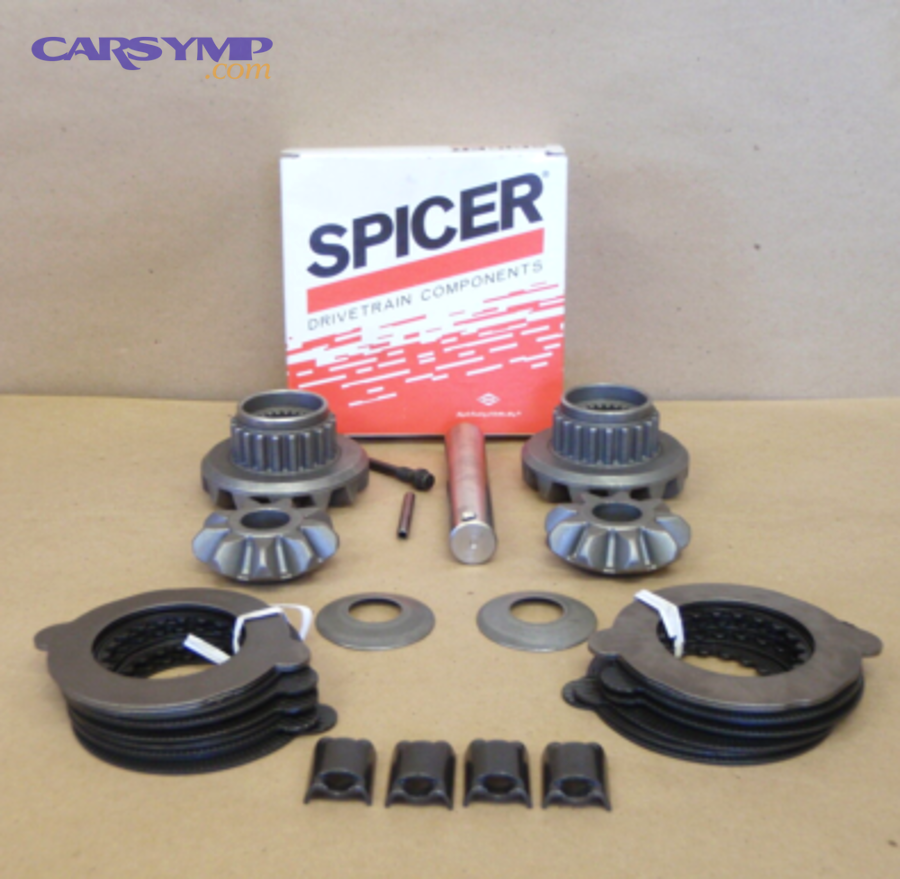
There are 4 easy-to-miss clutch-kit details—flywheel type compatibility, concentric slave cylinder risk, symptom mapping (chatter vs slip), and friction-material break-in behavior—because these micro-details often decide whether the car feels smooth or miserable after the job.
Next, we’ll use “smooth vs chattery” and “quiet vs noisy” contrasts to make these pitfalls obvious.
Single-mass vs dual-mass flywheel: which clutch kits are compatible, and what breaks if you mix them?
Single-mass flywheels win in simplicity and serviceability, dual-mass flywheels are best for vibration and drivability, and conversion setups can be optimal for specific builds—but mixing incompatible parts can create chatter, noise, or premature wear.
However, compatibility isn’t just bolt pattern; it’s also friction surface design, damping expectations, and clutch tuning.
- Chatter/judder during takeoff because the system damping changed.
- Gear rattle at idle because torsional vibration is no longer absorbed.
- Premature wear if the disc material and clamp behavior don’t match the flywheel’s characteristics.
Engineering and technical papers routinely discuss dual-mass flywheels as a tool to improve NVH and drivability by damping torsional inputs, which is exactly why some vehicles feel noticeably harsher after an uninformed conversion.
What is a concentric slave cylinder (CSC), and should you replace it “while you’re in there”?
A concentric slave cylinder (CSC) is a hydraulic release unit mounted around the transmission input shaft, and you should often replace it during clutch service because failure can instantly remove clutch control and require transmission removal again.
More specifically, CSC designs hide the slave inside the bellhousing area, so access is tied to the same labor you’re already doing.
- Labor overlap: you’re already paying the “transmission out” labor.
- Failure impact: leaks can contaminate the new clutch disc.
- Safety/control: losing clutch actuation can create a loss-of-control scenario in certain conditions.
Clutch chatter vs clutch slip: how do symptoms map to specific components?
Slip wins as the clearest sign of torque-holding failure, chatter is best viewed as a smoothness/alignment/surface issue, and noise can be optimal as a clue when you map it to “pedal in vs pedal out” behavior.
However, you need a consistent symptom map to avoid replacing the wrong part.
- Slipping under load (higher gear, acceleration): often disc wear, weak pressure plate, contamination, or mismatched kit.
- Chatter/judder on takeoff: often flywheel surface issues, uneven bedding, disc material mismatch, improper break-in, or mount/driveline issues.
- Squeal only when pedal is pressed: commonly release bearing.
- Hard shifting with clutch fully pressed: pilot bearing drag, air in hydraulics, or incomplete release geometry.
When you perform Clutch slipping symptoms and tests, pair the test with context: does it slip only when hot, only under high load, or consistently? That “when” often tells you whether you’re dealing with friction limits, heat fade, or a release/actuation problem.
Do performance friction materials (organic vs ceramic/kevlar) change break-in and daily drivability?
Organic friction wins in smooth engagement and daily drivability, ceramic-type materials are best for heat tolerance and torque holding, and kevlar blends can be optimal for longevity in certain street-performance setups—but all of them change break-in needs and engagement feel.
In addition, break-in isn’t optional: it’s how you condition the surfaces so the new disc and flywheel/pressure plate mate evenly.
- Engagement window gets narrower (more “on/off” feel).
- Noise and chatter risk increases if the system isn’t tuned for it.
- Heat tolerance improves, so repeated high-load use is less likely to cause slip from fade.
If your goal is a calm daily driver after a clutch job, choose the mildest material that still meets your torque needs—and treat break-in as part of the install, not an afterthought.
Evidence note (why heat and wear behavior matter): According to a study by the University of Zagreb from the Faculty of Mechanical Engineering and Naval Architecture, in 2021, controlled testing showed that temperature shifts can create significant short-term wear-rate transients in dry clutch friction material measurement, highlighting how sensitive clutch wear behavior can be to thermal conditions.