


Old coolant (also called antifreeze) should be disposed of legally and safely by collecting it in a sealed container, keeping it uncontaminated, and taking it to an approved drop-off or recycling program—never dumping it into drains, onto soil, or into stormwater systems.
Next, it helps to know why disposal rules exist, because toxicity and contamination risk explain why many areas treat used coolant as household hazardous waste and why acceptance rules can be strict at drop-off sites.
Then, you’ll need clear options for where to take used coolant—such as a municipal household hazardous waste facility, a county recycling site, or an automotive shop that accepts it—plus what to do if your area requires appointments or has quantity limits.
Introduce a new idea: once you understand the rules and locations, the safest results come from using a simple decision process—how you store, label, and transport used coolant determines whether it stays recyclable and whether you avoid spills, fines, and environmental harm.
What is “used coolant (antifreeze),” and why are there disposal rules for it?
Used coolant (antifreeze) is a heat-transfer fluid from your engine’s cooling system that has picked up contaminants and breakdown products over time, making it a regulated, high-risk liquid in many areas because it can be toxic and polluting if released improperly.
To better understand the “why” behind the rules, it helps to connect coolant’s job in the engine to what happens after it’s drained—because that “after” is where safety and legality matter most.

Engine coolant circulates through the radiator and engine passages to move heat away from the combustion process. Fresh coolant is formulated with a glycol base (commonly ethylene glycol or propylene glycol) plus corrosion inhibitors that protect aluminum, iron, and other metals inside the cooling system. After months or years of heat cycles, those inhibitors deplete, the pH can drift, and the fluid can carry dissolved metals, rust residue, silicate drop-out, or other contaminants. In plain terms: the fluid becomes less protective for your engine and more risky to dump.
Disposal rules exist for three practical reasons that matter to DIY car owners:
- Safety risk to people and animals. Ethylene glycol–based coolant is especially dangerous if ingested, and spills can be attractive to pets or wildlife. Even small exposures can become a medical emergency, which is why “keep it sealed and out of reach” is not optional—it’s core risk control.
- Environmental harm. Coolant released into soil or waterways can contribute to water quality problems and ecosystem damage. Rules focus on preventing releases into storm drains because stormwater often discharges to streams without treatment.
- Contamination and enforcement. Once coolant is mixed with other fluids, it can become harder (or impossible) to recycle responsibly. That drives strict “don’t mix” and “approved drop-off only” policies.
When you connect these reasons back to DIY maintenance, the story becomes simple: the same “do it right” mindset you use during maintenance—especially during a coolant flush—must continue through storage, transport, and final disposal.
Is used coolant considered hazardous waste?
Yes—used coolant is often treated as hazardous or household hazardous waste, because (1) it can contain toxic glycol and harmful contaminants, (2) it can pollute waterways and soil, and (3) many local programs legally restrict disposal routes to approved drop-offs to prevent dumping.
However, the most important practical point is not the label; it’s the behavior. Even if your specific area uses different terminology, the safe assumption is that used coolant is not a normal household liquid and should be handled like a regulated material: sealed, labeled, and delivered to a program that explicitly accepts it.
The “hazardous” question also changes based on who is generating the waste. A household DIYer is usually covered by household hazardous waste programs. A business, fleet, or shop may face different rules, recordkeeping, and transport requirements. That distinction is why many drop-off sites ask for proof of residency or impose household quantity limits.
What happens if used coolant gets into soil, storm drains, or waterways?
Used coolant entering soil, storm drains, or waterways creates a harmful exposure pathway by spreading toxic chemicals and oxygen-demanding contaminants into places they don’t belong, potentially harming animals, degrading water quality, and creating cleanup liability for the person who dumped it.
Specifically, storm drains are a critical “no” zone because stormwater systems often bypass treatment plants and flow directly to creeks, rivers, or lakes. When coolant goes there, it doesn’t get “filtered out later”; it becomes part of the ecosystem’s problem. That’s why many local rules emphasize “never pour into drains” more strongly than any other instruction.
On the human side, accidental exposure can happen faster than people expect: a spill on a driveway can be tracked on shoes, handled by kids playing outside, or licked by pets. The disposal rules are designed to eliminate these everyday pathways—not to inconvenience you.
According to a study by the University of Pennsylvania from the Smell and Taste Center (University of Pennsylvania Medical Center), in 2006, experiments with dogs and rats found antifreeze was not preferred to water and intake changed with concentration—showing that poisoning risk often comes from incidental exposure, not “preference,” which is why preventing spills is essential.
Where can DIY car owners legally take old coolant for recycling or drop-off?
There are three main legal places DIY car owners can take old coolant—municipal household hazardous waste (HHW) facilities, recycling/drop-off centers that accept antifreeze, and participating auto repair/parts locations—based on your local program rules and whether your coolant is clean and unmixed.
Next, the key is matching your situation to the right destination, because the “best” option is the one that actually accepts your coolant in its current condition.
Which places commonly accept used coolant: HHW facilities, recycling centers, or repair shops?
There are 3 common acceptance routes for used coolant—HHW facilities, public recycling/drop-off centers, and automotive shops—based on (1) household vs commercial status, (2) contamination risk, and (3) how the site processes or consolidates liquids.
1) Household Hazardous Waste (HHW) facilities (most reliable for households)
HHW sites are designed for “problem liquids” like antifreeze, paint, solvents, and pesticides. They are often the safest bet when you are unsure whether your coolant is contaminated. Many HHW programs also handle related items, like old chemicals and automotive fluids, which makes them convenient if you’re cleaning out a garage.
What to expect:
- Appointment windows or collection events on specific dates
- Proof of residency requirements
- Quantity limits (for example, a few gallons per visit)
- Instructions like “keep in original container” or “label clearly”
2) Recycling or multi-material drop-off centers (good for clean, unmixed coolant)
Some counties and cities run recycling centers that accept antifreeze alongside used oil, filters, and batteries. These locations can be quick and inexpensive, but they may be strict about contamination. If your coolant is mixed with oil, fuel, or unknown liquids, they may refuse it.
What to expect:
- Specific acceptance hours for fluids
- Rules about containers and labeling
- Separate drop tanks or drums for “used antifreeze only”
3) Auto repair shops or service locations that accept coolant (situational, call first)
Some shops, quick-lube locations, or fleet service centers accept used coolant—especially if they already manage waste antifreeze through a recycler. Many will only accept coolant generated in-house, and some may accept small amounts from customers as a courtesy. You should assume “no” until confirmed.
What to expect:
- “Call ahead” requirement
- Possible fees
- Strict “no mixed fluids” policies
The practical takeaway is simple: HHW is the universal fallback, while recycling centers and shops can be faster if your coolant is clean, clearly labeled, and within their limits.
How do you confirm a location will accept coolant before you drive there?
You confirm acceptance by checking four variables—(1) “Do you accept used antifreeze/coolant from residents?”, (2) “How much can I bring?”, (3) “What container and labeling do you require?”, and (4) “Do you refuse coolant that’s mixed or contaminated?”—so you avoid wasted trips and refusals.
Then, use a quick call or website check to lock in the details. The goal is not perfection; it’s certainty. A 60-second phone call can prevent you from arriving with the wrong container, an unlabeled jug, or an amount over the limit.
Use this “call-ahead script”:
- “I have X gallons of used engine coolant from a DIY drain. Do you accept it from households?”
- “Does it need to be in the original container, or is a sealed, labeled container fine?”
- “Do you accept it if it has rust residue, or do you treat that as contaminated?”
- “Do I need an appointment or proof of residency?”
This is also the moment to plan your broader maintenance timeline. If you’re scheduling a coolant flush, knowing the drop-off hours in advance helps you avoid storing hazardous liquid longer than necessary. It also helps you align cost decisions—if you’re comparing professional service vs DIY, your disposal plan becomes part of the real-world Coolant flush cost estimate.
What are the “don’ts” when disposing of old coolant?
There are five major “don’ts” when disposing of old coolant: don’t pour it into drains or storm systems, don’t dump it on soil, don’t put it in regular trash, don’t mix it with other fluids, and don’t store it in food containers—based on legal risk, environmental harm, and safety exposure.
However, these mistakes happen most often when people rush the final step after maintenance, so this section is designed to be a hard stop before you do something irreversible.
Can you pour coolant into a drain, toilet, storm sewer, or on the ground?
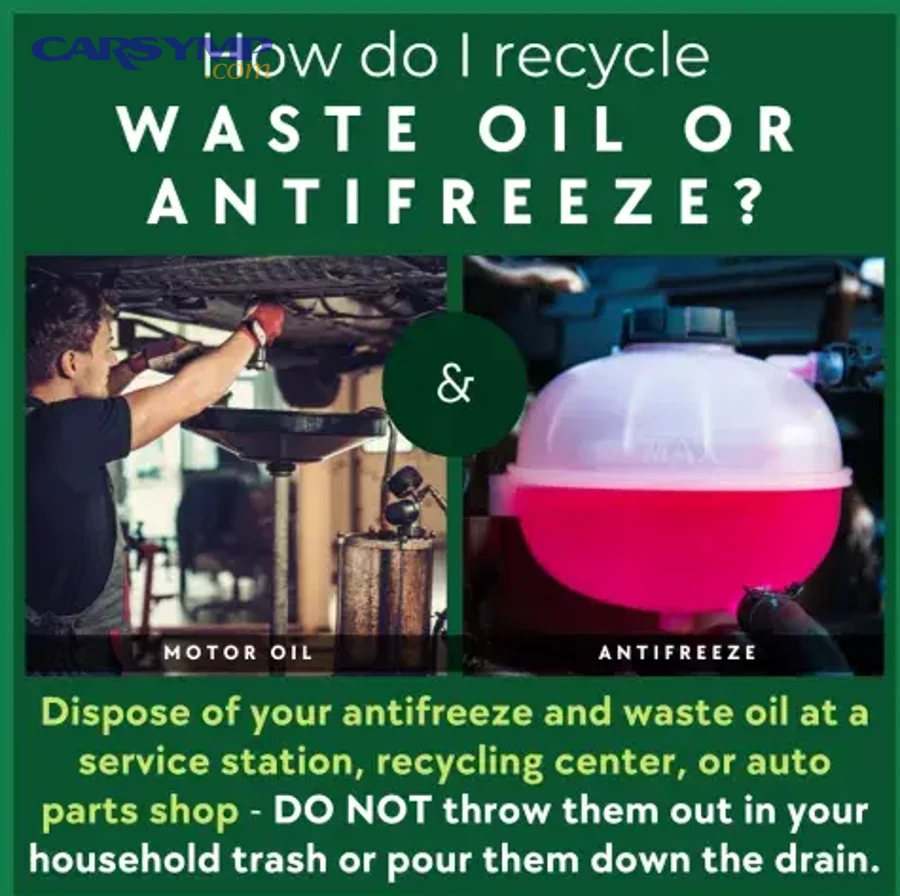
No—you should not pour coolant into a drain, toilet, storm sewer, or onto the ground, because (1) storm drains can discharge directly to waterways, (2) coolant can harm animals and people through exposure pathways, and (3) many areas treat it as an illegal discharge with fines and cleanup liability.
Moreover, pouring coolant “down the toilet” is not a loophole. Even when a system leads to a wastewater treatment plant, treatment is not designed for dumping automotive chemicals. Policies typically prohibit it because it creates worker safety hazards and contaminates the waste stream.
A practical rule that never fails: If it’s a glycol-based automotive fluid, it belongs in a sealed container headed to an approved drop-off—not in any drain.
Can you throw coolant in the trash or mix it with other fluids?
No—don’t throw liquid coolant in the trash or mix it with other fluids, because (1) liquids can leak from trash and contaminate soil or trucks, (2) mixing can make the coolant unrecyclable and trigger stricter handling, and (3) mixed waste increases safety hazards for workers and for you during transport.
On the mixing side, the most common DIY mistake is combining coolant with used oil “because both are car fluids.” That single decision can turn two recyclable streams into one rejected hazard stream. Another common mistake is dumping leftover degreaser, brake cleaner, or solvent into the coolant jug—this can create an unknown chemical cocktail that drop-off sites won’t accept.
If you remember only one rule from this article, make it this: Used coolant stays easiest to dispose of when it stays pure, labeled, and sealed.
How do you store, transport, and label used coolant safely for drop-off?
Safe handling is a five-step method—collect, seal, label, segregate, and transport upright—that prevents spills, protects kids and pets, and keeps your coolant acceptable for recycling programs.
Next, you’ll connect these steps to the real DIY workflow, because storage and labeling should start the moment you drain the system—especially if you’re following DIY coolant flush steps and safety.
A good disposal outcome starts with two simple choices: the right container and the right habits. The right container prevents leaks; the right habits prevent contamination. Together, they keep the process safe and legally clean.
What container should you use, and how full should it be?
Use a sealed, chemical-compatible container with a screw cap, ideally the original coolant jug or a dedicated, clearly non-food container, and fill it to about 90–95% so there’s a little headspace for expansion and slosh control during transport.
Then, see container choice as a safety system, not a convenience. Food containers (milk jugs, drink bottles) create two risks at once: they leak more often, and they can be mistaken for something drinkable—especially by kids or pets.
Container checklist:
- Compatible material: Most original coolant jugs are designed for this fluid.
- Secure cap: No cracked threads, no loose lids.
- No residue from other chemicals: Never reuse a container that held solvents, degreasers, or fuel.
- Upright stability: The jug should stand without tipping in your trunk.
If you drained coolant during a coolant flush, you may also have rinse water or diluted coolant from flushing steps. Do not assume diluted fluid is harmless; treat it as used coolant unless your local program explicitly says otherwise.
Transport safety tips:
- Place the container in a plastic tote or shallow bin.
- Use towels or absorbent pads around it.
- Keep it upright and avoid hard braking.
How do you label and segregate coolant so it stays recyclable?
Label the container “USED COOLANT / ANTIFREEZE” with the date and a “DO NOT MIX” note, and keep it separate from oil, brake fluid, and solvents so the drop-off site can accept it and so you avoid creating unrecyclable mixed waste.
In addition, segregation protects you from your future self. Many DIYers store fluids temporarily and forget what’s inside. Clear labels prevent accidental mixing later when you’re cleaning the garage, topping off fluids, or consolidating containers.
A simple labeling system that works:
- Big marker text: USED COOLANT / ANTIFREEZE
- Date drained: MM/YYYY
- Notes: From: [Vehicle] and Do Not Mix
- Optional: “May contain rust residue” if you saw heavy corrosion—so the site can route it correctly
This is also where preventive maintenance connects: Preventing overheating with proper coolant maintenance depends on using the right coolant type, keeping the system clean, and maintaining inhibitor protection—yet disposal depends on keeping the waste stream clean. One word—clean—ties maintenance quality to disposal success.
What’s the safest “decision tree” for disposal if you’re not sure about the rules in your area?
The safest decision tree is a six-step process—don’t mix, assess contamination, choose the most accepting option (HHW), verify acceptance, transport safely, and document drop-off—so you stay legal and safe even when local rules are confusing.
Below, this decision tree turns uncertainty into action, which matters most when you’re standing in your driveway with a full jug of used coolant and no clear disposal guidance.
First, remember the core assumption: local rules vary, but the safest default behavior is consistent everywhere—seal it, label it, and take it to a program that accepts it.
Is recycling always better than disposal, and when is it not possible?
Recycling wins in resource recovery, hazardous waste drop-off is best for maximum acceptance, and temporary storage is only acceptable for short-term safety—so recycling is “better” when your coolant is clean and accepted, but it’s not possible when the coolant is contaminated or your area lacks a coolant recycling route.
However, “better” is not the same as “available.” The best choice is the one you can execute safely today.
Use this practical comparison:
- Recycling route (best when possible): Clean, unmixed coolant; clear acceptance rules; convenient hours.
- HHW drop-off (best when uncertain): Unknown condition coolant; stricter safety oversight; higher acceptance probability.
- Not acceptable choices: Drains, ground, trash, or “just leave it outside” (exposure risk and legal risk).
If you’re doing DIY maintenance primarily to save money, include disposal logistics in your planning. Sometimes the disposal constraints push you toward professional service, especially if your area has limited HHW events. That’s not a failure—it’s a real factor in your personal Coolant flush cost estimate.
What should you do if coolant is mixed with oil, stop-leak, or unknown liquids?
Treat mixed coolant as potentially non-recyclable and route it to HHW or a facility that explicitly accepts contaminated antifreeze, because mixing (1) increases chemical hazard uncertainty, (2) can cause drop-off refusal, and (3) can elevate legal responsibility if a spill occurs.
Then, take three immediate actions:
- Stop mixing. Don’t add anything else “to dilute it.”
- Label honestly. Write what you know: “Used coolant + small amount of oil” or “unknown mix.”
- Call HHW first. Ask how to package and whether they accept it, or if a special collection is required.
This is the point where DIY discipline matters most. If you keep fluids separate from the start—especially during DIY coolant flush steps and safety—you usually avoid this scenario entirely.
To make this decision tree concrete, the table below summarizes common “what I have” situations and the safest matching action.
| What you have | Condition clues | Safest action | Why it works |
|---|---|---|---|
| Used coolant only | Clear label, no other fluids | Take to coolant-accepting drop-off or recycler | Highest chance of acceptance and recycling |
| Used coolant with rust/sludge | Brown tint, visible sediment | Call first; HHW if unsure | Some sites accept; HHW is safer fallback |
| Coolant mixed with oil | Oily sheen, black/brown streaks | HHW or facility that accepts contaminated antifreeze | Mixing often prevents standard recycling |
| Coolant mixed with stop-leak/chemicals | Particles, gel, unknown additives | HHW | Unknown chemistry increases refusal risk |
| Unknown “garage jug” | No label, unknown source | HHW (do not test taste/smell) | Minimizes handling and classification errors |
What special cases can change coolant disposal rules or acceptance at drop-off sites?
There are four special cases that most often change disposal rules or acceptance—contamination, coolant chemistry, household vs business generator status, and spills/pet exposure—because each one alters risk, processing requirements, or legal classification.
In addition, these special cases explain why two people can follow the same “general advice” and still get different outcomes at drop-off sites.
Does contaminated coolant (oil/fuel/stop-leak/rust sludge) change where you can take it?
Yes—contamination usually changes where you can take coolant, because (1) recyclers often require relatively clean input streams, (2) contaminants can create hazardous reactions or processing costs, and (3) drop-off sites manage risk by refusing mixed or unknown liquids.
However, “contaminated” doesn’t always mean “unaccepted.” Some HHW programs accept a broader range of conditions because they route the waste differently. The point is not to guess; it’s to disclose what you know and choose the most accepting channel.
Practical cues that suggest contamination:
- Oil sheen on top
- Strong fuel smell
- Gel or particulate clumps after using stop-leak
- Heavy rust sediment or muddy appearance
If you see these cues, default to HHW unless a recycler explicitly confirms acceptance.
Is ethylene glycol coolant disposed of differently than propylene glycol coolant?
Ethylene glycol wins in freeze protection popularity, propylene glycol is often best for lower acute toxicity risk, and HHW drop-off is optimal for consistent compliance—so disposal is usually handled through the same approved channels, but labeling the chemistry can influence acceptance and urgency.
Meanwhile, the chemistry matters most in two situations: safety exposure and program sorting. Ethylene glycol is associated with severe toxicity if ingested, so spill prevention and secure storage become even more critical. Some programs also sort or route fluids based on type, especially if they participate in recycling or reclamation.
The most reliable DIY move is simple: keep the original jug when possible, because it already communicates chemistry and intended use.
Do small shops or fleet owners follow different disposal rules than households?
Yes—small shops and fleet owners often follow different disposal rules than households, because (1) business waste is regulated differently than household waste, (2) larger volumes can trigger stricter transport and documentation requirements, and (3) facilities may require licensed waste services for commercial generators.
Moreover, many HHW programs are explicitly designed for residents, not businesses. A fleet manager who tries to “use the household program” can get turned away—not because the waste is different, but because the generator category is different.
If you’re a side-hustle mechanic or a small mobile service, treat this as a compliance boundary: call your local authority or waste provider and set up a compliant pickup or drop-off agreement rather than relying on household events.
What should you do immediately if there’s a spill or if a pet may have been exposed?
If there’s a spill or possible pet exposure, contain the spill immediately, prevent it from reaching drains, secure the area from kids/pets, and contact a veterinarian or poison control urgently—because quick action reduces harm, prevents wider contamination, and improves medical outcomes.
Then, switch from “cleanup mode” to “prevention mode.” A spill is a signal that your storage and transport system needs improvement—better caps, a tote bin, absorbent pads, and a no-rush workflow.
Spill response checklist:
- Put on gloves; ventilate the area.
- Stop the source; set the container upright; cap it.
- Block the path to drains with towels or absorbent material.
- Absorb liquid; place used absorbent in a sealed bag and ask your HHW program how to dispose of it.
- Wash only after the bulk is absorbed, and never wash into a storm drain.
Pet exposure checklist:
- Do not “wait and see.”
- Prevent further licking; wipe paws/fur with damp cloths.
- Contact a veterinarian immediately and describe what was ingested or contacted.
According to a study by Purdue University from the College of Veterinary Medicine, in 2017, ethylene glycol exposure was described as becoming severely toxic to the kidneys after metabolism, which is why immediate veterinary response is critical when pets may have contacted antifreeze.