


Most car owners can estimate a coolant flush within a practical range by matching the service type to their vehicle and confirming what the quote includes. Across mainstream vehicles, a standard coolant flush often lands in the low hundreds, but the “right” estimate depends on labor rates, coolant specification, and cooling-system complexity. (kbb.com)
Next, cost estimates get confusing because shops and estimator tools may use different labels—coolant flush, coolant exchange, coolant change, or drain-and-fill—even though they can represent different levels of work. That mismatch is the #1 reason people compare two prices that aren’t actually the same service. (kbb.com)
In addition, the “best” place to do the service (dealer vs independent vs quick-lube) depends less on the logo and more on whether the shop will use the correct coolant and bleed the system correctly for your engine design. A cheaper price can be a bargain—or it can be incomplete. (kbb.com)
Introduce a new idea: once you understand typical pricing and what changes it, you can quickly sanity-check any quote and decide whether you need a flush now, a drain-and-fill later, or a different repair altogether.
How much does a coolant flush cost for most cars (and what’s a realistic estimate)?
A realistic coolant flush estimate for most car owners is about $100–$250 for a standard service, with higher totals when coolant is expensive, capacity is large, or extra diagnostics/repairs are bundled into the quote. (carfax.com)
To begin, that range becomes useful only when you match it to the specific kind of service you’re being quoted for and confirm what “flush” means at that shop.

What is the typical coolant flush price range at a shop (low, average, high)?
There are 3 main price bands for coolant service—low, typical, and high—based on service scope and vehicle complexity:
- Low band (budget/basic): Usually the simplest coolant replacement workflow on common vehicles, often aligned with the “standard flush and replacement” pricing people see quoted at general service shops. CARFAX notes a standard coolant flush and replacement often costs about $100–$200, depending on vehicle size and coolant required. (carfax.com)
- Typical band (mainstream, most cars): Many owners see an “expected” range around $100–$250 when the service includes proper draining, refilling with correct mix, bleeding air, and basic checks. (jerry.ai)
- High band (bundled/complex): Some estimates labeled “coolant change” can be much higher—RepairPal lists an average coolant change between $418–$487 and also notes that related repairs may be needed. This band commonly appears when the quote includes added parts/labor (thermostat housing access, pressure testing, leak diagnosis, hose replacement, etc.) or the vehicle is more complex. (repairpal.com)
How to use these bands: if you’re quoted $120–$200, that’s typically a standard service on a common car. If you’re quoted $450+, the shop may be quoting a coolant change package with add-ons—or the vehicle requires more labor and/or expensive OEM coolant.
What does the quoted “coolant flush cost” usually include (and what’s extra)?
A standard coolant flush quote usually includes the minimum work required to replace old coolant safely and restore the correct level and mixture:
- Drain old coolant
- Refill with the correct coolant mixture
- Bleed/purge air and verify level after warm-up
- Basic visual inspection (hoses, cap, visible leaks)
Kelley Blue Book describes a radiator flush as draining the fluid and replacing it with fresh fluid, and it also highlights that the job can get more expensive if there’s a leak or another cooling-system problem discovered. (kbb.com)
Common “extras” that can legitimately increase price (but should be stated clearly on the estimate):
- Cooling system pressure test
- Chemical flush agent (especially if coolant is dirty)
- Thermostat replacement (parts + additional labor)
- Radiator cap replacement
- Hose/clamp replacement
- Disposal or shop material fees
- Vacuum-fill procedure (some systems benefit from it)
The key sanity check: if two shops quote very different prices, ask what steps they’re doing and whether they’re using the correct coolant specification for your vehicle (not just “green coolant”).
What factors make coolant flush prices go up or down?
There are 5 main factors that push coolant flush pricing higher or lower: labor rate, vehicle access, coolant specification, system capacity, and coolant condition, and each factor changes the job’s time, materials, or risk. (kbb.com)
Specifically, once you can identify which of these five factors applies to your car, you can predict whether your quote should be in the low, typical, or high band.
How do labor rates and vehicle access change the final estimate?
Labor rate and access change the final estimate because they determine how long the technician spends getting to drains, removing covers, and bleeding air.
- Regional labor rates: Two identical cars can have different prices simply because shop labor rates differ by city and market.
- Access time: Undertrays, tightly packed engine bays, and hard-to-reach drain points add minutes that add dollars.
- Bleeding complexity: Some cooling systems trap air easily, which means longer warm-up cycles, multiple bleeder points, or repeat top-offs after a road test.
This is why a “simple” service can cost more on certain vehicles even if the coolant itself isn’t expensive.
How does coolant type and system capacity affect parts cost?
Coolant type and system capacity affect parts cost because the shop pays for (1) the correct chemical formulation and (2) the number of gallons/liters required.
- Coolant formulation: Many vehicles require a specific OAT/HOAT/P-OAT style coolant and explicitly warn against mixing. KBB notes that coolant types differ and advises sticking with the manufacturer recommendation and not mixing types or colors. (kbb.com)
- Capacity: Larger engines and trucks often take more coolant, raising parts cost.
- Concentrate vs premix: Premix is convenient but can cost more per usable volume.
Practical tip: when you see a quote with surprisingly high “parts” cost, it’s often because the vehicle needs a specific OEM-type coolant and a larger volume.
Is a coolant flush the same as a coolant change or drain-and-fill?
A coolant flush is not the same as a drain-and-fill: flush/exchange is best for maximum old-coolant removal, drain-and-fill is best for lower cost and routine maintenance, and a “coolant change” quote may include extra work or related repairs. (kbb.com)
However, the terms are used inconsistently in real shops, so you need to match the name to the actual steps being performed.

What is the difference between a coolant flush, coolant exchange, and drain-and-fill?
There are 3 common service types, based on how much old coolant remains after the job:
- Drain-and-fill (basic coolant replacement): drains what comes out of the radiator/accessible drains, refills with fresh coolant, and bleeds air. Some old coolant remains in the engine block and heater core.
- Coolant flush / coolant exchange (more complete replacement): aims to replace a larger portion of old coolant, sometimes using equipment to circulate and exchange fluid. This is closer to what many people mean by a “coolant flush.”
- Coolant change (umbrella label): may refer to either of the above—or a larger package. RepairPal’s estimator shows a higher average for “coolant change” and explicitly notes that related repairs may also be needed, which helps explain why “coolant change” quotes can look much higher than “flush” quotes. (repairpal.com)
If you want a quick vocabulary check, you can ask the shop: “Are you doing a drain-and-fill, or a full exchange/flush that replaces most of the old coolant?”
Which service is cheaper and when is the cheaper option “good enough”?
Drain-and-fill is usually cheaper, and it’s often “good enough” when:
- The coolant looks clean and the service is routine
- The system has been maintained on schedule
- There’s no evidence of contamination or overheating
A full flush/exchange is more justified when:
- Maintenance history is unknown
- Coolant condition is visibly degraded
- The system has been opened for major work (radiator, water pump, thermostat) and you want the coolant baseline reset
- You’re seeing Signs coolant is contaminated or rusty (more on this in the next sections)
The takeaway: cheaper is fine when it still matches your needs; cheaper is risky when it skips the work your system actually requires.
When do you actually need a coolant flush (and when can you skip it)?
Yes—you should flush or replace coolant at the correct interval or sooner because coolant additives deplete over time, contamination reduces corrosion protection, and trapped air or degraded coolant increases overheating and component wear. (kbb.com)
Moreover, “need” should be based on interval guidance plus real-condition triggers, not just a generic upsell.
Should you do a coolant flush at the manufacturer interval even with no symptoms?
Yes, following the manufacturer interval is usually the safest default for three reasons:
- Additive protection changes over time: Coolant isn’t just colored water—it’s a chemical package designed to protect mixed metals.
- Intervals vary by coolant chemistry: KBB notes traditional IAT coolant often needs replacement on shorter cycles, while newer OAT coolants can last much longer, and it emphasizes checking the owner’s manual. (kbb.com)
- Long intervals don’t mean “never”: CARFAX notes some vehicles use intervals like 2–3 years or 30,000–50,000 miles, while others can go much longer, reinforcing that the manual is the correct reference point. (carfax.com)
If you want a practical mental model, treat your manual as your baseline and adjust earlier only if your real-world conditions demand it. Many readers like to keep a simple note or bookmark a When to flush coolant interval guide so they don’t have to re-learn the logic each time.
Evidence: According to a study by Chosun University from the Department of Materials Science and Engineering, in 2022, copper corrosion behavior in antifreeze solutions changed measurably over time, with reported corrosion rate reductions on the order of four magnitudes in certain inhibited solutions after weeks of immersion—showing why coolant chemistry and aging matter. (mdpi.com)
What symptoms or conditions suggest you need coolant service sooner?
There are 7 common triggers that justify coolant service sooner than the normal interval:
- Overheating or temperature fluctuations
- Repeated low coolant level (top-offs that keep returning)
- Visible debris or sludge in reservoir or radiator neck
- Brown/rusty appearance (classic contamination sign)
- Oil-like sheen (possible oil contamination—diagnosis needed)
- Sweet smell / visible leaks around hoses, water pump, radiator
- Major cooling-system repair completed (new baseline is helpful)
KBB explicitly notes that if conventional antifreeze looks brown, it can signal corrosion and it’s time for a coolant flush to protect the engine. (kbb.com)
When in doubt, the safest move is to inspect coolant condition first and then decide whether you need a drain-and-fill, a flush/exchange, or a diagnostic for a bigger issue.
Dealer vs independent shop vs quick-lube: where should you get a coolant flush?
Dealers win for OEM-spec compliance and complex bleeding, independent shops are best for value and flexibility, and quick-lube centers can be optimal for simple, routine services—as long as they can prove correct coolant spec and complete bleeding. (kbb.com)
On the other hand, the “best” choice is the place that performs the correct procedure for your cooling system design, not the cheapest menu price.
Is the dealership always more expensive—and is it ever worth it?
No, the dealership is not always more expensive, and it can be worth it for at least three reasons:
- Exact coolant specification and parts: Dealers are more likely to use the manufacturer-recommended coolant and follow model-specific bleeding procedures.
- Vehicle-specific procedures: Some vehicles have unique bleed steps, additional coolant circuits, or electronic pump behavior that general shops may not see often.
- Warranty and documentation: For newer vehicles, documented OEM-spec service can reduce disputes.
KBB’s guidance emphasizes sticking with the manufacturer recommendation and not mixing types or colors, which is one reason owners choose a dealer for spec-sensitive systems. (kbb.com)
How do you compare quotes so you’re not comparing different services?
To compare quotes accurately, use a short checklist that forces “apples-to-apples” clarity. This table shows what to ask and what you’re validating.
| Quote item to confirm | What it tells you | What to ask the shop |
|---|---|---|
| Coolant type/spec | Prevents mixing/wrong chemistry | “Which exact spec or OEM equivalent are you using?” (kbb.com) |
| Service type | Flush/exchange vs drain-and-fill | “Is this a drain-and-fill or a full exchange/flush?” (jerry.ai) |
| Bleeding method | Avoids air pockets and hot spots | “How do you bleed/purge air on this engine?” |
| Included tests | Distinguishes basic vs bundled | “Does this include a pressure test or inspection?” |
| Add-ons/repairs | Explains high quotes | “What ‘related repairs’ might be needed and why?” (repairpal.com) |
Once you get clear answers, the price differences usually make sense—and you can choose based on value rather than confusion.
How can car owners get an accurate coolant flush estimate before booking?
You can get an accurate estimate by using a 4-step approach—identify your coolant spec, choose the service type, describe symptoms/condition, and confirm what’s included—so the shop quotes the same scope you think you’re buying. (kbb.com)
Especially, this is how you avoid the common problem where one shop quotes a simple drain-and-fill while another quotes a more complete package under the same “coolant service” label.
What information should you provide to get a precise estimate (and avoid surprise add-ons)?
Provide these details up front so the estimate is precise:
- Year / make / model / engine (engines matter because capacity and bleeding differ)
- Mileage and maintenance history (unknown history often justifies a more complete service)
- Coolant spec if known (or ask the shop to look it up)
- Current symptoms (overheating, low coolant, leaks)
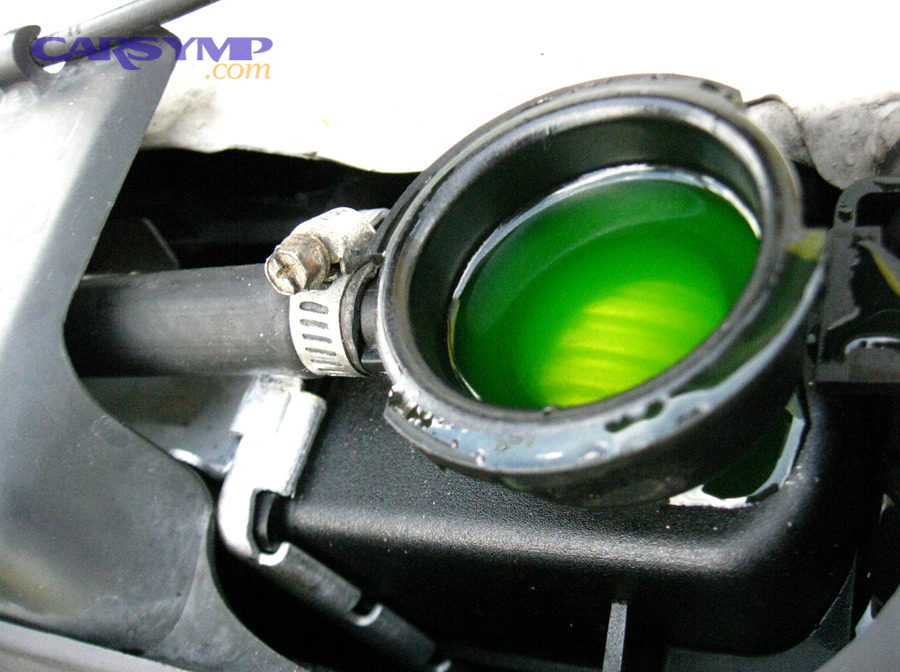
- Coolant condition (clean vs cloudy; bright vs brown/rust)
This is also where mentioning Signs coolant is contaminated or rusty helps the shop recommend the correct scope (basic replacement vs flush plus inspection).
What questions should you ask the shop to confirm scope and prevent upsells?
Ask questions that lock the quote to a clear scope:
- “Is this a drain-and-fill or a full flush/exchange?”
- “Which coolant spec are you using, and are you mixing types?”
- “Does the estimate include bleeding and a post-warm-up recheck?”
- “If you recommend a thermostat, what test result or symptom supports that?”
- “If you find a leak, will you call with options before adding work?”
RepairPal notes that “related repairs may also be needed,” which is true—but you want those related repairs to be justified by evidence, not automatically appended. (repairpal.com)
What special cases can change coolant flush cost and decision-making?
There are 4 special cases that often change the best decision and the final price: multi-loop hybrid/EV systems, heavy contamination, airlock-sensitive designs needing vacuum fill, and severe-duty operation, because each one adds steps, risk, or specialty requirements. (kbb.com)
More importantly, these edge cases explain why two cars can have completely different “right answers” even if both owners typed the same keyword into Google.

How do hybrids/EVs with multiple coolant loops affect service scope and cost?
Hybrids and EVs can increase scope and cost because they may have separate coolant loops (for example, power electronics, battery thermal management, cabin heat systems, and/or an engine loop on hybrids). That creates two practical consequences:
- More coolant circuits to service: More drains, fill points, and bleed procedures.
- Higher requirement for spec accuracy: Wrong coolant chemistry can create long-term corrosion or compatibility issues.
Decision rule: if your vehicle has multiple thermal systems, choose a shop that can name the loops and describe how they’ll bleed them—not just “we flush coolant.”
What happens to cost if coolant is contaminated (rust, sludge, oil, stop-leak residue)?
Contamination raises cost because it can shift the job from “maintenance” to “clean-up plus diagnosis.” The common cost drivers are:
- More labor cycles: Multiple drains/refills or longer flush time
- Extra inspection/testing: Pressure testing, leak tracing, or checking for oil contamination causes
- Parts risk: Deposits can reveal weak hoses, clogged radiators, or sticking thermostats
KBB notes that brown coolant can indicate corrosion and that it’s time for a coolant flush to protect the engine. (kbb.com)
Evidence: According to a study by Chosun University from the Department of Materials Science and Engineering, in 2022, researchers observed that corrosion behavior in antifreeze solutions can change substantially over time, including cases where the corrosion rate dropped by about four orders of magnitude after weeks—reinforcing that coolant chemistry and “aging” conditions materially affect metal corrosion outcomes. (mdpi.com)
When is vacuum filling required to prevent air pockets—and does it change pricing?
Yes, vacuum filling can be required (or strongly recommended) on airlock-prone systems for three reasons: it reduces trapped air, speeds filling on complex systems, and lowers the chance of post-service overheating from air pockets. The tradeoff is that it may add a small amount to labor cost because it uses specialized equipment and careful setup.
A shop doesn’t need vacuum filling for every car, but if a vehicle is known for difficult bleeding, vacuum fill is often worth it because it prevents repeat visits and overheating risk.
Does heavy-duty use (towing, extreme heat, track driving) change the best interval and fluid choice?
Yes, severe-duty use changes the best interval and fluid choice for three reasons: higher thermal load stresses additive packages, more heat cycling accelerates degradation, and greater risk tolerance is needed to prevent overheating under load. For these owners, the right move is usually shorter intervals and stricter attention to coolant specification and system health checks.
CARFAX notes that service intervals can vary widely by vehicle and that some use much longer mileage windows, which is exactly why severe-duty owners should treat the manual as the baseline and adjust earlier based on real use. (carfax.com)