


Contaminated or rusty coolant is a practical warning sign: it often means the cooling system can’t protect metal surfaces, transfer heat efficiently, or stay chemically stable the way “clean” coolant should. The fastest win is learning what “bad-looking” coolant really indicates—because some appearances are minor, while others predict overheating or expensive internal corrosion.
Next, you’ll learn how to interpret rust color, sludge, oily sheen, and “milkshake” textures in a way that matches real failure patterns—so you can tell “needs service soon” from “stop driving and diagnose now.”
Then, we’ll connect what you see in the reservoir to what you feel on the road (temperature spikes, weak heater, gurgling, sweet smells), so your diagnosis isn’t based on color alone.
Introduce a new idea: once you know the signs and likely causes, the decision becomes simple—confirm safely, then choose the right service method (flush vs drain-and-fill) and prevention routine.
What Does “Contaminated Coolant” Mean and Why Does It Matter?
Contaminated coolant is coolant that has picked up unwanted material (rust, scale, oil, combustion gases, wrong additives, or debris) to the point that it no longer protects against corrosion and overheating reliably.
To better understand why this matters, focus on what coolant is supposed to do: maintain stable chemistry (pH and inhibitors), prevent metal-to-metal corrosion, lubricate the water pump seal, and move heat through the radiator and heater core without leaving deposits.

When coolant becomes contaminated, three things tend to happen together:
- Protection drops: corrosion inhibitors get used up or neutralized, which lets iron, aluminum, solder, and mixed metals oxidize.
- Flow gets restricted: rust particles and mineral scale can narrow radiator tubes, heater cores, and passages.
- Heat transfer worsens: deposits and sludge act like insulation, making temperatures swing higher under load, at idle, or with A/C on.
The result is not just “dirty fluid.” It’s a system that’s more likely to overheat, corrode internally, or leak at weak points.
Is Rusty Coolant Always a Sign of Corrosion Inside the Cooling System?
No—rusty-looking coolant is often linked to corrosion, but it is not always proof that metal is actively rusting right now, and the “why” matters for what you do next.
To better understand the risk, treat “rust color” as a symptom that can come from harmless staining, early corrosion, or severe internal breakdown—then confirm using a few extra signs.
Can Coolant Look Rusty for Harmless Reasons?
Yes—coolant can look brownish or tea-colored without immediate damage if the discoloration is from mild staining or old residue rather than active corrosion.
Specifically, this happens when:
- Old coolant dye has degraded and shifted color over time, especially if it’s very overdue.
- Previous service left residue (old coolant remnants, cleaner residue, or minor sediment) that tints fresh coolant.
- Small amounts of “normal” metal fines from long-term wear are suspended, but not forming sludge or flakes.
A “mostly clear but slightly tinted” look is less alarming than visible particles, thick sediment, or repeated discoloration shortly after service.
When Does Rusty Coolant Point to Active Corrosion?
Rusty coolant strongly suggests active corrosion when you see particles, sludge, or repeated fast discoloration—especially if the system also shows leaks, overheating, or weak heat output.
More specifically, active corrosion is likely when:
- Coolant has floating rust flakes or gritty sediment at the bottom of the reservoir.
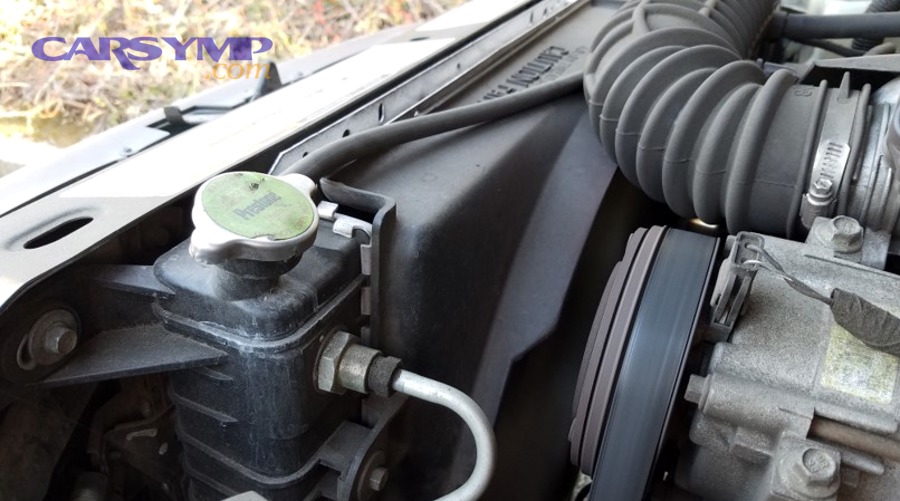
- The radiator neck/cap area shows orange crust or pitting.
- The fluid looks opaque, muddy, or thick, not just tinted.
- The coolant turns rusty again within weeks after a refill.
According to a University of Manchester study by the Department of Materials, in 2017, certain inhibitor packages reduced mild steel corrosion significantly across a broad pH range, showing corrosion risk rises when inhibitor chemistry is compromised—not just when the color looks off.
Should You Keep Driving If the Coolant Is Rust-Colored?
It depends—but if rusty color is paired with overheating, loss of cabin heat, or visible sludge, you should avoid extended driving until you inspect and service the system.
Meanwhile, the safest rule is:
- Okay for a short, careful trip if temperature is stable, coolant level is correct, and there’s no sludge/oil.
- Not okay to keep driving if temperature climbs, coolant level drops, heater output weakens, or the coolant looks like “mud.”
Rust color alone is a warning; rust color plus performance symptoms is a risk.
What Are the Most Reliable Visual Signs That Coolant Is Contaminated or Rusty?
There are three reliable visual sign groups of contaminated coolant—color changes, solids (sludge/gel), and oil-like contamination—based on what’s suspended or mixed into the fluid.
Next, use the “look + texture + separation” approach, because color alone can mislead.

What Color Changes Signal Contamination?
Color changes that signal contamination are rust-brown, gray/dirty tan, unexpected darkening, or two-tone separation, based on the coolant’s original color and what it’s mixing with.
To illustrate how to interpret color without guessing, here’s a quick reference table (it summarizes common color patterns and what they usually mean):
| What you see in coolant | Most likely meaning | What to check next |
|---|---|---|
| Light tea/brown tint but still transparent | Aging dye or mild contamination | Service history, reservoir sediment |
| Orange/rust color + visible specks | Rust particles/corrosion debris | Radiator neck/cap, magnetic particles, hoses |
| Gray/tan “dirty dishwater” | Mixed coolants, degraded inhibitors, fine corrosion | pH test, flush history, heater performance |
| Black/brown with soot-like look | Severe contamination or oil/combustion byproducts | Oil film, pressure test, head gasket signs |
| Two-layer look or streaks | Oil or incompatible coolants | Oil sheen, gel formation, hose swelling |
The key is transparency: healthy coolant can be bright, but it should still look like a clean liquid—not like soup.
What Does Sludge, Gel, or “Mud” in Coolant Mean?
Sludge or gel in coolant usually means incompatibility or breakdown: mixed coolant chemistries, contaminated water, or inhibitors that have fallen out of solution and turned into deposits.
More importantly, “mud” is a heat-transfer and flow problem—not just a cosmetic issue—because it can block:
- Radiator micro-tubes
- Heater core channels
- Thermostat passages
- Small bypass lines
Sludge often appears alongside a sticky reservoir wall coating, “stringy” gel, or chunks that settle when the engine cools. If you see gel, assume you’ll need deeper cleaning than a simple top-off.
What Does Oily Film or “Milkshake” Coolant Indicate?
An oily film typically indicates oil contamination, while “milkshake” coolant indicates oil + coolant emulsification, which often points to an internal leak path.
However, the cause can vary:
- Thin rainbow sheen: small oil presence (possible cooler leak, contamination during service).
- Thicker slick + smell of oil: stronger oil ingress (oil cooler, head gasket, cracked component).
- Beige/tan “milkshake”: emulsified oil and coolant, often seen with repeated overheating or internal mixing.
If you see milkshake in the reservoir, also check the oil dipstick/cap for creamy residue—but remember the diagnosis depends on multiple signs, not one.
Which Smells, Sounds, and Driving Symptoms Can Accompany Contaminated Coolant?
Contaminated coolant often comes with three symptom clusters—heater performance changes, overheating patterns, and abnormal noises—because contamination affects circulation, pressure stability, and heat exchange.

In addition, symptoms help you separate “looks bad” from “behaves bad,” which changes urgency.
What Cabin Heat and Defroster Changes Suggest Coolant Problems?
Weak cabin heat, fluctuating heat, or a defroster that can’t keep up often suggests restricted heater core flow or air pockets caused by contamination.
More specifically, watch for:
- Heat that is hot at speed but cold at idle (flow restriction or low circulation).
- Heat that surges hot/cold repeatedly (air bubbles, partial blockage).
- A sweet smell inside the cabin (possible heater core leak—separate from contamination, but often related to neglected coolant).
Because the heater core is a “small radiator,” it clogs sooner than the main radiator when sludge forms.
What Overheating Patterns Point to Coolant Contamination?
Overheating from contaminated coolant often shows up as load-sensitive spikes or idle creep, because deposits reduce heat transfer and restrictions reduce flow.
Specifically, common patterns include:
- Temperature climbs in traffic/idle, improves at highway speed.
- Temperature spikes under acceleration, towing, or hills.
- Overheating returns soon after a refill because deposits remain in the system.
According to a Sophia University study by the Department of Engineering and Applied Sciences, in 2021, coolant characteristics significantly influenced boiling heat transfer behavior in IC engine cooling conditions, supporting why degraded coolant can shift temperature stability under real loads.
What Noises Can Air, Sludge, or Cavitation Create?
Air pockets and flow restriction can create gurgling, sloshing, or whining noises, especially near the dash (heater core) or water pump.
Meanwhile, contamination can promote conditions that encourage:
- Gurgling behind the dashboard (air in heater core).
- Whining/rough pump sound (pump struggling with aerated coolant or deposits).
- Rapid bubbling in reservoir after revving (can be trapped air—but persistent bubbling may suggest combustion gas intrusion).
Treat noises as “supporting evidence” that your visual findings are affecting circulation.
What Causes Coolant to Become Contaminated or Rusty in the First Place?
Coolant becomes contaminated or rusty mainly due to wrong chemistry, internal leaks, or neglected service, based on what enters the system and how long inhibitors have been depleted.

More importantly, each cause leaves a different “signature,” so you can target the fix instead of repeatedly draining dirty fluid.
How Do Mixed Coolant Types or Wrong Water Cause Problems?
Mixed coolant types or wrong water cause problems by neutralizing inhibitor packages and introducing minerals that form scale.
For example, mixing incompatible chemistries can lead to:
- Gel formation (additives clumping)
- Precipitated solids (cloudiness that becomes sludge)
- Faster corrosion (inhibitors no longer protect mixed metals)
Wrong water (high mineral content) adds calcium/magnesium that forms deposits, which insulate surfaces and clog small passages. The result is a system that “runs hotter” even if the thermostat and fan are fine.
How Do Internal Leaks Add Oil, Fuel, or Exhaust to Coolant?
Internal leaks contaminate coolant by adding substances coolant was never designed to suspend—oil, fuel residues, or combustion gases—changing viscosity, pH behavior, and pressure stability.
Most commonly, contamination paths include:
- Oil cooler failure (oil into coolant or coolant into oil)
- Head gasket leakage (combustion gases pressurize coolant; sometimes oil/coolant mixing)
- Cracked head/block (varies by engine and overheating history)
If the system is building pressure unusually fast after a cold start, or pushing coolant out repeatedly, treat internal leakage as a serious possibility.
How Does Neglected Maintenance Accelerate Rust and Scale?
Neglected maintenance accelerates rust and scale because corrosion inhibitors get consumed over time, and once depleted, metal surfaces oxidize faster—especially where oxygen enters (low coolant level, leaks, frequent top-offs).
In addition, old coolant can become more acidic or chemically unstable, which speeds up:
- Rust particle generation (iron components)
- Pitting (aluminum components)
- Deposit buildup (radiator/heater core)
According to cooling-water inhibitor research carried out at Oregon State University, in 2016, inhibitor chemistry strongly affected corrosion and fouling behavior in cooling contexts, supporting the broader principle that expired protection is a common root cause behind rusty coolant.
How Can You Check for Coolant Contamination Safely at Home?
You can check for coolant contamination safely using two steps—(1) a careful visual inspection at the right points, and (2) simple confirmation tests—so you reduce guesswork without risking burns.

Below, the priority is safety and consistency: the best checks happen when the engine is fully cool.
How Do You Inspect the Reservoir, Radiator Neck, and Cap?
Inspecting the reservoir, radiator neck, and cap works best when you follow a short sequence: look, wipe, and compare.
Then, use these practical checks:
- Reservoir wall: look for sticky film, staining lines, or gritty deposits.
- Coolant surface: look for rainbow sheen, foam, or floating particles.
- Bottom of reservoir: look for sediment—use a flashlight.
- Radiator cap underside (cool engine): look for rust crust, sludge, or oily residue.
- Hoses: squeeze for abnormal softness/swelling (can hint at oil contamination).
If the system has a pressurized radiator cap, never open it hot. Always wait until it is fully cool.
What Simple Test Strips or Tools Help Confirm Contamination?
Simple test strips and basic tools can confirm contamination by checking pH behavior, freeze protection, and combustion gas presence.
More specifically, common DIY-friendly options include:
- Coolant test strips: indicate pH/inhibitor condition (useful trend indicator).
- Hydrometer or refractometer: checks freeze/boil protection mix strength.
- Block tester (combustion gas test kit): checks for exhaust gases in coolant.
- Magnet test (for particles): rust particles often respond; aluminum won’t.
Treat these tools as confirmation—not as a full diagnosis—because they tell you “something changed” and help guide whether you service or investigate deeper.
When Is It Time for a Coolant Flush vs a Drain-and-Fill?
A coolant flush is best when contamination is widespread and deposits likely remain, while a drain-and-fill is best when coolant is simply old but the system is otherwise clean—this is the practical Coolant flush vs drain-and-fill difference you should use for decision-making.
Next, choose the method based on what you found, not what’s easiest.

What Situations Call for a Full Coolant Flush?
A full coolant flush is the right choice when you have sludge/gel, repeated rust discoloration, mixed coolant types, or signs that deposits are restricting flow.
Specifically, a flush is justified when:
- Coolant is opaque, muddy, or has suspended solids.
- You see gel strands or thick residue on reservoir walls.
- The heater is weak/fluctuating and you suspect a clogged heater core.
- You’re correcting unknown or mismatched coolant chemistry.
If you’re building a maintenance plan, this is where an internal When to flush coolant interval guide becomes practical: flush sooner when contamination is present, and don’t rely on long intervals to “fix” dirty coolant on its own.
When Is a Drain-and-Fill the Better Choice?
A drain-and-fill is the better choice when coolant is overdue but still clear, with no sludge, no oil sheen, no persistent rust flakes, and no symptoms of restriction.
In addition, drain-and-fill is often preferred when:
- The system has no signs of internal mixing.
- You mainly want to restore inhibitor strength and correct the coolant mix.
- You’re doing staged maintenance (multiple drain-and-fills over time) to refresh without aggressive flushing.
A practical rule: if the coolant looks like a “normal liquid” and the car behaves normally, drain-and-fill can restore protection efficiently; if it looks like “contaminated soup,” flushing is the safer correction.
How Can You Prevent Coolant Contamination and Rust from Coming Back?
You can prevent coolant contamination and rust by controlling chemistry, maintaining sealed operation, and following repeatable service checks—so the system stays in the “clean” side of the dirty vs clean divide long-term.

More importantly, prevention is what makes your next service simple instead of reactive.
What’s the Best “Coolant Mix” Practice to Avoid Corrosion?
The best coolant mix practice is to use the correct coolant type and keep the mixture consistent, because stable chemistry keeps inhibitors active and reduces mineral deposits.
Specifically:
- Use manufacturer-specified coolant (not just “any color”).
- Mix with distilled/deionized water when concentrate is used.
- Avoid topping off repeatedly with plain water (it dilutes inhibitors over time).
- Fix leaks instead of “chasing the level,” because oxygen ingress accelerates corrosion.
This is the foundation behind Preventing overheating with proper coolant maintenance: correct chemistry prevents both corrosion and the deposit-driven heat transfer loss that leads to hotter running.
How Do You Choose the Right Coolant Type for Your Vehicle?
You choose the right coolant by matching the vehicle spec—not by matching color—because many coolants share colors while using different inhibitor technologies.
To illustrate a safe selection process:
- Check the owner’s manual or OEM spec (the spec is more reliable than color).
- If coolant history is unknown, treat it as unknown chemistry and plan service accordingly.
- When switching types, do it as a deliberate change (drain thoroughly or flush, then refill correctly), rather than mixing.
This “chemistry-first” approach is what prevents repeat contamination after you’ve already cleaned the system.
What Routine Checks Catch Problems Early?
Routine checks that catch problems early are the ones that monitor level stability, coolant clarity, and temperature behavior, because those shift before major failures.
A simple routine looks like:
- Monthly: glance at reservoir level and clarity (same lighting helps).
- Seasonal: check mix strength (refractometer/hydrometer) and look for sediment.
- Anytime: investigate sudden heater changes or new temperature swings.
If you track only one thing, track trend: coolant that changes fast is almost always telling you something new has entered the system.
How Does Proper Coolant Service Help Prevent Overheating?
Proper coolant service helps prevent overheating by restoring inhibitor protection and keeping heat-exchange passages clean, so the radiator and heater core can move heat predictably under load.
In short, the cooling system fails “quietly” first—slower heat transfer, partial restrictions, small air pockets—and proper service prevents those small issues from stacking into a real overheat event.
If your goal is reliability, treat coolant like a protective fluid, not just a “fill level.” That mindset is what keeps the system clean, stable, and far less likely to turn rusty again.