


Most people want one simple thing before booking a pro: a realistic price range for the upfront evaluation charge—and a clear idea of what they’re actually buying. This guide breaks down typical ranges by service type, what’s usually included, and what commonly triggers higher (or lower) quotes.
Next, you’ll see how these charges differ from “trip fees,” “inspection fees,” and other look-alike line items—so you can compare quotes apples-to-apples instead of guessing.
Then, you’ll learn which real-world factors move the number the most (urgency, access, diagnostic complexity, equipment type), plus how to ask the right questions so you don’t pay twice for the same troubleshooting time.
Introduce a new idea: once you understand the pricing logic, you can choose the best option—pay for expert troubleshooting, negotiate a credit toward the repair, or use a lower-cost alternative when it fits the problem.
What are “diagnostic fees,” and what are you actually paying for?
A diagnostic fee is an upfront charge that covers a technician’s time, expertise, and tools to identify the root cause of a problem—often including travel/setup—so you receive a repair recommendation (or a confirmed “no issue found”) instead of a guess.
Then, that simple definition matters because it explains why this line item exists even when no repair happens during the first visit.

What you’re really buying: a structured troubleshooting process (not a part swap)
When a shop charges a diagnostic fee, they’re typically paying for a repeatable workflow:
- Symptom verification: confirming the issue is real and repeatable (noise, leak, fault code, weak cooling, intermittent power).
- Baseline checks: obvious causes first (loose connections, filters, power supply, visible damage, error history).
- Targeted tests: measurements and isolation (electrical continuity, pressure, temperature delta, scan-tool live data, leak detection, camera inspection).
- Root-cause conclusion: why it failed, not just what looks broken.
- Repair options + estimate: parts, labor, risk notes, and what happens if you delay.
That’s why “free code reads” or quick looks can’t replace real diagnosis: they often identify a symptom pathway, not the underlying cause.
Why the price varies so much between “simple” and “complex” problems
Troubleshooting can be fast when the failure is obvious (burnt contactor, visibly leaking trap, dead capacitor). But it can expand quickly when:
- the issue is intermittent,
- access requires disassembly,
- multiple systems interact (e.g., HVAC controls + refrigerant + airflow),
- or the job needs specialized tools.
This is also where How shops apply diagnostic fees to repairs becomes a make-or-break detail: some providers credit the charge toward the final invoice, while others treat it as a standalone service. Ask before booking, not after the tech arrives.
According to a study by Kellogg School of Management from the Management & Strategy area, in 2013, requesting a price concession reduced the final quote by about 13% on average, yet customers asked for a concession only about a quarter of the time—showing that small, specific questions can change what you pay.
What are typical diagnostic fee ranges by service type (Auto, HVAC, Appliance, Plumbing)?
There are 4 main service-type ranges for this upfront troubleshooting charge—Auto, HVAC, Appliance, and Plumbing—because each category has different tool costs, technician specialization, and “time-to-isolate” complexity.
Next, use the ranges below as starting points, then adjust based on urgency and access (covered later).
To make this easy to scan, the table below summarizes typical ranges and what the charge usually includes.
| Service type | Typical upfront diagnosis range | What’s usually included | What often costs extra |
|---|---|---|---|
| Auto (general / check-engine diagnosis) | $122–$233 | scan + test plan + tech time to isolate | advanced electrical, drivability, brand-specific systems |
| HVAC (home heating/cooling) | $75–$150 | visit + system checks + troubleshooting | after-hours, complex equipment, extended time increments |
| Appliance (in-home) | ~$75 service call (common) | travel + initial evaluation | premium brands, sealed system work, repeat visits |
| Plumbing (service call / minimum charge) | $50–$200 | arrival + assessment + basic troubleshooting | camera inspections, hydro-jetting, access/digging |
Auto diagnostics (drivers)
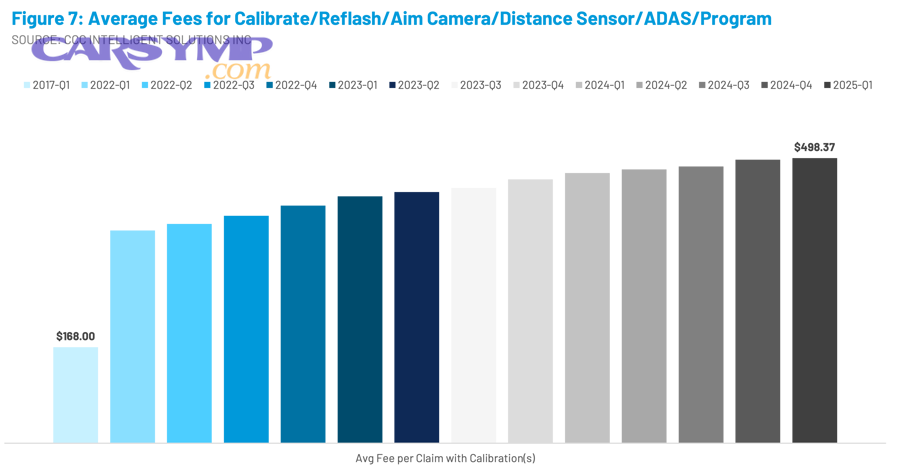
For vehicles, published estimates commonly land in the low-to-mid hundreds for diagnosis-only labor. For example, RepairPal lists $122–$233 as an average range for check-engine diagnosis and testing. That range aligns with the reality that many shops price diagnosis at roughly an hour of labor (sometimes more for complex faults).
HVAC diagnostics (homeowners)
HVAC commonly sits in a mid-range band because the tech may need to evaluate airflow, electrical controls, and refrigeration behavior in one visit. ServiceTitan describes a typical HVAC diagnostic fee range of $75–$150, noting that some companies price by time increments and may add charges for emergency/after-hours or complex equipment.
Appliance service calls (homeowners, renters)
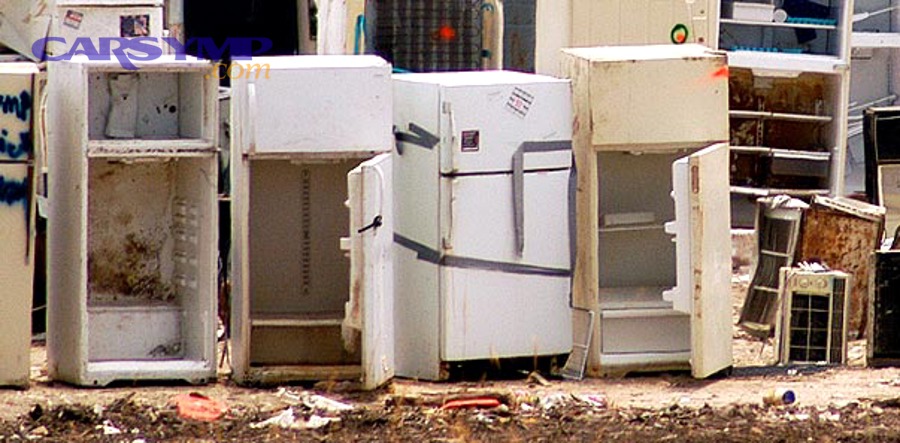
Appliance companies often separate “show up + assess” from “repair work,” especially if parts must be ordered. The Spruce notes that service calls alone are often about $75 (even if no repair is ordered). That’s the baseline you should compare against—not the total repair bill that comes after parts and labor.
Plumbing minimums / call-out fees (homeowners)
Plumbing often has a minimum to cover travel and the first chunk of time. HomeGuide reports many plumbers have a minimum service call-out fee of $50–$200 (alongside hourly rates), which is a practical “floor” for most in-home jobs.
How do diagnostic fees compare to service call fees, trip charges, and inspection fees?
Diagnostic fees and service call fees are related but not identical: a diagnostic fee is typically priced around problem-isolation work, while a service call/trip charge is often priced around showing up and initial assessment—and an inspection fee can be a separate deliverable-based price.
Then, once you label the line item correctly, you can spot inflated quotes and duplicate charges.
The easiest way to tell them apart: ask what deliverable you’re getting
Use this quick test when comparing two providers:
- Service call / trip charge: “What does it cover?”
Deliverable: arrival + basic look + maybe first 10–30 minutes. - Diagnostic fee: “What tests are included, and what conclusion do I receive?”
Deliverable: fault isolation + written or verbal findings + repair plan. - Inspection fee: “Am I paying for a report, documentation, or compliance checklist?”
Deliverable: inspection record, certification, or defined inspection scope.
Where homeowners get surprised: inspection tools that are priced separately
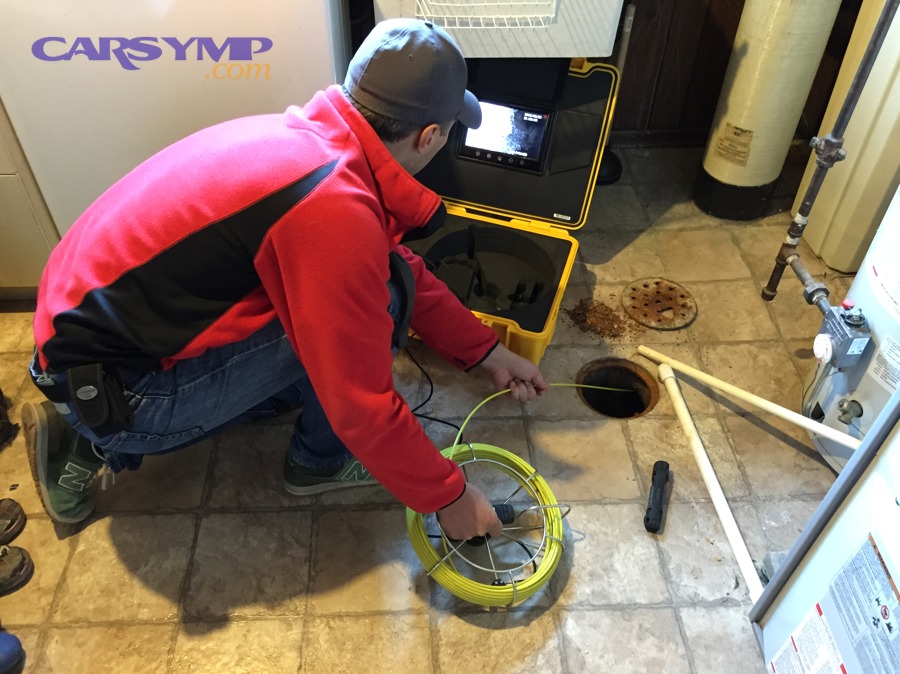
Some services are effectively “diagnosis with specialized equipment,” so they price like an inspection add-on. Sewer camera inspections are a classic example: HomeAdvisor lists typical sewer camera inspection spending between $271 and $1,730 for most homeowners, with an average around $1,000—and a broader possible range that can go much higher depending on access and line length.
When the wording is fuzzy, you can still compare fairly
If a provider says “We charge $99 to come out,” follow with:
- “Is that a trip/service call, or does it include full troubleshooting?”
- “How long does it cover?”
- “Do I get a written estimate or a confirmed diagnosis?”
- “Is it credited toward the repair if I approve work today?”
A clear answer to those questions often reveals whether you’re paying for real diagnosis or just the door opening.
What factors raise or lower the diagnostic fee for the same service type?
There are 5 main factors that raise or lower the diagnostic fee within the same service category: urgency, complexity, access, equipment type, and pricing model, because each one changes how much expert time (and risk) a company must commit.
Next, you’ll see how to predict the direction of the price change before you even call.
1) Urgency and after-hours scheduling
The same issue can cost more at night or on a weekend because companies staff fewer technicians and prioritize emergency calls. Expect surcharges or higher minimums for:
- nights/weekends/holidays,
- same-day “priority dispatch,”
- extreme weather HVAC peaks.
2) Diagnostic complexity (intermittent vs. constant failures)
Intermittent problems take longer because the tech must reproduce and isolate conditions. Examples:
- car stalls only when warm,
- AC freezes only overnight,
- breaker trips randomly,
- leak appears only when multiple fixtures run.
This is one of the most common reasons a “simple diagnosis” becomes a second visit.
3) Access and disassembly requirements
Access is the hidden multiplier. Fees climb when the tech must:
- move appliances,
- open walls/ceilings,
- remove undertrays or engine covers,
- work in tight crawlspaces/attics.
Good providers will tell you upfront whether “access work” is included or billed separately.
4) Equipment and brand complexity
Some systems demand specialized tools or OEM procedures:
- modern vehicle modules and network diagnostics,
- variable-speed HVAC systems and communicating thermostats,
- high-end appliances with proprietary error modes,
- plumbing diagnostics requiring cameras, locators, or pressure tests.
5) Flat-rate vs. time-based pricing models
Some businesses price a flat diagnostic fee; others price “trip + first X minutes + time increments.” The same company may use both models depending on job type.
This is also where Avoiding unnecessary diagnostic charges starts: if a provider bills by increments, ask what triggers additional time billing and what the cap is for the initial visit.
How do you compare diagnostic fees fairly before booking service?
The best method is a 5-step quote checklist that standardizes what you ask (scope, time included, deliverable, credit policy, and escalation rules) so you can compare providers on the same terms—and avoid paying twice for overlapping troubleshooting.
Then, once you run the checklist, the cheapest “fee” is often not the cheapest outcome.
Step 1: Standardize the problem statement you give every provider
Use the same 2–3 sentences so quotes are comparable:
- what is happening,
- when it happens,
- what you’ve already tried,
- any error codes (if applicable).
Consistency prevents one company from quoting “simple” while another quotes “complex” based only on the story you told.
Step 2: Ask what is included and how long it covers
A fair comparison requires:
- minutes/hours included,
- whether testing is included or only “visual assessment,”
- whether the tech can authorize deeper tests on-site (and at what cost).
Step 3: Confirm the deliverable
Ask: “Do I receive a written estimate, diagnosis summary, or just a verbal recommendation?” A written deliverable often signals higher diagnostic value.
Step 4: Confirm the credit/waiver policy before scheduling
Use the exact phrase: “Is the upfront charge credited toward the repair if I approve the work?” This single detail can flip the “best” option.
Step 5: Ask the escalation rule to avoid surprise add-ons
Say: “If it’s not found within the included time, what happens next—stop and call me, or keep going?” A transparent company will describe a decision point.
According to a study by the National Bureau of Economic Research that examined consumer interactions with auto repair shops, asking for a concession reduced the quoted price by about 13% on average, yet only about 26% of consumers asked—suggesting that simple, respectful questions about pricing and terms can materially affect outcomes.
When is a diagnostic fee waived or credited toward the repair, and is it worth it?
Yes—paying a diagnostic fee is often worth it when it prevents wrong-part replacements, produces a clear repair plan, and is credited toward the final repair, especially for complex or safety-related problems.
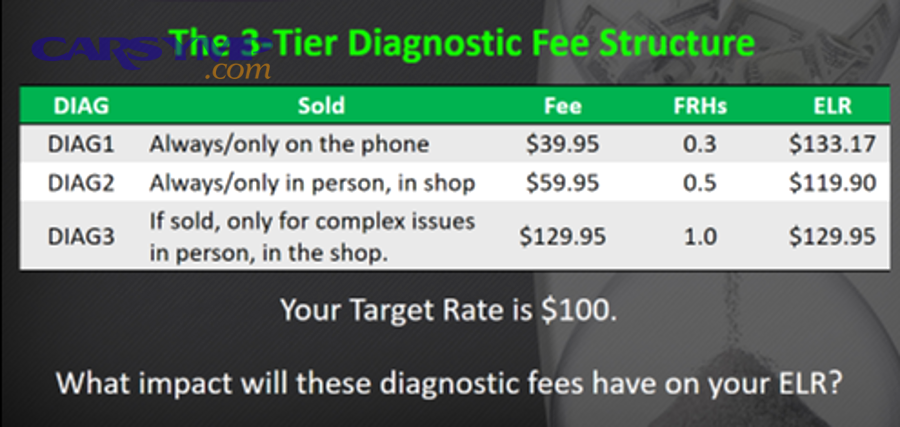
However, the value depends on the provider’s policy and the quality of the diagnostic deliverable.
When you’re most likely to see a waiver or credit
Credits are common when:
- you approve the repair immediately,
- the company uses a flat-rate menu and treats diagnosis as part of the job,
- you’re under a membership/maintenance plan,
- the issue is straightforward and the repair is performed in the same visit.
For example, ServiceTitan notes that in many cases the fee is credited toward the bill if the customer approves work based on the findings.
When the fee is less likely to be credited
Expect the upfront charge to stay separate when:
- the repair requires parts ordering and a second trip,
- the issue is “no fault found” (can’t reproduce),
- you decline the repair or choose another provider,
- you request a detailed report for insurance/compliance.
How to decide if it’s worth it in your situation
Use this decision logic:
- Worth it when the system is complex, the consequences are costly, or guessing risks compounding damage (HVAC refrigerant issues, vehicle drivability, hidden plumbing leaks, electrical faults).
- Less worth it when the symptom and fix are obvious and low-risk (simple clogs, minor cosmetic issues, replaceable filters, a known broken switch you can verify safely).
- Alternative path when the provider offers remote triage or a cheap first-step screening.
Here’s the practical truth: a good diagnostic visit saves money by preventing “part roulette.” A bad one wastes money by charging you to guess.
This is the moment to ask explicitly about How shops apply diagnostic fees to repairs. If the tech diagnoses the problem and then the repair is authorized, you want to avoid a second “diagnosis” charge embedded in labor line items.
What uncommon pricing models and edge cases can change diagnostic fees ?
There are 4 uncommon but important pricing edge cases—subscriptions, remote diagnosis, bundled flat-rate menus, and multi-visit/intermittent faults—that can change what you pay and how you should shop.

Next, these scenarios will help with Avoiding unnecessary diagnostic charges when the standard “one fee, one visit” model doesn’t apply.
When do membership plans or subscriptions change the upfront charge?
Some companies bundle or reduce the diagnostic fee for members. That can be a win if you expect recurring service, but only if:
- the discount is real (not offset by inflated repair prices),
- you can cancel easily,
- and the plan applies to the equipment you own.
Can remote/video diagnosis replace an on-site fee?
Remote triage can reduce unnecessary visits for simple issues (thermostat settings, reset procedures, basic appliance error codes). But it cannot replace on-site diagnosis when:
- measurements are required,
- safety is a concern,
- access and installation conditions matter.
Use remote triage as a filter, not as your only diagnostic step.
Are flat-rate menus better than time-based diagnosis?
Flat-rate models can be great for predictable problems, because you know the price upfront. But they can be worse when:
- your issue is ambiguous,
- the company pushes the highest-priced “likely fix,”
- the diagnosis is rushed to fit a flat ticket.
A reliable provider will explain what tests justify the recommended fix.
What if the problem is intermittent and takes multiple visits?
Intermittent faults are where customers overpay most often—because each visit “starts over.” To protect yourself:
- ask whether the first diagnostic fee includes follow-up time within a window,
- request that notes/tests carry forward,
- ask for a “stop-and-call” rule if the issue can’t be reproduced.
If you want a single line to remember: a fair diagnostic process has clear scope, clear deliverables, and clear escalation rules—and you agree to all three before the appointment.