


A drivetrain inspection includes a systematic check of the parts that deliver power from the transmission to the drive wheels—so you can confirm smooth power transfer, spot wear patterns early, and separate “normal aging” from “buy-it-now” problems.
If you’re trying to make sense of what gets checked (and what doesn’t), the fastest way is to map the inspection to real components—transmission, shafts, joints, differentials, and (on AWD/4WD) the transfer case—then tie each to the symptoms it creates when it’s failing.
You’ll also want to understand how shops actually perform the inspection (road test, lift checks, leak checks, and play measurements), because the method determines what problems they can reliably find in one visit.
Introduce a new idea: once you know what “included” really means, you can ask for the right scope and get a report you can use to decide whether to repair, negotiate, or walk away.
What is a drivetrain inspection, and what does “driveline” mean in plain English?
A drivetrain inspection is a focused evaluation of the power-delivery components after the engine—typically the transmission/transaxle, shafts, joints, differentials, and related mounts—checking for leaks, wear, abnormal play, and operating symptoms that point to failure. (en.wikipedia.org)
Because “driveline” and “drivetrain” get used interchangeably, it helps to hook the definition to what you can see and feel in the car: if it spins, transfers torque, or connects rotating parts between the gearbox and wheels, it’s usually in scope; if it creates power (engine), it usually isn’t.
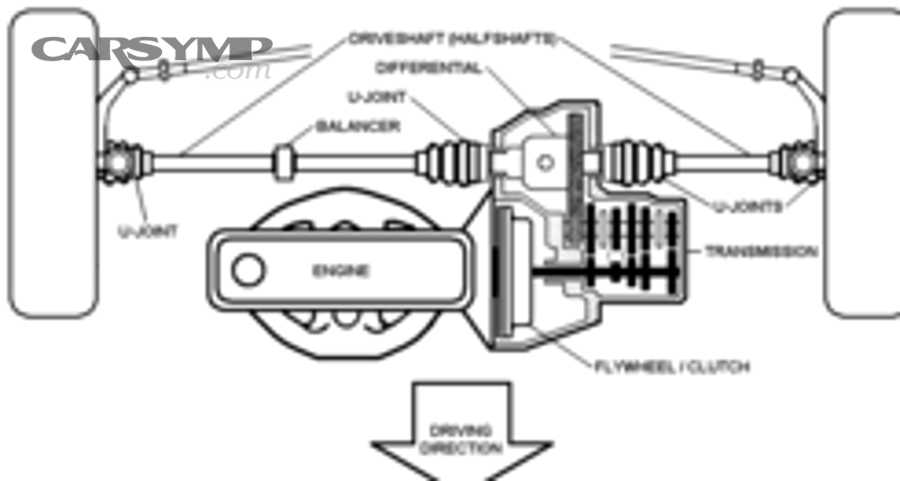
Is the engine included in a drivetrain inspection?
No—an engine is generally not included in a drivetrain inspection, for three reasons: (1) drivetrain scope usually starts after the power source, (2) engine diagnostics require different tests/tools (compression, fuel/air, ignition, scan data), and (3) mixing scopes can hide the real cause of a symptom and inflate cost.
More specifically, the reason shops separate them is practical: driveline faults tend to show up as speed-related noise/vibration, clunks on load changes, or shifting/engagement issues, while engine faults more often show up as rpm-related misfires, rough idle, or power loss across gears.
If you’re the one requesting the service, the best move is to state the symptom in a way that cleanly points to driveline vs engine. For example:
- “Vibration starts at 45–55 mph and changes with vehicle speed” → driveline likely
- “Vibration changes with rpm even in neutral” → engine/accessory likely
- “Clunk when shifting from Drive to Reverse” → driveline mounts/joints likely
- “Shudder only when braking” → brakes/suspension likely
Does “drivetrain” include the transmission?
Yes—the transmission (or transaxle) is typically included in the drivetrain, for three reasons: (1) it is the main torque-routing device between engine output and the final drive, (2) its fluid condition and shift behavior strongly predict internal wear, and (3) it directly interfaces with driveshafts/axles where many symptoms originate. (en.wikipedia.org)
Next, because the transmission sits at the start of the power-delivery chain, it becomes the reference point for the entire inspection: if the transmission output is unstable (slipping, harsh engagement, abnormal noises), downstream parts can look “bad” even when they’re only reacting to a problem upstream.
In practical terms, a proper inspection checks:
- Operation: engagement quality, shift timing, flare/slip, converter lockup feel (automatic), clutch take-up (manual)
- Containment: leaks at pan, seals, cooler lines, axle seals
- Mounting: mount condition and movement that can cause clunks or vibration under load
- Data (when available): scan data, adaptation values, stored codes, temperature history
What parts are checked during a drivetrain inspection?
There are five main groups of parts checked during a drivetrain inspection—transmission/transaxle, axles & CV joints, differential(s), driveshaft & support bearings/U-joints, and mounts/couplers/seals—based on where they sit in the power path from gearbox to wheels. (en.wikipedia.org)
To better understand what “included” really means, the easiest approach is a component-by-component checklist that ties each part to (1) what is inspected, and (2) what counts as a meaningful red flag.
Before the deep dive, here’s a quick table showing the typical inspection targets and what a technician looks for.
| Component group | What gets checked | Common red flags you can act on |
|---|---|---|
| Transmission / transaxle | fluid condition, leaks, mount movement, shift/engagement behavior | burnt odor, delayed engagement, harsh shifts, active leaks |
| Axles / CV joints | boots, grease loss, clicking/knocking on turns, play | torn boot, clicking on turns, sling grease, looseness |
| Differential(s) | leaks, noise on accel/decel, backlash clues | howl/whine, leaks at seals, metal in fluid (if checked) |
| Driveshaft / U-joints / center support | U-joint play, center support bearing, imbalance signs | clunk on takeoff, vibration at speed, visible play |
| Mounts/couplers/seals | trans mount, diff mount, guibo/couplers, seals | cracked rubber, excessive movement, thump on load changes |
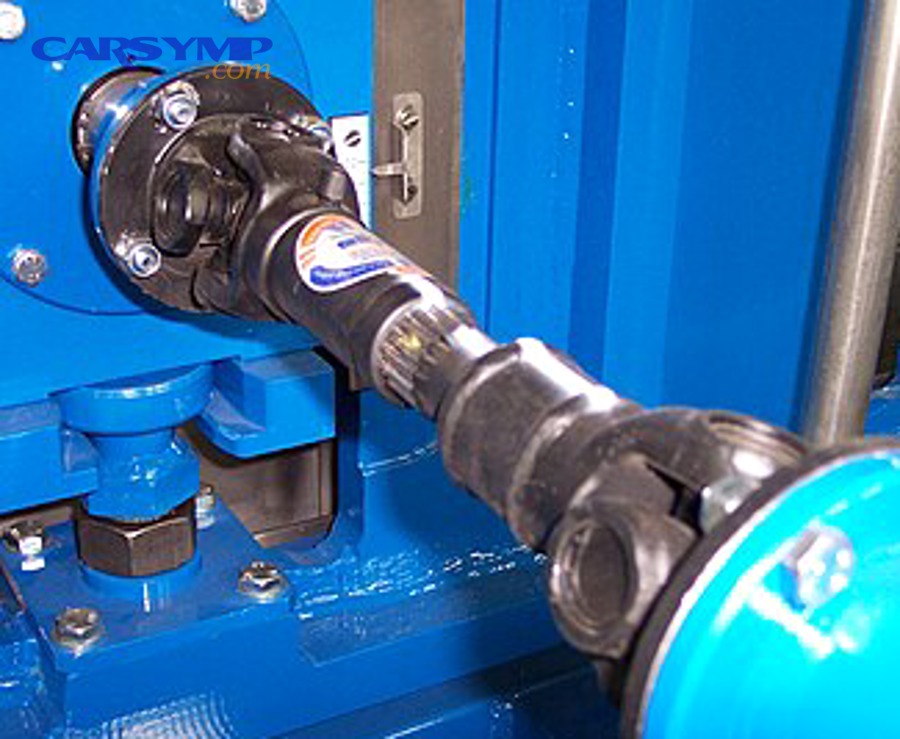
Transmission/transaxle: what do they inspect besides “does it shift”?
A drivetrain inspection evaluates the transmission/transaxle beyond basic shifting in four ways: (1) how it engages under load, (2) how it behaves when hot, (3) whether fluid condition suggests overheating/wear, and (4) whether leaks or mounts point to mechanical stress.
Then, because many transmission issues are intermittent, a good inspection recreates the “trigger conditions” (cold start, warm idle, moderate throttle, hill load, stop-and-go) instead of relying on a single quick lap around the block.
What a thorough check usually covers:
- Engagement delay test (automatic): time from Park/Neutral → Drive/Reverse engagement
- Shift quality under light vs moderate throttle: flare (rpm rise), bang/harshness, hunting
- Torque converter / lockup feel (automatic): shudder at steady cruise, slip sensation, heat pattern
- Manual transmission: clutch take-up, chatter, synchro behavior (especially 2nd/3rd), gear whine
- External leak points: pan gasket, axle seals, cooler lines, selector shaft seals
- Mounts: transmission mount collapse, torn rubber, excessive movement during load changes
Practical buyer insight: If you only hear “it shifts fine,” ask what conditions were tested (cold vs hot, steady cruise vs load, uphill, tight turns). That question often separates a surface check from a real driveline evaluation.
Axles and CV joints: what’s checked and what “normal wear” looks like
A drivetrain inspection checks axles and CV joints by verifying boot integrity, grease containment, joint noise under steering angle, and mechanical play, because those four factors predict failure far better than mileage alone.
Next, the boot is the headline item: a CV joint can survive a long time when sealed and lubricated, but once the boot tears and grease exits, contamination enters—and wear accelerates quickly.
What gets checked:
- Outer CV joint (often clicks on turns): full-lock turns at low speed, listen for rhythmic clicking
- Inner CV joint (often causes vibration under acceleration): accel/decel feel, plunge movement, play
- Boots and clamps: tears, cracks, grease sling on wheel well or underbody
- Axle seals: transaxle/diff seal seepage where axle enters the case
- Physical play on lift: controlled movement at joint and axle ends (within spec)
A simple rule of thumb technicians use:
- Clicking while turning → outer CV likely
- Vibration under acceleration that fades on coast → inner CV or driveline angle/mounts likely
- Grease thrown around the wheel well → boot failure is already active
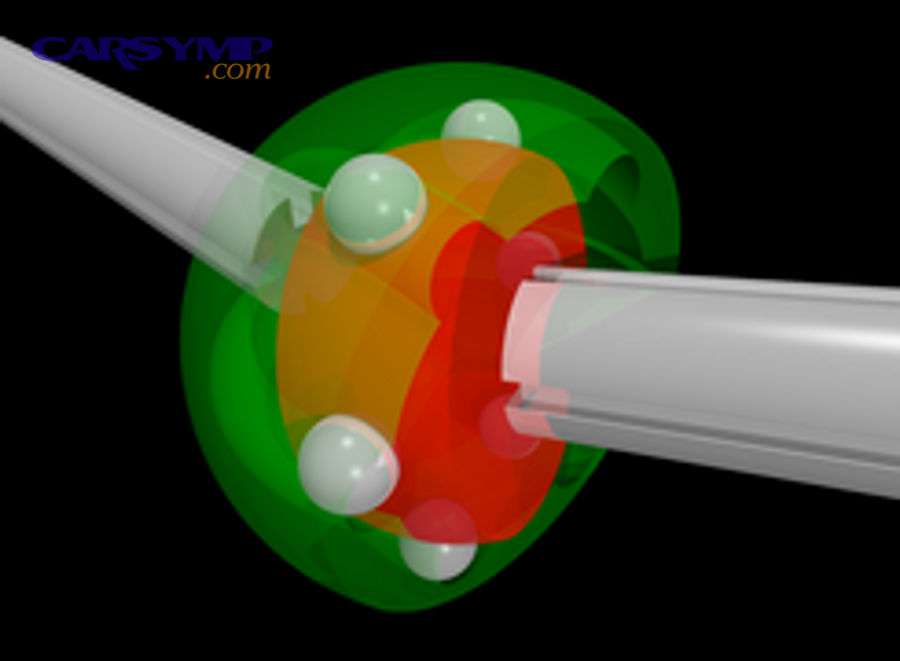
Differential(s): what do they look for without opening it?
A drivetrain inspection evaluates differentials without disassembly by checking leaks, noise patterns, temperature clues, and backlash-related symptoms, because those are the most reliable external indicators of internal wear.
More importantly, differentials talk through sound: the type of noise and when it happens (accel vs coast) often points to the problem category.
What’s commonly checked:
- Leaks: pinion seal, axle seals, cover gasket, vent issues
- Noise:
- Whine/howl on acceleration → gear mesh/pinion load issues
- Whine/howl on deceleration → coast-side wear/backlash patterns
- Clunk on throttle transitions → backlash, mounts, worn couplers, or driveline slack
- Mounting: diff bushings/mounts torn or fluid-filled mounts leaking
- Fluid check (if accessible/approved): level, odor, metallic sheen on magnet (varies by shop)
If a shop can’t check fluid, they can still do a strong job by documenting:
- exact speed/load conditions where noise appears
- whether it changes in turns (can suggest bearings)
- whether it changes when load is applied/removed (can suggest gear mesh vs mount)
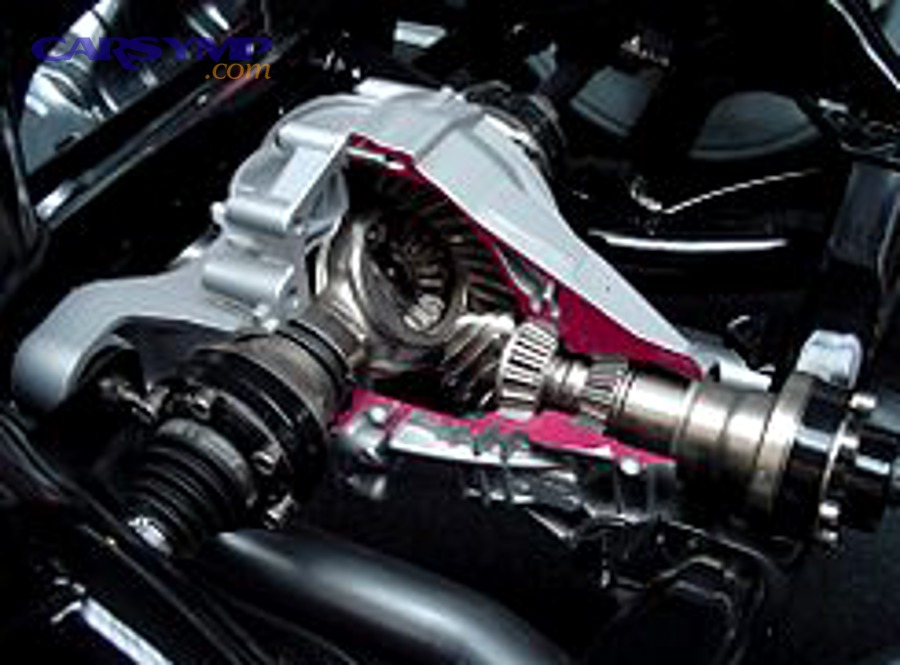
Driveshaft, U-joints, and center support bearings: what causes speed-specific vibration?
A drivetrain inspection checks the driveshaft system by measuring U-joint play, center support bearing condition, coupler integrity, and signs of imbalance, because these directly cause speed-specific vibration and clunks during takeoff or gear changes.
Then, the inspection uses a key diagnostic concept: driveline imbalance and joint issues usually create vibration that tracks vehicle speed, not engine rpm.
Typical checks include:
- U-joints: looseness, binding, rust-colored dust around caps, missing clips
- Center support bearing (two-piece shafts): torn rubber support, bearing noise, shaft alignment
- Slip yoke / splines: excessive play, clunking on takeoff
- Couplers (e.g., rubber flex discs): cracking, chunking, bolt sleeve wear
- Visual runout clues: dents, missing weights, damaged tubing, prior welding
Evidence sentence: According to a study by Michigan Technological University from the Department of Mechanical Engineering–Engineering Mechanics, in 2017, researchers showed that modifying clutch tip-out parameters reduced prop shaft oscillations, highlighting how driveline vibration can be measured and mitigated through targeted changes rather than guesswork. (digitalcommons.mtu.edu)
How is a drivetrain inspection performed step-by-step at a shop?
A drivetrain inspection is typically performed with 4 core steps—(1) symptom interview and baseline checks, (2) road test under controlled conditions, (3) lift inspection for leaks/play/boot condition, and (4) confirmation tests or measurements—so the shop can connect what you feel to what they can physically verify.
Next, it’s useful to understand what you should expect a professional to do, because the difference between a good inspection and a shallow one is usually the sequence and reproduction of symptoms, not the jargon.
Does the road test come first, and what should they try to reproduce?
Yes—the road test should come early, for three reasons: (1) many driveline issues only appear under load, (2) heat changes fluid behavior and clearances, and (3) noise/vibration patterns guide what the tech prioritizes on the lift.
Then, a meaningful road test is not random driving; it’s structured sampling:
- Light throttle acceleration: listens for clunks, checks for smooth torque transfer
- Steady cruise: checks for hum/whine/vibration onset speed
- Coast-down: compares accel vs decel noise to separate gear mesh vs bearings/mounts
- Turns at low speed: listens for clicking (outer CV) or binding
- Load changes: quick on/off throttle to provoke mounts/backlash clunks
If you’re describing what you feel, translate it into testable terms:
- “Happens at 52–58 mph” (speed window)
- “Only when accelerating lightly” (load condition)
- “Worse on turns” (steering-angle correlation)
- “Goes away when I lift off throttle” (coast vs drive)
What do they check on the lift: leaks, boots, mounts, and play?
A shop lift inspection checks containment and mechanics—leaks, torn boots, mount condition, and component play—because those are the most visible predictors of driveline reliability and the easiest to document.
Specifically, the lift portion is where a technician confirms whether the symptom has a physical “smoking gun”:
- Leaks: transmission pan, output seals, axle seals, diff covers, transfer case seams
- Boots: CV boots, clamps, grease sling, torn bellows
- Mounts: transmission mount collapse, differential bushing tears, engine/trans movement
- Play checks:
- U-joint play and binding
- axle in/out and rotational lash (within reason)
- differential mount movement under controlled force
- Visual damage: bent driveshaft, missing balance weights, impact dents, scraped casings
Important nuance: “A little movement” can be normal. A good inspection describes where and how much, and whether it’s consistent with the vehicle’s design and mileage.
What measurements or confirmation tests separate a quick check from a real inspection?
A higher-quality drivetrain inspection adds confirmatory measurements—noise localization, temperature checks, runout/angle checks (when relevant), and scan data where applicable—because these reduce false positives and help you prioritize repairs.
More specifically, these are the “signal boosters”:
- Chassis ears / electronic stethoscope: pinpoints which housing is producing noise
- Infrared temperature comparison: identifies a bearing or unit running hotter than normal
- Runout checks (selected cases): bent shaft suspicion
- Driveline angle checks (lifted/modified vehicles): vibration diagnosis support
- Scan data (modern vehicles): trans temp, slip values, stored driveline-related codes
Evidence sentence: According to a study by Texas A&M Transportation Institute from the Texas A&M University System, in 2019, the authors noted that the National Highway Traffic Safety Administration vehicle owner complaint database contained more than 1.4 million complaints and that around 5% involved injury or fatalities—underscoring why systematic inspection and early detection matter. (subasish.github.io)
What results should you expect from a drivetrain inspection report?
A drivetrain inspection report should deliver three outputs: (1) a clear list of inspected components and observed conditions, (2) a prioritized diagnosis linking symptoms to likely causes, and (3) next-step recommendations (repair now, monitor, or test further) with cost and risk context.
Then, the “best” report is one you can use to make a decision—buy, negotiate, repair, or walk—without guessing what the shop meant.
Should the report include photos, measurements, or a digital inspection checklist?
Yes—a strong report should include photos/measurements (or a digital vehicle inspection checklist) for three reasons: (1) they prove what was actually inspected, (2) they help you compare severity over time, and (3) they reduce misunderstandings when you ask another shop for a second opinion.
More specifically, look for:
- Photos of leaks (with location context, not just a wet spot)
- Photos of torn boots and grease sling patterns
- Notes on play (e.g., “U-joint has measurable play” rather than “U-joint bad”)
- Noise conditions (“whine on decel 45–60 mph”)
- Fluid notes (if checked): odor, color, metal on magnet, level
If the shop doesn’t provide photos, you can still request simple documentation:
- “Can you show me where the leak is starting?”
- “Which boot is torn—inner or outer, left or right?”
- “What speed/load reproduces the noise?”
How do you interpret “needs repair now” vs “monitor” in drivetrain terms?
In drivetrain terms, “repair now” usually means the issue has active risk (loss of lubrication, increasing play, safety-relevant failure potential), while “monitor” means the issue is present but stable and can be tracked with time/miles or rechecked at the next service.
Next, here’s how that typically maps to real findings:
Repair-now examples
- Torn CV boot with visible grease loss
- Active fluid leak that can drop level (trans/diff/transfer case)
- Driveshaft U-joint with clear play or binding
- Severe mount failure causing repeated clunks or driveline misalignment
- Harsh engagement or slipping that suggests internal transmission wear
Monitor examples
- Light seepage without measurable loss
- Minor bushing wear without clunking
- Slight lash noted but no abnormal noise
- Mild wear patterns with no symptom reproduction
A buyer’s trick: ask, “What happens if I drive it 2,000 miles as-is?” A good shop will answer in risk terms (likelihood of worsening, potential secondary damage).
Drivetrain inspection vs other inspections—what’s the difference?
A drivetrain inspection differs from other inspections because it prioritizes torque-transfer components and operating symptoms, while general inspections focus on broader safety/maintenance (fluids, brakes, tires, suspension, lights) and may not reproduce driveline issues under the right conditions.
However, the comparison is only useful if you know which inspection you’re buying—many “multi-point inspections” include a quick undercar look but don’t include the deeper driveline tests that find vibration causes.
Drivetrain inspection vs multipoint inspection: what’s actually more detailed?
A drivetrain inspection is usually more detailed for driveline concerns, while a multipoint inspection is broader but shallower, because the multipoint checklist spreads time across many systems and often can’t spend long on load-based vibration/noise reproduction.
More specifically:
- Multipoint excels at: tires, brakes, fluids, visible leaks, basic safety items
- Drivetrain-focused excels at: speed/load vibration diagnosis, joint play checks, mount movement, axle/CV confirmation, noise pattern interpretation
If your concern is “the car shakes at 55 mph,” a multipoint can miss the cause even when it correctly reports “tires worn” or “brakes okay.”
Drivetrain inspection vs pre-purchase inspection: which one should buyers choose?
A pre-purchase inspection is the better overall choice for most buyers, but a drivetrain inspection is the better choice when the deal hinges on power delivery (shifting quality, AWD function, vibration, clunks), because it goes deeper into the exact system that creates expensive surprises.
Next, use this decision rule:
- Choose pre-purchase inspection when you want a broad risk screen (maintenance + safety + general condition).
- Choose drivetrain inspection when you have a specific driveline concern or the vehicle type makes driveline risk higher (high mileage, lifted truck, AWD, towing history, modified drivetrain).
And here are Pre-purchase drivetrain inspection tips you can use to tighten scope without inflating cost:
- Ask the shop to reproduce the symptom at the exact speed/load you experience.
- Request documentation of leaks/boots and where they start.
- Ask whether the road test included turns, coast-down, and steady cruise.
- If it’s AWD/4WD, ask specifically whether the transfer system was checked and how.
- Get the “repair now vs monitor” breakdown so you can negotiate intelligently.
How does drivetrain inspection change by vehicle type and driving situation?
A drivetrain inspection changes by vehicle type and driving situation by adding system-specific checks—especially for AWD/4WD transfer systems, modified ride heights, towing use, and water/off-road exposure—so the inspection matches the failure modes most likely for that configuration.
Then, the key is not just “more checks,” but different checks tied to how torque is split and how angles/loads stress parts.
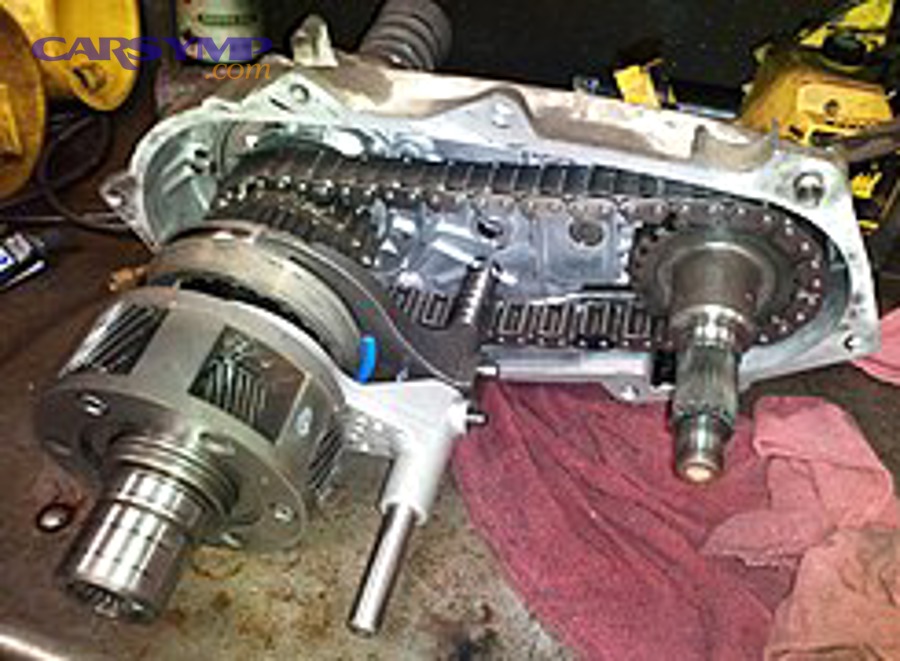
What extra items should be included for AWD/4WD systems?
AWD/4WD adds extra inspection targets—center couplers, front/rear differentials (often both), and the transfer case or transfer unit—because torque is split across more components and small problems can cascade into expensive system wear. (en.wikipedia.org)
More specifically, this is where you want explicit scope language like Transfer case inspection for AWD/4WD:
- verify engagement modes (2HI/4HI/4LO where applicable)
- check transfer case leaks and seepage points
- check for binding or windup symptoms on dry pavement (where relevant)
- verify front driveline shafts/joints and front differential condition
- confirm tire size matching and wear parity (critical for many AWD systems)
If a shop just says “AWD checked,” ask: “Did you verify transfer case operation and check for leaks/noise under load?”
What Car Symptoms point to driveline noise/vibration issues?
Driveline issues often show up as speed-based vibration/noise, clunks on torque transitions, and turning-related clicks, because rotating shafts and joints create repeatable patterns that track road speed and load.
Next, use this Drivetrain noises and vibration checklist to describe symptoms in a way a technician can test:
- Vibration at a specific speed band (e.g., 50–60 mph)
- worsens with acceleration → inner CV, driveline angles, mounts
- constant at speed regardless of throttle → imbalance, tire/wheel (but driveline still possible)
- Clunk when shifting Drive↔Reverse or on/off throttle
- mounts, backlash, worn couplers/U-joints
- Clicking on turns
- outer CV joints (common)
- Whine/howl on accel vs decel
- differential gear mesh/bearings pattern
- Shudder at steady cruise
- converter lockup (auto), mounts, or driveline resonance
Include context clues:
- “Only when hot”
- “Only uphill”
- “Only after lifting the truck”
Those details change the inspection approach dramatically.
When should you request a driveline-focused inspection after towing, off-roading, or water exposure?
You should request a driveline-focused inspection after towing/off-roading/water exposure when loads, angles, or contamination risks increase, for three reasons: (1) towing raises heat and stress on gear oil and mounts, (2) off-road impacts can damage boots/shafts and change alignment, and (3) water exposure can compromise seals and lubricants.
More specifically, ask for targeted checks when:
- you feel a new vibration after a lift kit or suspension change
- you hear new clunks after heavy towing
- you see fresh grease on the inside of wheels (boot damage)
- you drove through water deep enough to reach driveline housings
- you notice binding in tight turns on dry pavement (4WD system concerns)
What’s the “opposite” of a drivetrain inspection, and when is that enough?
The opposite of a drivetrain inspection is a general visual-only check (broad but non-specific), and it’s enough when you have no driveline symptoms, you’re doing routine maintenance, and you simply want to catch obvious leaks or torn boots early.
However, if you have a repeatable vibration/noise window—or you’re buying a higher-risk configuration (AWD, lifted, high-mileage)—a visual-only check is often the most expensive kind of “cheap,” because it can miss the exact failure that later becomes a major repair.
Evidence (if any)
- Drivetrain definition and component scope reference: (en.wikipedia.org)
- Transfer case definition and function reference: (en.wikipedia.org)
- Research on driveline torsional vibration and prop shaft oscillations (department listed): (digitalcommons.mtu.edu)
- Transportation research report noting complaint database scale and injury/fatality share: (subasish.github.io)