Understand What a Drivetrain Inspection Includes: A Driveline Check of Driveshaft, CV Joints & Differential for Car Owners
A drivetrain inspection is the fastest way to confirm What a drivetrain inspection includes—which parts are checked, what “normal” looks like, and which findings explain common noises, vibrations, and shifting-related complaints without guessing.
Next, you’ll learn whether you need a drivetrain inspection now by connecting real-world Car Symptoms (clicking on turns, clunks on takeoff, highway vibration, whining under load) to the most likely components that fail first.
Then, you’ll see how a shop validates those findings with a lift inspection and a structured road test, so you understand what you’re paying for and how the results translate into a repair plan.
Introduce a new idea: you can use the same inspection logic to avoid overpaying, prevent repeat visits, and make smarter decisions before buying a used vehicle.
What is a drivetrain inspection, and what does it include for most cars?
A drivetrain inspection is a systematic safety-and-drivability check of the components that transfer torque from the powertrain to the wheels, developed from shop diagnostic workflows and focused on wear, leaks, looseness, and vibration sources.
More importantly, most drivers confuse “drivetrain” with “transmission,” so defining the scope upfront prevents you from authorizing the wrong service and missing the actual cause of the problem.

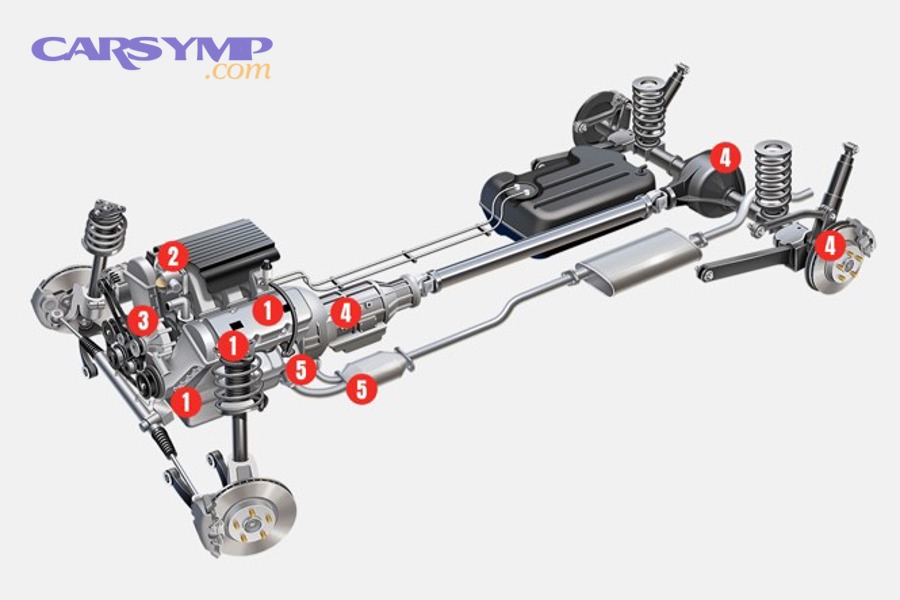
In practical terms, a standard drivetrain inspection usually centers on:
- CV axles and joints (front-wheel drive and many AWD vehicles)
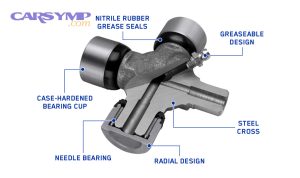
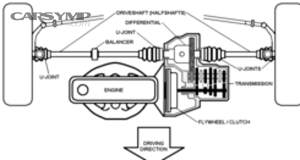
- Driveshaft and U-joints (rear-wheel drive and many trucks/SUVs)
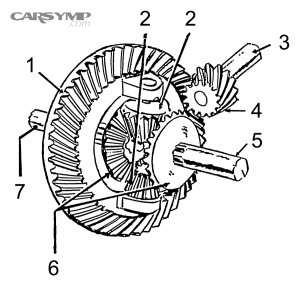
- Differential(s) (front, rear, or both on AWD/4WD)
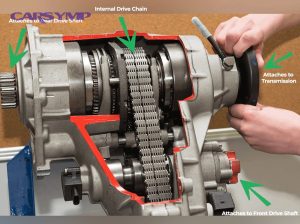
- Transfer case (for many AWD/4WD systems)
- Related support items that affect alignment and vibration (mounts, fasteners, seals)
Is a drivetrain inspection the same as a driveline check?
Yes, a drivetrain inspection is often treated as a driveline check in everyday shop language because both target torque-delivery parts, but a drivetrain inspection usually implies a broader scope and a clearer “repair vs monitor” outcome.
However, the terminology varies by shop, so the only reliable way to avoid miscommunication is to ask for the included component list before you approve labor. For example, one shop may call a quick undercar visual scan a “driveline check,” while another uses that phrase for a deeper hands-on inspection plus road test.
A quick rule of thumb:
- Driveline check often means: driveshaft/CV boots, obvious leaks, obvious looseness.
- Drivetrain inspection often means: driveline check plus mounts, differential/transfer case condition, and symptom-based testing.
Which parts are always inspected: driveshaft, CV joints, and differential?
There are three core component groups in nearly every drivetrain inspection—CV axles/joints, driveshaft/U-joints, and differential(s)—because they account for the most common drivability complaints and the most common rotational-vibration failure points.
Specifically, technicians focus on the failure signatures each part tends to produce:
1) CV axles and joints
- Torn or cracked boots, missing clamps, or grease sling
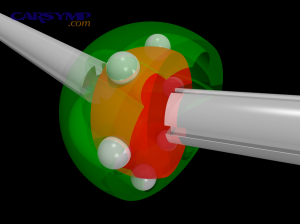
- Clicking or snapping on turns (often outer CV joint)
- Vibration under acceleration (can be inner joint tripod wear)
2) Driveshaft and U-joints
- Play in U-joint caps, binding, or “red dust”/rust powder
- Clunks when shifting from drive to reverse or on throttle tip-in
- Vibration that changes with speed (often balance/angles/joint wear)
3) Differential(s)
- Fluid leaks, vent issues, or wetness around seals
- Whine or howl that changes under load (accel vs coast)
- Mount/bushing wear that creates clunks or driveline lash

Do you need a drivetrain inspection right now?
Yes, you likely need a drivetrain inspection right now if you have drivetrain-related symptoms because (1) torque-transfer wear can escalate quickly, (2) vibrations can damage adjacent parts, and (3) leaks can turn a minor seal issue into major component failure.
Then, the smartest approach is to treat symptoms as a triage tool—not a diagnosis—so you know when to stop driving, when to schedule soon, and when you can monitor.
A practical urgency framework:
- Stop driving / tow if: loud banging, sudden loss of drive, severe vibration, burning smell with fluid loss, or visible parts hanging.
- Schedule soon if: new clicking/clunking/vibration that’s repeatable, or fresh leaks.
- Monitor briefly if: faint noise with no change over time and no leaks (still worth inspection at next service).
Are clicking turns, clunks, or vibrations clear signs of CV joint or driveshaft problems?
Yes, clicking turns, clunks, and vibrations are strong indicators for CV joint or driveshaft issues because they match the way worn joints behave under angle and load, but the exact part depends on when the symptom appears.
However, the key is to match when you feel it to what is happening mechanically:
- Clicking on tight turns (especially accelerating through a turn)
Often points to an outer CV joint because it’s operating at a higher steering angle and its worn bearing surfaces “step” under load. - Clunk on takeoff or shift from reverse to drive
Often points to driveline lash—U-joints, differential mounts, or worn splines—because torque reversals expose looseness. - Vibration that increases with speed
Often points to rotational imbalance (driveshaft), joint wear, or driveline angles. A drivetrain inspection narrows this down by checking for play, missing balance weights, and mount condition before guessing tires.
To make this actionable, use this Drivetrain noises and vibration checklist table to describe symptoms clearly to a shop (and to yourself). It summarizes what the symptom often correlates with, not a guaranteed diagnosis.
| Symptom you notice | When it happens | Common drivetrain suspects | Why the inspection focuses here |
|---|---|---|---|
| Clicking / snapping | Turning + light throttle | Outer CV joint | High joint angle reveals wear |
| Clunk | Shift D↔R or throttle tip-in | U-joints, diff mounts, splines | Torque reversal exposes play |
| Humming / whine | Cruise or load-dependent | Differential bearings/gears | Load changes alter gear/bearing noise |
| Shudder | Acceleration | Inner CV joint, mounts | Torque loads joints/mounts |
| High-speed vibration | 45–75 mph range | Driveshaft balance/angles, U-joints | Rotational speed amplifies imbalance |
Is it safe to keep driving with driveline vibration or differential whining?
No, it’s not reliably safe to keep driving with driveline vibration or differential whining because vibration can accelerate wear in joints and bearings, noise often indicates a progressing lubrication problem, and the failure mode can shift from “annoying” to “immobilizing” with little warning.
In addition, vibration is not just a comfort issue—it can create cyclical loads that fatigue components over time. That’s why a drivetrain inspection treats vibration as a mechanical stress signal, not a cosmetic complaint.
According to a study by University of Sydney from its Institute for International Health, in 2003, vehicles without a current certificate of inspection had significantly higher odds of being involved in an injury crash (OR 3.08, 95% CI 1.87–5.05) compared with vehicles that had a current certificate. (pubmed.ncbi.nlm.nih.gov)
What exactly gets checked during a drivetrain inspection on a lift?
There are four main parts of a lift-based drivetrain inspection—(1) leak and fluid condition checks, (2) boot and seal inspection, (3) play/binding tests of joints and shafts, and (4) mount and fastener verification—based on how torque transfer parts fail in real driving.
Next, you’ll see that a good inspection is not just “looking under the car”; it’s a repeatable checklist that turns symptoms into specific findings.
What do technicians look for on CV boots, clamps, and axle shafts?
There are three main checkpoints in CV axle and joint inspection steps—boot integrity, grease containment, and joint feel—based on whether contamination and lubricant loss have started.
Specifically, technicians look for:
- Boot condition: cracks, splits, brittleness, or missing ribs
A small crack can become a full tear quickly because the boot flexes constantly with steering and suspension travel. - Clamp security: loose or missing clamps
A loose clamp can leak grease without a dramatic tear, leaving a ring of sling pattern around the inner fender or underbody. - Grease evidence: wet grease near the boot, grease spots on surrounding surfaces
Grease sling is one of the most visible early warnings, and it’s why visual inspection matters. - Axle shaft condition: damage, corrosion, or abnormal movement
A tech may check for excessive in-and-out movement (plunge) or play that feels inconsistent.
What this means for you: if a boot is torn but the joint is still quiet, you may be able to address the boot early; if the joint clicks, the wear is often already internal and the repair path changes.
How do you check driveshaft/U-joints for play, binding, or rust powder?
A proper U-joint evaluation checks for free play, smooth articulation, and wear debris because U-joints fail by loosening, drying out, or binding under angle.
However, the clues are subtle, which is why Driveshaft U-joint wear symptoms are often missed until vibration or clunks get worse. During inspection, a technician typically:
- Grabs the driveshaft near each U-joint and attempts to rotate and rock it
Any clicking, clunking, or visible movement at the joint caps can indicate wear. - Checks for binding by moving the joint through its travel range
Binding can create a vibration or a “shudder” because the joint no longer rotates smoothly. - Looks for rust powder (“red dust”) near caps
This can indicate dried-out lubrication and metal-on-metal wear. - Inspects the slip yoke or splines (where applicable)
Excessive looseness or dry splines can create a thunk when load changes.
This is also where mount condition matters: a worn mount can mimic a worn joint because it allows the driveline to shift under load.
How is a differential inspected for leaks, noise clues, and mounting issues?
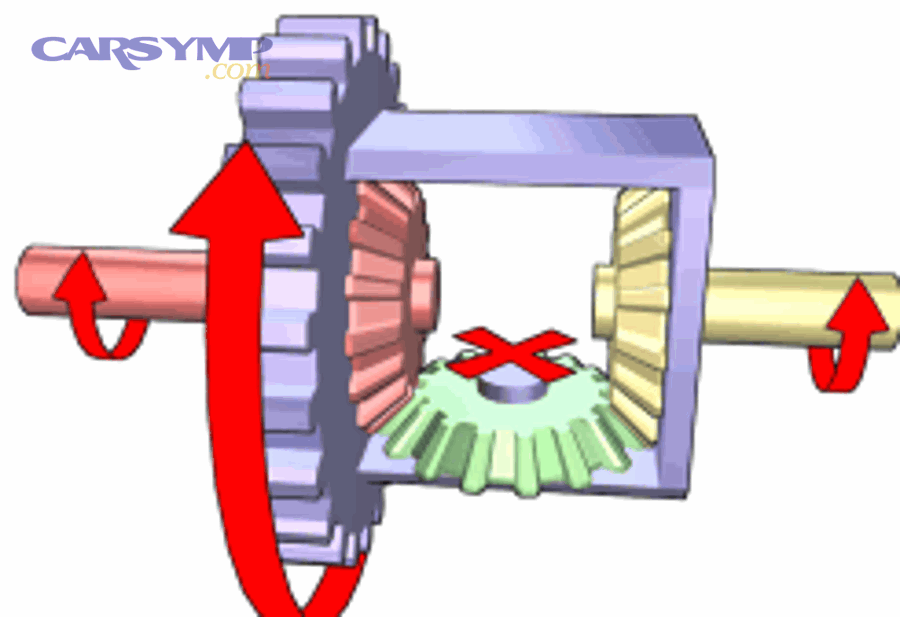
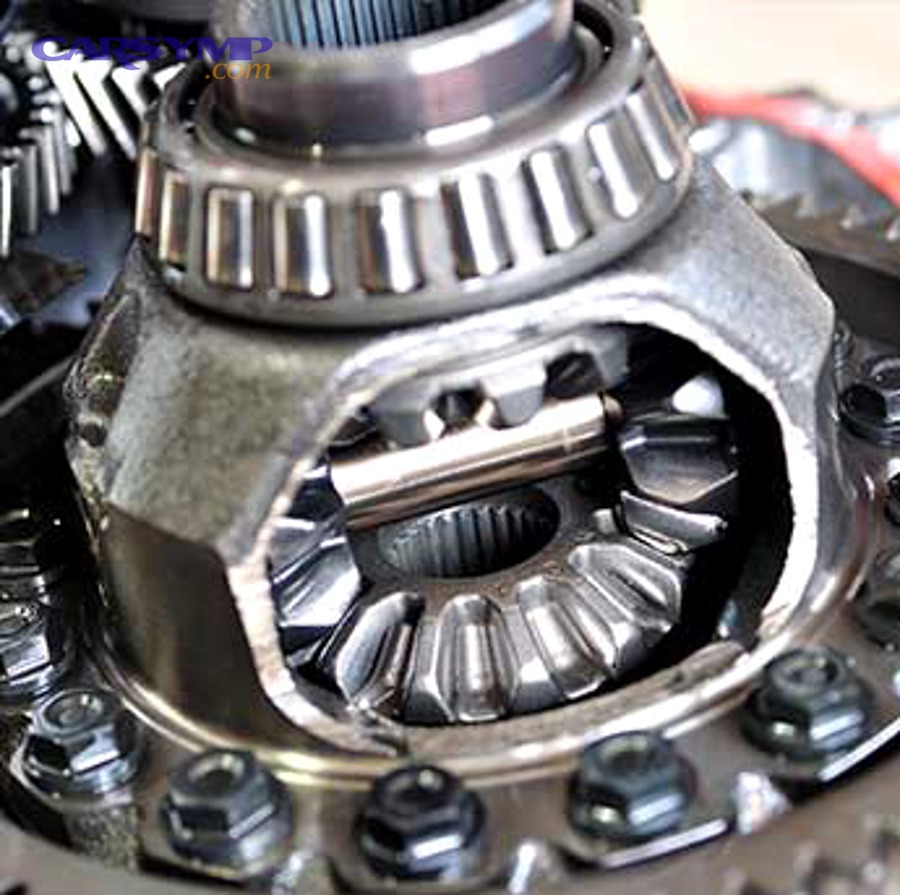
A differential inspection focuses on Differential fluid leak and condition checks, seal wetness patterns, and housing/mount integrity because lubrication and alignment are the difference between “normal gear noise” and accelerated wear.
More specifically, technicians look for:
- Seal leak patterns: pinion seal, axle seals, cover gasket seepage
A light film may be “seepage,” while a wet drip line or sling indicates active leakage. - Vent issues: clogged or damaged vent can push fluid past seals
This can create recurring leaks that come back after a seal replacement. - Fluid condition cues (when accessible): burnt smell, metallic sheen, contaminated fluid
Not every inspection includes a full fluid sample, but a skilled shop can often detect red flags quickly. - Mounts and bushings: torn bushings or loose mounts
These can create clunks and amplify driveline lash.
If your vehicle is AWD/4WD, a good shop may extend similar checks to the transfer case and front differential, because multiple units can share symptoms.
How does a road test confirm drivetrain problems?
A road test is a controlled drive that reproduces your symptom and classifies it by speed, load, and steering angle so the technician can separate drivetrain issues from tires, brakes, or engine-related problems.

Then, the road test results guide what the tech double-checks on the lift—because the best inspections loop between “feel” and “see” rather than relying on one method.
A structured road test often includes:
- Light throttle acceleration
- Moderate acceleration under load (uphill if possible)
- Coast-down (let off throttle)
- Steady cruise at the speed where vibration occurs
- Tight turns in a safe area (parking lot test)
- Gentle braking to check if vibration changes (helps separate brake rotor issues)
What’s the difference between a speed-related vibration and a load-related vibration?
A speed-related vibration is most consistent with rotating imbalance or runout, while a load-related vibration is more consistent with torque-sensitive components like CV joints, mounts, and driveline angles.
However, you can only make that distinction by testing both conditions:
- Speed-related vibration
Usually shows up at a particular mph range and remains similar whether you’re lightly accelerating or coasting. Driveshaft balance, bent shafts, and some tire issues rise to the top. - Load-related vibration
Usually intensifies when you accelerate and lessens when you coast. Inner CV joint wear, mount movement, and certain differential issues become more likely.
This is why it’s risky to “just balance the tires” when the vibration has a clear load pattern; a drivetrain inspection helps prevent that dead-end.
How do turning tests help pinpoint CV joint issues versus differential issues?
CV joint problems typically show up as clicking or snapping during turning under light throttle, while differential issues more often present as whining/howling that changes with load or as binding sensations in tight turns on certain limited-slip setups.
Meanwhile, the turning test also catches issues that drivers describe vaguely as “jerking”:
- A worn CV joint may click rhythmically as the joint articulates under steering angle.
- A differential with bearing wear may change tone between accelerating and coasting, not necessarily during steering input.
- In AWD systems, tight-turn binding can point toward transfer case or center differential behavior, which is why “it only happens in parking lots” is valuable information.
What results should you expect from a drivetrain inspection?
There are three main inspection outcomes—pass/normal, monitor/plan, and repair-now—based on safety risk, damage progression, and whether the symptom is repeatable during testing.
Next, the key is learning Interpreting inspection results and next steps so you don’t leave with vague advice like “keep an eye on it” without knowing what “it” is.
A good inspection result summary typically includes:
- Findings by component (CV axle, driveshaft, differential, transfer case if applicable)
- Severity notes (minor seep vs active leak, slight play vs unsafe play)
- Recommended repairs and why (what the failure mode is)
- Notes for prevention (fluid service intervals, recheck timing)
- Documentation (photos/video) when useful
What does “monitor” mean, and when should you recheck the driveline?
“Monitor” means the component shows early wear or minor leakage but is not yet unsafe, and you should recheck it after a defined time or mileage interval or sooner if symptoms change.
More specifically, “monitor” should come with measurable guidance, such as:
- “Recheck in 3,000–5,000 miles” or “at next oil change”
- “Return sooner if vibration increases, clicking starts, or leakage forms a drip”
- “We saw minor seepage; no fluid loss observed today”
If a shop can’t explain what change would trigger action, ask for the thresholds. Monitoring is only useful when it’s anchored to a clear observation.
When does an inspection turn into deeper diagnosis, and why?
An inspection turns into deeper diagnosis when symptoms don’t match visible findings, when multiple potential causes exist, or when confirming the root cause requires measurement or disassembly.
In addition, drivetrain complaints sometimes overlap with engine/transmission behavior, so deeper steps might include:
- NVH testing tools (microphones/chassis ears) to localize noise
- Measuring driveline angles (especially on lifted vehicles)
- Fluid sampling or magnet inspection for metal debris (where appropriate)
- Checking related supports like Transmission mount and engine mount inspection because mount movement can create driveline clunks and vibrations
Inspection cost and time expectations often change at this point. A basic inspection might fit into a short appointment window, while deeper diagnostics can require more shop time because the tech has to reproduce symptoms, measure, and document results.
According to a study by Texas A&M Transportation Institute from its transportation safety research work, in 2019, the authors concluded that continuing safety inspection programs was associated with reductions in vehicle complaint outcomes when comparing states with and without inspection programs. (subasish.github.io)
Drivetrain inspection vs transmission inspection: what’s the difference?
A drivetrain inspection wins in identifying torque-transfer wear (axles, driveshafts, differentials), a transmission inspection is best for shift-quality and internal transmission concerns, and a full diagnostic session is optimal when symptoms overlap and require testing across multiple systems.
However, many drivers get steered into the wrong lane because “shudder,” “hesitation,” or “noise” can originate from either side of the power delivery chain.
Here’s the practical separation:
- Drivetrain inspection: focuses on after the transmission—axles, driveshafts, differential(s), transfer case, mounts related to torque reaction.
- Transmission inspection / transmission service: focuses on the transmission unit—fluid condition, leaks, shifting behavior, scan data (if applicable), and internal performance symptoms.
- Full diagnosis: combines road testing, scan/measurement, and targeted checks across systems.
Can transmission symptoms mimic drivetrain problems (and vice versa)?
Yes, transmission symptoms can mimic drivetrain problems and vice versa because both affect how torque feels at the wheels, and both can create vibration, shudder, or clunks under load.
Meanwhile, a few pattern clues help:
- If the vibration is speed-tied and persists while coasting, driveline imbalance moves up the list.
- If the problem is gear-change-tied (happens at a specific shift), transmission behavior becomes more likely.
- If the symptom appears only under acceleration and especially in turns, CV joint and mount checks become more valuable.
This is why a good shop will often recommend a drivetrain inspection and a targeted transmission check if the symptom sits on the border.
What should you ask a shop to confirm the inspection scope upfront?
There are five scope questions you should ask—what components are included, whether a road test is included, what documentation you’ll receive, how recommendations are prioritized, and whether fees apply to repairs—because that prevents surprises and ensures you pay for findings, not guesses.
To make it easy, ask:
- “Can you list exactly what a drivetrain inspection includes on my vehicle?”
- “Will you perform a road test at the speed where the symptom happens?”
- “Will you check for leaks and note severity, including Differential fluid leak and condition checks?”
- “If it’s AWD/4WD, will you include Transfer case inspection for AWD/4WD?”
- “Will you evaluate mounts, including Transmission mount and engine mount inspection?”
- “How will you present Interpreting inspection results and next steps—photos, notes, or a checklist?”
At this point, you’ve covered the core intent: what gets inspected, how it’s tested, and how to use results. Next, you’ll expand into specialized setups where inspection scope changes.
How does a drivetrain inspection change for AWD/4WD, modified vehicles, and EVs?
A drivetrain inspection changes for AWD/4WD, modified vehicles, and EVs because the torque path includes extra components, geometry can create vibration even with healthy parts, and some systems produce different noise signatures that require different testing emphasis.
Then, the goal is to adjust the checklist—not to reinvent it—so the same logic still applies: identify wear, confirm with testing, and plan the next action.
What extra components are inspected on AWD/4WD systems (transfer case and multiple differentials)?
There are three common AWD/4WD additions—transfer case (or center coupling), additional differentials, and extra axle shafts/prop shafts—based on how power is split front-to-rear and side-to-side.
More specifically, Transfer case inspection for AWD/4WD commonly includes:
- Case exterior leaks and seal wetness
- Output shaft play checks (where accessible)
- Mount/bushing condition
- Evidence of overheating or fluid loss
- Symptom testing for binding, especially in tight turns (vehicle-dependent)
The practical takeaway: AWD/4WD systems can create symptoms that feel like “a bad tire” or “a bad transmission,” so adding transfer case and additional differential checks prevents false conclusions.
Do lifted trucks need driveline angle and balance checks during a driveline inspection?
Yes, lifted trucks often need driveline angle and balance checks during a driveline inspection because suspension changes alter joint angles, increase operating stress, and can create vibration even when U-joints are not yet “bad.”
However, the inspection still starts with basics—play, binding, leaks—before it moves to geometry:
- If U-joints are tight and boots are intact but vibration persists, angle measurement becomes more valuable.
- If the vibration appeared immediately after modifications, the cause is more likely geometric than wear-based.
This is also where a shop may recommend balancing, shims, or hardware changes, not just parts replacement.
What’s different about inspecting EV drivetrains (halfshafts and reduction gear units)?
EV drivetrains still rely on halfshafts (CV axles), but they often use reduction gear units instead of multi-gear transmissions, so inspections emphasize axle condition, seals, and noise/vibration patterns that may differ due to instant torque delivery.
Meanwhile, EV-specific notes can include:
- CV boot condition remains critical because contamination still ruins joints.
- Noise signatures may differ (whirring vs gear whine), so the road test matters.
- Some checks may shift toward verifying that mounts and supports handle torque transitions smoothly.
The core logic remains the same: isolate the symptom, confirm with physical checks, and document next steps.
When should you choose preventive inspection instead of waiting for corrective replacement?
Yes, you should choose preventive inspection instead of waiting for corrective replacement when you’re seeing early leakage, minor boot damage, or new vibration because preventive action protects adjacent parts and reduces the chance of getting stranded.
To illustrate, preventive inspection is especially valuable in two scenarios:
- Before buying a used vehicle: apply Pre-purchase drivetrain inspection tips like checking for torn boots, fresh undercarriage oil, and repeatable test-drive vibrations at highway speed.
- Before long trips or towing: early detection of leaks or joint wear can prevent expensive cascade failures.
A simple decision cue: if the symptom is new, repeatable, and tied to load/turning/speed, an inspection is usually cheaper than the risk of secondary damage—especially when you consider labor overlap if multiple parts are affected.
Evidence (if any)
According to a study by University of Sydney from its Institute for International Health, in 2003, vehicles without a current certificate of inspection had significantly higher odds of being involved in an injury crash (OR 3.08, 95% CI 1.87–5.05) compared with vehicles that had a current certificate. (pubmed.ncbi.nlm.nih.gov)
According to a study by the Texas A&M Transportation Institute from its transportation safety research work, in 2019, the authors concluded that continuing safety inspection programs was associated with reductions in vehicle complaint outcomes when comparing states with and without inspection programs. (subasish.github.io)