


Your AWD/4WD transfer case inspection is fastest and most reliable when you focus on three truth sources: leaks, fluid condition, and engagement behavior. If you inspect those in a consistent order, you can quickly spot whether the problem is minor (like seepage) or urgent (like fluid loss, metal debris, or binding).
Next, you’ll learn how to connect common symptoms—noises, vibrations, delayed engagement, and warning lights—to what the transfer case is likely doing internally, so you can avoid replacing good parts and stop guessing.
Then, you’ll see where a basic inspection ends and where “real diagnosis” begins, including what an inspection can confirm right away (like leak points and fluid health) versus what usually needs deeper testing.
Introduce a new idea: once you’ve got a repeatable inspection checklist, you can use it both for routine maintenance and for high-stakes situations like buying a used 4WD—where one smart check can save you thousands.
What is a transfer case inspection on an AWD/4WD vehicle?
A transfer case inspection is a drivetrain inspection step that evaluates the transfer case’s exterior condition, fluid health, and AWD/4WD engagement behavior to identify leaks, lubrication problems, or functional issues before they become expensive failures.
More specifically, the value of an inspection is that it turns vague “something feels off” complaints into observable evidence—wet areas, fluid smell/appearance, and repeatable engagement symptoms—so you can choose the correct next action.
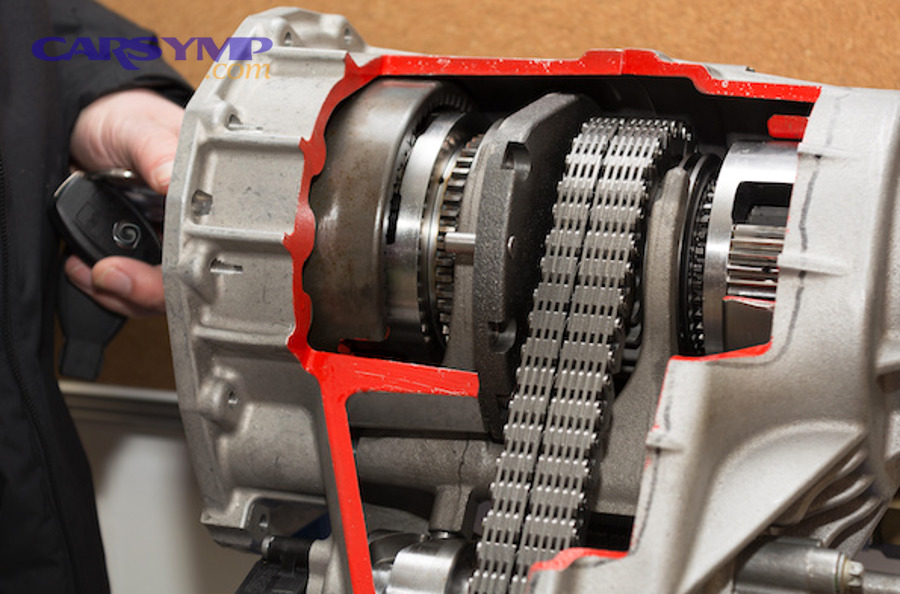
What parts are included in a transfer case inspection checklist?
A practical checklist covers the transfer case and the parts directly connected to it, because the symptoms often overlap. Use the list below as your “walk-around” sequence:
- Transfer case housing & seams
- Look for cracks, impact marks, fresh oil tracks, or damp seams where case halves meet.
- Check mounting points for looseness or broken bolts.
- Input and output seals
- Inspect the areas around the input (from transmission) and outputs (to driveshafts).
- Oil sling patterns around yokes/flanges often point to seal seepage.
- Fill and drain plugs (and washers)
- Look for wetness at the plug heads and around the sealing surfaces.
- A damaged washer can create a “slow leak” that looks like a bigger issue.
- Vent/breather area
- A clogged breather can build pressure and push fluid past seals, creating “mystery leaks.”
- Actuators/sensors (if equipped)
- Many systems have an encoder motor, range sensor, or electronic shift motor housing.
- Check for fluid at electrical connectors (a common sign of seal failure).
- Driveshaft interfaces
- Check U-joints/CV joints for play or torn boots; vibration can mimic transfer case issues.
- Mounts and crossmembers
- A failed mount can cause clunks that sound like internal damage but aren’t.
If you’re doing Pre-purchase drivetrain inspection tips, add one more step: look for evidence of recent undercarriage cleaning. A freshly sprayed underside can hide a leak for a short time—so check again after a test drive.
Does a transfer case inspection diagnose the exact failed part every time?
No—transfer case inspection does not diagnose the exact failed part every time, because many issues share the same symptoms; however, it does narrow the problem quickly by confirming (1) leak location, (2) whether fluid is compromised, and (3) whether engagement behavior is abnormal.
More importantly, here are three reasons inspection can’t always pinpoint the single component immediately:
- Symptom overlap across the drivetrain
A vibration may come from a U-joint, differential, wheel bearing, or tires—not just the transfer case. That’s why a broader drivetrain inspection is part of good transfer case triage. - Internal wear can look “normal” externally
Chain stretch, worn bearings, or clutch-pack wear might not leak or show visible damage until later. - Electronic AWD/4WD control adds layers
A mode that “won’t engage” may be caused by an actuator, a sensor, wiring, or the control module—none of which can be confirmed by a visual check alone.
That’s not a weakness—it’s the point of inspection: you move from guessing to evidence, then decide whether you need deeper diagnostics.
How do you inspect your AWD/4WD transfer case for leaks the right way?
You inspect for leaks the right way by using a three-step method—clean, verify, and trace—so you can distinguish harmless grime from active fluid loss and identify the exact leak origin.
To better understand why this matters, remember that transfer case fluid can travel along surfaces and drip far from the source. If you only look for the drip, you may repair the wrong seal.
Step 1: Clean the suspect area
Wipe the housing, seam, and plug areas with a rag. If it’s heavily coated, use a gentle degreaser and rinse carefully (avoid blasting electrical connectors).
Step 2: Verify after a short drive
A 10–15 minute drive warms the fluid so fresh wetness shows up more clearly. Blauparts specifically recommends warming the transfer case fluid before service because warmth reduces viscosity and improves fluid movement—this same principle helps leak verification. (blauparts.com)
Step 3: Trace upward to the source
Follow the wet track upward to the highest wet point. That topmost wet line is usually the origin.
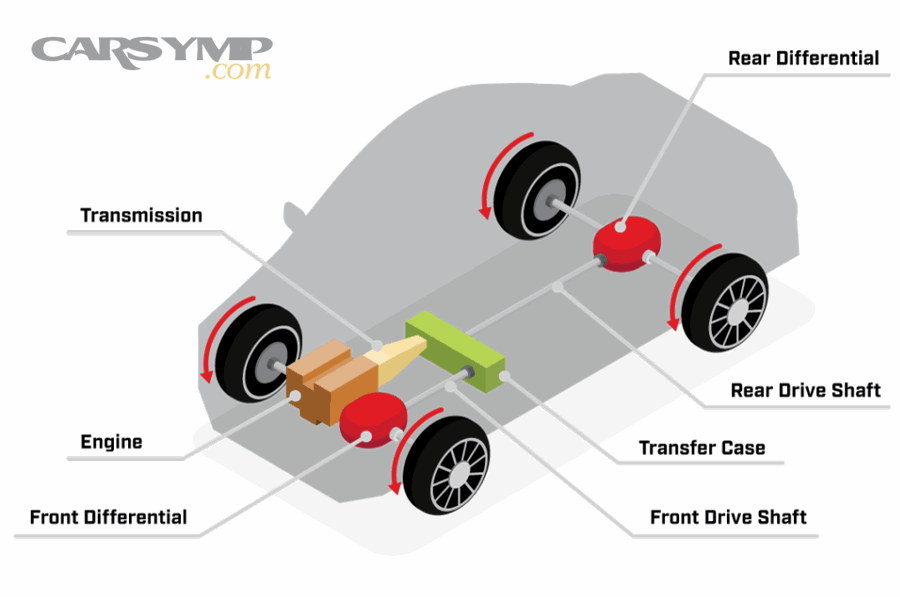
Where are the most common transfer case leak points on AWD/4WD systems?
There are five common leak points on AWD/4WD transfer cases: input seal, output seal(s), case seam, fill/drain plug sealing surfaces, and actuator/sensor ports, based on where rotating shafts and sealing surfaces meet.
Next, use this quick map to match what you see to what it likely is:
- Output seal area (rear/front driveshaft connection)
You’ll often see wetness around the yoke/flange and a sling pattern on nearby underbody components. - Input seal area (between transmission and transfer case)
This can be harder to spot because fluid may drip from higher points and collect on the skid plate or crossmember. - Case seam (case halves)
A thin wet line along the seam may indicate sealant failure or bolt loosening. - Fill/drain plugs and washers
It’s common to see wetness around a plug if the washer is damaged or the plug wasn’t torqued correctly. Blauparts’ step-by-step procedure highlights removing the fill plug and sealing washer before draining—because if the fill plug is seized, you don’t want to drain the unit and get stuck. (blauparts.com) - Actuator/sensor/encoder motor area
Any fluid in or around connectors is a “pay attention now” sign because it can create electrical faults and repeated engagement errors.
Is a small transfer case seepage safe to monitor, or should you repair it now?
Yes, a small transfer case seepage is sometimes safe to monitor if (1) the fluid level remains stable, (2) engagement feels normal, and (3) seepage does not worsen after cleaning—but no, you should not “just monitor” it if it shows active dripping, burning odor, or repeated top-offs.
In addition, use these three practical rules:
- Monitor (usually okay short-term)
Light dampness at a seam or plug, no drips, no spots on the ground, and no changes after multiple drives. - Repair soon (planned action)
Seepage that returns quickly after cleaning, or wetness around a seal with early sling patterns. - Repair now (urgent)
Drips, puddles, visible spraying/slinging, or any sign that the transfer case is losing fluid fast enough to risk overheating.
For drivers using a “Car Symp” log (a simple symptom journal), write down the exact location of wetness and whether it changes after each drive—small details make a shop diagnosis faster and cheaper.
How do you check transfer case fluid level and condition?
You check transfer case fluid level and condition by using the fill-port method—confirm the fill plug can be removed, verify the vehicle is level, and assess fluid by sight and smell—so you can confirm lubrication health without guessing.
Then, treat fluid like a report card: it tells you about wear, heat, contamination, and maintenance history.
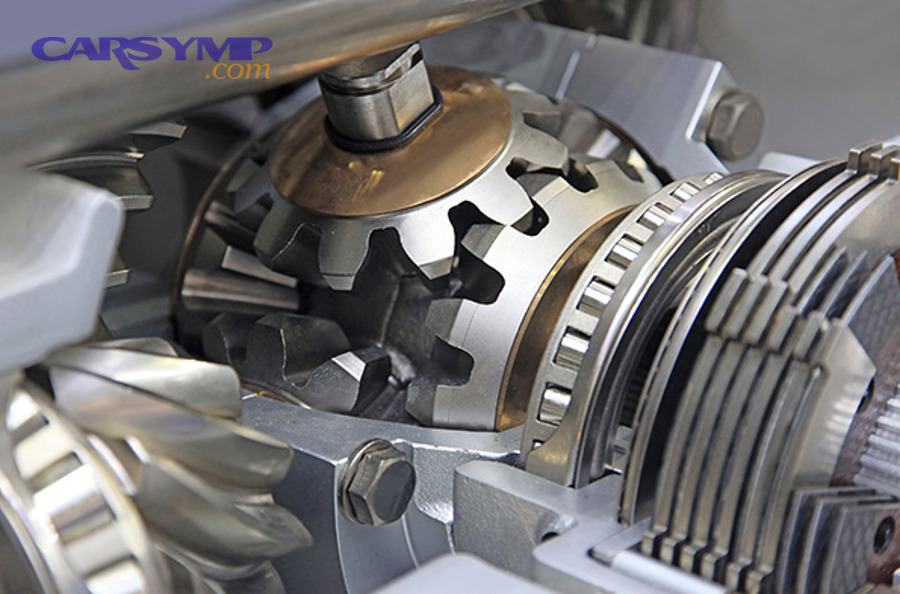
What does healthy vs unhealthy transfer case fluid look and smell like?
Healthy transfer case fluid typically looks clear to slightly darkened (depending on age and fluid type) and smells like oil; unhealthy fluid often shows burnt odor, unusual discoloration, or contamination, and the differences matter because they change what you do next.
However, don’t judge only by color—different manufacturers use different fluids and some darken faster than others. Use this comparison checklist:
Healthy signs
- Slight darkening over time, but still translucent
- No burnt smell
- No milky appearance
- No gritty feeling when rubbed between fingers (use gloves)
Unhealthy signs
- Burnt odor (heat stress and lubrication breakdown)
- Milky or foamy fluid (water contamination—often after deep water exposure)
- Strong metallic shimmer (sustained wear or damage)
- Thick sludge or gritty residue (severe contamination or overdue service)
If you’re unsure whether your “normal” is actually normal, compare with the fluid’s expected type and viscosity listed for your vehicle. Blauparts notes that even within one model line (Tacoma), the recommended fluid types can vary by generation. (blauparts.com)
What do metal flakes or glitter in transfer case fluid indicate?
Metal flakes or glitter in transfer case fluid indicate abnormal wear—often bearings, chain, gears, or clutch components—because metal in the oil means components are shedding material into the lubricant.
More importantly, not all metal looks the same, and your next step depends on what you find. The table below explains how to interpret common observations during inspection.
This table contains visual findings vs likely meaning vs what to do immediately, so you can respond with the right urgency:
| What you see in fluid/plug | What it often suggests | What to do next |
|---|---|---|
| Fine gray paste on magnetic plug | Normal break-in wear or mild wear over time | Monitor + follow service interval; recheck next service |
| Bright “glitter” throughout fluid | Accelerated wear (bearings/gears/chain) | Reduce driving, plan diagnostics, consider fluid change + inspection for source |
| Visible chunks/shards | Possible component damage | Stop driving if symptoms exist; tow for diagnosis |
| Milky fluid + metal | Water contamination + wear | Avoid driving; service immediately to prevent rapid damage |
According to a study by The University of Akron from the Department of Mechanical Engineering, in 2010, the thesis reported that ultrasonic and capacitance measurement methods could detect wear debris particles as small as 44.5 μm in lubricating oil—supporting the idea that small metal debris can be identified and trended before catastrophic failure. (etd.ohiolink.edu)
How do you test AWD/4WD engagement to spot transfer case issues?
You test AWD/4WD engagement by using a three-part functional check—mode selection, low-speed behavior, and repeatability—so you can confirm whether the transfer case engages smoothly, holds the selected mode, and avoids binding or abnormal noise.
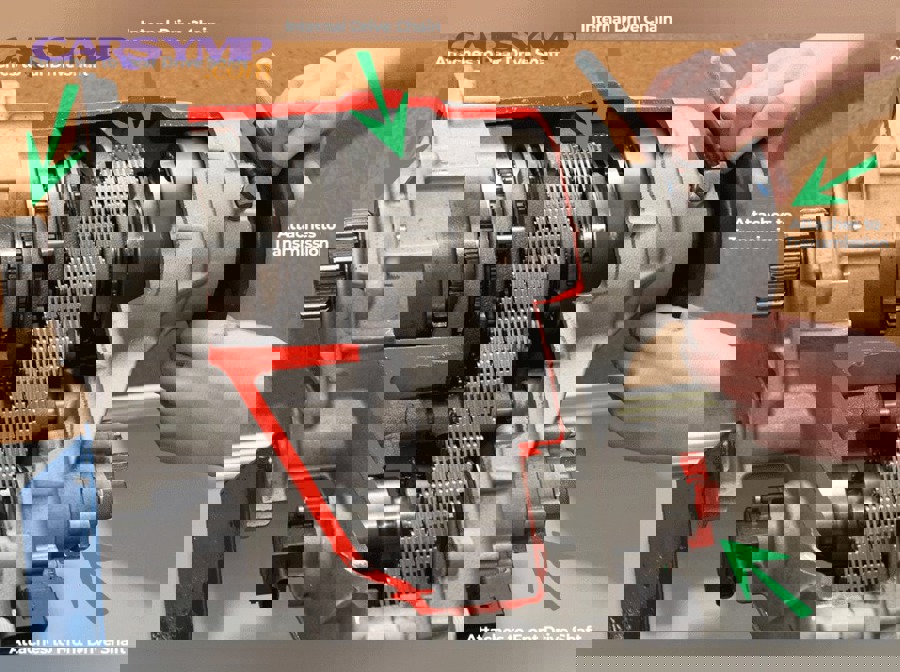
Next, treat engagement like a “behavior test.” Even if a system doesn’t leak, an engagement problem often appears first as inconsistent mode changes or binding in turns.
Here is one practical video you can reference while learning the basic process of checking transfer case fluid and related access points:
What engagement symptoms point to transfer case problems vs drivetrain problems?
Transfer case problems show up most often as mode-related symptoms (won’t engage, pops out of mode, binds only in 4WD), while drivetrain problems more often show speed-related symptoms (vibration regardless of mode) or load-related clunks from joints and mounts.
However, because symptoms overlap, use this separation logic:
Symptoms that point more toward the transfer case
- 4HI/4LO won’t engage or engages only sometimes
- Audible grinding/clunk during mode change
- Binding appears specifically when 4WD is selected (especially on dry pavement in part-time systems)
- Mode indicator light flashes, then returns to previous mode
Symptoms that point more toward the rest of the drivetrain
- Vibration that persists regardless of AWD/4WD mode
- Clunk on takeoff or shifting that correlates with driveshaft play or mount movement
- Growling that increases steadily with road speed (often wheel bearing or differential)
A solid “Drivetrain noises and vibration checklist” approach is to separate vibration into speed-related vs engine-RPM-related vs throttle-position-related. Vibration diagnostic flow charts from drivetrain suppliers commonly start with exactly that kind of classification. (dana.com.au)
Should you keep driving if 4WD won’t engage or it binds in turns?
No, you should not keep driving if 4WD won’t engage or it binds in turns, because (1) binding can overload driveline components, (2) partial engagement can damage gears or clutches, and (3) continued operation can turn a small fault into a major repair.
In addition, here are the three “stop now” reasons in plain language:
- Binding means something is fighting itself
In part-time systems on dry pavement, binding can be expected—but if binding is severe, sudden, or new, you need to stop and verify you’re not dealing with a stuck mode, actuator fault, or internal damage. - Partial engagement creates heat and wear
A transfer case that “tries” to engage repeatedly can generate heat and shed metal into the fluid. - Loss of traction control behavior can be unsafe
If the system is not behaving predictably, you can’t rely on it in poor traction conditions.
If the symptom happens intermittently, document the exact circumstances (speed, temperature, road condition, which mode, and what the indicator did). Those details shorten diagnostic time.
What are the most common signs your transfer case needs service or repair?
There are five common signs your transfer case needs service or repair: leaks, burnt/contaminated fluid, engagement problems, unusual noises, and vibration that correlates with driveline load—based on how transfer cases fail (sealing, lubrication, actuation, and wear).
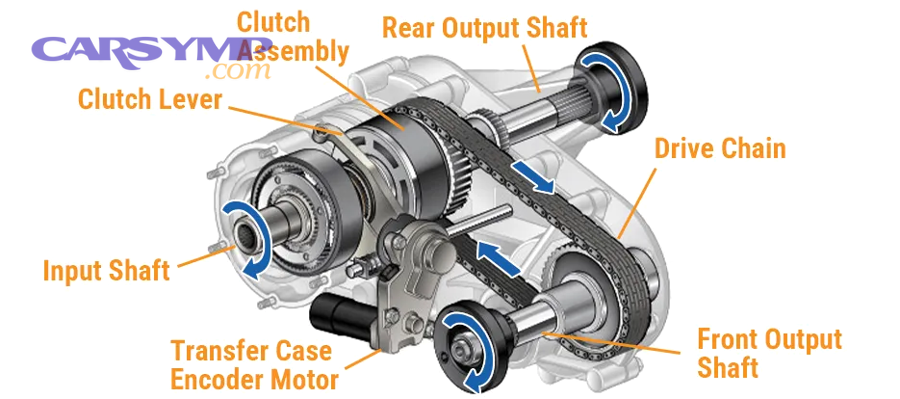
More importantly, the goal here is triage: determine whether you likely need (A) fluid service, (B) seal repair, or (C) deeper diagnosis.
Here’s a quick symptom-to-check table to help you prioritize. This table contains symptoms and the first inspection step that usually yields evidence:
| Symptom you notice | First thing to check | Why it’s the fastest check |
|---|---|---|
| Fluid spots under vehicle | Leak trace (clean + drive + trace) | Confirms source area quickly |
| Whine/growl that rises with speed | Fluid condition + driveline joints | Differentiates wear vs vibration sources |
| Clunk on takeoff/shift | Mounts + U-joints/CV joints | Often external, not internal |
| Mode won’t engage | Fluid + actuator area + indicator behavior | Separates mechanical vs electronic clues |
| Binding only in 4WD | Mode type + engagement test | Identifies misuse vs fault |
Which noises and vibrations are most associated with transfer case wear?
The noises and vibrations most associated with transfer case wear include whine, grinding, chain slap (rattle), and load-change clunks, and you can classify them by when they occur to narrow the likely cause.
Next, use this classification method:
- Whine that increases with vehicle speed
Often points to bearings or gear wear—especially if it’s present in multiple modes. - Grinding during engagement
Often points to engagement mechanism issues, actuator timing problems, or internal wear. - Rattle/chain slap under load
Can suggest chain stretch in chain-driven cases (common on many 4WD designs). - Clunk on acceleration/deceleration transitions
Could be transfer case backlash, but also commonly comes from driveline joints or mounts.
If you want a structured method, use the same classification logic found in vibration diagnostic checklists: determine whether the vibration is speed-related, whether it changes with throttle position, and whether it appears under specific conditions. (dana.com.au)
What warning lights or codes can relate to AWD/4WD transfer case behavior?
Warning lights or codes can relate to transfer case behavior when the AWD/4WD system detects mismatches between commanded mode and actual position, actuator faults, or sensor data outside expected range—even though codes alone do not prove the transfer case itself is mechanically damaged.
More importantly, codes should guide your inspection, not replace it. If your scanner shows AWD/4WD-related codes:
- Record the code and any freeze-frame/conditions
- Note whether the indicator light flashed, stayed solid, or switched modes
- Inspect actuator connectors for fluid intrusion or damage
- Confirm fluid level/condition before repeated engagement tests
A key practical point: repeated “try and fail” engagements often create heat and wear, so avoid cycling modes aggressively until you’ve confirmed fluid health.
Transfer case inspection vs service vs repair: what’s the difference?
Transfer case inspection identifies the problem, transfer case service restores fluid/sealing health, and transfer case repair replaces or rebuilds components—so inspection is the decision step, service is the maintenance step, and repair is the fix step.
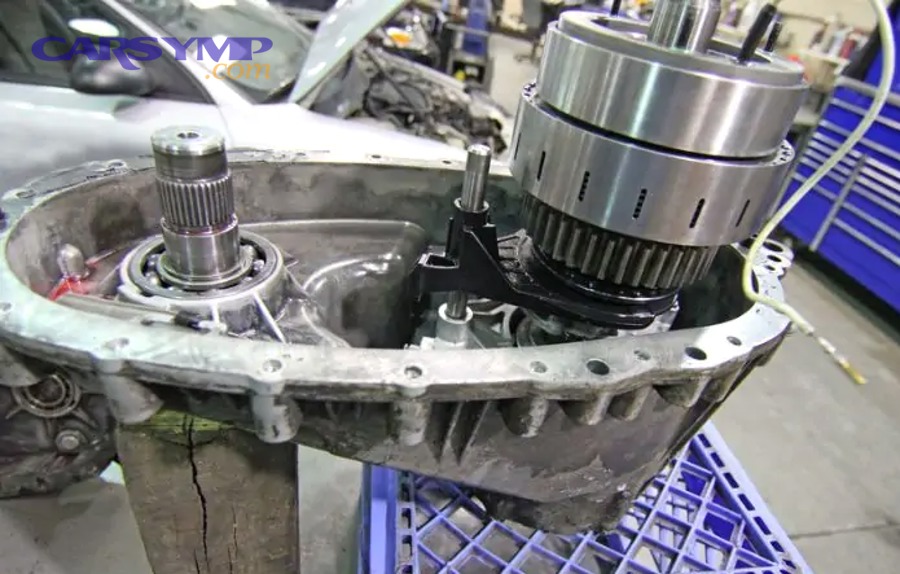
Then, use this simple distinction to avoid paying twice:
- Inspection: Observe and verify (leaks, fluid condition, engagement behavior)
- Service: Maintain and prevent (fluid change, sealing washers, minor leak corrections)
- Repair: Correct damage (seals, bearings, chain, actuator, rebuild)
To illustrate a service-focused perspective, 2CarPros describes transfer case service around locating drain/fill plugs and changing contaminated fluid—useful for understanding what a shop may do during a paid service.
When does an inspection turn into a fluid service or a seal replacement?
Yes, an inspection should turn into a fluid service or seal replacement when (1) fluid condition shows heat/contamination, (2) seepage becomes an active leak, and (3) engagement symptoms correlate with low or degraded fluid—because delaying action increases wear and risk.
More importantly, here are the practical thresholds:
- Fluid service becomes the next step when:
- Fluid smells burnt or looks contaminated
- Service history is unknown (especially on used 4WD)
- The vehicle is used for towing, off-roading, or frequent 4WD operation (higher heat/shear cycles)
- Seal replacement becomes the next step when:
- Wetness returns quickly after cleaning and verification
- Fluid level requires top-off
- Oil is slinging around a yoke/flange area
If you’re buying a used AWD/4WD, treat this as part of your pre-purchase checklist: a small leak plus bad fluid is not “just maintenance”—it’s a price negotiation point.
Contextual Border: You now have a complete, repeatable checklist that answers the core question: how to inspect a transfer case using leak tracing, fluid assessment, and engagement testing. Next, we’ll expand into micro-level decisions—DIY vs shop, scan tools, calibration/relearn needs, and the red flags that justify towing.
When should you DIY vs visit a shop for transfer case inspection and diagnostics?
You should DIY basic transfer case inspection when you can safely check leaks, fluid level/condition, and simple engagement behavior, but you should visit a shop when (1) symptoms are severe, (2) electronics require scan-tool testing, or (3) evidence suggests internal damage—because the cost of guessing is higher than the cost of diagnosing.
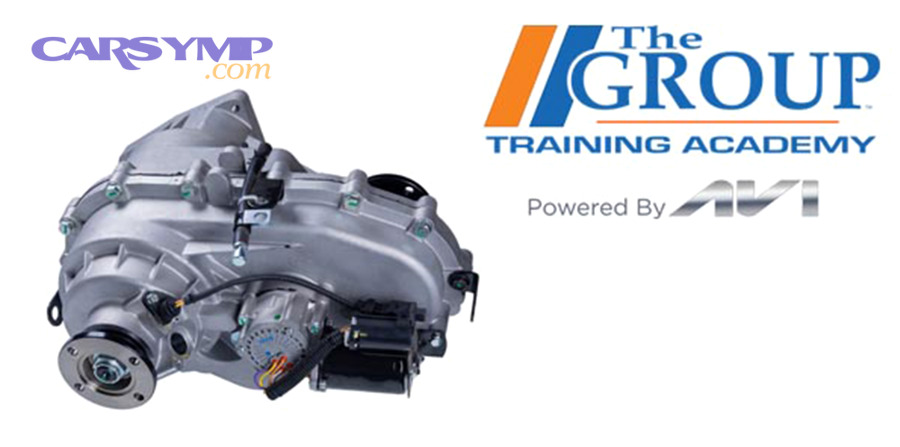
In addition, use these three decision rules:
- DIY when your goal is evidence, not certainty
DIY is perfect for confirming “it’s leaking here,” “fluid looks/smells burnt,” or “it binds only in 4WD.” - Shop when electronics or calibration is involved
Modern AWD systems often need scan data to confirm commanded vs actual mode. - Shop immediately when you see danger signs
Metal chunks, rapid fluid loss, or loud grinding are not “watch and wait” situations.
Which transfer case checks require a scan tool or calibration/relearn?
Transfer case checks require a scan tool or calibration/relearn when you have an electronically controlled system and need to verify actuator operation, position sensor readings, or commanded-versus-actual mode—because visual inspection can’t confirm electronic agreement.
More specifically, a shop (or an advanced DIYer) may use scan data to:
- Command mode changes and confirm position feedback
- Identify stored AWD/4WD actuator or range sensor faults
- Confirm whether the issue is control-side (electrical) or mechanical-side (internal)
If your mode indicator flashes and fails to complete the change, that pattern often points toward an actuator/sensor/control problem rather than a simple fluid issue—though low or degraded fluid can still contribute to poor engagement.
What are “stop-driving” red flags that justify towing?
Yes, there are stop-driving red flags that justify towing: you should stop and tow if (1) the transfer case is losing fluid rapidly, (2) you find chunks of metal or heavy glitter with symptoms, or (3) the vehicle binds/grinds severely during engagement, because continuing can destroy internal components.
Next, treat these as “non-negotiables”:
- Puddle-level leaks or repeated top-offs
- Loud grinding under load or during mode changes
- Burning smell plus new noise/vibration
- Severe binding that affects steering or makes the vehicle hop in turns
- Metal chunks on the drain plug or in drained fluid
What should you ask a shop to document after a transfer case inspection?
You should ask the shop to document transfer case inspection with (1) leak source location, (2) fluid condition findings, and (3) engagement test results, because written evidence prevents miscommunication and helps you compare quotes or seek a second opinion.
Specifically, ask for:
- Photos of the suspected leak area after cleaning/verification
- Notes on fluid smell, color, and presence of debris
- Any AWD/4WD codes and what conditions triggered them
- A clear “next step” recommendation: service vs repair vs further diagnostics
If you walked in with your own notes (including your “Car Symp” log), hand them over. That gives the technician a head start and can reduce diagnostic time.
How is an AWD coupling/clutch-pack system different from part-time 4WD during diagnosis?
AWD coupling/clutch-pack systems are designed to vary torque automatically and may show subtle slip or chatter when worn, while part-time 4WD systems lock front and rear together and often bind on dry pavement—so AWD diagnosis emphasizes control behavior and clutch health, and part-time diagnosis emphasizes correct mode use and mechanical engagement.
More importantly, this difference changes how you interpret symptoms:
- Binding on dry pavement
- Often “normal behavior” in part-time 4WD when used incorrectly
- Often a fault in AWD if it appears suddenly and consistently
- Chatter/vibration during light turns
- Can be a clutch-pack/coupling wear clue in AWD systems
- Can also be tire mismatch or driveline joint issues—so confirm tire size/pressure first
- Intermittent engagement complaints
- More common in electronically controlled AWD systems with sensor/actuator inputs
- Still possible in part-time systems if linkage/actuation is failing
If you match the system type to the symptom pattern before you spend money, you avoid the most expensive mistake in transfer case troubleshooting: repairing a symptom that was caused by a different part of the drivetrain.