


If you’re stuck deciding between repairing your ECU and replacing it, the best answer is not “always repair” or “always replace”—it’s “choose the option that matches the failure mode, the security/programming requirements, and your risk tolerance.” This guide compares ECU repair vs replacement options so you can pick the most reliable, cost-effective path.
Then, because most people start worrying about money right after they hear “module,” you’ll see how real-world costs break down—what you’re paying for, what’s optional, and what’s often hidden (like programming or a second diagnostic pass).
In addition, you’ll learn what the process actually looks like for each route—what a reputable repair includes, when replacement requires coding or immobilizer pairing, and how to avoid buying the right part for the wrong problem.
Introduce a new idea: the fastest way to waste money on an ECU is to skip the confirmation steps, so the main content starts with what the ECU does, why it fails, and how to choose confidently without guesswork.
What does an ECU/ECM do in a car, and why does it fail?
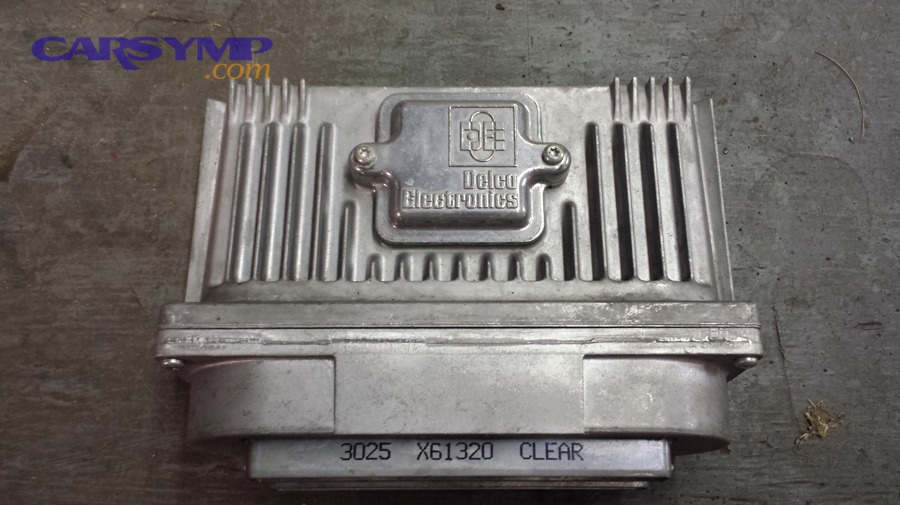
An ECU/ECM is the vehicle’s engine-management computer that reads sensor inputs, runs control logic, and commands fuel, ignition, emissions, and idle strategies; it fails most often due to heat cycling, moisture intrusion, voltage events, or internal component fatigue.
Next, because “computer” sounds definitive, you need a practical view of what failure looks like in the driver’s seat—then what typically causes it behind the dash.
What are the most common ECU failure symptoms car owners notice?
There are 6 main types of ECU failure symptoms car owners notice: no-start, stall/intermittent cut-out, rough running/misfire behavior, limp mode, abnormal shifting/torque behavior (on integrated powertrain controllers), and recurring warning lights—based on how the ECU’s outputs stop matching real engine conditions.
More specifically, these ECU failure symptoms show up in patterns that are easy to confuse with other problems, so each symptom cluster should trigger a short verification checklist instead of an immediate module purchase.
1) No-start or “cranks but won’t fire”
- The engine turns over, but injectors or ignition appear inactive.
- The fuel pump may prime, but commanded fuel/spark never stabilizes.
- Often overlaps with: immobilizer/key issues, crank sensor failure, fuel pressure loss.
2) Sudden stalling or intermittent cut-out
- Car dies at stoplights or under light throttle.
- Restarts after a short wait, then repeats.
- Often overlaps with: failing main relay, bad ground, thermal expansion opening a cracked solder joint.
3) Rough idle, misfire-like behavior, or hesitation
- Engine bucks, stumbles, or surges without a consistent mechanical cause.
- Misfires may “move around” cylinders because the root issue is control logic or a shared driver circuit.
- Often overlaps with: coils/plugs, vacuum leaks, MAF/MAP issues.
4) Limp mode (reduced power)
- Throttle response is limited, RPM may cap, and acceleration is weak.
- Often overlaps with: throttle body faults, transmission/torque management events, sensor plausibility issues.
5) Repeated “check engine” returns after clearing
- Codes return quickly, sometimes in different categories.
- A key red flag is when codes don’t correlate with real symptoms or change unpredictably.
6) Loss of communication with a scan tool
- The scanner can’t talk to one or more modules, or the engine module won’t respond.
- This can be ECU-related, but it can also be wiring, fuse, CAN network, or connector issues.
To keep terminology consistent, treat these as ECU failure symptoms only after you confirm the ECU is receiving power/ground and the network/connector is healthy—otherwise you are just naming a symptom, not a cause.
Can a car still run with a failing ECU, or is replacement always urgent?
Yes, a car can still run with a failing ECU, and replacement is not always urgent, because (1) many ECU faults are intermittent, (2) limp-home strategies can keep the engine running, and (3) the underlying issue may be external (power, ground, wiring, or sensors) rather than the ECU itself.
However, the urgency changes when the failure compromises safety or reliability, so you should treat these situations as “urgent”:
- The engine stalls unpredictably in traffic.
- The vehicle enters limp mode during merging or climbing.
- The car will not restart consistently.
- The scan tool shows widespread “communication loss” across multiple systems (could be a network failure that will strand you).
In short, “it still drives” does not mean “it’s fine,” but “it still drives” does mean you have time to diagnose correctly instead of panic-buying a module.
Evidence (if any): According to a study by the University of Maryland from the engineering reliability research community, in 2015, researchers reported that over 82% of solder-fatigue test conditions in IEEE literature were isothermal thermal cycles, reinforcing how thermal cycling is a dominant stressor for electronic joints that can contribute to intermittent module faults. (smtnet.com)
Is ECU repair a good option for your vehicle?
Yes, ECU repair can be a good option for your vehicle because (1) it often preserves your original coding/security data, (2) it can be cheaper than replacement when the unit is repairable, and (3) it reduces compatibility risk by keeping the exact module that already matches the car.
Then, because “repair” means different things depending on who says it, you should define what a real repair includes—and when “repair” is just a guess with a soldering iron.
What does ECU repair include—testing, component repair, and validation?
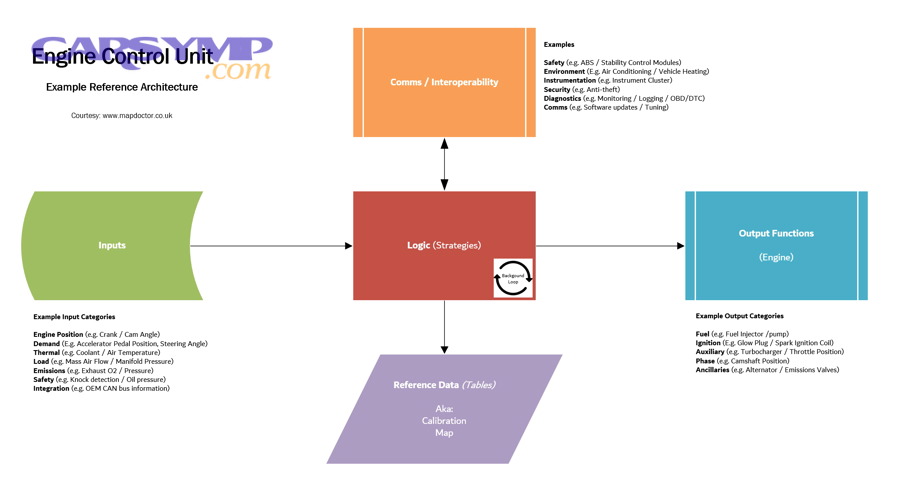
ECU repair includes bench testing + fault isolation + component-level repair + post-repair validation, typically performed by a rebuilder who can replicate operating conditions and confirm that the module outputs are stable.
Specifically, a reputable repair workflow usually looks like this:
1) Intake and identification
- Part numbers, hardware version, and any labels are recorded.
- The rebuilder confirms the symptoms you reported match known failure patterns.
2) Pre-test and fault isolation
- The module is tested for basic functionality and communication.
- Known weak points (drivers, regulators, capacitors, solder joints, connector pins) are inspected.
3) Component-level repair
- Failed components are replaced, traces are repaired, and cracked joints are reworked.
- If there is corrosion, the rebuilder determines whether it is surface-level or structural.
4) Software/data handling (when needed)
- If the failure involved corrupted memory, the rebuilder may restore or transfer calibration data.
- When possible, the original data is retained to reduce programming steps later.
5) Validation and return documentation
- The module is retested under load and thermal conditions that resemble real use.
- Better rebuilders provide a results summary (even if brief) and warranty terms.
This is where ECU diagnosis matters: the repair decision should be based on a confirmed fault mode, not just the presence of a warning light.
Which ECU problems are typically repairable vs not repairable?
Repairable issues win in localized electrical failure, while replacement is best for structural destruction, and “neither” is optimal until you fix the vehicle-side cause when the ECU is being damaged repeatedly.
However, you need a quick classification. The table below groups common patterns so you can speak clearly with a shop or rebuilder.
What this table contains: A practical classification of ECU faults into “typically repairable” vs “typically not repairable,” based on damage mechanism and repeat-failure risk.
| Fault pattern | Typically repairable? | Why it matters |
|---|---|---|
| Cracked solder joints / thermal fatigue | Often yes | Can cause intermittent cut-outs and heat-related no-starts |
| Failed capacitor/regulator/driver circuit | Often yes | Can break injector/coil control or sensor reference voltages |
| Connector pin fretting / minor pad damage | Sometimes | Depends on whether the board is structurally intact |
| Light contamination / residue | Sometimes | Repair must include cleaning and corrosion control |
| Severe water intrusion with deep corrosion | Often no | Hidden damage can keep spreading and re-failing |
| Burned board / lifted pads across multiple circuits | Usually no | Structural damage reduces long-term reliability |
| Missing/locked security data with no recovery path | Sometimes no | Some platforms require dealer-level pairing or donor matching |
A practical takeaway is simple: if the module is physically intact and the failure is electrical and localized, repair often makes sense; if the module is structurally compromised, replacement usually wins.
Will repairing the ECU preserve coding, immobilizer data, and VIN pairing?
Yes, repairing the original ECU usually preserves coding, immobilizer data, and VIN pairing, because you are keeping the same module identity in the vehicle, and (1) security pairing remains intact, (2) calibration data stays matched, and (3) you avoid “new module teach-in” steps.
Moreover, the exceptions are predictable:
- The ECU’s memory is corrupted and cannot be reliably recovered.
- The failure forces a memory chip replacement without a clean backup.
- The platform stores immobilizer or key data in multiple modules and one is already mismatched.
If you own a newer vehicle with strict security, “repair first” is often the safest way to avoid turning a drivability issue into a programming appointment.
When is ECU replacement the better choice?
Replacement wins in unrepairable physical damage, repair is best for repairable electronic faults on the original module, and reman/new is optimal for long-term warranty and predictable support when programming requirements are manageable.
Next, because “replacement” isn’t one thing, you need to compare used vs remanufactured vs new—and understand the real cost driver: compatibility and programming.
What are the differences between used, refurbished/remanufactured, and new ECUs?
Used wins in lowest upfront price, remanufactured wins in balanced reliability and warranty, and new wins in maximum predictability and support, but only if programming and compatibility are handled correctly.
Used ECU
- Pros: Cheapest purchase price; sometimes quick to source.
- Cons: Unknown history; may carry the same failure mode; may be locked to a donor vehicle.
Refurbished/remanufactured ECU
- Pros: Typically tested; may include updated components; often comes with a warranty.
- Cons: Quality varies by rebuilder; “reman” can mean anything unless testing standards are clear.
New ECU
- Pros: Best support channel; clean part history; usually easiest to warranty.
- Cons: Highest cost; may still require programming; may require dealer involvement.
A simple mindset helps: used is a gamble, reman is a managed bet, and new is the most controlled—yet none of them fix misdiagnosis.
Does ECU replacement require programming, flashing, or immobilizer/key matching?
Yes, ECU replacement often requires programming, flashing, or immobilizer/key matching, because (1) the ECU must run the correct calibration for your VIN/configuration, (2) security systems may block start without pairing, and (3) other modules on the network may require synchronization.
However, “often” is not “always,” so focus on the factors that change the answer:
- Vehicle age and platform: newer cars tend to require more module “teach-in.”
- Module type: some vehicles use integrated controllers (PCM/ECM) that are tightly married to the car.
- Replacement type: a “plug-and-play” reman may arrive preconfigured if you provide VIN details.
In real-world terms, ECU replacement can be a two-part job:
- install the hardware
- complete the software/security steps
If you only budget for part (1), your car can still be a no-start in the driveway.
How do you confirm ECU compatibility (part number, calibration, VIN) before buying?
Confirming ECU compatibility means matching hardware part numbers, software/calibration requirements, and vehicle security identity before you pay—so you don’t buy a module that fits physically but cannot operate logically.
To better understand the process, use this pre-purchase checklist:
Compatibility checklist (copy/paste friendly)
- Match the OE part number and any supersession numbers.
- Verify the ECU family/hardware version (some look identical but differ internally).
- Confirm engine/transmission pairing (especially on integrated powertrain modules).
- Ask whether VIN writing is required and whether the module supports it.
- Ask whether immobilizer/key pairing is required and who will perform it.
- Confirm return policy if the module is incompatible or unprogrammable.
This is also where Communication codes matter: if your original problem is a U-code network fault, buying a new ECU without checking the CAN wiring can leave you with the same “no comm” issue.
How do ECU repair vs replacement costs compare in real life?
Repair wins in lowest total cost when the original ECU is repairable, replacement is best for unrepairable modules, and reman/new is optimal when warranty certainty and predictable downtime matter more than the lowest price.
Then, because pricing confusion usually starts with the very first invoice line, you should separate diagnosis cost from parts cost and programming cost.
What typically drives ECU costs—diagnostic time, programming labor, and parts sourcing?
ECU costs are driven by three levers: (1) how long it takes to confirm the fault, (2) how much programming/security work the platform demands, and (3) how expensive and available the correct part is.
Specifically, your total bill typically includes:
- ECU diagnosis time: testing, scan interpretation, power/ground checks, and network verification.
- ECU diagnosis cost estimate variability: higher on intermittent or network-related faults.
- Part cost: used vs reman vs new pricing differences.
- Programming labor: flashing calibration, VIN writing, immobilizer/key pairing, adaptation resets.
- Downtime/shipping: mail-in repair adds shipping time; dealer programming adds scheduling delay.
A common money trap happens when someone hears “ECU” and skips to “part cost,” even though the expensive variable is often “time to certainty.”
Which option is usually cheaper: repair, reman, or new replacement?
Repair is usually cheapest for repairable failures, reman is best for mid-range budgets with warranty needs, and new replacement is most expensive but can be optimal for long-term ownership and predictable support.
However, the “usually” changes in predictable situations:
- If the ECU is rare or discontinued, repair may be the only financially sane option.
- If programming is dealer-only and expensive, a plug-and-play reman might be cheaper than a used ECU that still needs heavy programming.
- If the ECU has severe corrosion, repair attempts can become repeat costs; replacement may win on total cost of ownership.
What this table contains: A practical cost-comparison framework that shows where money typically goes for each option, even when the sticker price looks similar.
| Option | Where cost usually goes | Where it surprises people |
|---|---|---|
| Repair | Testing + component work | Shipping time and “no fault found” risk on intermittent issues |
| Used replacement | Low part price | Compatibility + security pairing can add major labor |
| Reman replacement | Part price + warranty value | Quality varies; confirm testing standards |
| New replacement | Highest part price | Still may require programming; may require dealer scheduling |
The decision should always be based on total installed cost, not the part listing.
Is ECU repair faster than replacement when you include programming and shipping?
Yes, ECU repair can be faster than replacement when (1) the repair is local or offers quick turnaround, (2) replacement would require dealer programming, and (3) sourcing the exact compatible module takes time.
On the other hand, replacement can be faster when:
- You can get a VIN-programmed reman unit overnight.
- The vehicle is common and programming is straightforward at an independent shop.
- The original ECU is too damaged for reliable repair.
In practice, “fastest” is the option with the fewest dependencies—shipping + appointment scheduling + security steps are the real delay multipliers.
How do you avoid misdiagnosis before spending money on an ECU?
There are 3 main ways to avoid misdiagnosis before spending money on an ECU: (1) verify power/ground and connector integrity, (2) interpret codes as clues rather than verdicts, and (3) confirm network communication before condemning the module.
Next, because most wrong ECU purchases start with skipped basics, the sub-steps below are intentionally unglamorous—and highly effective.
What checks should be done before calling an ECU “bad” (power, ground, wiring, fuses)?
There are 7 essential checks you should do before calling an ECU “bad”: battery health, main fuses, ECU power feeds, ECU grounds, relay output, connector condition, and harness continuity—based on the fact that the ECU cannot function without stable inputs.
Specifically, use this order because it’s fast and prevents circular testing:
- Battery and charging health
- Low voltage creates false module errors and weird behavior.
- Main fuses and ECU-specific fuses
- Confirm with a meter, not just visual inspection.
- ECU power feeds under load
- A corroded feed can show voltage at rest but collapse under demand.
- Ground quality (voltage drop testing)
- Grounds can look “tight” but perform poorly.
- Main relay function
- Intermittent relays mimic ECU failure symptoms perfectly.
- Connector inspection
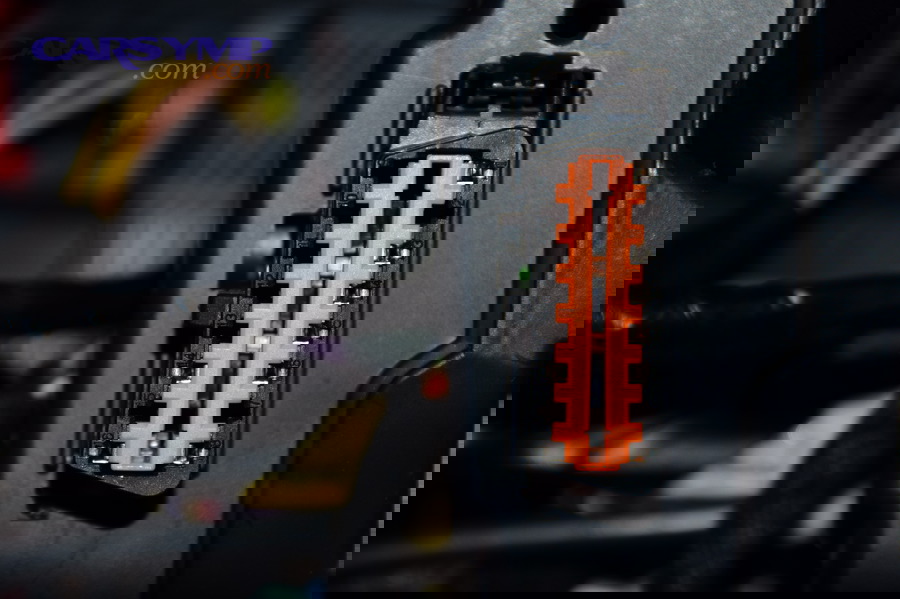
- Look for moisture, green corrosion, pushed pins, oil intrusion, and looseness.
- Harness continuity to critical circuits
- A broken wire to a sensor reference or network line can look like “ECU died.”
If a shop cannot explain these checks clearly, you’re not paying for certainty—you’re paying for a guess.
Can sensors, alternators, or CAN bus faults mimic ECU failure?
Yes, sensors, alternators, and CAN bus faults can mimic ECU failure because (1) bad sensor data can trigger protection strategies that feel like ECU failure, (2) voltage ripple/low voltage can destabilize modules, and (3) network faults can create module “no communication” events that look like a dead ECU.
However, the easiest way to spot a mimic is to compare symptoms to what the ECU can actually do:
- A single sensor plausibility fault usually causes a consistent mode change (like limp mode).
- A charging/voltage issue often causes wide-ranging electrical symptoms across multiple systems.
- A CAN fault can produce multiple U-codes and intermittent module access problems.
When you see a pattern of Communication codes (U-codes), shift your mindset from “replace ECU” to “verify the network and power distribution first.” For example, U-codes are widely used to indicate network communication faults between modules. (en.wikipedia.org)
What questions should you ask a shop or rebuilder before authorizing repair or replacement?
There are 8 questions you should ask before authorizing repair or replacement: what tests were performed, which codes were found, what data supported the conclusion, what option is repairable, what programming is required, what the total installed estimate is, what warranty applies, and what happens if the ECU isn’t the root cause.
Moreover, asking the right questions forces the process to become evidence-based. Use these exact prompts:
- “What did you do to confirm power and ground at the ECU?”
- “Which modules failed to communicate, and do you have scan logs?”
- “What were the exact codes, including U-codes if present?”
- “Do the codes return immediately, or only under certain conditions?”
- “Is this repairable, or is it physically damaged beyond reliable repair?”
- “Does replacement require VIN writing, flashing, or immobilizer pairing?”
- “Can you give me a total ECU diagnosis cost estimate plus parts plus programming?”
- “If we replace/repair the ECU and the problem remains, what’s the next step—and who pays?”
A strong shop answers these without defensiveness, because they are normal quality-control questions.
Which option should you choose: a simple decision framework for car owners
A simple decision framework for car owners is a five-question flow that sorts your case by repairability, security/programming complexity, and total installed cost—so you choose repair, reman, or new replacement based on evidence instead of anxiety.
Then, because decisions feel hard when the car is down, the framework below is intentionally binary: each answer pushes you toward the next step.
If your ECU is repairable, should you repair first before replacing?
Yes, if your ECU is repairable you should usually repair first before replacing because (1) you preserve original security/coding, (2) you reduce compatibility risk, and (3) you often lower total installed cost—especially when replacement would add programming steps.
However, “repair first” is not universal. Consider replacement first when:
- The ECU has severe corrosion or burn damage.
- You need guaranteed uptime with a strong warranty and fast sourcing.
- The module fails repeatedly because the vehicle-side cause keeps damaging it.
A useful rule is: repair first when you trust the diagnosis and the module is structurally sound; replace first when physical damage or repeat-failure risk is high.
What is the best option for older cars vs newer cars with security systems?
Repair wins for newer cars with strict security, while used replacement is often best for older cars with simpler pairing, and reman/new becomes optimal when you want warranty certainty regardless of age.
More specifically:
Older cars (simpler security)
- Used ECU swaps can be practical if part numbers match closely.
- Programming needs may be minimal or manageable.
Newer cars (strict security/immobilizer)
- Repairing the original ECU often avoids immobilizer and VIN pairing headaches.
- Replacement often requires tools, credentials, or dealer-level access.
If you don’t know which category your car falls into, your quickest clue is whether the platform commonly stores key/immobilizer data that blocks start when modules are mismatched.
How do warranties and return policies change the “best value” choice?
Repair wins in best value when the warranty covers the known failure mode and you keep your original identity data, while reman/new is best when the warranty meaningfully reduces risk (including support and replacement speed), and used is only “best value” when return terms protect you from incompatibility.
In addition, read warranty terms like a mechanic reads a code: focus on what’s excluded.
- Does the warranty cover only the part, or also labor?
- Does it exclude water intrusion or “improper diagnosis”?
- Does it require proof of installation or testing?
A strong warranty is not just a marketing line; it is a risk-transfer mechanism that can justify a higher upfront price when downtime is expensive.
What advanced ECU edge cases can change the repair vs replacement decision?
There are 4 advanced edge cases that can change the repair vs replacement decision: ECU cloning needs, water/corrosion severity, CAN-network false failures, and OEM vs reman/aftermarket quality differences—based on how security data and network behavior can override “simple” part swapping.
Next, these micro-cases matter most when you already chose a direction, but your vehicle platform makes the “obvious” choice harder in practice.
What is ECU cloning, and when does it reduce immobilizer/programming headaches?
ECU cloning is the process of copying key data (and sometimes calibration/security information) from your original ECU to a replacement unit so the vehicle recognizes it as “itself,” which can reduce immobilizer/programming headaches when the platform is strict about module identity.
Specifically, cloning tends to help when:
- The original ECU still allows data extraction even if it fails intermittently.
- The replacement ECU hardware is compatible but would otherwise need complex pairing.
- You need faster turnaround than dealer programming can provide.
Cloning is not universal. Some platforms limit what can be copied or store security data elsewhere, so treat cloning as a tool—not a promise.
Can water-damaged or corroded ECUs be reliably repaired, or should they be replaced?
Replacement wins for deep corrosion and long-term reliability risk, while repair can be reliable for minor intrusion with controlled damage, and neither is optimal if you don’t fix the leak or harness issue that caused the exposure.
More specifically, classify water damage by depth:
- Surface contamination: may be cleanable and repairable if caught early.
- Localized corrosion at connector/pins: sometimes repairable with pin/trace restoration.
- Deep board corrosion under chips or multi-layer damage: often unreliable long-term.
The decision isn’t about optimism; it’s about whether you can restore stable electrical behavior and stop ongoing corrosion progression.
How do CAN bus/network issues create “false ECU failure” diagnoses?
CAN bus/network issues create false ECU failure diagnoses when modules lose the ability to communicate due to wiring faults, connector pin issues, or voltage/ground instability—so the ECU looks “dead” even though it is simply isolated from the network.
To illustrate, network-related “no comm” cases often produce U-codes, which point to communication loss but not necessarily the failed component. A technical training article explains that U-codes identify communication faults between modules and are commonly associated with wiring/connector-related causes rather than immediate module failure. (snapon.com)
In practical terms, if multiple modules throw communication complaints at once, the network (and power distribution) deserves priority before you condemn any single module.
Should you choose OEM, remanufactured, or aftermarket ECUs for long-term reliability?
OEM/new wins for maximum predictability, remanufactured is best for balanced cost and warranty, and aftermarket is only optimal when it is well-validated for your exact platform and supported by a strong warranty and programming pathway.
Especially for long-term reliability, choose based on process quality, not branding:
- Does the supplier document testing and validation?
- Do they support VIN programming or provide configuration services?
- Is the warranty meaningful and the return policy fair?
A “cheap ECU” that costs you a second tow and another programming session is not cheap—it is just deferred cost.
Evidence (if any)
According to a study by the University of Maryland from the engineering reliability research community, in 2015, researchers reported that over 82% of solder-fatigue test conditions in IEEE literature were isothermal thermal cycles, highlighting how thermal stress dominates electronic reliability considerations that can contribute to intermittent module behavior. (smtnet.com)