


If you’re worried your car’s ECU is failing, the real answer is not “plug in a scanner and replace the module”—it’s a repeatable shop workflow that verifies symptoms, checks data, proves power/ground integrity, and tests inputs/outputs before anyone calls the ECU bad.
Most of the time, what feels like an ECU problem is actually an electrical supply issue, a wiring/connector fault, or a network interruption, so the process also focuses on ruling out look-alike failures with evidence you can understand.
You’ll also want to know the practical difference between a quick code scan and a real diagnosis, because that gap is where costs, timelines, and repair decisions can swing dramatically.
Introduce a new idea: once you know what ECU testing looks like in a professional bay, you can ask better questions, recognize solid troubleshooting, and avoid paying for guesses.
What does “ECU testing” mean at a repair shop (and what doesn’t it mean)?
ECU testing is a structured diagnostic process that verifies the ECU’s inputs, outputs, power/ground, and network communication to confirm (or eliminate) the ECU as the root cause—it is not a single “pass/fail” scan button or a guaranteed module replacement recommendation.
Specifically, the phrase “test the ECU” is shop shorthand for proving the ECU can think (process data) and act (command outputs) under real conditions, while also proving the rest of the car isn’t lying to it. That’s why good shops start with the basics—battery voltage, grounds, connectors—before they ever point at the ECU.
In real terms, ECU testing usually includes:
- Confirming the complaint .
- Reading codes and data (but not stopping there).
- Checking power, grounds, and reference circuits (because low voltage mimics “bad computer”).
- Testing sensor inputs for plausibility (does the ECU receive believable information?).
- Testing actuator outputs (does the ECU command what it should, when it should?).
- Checking network health when multiple modules are involved (because one weak link can create multiple false symptoms).
What ECU testing doesn’t mean:
- It doesn’t mean the technician can diagnose a complex intermittent fault in five minutes.
- It doesn’t mean a generic scan tool can see every module or every failure mode.
- It doesn’t mean the ECU is the most likely culprit just because a code mentions it.
What is the difference between an ECU, ECM, and PCM in everyday shop language?
An ECU is an electronic control unit (a vehicle computer) that manages a system, while ECM and PCM are common ECU subtypes used for engine or engine-plus-transmission control—names vary by manufacturer, but the diagnostic logic (inputs, outputs, power/ground, communication) stays consistent.
To illustrate the naming overlap:
- ECU can mean any module (engine, transmission, ABS, airbag, body control).
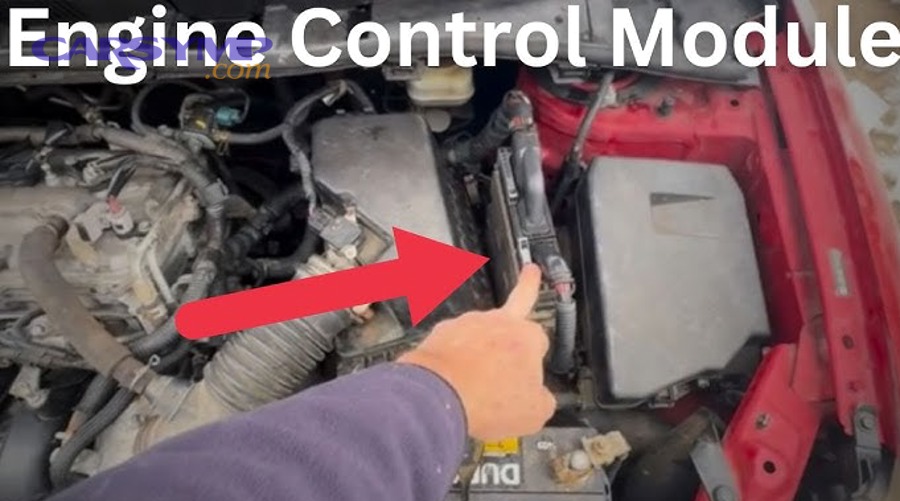
- ECM (Engine Control Module) usually means the engine computer.
- PCM (Powertrain Control Module) often means engine + transmission control combined.
When a shop says “ECU,” they often mean “the module controlling the symptom you’re experiencing,” especially if the complaint is drivability (stalling, misfire, no-start, poor throttle response).
Can a shop “test the ECU” without removing it from the car?
Yes—shops can test the ECU in the car because most meaningful checks require real sensor signals, real loads, and real network traffic, and in-vehicle testing is faster, safer, and more representative than bench-only guessing.
Then, if the evidence points strongly to an internal ECU fault, removal becomes a secondary step for one of three reasons:
- Connector/terminal inspection is easier off-car (bent pins, corrosion, moisture trails).
- Known-good substitution may be attempted (rare, model-dependent, sometimes not possible).
- Specialist bench testing or repair is needed (especially after water intrusion or physical damage).
A strong shop treats removal as an escalation, not a starting point.
How do mechanics test an ECU step-by-step at a shop?
Mechanics test an ECU using a repeatable step-by-step method—verify the symptom, scan for codes and freeze-frame, analyze live data, prove power/ground integrity, perform pinpoint tests on inputs/outputs, and confirm the fix—so the outcome is a root cause, not a guess.
To better understand the process, it helps to think like a technician: every step either adds evidence or removes a suspect. If a step doesn’t do one of those two things, it’s wasted time.
Here’s what a solid shop workflow typically looks like in the real world.
What is the first thing a mechanic checks before connecting any scan tool?
The first thing a mechanic checks is whether the symptom is real and repeatable—then they check the fundamentals (battery condition, charging health, obvious wiring/connector issues) because unstable voltage and poor connections can create “computer-looking” problems.
More specifically, good techs start with a short but focused intake and inspection:
- Interview and symptom mapping
- When did it start?
- What changed recently (battery, alternator, jump start, repairs, aftermarket parts)?
- Does it happen hot, cold, only in rain, only after long drives?
- Quick “big picture” checks
- Battery voltage and terminal integrity
- Loose grounds (especially engine-to-chassis)
- Blown fuses feeding the ECU or ignition circuits
- Harness damage near heat sources or moving parts
- Visual inspection where the ECU and main harness live
- Moisture evidence (water trails, green corrosion, crusty pins)
- Connector locks and strain reliefs
- Evidence of prior repairs (butt connectors, scotch-locks, tape blobs)
This is not busywork—it prevents the most expensive mistake: blaming a module for what is actually a basic electrical fault.
What does a scan tool check during ECU diagnostics (codes, freeze-frame, readiness, live data)?
A scan tool check during ECU diagnostics pulls Diagnostic Trouble Codes (DTCs), freeze-frame snapshots, readiness monitor status, and live data streams so the technician can identify what the ECU thought happened and under what conditions it detected the fault.
However, the scan is only valuable if it’s interpreted correctly. The technician typically uses it to:
- Sort codes by type and relevance
- Which codes are current vs history?
- Which are primary vs “collateral damage”?
- Read freeze-frame
- What were RPM, load, coolant temp, fuel trims, throttle position at the moment the fault set?
- Check readiness and mode status
- Are monitors incomplete because the ECU reset recently (battery disconnect) or because a fault prevents completion?
- Observe live data under the symptom
- Is the ECU seeing crank signal?
- Is throttle position plausible?
- Do fuel trims make sense?
The key is that data must connect back to the symptom. A high-quality tech doesn’t just read numbers; they ask, “If this were true, would the car behave the way the driver describes?”
Which electrical checks confirm the ECU is being powered and grounded correctly?
The electrical checks that confirm ECU power and ground integrity include verifying battery feed, ignition feed, fuse/relay operation, ground continuity, and voltage drop under load—because an ECU can appear “dead” or “confused” when it’s simply underpowered.
Next, shops usually perform these checks in a logical order:
- Power supply verification
- Battery voltage at the ECU power pin(s)
- Ignition-switched voltage at the proper pin(s)
- Fuse continuity and correct amperage rating
- Relay activation (commanded and actual)
- Ground integrity checks
- Ground continuity is not enough—voltage drop is the real test
- Ground points inspected for looseness, paint, corrosion
- Reference circuits
- 5V reference presence and stability
- Shared reference problems (one shorted sensor can pull the 5V rail down and make the ECU look faulty)
- Load-based testing
- The circuit must hold voltage while components draw current
- Intermittent issues often show up only under vibration, heat, or high electrical load
This is a major reason “new ECU didn’t fix it” stories happen: power and ground were never proven.
What pinpoint tests prove whether the ECU can control outputs (actuators, relays, injectors, coils)?
Pinpoint tests prove ECU output control by checking whether the ECU can command actuators (via bidirectional controls), whether output drivers produce correct signals, and whether the commanded action results in the expected physical response—so the tech can separate a failed ECU driver from a failed component or wiring.
More importantly, output testing is where ECU diagnosis becomes proof-based. Depending on the vehicle and tools, a shop may do:
- Bidirectional actuator commands
- Command cooling fans, purge valves, EGR, throttle actuator tests (where supported)
- Verify the actuator responds and verify electrical current/voltage behavior
- Circuit integrity checks
- Check the control side of a relay (ECU control) and the load side (power delivery)
- Confirm wiring from ECU to component with continuity and short-to-ground checks
- Signal confirmation
- Backprobe at the ECU pin and at the component connector
- Confirm the signal exists where it should, when it should
- “Swap logic” without swapping parts
- For example, compare cylinder-to-cylinder behavior (coil/injector command patterns)
- Move a suspect component only after the signal evidence supports it
If the ECU commands correctly but the actuator doesn’t move, the ECU is usually not the problem. If the ECU never commands despite correct inputs and enabling conditions, the ECU becomes a stronger suspect.
Is it usually the ECU—or something else causing ECU-related symptoms?
Wiring and power/ground issues win for overall likelihood, sensor problems are best at creating misleading data patterns, and true ECU failures are most plausible when the ECU cannot communicate or cannot drive outputs despite verified inputs and correct power/ground.
However, “likely” doesn’t mean “always,” and that’s why the process matters. A shop that jumps straight to ECU replacement without proving the basics is selling parts, not diagnosis.
Here’s how good technicians think about ECU vs everything else.
What problems commonly mimic a “bad ECU” (wiring, sensors, grounds, low battery voltage)?
Common problems that mimic a bad ECU include corroded connectors, damaged harness sections, weak grounds, failing relays, low system voltage, and sensor faults that feed the ECU impossible readings.
Specifically, these are the repeat offenders:
- Low voltage / unstable voltage
- Weak battery, failing alternator, poor connections
- Symptoms: random warning lights, intermittent stalling, multiple unrelated codes
- Ground faults
- Loose ground straps, corroded ground points, high resistance under load
- Symptoms: intermittent resets, “no communication,” odd sensor readings
- Connector and harness faults
- Water intrusion at connectors, pin fit issues, chafed wires
- Symptoms: faults triggered by vibration, turning, bumps, rain
- Shared reference circuit issues
- One shorted sensor can collapse the 5V reference and “take down” multiple sensors
- Symptoms: multiple sensor codes at once, strange live data
- Aftermarket modifications
- Remote starters, alarm splices, tuning devices, non-OE sensors
- Symptoms: intermittent communication, no-starts, odd network codes
When a shop proves these aren’t present, the ECU becomes a more credible suspect.
How do technicians separate ECU faults from sensor faults using plausibility checks?
Technicians separate ECU faults from sensor faults by comparing sensor signals against each other and against physics—checking plausibility ranges, correlation under load, and redundancy—so they can tell whether the ECU is receiving bad information or misprocessing good information.
For example, a tech may:
- Compare MAP/MAF behavior against throttle position and RPM.
- Verify coolant temperature is plausible at cold start and warms steadily.
- Check oxygen sensor response during controlled fuel changes (when applicable).
- Validate crank/cam synchronization when diagnosing no-start or misfire patterns.
- Use known-good references (service information specs, expected voltages) rather than guessing.
If multiple sensors agree but the ECU output behavior is irrational, the ECU becomes more suspect. If sensors disagree or are out-of-range, the sensor/wiring side moves up the list.
What do communication codes (U-codes) mean, and do they automatically indicate a bad ECU?
No—Communication codes do not automatically mean a bad ECU; they mean a module-to-module network communication problem, which can be caused by wiring, power/ground issues, connector faults, or a failed module that is disrupting the network.
Meanwhile, this is where many drivers get stuck because scanners often show scary-sounding faults. In plain language, Communication codes (often “U-codes”) are the vehicle telling you, “Modules can’t talk reliably right now.” That could be:
- A dead module (no power, no ground, failed internally)
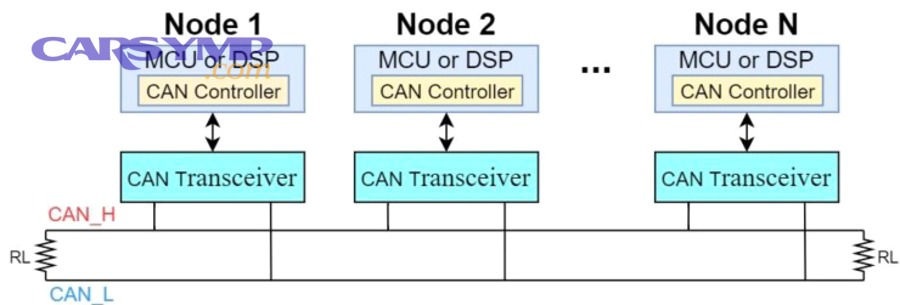
- A network wiring issue (CAN high/low faults, poor terminal tension)
- A voltage issue (system brownout causes modules to drop offline)
- A gateway/module configuration issue (less common, but possible after repairs)
The key diagnostic move is network isolation: identify which module drops offline first, verify its power/ground, and verify whether it’s pulling the bus down.
According to a study by Cranfield University from the IVHM Centre, in 2020, the CAN in-vehicle network (used for ECU-to-module communication) has known limitations like lack of built-in encryption/authentication, which is part of why robust monitoring and fault-handling approaches are emphasized in vehicle network analysis.
What is the difference between a code scan and a full ECU diagnostic at a shop?
A code scan wins for speed and low cost, a full diagnostic is best for finding the true root cause, and an OEM-level diagnostic approach is optimal when programming, network testing, or module-specific functions are required.
However, most confusion comes from people calling every scan a “diagnosis.” The difference is simple: a scan reports what the computer noticed; a diagnosis proves why it happened.
Is a “free scan” the same as ECU testing?
No—a free scan is not the same as ECU testing because it typically reads generic codes only, doesn’t include validation testing, and cannot prove whether the ECU is faulty versus reacting to an external problem.
Then, the risk is obvious: if you treat a scan result like a diagnosis, you buy parts that match code descriptions instead of fixing the root cause.
A free scan is useful when it helps you:
- Confirm the code category (powertrain vs network vs body)
- Decide whether driving is safe
- Gather information before visiting a shop
But ECU testing requires additional steps—power/ground checks, data verification, and pinpoint tests—because ECUs almost always “complain” when other parts fail.
What should you receive after a proper ECU diagnostic (results, printouts, test steps, estimate)?
You should receive a clear explanation of findings, the relevant codes and freeze-frame, the tests performed (and their results), and a written repair path with an estimate—because professional diagnostics produce evidence and a decision tree, not a vague recommendation.
More specifically, a quality diagnostic deliverable usually includes:
- Scan results
- Codes, status (current/history), freeze-frame details
- Test results
- Power/ground measurements (often including voltage drop)
- Circuit integrity outcomes (short/open checks)
- Actuator command outcomes (did it respond?)
- Root cause statement
- “The ECU is not communicating because it lacks ignition feed at pin X due to…”
- Or “The ECU output driver for component Y fails under load despite verified wiring and verified input conditions…”
- Next steps and options
- Repair wiring/connector
- Replace a component
- Reflash/reprogram
- Replace ECU/module (with programming notes)
If your shop provides an ECU diagnosis cost estimate, it should separate the diagnostic labor from the repair labor and specify what the diagnostic fee includes (time cap, test scope, and whether it applies to the final repair).
How long does ECU testing take and what affects the diagnostic fee?
ECU testing time and cost depend on complexity, access, and whether the problem is intermittent, but most shops can complete an initial ECU diagnosis within 1–2 labor hours, while intermittent network or wiring faults can require extended scheduled testing.
In addition, the diagnostic fee is not just “plugging in a scanner”—you’re paying for process, tooling, and proof. That’s why prices vary by region and vehicle complexity, and why a good shop sets expectations upfront.
A practical way to think about time:
- Quick direction-finding (15–30 minutes): Identify whether the issue looks like power/ground, sensor plausibility, or communication failure.
- Standard diagnostic (60–120 minutes): Prove the failure path with measurements and pinpoint tests.
- Extended diagnostic (2–4+ hours, sometimes over multiple visits): Reproduce intermittent faults, perform data logging, isolate network disruptions, confirm under heat/vibration.
Here’s what commonly drives cost upward:
- Luxury vehicles with more modules and gateways
- Limited access to connectors or harness routes
- Intermittent faults that won’t appear on demand
- Aftermarket wiring changes
- Need for OEM subscriptions or programming tools
What factors make ECU diagnosis take longer (intermittent faults, wiring access, aftermarket mods)?
ECU diagnosis takes longer when the failure is intermittent, buried in a hard-to-reach harness, or complicated by aftermarket modifications because the technician must recreate the condition, test under load, and often log data over time.
Specifically, expect longer diagnostic time when:
- The symptom happens only after heat soak or long drives
- The problem appears only in rain or high humidity
- The car fails only over bumps (movement-related wiring faults)
- There are non-factory splices for remote start, alarms, audio systems
- The vehicle has been tuned and stock calibrations are unknown
The honest truth: intermittent electrical faults are hard even for great techs, because the car can behave perfectly in the bay.
When should you authorize more diagnostic time—and when should you seek a second opinion?
You should authorize more diagnostic time when the shop can explain the next test step and what it will prove, but you should seek a second opinion when the shop jumps to an ECU replacement without power/ground proof, cannot explain the test plan, or refuses to provide evidence.
More importantly, use this “good diagnostic” checklist:
Authorize more time if the shop can say:
- “Next we will verify ECU power/ground under load because…”
- “Next we will isolate the network by checking which module drops offline first because…”
- “Next we will command the actuator and verify the driver signal because…”
Seek a second opinion if you hear:
- “It’s probably the ECU” with no measurements
- “The scanner says ECU, so ECU” with no testing
- “We can’t show you anything” and no written plan
A trustworthy shop makes diagnostics feel like a guided investigation, not a gamble.
What happens after the shop concludes the ECU is faulty?
After the shop concludes the ECU is faulty, the best path depends on what failed: a software/calibration issue may be solved by reprogramming, a damaged circuit board may require specialist repair, and a confirmed internal driver or communication failure often leads to ECU replacement followed by programming and verification.
Then the decision becomes less about “can we replace it?” and more about “what’s the smartest, most reliable fix for this vehicle and budget?”
Here are the common post-diagnosis paths.
Can an ECU be repaired or reprogrammed instead of replaced?
Yes—an ECU can sometimes be repaired or reprogrammed instead of replaced, especially when the issue is software-related, calibration-related, or limited to certain repairable internal faults, and this can reduce cost and keep factory matching intact.
Specifically, shops may recommend:
- Reflash / software update: When drivability complaints or certain code patterns match a known calibration fix.
- Connector/pin repair and sealing: If the “ECU fault” is actually corrosion at the ECU connector or water intrusion at the connector shell.
- Specialist module repair: If the ECU shows board-level damage that’s repairable (varies widely by module and failure type).
That said, if the ECU has severe water damage or multiple internal faults, replacement is often the reliable choice.
Does replacing an ECU require programming, immobilizer/key matching, or VIN coding?
Yes—replacing an ECU often requires programming, immobilizer/key matching, or VIN coding because modern vehicles use security handshakes and configuration data that must match the car, and skipping this step can cause no-starts, warning lights, or missing functions.
Next, here’s what you should expect to hear from a competent shop:
- “We can install the module, but it must be programmed to the vehicle.”
- “The immobilizer needs to learn the ECU (or keys need to be matched).”
- “We’ll update software and perform relearns after programming.”
Programming requirements vary by make/model/year, and this is one reason ECU replacement is not a simple DIY job on many cars.
How does a shop verify the fix after ECU-related repairs?
A shop verifies the fix by confirming communication, clearing codes only after repairs, re-checking live data, performing a road test under the original symptom conditions, and confirming readiness monitors or system self-tests—so the repair is validated, not assumed.
More specifically, post-repair verification often includes:
- Full-system scan (confirm no remaining communication or powertrain faults)
- Confirm stable voltage and grounds
- Road test with live data recording
- Recheck for pending codes
- Verify the customer complaint is resolved (cold start, hot restart, highway load, etc.)
This is where strong shops stand out: they don’t just “make the light go off,” they prove the vehicle behaves correctly again.
When do shops use bench testing, oscilloscopes, or ECU specialists instead of standard diagnostics?
Shops escalate to bench testing, oscilloscopes, or ECU specialists when in-vehicle evidence suggests an internal module fault, when intermittent network faults require waveform-level visibility, or when cloning/programming constraints make specialist services the most reliable route.
Below, the key contrast is in-vehicle proof vs bench-level confirmation: in-vehicle testing identifies what the car is doing under real conditions, while specialist methods can confirm internal weaknesses or recover modules that are otherwise expensive to replace.
What is ECU bench testing and what can it prove that in-car testing can’t?
ECU bench testing is a controlled off-vehicle evaluation that powers the ECU, feeds simulated inputs, and checks output behavior to confirm internal failures—especially when the car environment (wiring, sensors, intermittent conditions) makes in-vehicle proof difficult.
Specifically, bench work can help when:
- The ECU has suspected internal driver damage (injector/coil/fan driver issues)
- Water intrusion likely damaged the board
- The vehicle cannot reliably reproduce the failure in the bay
- The car is not available, but the module is
However, bench testing is not universal; many ECUs require vehicle-specific conditions and security contexts, and not all faults reproduce on a bench.
How does an oscilloscope help confirm ECU input/output problems (crank/cam, injector/coil drivers, CAN)?
An oscilloscope helps confirm ECU input/output problems by showing the true shape and timing of signals—so a technician can see dropouts, noise, weak drivers, and network distortions that a scan tool cannot display.
More specifically, scopes are powerful for:
- Crank and cam signals (missing pulses, weak amplitude, timing drift)
- Injector and coil control (driver saturation, inconsistent dwell, missing commands)
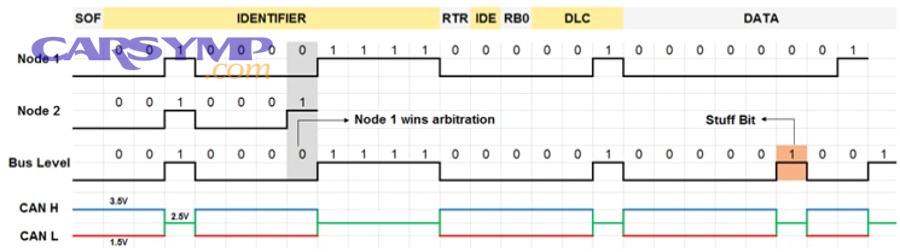
- CAN bus health (dominant/recessive voltage behavior, reflections, interference)
This is often the deciding tool when a problem is intermittent: a scope can capture a fault event in a way a scanner cannot.
Do ECU cloning or “virginizing” services solve the problem—or just move it?
No—cloning or virginizing does not automatically solve the problem; it can restore functionality and match security data, but it will only be a true fix if the original root cause (water intrusion, power/ground fault, wiring damage) is corrected first.
On the other hand, these services can be the best option when:
- A replacement ECU is scarce or expensive
- Immobilizer matching is complex
- You need the vehicle configuration preserved
The smart rule is simple: repair the reason the ECU failed (if known) before installing or cloning another module.
How can you document intermittent ECU faults (logging, heat/vibration tests) before authorizing replacement?
You can document intermittent ECU faults by logging live data during the symptom, capturing freeze-frame and pending code status quickly, and using controlled reproduction methods (heat soak, vibration/wiggle testing, electrical load changes) to create repeatable evidence.
More importantly, documentation protects your wallet. It transforms “it acts up sometimes” into a measurable event:
- Save scan reports (codes + freeze-frame)
- Note conditions (ambient temp, wet/dry, time since start, speed/load)
- Ask the shop what they’re trying to prove with the next test
- Request before/after measurements when they recommend replacement
According to a study by Universidad Miguel Hernández de Elche from the Escuela Politécnica Superior de Elche, in 2018, freeze-frame data is described as a snapshot of real-time sensor values at the moment a DTC condition occurs, helping users understand the conditions present when a fault was detected.