


If you’re searching for an ECU diagnosis cost estimate, the practical answer is that most drivers will pay for time + tools + technician expertise, not just a “code scan,” and the final number depends on whether the shop is doing a quick confirmation or a full troubleshooting workflow. (repairpal.com)
Next, it helps to separate what you’re being charged for (a scan fee, a diagnostic fee, or a deeper electrical test) so you can compare quotes fairly and avoid paying twice for the same step.
Then, you’ll get a more accurate estimate if you know the big price drivers—vehicle make/model, symptoms, access time, whether there’s water intrusion, and whether programming is required after parts are replaced. (repairpal.com)
Introduce a new idea: once you understand the difference between a “part-level scan” and a “whole-system diagnosis,” you can choose the right level of testing and only authorize deeper work when it clearly reduces the chance of replacing the wrong part. (pangea.stanford.edu)
How much does an ECU diagnosis cost estimate at a shop?
An ECU diagnosis cost estimate typically falls into 3 main tiers—basic scan, guided diagnostics, and advanced electrical/module testing—based on how much time and verification the shop performs beyond reading codes.
To begin, that tiered view matters because two quotes can look “similar” but cover totally different work.
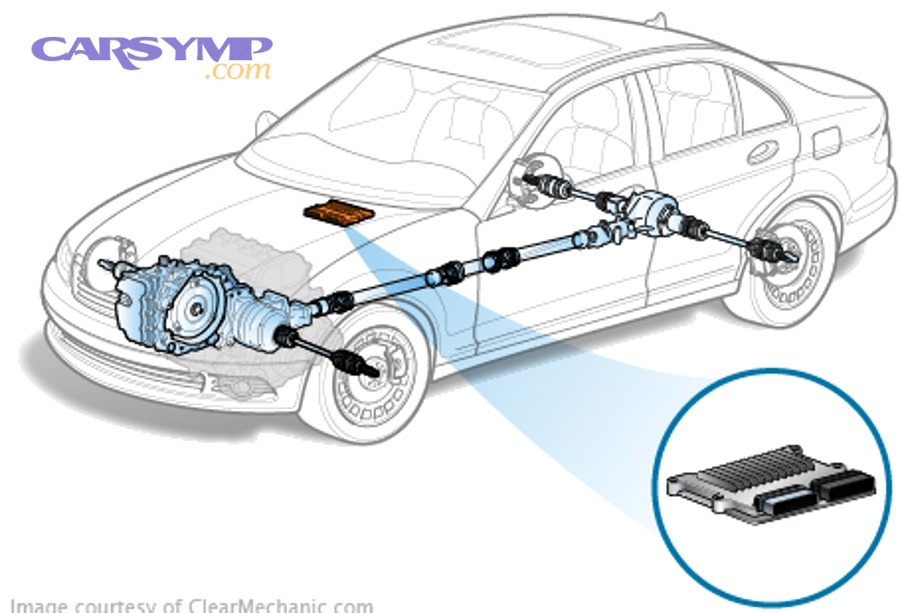
What is the typical price range for ECU-related diagnostics?
Most shops will quote either a flat diagnostic fee or an hourly diagnostic rate, and you’ll see common ranges like:
- Basic scan / quick check: often the lowest tier (sometimes bundled with a brief visual check).
- Full drivability/electrical diagnostics: usually higher because it includes confirming the fault, checking inputs/outputs, and verifying wiring/grounds.
- Module-level testing or replacement decision support: can be higher still because the shop may need scope work, pin testing, or manufacturer-level scan routines.
For a concrete benchmark, RepairPal lists Powertrain Control System Diagnosis & Testing at $61–$90 (labor) on average (not including taxes/fees or location variation). (repairpal.com)
Meanwhile, a consumer-facing guide notes you may see $150–$300 “just to have the ECU inspected and tested” at some garages, which often reflects longer diagnostic time or higher shop rates.
How do shops turn a quote into a real “estimate” you can trust?
A usable estimate is not just a number—it’s a scope statement. When you ask for pricing, you want the shop to define:
- What’s included: code read? live data? freeze-frame? road test? smoke test? voltage drop testing?
- Time cap: “Up to 1 hour diagnostic time” vs “diagnose until solved.”
- Deliverable: written findings, probable cause, next step options.
- How the fee applies: credited toward repair or separate regardless.
When the scope is clear, you can compare apples-to-apples and avoid paying for repeated “starts” without conclusions.
What’s a realistic ECU-related cost picture if replacement becomes likely?
Even though this article focuses on diagnosis, replacement estimates influence why diagnostics can matter. RepairPal’s estimator lists Engine Control Module (ECM) replacement commonly around $1,122–$1,205, and a similar range for Powertrain Control Module (PCM) replacement around $1,123–$1,204 in its generic estimates (location/vehicle dependent). (repairpal.com)
That’s why many reputable shops push for thorough diagnosis before replacing a module: the part is often expensive, and wrong replacements cost more than the diagnostic fee.
Evidence: According to a paper by The Ohio State University from the Department of Mechanical Engineering and Center for Automotive Research, in 2009, industry studies cited in their review found false positives for engine control unit replacement as high as 80% in some contexts—meaning the ECU was replaced even though it wasn’t actually the root cause. (pangea.stanford.edu)
What does an ECU diagnostic fee cover?
An ECU diagnostic fee covers the technician’s time and the test process—reading codes is only one small part—plus the equipment and expertise needed to confirm whether the ECU is failing or simply reporting a failure elsewhere.
Specifically, people often confuse “I got a code” with “I found the cause,” and the gap between those two is what the fee is paying for.
What does a basic ECU code scan include?
A basic scan usually includes:
- Pulling Diagnostic Trouble Codes (DTCs) and sometimes pending codes
- Viewing freeze-frame data (snapshot of conditions when a code set)
- Clearing codes (sometimes) and checking immediate return
- A quick interpretation of likely systems involved
This is useful for direction—but it is not automatically a diagnosis.
What does a full ECU diagnosis include beyond scanning?
A full ECU diagnosis typically adds verification steps such as:
- Live data analysis: sensor plausibility checks (e.g., MAF readings vs RPM/load)
- Bidirectional controls: commanding components on/off (where supported)
- Circuit integrity testing: power, ground, and voltage-drop checks
- Wiring and connector inspection: pin fit, corrosion, abrasion, heat damage
- Recreating the fault: road test or controlled conditions
- Ruling out “reporting vs causing”: proving whether the ECU is failing internally or reacting correctly to another problem
If the shop is reputable, the output is a conclusion like: “Fault confirmed in circuit X due to Y; ECU output is correct/incorrect under test; next step is…”
When does the diagnostic fee increase because of ECU water damage and corrosion inspection?
Costs rise when the shop needs to do ECU water damage and corrosion inspection because it’s rarely a simple glance. It can involve:
- Removing trim or covers to access the module
- Opening connectors and checking for green/white residue
- Checking for moisture paths (sunroof drains, windshield leaks, HVAC condensation)
- Confirming whether corrosion caused high resistance, intermittent contact, or shorts
- Determining whether cleaning/repair is viable or replacement is safer
This is one of the most common reasons “intermittent weirdness” becomes time-consuming: the fault may vanish during testing and reappear later.
Evidence: According to a study-led investigation by the Technical University of Denmark from the Department of Civil and Mechanical Engineering, in 2024, corrosion in electronics can lead to failure very quickly—sometimes within 30–60 minutes once corrosion processes create unintended conductive paths, especially under moisture and electrical bias conditions. (dtu.dk)
Which factors change an ECU diagnosis cost estimate?
There are 6 main factors that raise or lower an ECU diagnosis cost estimate: symptom type, intermittency, vehicle complexity, access time, tool level (OEM vs generic), and whether programming/security steps are required.
More importantly, these factors explain why one car gets a quick answer while another becomes a multi-step investigation.
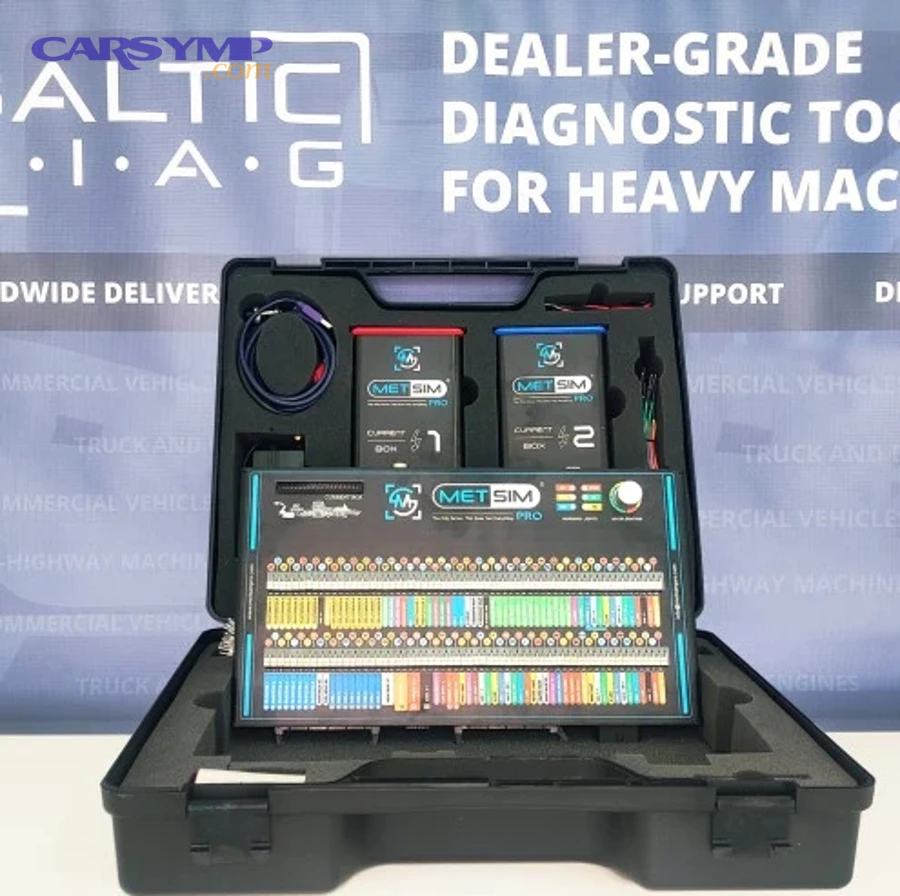
Which symptoms usually cost more to diagnose?
Symptoms that tend to increase diagnostic time include:
- Intermittent stalling/no-starting (hard to reproduce)
- Multiple unrelated codes (can be low voltage, ground issues, water intrusion, or network faults)
- Communication/network faults (CAN/LIN issues can mimic module failure)
- “After repair” problems (e.g., new battery/alternator replaced, issue persists)
By contrast, a single consistent code with clear verification steps can be faster.
How do vehicle make/model and tool requirements affect cost?
Some vehicles require:
- Manufacturer-level scan tools for certain tests (security access, special functions)
- More complex diagnostic routines (guided fault trees, special test modes)
- More time to access modules or connectors (packaging and covers)
So the same symptom can cost more to diagnose on a vehicle that needs OEM-level procedures.
When does programming raise the diagnosis-to-repair total?
Even if the diagnosis is straightforward, the total cost picture can jump when the next step requires ECU programming and immobilizer pairing. That’s because:
- Replacement modules may need flashing/coding
- Immobilizer systems may require key learning or security authorization
- Some vehicles require online access subscriptions or token-based programming steps
- Programming can fail if voltage isn’t stabilized, creating extra steps (battery support unit)
This is a major reason you want clarity: sometimes you’re paying not just to “find the problem,” but to ensure the fix is actually installable and secure.
Is paying for ECU diagnosis worth it before replacing parts?
Yes—paying for an ECU diagnosis is usually worth it because it (1) reduces the chance of replacing the wrong expensive module, (2) identifies wiring/ground issues that mimic ECU failure, and (3) prevents repeat breakdowns caused by untreated root causes like moisture or power supply faults.
Next, the key is understanding when diagnosis is “enough” and when it’s rational to stop and seek a second opinion.
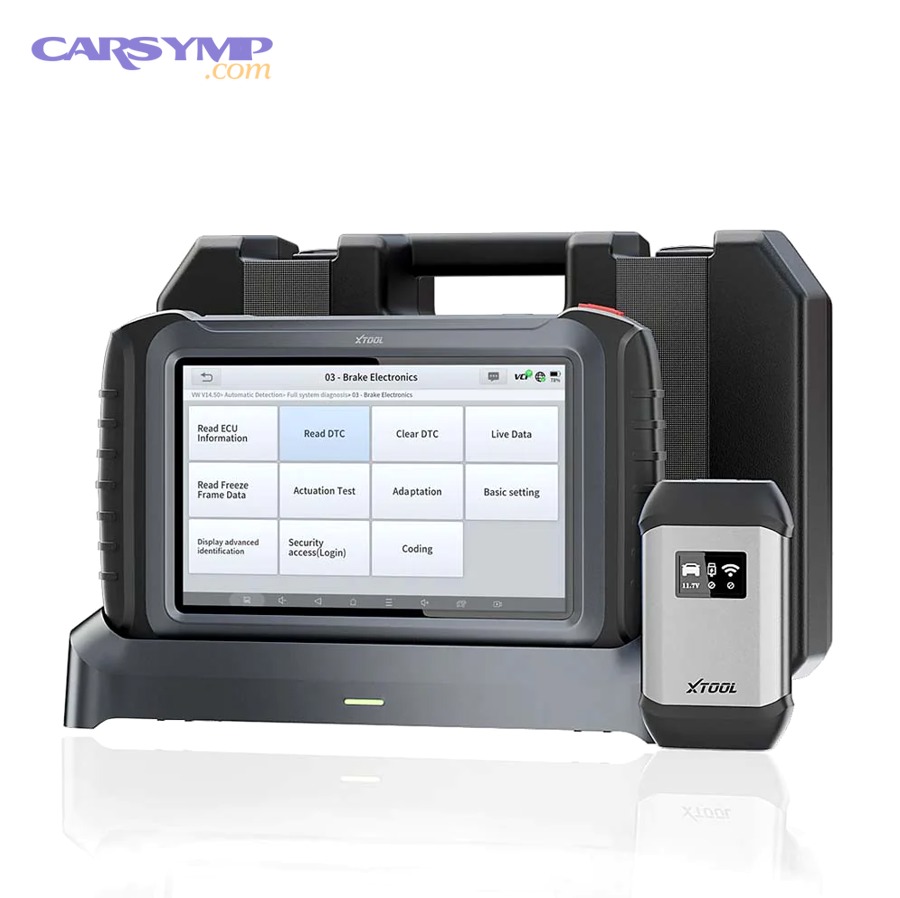
What are the top reasons ECU diagnosis prevents wasted money?
The biggest money-savers are:
- Differentiating “ECU is bad” from “ECU is reporting a bad input.”
- Catching power/ground problems (low voltage, high resistance, poor grounds).
- Finding moisture/corrosion that will destroy a replacement ECU if not corrected.
- Confirming the failure is reproducible so the repair can be verified.
If the shop can’t explain how they concluded the ECU is the cause, the risk of an expensive wrong turn rises.
When is it reasonable to stop after the first diagnostic hour?
Stopping can be rational when:
- The shop’s first hour produced no reproducible failure and only generic “maybe” conclusions
- The next step is an open-ended teardown without a clear plan
- You can get a second opinion from a specialist (electrical diagnostician, dealer, or ECU bench-test service)
- The vehicle value doesn’t justify deep exploratory labor
A good shop will propose “Decision A/B/C” with costs and probabilities, not just “keep going.”
When should you seek a specialist instead of a general repair shop?
Consider a specialist when:
- The problem is module communication, immobilizer, or programming related
- There is suspected water intrusion affecting multiple systems
- You’ve already replaced parts without solving the issue
- The fault involves advanced drivability (scope patterns, high-speed data, intermittent dropout)
This is less about “cheap vs expensive” and more about “fast certainty vs repeated guesses.”
ECU testing vs ECU replacement vs ECU programming: which cost scenario fits you?
ECU testing wins for confirming the root cause, ECU replacement is best when internal failure is proven, and ECU programming is essential when the vehicle’s security/configuration requires pairing—especially after module swaps.
However, you can control total cost by choosing the right path in order, rather than jumping straight to the most expensive step.
What does “ECU testing” mean in real shops?
ECU testing typically includes:
- Verifying sensor inputs at the ECU (signal present and plausible)
- Verifying ECU outputs (commands appear when expected)
- Checking reference voltages and grounds under load
- Comparing scan data vs physical measurements (multimeter/scope)
This is the “prove it” phase that prevents costly misdiagnosis.
When is ECU replacement the most cost-effective move?
Replacement is most cost-effective when:
- The ECU fails internal self-checks or shows confirmed internal fault behavior
- Output drivers are proven dead despite good inputs/power/grounds
- The issue follows the module after controlled swap/bench test (when appropriate)
- Corrosion/internal damage is visible and not repairable
RepairPal’s generic ECM/PCM replacement estimates illustrate why replacement is a big decision—often around $1,100+ depending on the vehicle and location. (repairpal.com)
When does programming become the “hidden cost center”?
Programming becomes the cost center when:
- A replacement ECU arrives blank or mismatched
- The car requires immobilizer/key pairing
- Variant coding is needed for options (transmission, emissions package, trim level)
- A failed programming attempt creates extra recovery steps
This is where ECU programming and immobilizer pairing isn’t optional—it’s what makes the car start, communicate, and pass readiness checks.
To keep costs predictable, ask the shop to quote diagnosis + (if needed) programming steps as separate line items so you can approve them intentionally.
How can you reduce ECU diagnosis cost without risking misdiagnosis?
You can reduce ECU diagnosis cost by 4 steps—pre-visit documentation, choosing the right diagnostic tier, demanding a written scope/result, and preventing repeat failures from moisture/power issues—while still protecting yourself from guesswork.
Besides, the goal isn’t to spend the least; it’s to spend once and finish.

What information should you bring to the shop to lower diagnostic time?
Bring:
- Exact symptoms and when they occur (cold start, rain, after fueling, highway only)
- Any recent work performed (battery, alternator, stereo, alarm, jump start)
- Photos of dash warnings and a short timeline
- If safe: the code list from a basic scan (not as “proof,” but as context)
Clear inputs reduce “exploration time.”
How do you choose between a scan fee and a full diagnostic fee?
Choose a scan fee when you need direction and symptoms are mild/consistent.
Choose a full diagnostic fee when the car is stalling/no-starting, showing multiple systems failing, or you suspect wiring, network, or moisture involvement.
This is the “part vs whole” decision: the scan is a part; diagnosis is the whole troubleshooting process.
What should a written diagnostic result include?
Ask for:
- The confirmed failure condition (“fails on hot restart,” “drops CAN comm,” etc.)
- The tests performed (power/ground drop, pin checks, actuator command tests)
- The conclusion with confidence level
- The next step options (repair wiring, reseal leak, reflash, replace module)
If they can’t write it down, they probably can’t defend it.
How do you prevent the same ECU issue from coming back?
Prevention often saves more than discounts:
- Fix moisture sources (drains, seals, windshield leaks) before installing a new module
- Address charging/voltage issues (battery, alternator, grounds)
- Ensure connectors are clean, pinned correctly, and protected
- If corrosion was present, make sure the shop did a proper ECU water damage and corrosion inspection—not just a quick look—so the next ECU isn’t doomed
Evidence: According to an investigation by the Technical University of Denmark (Department of Civil and Mechanical Engineering) in 2024, moisture combined with electrical bias can trigger electrochemical migration and rapid electronic failure, reinforcing why moisture prevention is part of “fixing” an ECU-related fault—not an optional extra. (dtu.dk)