


If you’re stuck between cleaning and replacing, the fastest correct answer is this: cleaning wins when the valve and passages are merely carbon-restricted, but replacement wins when the valve can’t move, can’t seal, or can’t report position correctly. The rest of this guide shows you how to decide with symptoms, quick tests, and practical thresholds—without guessing.
Many owners misread the same rough idle or hesitation in two different ways, so you’ll also learn what symptoms point to clogging vs mechanical/electrical failure, and which ones are strong “replace now” red flags that cleaning won’t fix.
Cost matters too, so we’ll compare cleaning vs replacement total cost (tools, gaskets, labor, and time), including what typically drives EGR valve replacement labor time higher on some engines.
Introduce a new idea: you don’t have to “throw parts” at an emissions problem—you can verify the correct fix with simple inspections and scan data, and then prevent the same clogging from coming back.
What does an EGR valve do, and why does “clean vs replace” matter for car owners?
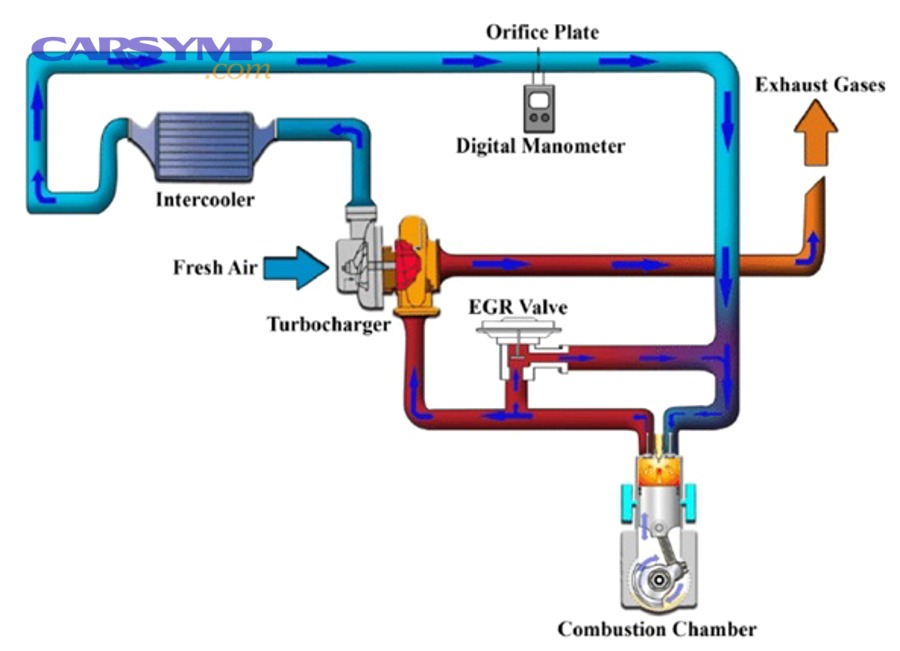
An EGR valve is an emissions-control metering valve that recirculates a controlled amount of exhaust gas back into the intake to lower combustion temperature and reduce NOx, and “clean vs replace” matters because deposits can block flow while a failed valve can’t meter flow at all. More specifically, the EGR system is designed to be precise: too little EGR can trigger “insufficient flow” faults and raise NOx, while too much EGR (or a valve stuck open) can cause rough idle, stalling, and poor combustion.
What is the difference between a clogged EGR valve and a failed (stuck or broken) EGR valve?
A clogged EGR problem is usually a restriction problem, while a failed EGR problem is usually a control problem.
- Clogged (restriction) EGR: Carbon and soot narrow the valve ports, EGR passageways, or the intake’s small EGR feed ports. The valve may still work, but the engine can’t get enough EGR flow when commanded. This often creates “flow insufficient” behavior: the computer requests EGR, but the airflow/pressure change it expects never happens.
- Failed (control) EGR: The valve can be stuck open/closed, have a weak spring, a torn diaphragm (vacuum type), a burned motor winding (electronic type), or a faulty position sensor. In that case, the engine may get too much EGR at idle (stumble/stall) or no EGR under cruising (ping/knock, NOx, flow codes). A control failure often repeats immediately after clearing codes.
The key takeaway is simple: cleaning restores flow; replacement restores control. That’s why the “right” fix depends on whether your issue is restriction or control.
Which symptoms most strongly point to cleaning being enough?
There are several symptom patterns that usually mean cleaning is a rational first move, especially if the valve still moves and the connector/vacuum line is intact:
- Intermittent hesitation or mild surge at steady cruise (especially after lots of short trips).
- Reduced power that improves temporarily after a hard highway run (heat and flow can partially “burn off” loose soot).
- EGR-related “insufficient flow” behavior rather than position/performance behavior.
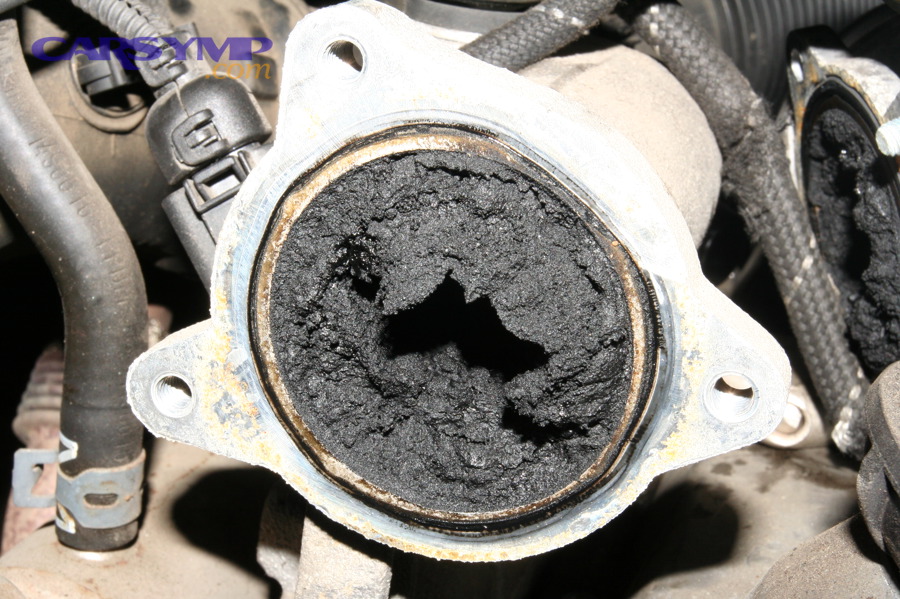
- Visible heavy carbon in the EGR inlet/outlet or nearby passages without signs of a broken pintle, cracked housing, or damaged connector.
In practical terms, cleaning tends to succeed when the car runs “mostly OK” but feels inconsistent—because a restriction is rarely perfectly constant. Deposits can shift, soften when hot, and change the effective opening area.
Which symptoms are red flags that replacement is the better fix?
Replacement becomes the better call when symptoms suggest the valve cannot reliably open, close, or report its position, including:
- Rough idle or stalling that’s strongly tied to idle/stoplights, especially if it feels like the engine is “choking.” (Often stuck-open EGR.)
- Immediate repeat of the same EGR fault after clearing codes, sometimes in the same drive cycle.
- Position/performance faults (valve commanded vs valve actual mismatch), which often indicate an actuator or sensor issue rather than a simple clog.
- Electrical evidence: brittle connector, corrosion inside pins, damaged wiring near hot exhaust, or a valve that fails an actuator command test.
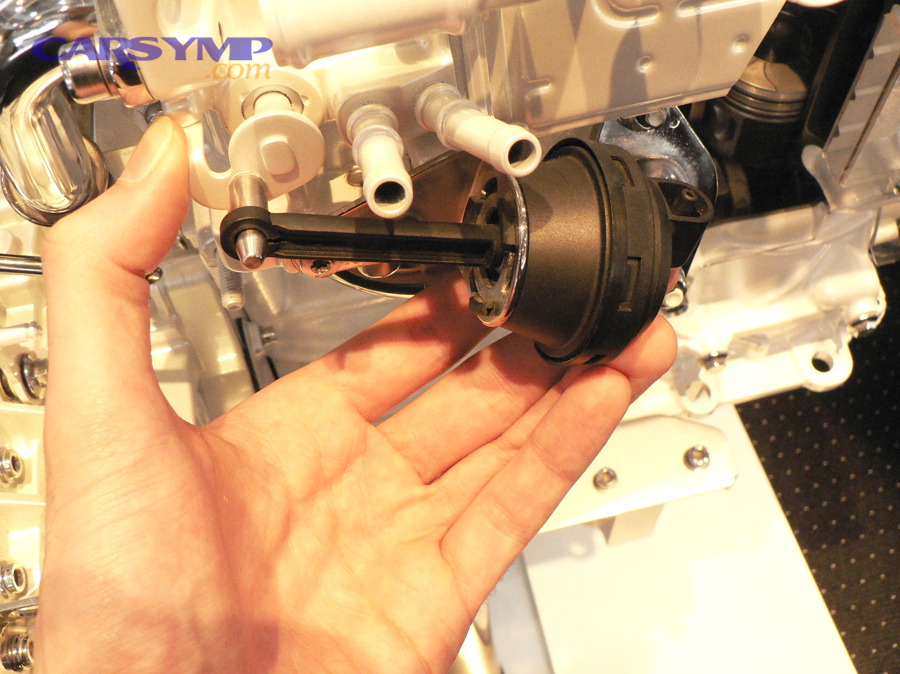
- Mechanical evidence: pintle won’t move (or moves inconsistently), broken gasket surface, cracked casting, or vacuum diaphragm that won’t hold vacuum (on vacuum-operated units).
If you see these, cleaning may still remove carbon—but it won’t restore correct control, which is what the engine needs to idle smoothly and meet emissions logic.
According to a study by Purdue University from the Department of Mechanical Engineering, in 2013, researchers modeled EGR fractions between 5% and 40% and confirmed that EGR is an effective method of reducing NOx because changing the oxidizer composition and available oxygen affects NOx formation trends.
Should you clean an EGR valve or replace it based on your symptoms and quick tests?
Yes—you can decide whether to clean or replace an EGR valve using symptoms and quick tests, because (1) restriction symptoms cluster differently than control-failure symptoms, (2) simple inspection can reveal heavy carbon vs physical damage, and (3) scan data can confirm whether commanded EGR produces the expected engine response. Then, instead of guessing, you follow a repeatable decision path: symptoms → inspection → actuation check → scan verification → choose cleaning or replacement.
A useful way to think about EGR valve repair is that you’re solving one of three problems: not enough flow, too much flow, or incorrect control. Once you know which bucket you’re in, the fix becomes obvious.
Can you decide “clean vs replace” with a basic visual inspection and movement check?
Yes—basic inspection often tells you whether you’re dealing with carbon restriction or component failure, because carbon leaves visible deposits, stuck valves resist movement, and damaged connectors/diaphragms show clear physical clues. To better understand what you’re seeing, use this checklist:
1) Visual inspection (restriction vs damage)
- Look for thick carbon rings around the EGR port openings and crust in the throat.
- Check the gasket surface for pitting or warping. A sealing problem can mimic valve failure.
- Inspect any short EGR tube for internal soot narrowing (where accessible).
2) Movement/actuation sanity check (without forcing anything)
- Vacuum EGR: if you can safely access it, a hand vacuum pump can often pull the diaphragm and move the pintle. If it won’t hold vacuum or won’t move, replacement becomes more likely.
- Electronic EGR: do not pry on the pintle. Instead, rely on scan-tool actuation tests or observe commanded vs actual position if available.
3) “Where cleaning works” clues
- The pintle area is dirty, but it appears intact.
- The valve isn’t physically damaged.
- The problem built up gradually, often after months of short-trip driving.
4) “Where replacement wins” clues
- A cracked housing, broken mount ear, melted connector, or obvious sensor/actuator failure.
- A valve that is stuck open and the engine nearly dies at idle every time.
This approach prevents the classic mistake: cleaning a valve that is electronically dead, or replacing a valve when the real restriction is in the passages.
Do OBD-II codes and live data reliably tell you when to clean or replace an EGR valve?
Yes—scan codes and live data are reliable when you interpret them as categories (“flow” vs “position/control”) and confirm with one engine-response check, because codes describe what the computer detected, not always the single failed part. However, scan data is most valuable when you use it to answer one specific question:
When EGR is commanded, does the engine respond the way it should?
For example, many “insufficient EGR flow” situations point to restriction in the valve or passages, while position/performance situations point to control failure. A common “flow insufficient” code category is explained by AutoZone as meaning the system isn’t creating enough recirculation and should be addressed.
Practical scan-data cues (what to look for):
- Commanded EGR increases but the engine shows little to no change in MAP/airflow/idle quality → likely restriction (clean valve/passages).
- Commanded vs actual position mismatch (if your scan tool supports it) → likely actuator/sensor issue (replace valve or diagnose wiring).
- Codes return immediately after clearing (especially position/performance) → control failure more likely than restriction.
This is where Verifying repair with scan data becomes more than a buzzphrase—after cleaning or replacement, you re-run the same observation to ensure the commanded response has returned.
What are the fastest “at-home” tests that reduce misdiagnosis before you buy parts?
There are three main test groups you can do at home—based on tool level—each designed to reduce the chance you replace the wrong thing.
A) No-special-tool tests (behavior + inspection)
- Note whether the issue is worst at idle (often too much EGR / stuck open) or worst at steady cruise (often insufficient EGR / restriction).
- Confirm the problem changes with engine temperature; deposits often cause more trouble when cold.
B) Basic tool tests (vacuum pump, multimeter, smoke check)
- Vacuum pump test for vacuum-operated valves (movement + hold).
- Connector and harness inspection; check for broken insulation near heat sources.
- If you suspect vacuum leaks, a smoke test (or careful leak check) can prevent blaming the EGR for a lean condition.
C) Scan-tool tests (best “confidence builder”)
- Use actuator tests if available.
- Watch commanded EGR and any available feedback PIDs.
- Compare “before” and “after” behavior to prove the fix.
Below is a widely viewed “how-to” style video that demonstrates EGR cleaning steps and what heavy carbon looks like during disassembly:
The point isn’t that you must follow one creator’s exact method. The point is that you can create a repeatable decision path: inspect, test, then commit to cleaning or replacement based on what you proved.
How much does it cost to clean vs replace an EGR valve, and when is each the better value?
Cleaning wins in low-cost maintenance and quick wins, replacement is best for reliability when control fails, and passage cleaning becomes optimal when the valve is fine but the system is still restricted—because the “total cost” depends on labor access, repeat-failure risk, and how much of the EGR system is actually blocked. Specifically, cost isn’t just the price of the valve—it’s also your time, gaskets, risk of repeat clogging, and how hard the engine makes access.
To illustrate how costs typically stack up, the table below compares typical DIY and shop scenarios so you can see what you’re really paying for.
| Fix option | What you pay for | Best when | Hidden cost risk |
|---|---|---|---|
| Clean EGR valve | Cleaner/brushes, possibly a gasket, time | Valve moves and seals; heavy carbon is visible | If passages are clogged too, cleaning only the valve won’t restore flow |
| Replace EGR valve | New valve, gasket, labor | Stuck/open/closed, electrical failure, position mismatch | Buying a valve won’t fix blocked passages or sensor/wiring faults |
| Clean passages + valve | More labor/time, sometimes intake removal | Flow still low after valve cleaning; ports are restricted | Higher time investment, but often the “real” fix on chronic cloggers |
Is DIY EGR cleaning actually cheaper once you factor in time, tools, and gaskets?
Yes—DIY cleaning is usually cheaper because the materials are low-cost and you avoid labor charges, but it’s only truly cheaper if you can access the valve without major disassembly and you replace gaskets correctly to prevent vacuum leaks. For example, a simple, accessible EGR valve on the front of a four-cylinder can be a straightforward clean-and-reinstall job. But some engines bury the valve behind the intake or near the firewall, which turns a “cheap cleaning” into a multi-hour removal process.
A realistic DIY cost breakdown often looks like:
- Cleaner/solvent + brushes/scrapers
- Replacement gasket (strongly recommended if the gasket is crushed or brittle)
- Optional: throttle body/intake cleaner if you’re already in the area
- Your time: anywhere from “quick service” to “half a Saturday,” depending on access
The biggest DIY money saver is labor—but the biggest DIY risk is creating a vacuum leak or damaging a connector during removal.
When does replacement become cheaper than cleaning?
Replacement becomes cheaper when cleaning can’t restore control or when cleaning is likely to be repeated.
Common situations where replacement is the better “value” decision:
- The valve is electronically faulty (position sensor or actuator fails).
- The valve is mechanically stuck or the diaphragm fails (vacuum type).
- Access is so difficult that removing it twice is more expensive than replacing once.
- The vehicle has a history of rapid re-clogging, so cleaning buys only short-term relief.
A practical labor-time benchmark can help you estimate the crossover point. One automotive guide estimates gasoline vehicle replacement labor at roughly 0.7–2.0 hours and diesel replacement labor at 2.5–5.0+ hours, largely because diesels often involve additional EGR components and tighter packaging.
Should you replace just the valve, or clean the EGR passages too?
Replacing the valve is best when the valve itself fails control, but cleaning the passages is essential when the restriction is in the system “around” the valve—because the valve is only one part of the EGR flow path. More importantly, this is where many owners waste money: they replace the valve, the code comes back, and they assume the new valve is defective—when the true issue is restricted ports or a blocked cooler/passage.
Think of the EGR system as a chain:
- Exhaust source → EGR tube/cooler (on many diesels) → EGR valve → intake ports/manifold runners
If any link is clogged, the system can still show “insufficient flow.” So:
- If you clean/replace the valve but flow is still low, you likely need passage cleaning.
- If the engine’s EGR feed ports are tiny (common on some designs), they can clog even when the valve itself looks “only moderately dirty.”
A good rule is: fix what you can prove. If your post-repair scan behavior still shows no response when EGR is commanded, you didn’t restore flow yet—so you keep moving down the chain.
What risks come with driving on a bad EGR valve, and does it change the clean vs replace decision?
Yes—driving with a bad EGR valve can increase drivability and emissions risks because (1) a stuck-open valve can cause stalling and unsafe loss of power at stops, (2) insufficient EGR can raise combustion temperature and promote knock in some conditions, and (3) unresolved faults can keep the car failing monitors and emissions testing. Moreover, the risk profile can change your decision: a dangerous idle-stall problem pushes you toward a faster, more definitive fix (often replacement), while a mild restriction problem may allow a careful cleaning-first approach.
Can you drive with an EGR fault, or should you fix it immediately?
Yes, you can sometimes drive with an EGR fault—but you should fix it immediately if the engine stalls, knocks/pings, overheats, or goes into limp mode, because those symptoms indicate a higher-risk failure pattern. To better understand urgency, use these tiers:
Low urgency (schedule soon):
- Mild hesitation, mild roughness, occasional check engine light, no stalling
Medium urgency (fix ASAP):
- Frequent drivability issues, poor idle quality, repeated fault codes, reduced power
High urgency (stop-and-fix / tow if necessary):
- Stalling at intersections, severe misfire-like shaking, strong fuel smell, overheating, or limp mode
A stuck-open EGR can make the engine behave like it has a massive vacuum leak at idle—sometimes it will run “OK-ish” above idle but stumble badly at stops. That’s not just annoying; it can be unsafe.
Does cleaning an EGR valve carry any risks compared with replacing it?
Yes—cleaning carries risks that replacement avoids, because aggressive scraping can dislodge carbon into the intake, solvents can damage electronics on some valves, and reinstall mistakes (gaskets/torque/connectors) can create new problems even if the valve is now clean. However, replacement has its own risks: buying the wrong part, using low-quality components, or replacing the valve when the real fault is a clogged passage or wiring.
To reduce cleaning risk:
- Avoid gouging sealing surfaces
- Prevent carbon chunks from falling into open intake ports
- Keep solvents away from electronic actuator housings unless the product explicitly allows it
- Use new gaskets where required and torque correctly
To reduce replacement risk:
- Confirm the failure mode (stuck/actuator/position mismatch) before ordering
- Inspect wiring/connectors and vacuum lines
- Verify that passages are not the real restriction
How do you confirm the fix after cleaning or replacement?
You confirm the fix by proving three outcomes: (1) symptoms improve, (2) codes do not return, and (3) the engine shows a normal response when EGR is commanded—ideally confirmed through scan data. In addition, the best confirmation approach ties directly back to your diagnosis method:
1) Driveability confirmation
- Stable idle, no stalling, improved throttle response
2) Scan confirmation
- Clear codes, then monitor for returns over a full warm-up cycle
- Re-check the behavior you used to diagnose the fault in the first place
- This is where Verifying repair with scan data matters: you’re looking for a normal engine response to EGR command, not just an empty dashboard light.
3) Readiness/inspection confirmation
- If you live in an emissions-testing area, ensure readiness monitors can set normally.
If a code returns immediately, treat it as evidence that:
- The valve wasn’t the only restriction (passages still clogged), or
- The valve can’t control properly (actuator/sensor/wiring issue)
According to AutoZone, an insufficient EGR flow code indicates the EGR subsystem isn’t creating enough recirculation and should be addressed, reinforcing that EGR faults are not “ignore forever” issues.
How can you prevent EGR clogging and avoid repeat repairs after cleaning or replacement?
Preventing EGR clogging works best with a few consistent habits and maintenance checks, using four steps—(1) reduce soot-producing conditions, (2) keep intake airflow healthy, (3) address oil-vapor contributors, and (4) confirm EGR function periodically—so you don’t repeat the same repair cycle. Next, think of prevention as the antonym of repair: you’re not just fixing today’s symptom, you’re removing the conditions that created the deposits.
Which driving habits make EGR clogging worse, and what habits reduce buildup?
Short, cold trips tend to make buildup worse because the engine spends more time in conditions that promote soot and condensation mixing into sticky deposits.
Habits that often increase buildup:
- Frequent short trips without full warm-up
- Constant low-RPM, low-load driving
- Long idle periods (vehicle-dependent)
Habits that often reduce buildup:
- Regular full warm-up drives
- Occasional steady highway cruising (when safe and appropriate)
- Avoiding chronic “lugging” (very low RPM under load)
The goal is not to drive aggressively—it’s to ensure the engine regularly reaches stable operating conditions where deposits are less likely to accumulate.
What maintenance steps help prevent EGR deposits from coming back?
To illustrate, prevention is usually a combination of “keep air clean” and “keep oil vapor under control”:
- Air filter and intake plumbing: a restricted air filter can change airflow patterns and contribute to deposits.
- PCV system health: excessive oil vapor can mix with soot and form stubborn sludge.
- Address oil consumption: burning oil increases deposit formation potential.
- Use the correct oil specification for your engine (especially important for modern diesels and direct injection).
If you’re building a maintenance checklist for readers, you can also link out to a broader symptom and maintenance library like carsymp.com for related drivability patterns (without turning the article into a directory).
Do diesel EGR coolers and DPF systems change the “clean vs replace” logic?
Yes—diesels often have more components in the EGR path (like coolers), which means “clean vs replace” can also become “valve vs cooler vs passages.”
- If the valve is fine but EGR flow is still low, a restricted cooler or passage may be the real bottleneck.
- If a cooler leaks (a rarer but important case), symptoms can look different and may include coolant-related issues rather than just drivability.
Also, because diesel emissions systems interact (EGR, DPF regeneration strategies, sensors), a successful repair is often the one you can verify, not the one that merely replaced the most common part.
What are the most common misdiagnoses that look like an EGR problem?
There are four common misdiagnosis buckets that can mimic EGR symptoms or codes:
- Vacuum leaks that cause unstable idle and lean behavior
- Sensor faults (MAP/pressure-related sensors in some systems) that misreport flow changes
- Wiring/connector problems near high heat that create intermittent EGR control faults
- Intake restrictions or throttle body issues that change airflow and confuse EGR diagnostics
If you treat the EGR valve as “guilty by default,” you risk spending money twice. If you treat diagnosis as a simple proof process—inspection + actuation + scan confirmation—you fix it once and move on.
According to a study by Purdue University from the Department of Mechanical Engineering, in 2013, the researchers analyzed EGR fractions between 5% and 40% and discussed how EGR changes oxygen availability and NOx formation behavior, supporting the idea that EGR is a deliberate NOx-reduction strategy rather than a “nice-to-have” component.