


If you want to test EGR valve operation correctly, you need to prove one thing: the valve opens and closes when it should, and that airflow change produces a predictable engine response without causing new problems. That means you’re testing function, not guessing from symptoms.
Next, the fastest way to avoid wasted time is to identify your system type first, because vacuum-actuated valves and electronic valves do not fail the same way and they cannot be tested with the same steps. A correct test begins with choosing the correct method for your hardware.
Then, once you run the right test, you need a pass/fail interpretation that tells you what to do next—clean, diagnose the control side, or move toward EGR valve repair. A “maybe” result is common if you don’t interpret the outcome in context.
Introduce a new idea: even if the valve itself passes a bench-style function check, you can still have an EGR-related fault because EGR is a system—flow paths, control solenoids, wiring, and feedback sensors can break the chain and mimic a bad valve.
What does “EGR valve operation” mean, and what exactly are you testing?
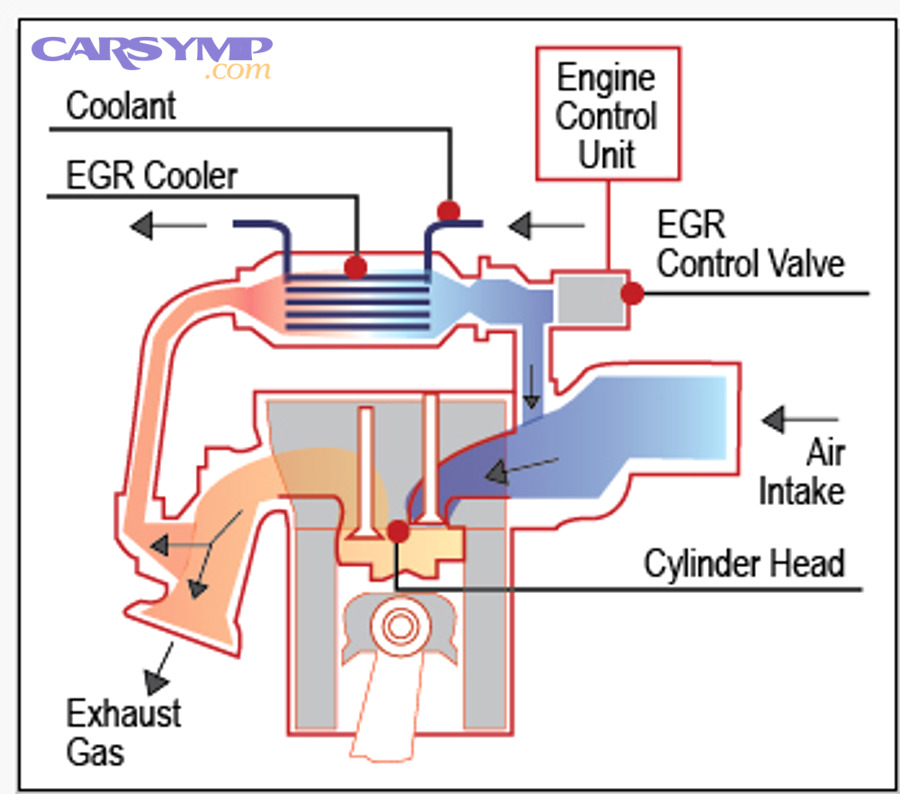
EGR valve operation is the valve’s ability to open and close at the correct time and to allow controlled exhaust-gas flow into the intake stream so combustion temperature and NOx formation are reduced without creating drivability problems. (en.wikipedia.org)
To better understand why this matters, it helps to separate what you see (symptoms) from what you must prove (function). A driver may feel rough idle, knock, hesitation, or stalling, but the test must confirm whether the valve is moving, whether the flow path is open, and whether the control strategy is being followed.

Can a working EGR valve still trigger an EGR code or drivability symptoms?
Yes—testing EGR valve operation can still show a “working” valve while the vehicle throws EGR codes or runs poorly for at least three reasons: blocked EGR passages restrict flow, the control device fails to deliver the command (vacuum solenoid or electronic driver), or the feedback signal lies (DPFE/MAP/position). (agcoauto.com)
Next, the key idea is that the engine computer does not “watch” your valve directly in most designs; it infers EGR flow from pressure changes, sensor feedback, or expected combustion behavior. If the flow can’t physically move through a carboned passage, the ECU may report insufficient flow even though the pintle is moving.
Specifically, a valve can:
- Open normally but feed into a clogged port, so the intake never receives the expected exhaust-gas volume.
- Stay closed normally but the ECU thinks it opened because a sensor value is wrong or wiring is damaged.
- Respond sluggishly due to carbon, making it “technically moving” but effectively failing under real conditions.
A practical takeaway is that your test should be designed to prove movement + flow + control in that order.
What are the fastest signs that your EGR is stuck open vs stuck closed?
A stuck-open EGR typically causes rough idle, stalling, and low-speed hesitation, while a stuck-closed EGR is more likely to show pinging/knock, higher combustion temperature behavior under load, and emissions-related faults—because EGR flow is missing when the ECU expects it. (autozone.com)
Then, use this mental model: EGR is supposed to add “inert” gas mostly during cruising/light-load conditions, not during cold start, heavy acceleration, or unstable idle. So the wrong-time EGR flow acts like a major mixture disturbance.
To illustrate the “EGR valve stuck open vs closed symptoms” pattern in a way you can test:
- If the valve is stuck open, you often get a bad idle first (because exhaust dilutes the mixture when the engine needs stable combustion).
- If the valve is stuck closed, idle may be normal, but you may see knock/ping and emissions faults because combustion temperature tends to be higher when EGR is absent. (en.wikipedia.org)
Can a working EGR system improve emissions without hurting drivability?
Yes—when EGR flow is correctly controlled, it can reduce NOx because it lowers peak combustion temperature, and it can do this without drivability issues because the ECU meters EGR mainly when the engine is warm and stable. (en.wikipedia.org)
Moreover, research supports the emissions relationship behind EGR strategies. According to a study by Purdue University from the Department of Mechanical Engineering, in 2013, simulations varying EGR fractions between 5% and 40% showed NOx-related metrics track strongly with oxygen availability, supporting the idea that increasing exhaust dilution can reduce NOx formation under appropriate conditions. (docs.lib.purdue.edu)
Which EGR system do you have: vacuum-actuated or electronic?
There are two main types of EGR valve systems—vacuum-actuated and electronic—based on how the valve is commanded to open, and identifying which you have determines the correct test method and the most likely failure points.
Next, this is where many DIY tests go wrong: people apply vacuum to an electronic valve, or they check electrical resistance on a vacuum diaphragm valve, and both “tests” produce nonsense. This section also clarifies the required phrase Vacuum vs electronic EGR valve differences in a way that helps you choose the right path.

Does your EGR valve have a vacuum diaphragm and hose port?
Yes—if you see a round diaphragm “cap” (often metal) with a small vacuum hose nipple, you almost certainly have a vacuum-actuated EGR valve, because the diaphragm uses manifold vacuum to lift the pintle.
Then, confirm with a quick checklist:
- A thin vacuum hose runs to the valve or to a small solenoid near it.
- The valve body is usually metal and mounts between exhaust and intake passages.
- You may find a vacuum modulator/solenoid in the same area.
Specifically, vacuum systems often fail due to:
- cracked hoses,
- a stuck solenoid that never passes vacuum,
- a ruptured diaphragm that won’t hold vacuum,
- heavy carbon around the pintle seat.
Does your EGR valve have an electrical connector and a position sensor?
Yes—if the EGR valve has a multi-pin electrical connector and no vacuum diaphragm, it’s typically an electronic EGR valve, often driven by a solenoid or stepper motor with position feedback. (x-engineer.org)
Next, you’re not just checking “does it move”; you’re checking whether the ECU can command it and whether the valve reports position or flow correctly.
Common electronic EGR features include:
- Stepper motor actuation (precise movement control) (x-engineer.org)
- A position sensor (built-in or separate)
- A cooler or pipe assembly on some engines, especially diesels
What related parts must be tested with the EGR valve (solenoid, vacuum supply, sensors)?
There are three related component groups you should test with EGR operation—command delivery, flow path, and feedback—because any one of them can create an “EGR fault” even when the valve is fine. (agcoauto.com)
Then, break it down like this:
1) Command delivery
- Vacuum EGR: vacuum source, hoses, EGR vacuum solenoid/modulator
- Electronic EGR: power, ground, signal/control wiring, ECU command capability
2) Flow path
- EGR passages in intake manifold
- EGR tube/pipe and gasket sealing surfaces
- Carbon buildup restricting ports
3) Feedback
- DPFE (on some Ford designs) or other differential pressure sensors (agcoauto.com)
- MAP/MAF/O2 behavior used by ECU to infer EGR flow
- EGR position sensor on electronic valves
More importantly, this “system view” is what prevents you from replacing the valve and finding the same fault code 30 minutes later.
How do you test a vacuum-actuated EGR valve with a hand vacuum pump?
A vacuum-actuated EGR valve test uses two steps—apply vacuum to move the diaphragm and observe engine response, then verify the valve holds vacuum—to confirm movement, sealing, and flow impact in a controlled way.
Next, you’ll get the best results with the engine fully warm, at idle, and with a stable baseline idle speed. A cold engine can hide EGR behavior because many ECUs suppress EGR until operating temperature.

Should the engine stumble or stall when you apply vacuum at idle?
Yes—when you apply vacuum to open a vacuum EGR valve at warm idle, the engine should usually stumble, run rough, or even stall for at least three reasons: exhaust dilution reduces oxygen, combustion becomes unstable, and idle airflow control can’t always compensate instantly.
Then, treat this as a functional “reaction test,” not a punishment test. You’re briefly forcing EGR to prove the pathway is open.
Specifically, interpret the result like this:
- Stumble/stall happens: EGR flow is reaching the intake; the valve can open and the passage likely has flow.
- No change at all: either the valve didn’t open, the passage is blocked, or the engine/ECU compensated unusually fast.
Important cautions:
- If the engine already idles rough, your reaction test may be inconclusive because the baseline is unstable.
- If the idle surges or misfires, confirm there’s no major vacuum leak first.
Does the EGR diaphragm hold vacuum, and what does it mean if it doesn’t?
Yes—a healthy vacuum EGR diaphragm should generally hold vacuum, and if it doesn’t, it often means the diaphragm is leaking, the valve seat is damaged, or the internal pintle is not sealing—three common causes of “won’t hold” results that justify repair planning.
Next, isolate the test:
- Connect the hand pump directly to the EGR vacuum port.
- Pump to a modest vacuum level (follow service manual if available).
- Watch the gauge: does it hold steady for a short period?
If vacuum drops quickly, the likely outcomes are:
- Ruptured diaphragm → the valve cannot remain commanded open, and it may create vacuum issues.
- Mechanical binding → carbon can prevent full movement or sealing.
- Bad internal seal → the valve may “move” but leak, causing odd drivability.
This is where many DIYers decide between cleaning and EGR valve repair steps: a valve that won’t hold vacuum is often beyond “simple cleaning” if the diaphragm itself is compromised.
How do you test the vacuum supply and EGR solenoid if the valve itself is OK?
You can test the vacuum supply and solenoid by verifying source vacuum, solenoid switching, and vacuum delivery to the valve, which confirms the ECU can actually command EGR under real driving conditions.
Then, run this simple chain test:
Step 1: Check vacuum source
- Identify the source line feeding the EGR solenoid.
- With the engine idling, verify vacuum exists at the source (a gauge or pump can help).
Step 2: Check hose integrity
- Inspect for cracks, loose fits, oil saturation, or soft hoses collapsing under heat.
Step 3: Verify solenoid function
- Many troubleshooting guides recommend commanding the solenoid (when possible) or checking switching behavior.
- On some systems, a scan tool can energize the control, or you can test for electrical signal and proper ground.
If you have vacuum at the source but none at the valve during command, the solenoid, wiring, or ECU command logic becomes the prime suspect—not the valve.
How do you test an electronic EGR valve using a scan tool and basic electrical checks?
An electronic EGR test uses scan-tool actuation plus verification of commanded vs actual movement, followed by basic power/ground and signal checks, to confirm whether the valve responds correctly or the fault lies in wiring, control, or feedback.
Next, the most important difference is that electronic valves can fail “electrically” while still moving freely, or fail mechanically while the ECU continues sending correct commands. So you want to prove both control and motion.

Can you command the EGR open with a scan tool, and does the position value change?
Yes—if you can run a bi-directional control test, you should be able to command the EGR valve open and see a corresponding change in position (or inferred flow), and if position does not change it usually points to a stuck valve, failed actuator, or a control circuit issue.
Then, treat the scan tool test as your “truth serum”:
- Command changes + position changes: the valve is responding.
- Command changes + position flatlines: actuator or circuit problem, or position sensor failure.
- No command available: your tool may lack bi-directional control, or the ECU doesn’t support it on that model.
Specifically, watch for:
- DTCs that return immediately when commanding the valve
- No movement sounds (some stepper valves are quiet; don’t rely on sound alone)
- Position values stuck at a fixed percentage even when commanded
Is it possible to test electronic EGR operation without a scan tool?
Yes, but only partially—without a scan tool you can still test electronic EGR operation for at least three basics (power supply, ground integrity, and connector/wiring condition), but you cannot reliably prove commanded movement under ECU control.
Next, this “partial test” is still valuable because a huge share of failures are simple:
- corrosion in connectors,
- broken wires near the harness bend points,
- missing power or bad ground.
A practical no-scan checklist:
- Visual inspection: look for heat damage, oil intrusion, bent pins.
- Power and ground test: verify the connector has expected supply and stable ground.
- Wiggle test: gently move the harness while monitoring readings for intermittent drops.
If these checks fail, you may have found the true fault without replacing the valve.
How do you tell the difference between a bad EGR valve motor and a wiring/connector problem?
A bad EGR motor is more likely when the wiring proves stable and the valve never responds across repeated commands, while a wiring/connector fault is more likely when the symptom is intermittent, changes with movement, or shows inconsistent power/ground or signal integrity.
Then, compare the two patterns:
Bad actuator/motor pattern
- consistent non-response
- repeated “position does not follow command”
- normal power and ground present
- no improvement after cleaning connector pins
Wiring/connector pattern
- intermittent faults (comes and goes)
- changes when harness is moved
- visible corrosion or moisture
- unusual voltage drop under load
On the other hand, carbon can still create a “motor-like” failure if the pintle is physically jammed. That’s why mechanical inspection remains relevant even for electronic valves.
What test results mean “good,” “bad,” or “inconclusive” for EGR operation?
There are three outcome categories for testing EGR valve operation—good, bad, and inconclusive—based on whether you have confirmed movement, confirmed flow effect, and confirmed control integrity.
Next, the goal is to end your test session with a decision, not a guess. The table below summarizes the most common result patterns and what they usually mean.
Here’s a quick interpretation table that maps what you observe to likely causes and next steps:
| Test result pattern | What it usually means | What to do next |
|---|---|---|
| Valve moves and engine reacts as expected | EGR flow path likely open; valve function likely OK | Check for intermittent control or feedback issues if codes remain |
| Valve moves but engine does not react | Flow may be blocked (ports/passages clogged) or wrong test conditions | Inspect/clean passages; verify you tested warm idle |
| Valve does not move but command/supply exists | Mechanical jam or failed actuator/diaphragm | Remove for inspection; clean if carbon-bound; replace if failed |
| Vacuum won’t hold / electronic position flatlines | Leak/diaphragm failure or position/actuator failure | Plan repair/replace; verify wiring before condemning electronic valve |
| Everything passes but symptoms persist | Not a valve problem, or EGR system problem elsewhere | Diagnose solenoid, wiring, sensors, leaks, carbon buildup |
If the EGR opens but the engine doesn’t react, is that normal?
No—if the EGR opens and the engine shows no change, it’s usually not “normal,” and it commonly indicates at least three issues: clogged EGR passages, incorrect test conditions (cold engine or unstable idle), or an EGR path leak that prevents meaningful flow into the intake.
Then, the fastest follow-up is to confirm whether exhaust gas can physically reach the intake:
- inspect EGR ports for carbon restriction,
- check EGR tube passages (where accessible),
- verify gaskets and mounting surfaces are not leaking.
More specifically, carbon blockage is extremely common in engines that do short trips, idle often, or have high soot loads (especially some diesel setups). A valve can look “fine,” but the passage looks like concrete.
If the engine runs worse at idle when EGR opens, does that confirm the EGR is working?
Yes—if the engine runs worse when you intentionally open the EGR at idle, it strongly suggests EGR flow is actually entering the intake, because exhaust dilution destabilizes idle combustion and the engine reacts immediately.
Next, don’t stop there: “It reacts” does not guarantee the valve closes correctly or that the ECU uses it properly under load. Your next goal is closure integrity.
Practical closure checks include:
- confirm the valve returns to closed when vacuum is released (vacuum type),
- confirm the position returns to 0% or near baseline (electronic type),
- verify idle stabilizes again after the command ends.
If it does not return to baseline, you may be dealing with carbon binding, a sticky pintle, or a failing actuator.
Which “next checks” come after a failed test: clean, replace, or diagnose control/flow?
There are three next-step paths after a failed EGR test—cleaning, replacement/repair, or system diagnosis—based on whether the failure is mechanical, sealing-related, or command/feedback-related.
Then, use this decision logic:
1) Cleaning is best when:
- the valve moves but sticks slightly,
- carbon buildup is visible on the pintle seat,
- passages show restriction.
2) Replace or repair is best when:
- the diaphragm won’t hold vacuum,
- the electronic actuator does not move despite good power/ground,
- the valve leaks internally and causes persistent idle issues.
This is the point where EGR valve repair becomes a realistic consideration: repair is often about restoring sealing and movement reliability, not “making codes disappear.”
3) Diagnose control/flow when:
- the valve passes tests but codes remain,
- vacuum never reaches the valve under command,
- position feedback is irrational or inconsistent.
According to a technical guide from Delphi, solenoid and control faults can prevent proper EGR operation, and verifying command delivery before replacing parts helps identify the true root cause.
How do you avoid false positives while testing EGR valve operation?
You avoid false positives by testing warm, stabilizing baseline conditions, and ruling out three common “look-alikes”—vacuum leaks, misfires, and intake carbon problems—because each can mimic EGR faults and distort your test outcome.
Next, think of this section as your “test hygiene.” A messy baseline produces messy conclusions.

Should you test EGR operation on a cold engine?
No—you should not test EGR operation on a cold engine for at least three reasons: many ECUs inhibit EGR until warm, cold combustion is unstable (masking EGR effects), and idle control strategy is different before closed-loop operation begins. (en.wikipedia.org)
Then, warm the engine fully and confirm idle is steady before you apply vacuum or run command tests. This single step dramatically improves the reliability of your results.
Practically:
- drive 10–15 minutes (or until normal coolant temperature),
- let idle stabilize,
- turn off large electrical loads if they affect idle significantly.
Can misfires, vacuum leaks, or intake carbon buildup mimic EGR faults?
Yes—misfires, vacuum leaks, and intake carbon buildup can mimic EGR faults because all three can cause rough idle, hesitation, and unstable combustion, and they can also change sensor readings the ECU uses to infer EGR flow.
Next, here’s how each imitates EGR trouble:
Misfires
- cause rough idle and poor acceleration
- can trigger oxygen sensor swings and fuel trims that confuse diagnosis
Vacuum leaks
- create lean conditions and unstable idle
- may make the engine stumble when you open EGR, exaggerating results
Intake carbon buildup
- restricts airflow and can behave like “insufficient EGR flow”
- may create uneven cylinder-to-cylinder behavior
If you suspect a vacuum leak, do that check first because it’s a “multiplier” problem: it can make every other test look worse than it is.
What else causes “EGR not working” symptoms after the valve passes the test?
If the valve passes, “EGR not working” symptoms usually come from flow restriction, command delivery failure, or feedback/sensor interpretation problems, which means the fix is often in passages, solenoids, wiring, or sensors—not the valve itself. (agcoauto.com)
Next, this is where many DIYers get frustrated: they did a correct movement test, felt confident, and the code returned. That’s not a contradiction—EGR is a system, and your test proved only one link in the chain.

Are clogged EGR passages the most common reason for low EGR flow with a good valve?
Yes—clogged EGR passages are one of the most common reasons for low EGR flow even when the valve is good, because carbon physically blocks the route, reduces effective cross-sectional area, and prevents the ECU from detecting the expected flow change. (commons.wikimedia.org)
Then, the best clue is a mismatch: the valve moves, but the engine doesn’t react—or the ECU reports insufficient flow.
Common clog locations include:
- the intake manifold EGR port (often a small, easy-to-plug channel),
- the EGR tube near bends,
- the plenum distribution area where soot accumulates.
A practical approach is to remove the valve (or the connecting pipe if easier) and visually inspect the port. If the opening is reduced to a pinhole, your “bad valve” was actually a “bad passage.”
Which sensors can falsely implicate the EGR valve (DPFE, MAP, MAF, O2), and how do they relate?
There are four sensor categories that can falsely implicate an EGR valve—DPFE/differential pressure sensors, MAP sensors, MAF sensors, and oxygen sensors—because the ECU uses them to infer EGR flow and combustion changes rather than measuring exhaust flow directly. (agcoauto.com)
Then, think of these as “interpreters”:
- DPFE estimates flow by measuring pressure difference across an orifice/tube (common on some Ford systems). (agcoauto.com)
- MAP changes can reflect EGR introduction (manifold pressure shifts).
- MAF can reflect the displacement of fresh air when EGR enters.
- O2 readings change because exhaust dilution affects oxygen availability and combustion quality.
If the interpreter lies, the ECU blames the valve—even when it’s innocent.
How do EGR readiness monitors and driving conditions affect your ability to confirm the repair?
EGR readiness monitors affect confirmation because the ECU may require specific temperature, speed, load, and steady-state conditions before it runs the self-tests that verify EGR flow, meaning your repair can be correct while the monitor remains incomplete for a while. (obdautodoctor.com)
Then, this is why a “clear codes and quick idle test” is not a full confirmation for many vehicles. The ECU wants to see EGR behavior during the conditions where it normally commands EGR—often light-load cruising after warm-up.
One practical tool for advanced DIYers is Mode $06 data (if your scanner supports it), which can show self-test results used by OBD-II systems to detect faults and determine readiness status. (obdautodoctor.com)
When is advanced testing (smoke test, oscilloscope, professional diagnosis) worth it?
Advanced testing is worth it when the problem is intermittent, electrical, or expensive to guess at, because professional-grade tests can isolate vacuum leaks, verify control signals, and confirm sensor truth—saving you from repeated parts replacement.
Then, use this threshold logic:
- If the EGR valve is hard to access and labor cost is high, don’t “parts-cannon.”
- If the code returns only under certain conditions (highway cruise, hot soak), advanced data capture becomes valuable.
- If you see wiring damage, corrosion, or erratic sensor readings, a scope-level signal check can prevent false conclusions.
In short, a correct EGR diagnosis is not about replacing the most common part—it’s about proving which link in the chain failed, so your fix is final.
Evidence (summary of strongest research-based support)
According to a study by Purdue University from the Department of Mechanical Engineering, in 2013, research modeling EGR fractions between 5% and 40% supported the underlying emissions principle that increasing exhaust dilution (reducing oxygen available for combustion) is strongly associated with reduced NOx-related output measures under controlled conditions. (docs.lib.purdue.edu)