


Most engine oil leaks come from a small set of predictable sealing points—usually where two parts meet and heat, vibration, and pressure slowly flatten a gasket or harden a rubber seal. If you know the common engine oil leak locations, you can stop guessing, narrow the source faster, and avoid replacing the wrong part.
Next, you’ll see the “big map” of leak-prone areas (top/bottom/front/rear) and what each location typically looks like when it fails—wet edges, oily drips, or oil mist that spreads backward with airflow. Then, you’ll learn a simple method to pinpoint the true source even when oil has already traveled.
Moreover, we’ll cover the leaks that get misdiagnosed most often—like valve cover leaks that imitate a rear main seal, or fresh oil from an oil change that looks like a new pan gasket failure. Introduce a new idea: once you can identify the real source, you can decide whether it’s urgent and what an efficient fix should look like.
What are the most common engine oil leak locations (top, bottom, front, rear)?
There are four main groups of common engine oil leak locations—top-of-engine, lower-engine, front-of-engine, and rear-of-engine—based on where fresh oil first appears on the engine assembly and where gravity/airflow carries it afterward.
Next, use these groups as a checklist, because the fastest diagnosis comes from matching oil pattern + location + symptoms instead of chasing the lowest drip.
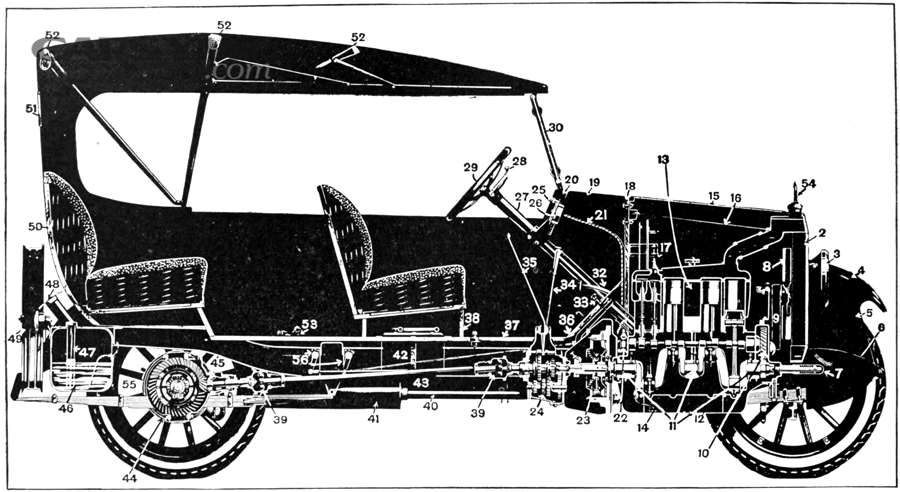
Valve cover gasket and upper engine sealing surfaces (top-of-engine)
A valve cover gasket leak is one of the most common top-of-engine leaks because the gasket sits high, sees constant heat cycles, and can shrink or harden over time—especially on engines that run hot or go long intervals between services.
Specifically, oil usually starts as a wet seam along the valve cover edge, then runs downward onto the cylinder head, exhaust manifold heat shields, or the back of the engine.
What it typically looks like:
- Oily edge around the valve cover perimeter (often worse at corners)
- Oil film on the side of the cylinder head
- Burnt-oil smell after driving (oil dripping onto hot components)
- In some cases, oil in spark plug wells (misfires can follow)
Why it’s so often the source:
- Rubber gaskets lose elasticity with age
- Over-tightening can warp stamped metal covers
- PCV issues can raise crankcase pressure and push oil out (more on this later)
A quick sanity check: if oil is wet high on the engine, don’t let the lowest drip distract you—oil nearly always travels downward before it hits the ground.
Oil filter housing, oil cooler seals, and adapter gaskets (upper/mid engine)
An oil filter housing gasket (or oil cooler seal/adapter gasket) leak is common on many modern engines because the housing is a junction point: oil passages, coolant passages (on some designs), and the filter mount all meet in a compact assembly.
Then, once the gasket starts weeping, oil can spread wide and mimic multiple leaks.
Typical clues:
- Oil collects around the filter housing base or below the housing
- A “sheet” of oil appears on a belt area or the engine front if airflow spreads it
- Oil seems to appear after startup and then slow down at idle
Why it confuses people:
- Oil can run along casting ribs and drip far from the actual gasket line
- A small seep can look dramatic because it coats a large surface area
If your vehicle uses a cartridge filter and plastic cap, also consider:
- Cap O-ring pinched or reused
- Cap over-torqued or cross-threaded (slow leak, often after an oil change)
Oil pan gasket and drain plug area (bottom-of-engine)
An oil pan gasket leak is a classic bottom-of-engine leak, but it’s often blamed incorrectly when the real leak is higher up and simply drips onto the pan flange.
However, when the pan gasket truly fails, you’ll often see fresh wetness around the pan perimeter and a drip point along the lowest lip.
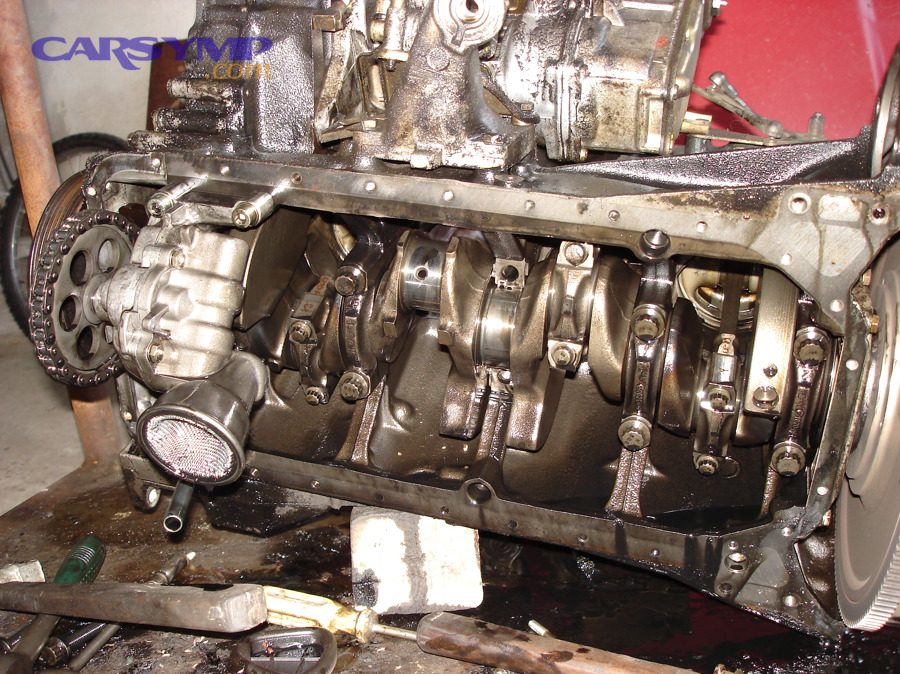
What to look for:
- Wet seam around the pan-to-block mating surface
- Oil collecting at pan bolt heads or along the pan edge
- Drips that form after the engine warms up (oil thins as temperature rises)
Don’t miss the “cheap leak” next to it:
- Drain plug loose or washer/gasket crushed
- Drain plug threads damaged (slow seep that becomes a drip)
- Oil on the pan that started right after service → suspect plug/washer first
A strong rule: if the pan is wet only at the bottom but dry above, the pan is more likely. If the pan is wet everywhere, look higher.
Front crankshaft seal and timing cover area (front-of-engine)
A front-of-engine oil leak often traces back to the front crank seal or timing cover sealing because the crank snout spins continuously and the seal lip wears, especially on high-mileage engines.
However, airflow can fling oil in patterns that look like multiple leaks.
Common signs:
- Oil behind the crank pulley/harmonic balancer
- Oil misting on the lower timing cover area
- Oil thrown outward in a circular pattern (sometimes visible as a dirty “fan” of grime)
Why it matters:
- Oil contamination can shorten the life of serpentine belts
- On timing-belt engines, oil leaks can degrade belt materials over time (design-dependent)
Rear main seal and bellhousing area (rear-of-engine)
A rear-of-engine leak is often suspected when oil appears between the engine and transmission, but true rear main seal failures are less common than people think—and they’re frequently mimicked by valve cover leaks running down the back of the block.
Next, focus on whether oil is truly originating inside the bellhousing or simply collecting on the outside and dripping near the same region.
Clues that support a real rear main seal leak:
- Oil appears at the lowest point of the bellhousing inspection area
- The back of the oil pan is wet but the upper rear block is dry
- Drip rate increases with engine speed (more oil flow + splash)
Clues that argue against it:
- Oil is wet high on the back of the engine
- The bellhousing is dry inside, but the exterior is oily
- Evidence of recent oil service spill that tracked backward
How can you pinpoint the source of an engine oil leak without guessing?
Pinpointing the source of an engine oil leak is a repeatable diagnostic workflow: clean the area, create a fresh baseline, observe where new oil appears, and confirm the trail with a simple tracing method like UV dye so you fix the right part the first time.
To begin, treat “the drip on the driveway” as the final symptom—your job is to find where the oil first becomes wet.
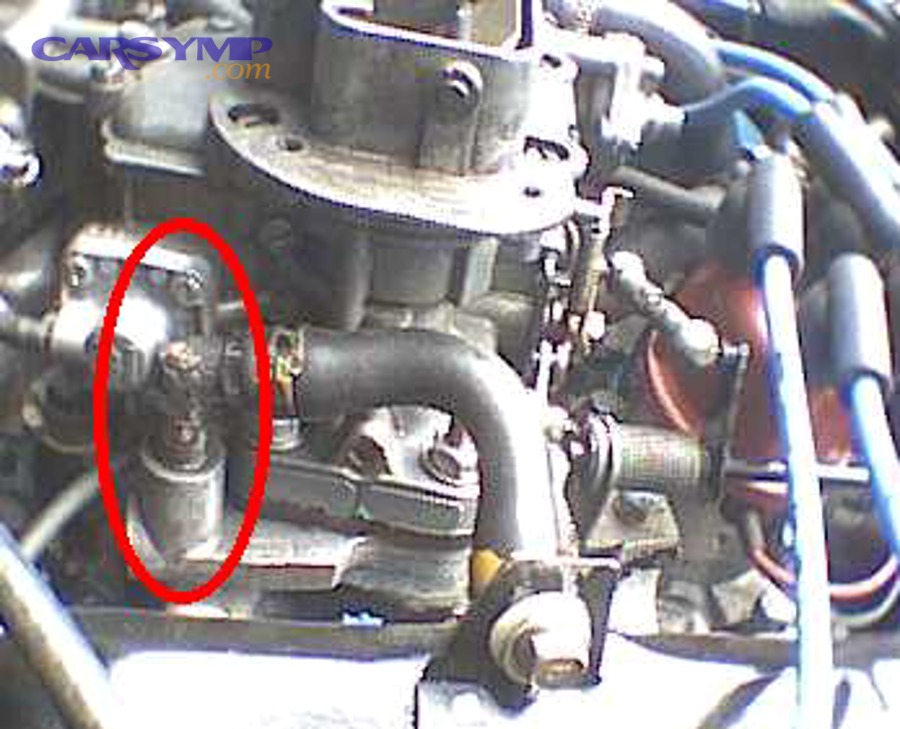
Clean the engine and establish a fresh baseline
Yes—cleaning first saves time because old oil is misleading and can travel for weeks before it finally drips.
Next, do a practical clean that focuses on suspect areas instead of detailing the whole engine bay.
A simple baseline routine:
- Verify oil level is safe before running the engine
- Degrease the suspect zone (top leaks: valve cover area; mid leaks: filter housing area; bottom leaks: pan flange)
- Rinse/wipe and let it dry
- Place clean cardboard under the vehicle overnight to map drip position
Pro tip: If you can’t safely rinse the engine bay, use shop towels and a targeted degreaser, then wipe until the seam is visibly dry.
Track the leak path with gravity and airflow in mind
Oil almost never travels in a straight line. It follows:
- Gravity (downward)
- Airflow (backward while driving)
- Surfaces and ribs (along edges and casting channels)
Then, recheck after a short drive and after a warm idle:
- Warm idle reveals slow seepage
- Short drive reveals airflow spread and higher-pressure leaks
A fast visual logic:
- Find the highest wet point you can see.
- Identify the nearest seal/gasket seam above it.
- Confirm whether oil is fresh at that seam.
Use UV dye to confirm the true source (best for confusing leaks)
UV dye wins when multiple areas are oily because it turns “maybe” into a clear trail—fresh dye-glowing oil shows you the origin seam.
However, you should use dye correctly: add the correct dye type, run the engine long enough to circulate, then scan with a UV light in low ambient light.
Basic dye method:
- Add UV oil dye compatible with engine oil
- Run engine and drive briefly
- Scan the suspected areas with UV light
- Follow the brightest point upward to the source seam
You can see the general approach here:
Evidence: According to an SAE International standard on ultraviolet leak detection dye stability and compatibility criteria, dye performance and compatibility requirements are defined to ensure reliable detection and avoid system issues when used correctly. (sae.org)
Verify oil level, crankcase pressure clues, and “when it leaks” patterns
A good diagnosis also asks when it leaks, because timing narrows the source:
- Leaks mostly at idle → slow seep, gasket weep
- Leaks mostly under load/high RPM → higher pressure/splash, possibly seal lip wear or crankcase pressure issue
- Leaks mainly after shutdown → oil draining back, pooling, then dripping
Also check oil level often during diagnosis:
- A leak that drops the dipstick quickly is urgent
- A slow seep might be manageable short-term while you plan repairs
Which oil leak locations are most often misdiagnosed, and why?
Valve-cover-to-rear-main confusion wins in frequency, oil-pan-versus-service-point mistakes are best known right after maintenance, and “engine oil vs other fluid” mix-ups are optimal to solve by matching color/feel/smell and exact origin point.
However, the real reason misdiagnoses happen is simple: oil travels, and people chase the lowest drip instead of the highest fresh wet seam.
Valve cover leak vs rear main seal leak (the classic “back of engine” trap)
A leaking valve cover gasket can run down the back of the engine and drip near the bellhousing, creating the illusion of a rear main seal failure.
Meanwhile, a true rear main leak usually originates inside the bellhousing area and may show a distinct drip point at the lowest bellhousing edge.
How to separate them:
- Check the upper rear of the engine with a light and mirror
- Look for a fresh wet seam at the valve cover edge
- If the top is dry but oil appears from the bellhousing seam, rear main becomes more likely
Why it matters:
- Valve cover gasket repair is often far less labor-intensive than rear main access
- Correct diagnosis can prevent expensive “wrong repair” frustration
Oil pan gasket vs oil filter/drain plug leak (the “it started after an oil change” problem)
Oil on the pan doesn’t automatically mean the pan gasket failed.
Specifically, spills during oil changes and leaks from the drain plug washer or filter seal often drip onto the pan and spread.
Fast checks:
- Wipe the drain plug area completely dry and recheck after a short drive
- Confirm the oil filter seal is seated (double-gasket issues can happen if the old seal sticks)
- Look at the pan flange: is the wetness uniform around the perimeter or only near the plug/filter area?
If it began right after service, suspect the service points first.
Engine oil vs other fluids (ATF, power steering, coolant/oil mix confusion)
Not every “oil-like” drip is engine oil.
Then, use quick identifiers so you don’t repair the wrong system:
Basic comparisons:
- Engine oil: amber to dark brown/black, slick, typical “oil” smell
- ATF: often red/pink (can darken), thinner, distinct odor
- Coolant: watery feel, sweet smell (varies), often colored (green/orange/pink)
- Power steering fluid: can resemble ATF depending on system
If the drip is near the transmission pan or axle area, don’t assume engine oil. Confirm at the highest wet point and trace upward.
When is an oil leak urgent, and what should you do first?
An oil leak is urgent when it drops oil level quickly, reaches hot exhaust surfaces, or contaminates belts/tires, and the safest first steps are to check oil level, identify fire-risk zones, and plan the correct engine oil leak repair by source rather than replacing parts at random.
More importantly, urgency is about risk, not just the size of the spot on the driveway.
Fire-risk hotspots, plus Oil burning smell and smoke causes
Yes—an oil leak can become a fire risk if oil contacts hot surfaces like exhaust components, because leaked lubricating oil can ignite under certain conditions and spreads flame behavior as temperature rises.
However, the immediate warning signs are practical: burning smell, wisps of smoke, or oil visibly dripping onto hot shields or exhaust parts.
Common Oil burning smell and smoke causes (leak-related):
- Valve cover leak dripping onto exhaust manifold/heat shield
- Oil filter housing leak spreading onto front exhaust routing (layout-dependent)
- Oil spilled during service burning off (should fade after short drive—if it persists, suspect an active leak)
If you smell burning oil:
- Stop and inspect safely when possible
- Don’t ignore recurring smoke from underhood areas
- Prioritize diagnosis and repair
Evidence: According to a 2025 study by Xi’an University of Science and Technology from the College of Safety Science and Engineering, lubricating oil leaking onto hot surfaces showed decreasing ignition delay as surface temperature increased, with 450°C identified as a critical turning point in their findings. (pmc.ncbi.nlm.nih.gov)
Low oil level risk and engine damage thresholds
No—driving with a dropping oil level is not “fine if it’s only a small leak,” because oil starvation damages bearings, timing components, and turbochargers (if equipped) quickly once the level gets too low.
Then, the simplest protection is discipline: check the dipstick more often than you think you need.
Practical urgency markers:
- Oil level drops noticeably between checks
- Oil pressure warning appears (stop immediately)
- New knocking/ticking noise appears (stop and investigate)
- Wet oil is reaching belts or tires (loss of belt function or traction risk)
Short-term driving checklist while you schedule repairs
If you must drive short-term, follow a risk-reduction routine:
- Keep oil level in the safe range (check often)
- Avoid long highway drives if you see smoke or smell burning oil
- Park over cardboard to monitor drip rate
- Fix service-point leaks (filter/plug) immediately if suspected
- If oil hits exhaust or you see smoke, treat it as urgent
This approach buys you time without gambling on catastrophic damage.
Repair prioritization and Oil leak repair cost estimate by source
The best repair plan is to match the leak source to labor intensity and risk—fix high-risk leaks first (fire/rapid loss), then address slow seeps.
Next, use cost ranges as a planning tool, not a guarantee, because labor varies widely by vehicle layout.
Below is an Oil leak repair cost estimate by source using widely published averages as a reference point:
| Leak source (common) | Typical repair category | Why cost varies | Example average range |
|---|---|---|---|
| Valve cover gasket | Gasket reseal | Access, number of covers, intake removal | $336–$461 (repairpal.com) |
| Oil pan gasket | Gasket reseal | Subframe clearance, RTV vs gasket, labor hours | $553–$759 (repairpal.com) |
| Engine front cover gasket (timing cover area) | Major reseal | Significant disassembly, timing components access | $1,224–$1,716 (repairpal.com) |
| Oil filter adapter/housing (example vehicle-specific) | Housing/adapter reseal or replacement | Design differences, parts cost, access | $596–$750 (example: Ford F-150 adapter) (repairpal.com) |
How to use this table intelligently:
- If your leak is likely a valve cover gasket, confirm it before paying for a rear main “guess”
- If the leak is in a high-labor zone (front cover, rear main), invest extra time in diagnosis (clean + dye)
- If the leak began right after service, check the low-cost service points first
What less-common oil leak sources should you check after the usual suspects?
There are four main categories of less-common oil leak sources to check when the usual suspects are dry: pressure-related leaks, specialized lines/housings, hidden pooling leaks, and “not-a-leak” oil loss, based on how oil moves, where it hides, and whether it burns instead of dripping.
To better understand these, treat them as the “second pass” only after you’ve ruled out the big five: valve covers, filter housing, pan/plug, front seal/cover, and rear main zone.
Contextual Border: Up to this point, you’ve learned how to identify the most common leak locations and confirm the true source. Next, the goal shifts from “most likely” to “less obvious but still real” causes that improve semantic coverage and prevent dead-end repairs.
PCV/crankcase pressure problems that force oil past seals
A failing PCV system can raise crankcase pressure and push oil out through gaskets and seals that would otherwise hold, making small seep points suddenly act like “new leaks.”
Moreover, pressure-related leaks can appear inconsistent—worse under load and better at idle.
What to watch for:
- Multiple new weeps at once (valve cover corners, dipstick tube, front seal)
- Whistling, rough idle, or abnormal vacuum behavior (vehicle-dependent)
- Oil mist in intake plumbing (design-dependent)
Evidence: According to a 2014 thesis by the University of Windsor from the Department of Mechanical, Automotive & Materials Engineering, controlling crankcase pressure is a central consideration in oil leak prevention and overall engine sealing performance, highlighting pressure management as a key factor in leak behavior.
Turbo oil feed/return lines and banjo fittings (if equipped)
Turbocharged engines add oil lines that can leak at:
- Feed line fittings
- Return line seals/gaskets
- Crimped sections on flexible lines
Clues:
- Oil wetness concentrated near the turbo area
- Smoke after boost (oil contacting hot turbo/exhaust hardware)
- Oil collecting on undertrays near turbo side
Because turbos run extremely hot, turbo-area leaks can be higher urgency if they cause smoke.
Cam carrier, upper oil pan, RTV joints, and “hidden seam” leaks
Some engines use RTV sealant instead of a traditional gasket in key joints (cam carriers, timing covers, upper pans). These can seep slowly and spread widely.
Especially on engines with plastic covers or complex front assemblies, the leak may not drip—it may simply coat surfaces and collect dust.
Diagnosis tips:
- Clean thoroughly and recheck after a short drive
- Use UV dye when seams are hard to see
- Look for oil emerging from a continuous seam line rather than a single gasket edge
Oil loss that looks like a leak but is actually consumption
Not all oil loss ends up on the ground.
In addition, oil can burn internally due to:
- Worn valve stem seals
- Ring wear
- PCV pulling oil vapor into the intake
Clues that point toward consumption:
- Oil level drops but the engine exterior stays dry
- Blue-tinged smoke on startup or after idle (classic valve seal clue)
- Oily residue inside intake plumbing (system-dependent)
Evidence: According to a 2024 paper by Politehnica University of Timișoara from the Doctoral School of Engineering Studies, used engine oil leakage and volatilization/combustion pathways contribute to environmental impact, emphasizing the importance of preventing leaks and minimizing oil loss. (researchgate.net)