


Oil leak repair cost estimates vary most by where the leak starts, because each source changes access time, parts complexity, and “while-you’re-in-there” labor—so the smartest estimate begins by matching the leak to its source, not the symptom.
Next, you’ll see the most common leak sources and the cost ranges they typically fall into, so you can quickly tell whether a quote is in the expected neighborhood or way off.
Then, we’ll break down the three sources that confuse people most—valve cover gasket, oil pan gasket, and rear main seal—so you can understand why “small part, big bill” is often a labor story.
Introduce a new idea: once you know the likely source, you can estimate faster, compare quotes fairly, and decide whether it’s safe to drive—without guessing or overpaying.
What does “oil leak repair cost by source” mean, and why do repair sources change the price?
“Oil leak repair cost by source” means you estimate the repair by the exact seal, gasket, or component that’s leaking, because each location determines labor access, parts type, and the likelihood of related repairs that raise the total.
Then, this matters because “oil on the driveway” is a symptom—and different sources can produce the same symptom while costing wildly different amounts to fix.
What counts as an “oil leak source” vs a leak symptom?
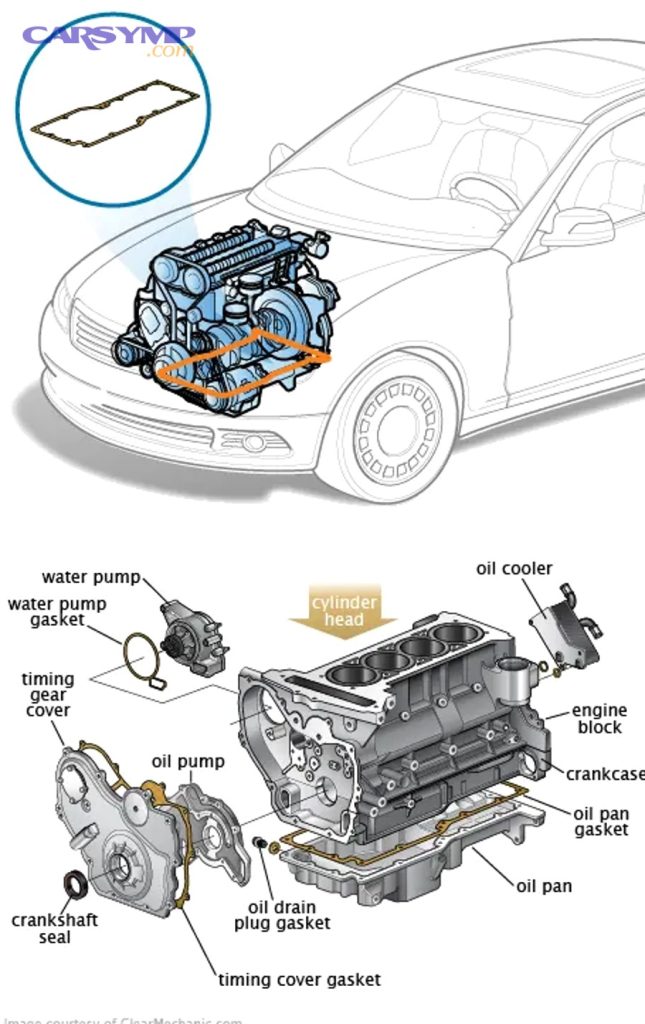
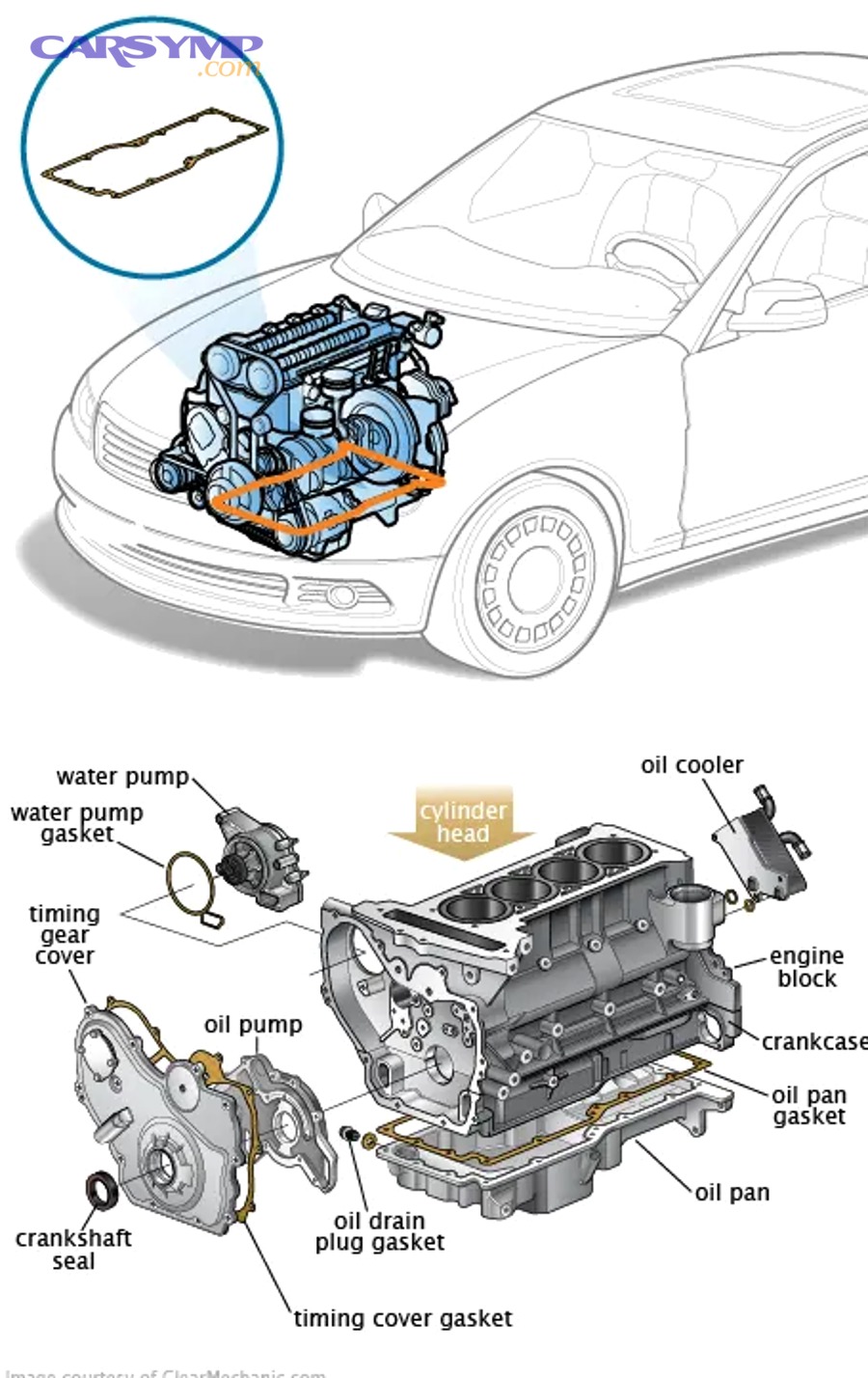
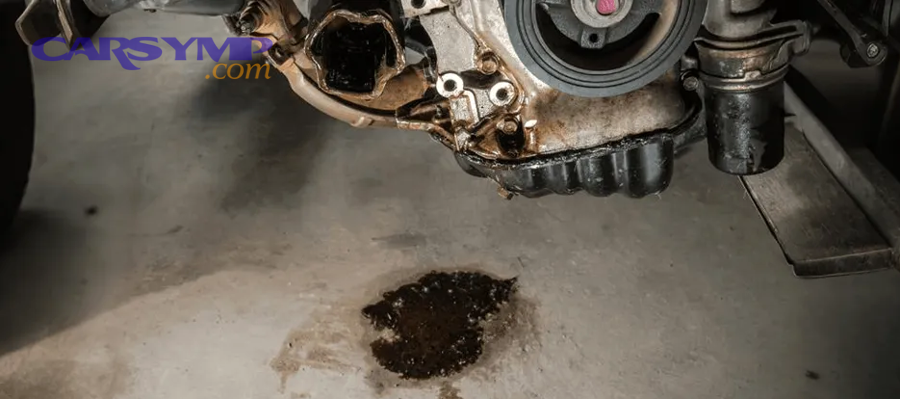
A leak source is the origin point where oil escapes the sealed engine system—like a gasket edge, a crankshaft seal lip, or a housing seam—while a leak symptom is what you notice (drips, smoke, burning smell, low oil level, or oily residue).
To keep your estimate accurate, treat these as different layers of the same problem:
- Symptoms (what you see): oil spots, wet engine, burning smell, smoke, low oil warning
- Path : airflow, gravity, splash from belts, pooling on covers
- Source (what you pay to fix): gasket/seal/housing that actually failed
If you estimate based on symptoms alone, you risk paying for the wrong repair—especially because oil can run downhill and “frame” the wrong component.
Why does the same leak source cost more on some vehicles?
The same source can cost more because three pricing levers change by vehicle:
- Access time: engine layout (inline vs V), tight bays, transverse mounting, subframe obstruction
- Part integration: one-piece assemblies, integrated PCV channels, reusable vs single-use fasteners
- Required removals: intake plumbing, exhaust sections, crossmembers, steering racks, or the transmission
In short, your best estimate isn’t “part price + a little labor”—it’s “how many systems must move to reach the seal safely.”
Which oil leak sources are the most common, and what do they usually cost?
There are two main groups of oil leak sources—upper-engine gasket leaks and lower/engine-to-transmission seal leaks—and they usually differ most in labor time, which is why their average costs separate into “hundreds” vs “thousands.”
Next, use the grouping below to anchor expectations before you drill into your specific source.
What is the typical cost range for common gasket and seal leaks?
As a quick benchmark, these averages are often cited for common repairs:
- Valve cover gasket replacement: commonly lands in the mid-hundreds. (repairpal.com)
- Oil pan gasket replacement: commonly lands in the upper-hundreds. (repairpal.com)
- Rear main seal replacement: frequently lands in the high-hundreds to low-thousands, largely due to labor. (endurancewarranty.com)
Those are not “your exact price,” but they are strong reality checks when a shop quote is far outside the band.
Which sources are usually “low labor” vs “high labor”?
Most leak sources fall into predictable labor tiers:
- Lower labor (often easier access): valve cover gaskets, some oil filter housing seals, some front timing-related seep points (varies)
- Medium labor (access dependent): oil pan gasket, front crank seal, some cam seals
- High labor (major disassembly): rear main seal, upper oil pan on certain designs, seals that require engine/transmission separation
This is why “tiny seal” doesn’t equal “tiny bill”—the bill follows access.
How much does a valve cover gasket oil leak repair typically cost?
A valve cover gasket oil leak repair typically costs in the mid-hundreds because the gasket is inexpensive, and most of the price comes from labor to access the top of the engine and reseal it correctly. (repairpal.com)
Then, the key to a clean estimate is separating straightforward reseal jobs from diagnosis traps that mimic the same leak.
What affects valve cover gasket cost (engine layout, accessibility, parts)?
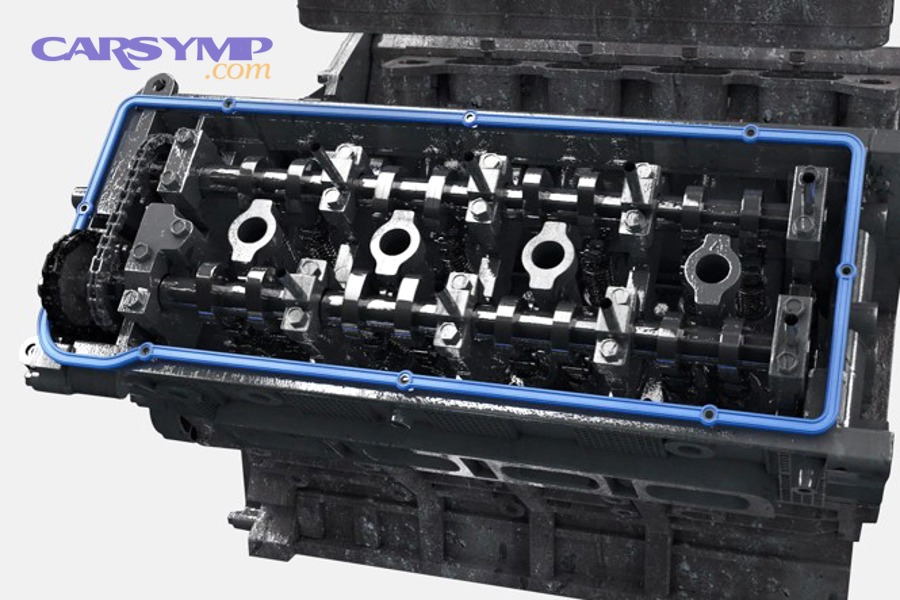
Valve cover gasket cost rises when the job stops being “remove cover, replace gasket” and becomes “remove components to reach cover safely.” The biggest cost drivers are:
- Engine configuration: V-engines can mean two covers; some require intake removal for access
- Ignition components: coil packs, harness routing, brittle connectors that add careful time
- Seal design: molded rubber gaskets vs RTV corner sealing requirements
- Add-on seals: spark plug tube seals and grommets sometimes add parts and time
This is where engine oil leak repair becomes a “top-end reseal package” rather than a single gasket line item.
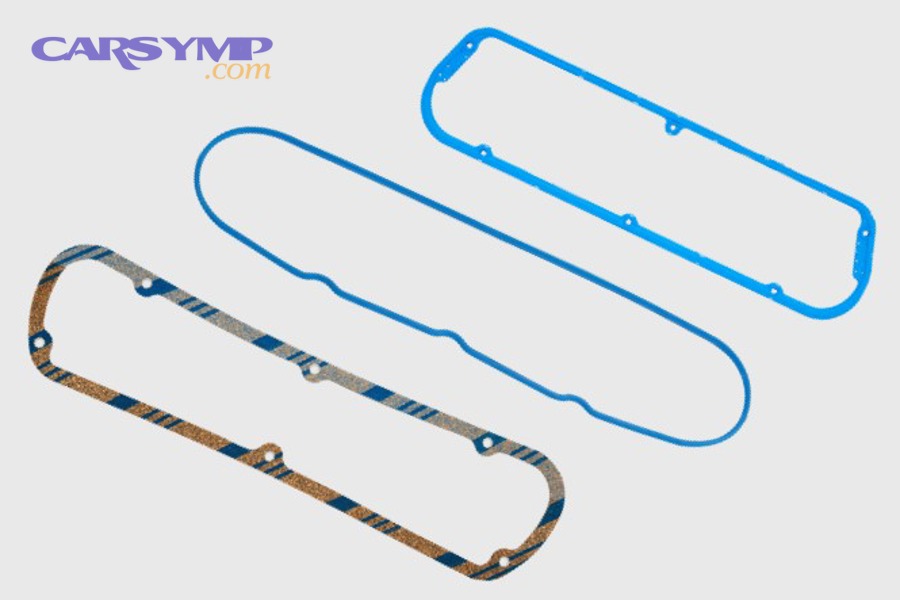
A practical estimating rule: if the cover is easily accessible, you’re paying for clean removal, cleaning surfaces, and torquing evenly; if the cover is buried, you’re paying for careful disassembly and reassembly.
When is it actually not the valve cover ?
Valve cover gasket leak diagnosis fails most often when oil appears on the cover area but originates elsewhere. Common look-alikes include:
- PCV system issues: excess crankcase pressure can worsen seepage and make multiple seals look guilty
- Oil filter housing or cooler seals: can coat the side of the block and run backward with airflow
- Front timing cover seep: can travel and look like a top leak from above
- Spill pattern: oil from a fill cap spill can mimic a slow perimeter leak
To confirm, a good shop will clean the area and re-check after a short drive. If oil reappears at the seam first, the cover gasket is likely; if it reappears above or forward, the “source” changes—and so does the estimate.
How much does an oil pan gasket oil leak repair typically cost?
An oil pan gasket oil leak repair typically costs in the upper-hundreds on average because the gasket is affordable, but labor varies widely depending on whether the pan is blocked by exhaust, crossmembers, or subframe components. (repairpal.com)
Then, the biggest estimating mistake here is assuming every oil pan gasket job is the same.
Why do oil pan gasket jobs vary so much in labor time?
Oil pan gasket labor swings because the oil pan sits at the bottom of the engine—and modern vehicles often place structural and exhaust parts directly underneath it. Labor increases when the job requires:
- Exhaust removal or loosening for clearance
- Crossmember/subframe lowering
- Engine support (sometimes lifting slightly)
- Steering rack movement on some platforms
- Two-piece pan designs (upper/lower pans) that behave like separate jobs
That’s why one quote might sound “reasonable” at $600–$800 while another hits four figures on a different model—your estimator should track access difficulty first, not gasket price.
How do you rule out a “false oil pan leak” from leaks above?
A false oil pan leak happens when oil drips down from higher leaks and accumulates along the pan seam. To avoid paying for the wrong job:
- Inspect above the pan rail: valve covers, filter housing, timing area
- Look for the highest wet point: oil usually marks the true source first
- Check for airflow patterns: oil can be blown rearward while driving
- Request a clean-and-recheck: a proper diagnosis often includes degreasing and verifying return
This is where “by source” estimating protects you: if the true source is above the pan, your estimate changes categories.
How much does a rear main seal oil leak repair typically cost?
A rear main seal oil leak repair typically costs from the high-hundreds into the low-thousands because reaching it usually requires separating the engine and transmission, and that access labor dominates the bill. (endurancewarranty.com)
Then, once you recognize that labor reality, the rest of the estimate becomes easier to predict.
Why is the rear main seal so expensive compared to other seals?
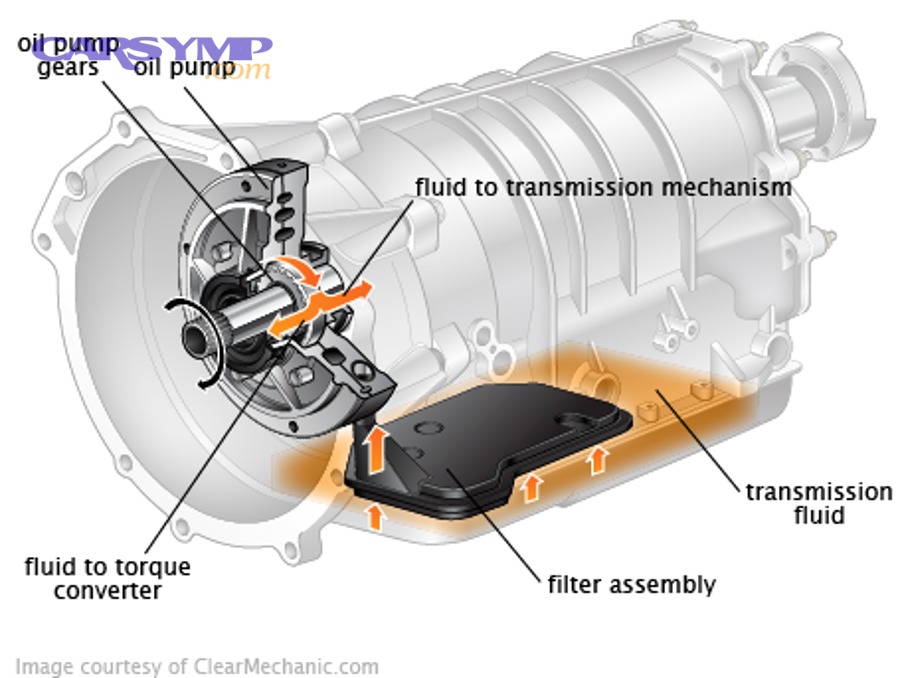
The rear main seal sits at the back of the crankshaft where it meets the transmission. That location creates three cost multipliers:
- Major disassembly: transmission removal is time-heavy
- High risk of add-on labor: seized fasteners, alignment steps, and reassembly checks
- Opportunity cost: shops often recommend related parts while access is open (sometimes legitimately)
This is also why Rear main seal leak signs can trigger sticker shock: the seal is small, but the access job is big.
What other “while you’re in there” parts can change the total?
Rear main seal totals often change when a shop adds (or discovers the need for) adjacent work such as:
- Oil pan reseal or housing plate reseal on certain designs
- Clutch replacement (manual) if it’s near end-of-life
- Torque converter seal or related seals (automatic) depending on findings
- Rear main seal housing gasket or RTV reseal when the housing is removed
Not every add-on is necessary, but you should expect the shop to discuss them because the incremental labor is lower once the transmission is out.
What’s the fastest way to estimate your oil leak repair cost by source?
The fastest way to estimate your oil leak repair cost by source is to identify the most likely leak source, pull a location-based average, then adjust by labor-access tier, which gives you a realistic range instead of a single misleading number. (repairpal.com)
Then, you can refine that range using labor hours and parts choices instead of guesswork.
How to use location-based estimators and parts pricing the right way
Use estimators as “guardrails,” not gospel:
- Start with the source-specific average (valve cover vs oil pan vs rear main)
- Account for your region (labor rates differ sharply by area)
- Separate parts vs labor so you can see what’s actually driving cost
- Match the job name precisely (e.g., “oil pan gasket” vs “upper oil pan reseal”)
If a quote is much higher than the average, ask what access steps increase labor on your specific model.
How to convert “labor hours” into a realistic quote range
Labor math is simple, but only when you include the hidden pieces:
- Labor total = labor hours × shop labor rate
- Add shop supplies / fees, and consider taxes on parts (varies by location)
- Add diagnostic time if the source is uncertain
A clean way to estimate: take the expected hours for the access tier (low/medium/high), multiply by local labor rate, then add parts + a buffer for seized bolts or extra removal steps.
How do you compare quotes fairly for the same oil leak source?
When comparing quotes for the same oil leak source, the best quote is the one that wins on scope clarity, correct diagnosis, and warranty terms, while the cheapest quote is only “best” if it includes the same work and parts quality.
Then, comparison becomes straightforward when you force apples-to-apples detail.
What should be included in a proper quote (diagnosis, parts, labor, warranty)?
A fair quote should explicitly list:
- Confirmed source and method used to confirm it (cleaning, recheck, inspection approach)
- Parts included: gasket/seal, grommets, tube seals, sealant type if needed
- Labor operations: what’s being removed to access the source
- Fluids: oil/top-off, filter, and any required refill procedures
- Warranty terms: parts and labor coverage length
If a quote is missing diagnosis steps, it may be pricing a guess, not a repair.
What red flags suggest misdiagnosis or unnecessary work?
Common red flags include:
- “It’s definitely the oil pan” without explaining how leaks above were ruled out
- A quote that bundles unrelated reseals with no justification
- Refusal to show you the leak area (photos are common now)
- Big cost jumps without listing access steps (subframe drop, exhaust removal, etc.)
In short, the best quote reads like a plan, not a hunch.
Can you drive with an oil leak, and how does leak severity change urgency and cost?
Yes, you can sometimes drive with an oil leak, but only if it’s minor and monitored, because leak severity changes urgency through oil-loss risk, contamination risk, and fire risk, and those risks can turn a small leak into a major repair.
Then, use leak-rate thinking—not panic—to decide what to do next.
What leak rate is “minor seep,” “active leak,” and “dangerous leak”?
Practical severity tiers:
- Minor seep: dampness or light film, no consistent drips after parking
- Active leak: visible wet trail, recurring drips, oil level drops between checks
- Dangerous leak: fast drips/streaming, oil warning light, smell/smoke from hot surfaces
Even a seep can become urgent if it reaches belts, sensors, or the exhaust.
What damage can happen if you delay repairs (low oil, fire risk, sensor damage)?
Delaying can trigger three expensive outcomes:
- Low oil level → lubrication loss → engine damage risk (especially if you don’t check oil frequently)
- Oil on rubber components → premature degradation (hoses, mounts, bushings)
- Oil reaching hot surfaces → fire hazard in worst cases
Evidence that ignition risk can increase with heat: According to a study by Xi’an University of Science and Technology from the College of Safety Science and Engineering, in 2025, increasing hot-surface temperature reduced ignition delay time for lubricating oil, indicating higher ignition risk as temperatures rise. (pmc.ncbi.nlm.nih.gov)
Contextual border: Up to this point, you’ve estimated cost by source and learned how to validate diagnosis, compare quotes, and decide urgency. Next, we expand into secondary factors that change the final number—so your estimate stays accurate in real-world shop conditions.
What secondary factors can raise or lower the final price of an oil leak repair?
There are three main secondary factors that change the final price: parts quality choice, vehicle condition (rust/previous work), and design complexity, and they can move your total by hundreds even when the leak source is the same.
Then, these are the levers you can often control—or at least anticipate—before approving a quote.
Does choosing OEM vs aftermarket parts meaningfully change cost and durability?
It can, depending on the component:
- OEM often costs more but may fit more consistently on complex molded gaskets
- Aftermarket premium can match OEM performance if the brand and design are reputable
- Cheap aftermarket can cost less up front but risk repeat leaks and rework labor
If labor is the main cost (like rear main seal), prioritizing a quality seal can be the smarter total-cost decision.
How do engine design, rust, and prior repairs affect the final bill?
These are the quote “wildcards”:
- Rust/corrosion: seized exhaust hardware and broken bolts can add time
- Prior reseals: excessive RTV, stripped threads, or warped flanges increase cleanup and repair steps
- Packaging: tight engine bays turn simple reseals into careful, slow disassembly
A quote that includes a contingency line is often being honest about these unknowns.
What preventative steps reduce the odds of repeat leaks?
Preventing repeat leaks is cheaper than repeating labor. The highest-impact steps include:
- Fix crankcase pressure issues (PCV problems can worsen seepage after a reseal)
- Use correct torque and sequence during gasket installation
- Keep oil level correct so you don’t run low while a minor leak is being scheduled
- Address early signs before oil saturates adjacent components
When you combine these with correct Valve cover gasket leak diagnosis and early attention to Rear main seal leak signs, you reduce both repeat repairs and surprise add-ons at the shop.