


An oil leak doesn’t automatically mean you must shut the engine off forever—but it does mean you’re driving on a clock. If the leak is small, the oil level stays safely in range, and there are no warning lights or burning smells, you may be able to drive a short distance to a safe location or a shop. If the leak is heavy, the oil pressure light appears, or you smell oil burning, continuing to drive can turn a manageable repair into catastrophic engine damage.
Next, you’ll learn how to judge whether your leak is “minor” or “major” using practical checks you can do in minutes—oil level, leak rate, smell/smoke, and where the oil is landing. That quick classification is the fastest way to match your next move to the real risk.
Then, if you must move the car (for example, off a roadway or into a garage), you’ll get a short-distance safety procedure to reduce engine and fire risk—how to top up, how to drive, and what to watch for while moving.
Introduce a new idea: once you’ve handled the immediate decision, you can shift from “damage control” to prevention—finding the source and stopping the leak so it doesn’t return.
Can you drive with an oil leak?
Yes—but only if the oil leak is minor, the oil level stays in the safe range, and you have no oil-pressure warning or burning-oil smell, because (1) lubrication must remain continuous, (2) leak rate can change under load, and (3) hot exhaust parts can ignite leaked fluids. Then, to make the safest call, you need a quick decision framework that separates “drive a short distance” from “stop and tow.”
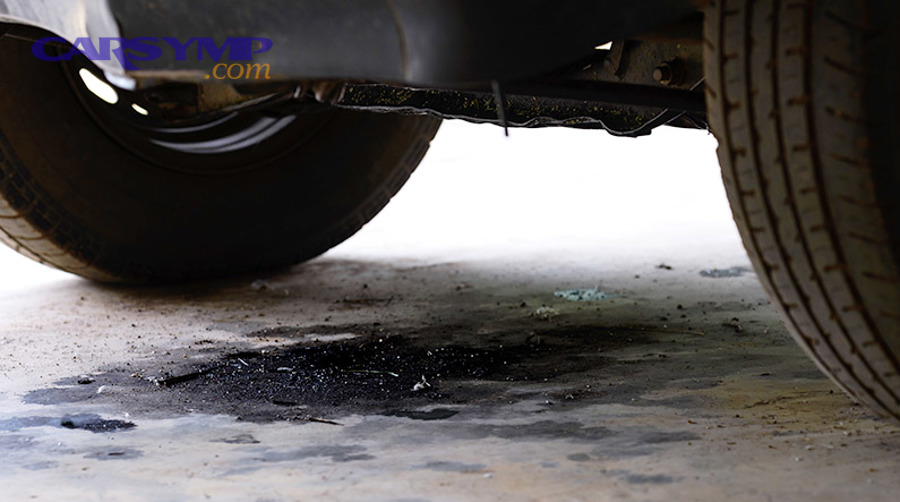
Should you ever drive with a small oil leak for a short distance?
If the leak is slow and your oil level reads safely between the minimum and maximum marks, a short drive to a repair shop is sometimes reasonable. The key is to treat it like a controlled relocation, not normal driving.
Use this “3-check rule” before you move the car:
- Oil level check: Must be safely above the minimum mark.
- Warning lights check: No oil pressure warning light.
- Smell/smoke check: No burning-oil smell or visible smoke from the engine bay.
If any of those fail, the risk jumps sharply—from “wear over time” to “damage right now.”
Is it safe to drive if the oil pressure light is on?
No. The oil pressure warning means the engine may not be receiving adequate pressurized lubrication, which can cause rapid overheating and severe wear in bearings and other surfaces. Treat it as a “stop engine” event, not a “drive carefully” event.
Can you drive to a mechanic with an oil leak?
Sometimes, but only when you can prove the leak is minor and stable:
- The dipstick level stays stable after topping up and rechecking.
- The leak does not drip actively at idle.
- The leak is not spraying onto the exhaust area or belts.
- You can keep the trip short and low-load (no towing, no highway pulls).
To summarize the decision, here’s a quick checklist table (it shows green/yellow/red conditions and what action each one supports):
| Condition you observe | What it usually means | Best action |
|---|---|---|
| Level OK, no warning light, no burning smell | Likely minor leak | Drive a short distance to a shop, monitor closely |
| Level dropping, occasional drips, mild smell | Leak may worsen under heat/load | Top up, drive only if necessary, keep speed/load low |
| Oil pressure light, smoke, puddle forming quickly | High risk of engine damage or fire | Shut down, call roadside/tow |
What does an engine oil leak mean for your car?
An engine oil leak means pressurized or splash-lubricating oil is escaping past a seal, gasket, or housing, reducing lubrication reserve and potentially sending oil onto hot or moving components—especially as heat and crankcase pressure rise during driving. Next, it helps to connect “what you see on the ground” to what’s happening inside the engine.
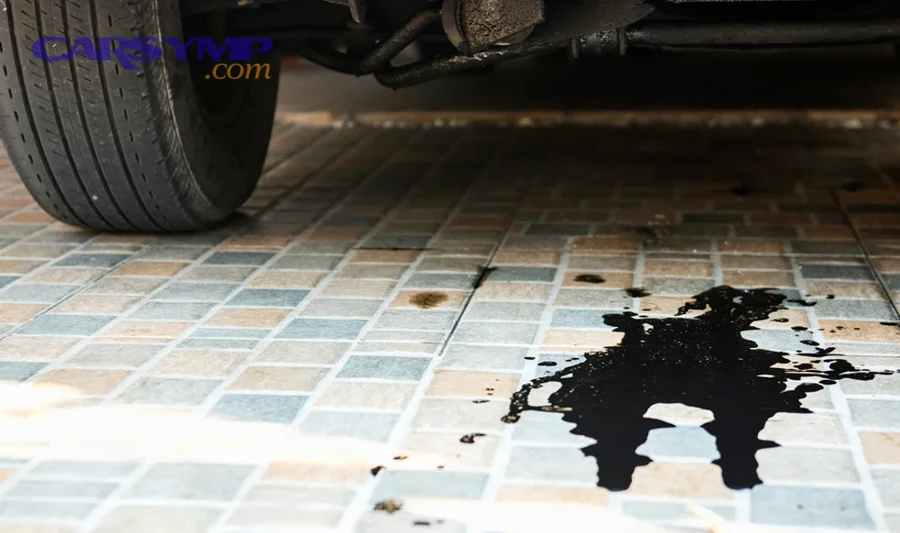
What are the most common oil leak sources?
Most oil leaks come from aging seals and gaskets or from parts that were loosened, over-tightened, or disturbed during service. Common sources include:
- Valve cover gasket and grommets (leaks at the top of the engine, oil runs down the sides)
- Oil pan gasket or drain plug washer (leaks underneath, often drips after parking)
- Oil filter or oil filter housing seal (leaks near the filter area, can drip quickly after startup)
- Front or rear crankshaft seals (oil slung by pulleys or dripping between engine and transmission)
- Oil cooler lines / turbo oil feed and return lines (if equipped)
This is where Valve cover gasket leak diagnosis becomes practical: a leak high on the engine often looks worse than it is because oil travels and coats everything below it.
Why do oil leaks often look worse after driving?
Driving raises:
- Oil temperature (thinner oil flows easier through weak seals)
- Oil pressure and flow (more oil moving through galleries)
- Crankcase pressure (especially if PCV flow is restricted)
So a seep that barely marks your driveway can become an active drip after a highway run.
What does a burning-oil smell or smoke suggest?
Burning oil smell usually means oil is contacting a hot surface—often exhaust components. Exhaust system parts can reach very high temperatures under load, which increases the chance that leaked oil will smoke or, in rare cases, ignite. (depts.washington.edu)
How can you tell whether an oil leak is minor or major?
You can tell whether an oil leak is minor or major by checking (1) oil level stability, (2) leak rate (drips per minute), and (3) symptoms like smoke, burning smell, or warning lights—because those signals reveal whether lubrication and fire risk are still controlled. Then, you’ll use simple measurements to replace guessing with evidence.
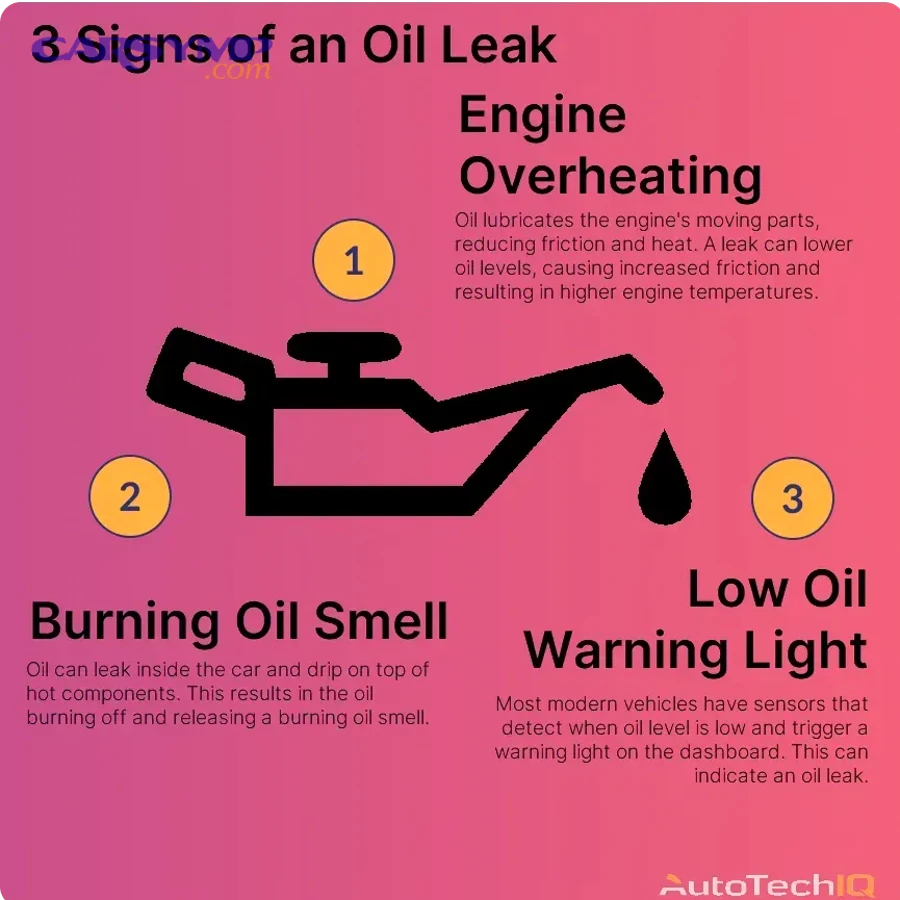
How do you check the oil level correctly?
A reliable dipstick check is your fastest risk assessment:
- Park on level ground and shut the engine off.
- Wait a few minutes so oil drains back to the pan.
- Pull the dipstick, wipe it clean, reinsert fully, and pull again.
- Read the level: it should be between MIN and MAX.
If the level is near MIN and you’re seeing fresh drips, assume the leak is not trivial until proven otherwise.
Here’s one practical video for beginners (watching the technique once can prevent wrong readings):
How do you estimate leak rate without tools?
Use a simple “time and towel” method:
- Place clean cardboard or a light-colored towel under the suspected drip area.
- Let the engine idle for 5 minutes (hood open).
- Count drips and note puddle size.
General rule-of-thumb classification:
- Minor: light film or occasional small drops after parking.
- Moderate: steady dripping at idle or puddle grows noticeably within minutes.
- Major: stream/spray, rapid puddle formation, or oil level drops quickly.
Which signs mean “major leak—stop now”?
Treat these as stop-and-tow triggers:
- Oil pressure warning light
- Visible smoke from engine bay
- Strong burning-oil smell
- Oil spraying (not just dripping)
- Oil level below MIN after a short drive
- Oil landing near exhaust/belts
Exhaust components can reach temperatures that are hot enough to create ignition hazards under certain conditions, especially at high load or with malfunction—so if oil is hitting the exhaust, don’t “test drive” it. (depts.washington.edu)
Evidence (why oil supply matters so much)
According to a study by University of Twente from Engineering Technology, in 2022, researchers showed that under starved lubrication conditions, film thickness behavior changes significantly compared with fully flooded conditions—illustrating how reduced lubricant supply increases the risk of inadequate surface separation and wear. (ris.utwente.nl)
What should you do immediately if you must move the car with an oil leak?
If you must move the car with an oil leak, the safest method is to (1) verify oil level and top up if needed, (2) reduce load/heat while driving a very short distance, and (3) stop immediately if warning lights, smell, or smoke appear—because those are early signals of escalating risk. Next, you’ll turn that into a step-by-step “move it safely” procedure.
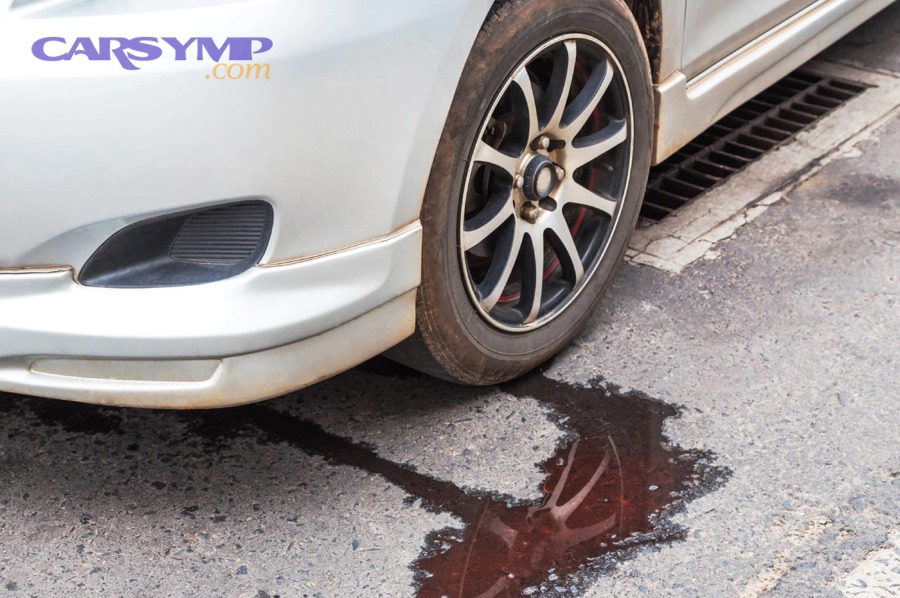
How do you top up oil safely before moving?
- Park on level ground, engine off.
- Check the dipstick properly.
- Add oil in small amounts (for example, a quarter to half quart at a time).
- Wait a minute, recheck, and stop once you’re safely in range.
Avoid overfilling. Too much oil can aerate (foam) and reduce effective lubrication, and it may worsen leaks by raising crankcase pressure.
How do you drive to minimize damage during a short move?
If you must move the car a short distance:
- Keep RPM low and acceleration gentle.
- Avoid highways, steep grades, towing, and stop-and-go heat buildup.
- Use the shortest route and plan a safe pull-over point.
- Watch the dashboard continuously for oil pressure warnings.
How do you protect your driveway and the environment?
Oil is hazardous to surfaces and waterways. If you’re parking the car temporarily:
- Place cardboard or an absorbent pad under the drip area.
- Clean up spills promptly with appropriate absorbent material.
- Don’t hose oil into a drain.
This is also the best moment to plan your engine oil leak repair strategy: you’re trying to prevent one short move from becoming repeated exposure.
What happens if you keep driving with an oil leak?
Keeping driving with an oil leak can lead to progressive oil loss, oil starvation, overheating, and in worst cases engine seizure, while also increasing the chance oil contacts hot exhaust parts and creates smoke or fire risk—because the leak rate often accelerates with temperature and load. Then, you can understand the “damage chain” so you don’t underestimate a leak that seems small today.
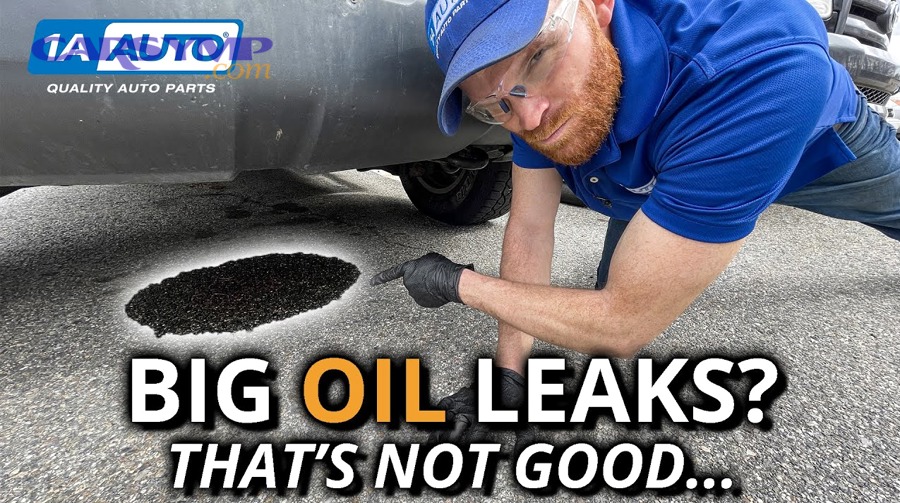
How does oil loss turn into engine damage?
Engine oil does multiple jobs: it reduces friction, carries heat away from surfaces, and helps seal between moving parts. When oil drops:
- Bearings can lose the protective film.
- Friction rises and parts heat up.
- Wear accelerates, and clearances worsen.
- The engine may knock, seize, or fail.
The dangerous part is that the “last bit” of oil can disappear faster than you expect—once the level is low enough for the oil pickup to draw air during turns, braking, or hills.
Why can a leak become a fire or smoke hazard?
Oil itself is less volatile than fuel, but it can smoke heavily when it hits hot components. Exhaust systems and catalytic converters can run extremely hot under load, and some conditions can raise surface temperatures further, which is why “oil on exhaust” is treated seriously. (depts.washington.edu)
What secondary damage can an oil leak cause?
Even if the engine survives, leaks can damage other systems:
- Rubber hoses and bushings soften when soaked in oil.
- Accessory belts can slip if contaminated.
- Sensors and wiring connectors can become coated and fail.
- Mounts and bushings can degrade faster if constantly exposed.
So “keep topping up forever” often costs more than fixing the leak—because the leak spreads its impact.
When should you avoid driving and call for help instead?
You should avoid driving and call for help if the leak is rapid, the oil pressure light appears, you see smoke, you smell burning oil, or oil is pooling under the car—because those signals indicate either immediate lubrication risk or a higher chance of oil contacting hot exhaust components. Next, you’ll get clear tow-vs-drive criteria so you can act quickly under stress.
When is towing the smarter option than “just driving carefully”?
Choose towing or roadside help when:
- Oil pressure warning light is on at any time.
- Oil level cannot be kept in range even after topping up.
- The leak is a steady drip at idle (or worse).
- You must drive far, at high speed, or up grades.
- You can’t confirm where the oil is landing.
If you’re uncertain, assume the safer option. The cost of towing is usually smaller than the cost of severe engine damage.
What should you do if you see smoke or smell burning oil?
Do this in order:
- Signal and pull over safely.
- Shut off the engine.
- Avoid opening the hood immediately if smoke is heavy (air can feed a flame).
- Move away from traffic and call for help.
Hot exhaust surfaces can cool quickly after shutdown, but the first priority is stopping the engine and removing heat input. (depts.washington.edu)
What if oil is leaking near tires or brakes?
If oil is reaching:
- Tire tread area → traction risk.
- Brake components → braking performance risk.
In those cases, do not drive. Contamination here can create immediate safety hazards even if the engine oil level is still acceptable.
What causes engine oil leaks and how can you prevent them?
Engine oil leaks are most often caused by aging seals/gaskets, improper torque or installation during service, crankcase pressure issues (PCV), or physical damage—and you can prevent many leaks by maintaining correct oil service practices, keeping the PCV system healthy, and repairing small seepage before it becomes a major leak. Next, you’ll move from “Is it safe to drive?” to “How do I stop this from happening again?”
What are the most common mechanical causes behind leaks?
Typical root causes include:
- Heat cycling and age: gaskets harden, seals lose elasticity.
- Overtightening or undertightening: distorts sealing surfaces or allows seepage.
- Blocked PCV system: raises crankcase pressure and pushes oil past seals.
- Impacts and road debris: can damage the oil pan or lines.
- Incorrect oil filter installation: double-gasket, wrong seal seating, or improper tightening.
How can you spot Oil pan gasket leak symptoms early?
Look for a pattern:
- Oil collecting around the pan rail (where the pan meets the engine block).
- Drips that appear after the engine warms up, then increase after parking.
- Oil on the lowest part of the engine but not obviously from higher areas.
Because oil travels, clean the area first if possible—otherwise a top leak can masquerade as a pan leak.
What does a good Valve cover gasket leak diagnosis process look like?
A reliable approach:
- Look for oil wetness high on the engine (valve cover perimeter).
- Check for oil in spark plug wells (on many engines this is a classic clue).
- Notice burning smell after driving (oil dripping onto hot areas below it).
Valve cover leaks are common, and fixing them early can prevent oil from coating hoses, wiring, and exhaust heat shields.
What habits actually help Preventing future oil leaks?
Prevention is mostly about reducing stress on seals and avoiding “service-caused” leaks:
- Use the correct oil viscosity and change intervals recommended for the engine’s operating conditions.
- Replace sealing washers (like drain plug washers) when required.
- Torque fasteners to specification—especially oil pan and valve cover fasteners.
- Keep the PCV system functioning so crankcase pressure stays controlled.
- Fix small seepage early, before it becomes a high-rate leak under heat/load.
If you treat leaks as “normal,” they tend to multiply; if you treat them as “signals,” you usually fix one root cause and prevent several future problems.