


Fuel means any substance (or energy source) that releases usable energy to power heat, motion, or electricity—and in everyday life it most often refers to what makes engines and heaters run. In practice, “fuel” is the reason your car moves, your furnace heats, and many machines keep working.
Then, to make that definition useful, you also need a clear way to classify fuels—by physical form (solid/liquid/gas) and by origin (fossil, bio-based, synthetic, nuclear)—so you can recognize what people mean when they say “diesel,” “biofuel,” or “fossil fuel.”
In addition, drivers and students often want the “why it matters” layer: how diesel differs from gasoline, why ethanol blends can change mileage, and which fuel categories show up most in daily life.
Introduce a new idea: once you know what fuel is and how fuels are grouped, you can start making practical choices—like picking the right fuel for a vehicle or generator—and understand common troubleshooting situations where “fuel” is only one piece of the puzzle.
What is fuel (and what does “fuel” mean in plain English)?
Fuel is an energy-releasing material or source—usually a chemical substance like gasoline, diesel, or natural gas—whose stored energy is converted into heat or work, and it also functions as a verb meaning “to supply energy to” (literally or figuratively). To better understand why this definition stays consistent across cars, homes, and industries, it helps to break “fuel” down into what it does, how it’s used, and what people commonly mean by the word.
At the most practical level, fuel is about conversion: stored energy becomes usable energy. In a gasoline car, that conversion happens when fuel and air ignite in the engine and create expanding gases that push pistons. In a gas furnace, fuel burns to release heat. In a power plant, a fuel source may be burned (coal, natural gas, biomass) or used in other processes (nuclear fuel) to produce electricity.
Fuel is also a flexible word in English because it maps neatly onto the idea of “energy input.” That’s why you’ll see it used outside of engineering: headlines say a rumor “fueled” panic, or a comment “fueled” a debate. The metaphor still works because the core meaning—providing energy that makes something intensify—remains the same.
Is fuel only something you burn?
No—fuel is not only something you burn, because (1) some fuels release energy through processes that aren’t simple open-air “burning,” (2) the word is also used for stored energy sources beyond everyday flames, and (3) modern systems sometimes treat “fuel” as whatever feeds an energy-conversion device. Next, to connect this to real-world usage, notice that “burning” is still the most common mechanism people imagine, but it is not the only conceptual frame.
In everyday contexts, most fuels are combusted: gasoline, diesel, natural gas, propane, wood, coal. Combustion is familiar, visible, and common—so it dominates casual definitions.
However, certain domains broaden the idea:
- Nuclear fuel (like uranium) releases energy through nuclear reactions rather than chemical burning.
- Hydrogen is often described as a fuel because it can be used in combustion or in fuel cells; the energy conversion pathway differs, but the “energy input” role still fits.
- In some consumer discussions, people loosely treat electricity as a “fuel” for EVs because it powers motion—though technically it’s an energy carrier rather than a chemical fuel. The key is intent: people use “fuel” to mean “what makes it go.”
So, while “burning” is the most common mental model, a more accurate plain-English rule is: fuel is whatever an energy system consumes to produce useful output.
What is the difference between “fuel” as a noun and “fuel” as a verb?
Fuel as a noun is the energy source itself (gasoline, diesel, propane), while fuel as a verb is the act of supplying that energy source (to fuel a car, to fuel a fire, to fuel a reaction). Then, once you see that split, you can understand why the word works so well both literally and metaphorically.
As a noun, fuel is tangible: you can store it, measure it, and buy it. It has properties like energy content, volatility, and storage requirements.
As a verb, “fuel” describes the transfer or provision of energy input:
- “I fueled the car” = I put gasoline/diesel into the tank.
- “Dry wood fuels the fire” = the wood supplies energy that sustains the flame.
- “That argument fueled concern” = the argument increased the intensity of concern.
This noun/verb flexibility is useful for students because it shows language tracking a physical truth: systems intensify when you add energy.
What are the main types of fuel?
There are two main ways people classify fuel: (1) by physical form (solid, liquid, gas) and (2) by origin/source (fossil, biofuel, nuclear, synthetic), which together explain most everyday fuel names and categories. To better understand fuel conversations—especially “diesel,” “biofuel,” and “fossil fuels”—start with form, then connect it to where the fuel comes from.

Classification matters because the same word “fuel” can refer to very different substances with different storage, safety, and performance characteristics. A driver cares about liquid fuels and compatibility; a homeowner might care about natural gas vs heating oil; a student may need the high-level taxonomy that explains “why these belong together.”
To make the categories easy to scan, the table below summarizes common fuels, grouped by form and origin, with typical everyday uses.
Table: Common fuels by form and origin (with everyday examples)
| Fuel (example) | Form | Origin category | Typical use |
|---|---|---|---|
| Gasoline | Liquid | Fossil (petroleum-derived) | Most passenger cars |
| Diesel | Liquid | Fossil (petroleum-derived) | Trucks, some cars, generators |
| Natural gas (methane) | Gas | Fossil | Home heating, power generation |
| Propane | Gas (stored as liquid under pressure) | Fossil (often) | Grills, heating, off-grid |
| Wood | Solid | Bio-based (biomass) | Heating, cooking |
| Ethanol (E10/E85 blends) | Liquid | Biofuel (often) | Gasoline blending |
| Biodiesel (B5–B20) | Liquid | Biofuel | Diesel blending |
| Uranium (nuclear fuel) | Solid | Nuclear | Electricity generation |
This table is not the only valid grouping, but it reflects how most learners and drivers encounter fuel categories.
How are fuels grouped by physical form (solid, liquid, gas)?
Fuels are grouped into three main types by physical form—solid, liquid, and gas—based on how they’re stored, transported, and fed into an energy system. Next, once you understand form, you can quickly predict practical realities like tank design, refueling methods, and safety risks.
1) Solid fuels
Solid fuels are typically burned in a controlled space (firebox, boiler) and are common where storage space is available.
- Examples: wood, charcoal, coal, some biomass pellets
- Practical features: bulk storage, ash handling, slower fueling cycles
2) Liquid fuels
Liquid fuels dominate transportation because they pack a lot of usable energy into a manageable volume and can be pumped quickly.
- Examples: gasoline, diesel, heating oil, ethanol blends, biodiesel blends
- Practical features: fast refueling, standardized distribution, spill and vapor concerns
3) Gaseous fuels
Gaseous fuels flow easily through pipes and often burn cleanly, but they require sealed infrastructure and sometimes pressurized storage.
- Examples: natural gas, propane, hydrogen (in some applications)
- Practical features: pipeline delivery (where available), pressure tanks, leak monitoring
Form is the “first filter.” Once you know it, you can understand why cars rarely run on coal and why homes commonly use natural gas.
How are fuels grouped by where they come from (fossil, biofuel, nuclear, synthetic)?
Fuels are commonly grouped into four main types by origin—fossil fuels, biofuels, nuclear fuels, and synthetic fuels—based on how the energy source is formed and sourced. Then, with origin in mind, you can interpret debates about renewability, emissions, and long-term supply.
Fossil fuels come from ancient organic matter transformed over geologic time (coal, petroleum, natural gas).
Biofuels come from recently living biological sources (ethanol, biodiesel, biomass).
Nuclear fuels use energy stored in atomic nuclei (uranium, plutonium in certain contexts).
Synthetic fuels are manufactured to mimic or replace conventional fuels (some “e-fuels,” certain gas-to-liquid products).
Origin-based categories are especially important for terms like “renewable,” “low-carbon,” or “drop-in fuel,” because those concepts depend on how the fuel is made—not just what it looks like at the pump.
Which fuels are most common for everyday drivers and home use?
The most common everyday fuels are gasoline and diesel for drivers, and natural gas, propane, heating oil, wood, and electricity (as an energy carrier) for home energy needs. Next, because “common” changes by region and infrastructure, it helps to connect these fuels to where you’re most likely to encounter them.
For drivers (most common):
- Gasoline: dominant for passenger cars in many markets
- Diesel: common for trucks, commercial fleets, some cars, and generators
- Ethanol blends: often mixed into gasoline (like E10) depending on country/region
- Biodiesel blends: sometimes blended into diesel in certain areas or fleets
For homes (common):
- Natural gas: heating, cooking, hot water (where pipeline networks exist)
- Propane: off-grid heating, cooking, grills
- Heating oil: common in some colder regions
- Wood/pellets: supplemental or primary heat in some households
So “everyday fuel” is less about a universal list and more about what local infrastructure supports.
What are fossil fuels, and why are they called “fossil”?
Fossil fuels are energy-rich fuels formed from ancient plants and microorganisms compressed and transformed over millions of years, and they’re called “fossil” because their carbon largely originates from prehistoric organic matter preserved and altered in Earth’s crust. To better understand why fossil fuels dominate modern energy—and why they raise questions about supply and emissions—you need to know what counts as fossil fuel and what “fossil” really signals.
The “fossil” label is shorthand for geologic timescales. The fuel isn’t literally made of dinosaur bones; it’s the carbon from long-ago life forms, processed by heat and pressure. This timescale matters because it explains why fossil fuels are treated as non-renewable on a human time horizon.
Fossil fuels became central to modern industry because they offer:
- High energy density (especially for transport fuels)
- Easy storage and transport (especially liquids)
- Established infrastructure (refineries, pipelines, engines)
Understanding fossil fuels also helps learners make sense of fuel vocabulary: petroleum fuels, hydrocarbons, gasoline, diesel, kerosene, and natural gas are all tightly related in origin.
Which fuels are considered fossil fuels?
Fossil fuels include coal, petroleum (and its refined products like gasoline and diesel), and natural gas, grouped together because they come from geologic processing of ancient organic matter. Next, once you see the core list, you can recognize fossil fuels in the products you encounter daily.
Coal is a carbon-rich solid fuel formed from ancient plant material.
Petroleum (crude oil) is refined into multiple fuels and products, including:
- Gasoline
- Diesel
- Jet fuel/kerosene
- Heating oil
- Many petrochemical feedstocks
Natural gas is primarily methane and is used widely for heating and electricity generation.
Are fossil fuels renewable?
No—fossil fuels are not renewable on human timescales, because (1) they form over millions of years, (2) extraction and consumption occur far faster than natural replenishment, and (3) accessible reserves are finite and geographically concentrated. Then, once you accept that timeline mismatch, you can understand why energy planning focuses on efficiency, alternatives, and diversification.
In plain terms: you cannot “grow” new petroleum the way you grow biomass. That doesn’t mean fossil fuels vanish tomorrow; it means the resource base is limited and replacement is not quick.
According to a study by the University of Waterloo from the Centre for Advanced Science Education, in 2024, their heating-value discussion explains that gasoline- and diesel-like hydrocarbons have similar carbon fractions and comparable heating values on a mass basis—highlighting why fossil-derived fuels remain powerful energy carriers even as supply is finite.
What is diesel fuel, and how is it different from gasoline?
Diesel fuel is a petroleum-derived liquid fuel designed for compression-ignition engines, and compared with gasoline it typically supports higher efficiency under load while requiring different engine hardware and fuel properties. Next, because many drivers hear “diesel vs gasoline” as a simple debate, it helps to compare them using practical criteria that affect real ownership and use.
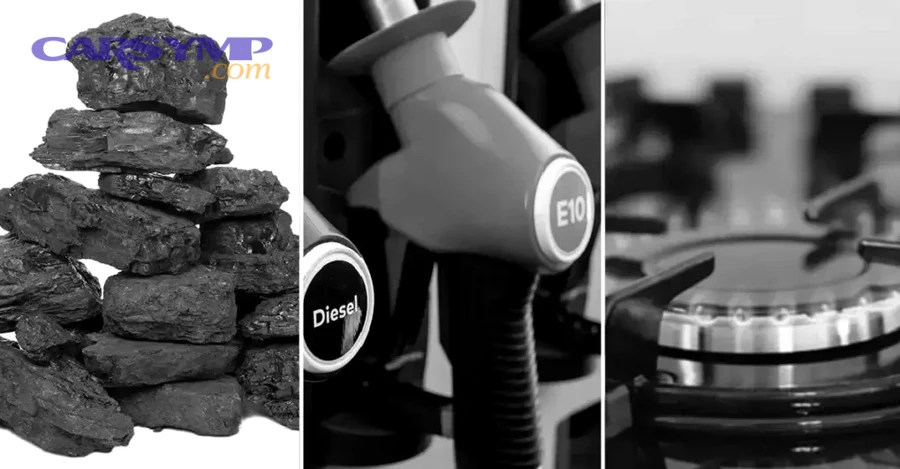
Diesel is not “better” or “worse” in general—it is optimized for a different engine type and use case. The real difference shows up in how engines ignite the fuel:
- Gasoline engines usually use spark ignition: a spark plug ignites a fuel-air mix.
- Diesel engines compress air until it’s hot enough that injected diesel ignites without a spark.
That single shift cascades into differences in maintenance, torque characteristics, and efficiency profiles.
Is diesel a fossil fuel?
Yes—diesel is a fossil fuel in its common form, because (1) most diesel is refined from crude oil, (2) it shares the same fossil-carbon origin as gasoline and jet fuel, and (3) it relies on petroleum extraction and refining infrastructure. Then, to keep the picture complete, it’s also important to know that diesel engines can sometimes run on blends that include bio-derived components.
Most “pump diesel” is petroleum diesel. However, you may encounter:
- Biodiesel blends (like B5 or B20), which mix biodiesel with petroleum diesel
- Renewable diesel (in some markets), produced differently than biodiesel but used similarly in many diesel engines
So diesel is fossil by default, but not always fossil-only in blended forms.
How do diesel and gasoline compare for drivers (engine type, efficiency, availability)?
Diesel wins in efficiency under load and torque, gasoline is best for broad availability and lower complexity for many drivers, and alternative blends (like some biofuel mixes) can be optimal for specific fleets or regional availability. Meanwhile, to choose the right comparison, you should focus on the criteria that actually change day-to-day costs and experience.
Below are the practical criteria most drivers care about:
1) Engine type and maintenance reality
- Gasoline engines use spark plugs and ignition components; they can be simpler for many mainstream models.
- Diesel engines rely on high compression and high-pressure fuel injection; modern diesels may include additional emissions-control systems.
2) Efficiency and driving feel
- Diesel engines often deliver strong low-end torque, which is helpful for towing and heavy loads.
- Gasoline engines can feel smoother at higher RPM ranges and are common across many vehicle types.
3) Availability and pricing
- Gasoline is widely available almost everywhere.
- Diesel is also widely available, but the balance of price vs efficiency varies by region and season.
4) Cold-weather and short-trip patterns
- Some diesel setups may be less ideal for repeated short trips depending on emissions equipment design.
- Gasoline vehicles often suit short-trip patterns with fewer special considerations.
According to a study by the University of Waterloo from the Centre for Advanced Science Education, in 2024, their heating-value overview indicates gasoline-like and diesel-like hydrocarbons have comparable energy on a mass basis, which helps explain why efficiency differences often come more from engine design than from “magic fuel energy.”
What are biofuels, and when do they make sense?
Biofuels are fuels made from recent biological material—such as plant sugars, oils, or waste biomass—and they make sense when they fit local infrastructure, provide practical blends for existing engines, and align with feedstock and supply realities. Next, because “biofuel” covers multiple products (ethanol, biodiesel, renewable diesel), it helps to separate the main types and clarify how each shows up for drivers.
Biofuels are often introduced through blends because blending reduces friction: existing engines and supply chains can absorb modest percentages without redesigning everything. For many readers, the first exposure is ethanol in gasoline or biodiesel in diesel.
Biofuels can be produced from different feedstocks:
- Corn or sugarcane (ethanol)
- Soybean oil, used cooking oil, animal fats (biodiesel feedstocks)
- Waste biomass or advanced processes (some next-generation biofuels)
The “when do they make sense?” question usually comes down to three practical filters:
- Compatibility (what your engine or device is designed to use)
- Availability (what local fuel stations and suppliers offer)
- Tradeoffs (energy content, cold-weather behavior, storage, and cost)
What are the main biofuel types (ethanol, biodiesel, renewable diesel)?
The main biofuel types are ethanol, biodiesel, and renewable diesel, grouped by how they’re made and how they behave in engines. Then, once you know these three, you can interpret labels like E10, B20, and “drop-in diesel.”
1) Ethanol (often blended into gasoline)
- Usually appears as E10 (10% ethanol) in many markets
- Higher blends like E85 are used in flex-fuel vehicles
- Tends to have lower energy per volume than gasoline, which can affect mileage
2) Biodiesel (FAME biodiesel, blended into diesel)
- Common in blends like B5 or B20
- Comes from oils/fats processed into fuel-compatible molecules
- Has slightly lower energy content per gallon than petroleum diesel, and can have different cold-flow characteristics
3) Renewable diesel (a “drop-in” diesel alternative in some markets)
- Produced through different processes than biodiesel
- Often used as a more direct replacement in diesel infrastructure (where available)
- Still has its own energy content and performance profile
According to a study by Virginia Tech from VCE Publications, in 2021, their biodiesel guidance notes that B100 has slightly lower energy content than No. 2 diesel (on the order of single-digit percent per gallon), which is why drivers may see a small change in fuel economy with higher biodiesel blends.
Are biofuels always better for the environment?
No—biofuels are not always better for the environment, because (1) outcomes depend on feedstock and land use, (2) production methods and energy inputs vary widely, and (3) real-world benefits depend on how the fuel is blended, transported, and used. Next, to keep this practical for students and drivers, it helps to treat “biofuel impact” as a spectrum rather than a label.
In day-to-day terms, what you can reliably say is:
- Biofuels can reduce reliance on fossil carbon in certain pathways
- Biofuels can also introduce tradeoffs (land, water, fertilizer use, processing energy)
- Blends are often chosen because they balance feasibility and incremental change
According to a study by Pennsylvania State University from Penn State Extension, in 2024, their fuel-ethanol overview explains ethanol contains about 30% less energy per unit volume than gasoline, which is why higher ethanol blends can reduce fuel economy even if they serve other policy or supply goals.
How do you choose the “right” fuel for a vehicle or device?
Choosing the right fuel means matching the manufacturer-specified fuel type to your engine or device, checking compatibility with blends and conditions, and using a simple checklist to avoid costly mistakes and performance problems. Next, because “fuel choice” often becomes urgent when something won’t run, it’s useful to connect fuel selection to real troubleshooting habits—without confusing fuel issues with ignition or battery problems.
A good “right fuel” decision is rarely about preference; it’s about requirements. Engines and appliances are engineered for specific fuel properties: volatility, ignition behavior, lubricity, and storage stability. When you deviate, you can create knock, poor combustion, damage, or safety risks.
Here’s a practical approach that works for drivers, students working on lab examples, and anyone using small engines or generators:
Fuel selection checklist (practical and fast):
- Read the owner’s manual or fuel cap label (fuel grade and type).
- Confirm the fuel category (gasoline vs diesel vs approved blends).
- Consider operating conditions (cold weather, storage time, load).
- Buy from reliable sources and store correctly if using portable fuel.
- If the device won’t start, treat fuel as one branch of a broader diagnostic tree.
That last point matters because many people assume “no start = fuel,” when the cause might be the battery, starter, ignition, or sensor logic. This is where a disciplined approach—like a no-start diagnosis—prevents wasted time.
If you use a structured workflow such as a No-start checklist: battery first, you avoid chasing fuel problems when the issue is simply low voltage or poor connections. If battery health is good, you can move to Spark test and ignition checks (for gasoline engines) and only then treat fuel delivery or fuel quality as the likely culprit. Some drivers reference quick guides from communities or brands like Car Symp to keep that checklist order consistent and avoid jumping around.
Can using the wrong fuel damage an engine or equipment?
Yes—using the wrong fuel can damage an engine or equipment, because (1) it can prevent proper combustion or lubrication, (2) it can harm fuel system components designed for different properties, and (3) it can trigger expensive failures that require draining, flushing, and replacing parts. Then, to reduce risk, it helps to know the most common misfueling scenarios and the “what to do immediately” response.
Common misfueling examples:
- Putting diesel in a gasoline car: can foul spark plugs and clog fuel components
- Putting gasoline in a diesel vehicle: can reduce lubricity and damage fuel pumps/injectors
- Using a high ethanol blend (like E85) in a non-flex-fuel vehicle: can cause drivability issues and fuel system stress depending on design
- Using old/stale gasoline in small engines: can contribute to hard starting and poor running
What to do if misfueling happens:
- Do not “try to run it out.”
- Turn the vehicle off (or do not start it).
- Arrange for proper draining and system inspection.
Misfueling is one of those cases where a small mistake can become a big repair—so the best “choice” is always the correct fuel, not the cheapest label.
What do octane, cetane, and “fuel grade” mean at a basic level?
Octane, cetane, and fuel grade are basic quality signals: octane measures gasoline’s resistance to knock, cetane reflects diesel’s ignition quality, and fuel grade combines these specs with standards and additives that influence performance and reliability. Next, once you interpret these numbers correctly, you can choose fuel confidently without overpaying or misunderstanding what “premium” means.
Octane (gasoline):
- Higher octane generally means better resistance to engine knock in engines designed for it.
- Using a higher octane than required usually doesn’t add power unless the engine is tuned to benefit.
Cetane (diesel):
- Higher cetane generally means diesel ignites more readily under compression.
- It can influence cold starting, smoothness, and combustion timing behavior.
Fuel grade (overall):
Fuel grade is a practical umbrella for:
- The relevant rating (octane/cetane)
- Compliance with standards
- Additive packages (detergents, stabilizers, cold-flow improvers)
So the “right” fuel is not only the right category (gasoline vs diesel), but also the right grade for your engine’s design.
What else should you know about fuel beyond the basics?
Beyond the basics, fuel understanding improves fastest when you learn energy density, renewability tradeoffs, and a few niche fuel concepts (like hydrogen, e-fuels, and sustainable aviation fuel), because these explain why some fuels are great for range while others are great for certain emissions or supply goals. Next, this is where micro-details add real clarity—especially when a fuel sounds promising but faces storage, cost, or infrastructure constraints.
What is energy density, and why does it matter for range and performance?
Energy density is how much usable energy a fuel stores per unit mass or volume, and it matters because higher energy density generally supports longer range, longer runtime, or smaller tanks for the same work output. Then, once you connect energy density to everyday outcomes, “why this fuel?” becomes much easier to answer.
Two helpful ways to think about it:
- Gravimetric energy density (per kg): matters when weight is critical (aviation, shipping, portable tanks).
- Volumetric energy density (per liter): matters when tank size and packaging matter (cars, trucks, aircraft tanks).
A practical example: a fuel with high energy per liter can often deliver longer range without a bigger tank. That’s one reason liquid hydrocarbon fuels became dominant in transportation.
According to a study by the University of Michigan from the Center for Sustainable Systems, in 2023, their hydrogen factsheet reports hydrogen has very high energy per mass but much lower volumetric energy density (e.g., around 8 MJ/L for liquid hydrogen compared to around 32 MJ/L for gasoline), which illustrates why storage volume is a central constraint for hydrogen mobility.
How do renewable and non-renewable fuels compare at a high level?
Renewable fuels win in potential replenishment and fossil displacement, non-renewable fuels win in existing infrastructure and energy convenience, and hybrid approaches (like blends and transitional fuels) can be optimal for practical adoption at scale. Meanwhile, to compare fairly, you should keep the criteria consistent: availability, compatibility, lifecycle considerations, and storage/transport realities.
Renewable (high-level):
- Often produced from biomass, waste streams, or renewable electricity pathways
- Can reduce fossil fuel dependence in some supply chains
- Can face constraints: feedstock availability, production capacity, and regional logistics
Non-renewable (high-level):
- Typically fossil-based fuels formed over geologic time
- Extremely mature infrastructure and global distribution
- Finite resource base and environmental tradeoffs
This comparison stays “high level” on purpose: the moment you go deeper, the answer becomes pathway-specific. But as a semantic map, “renewable vs non-renewable” is one of the cleanest antonym pairs in fuel vocabulary.
Is hydrogen a fuel, and how is it different from gasoline or electricity?
Yes—hydrogen can be a fuel, because (1) it can release energy through combustion or fuel cells, (2) it can power vehicles and equipment designed for it, and (3) it functions as an energy input that systems consume—yet it differs from gasoline and electricity in storage density and how it’s produced and delivered. Then, to keep the concept accurate, it helps to separate “fuel” from “energy carrier” without getting lost in jargon.
Hydrogen differs from gasoline in three big practical ways:
- Storage and volume: hydrogen’s low volumetric energy density makes tank design and pressure/cryogenic storage critical.
- Infrastructure: fewer refueling stations and different handling requirements.
- Production pathway: hydrogen is often produced from other energy sources, which affects its overall footprint.
Hydrogen differs from electricity because:
- Electricity is delivered through wires or stored in batteries; it’s an energy carrier.
- Hydrogen is stored as a molecule and can be transported and used as a fuel input.
According to a study by the University of Michigan from the Center for Sustainable Systems, in 2023, hydrogen’s energy profile shows very high energy per mass but low energy per volume, which helps explain why hydrogen storage systems are a major engineering focus compared with gasoline tanks.
What are e-fuels and sustainable aviation fuel (SAF), and where are they used?
E-fuels and sustainable aviation fuel (SAF) are specialized fuel categories: e-fuels are synthetic fuels made using electricity (often with captured CO₂ and hydrogen), while SAF refers to aviation fuels produced from lower-carbon or alternative feedstocks that are compatible with aircraft needs in specific blends or pathways. Next, because aviation and heavy transport have strict energy-density and reliability demands, these fuels often show up first in hard-to-electrify segments.
E-fuels (electrofuels):
- Aim to create liquid fuels that work in existing engines and infrastructure
- Often discussed as “drop-in” concepts, though feasibility and scaling vary
- Use cases: potential for shipping, aviation, or legacy vehicle fleets if economics and supply align
SAF (sustainable aviation fuel):
- Targets aviation because batteries are heavy and flight range demands are high
- Used as blends under strict standards and supply constraints
- Often adopted by airlines and airports as part of decarbonization strategies
The key semantic point is that both e-fuels and SAF are hyponyms within “fuel”: they are narrower subtypes designed for specific performance and compatibility constraints.