Troubleshoot a Car No-Start Fast: Step-by-Step No-Start Diagnosis Checklist for Car Owners (Crank-No-Start vs No-Crank)
A no-start diagnosis is fastest when you treat it like car diagnostics: you observe what the car does, pick the correct branch (no-crank vs crank-no-start), and follow a checklist that rules out the most common causes first—without guessing or buying random parts.
Then, you can decide whether the problem is safe to keep troubleshooting, or whether the symptoms point to an immediate stop—because the right call on When to tow vs keep troubleshooting is part of a good diagnostic outcome, not a failure.
Next, you’ll use quick checks to narrow the system—battery and cables, starter circuit, ignition/spark, fuel delivery, and mechanical basics—so you can move from “my car won’t start” to “this is the most likely cause” with clear next steps.
Introduce a new idea: once you’ve followed the core checklist, you’ll also learn how a scan tool and a few advanced checks catch the tricky cases—like intermittent faults, Security/immobilizer no-start causes, and electrical issues that hide behind “it looks fine.”
What does “no-start” mean, and why does the Crank-No-Start vs No-Crank difference matter?
A “no-start” is a vehicle that won’t run under its own power, and the standout feature is that it splits into two main types—No crank vs crank no start differences—which determine whether you start with the battery/starter circuit or with fuel/spark/compression.
To better understand why this matters, you need one observation before anything else: does the engine crank (turn over) or not?

What is a No-Crank condition (and what does it sound/feel like?)
A No-Crank condition is a no-start where the starter does not rotate the engine; it typically presents as silence, a single click, or rapid clicking, even though you’re trying to start the car.
Think of No-Crank as a “starting system can’t spin the engine” problem. Your goal is to confirm whether power is reaching the starter and whether the starter circuit can handle high current.
Common No-Crank sound patterns and what they usually mean:
- Silence (no click, no crank): possible dead battery, bad ignition switch/start signal, failed starter relay, park/neutral switch issue, brake/clutch switch issue, or immobilizer preventing the start command.
- Single click (one loud click, no crank): the starter solenoid may be engaging, but the starter motor may not be turning; it can also be a high-resistance cable/connection problem. This is the classic Starter click vs silent no-start diagnosis fork.
- Rapid clicking: often low battery voltage under load, corroded terminals, or a weak connection causing voltage to collapse when the starter tries to draw current.
A simple “dash lights on” does not prove the battery is good. Headlights and interior lights draw far less current than a starter motor, so you can have lights and still have a no-crank. (samarins.com)
What is a Crank-No-Start condition
A Crank-No-Start condition is a no-start where the starter spins the engine normally, but the engine never fires and runs. It’s different from “starts then stalls,” where the engine catches briefly and then dies (often pointing to fuel delivery, anti-theft, airflow, or sensor input issues).
In a crank-no-start, the starter system has done its job. Now the engine is missing at least one requirement of combustion: fuel, spark, compression, or correct timing. That’s why your checklist shifts away from the starter and toward the engine’s “must-haves.” (identifix.com)
A quick comparison that clarifies the branch (this table summarizes what each symptom usually points to):
| Symptom | What you observe | What it most often points to first |
|---|---|---|
| No-Crank | Engine does not rotate | Battery/cables/grounds, starter relay/solenoid, starter motor, start-permission switches |
| Crank-No-Start | Engine rotates normally but won’t fire | Fuel delivery, Spark test and ignition checks, injector pulse, air restriction, compression/timing, immobilizer |
Is it safe to keep trying to start the car?
Yes—sometimes it is safe to keep troubleshooting a no-start diagnosis, but only if (1) you’re not seeing signs of fuel flooding or overheating, (2) you’re not hearing mechanical grinding, and (3) you’re not repeatedly collapsing battery voltage, which can create misleading symptoms and waste time.

More importantly, safety and damage prevention are part of good car diagnostics, because repeated cranking can create new problems (a cooked starter, a drained battery, or a flooded engine) that blur the original cause.
Should you stop immediately if you smell fuel, see smoke, or hear grinding?
Yes—you should stop immediately if you smell strong fuel, see smoke, or hear grinding, because (1) fuel vapor increases fire risk, (2) smoke signals electrical overheating, and (3) grinding can indicate starter drive/ring gear issues that get worse with every attempt.
Then, shift from “keep troubleshooting” to “protect the vehicle”:
- Strong fuel smell: you may have a flooded engine, leaking injector, or a fuel system issue; repeated cranking can worsen flooding and contaminate oil.
- Smoke or hot wiring smell: a high-resistance connection or failing component can overheat; continuing can melt insulation.
- Grinding noise: the starter gear may not be engaging correctly; continuing can damage the ring gear.
If any of these show up, the best next step is usually to stop and choose when to tow vs keep troubleshooting based on risk: if it’s smoke or grinding, towing is often the safer call.
Can repeated jump-start attempts damage electronics or the battery?
Yes—repeated jump-start attempts can cause problems because (1) incorrect connections can damage electronics, (2) voltage spikes and poor contact can create unstable power, and (3) repeated deep discharges accelerate battery wear.
Next, treat jump starting as a diagnostic tool, not an infinite loop:
- If the car starts immediately with a jump and then stays running, your leading suspects become a weak battery, corroded terminals, or charging system issues.
- If the car won’t start with a jump, suspect high resistance at cables/terminals, a starter issue, or a crank-no-start that isn’t battery-related.
- If it starts with a jump but dies at idle or while driving, you may be dealing with a charging issue or anti-theft behavior, and continued “jump and go” attempts can strand you again.
What quick checks can you do in 5 minutes before deeper diagnosis?
There are 5 quick checks you can do in a no-start diagnosis—battery connection, dash/security indicators, crank behavior, fuel sanity check, and scan-for-codes readiness—because these checks rapidly narrow your path without tools or parts swapping.
Below, these quick checks act like a mini No-start checklist: battery first, then “is the car allowing start,” then “which branch am I on,” then “is fuel obviously missing,” and finally “can a scanner give me direction.”

What does the dash tell you (security light, check engine light, battery light)?
Dash indicators are early clues, not verdicts: they tell you whether the car is powering up normally and whether an immobilizer or fault state may be involved.
Use the dash like this:
- Security/immobilizer light flashing or staying on during start attempts: treat Security/immobilizer no-start causes as a serious possibility—especially if the car cranks but won’t fire, or if the start command seems blocked.
- Check engine light behavior: a lit check engine light with key-on can mean the ECU is awake; if you can pull codes, Scan tool data helpful for no-starts can speed up the process.
- Battery light: it doesn’t prove the battery is bad at the moment you’re starting; it often indicates charging system status once running, but a fully dead or disconnected system can still show odd behavior.
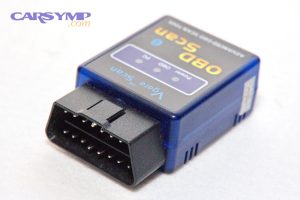
If you have a simple scan tool, this is the moment to plug it in and see whether the car communicates at all—communication itself is a clue.

Does the car have fuel, and can “empty” still happen even when the gauge isn’t?
Yes—fuel can still be the issue even when the gauge doesn’t read empty, because (1) gauges can be inaccurate, (2) the fuel pickup can uncover on inclines when fuel is very low, and (3) a failing fuel pump can mimic “out of fuel” symptoms.
Then do a fast fuel sanity check:
- Confirm you didn’t recently ignore a low fuel warning.
- If you’re near empty, add a small amount of fuel and retry (after letting the pump prime).
- Listen for a brief fuel pump prime sound at key-on (not all vehicles are audible, but many are).
Fuel isn’t the only cause of crank-no-start, but verifying it early prevents you from chasing spark and sensors when the tank is actually the problem.
How do you diagnose a No-Crank no-start step by step?
A No-Crank no-start diagnosis is best done as a 6-step checklist—battery state, terminal/cable integrity, ground path, start-permission switches, relay/solenoid behavior, and starter motor response—so you isolate the block point instead of guessing parts.

Specifically, this section turns the common “it just clicks” complaint into a repeatable workflow that handles starter, wiring, and start-permission logic in the right order.
Is the battery actually the problem ?
Yes—the battery is often the problem in No-Crank cases, and you can tell without guessing by checking (1) cranking speed/attempt, (2) voltage drop symptoms like dash dimming, and (3) whether a proper jump changes the behavior.
Start with observations that matter:
- Dash lights dim hard when you turn to START: the starter is demanding current, but voltage collapses—often battery weak, terminals corroded, or cable resistance.
- Nothing changes (no dim, no click): start signal may not be reaching the starter circuit (relay, ignition switch, park/neutral switch, brake/clutch switch, immobilizer start permission).
If you have a multimeter, a quick rule of thumb is: a battery can read “fine” at rest but collapse under load. That’s why a jump start is useful—not as a cure, but as a test.
Are the battery terminals/cables and grounds causing a hidden no-start?
Yes—cables and grounds can cause a hidden no-start, because (1) corrosion increases resistance, (2) loose clamps reduce contact area, and (3) a bad ground strap can block the starter’s return path even when the battery is good.
Next, treat “connection health” as its own diagnostic step:
- Inspect for white/green crust at terminals.
- Check for loose terminal clamps that can rotate by hand.
- Inspect ground strap connections from battery negative to engine block/body.
- Look for swelling, heat damage, or fraying near cable ends.
A key concept: the starter draws high current. Small resistance at the terminals can become a big voltage drop, creating the classic “click but no crank” symptom.
Is the starter/relay the culprit, and what are the telltale symptoms?
The starter circuit usually fails in one of 3 common ways—relay/control failure, solenoid engagement without motor spin, or motor failure—based on whether you get no sound, a single click, or irregular engagement.
Then use symptom logic, not myths:
- No sound + no dimming: likely control side (relay/start signal).
- Single click + dimming: solenoid engages but motor doesn’t spin or power path is restricted.
- Intermittent starts: worn solenoid contacts, heat soak issues, or marginal cables.
This is where Fuel pump and relay test basics and starter relay basics diverge: a starter relay is often swappable with another identical relay in the fuse box (only if labeled identical). A fuel pump relay swap can also be a quick test later in crank-no-start cases.
Is the car blocked by Park/Neutral switch or clutch switch?
Yes—start-permission switches can block starting, because (1) the ECU may require Park/Neutral confirmation, (2) the brake switch is required for many push-button starts, and (3) a clutch switch can prevent cranking on manuals.
Next, do simple “permission” tests:
- Automatic: try starting in Neutral (with foot on brake) if Park doesn’t work.
- Manual: press clutch fully; try a second attempt while slightly varying pedal position.
- Push-button: confirm brake lights work; if brake switch fails, the car may not allow start.
If these tests change the symptom (click becomes crank, or silence becomes click), you’ve learned something valuable before touching the starter.
How do you diagnose a Crank-No-Start step by step?
A Crank-No-Start diagnosis follows a 4-factor method—fuel, spark, compression, timing—and the expected outcome is that you identify which factor is missing before you replace anything.

However, you’ll move faster if you do the checks in “most likely and easiest to confirm” order, while using Scan tool data helpful for no-starts when available. (identifix.com)
Is the engine getting spark (and what’s a safe way to check)?
Yes—you can safely check for spark, and you should, because (1) spark is a core requirement, (2) ignition failures create true crank-no-start, and (3) spark results guide whether you focus on ignition control or fuel delivery.
Then do a safe spark check:
- Use a spark tester (preferred). Avoid unsafe “hold the plug near metal” methods.
- Check spark on at least one cylinder; if it’s coil-on-plug, use the correct adapter.
- If there’s no spark, consider: crank sensor input, ignition power supply, coil drivers, fuses, or immobilizer behavior.
This step directly supports Spark test and ignition checks without turning the diagnostic into trial-and-error.
Is the engine getting fuel (pressure vs injector pulse vs fuel quality)?
There are 3 fuel checks that matter—pump operation/pressure potential, injector pulse, and fuel quality—because you can have fuel in the tank and still have no injection or no pressure.
Next, use a tiered approach:
- Listen/prime check: at key-on, some cars prime the pump briefly.
- Relay/fuse basics: confirm fuel pump fuse; consider a relay swap test if identical (this is where Fuel pump and relay test basics lives).
- Injector pulse vs pressure: an engine can have injector pulse but no pressure (dead pump), or pressure but no pulse (ECU not commanding injection, sensor/security issues).
Fuel quality is the sleeper cause: wrong fuel, water contamination, or extremely old fuel can produce a “cranks all day” scenario. It’s less common than battery or starter issues, but it’s worth considering if the timeline fits.
Could air or exhaust restriction be preventing start?
Yes—air or exhaust restriction can prevent start, because (1) severe intake blockage limits combustion air, (2) a heavily restricted exhaust can prevent the engine from breathing, and (3) some failures mimic fuel problems.
Then keep it practical:
- Check the air filter box for obvious blockage (animals/nesting, collapsed filter).
- Confirm nothing is obstructing the intake snorkel.
- If the engine “tries” to start but won’t, and you suspect restriction, a technician may test exhaust backpressure.
Most crank-no-start problems are still fuel or spark, but ruling out an obvious airflow issue is a quick win.
Is low compression or incorrect timing likely, and what clues point there?
Yes—low compression or incorrect timing is possible, and the best clues are (1) unusually fast cranking speed, (2) backfiring or popping during cranking, and (3) recent engine work or timing-related symptoms before the failure.
Next, treat this as a “stop and escalate” branch:
- Fast, even cranking can indicate loss of compression (timing belt/chain issue on interference engines can be catastrophic).
- Backfire while cranking can indicate timing problems or severe ignition misfire.
- If you suspect timing/compression, towing is often the safer decision in the when to tow vs keep troubleshooting choice, because continued cranking can worsen damage.
What should you do after the checklist finds a likely cause?
After the checklist points to a likely cause, you should confirm it with one targeted test, then decide whether it’s a DIY-safe repair or a shop job, because the goal of no-start diagnosis is not just “start the car once,” but “fix the root cause reliably.”

In addition, this is where you control Diagnosis cost and common repairs: you bring evidence, not guesses, to the repair decision.
What information should you record to avoid misdiagnosis (symptoms, steps, results)?
You should record 5 categories of information—symptom type, environment, what changed, what you tested, and what the results were—because that prevents repeated work and helps a mechanic verify your conclusion.
Use this simple template:
- Symptom branch: No-Crank or Crank-No-Start (include sound: click/silent/rapid click).
- Battery behavior: dash dimming, jump-start effect, terminal condition.
- Fuel/spark notes (if crank-no-start): spark present? fuel prime audible? relay/fuse checked?
- Scan tool notes: codes (if any), and whether the car communicated.
- Timeline: intermittent vs sudden; weather; recent repairs.
This is also where you can reference “Car Symptoms” in a useful way: the more precisely you describe the symptom chain, the less likely you’ll be sold unnecessary parts.
When is it better to stop and get professional testing?
Yes—it’s better to stop and get professional testing when (1) you suspect immobilizer/security lockout, (2) you need fuel pressure or advanced ignition testing tools, and (3) symptoms suggest timing/compression or electrical overheating.
Next, use these “escalation triggers”:
- Security light behavior suggests Security/immobilizer no-start causes (especially if a spare key changes the result).
- You have repeated dead-battery events suggesting parasitic draw.
- You have crank-no-start with no spark and no clear fuse/relay explanation.
- You hear grinding, smell burning, or see smoke.
A shop can also confirm your diagnosis faster with load testers, current clamps, and professional scan tools—often saving money versus replacing parts blindly.
What advanced tools and rare causes can explain an intermittent or “mysterious” no-start?
There are 4 common “advanced” buckets behind intermittent no-starts—immobilizer permission, live scan data clues, voltage-drop/parasitic drain, and network/module faults—because intermittent problems usually hide from basic checks until you capture data at the moment it fails.

Especially, this is where Scan tool data helpful for no-starts becomes more than just reading codes—it becomes reading conditions.
Can an immobilizer / anti-theft system cause a no-start even if the battery is good?
Yes—an immobilizer can cause a no-start even with a good battery, because (1) the ECU may block injector pulse, (2) the ECU may block spark, and (3) some systems block the start command entirely.
Then look for patterns:
- Security light flashing or staying on during start attempts.
- Starts and immediately stalls (some systems allow initial start but cut fuel).
- A spare key works when the main key doesn’t.
- Aftermarket remote start or alarm history (sometimes affects start permission).
If immobilizer is likely, stop cycling the ignition repeatedly—capture the symptom once, note the security indicator behavior, and consider professional diagnosis.
What OBD-II live data matters most during cranking (RPM, sync, fuel trims)?
The most useful live data during cranking is usually engine RPM, crank/cam sync (if available), and basic sensor plausibility, because these values tell you whether the ECU is “seeing” the engine turn and whether it can command fuel and spark.
Next, prioritize these checks:
- RPM while cranking: if RPM stays at 0, suspect crank sensor signal issues or wiring.
- Throttle position and coolant temp plausibility: extreme incorrect readings can upset starting strategy.
- Communication status: if you can’t connect reliably, power/ground or network faults move up the list.
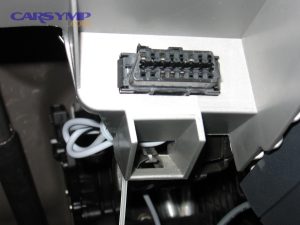
This is also where knowing the OBD port location matters for speed and consistency.
How do voltage-drop and parasitic-drain tests find electrical no-starts that basic checks miss?
Voltage-drop and parasitic-drain testing finds hidden no-starts by identifying resistance under load and battery discharge over time, which basic “it reads 12 volts” checks often miss.
Then apply the core idea:
- Voltage drop test: a high-current circuit can look fine at rest but fail under load because resistance steals voltage. (freeasestudyguides.com)
- Parasitic draw test: a small current draw can drain a battery over days until the car becomes a no-start again, creating a repeating “mystery” pattern. (aamcouniversity.com)
According to a study by University of Warwick from Warwick Manufacturing Group, in 2024, researchers reported that lead-acid charging time under partial state-of-charge operation can be highly variable depending on charge procedure, which helps explain why short, inconsistent recharge patterns can contribute to recurring weak-battery no-start complaints. (wrap.warwick.ac.uk)
Could CAN bus or module communication failures prevent starting?
Yes—CAN bus or module communication failures can prevent starting, because (1) start permission may depend on multiple modules agreeing, (2) a failed module can disrupt communication, and (3) power/ground issues can knock modules offline.
Next, treat these as “rare but real” indicators:
- Multiple warning lights with weird, unrelated messages.
- Intermittent no-start with intermittent scan-tool communication failures.
- Network-related diagnostic trouble codes (U-codes) appearing alongside no-start.
In these cases, professional diagnostics can be cost-effective because it prevents replacing good parts while the real issue is a network fault or power distribution problem.
(Maintenance takeaway to prevent repeats) A strong prevention habit is simple: keep terminals clean and tight, replace aging batteries proactively, address slow-crank early, and avoid letting the car sit for long periods without a maintainer—because Preventing no-start issues with maintenance is cheaper than emergency troubleshooting and towing. (samarins.com)