Preventing a car from refusing to start is mostly about keeping the starting system healthy—because a battery that can’t deliver high current, cables that add resistance, or a weak charging system will eventually create a “no crank” moment when you least expect it. This guide gives you a practical maintenance checklist focused on the battery, starter, alternator, and the connections that tie them together so your car starts reliably.
Next, you’ll learn what typically causes no-start events and how each maintenance action maps to that failure point. That matters because the best prevention isn’t “do everything,” it’s “do the right things” for the most common problems—especially corrosion, loose connections, battery aging, and undercharging from short trips.
Then, you’ll get a schedule you can actually follow: quick weekly habits, monthly checks, and seasonal prep that reduces risk before winter or long periods of parking. A checklist without timing becomes forgotten; a timed checklist becomes a routine.
Introduce a new idea: after you’ve covered the prevention basics, you’ll also see what to look at when no-starts still happen—like parasitic drain, battery type and charger compatibility, and cable resistance checks that often show up during deeper no-start diagnosis.
Can routine maintenance actually prevent most no-start problems?
Yes—routine maintenance can prevent most no-start problems because (1) battery-related failures and weak connections are highly preventable, (2) charging issues often give early warning signs you can catch, and (3) simple inspection and cleaning reduces resistance that steals cranking power when you need it most.
More importantly, prevention works best when you treat the starting system as one chain (battery → cables/grounds → starter → alternator recharge) instead of blaming one part at a time.
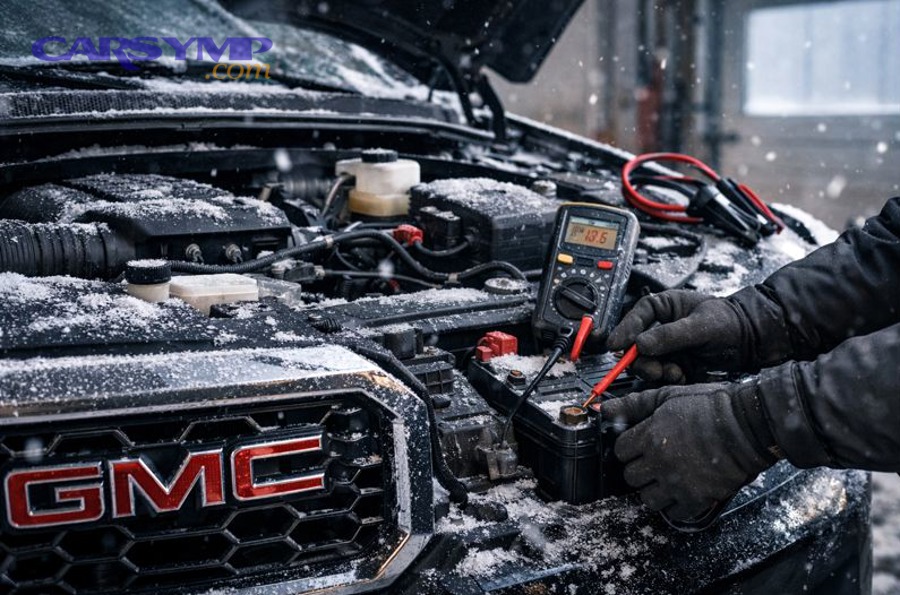
A “no-start” event usually feels sudden, but the causes often build slowly: corrosion grows on terminals, cable clamps loosen over time, batteries age and lose capacity, and short trips leave the battery undercharged. Maintenance interrupts that slow decline. It also keeps you out of panic mode—because when a car won’t start, people often guess and replace parts randomly rather than verifying the real weak link.
A key mindset: prevention is not the same as repair. You are not trying to “fix” a dead car in the driveway. You are trying to reduce the chance your starting system ever gets weak enough to fail. That means focusing on high-impact actions: clean/tight connections, good battery state of charge, and healthy charging.
Is a dead battery the most common preventable reason a car won’t start?
Yes—a dead or weak battery is the most common preventable no-start trigger because (1) batteries naturally lose capacity with age, (2) cold temperatures reduce available power, and (3) undercharging from short trips slowly drains the battery below a reliable starting threshold.
To better understand this, focus on what a start demands: the starter pulls a burst of high current, and the battery must supply it without voltage collapsing.
Even if your alternator is fine, a battery that spends days at partial charge will sulfate internally over time and become less capable. If your car is used for short trips—especially with lights, defrosters, heated seats, and phone charging—it may never fully recharge between starts. That’s why “it started yesterday” is not a guarantee it will start today.
Cold is the multiplier. Low temperatures slow chemical reactions and increase internal resistance, so the battery behaves like it got smaller overnight. According to a study by Technische Universität Berlin from Electrical Energy Storage Technology, in 2023, the usable energy of tested lead–acid starter batteries at −18 °C dropped to roughly 51–61% of their usable energy at 25 °C. (mdpi.com)
Can cleaning terminals and tightening connections stop intermittent no-starts?
Yes—cleaning terminals and tightening connections can stop intermittent no-starts because (1) corrosion increases resistance under load, (2) loose clamps create voltage drop that the starter “feels” as a weak battery, and (3) heat/cold expansion can turn a borderline connection into a failure at random times.
Then, the important link is this: even a “good battery” can act dead if the current can’t flow cleanly through the cable ends and grounds.
Battery terminal corrosion is more than “ugly white fuzz.” It is an electrical bottleneck. The starter demands high current; corrosion and looseness turn that demand into heat at the terminal instead of torque at the starter. The driver hears clicking, slow cranking, or nothing at all.
Practical prevention steps:
- Look for powdery buildup at battery posts and cable ends (white/blue/green depending on chemistry and metals).
- Check clamp tightness (you should not be able to rotate the cable end by hand).
- Clean properly (disconnect negative first, then positive; neutralize corrosion with a baking-soda-and-water solution; brush; rinse; dry).
- Reconnect correctly (positive first, then negative) and tighten to a firm, secure fit.
What counts as a “no-start problem” in this checklist?
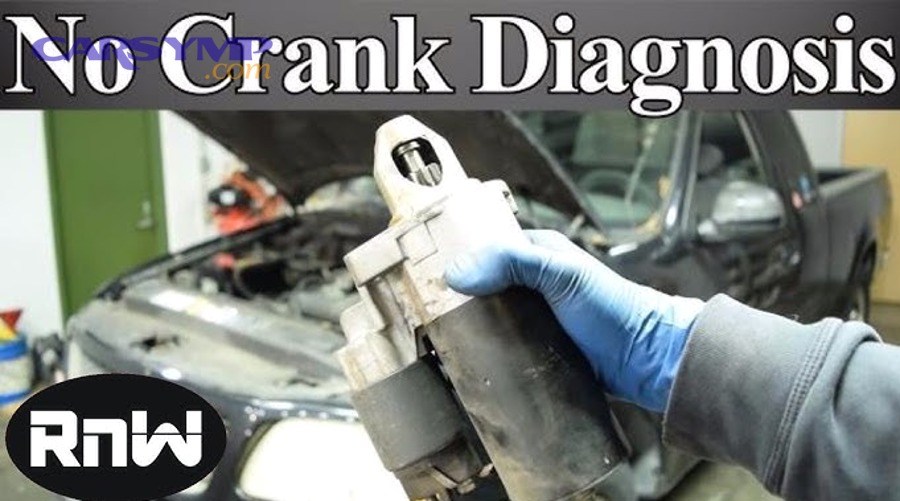
A no-start problem is a failure to begin engine operation, typically caused by either a no-crank condition (starter doesn’t spin) or a crank-but-won’t-start condition (starter spins but engine won’t run), with prevention here focusing on the starting and charging system.

Next, the distinction matters because maintenance prevents some no-start types better than others.
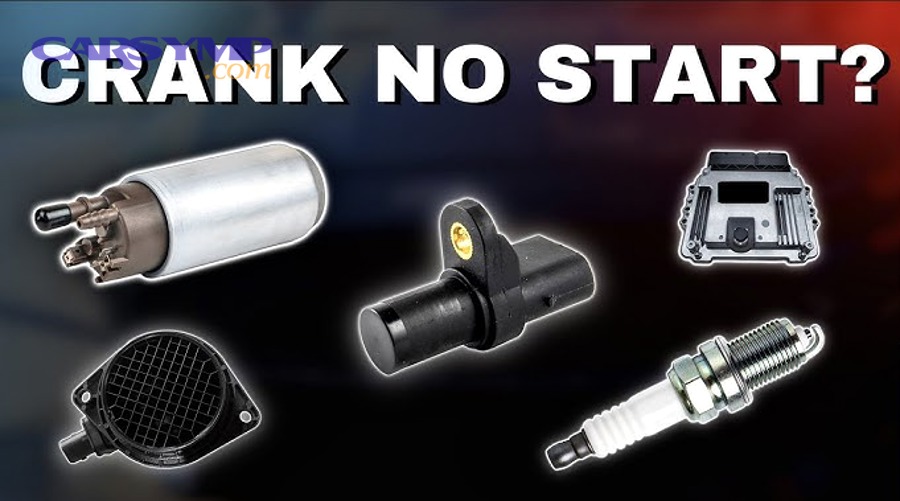
This article is intentionally prevention-first. Most routine maintenance strongly reduces no-crank and slow-crank failures because those are tied to battery health, cables, grounds, starter demand, and charging performance. In contrast, “crank but won’t start” often involves fuel delivery, ignition, sensor inputs, or immobilizer issues—areas where maintenance helps indirectly but diagnosis matters more.
What is the difference between “no crank” and “crank but won’t start”?
No crank wins as the most maintenance-preventable category, crank-but-won’t-start is best addressed with systematic no-start diagnosis, and slow crank is the optimal early-warning category to catch before either becomes a full failure.
However, the most practical takeaway is the “No crank vs crank no start differences” checklist in your head: Does the engine rotate or not?
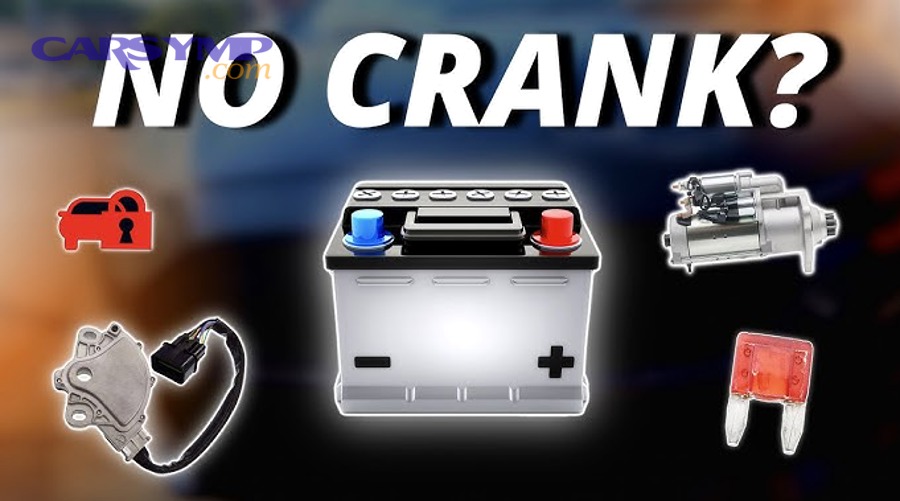
- No crank: You turn the key (or press Start), and the engine does not rotate. Symptoms include silence, a single click, rapid clicking, or lights dimming heavily. Prevention focus: battery, cables/grounds, starter, charging.
- Crank but won’t start: The engine rotates normally but does not catch and run. Symptoms include cranking speed sounding normal but no ignition. Prevention focus shifts toward fuel quality, spark components, air intake issues, and sometimes security/immobilizer concerns.
- Slow crank: The engine rotates but sluggishly. This is often the “warning label” for upcoming no-crank if you don’t maintain the battery and connections.
Because your title is built around the starting-system checklist, you’ll see the words battery, starter, and alternator repeatedly. That repetition is intentional—it keeps terminology consistent and keeps the reader anchored to the same system.
What does “slow crank” mean and why is it an early warning?
Slow crank is a reduced starter rotation speed caused by limited available battery power, excessive electrical resistance in cables/grounds, or increased starter load, and it stands out because it often appears days or weeks before a true no-start.
Besides, slow crank gives you time to act—if you treat it as a symptom, not a quirk.
Common slow-crank patterns:
- Cold-morning slow crank: battery capacity and power delivery are reduced by temperature.
- After sitting overnight: battery state of charge is borderline.
- After repeated short trips: alternator didn’t recover the battery charge.
- Intermittent slow crank: connection resistance (corrosion/loose clamp/weak ground) changes with vibration and temperature.
If you hear slow crank twice, don’t wait for the third time. That’s when many drivers end up jump-starting, which is a short-term rescue—not a maintenance plan.
What is the starting system and charging system, and how do they work together?
The starting system is the battery-powered circuit that spins the engine via the starter motor, while the charging system is the alternator-driven circuit that restores battery energy after starting, and they work together because the battery starts the engine and the alternator sustains and recharges the battery afterward.
More specifically, this “two-system handshake” explains why a new battery can still die quickly if charging is weak.
A simple mental model helps:
- Battery stores electrical energy.
- Starter converts that energy into mechanical rotation (cranking).
- Engine runs, and the alternator produces electricity to supply the car’s loads and recharge the battery.
- The cycle repeats.
When the alternator underperforms, the battery is forced to carry more load than it should, and the battery’s state of charge trends downward. When cable resistance increases, the battery might be fine but the starter receives less voltage. When the starter draws more current due to wear, the battery must be stronger to compensate.
What does the battery do during a start compared to the alternator?
The battery wins at delivering instant high current for starting, the alternator is best for supplying power once the engine is running, and a battery charger/maintainer is optimal for restoring full charge when driving patterns can’t.
Meanwhile, confusing the alternator’s job is a common reason people mis-handle prevention.
During the start, the alternator is not “saving” you—because the engine isn’t spinning fast enough to generate meaningful alternator output. The battery does the heavy lift. After the engine starts, the alternator takes over most of the vehicle’s electrical demand and pushes current back into the battery to replace what starting used.
This matters for prevention:
- If you mostly drive short trips, the alternator may never refill what the battery spent to start.
- If your alternator is weak, the battery becomes the victim—draining every day until it fails.
- If your battery is weak, the alternator is forced to work harder, often leading to repeated “battery problems.”
What are the key “failure points” car owners can maintain?
There are 5 main failure points you can maintain—battery state and age, terminal corrosion, cable/ground integrity, charging performance, and starter-load warning signs—based on the criterion of “parts that reduce voltage/current delivery during cranking.”
To illustrate, you don’t need to disassemble the starter to maintain the system around it.
High-impact maintenance targets:
- Battery terminals and clamps (clean and tight)
- Ground connections and straps (secure and not corroded)
- Battery state of charge (avoid living at partial charge)
- Alternator output and belt condition (charging is consistent)
- Starter behavior cues (slow crank, click patterns, heat-related issues)
The checklist in the next sections turns these into concrete actions.
What is the no-start prevention checklist for battery health?
There are 6 main types of battery-health prevention actions—inspect, clean, secure, test, recharge, and replace—based on the criterion of “what keeps battery power available on demand.”
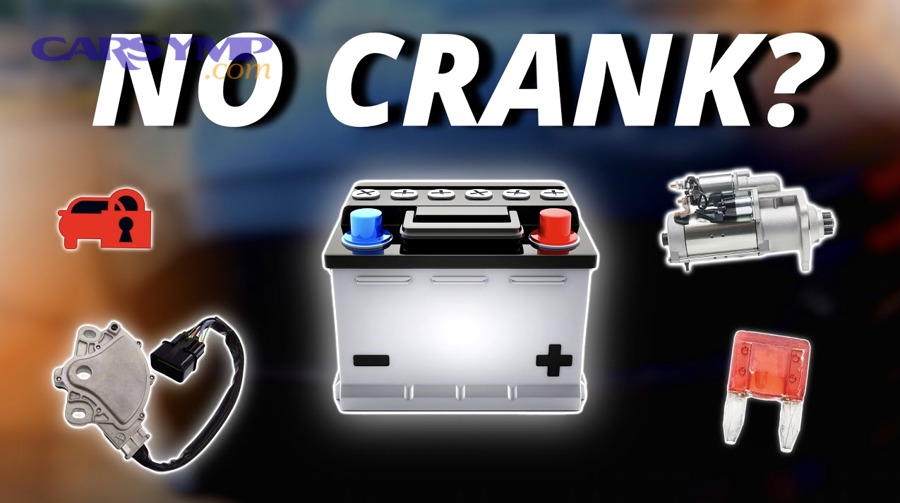
In addition, each action has a specific purpose: you’re either preserving capacity or improving delivery.
Battery health is not just “does it read 12 volts.” Voltage alone can be misleading because of surface charge, temperature, and measurement timing. Think of battery health as two things: energy capacity and power delivery .
Which battery checks should you do monthly to prevent a no-start?
There are 5 main monthly battery checks—visual condition, terminal cleanliness, clamp tightness, cable integrity, and resting voltage trend—based on the criterion of “fast checks that predict failure without special equipment.”
Next, do these checks consistently so you spot patterns, not just one-time readings.
Monthly battery checklist (10–15 minutes):
- Visual inspection: look for swelling, cracks, leaks, or wetness around the battery case.
- Terminal inspection: identify corrosion, crust, or discoloration on posts/cable ends.
- Clamp tightness: verify both clamps are secure; if you can twist them, tighten.
- Cable condition: look for frayed strands, stiff/brittle insulation, or damaged ends.
- Resting voltage trend (optional): measure after the car has been off for several hours; track whether it’s dropping over weeks.
If you measure voltage, don’t treat a single number as truth. Use it as a trend: “Is it generally stable, or sliding downward?”
When should you replace a battery to prevent a surprise no-start?
A battery should be replaced preventively when it shows repeated slow cranking, fails a proper battery test, or is approaching the end of its typical service life in your climate—because those are the strongest predictors of an imminent no-start.
More importantly, preventive replacement is often cheaper than emergency failure in a parking lot or during bad weather.
Practical replacement triggers (prevention-first):
- Repeated slow crank even after terminals are clean and tight
- Frequent need for jump starts
- Battery warning light issues that confirm charging/voltage problems
- Age + climate combination: batteries tend to fail sooner in extreme heat and after harsh winters
- Failed load/conductance test at a shop or with a quality tester
The most prevention-friendly time to replace is before the high-stress season (often winter in cold climates). The least friendly time is “after it fails.”
What maintenance prevents corrosion from coming back?
There are 4 main ways to prevent corrosion from returning—proper cleaning, correct tightening, protective coating on the correct surfaces, and moisture/salt control—based on the criterion of “reducing chemical reaction at the metal interface.”
Especially, the “correct surfaces” detail matters because coating the wrong contact area can reduce conductivity.
Corrosion prevention approach:
- Clean fully: disconnect negative then positive; neutralize with baking soda solution; scrub; rinse; dry.
- Restore good metal contact: ensure the clamp seats fully on the post; tighten securely.
- Protect after assembly: apply a terminal protectant spray or a light coating around the outside of the connection (not between the mating metal surfaces).
- Control exposure: if you drive in road-salt regions, inspect more often; salt mist accelerates corrosion.
What is the no-start prevention checklist for starter reliability?
There are 4 main starter-reliability prevention actions—monitor cranking behavior, reduce connection resistance, protect ground integrity, and respond early to warning sounds—based on the criterion of “keeping starter current delivery and load within a normal range.”

Then, the key is recognizing that starter failures often look like battery failures until you observe patterns.
Starters fail in two broad ways: electrical (solenoid/contacts) and mechanical (internal wear). But as a car owner, you rarely prevent internal wear directly. What you can prevent is the system stress that accelerates failure—low voltage, high resistance, and repeated strained cranking.
Which symptoms suggest starter wear before it fails completely?
Starter wear symptoms are repeated clicking, intermittent no-crank that resolves after multiple attempts, slow crank with a known-good battery, and hot-start hesitation—because these patterns point to a starter that struggles under load or has inconsistent internal contact.
However, you should treat these symptoms as a prompt to check the entire starting circuit first, not an instant command to replace the starter.
Common patterns to watch:
- Single click + no crank: may indicate solenoid engagement but insufficient motor rotation (also can be weak battery or resistance).
- Rapid clicking: often voltage collapses under load (battery weak or connection resistance high).
- Starts fine cold, fails hot: can indicate starter heat soak or marginal internal contacts.
- Intermittent no crank that “goes away”: classic sign of something borderline—either connection resistance or starter internals.
This is where prevention meets no-start diagnosis. If you ignore patterns, you’ll eventually face a full failure with no warning left.
What connection and ground checks help prevent starter “no crank”?
There are 5 main connection and ground checks—battery clamps, positive cable path, engine ground strap, chassis grounds, and starter-terminal security—based on the criterion of “points where resistance steals cranking voltage.”
More importantly, these checks are “starter prevention” even though they aren’t inside the starter.
Starter-current path (what to check):
- Battery positive clamp (clean, tight)
- Battery negative clamp (clean, tight)
- Ground strap from engine to chassis (secure, not corroded, not loose)
- Ground point fasteners (tight, free of corrosion)
- Positive cable routing (no rubbing damage, no burnt sections)
If you ever see melted insulation, burnt smell near cables, or visibly frayed strands, address it immediately. Those are not “eventually” issues.
What is the no-start prevention checklist for alternator and charging health?
There are 4 main alternator-and-charging prevention actions—verify charging behavior, inspect belt condition, monitor warning indicators, and match electrical load to driving habits—based on the criterion of “ensuring the battery is recharged after each start.”

Besides, a healthy alternator prevents the quiet battery drain that leads to morning no-start surprises.
An alternator doesn’t usually fail overnight. Charging problems often show up as “my battery keeps dying,” which triggers repeated jump starts and battery swaps—without fixing the root cause.
How can you tell if the alternator isn’t charging the battery properly?
An alternator isn’t charging properly when the battery repeatedly loses charge, voltage stays low while the engine runs, electrical accessories dim or behave erratically, or the charging warning light appears—because these signs indicate inadequate system voltage and current supply.
Then, confirm the pattern rather than relying on one momentary symptom.
Simple owner-level indicators:
- Repeated dead battery despite a newer battery
- Dim headlights at idle that brighten with RPM changes
- Dashboard battery/charging warning light
- Unusual electrical behavior (flickering interior lights, unstable infotainment)
If you use a multimeter, a basic check is comparing battery voltage engine-off vs engine-running. The important point is not memorizing one “magic number,” but confirming that running voltage is meaningfully higher than resting voltage and stable.
What belt and pulley maintenance reduces charging-related no-starts?
There are 3 main belt-and-pulley maintenance checks—belt condition, tensioner behavior, and pulley alignment/noise—based on the criterion of “mechanical drive reliability for alternator output.”
Especially, a slipping belt can undercharge the battery without creating an obvious failure until you’re stuck.
What to inspect:
- Belt cracks, glazing, fraying: signs of aging and slip risk
- Tensioner movement: weak tensioner can allow belt slip under load
- Noises (squeal) on start: often belt slip—common when damp/cold or accessory load is high
If you hear squeal right after starting with headlights/defroster on, treat it as a maintenance flag. Undercharging can be subtle but cumulative.
What maintenance schedule best prevents no-start problems?
There are 4 main maintenance schedule layers—weekly habits, monthly checks, seasonal prep, and annual testing—based on the criterion of “frequency needed to catch decline before it becomes failure.”
Next, a schedule turns knowledge into prevention because it creates repeatable action instead of one-time motivation.
Before the schedule, remember the core hook chain of this article: prevention works because you maintain the same starting-system chain repeatedly—battery health, starter power delivery, alternator recharge, and the connections between them.
Here’s a simple schedule you can follow without turning your life into a maintenance project.
To make this easier to apply, the table below summarizes what to do and why it matters.
| Timing | What to do | Why it prevents no-starts |
|---|---|---|
| Weekly | Drive long enough to recharge after starting (when possible); avoid repeated short start/stop cycles | Reduces chronic undercharge that weakens battery over time |
| Monthly | Inspect/clean terminals; check clamp tightness; quick visual cable/ground check | Cuts resistance and prevents intermittent voltage drop under load |
| Seasonal | Pre-winter battery/charging check; post-winter corrosion audit (salt regions) | Cold amplifies weakness; salt accelerates corrosion |
| Annually | Get battery + charging system tested; inspect belt/tensioner | Finds declining capacity or undercharge before it becomes “no crank” |
What should you do weekly vs monthly vs seasonally?
There are 3 main time-based maintenance groups—weekly driving habits, monthly connection checks, and seasonal readiness checks—based on the criterion of “how quickly each risk factor develops.”
To begin, focus on the high-frequency habits that prevent undercharge, because undercharge is invisible until it isn’t.
Weekly (habits):
- Combine errands into one longer drive when possible.
- If the car sits, start it only when you can drive it long enough to recharge.
- Reduce accessory load during short trips (high draw + low recharge is a bad mix).
Monthly (inspection):
- Terminal corrosion check and cleaning if needed
- Clamp tightness check
- Visual inspection of ground straps and cable routing
Seasonal (pre-winter / pre-storage):
- Battery/charging check before cold weather
- Corrosion prevention after salty/wet seasons
- Storage strategy if the car will sit (maintainer or periodic full recharge)
The schedule is flexible, but the principle isn’t: don’t let months pass without checking the connection points that carry starting current.
How does short-trip driving change the maintenance schedule?
Short-trip driving changes the schedule by increasing the frequency and importance of state-of-charge management, because frequent starts with limited drive time can leave the battery partially charged, accelerating capacity loss and making no-start events more likely.
More specifically, short trips don’t just “use” the battery—they slowly train it to live below full charge.
If your normal use is:
- 5–10 minute trips
- multiple starts per day
- heavy accessory use
…then your prevention upgrade is:
- add one longer drive per week when possible, or
- use a smart charger/maintainer periodically (especially in winter), and
- tighten monthly inspection intervals (don’t wait a full season).
Short-trip patterns are one of the biggest reasons a battery dies “early” even when it’s not old.
Which prevention steps matter most in cold weather and long parking periods?
Cleaning and tightening connections wins for reliability in cold weather, keeping the battery fully charged is best for long parking periods, and proactive testing/replacement is optimal before winter because cold magnifies any weakness in capacity and power delivery.
However, the smart approach is to prioritize based on your situation: cold climate, garage vs outdoors, daily driving vs sitting.
Cold weather increases engine oil viscosity (harder cranking) and reduces battery chemical reaction speed (less available power). Long parking periods add parasitic draw and self-discharge. Both scenarios reduce the margin between “starts fine” and “no crank.”
What should you prioritize before a cold snap to prevent a no-start?
There are 4 main cold-snap priorities—full charge, clean/tight terminals, verified charging behavior, and early battery replacement if marginal—based on the criterion of “maximizing cranking power and minimizing voltage loss.”
Then, treat the first cold week as a test: if slow crank appears, act immediately.
Pre-cold checklist:
- Recharge battery fully (especially if short trips are common)
- Clean terminals / tighten clamps (remove resistance)
- Check for early warning sounds (slow crank, clicks)
- Test battery and charging if the battery is older or performance is inconsistent
Cold is unforgiving because it reduces available power while increasing demand. Your goal is to widen the margin.
What’s the best way to prevent a no-start when a car sits for weeks?
A battery maintainer wins for long-term sitting without loss of charge, a periodic longer drive is best when you can do it consistently, and disconnecting the battery is optimal when storage is long and you accept resetting some settings—because each method reduces the net discharge while the car is parked.
In short, “start it and idle it” is usually the weakest strategy because idling may not recharge the battery meaningfully and can add other problems.
Practical sitting prevention:
- If parked 2–4 weeks: a maintainer is ideal; otherwise plan a real drive (not just idling).
- If parked months: maintainer or disconnect (with awareness of electronics/memory settings).
- Before storage: clean terminals; ensure battery is healthy; avoid storing with a marginal battery.
If the car sits and repeatedly needs jump starts, you’re no longer in prevention—you’re already in recurring no-start diagnosis territory.
If you still get no-starts, what hidden issues should you check next?
There are 4 main hidden issues to check next—parasitic drain, battery type/charger mismatch, cable voltage-drop resistance, and test-method limits—based on the criterion of “problems that persist even after basic maintenance.”

Next, this section expands micro-level checks that often explain “I did everything and it still happens.”
This is where you shift from simple prevention to smarter prevention: you’re still avoiding the problem, but you’re doing it by identifying a less obvious cause.
What is a parasitic battery drain and how can you prevent it from causing no-starts?
Parasitic battery drain is the continuous electrical draw that occurs when the car is off, and it can cause no-starts when the draw is excessive or the car sits long enough for normal draw to discharge the battery below starting capacity.
More importantly, preventing it starts with understanding your parking patterns and electrical add-ons.
Modern vehicles always draw some current (memory, alarms, modules). Prevention focuses on excessive drain and long sitting periods:
- Avoid leaving accessories plugged in that don’t shut off properly.
- Be cautious with aftermarket electronics (dash cams, audio amps, trackers).
- If the car sits, use a maintainer rather than gambling on battery reserve.
If you suspect drain, you’re officially in no-start diagnosis territory—because the correct solution depends on measuring draw and isolating the circuit. That’s beyond basic maintenance, but it explains why “a new battery didn’t fix it.”
AGM vs flooded batteries: does maintenance change and can the wrong charger cause problems?
AGM batteries win for spill resistance and some cycling resilience, flooded batteries are best for cost and broad compatibility, and an AGM-compatible smart charger is optimal when you need to recharge frequently—because battery type affects charging behavior and tolerance to under/overcharging.
Meanwhile, mismatched charging can shorten life and create repeating weak-start symptoms.
Prevention tips by type:
- AGM: prefer chargers with AGM mode; avoid chronic undercharge; ensure charging system voltage is appropriate.
- Flooded: check for physical condition and corrosion; recharge if sitting; keep terminals clean and secure.
The maintenance “difference” isn’t dramatic for most owners, but charging habits matter more when the car isn’t driven enough to keep the battery full.
What is voltage drop testing and why can it reveal a hidden no-start cause?
Voltage drop testing is a method of measuring how much voltage is lost across cables and connections under load, and it reveals hidden no-start causes because high resistance can exist even when the battery voltage looks normal at rest.
Specifically, this is how you catch “the battery is fine but the starter isn’t receiving power.”
Why it matters:
- A resting battery voltage can look acceptable.
- Under cranking load, resistance at a cable end or ground point can create a large drop.
- The starter sees low voltage and won’t crank properly.
This is one of the most useful tools in advanced no-start diagnosis because it tests the system the way the starter experiences it—under heavy load, not at rest.
Conductance test vs load test: which predicts battery failure better?
Conductance testing wins for fast assessment and usability at lower states of charge, load testing is best for seeing real under-load behavior, and combined testing is optimal for confident decisions because each method reveals different aspects of battery health.
More specifically, the best prediction comes from matching the test to the situation: quick screening vs confirming under load.
In real life:
- Conductance tests are quick and often used in shops for decision-making speed.
- Load tests apply a controlled load and observe voltage behavior.
- Both are more informative than relying on “it reads 12.X volts.”
If your car has repeated weak starts, a proper battery test combined with connection inspection is typically more effective than guessing parts. And if you end up needing to explore fuel-side issues, you can pivot into Fuel pump and relay test basics as part of crank-but-won’t-start troubleshooting—after you’ve confirmed the battery/starting system is truly solid.
Evidence
According to a study by Technische Universität Berlin from Electrical Energy Storage Technology, in 2023, tested lead–acid starter batteries showed usable energy at −18 °C dropping to roughly 51–61% compared with 25 °C, highlighting why cold weather sharply increases no-start risk when the battery is marginal. (mdpi.com)