


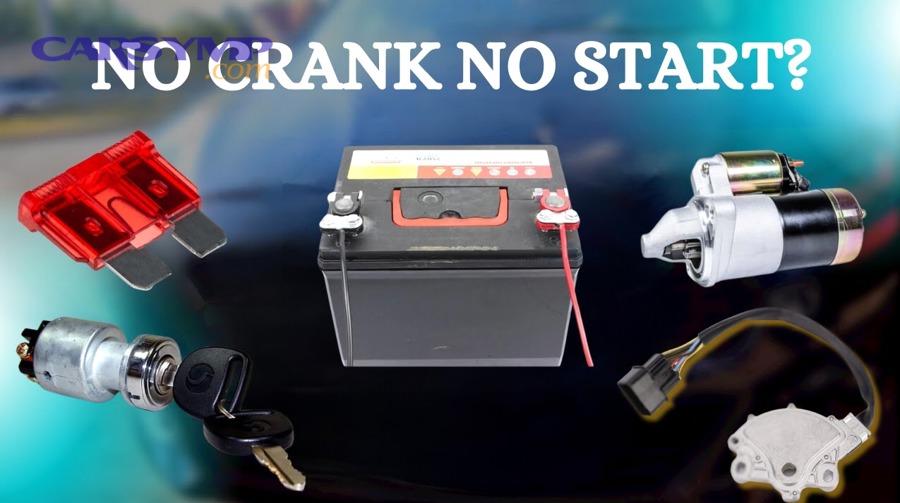
If your car “won’t start,” the fastest way to get the right fix is to separate no crank (the engine doesn’t turn) from crank-no-start (the engine turns but never fires). These two symptoms look similar from the driver’s seat, but they point to opposite subsystems—either the starting circuit (battery, cables, starter, switches) or the engine-running requirements (fuel, spark, air, compression, timing).
Next, you’ll learn why “no crank” is not automatically a bad starter, and how simple clues—dash lights dimming, a single click, rapid clicking, or total silence—change the diagnosis. That distinction is the backbone of accurate no-start diagnosis, because it prevents wasted money on the wrong part.
Then, we’ll break down the most common causes for each condition and show a step-by-step workflow you can follow (or use to communicate clearly with a shop). This makes troubleshooting faster and also helps you understand Starter click vs silent no-start diagnosis so you can prioritize what to test first.
Introduce a new idea: once you know whether you have no crank or crank-no-start, you can map symptoms to the right checks, estimate repair costs realistically, and reduce repeat failures with smart maintenance.
What is the difference between “no crank” and “crank no start”?
No crank vs crank-no-start are different failure categories: no crank means the starter system can’t rotate the engine, while crank-no-start means the engine rotates but can’t run because fuel, spark, air, compression, or timing isn’t right. Next, this difference matters because every test you do—and every part you might replace—depends on which “side” of the start process is failing.
What “no crank” feels like from the driver’s seat
No crank means you turn the key/push start and the engine never spins. You might see:
- Total silence (no click, no crank)
- Single click (solenoid tries, motor doesn’t spin)
- Rapid clicking (low voltage / poor connection causing relay/solenoid chatter)
- Lights dim hard when you try to start (high current draw or severe low voltage)
This is mainly a high-current electrical problem: the battery must deliver a large burst of current through cables, connections, relays, and the starter motor. Any resistance (corrosion, loose terminal, failing cable) can stop cranking even when lights still work.
What “crank-no-start” feels like from the driver’s seat
Crank-no-start means you hear the starter and the engine is turning over normally, but it never catches and runs. You might notice:
- Normal cranking speed but no ignition
- Occasional sputter or “almost starts”
- Strong fuel smell (possible flooding)
- Tachometer doesn’t move while cranking (possible crank sensor signal issue on some vehicles)
This points away from the starter circuit and toward the systems that keep an engine running: spark, fuel delivery, air, compression, and correct timing.
Why this one distinction saves money
Many people replace the starter because “it won’t start,” but a dead battery (or corroded terminals) is a more common root cause. AAA notes that dead batteries are by far the most common cause of a vehicle not starting, and that batteries generally last 3–5 years. (cluballiance.aaa.com)
Is no crank always the starter?
No—no crank is not always the starter, because the starter is only one component in a chain that includes the battery, cable connections, ground path, relays, fuses, and safety interlocks; any break or voltage drop can prevent cranking. Then, the smartest approach is to treat no crank as a starting-circuit problem until tests prove the starter itself is bad.
Three reasons no crank is often not a bad starter
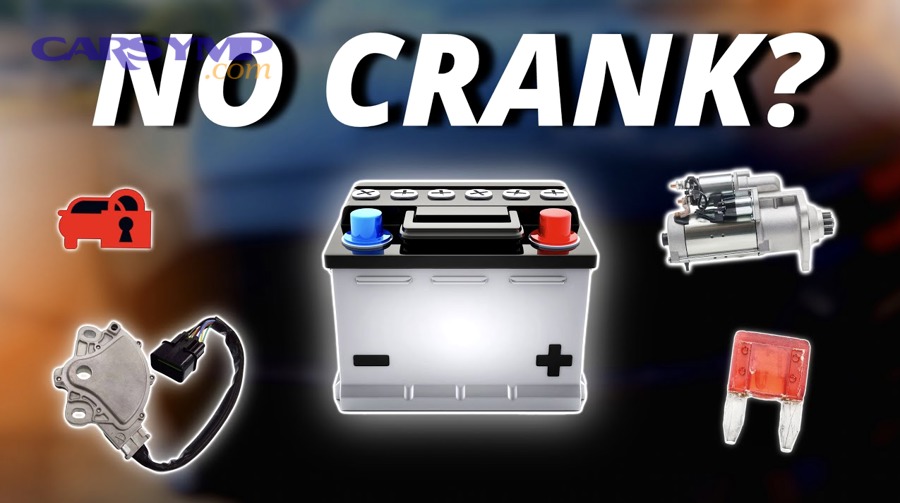
- The battery can be weak even when lights work
Headlights and dashboards require far less current than a starter. A marginal battery may power accessories but collapse under cranking load. - Corrosion and loose connections “steal” voltage
A starter circuit is extremely sensitive to resistance. Corroded terminals can look minor but behave like a bottleneck under high current. - Control-side problems can prevent the starter from being commanded
Neutral safety switches, clutch switches, ignition switches, starter relays, immobilizer logic, or a weak key fob battery (push-to-start cars) can stop the signal that energizes the solenoid.
“Click” vs “silent” no crank: what it suggests
This quick split helps with starter click vs silent no-start diagnosis:
- Single click: solenoid engages but the motor doesn’t spin (could be low voltage, bad starter motor/solenoid contacts, or high resistance).
- Rapid clicking: usually insufficient voltage/current (weak battery or high resistance).
- Dead silent: could be control-side (relay, switch, immobilizer), blown fuse, or no battery power reaching the circuit.
Practical test that beats guessing: voltage-drop testing
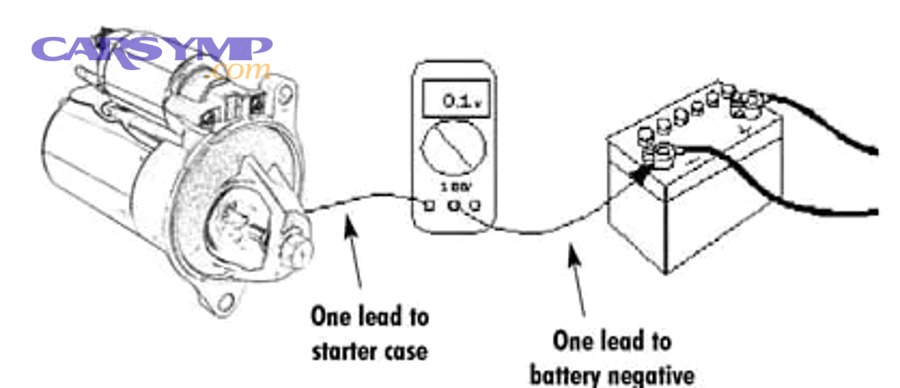
Voltage-drop testing finds hidden resistance while the circuit is under load. Fluke’s starter-circuit guide describes checking drop during cranking and gives typical “acceptable total drop” ranges, helping pinpoint whether the issue is on the positive or ground side.
What causes a no crank condition?
There are five main causes of a no crank condition—battery, connections/cables, starter/solenoid, control circuit, and mechanical lock-up—and you can narrow them quickly based on symptoms and simple checks. Next, we’ll group them by what fails first in the “start chain,” so you test in the same order electricity flows.
Battery-related causes (state of charge, age, internal failure)
A battery can fail suddenly or gradually. Common triggers include:
- Aging (especially past the typical service window)
- Extreme cold reducing output
- Parasitic drain from a module staying awake
- Charging system problems that leave the battery undercharged
AAA highlights that batteries commonly last 3–5 years, and a dead battery is the most common reason for a no-start. (cluballiance.aaa.com)
Cable/terminal/ground causes (high resistance)
High resistance is a top culprit because the starter demands high current.
- Corroded battery posts or clamps
- Loose terminal connections
- Bad ground strap (battery to chassis/engine)
- Internally corroded cables (looks fine outside, fails under load)
A key clue is heat: after a few start attempts, a bad connection may feel warm/hot compared to other parts of the cable path.
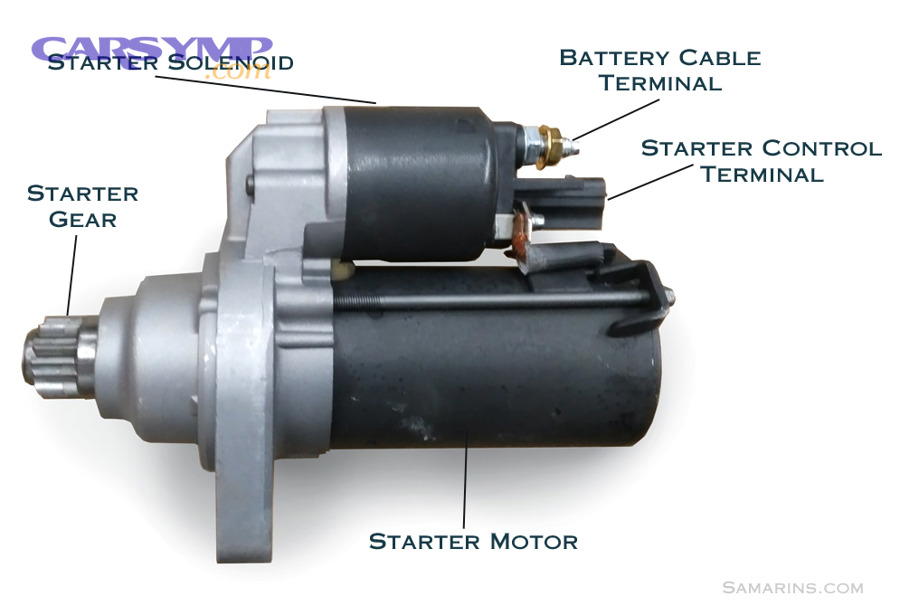
Starter motor and solenoid causes (mechanical/electrical wear)
Starters can fail in multiple ways:
- Solenoid clicks but contacts are burned → no motor power
- Brushes worn → intermittent/no operation
- Motor spins but doesn’t engage flywheel → whirring sound (less common)
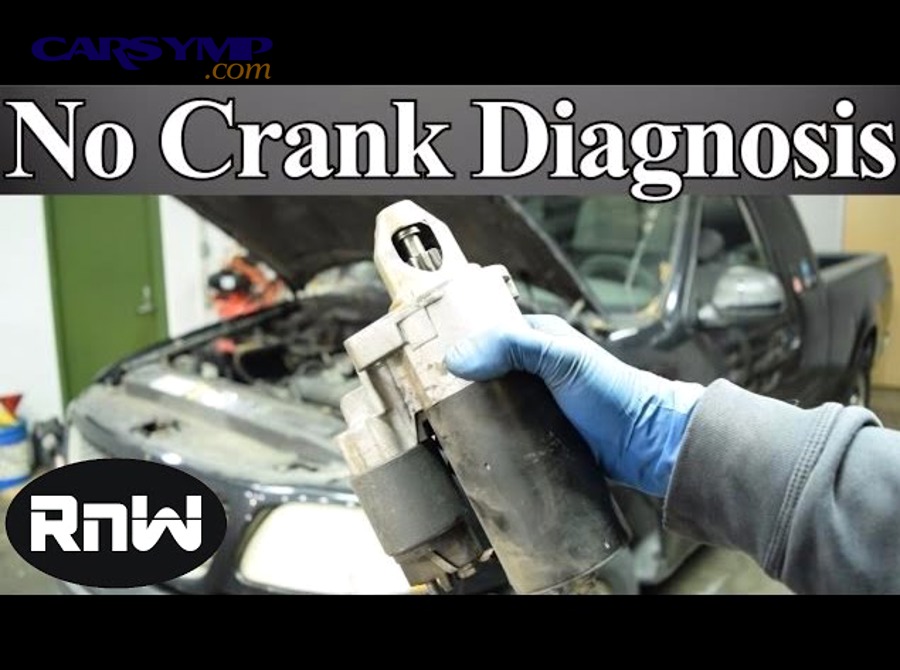
A detailed starter-system overview explains that the starter is a DC motor with a solenoid and that poor connections or a weak battery can mimic starter failure, so testing is essential before replacement. (samarins.com)
Control circuit causes (signal never reaches the starter)
If nothing happens at all:
- Starter relay failure
- Ignition switch failure
- Neutral safety switch / range switch out of adjustment
- Clutch switch not closing
- Immobilizer/key recognition issues
This category is why “silent” no crank can be misleading: the starter may be fine, but never receives the “start” command.
Rare but important: mechanical lock-up
If the starter tries hard and the engine cannot rotate, consider:
- Hydrolock (fuel/coolant in a cylinder)
- Seized engine accessories (rare)
- Engine internal seizure (rare, but high stakes)
These are uncommon, but you don’t want to keep cranking if the engine is locked—damage can escalate quickly.
What causes a crank-no-start condition?
A crank-no-start happens when the engine is turning but can’t run because one (or more) of the five basics—fuel, spark, air, compression, timing—is missing or incorrect. Then, diagnosing becomes a process of proving which basic requirement fails first, rather than swapping parts.
Fuel delivery problems (no fuel, low pressure, wrong amount)
Common fuel-side causes:
- Empty tank or bad fuel gauge reading
- Fuel pump failure or weak pump
- Clogged fuel filter (older vehicles) or restricted pickup
- Failed fuel pump relay or fuse
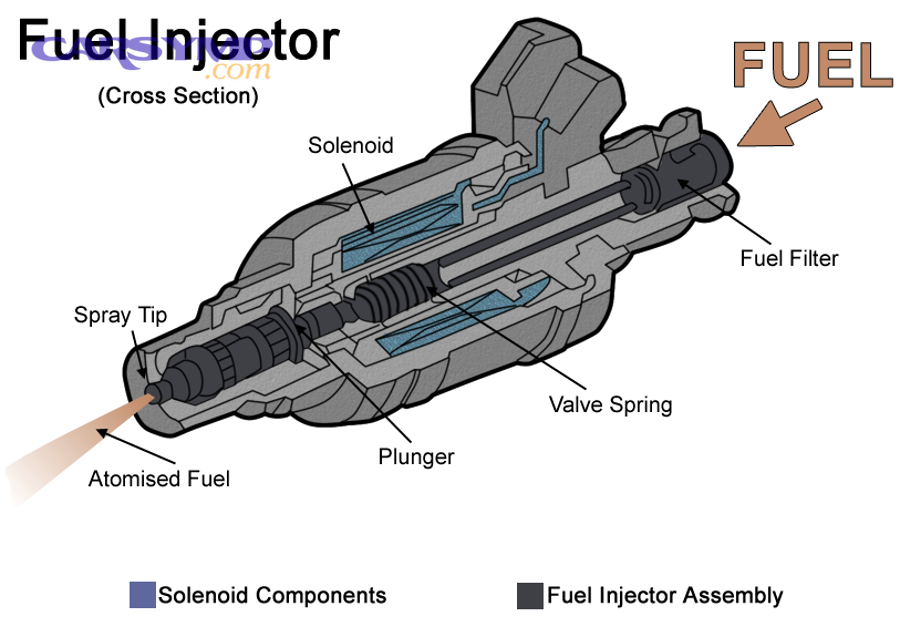
- Injector control problem (no injector pulse)
- Flooding (too much fuel), often after repeated cranking
Crank-no-start can also appear after refueling if contaminated fuel enters the system, though that’s less common.
Spark/ignition problems (no spark under load)
If there’s no spark, the engine will crank forever:
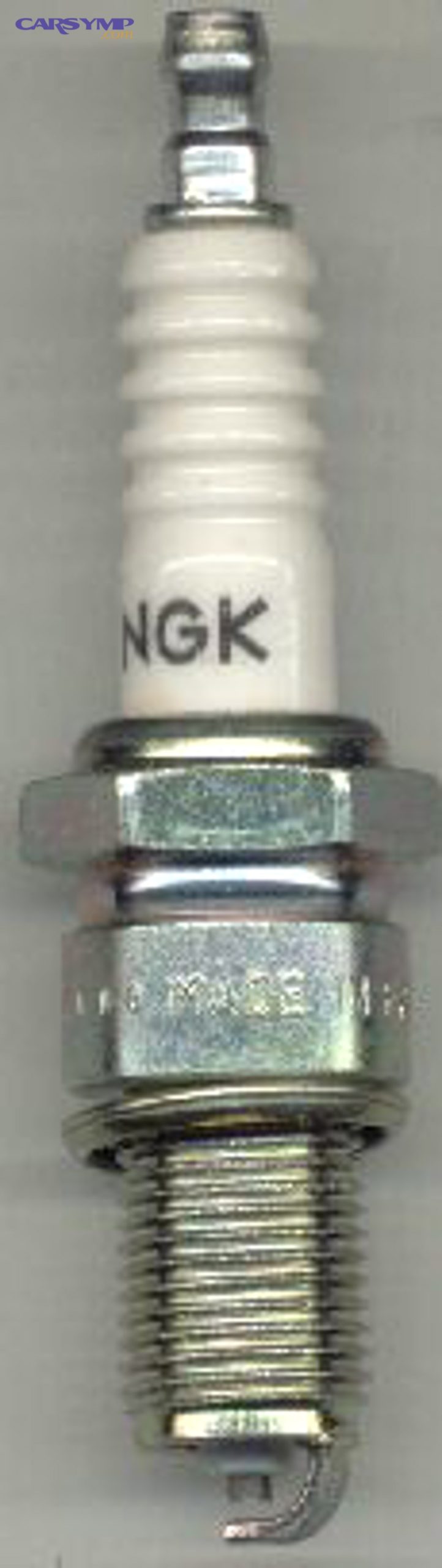
- Failed ignition coil/coil pack
- Bad crankshaft position sensor or cam sensor (no timing signal → ECU won’t trigger spark/injectors)
- Ignition module failure (vehicle-dependent)
- Severe plug/wire issues on older designs
Air and throttle management problems
Less common, but still real:
- Massive vacuum leak
- Stuck throttle plate (rare)
- Severe intake restriction
On many modern cars, electronic throttle issues usually set codes and may show warning lights, but the symptom can still look like crank-no-start.
Compression/timing problems (mechanical or timing-related)
Mechanical issues can cause crank-no-start:
- Broken timing belt/chain (varies by engine; often cranks faster than normal)
- Low compression across cylinders
- Valve timing off due to slipped timing component
Why repeated cranking can create “secondary problems”
Repeated cranking can:
- Flood the engine (washing cylinder walls, fouling plugs)
- Overheat the starter circuit (worsening a borderline no crank)
- Drain the battery so the crank speed drops too low for starting
This is why proper no-start diagnosis is faster (and cheaper) than trial-and-error.
How do you diagnose no crank vs crank no start step by step?
The best method is a two-branch workflow: first confirm whether you have no crank or crank-no-start, then follow a targeted checklist for that branch to isolate the failed component in the fewest steps. Next, you’ll use easy observations first, then move to measurements only when needed—this keeps the process efficient and safe.
Step 1: Confirm the symptom category in 10 seconds
- Engine does not rotate → No crank
- Engine does rotate → Crank-no-start
Also note the sound:
- Click, rapid clicks, silence, slow crank, normal crank, fast crank
Step 2A: No crank checklist (from easiest to most diagnostic)
- Check battery condition
- Are headlights bright?
- Do lights dim sharply when starting?
- If available, measure battery voltage (resting and during crank attempt)
- Inspect terminals and grounds
- Look for corrosion, looseness, cracked clamps
- Confirm the ground strap is intact
- Try a jump start (carefully)
- If a jump fixes it, suspect battery state/age, connection resistance, or charging issues rather than instantly blaming the starter.
- Listen for relay/solenoid behavior
- Single click: solenoid engages
- No click: possible control-side issue
- Voltage-drop test under load
- This is where you catch hidden resistance. Fluke’s guide outlines probing battery-to-starter on the positive side and battery negative-to-engine block on the ground side, plus interpreting typical drop limits.
Step 2B: Crank-no-start checklist (prove the “five basics”)
- Check for fuel
- Do you hear the pump prime (many cars do)?
- Any fuel smell (possible flooding)?
- If you have tools: check fuel pressure (spec varies by car)
- Check for spark
- Use a proper spark tester if possible
- No spark often points to crank sensor signal, ignition power supply, or coil control
- Check for air restriction
- Inspect intake ducting, air filter housing, obvious disconnections
- Check compression/timing clues
- Unusually fast cranking can hint at low compression or timing belt/chain issues
- Scan for codes if you have a reader (P0335 crank sensor codes, etc.)
Step 3: Decide whether it’s DIY-safe or tow-worthy
- If you smell strong fuel, see leaking fuel, or suspect hydrolock → stop cranking.
- If you don’t have safe access or tools for voltage-drop testing and fuel pressure checks, it may be faster to involve a shop.
Optional video (parasitic drain example)
How much does it cost to diagnose and fix each condition?
A realistic way to estimate cost is: diagnostic time + the failed part + labor difficulty, because the “same symptom” can mean a $0 fix (tighten a terminal) or a bigger repair (starter, fuel pump, timing components). Then, understanding typical ranges helps you evaluate quotes and decide when a second opinion is worth it—especially for Diagnosis cost and common repairs.
Typical diagnosis costs (what you’re paying for)
Shops often charge a diagnostic fee for:
- Battery/charging system testing
- Scan tool time and data interpretation
- Electrical testing (including voltage-drop or circuit tracing)
- Fuel pressure testing (equipment + time)
Costs vary by region and shop, but the key is whether the shop can explain the test result that proves the failure. Ask for measured values (battery voltage under load, voltage-drop readings, fuel pressure numbers).
Common “no crank” repair cost drivers
- Battery replacement: depends on type and size (standard vs AGM)
- Terminal/cable repair: can be low cost unless cable routing is complex
- Starter replacement: depends heavily on access
One starting-system reference notes a starter replacement can cost roughly $250 to $850 depending on repair difficulty and part choice. (samarins.com)
Common “crank-no-start” repair cost drivers
- Fuel pump (part + labor; often involves tank access)
- Ignition coils/spark plugs (moderate, but varies by engine layout)
- Crank/cam sensor (varies; some are easy, some are buried)
- Timing belt/chain issues (can be major due to labor and risk of engine damage on interference engines)
How to avoid paying twice
The most expensive outcome is “parts roulette.” A good workflow:
- Confirm symptom category
- Test the circuit/system that category belongs to
- Replace only what is proven bad
That’s the difference between guessing and disciplined no-start diagnosis.
Can you prevent no-start problems with maintenance?
Yes—Preventing no-start issues with maintenance works because most no-starts trace back to predictable wear (battery age), corrosion (resistance), and neglected tune/charging issues; three big wins are battery care, clean connections, and periodic testing. More importantly, prevention is cheaper than emergency repairs and reduces the chance you’ll get stranded.
Reason 1: Battery health management prevents the most common no-start
Since dead batteries are widely cited as the most common cause of a no-start, prevention starts here. AAA points out batteries commonly last 3–5 years, which gives you a planning window instead of a surprise failure. (cluballiance.aaa.com)
Practical habits:
- Replace proactively if your battery is approaching end-of-life
- If you drive short trips, consider occasional longer drives or charging maintenance (vehicle-dependent)
- Test the battery and charging system before winter
Reason 2: Clean, protected terminals prevent voltage loss
Corrosion creates resistance. Cleaning and protecting terminals reduces the chance of slow crank or no crank. A battery-corrosion guide emphasizes that corrosion is “easy to take care of” and impacts battery performance and life, reinforcing why this small task pays off.
Reason 3: Reduce parasitic drain and charging problems
If your battery dies after sitting, the culprit may be parasitic drain or a weak charging system. Having the alternator output tested and checking for abnormal key-off draw can prevent repeat no-start events.
Maintenance checklist (simple, high ROI)
- Battery test (especially before temperature extremes)
- Clean terminals + apply protectant
- Inspect ground straps
- Scan for stored codes if you’ve had intermittent starting issues
- Replace worn spark plugs per schedule (helps reduce crank-no-start risk)
What uncommon issues mimic no crank or crank-no-start?
Some less common faults masquerade as starter or fuel/spark problems, so the key is to recognize the “pattern breakers”—symptoms that don’t match the usual flow and require a different test. Next, these edge cases are where clear evidence (measured voltage drop, verified spark, verified fuel pressure) prevents wild guesses.
Immobilizer/key authorization problems
- No crank (or immediate stall) can happen if the car doesn’t authorize the key.
- Often accompanied by a security light or message.
Range switch / clutch switch intermittents
- Car starts in Neutral but not Park (or only with the clutch pressed harder)
- Can look exactly like a dying starter because it’s intermittent
ECU power/ground faults
If the ECU isn’t powered properly, you can see crank-no-start with no injector pulse or no spark even though the starter works.
Flooding and catalyst risk (why you should stop endless cranking)
Repeated cranking when the engine isn’t firing can send excess fuel into the exhaust stream. Research on three-way catalytic converter behavior (including operation under varying conditions) is an active area in university engineering work; for example, an MIT thesis examined how operating conditions affect three-way catalyst behavior and performance. (dspace.mit.edu)
Mechanical lock or hydrostatic lock
If the engine cannot rotate freely, forcing repeated crank attempts can cause more damage. This is rare, but it’s a “stop and verify” situation.
Evidence (if any)
- AAA notes dead batteries are by far the most common cause of a vehicle not starting and that batteries generally last 3–5 years. (cluballiance.aaa.com)
- A starter-system technical overview explains starter operation and notes starter replacement can range roughly $250–$850 depending on difficulty and part choice. (samarins.com)
- A starter voltage-drop testing guide provides a practical method and typical acceptable ranges for diagnosing high resistance in starter circuits.
- An MIT engineering thesis discusses how three-way catalytic converters behave under different operating conditions, supporting the broader point that upstream running problems can affect downstream exhaust aftertreatment behavior. (dspace.mit.edu)