


A single starter click and a totally silent no-crank can feel like the same failure, but they usually point to different “break points” in the starting circuit. The fastest way to match the symptom to the cause is to treat “click vs silence” as a comparison test: the sound (or lack of it) tells you whether power is reaching the starter solenoid, whether the solenoid can pull in, and whether the high-current path can actually turn the engine.
Next, you’ll learn why a single click often indicates the starter solenoid is being commanded but the motor can’t spin—commonly from low voltage under load, high resistance at cables/grounds, or an internal starter issue. Then you’ll see why silence more often points to the control side: battery disconnects, blown fuses, ignition switch/relay/neutral safety/clutch switch issues, immobilizer blocks, or a missing “start” signal.
Then, you’ll follow a practical, tool-light no-start diagnosis path: what to check first, where to probe, and how to use a multimeter (or a test light) to confirm which side of the circuit is failing—without guesswork or parts roulette.
Introduce a new idea: once you can prove where voltage stops (battery, control circuit, solenoid command, or high-current cables), every next step becomes obvious—and you avoid replacing the wrong part.
Is a single click when starting usually a starter problem?
Yes—starter click vs silent no-start patterns strongly suggest a starter-circuit issue, and a single click is often linked to (1) the solenoid engaging, (2) insufficient battery power under load, or (3) high resistance in cables/grounds that prevents the starter motor from spinning.
Next, because the click is informative, you can treat it like a clue: it tells you the starter is trying to do something, so you focus on load voltage and high-current flow.
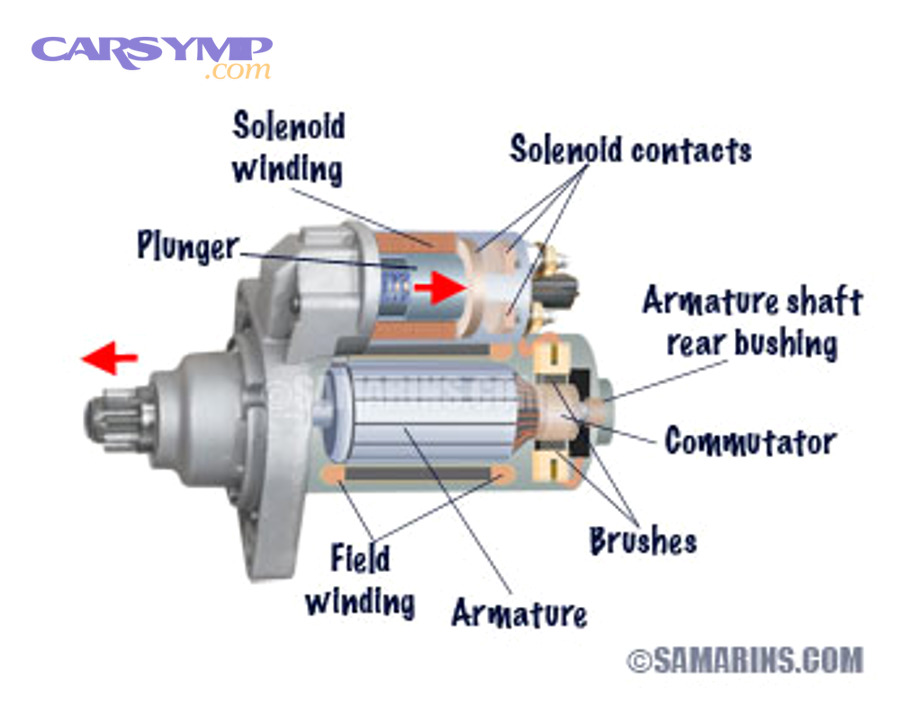
What does the single click actually mean in the starting system?
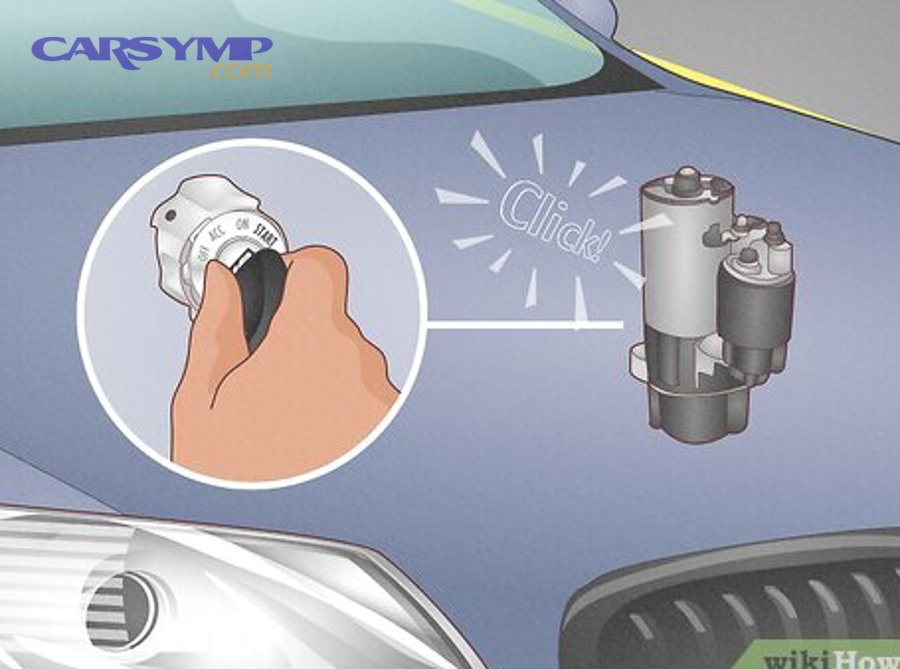
A single, solid click usually means the starter solenoid pulled in. The solenoid is an electromagnetic switch: it does two jobs at once—(1) it pushes the starter gear toward the flywheel/flexplate, and (2) it closes a high-current contact to feed the starter motor.
So when you hear one click, it often means:
- The control circuit (key/start button → relay/safety logic → solenoid “S” terminal) is at least partly working.
- The failure is often on the high-current path (battery → positive cable → solenoid main contacts → starter motor → ground return).
However, a click doesn’t automatically “convict” the starter. A weak battery can still click the solenoid but collapse under the heavy draw needed to spin the motor.
Which causes are most common when you hear one click?
A single click tends to cluster into a few high-probability buckets:
1) Low battery voltage under load (or weak battery health)
- Battery may show “normal” voltage at rest, but the moment the starter tries to draw heavy current, voltage drops too far.
- Cold weather amplifies this: chemical reaction rates slow, and effective capacity and power delivery fall.
2) High resistance at battery terminals or cable connections
- Corrosion, loose clamps, worn cable ends, or a poor engine ground strap can pass enough current to run dash lights—but not enough to crank.
3) Starter internal wear (solenoid contacts, brushes, armature issues)
- The solenoid clicks, but the internal high-current contacts are burned/pitted, or brushes don’t make reliable contact, so the motor never turns.
4) Engine mechanical load (rare, but important)
- A seized engine or locked accessory can prevent cranking, though typically you’ll see other signs (belt squeal, prior overheating, manual rotation impossible).
To keep the reasoning clean: the click says “command exists.” Your job is to determine whether the system fails due to insufficient power, insufficient current flow, or a starter that can’t convert power into rotation.
Evidence (if any): According to a study by Virginia Polytechnic Institute and State University from Electrical Engineering, in 2014, the thesis notes that cranking currents often exceed 500 A, which explains why small resistance or battery weakness can still allow a click but prevent the motor from turning.
Is total silence (no click) when turning the key more likely an electrical control issue?
Yes—silent no-start (no click, no crank) is more likely a control-side problem because (1) the solenoid isn’t being commanded, (2) safety/anti-theft logic may be blocking the start request, and (3) the start relay/fuse/ignition switch path may be open.
Then, instead of jumping straight to the starter, you shift your testing upstream: power delivery to the solenoid “S” terminal and the systems that enable it.
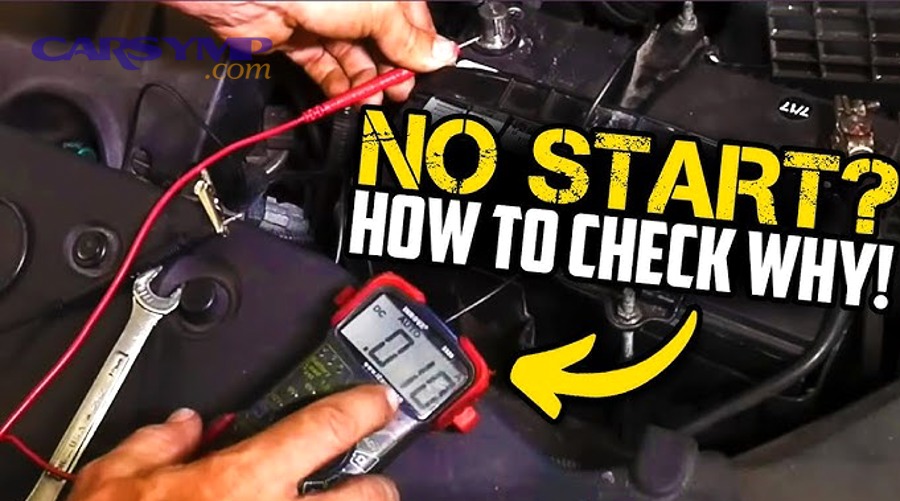
What “silence” usually indicates in the circuit
Silence means the solenoid is not even attempting to engage—so either:
- The solenoid never receives the “start” signal (no voltage at the S terminal), or
- The solenoid receives it but cannot respond (rare compared with upstream issues), or
- The battery is effectively disconnected (dead battery, loose terminal, internal break, main fuse link open).
This is why silence is often control circuit territory.
Common control-side culprits to prioritize
Work from most likely/easiest to verify:
1) Battery connection / main power loss
- Loose or corroded terminals can create intermittent silence.
- A blown main fusible link or mega-fuse can cut power to the start circuit.
2) Starter relay / fuse / ignition switch
- A failed relay can produce silence even with a good battery.
- An ignition switch can fail on the “start” contact while other key positions still work.
3) Neutral safety switch / clutch switch
- Automatic: transmission range (Park/Neutral) signal missing = no crank.
- Manual: clutch pedal switch not closing = no crank.
4) Immobilizer / security system blocks
- Many vehicles will allow accessories but block cranking if the key authentication fails.
5) Start button logic or brake pedal interlock (push-button systems)
- No brake signal = no crank on many models.
A useful mental model: silence = “permission or signal missing.” That’s why the next section focuses on proving where the signal stops.
What step-by-step checks diagnose click vs silence without guesswork?
A reliable click vs silent no-start diagnosis uses 6 steps—verify battery state, verify terminal integrity, verify control-signal at the solenoid, verify voltage drop on the high-current path, verify ground return, and finally isolate starter vs engine load—so you can identify the failed link with certainty.
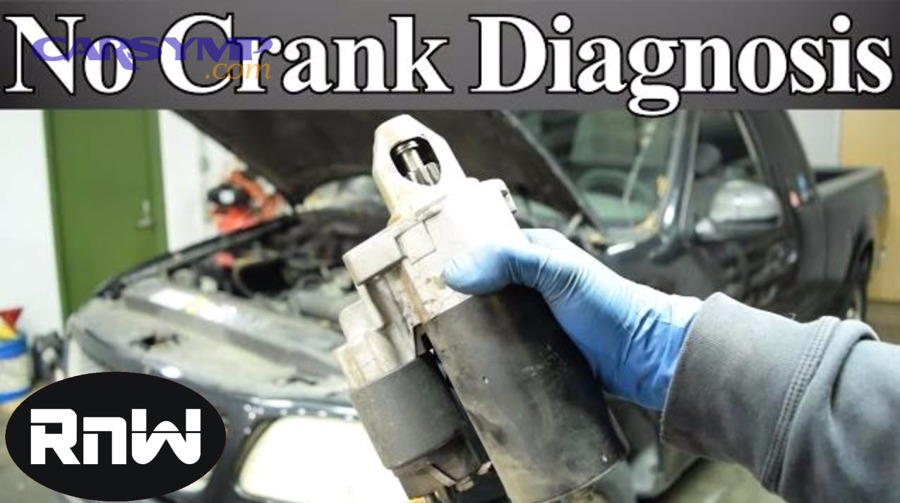
To begin, follow this sequence in order; it keeps your test results “clean” and prevents false conclusions.
Here’s what the table below contains: a quick map from symptom → what it most often means → the best confirming test, so you can pick the next measurement confidently.
| Symptom (Key to START) | Most likely “break point” | Best confirming check |
|---|---|---|
| Single click, no crank | High-current path can’t deliver torque | Battery voltage under crank attempt + voltage drop tests |
| Rapid clicking | Battery voltage collapses repeatedly | Battery load test / jump start result |
| Silence, dash lights normal | Control circuit not commanding solenoid | Check for 12V at solenoid “S” terminal during START |
| Silence, lights dead/very dim | Battery disconnected or extremely weak | Terminal tightness + battery voltage at posts |
| Cranks slowly | Low voltage under load or high resistance | Voltage drop on positive and ground cables |
| Cranks normal but won’t start | Not a cranking problem | Move to fuel / Spark test and ignition checks |
Step 1: Confirm battery voltage the right way (at rest vs under attempt)
Start with two quick readings:
- At rest (key off): a healthy, fully charged 12V lead-acid battery is typically around 12.6V (varies with temperature and battery type).
- During a start attempt: watch what the voltage does while the problem occurs. This is where weak batteries reveal themselves.
How to do it:
- Set your multimeter to DC volts.
- Probe directly on the battery posts (not the cable clamps).
- Have a helper turn the key to START while you watch the meter.
Interpretation:
- If voltage stays relatively strong but you still get a click/no crank → suspect resistance or starter.
- If voltage drops dramatically → suspect battery condition, terminal/cable resistance, or both.
Step 2: Check terminal contact quality (not just “tight”)
A terminal can feel tight and still be a poor conductor if it’s oxidized, partially seated, or cracked.
Quick checks:
- Try twisting the clamp by hand (it should not rotate).
- Look for white/blue powdery corrosion, swelling cable ends, or heat discoloration.
- Verify ground strap from battery to chassis/engine is intact.
If you suspect corrosion:
- Disconnect negative first, then positive.
- Clean posts and clamps until bright metal is visible.
- Reattach positive first, then negative.
Step 3: Decide whether you’re in “control” or “high-current” territory
This is the fork in the road:
- Click present → you likely have a start command; move toward high-current/voltage drop tests.
- No click → prove whether the solenoid is receiving the start command.
Step 4: Test for the start signal at the starter solenoid “S” terminal
This is the cleanest way to confirm control-side faults.
How:
- Identify the small wire to the solenoid (often labeled “S”).
- Place your meter’s black lead on a clean engine ground.
- Place red lead on the S terminal.
- Have a helper attempt START.
Results:
- 12V present during START, but no crank/click → starter/solenoid is likely the issue.
- No 12V during START → the problem is upstream (relay, fuse, ignition switch, safety switch, immobilizer).
Step 5: Perform voltage drop tests (the pro-level shortcut)
Voltage drop testing finds hidden resistance that simple “continuity” checks miss.
A good rule: you want very low drop across each major cable path during cranking attempts. High drop = resistance = heat = lost cranking power.
You can follow a starter voltage drop test procedure like this:
Typical setup:
- Positive side drop: battery positive post → starter main terminal (during START)
- Ground side drop: starter housing → battery negative post (during START)
If one side shows an unusually high drop, you’ve found where power is being lost.
Step 6: Separate “no-crank” from “cranks-but-won’t-start”
Once the engine cranks at normal speed, you leave the starter topic entirely. At that point, your no-start diagnosis shifts to fuel delivery and Spark test and ignition checks—because the starter system is now doing its job.
What’s the simplest way to confirm battery/terminal problems vs starter failure?
The simplest confirmation is to combine (1) a battery-post voltage reading during a start attempt, (2) a quick jump-start comparison, and (3) a targeted voltage-drop test—because these three checks distinguish low available power, high resistance, and a failing starter with minimal tools.

Next, you’ll use these checks in the most time-efficient order, so each result narrows the cause instead of adding confusion.
The “3-check shortcut” for real-world diagnosis
Check A: Voltage at the battery posts during START
- Meter leads on the posts.
- Attempt start.
What it tells you:
- Big drop = battery weak or massive resistance.
- Small drop but no crank = likely resistance downstream or starter.
Check B: Jump start (or a known-good booster)
- If jump-starting makes it crank strongly, your problem is very likely battery health (aging/low state of charge) and/or terminal/cable resistance that improves temporarily with higher available current.
- If jump-starting changes nothing, you lean toward starter/solenoid failure, control circuit not commanding start, or severe resistance (especially on the ground side).
Check C: Voltage drop across the main cables
Here’s how to make it concrete:
1) Positive cable drop test
- Red lead on battery positive post
- Black lead on starter’s main power stud
- Attempt START
- The meter reading is the voltage “lost” in the positive cable path.
2) Ground path drop test
- Red lead on starter housing (clean metal)
- Black lead on battery negative post
- Attempt START
- The meter reading is the voltage “lost” in the ground return path.
If your drops are high on either side, fix the cables/grounds before condemning the starter.
A quick “why this works” explanation
The starter motor is essentially a controlled short-term high-power load. It needs:
- Sufficient voltage at the motor under load, and
- A very low-resistance path to deliver hundreds of amps.
So:
- Bad battery fails the load test (voltage collapses at the posts).
- Bad cables/terminals fail the voltage drop test (voltage is lost in the path).
- Bad starter fails when it has proper voltage at its terminals but still won’t spin.
Evidence (if any): According to a study by Virginia Polytechnic Institute and State University from Electrical Engineering, in 2014, the thesis states that when measured Cold-Cranking-Amps (CCA) falls below 75% of its rated value, the battery is considered at the end of its usable life—supporting why “looks fine at rest” batteries still fail under cranking load.
When should you stop DIY troubleshooting and call a shop or tow?
Yes—you should stop DIY no-start diagnosis and call a shop or tow when (1) you confirm power is present but the starter won’t respond and access is unsafe, (2) your tests suggest a possible engine mechanical issue, or (3) the vehicle’s security/networked start logic requires scan-tool confirmation.
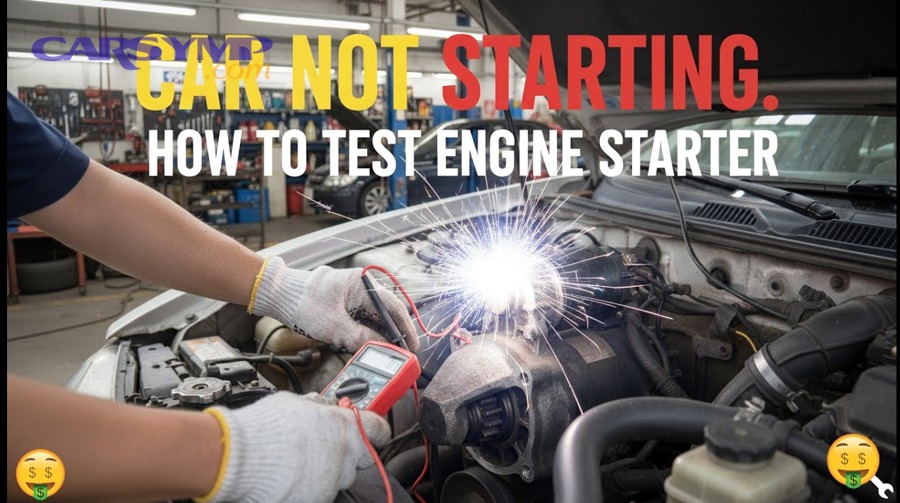
Then, instead of escalating risk (sparks, shorting terminals, or getting stranded), you switch to a controlled repair environment.
Stop and call for help if any of these are true
1) You measure 12V at the solenoid “S” terminal during START, but the starter is dead
- That’s strong evidence the fault is inside the starter/solenoid assembly.
- Replacement often requires working underneath the car near the transmission and exhaust—riskier without a lift.
2) You get signs of engine mechanical resistance
- Loud clunk, belt smoke, repeated attempts causing heavy voltage sag, or inability to rotate the engine by hand (advanced check).
- A seized accessory or engine requires professional diagnosis.
3) The vehicle is push-button, has start authorization issues, or intermittent immobilizer behavior
- Modern vehicles may block crank due to key authentication, brake pedal signals, CAN communication faults, or module logic.
- A shop scan tool can read relevant codes and live data.
4) You smell burning insulation, see cable heating, or terminals spark aggressively
- That’s often high resistance causing heat—continued cranking attempts can damage cables, terminals, or even start a fire.
5) The vehicle cranks normally but still won’t start
- Your starter system is no longer the main suspect. Now you need a broader no-start diagnosis focused on fuel, airflow, compression, and Spark test and ignition checks. A shop can quickly confirm these with the right instruments.
Practical towing decision
Tow is usually smarter than repeated attempts when:
- the car is in an unsafe spot,
- the battery is being drained rapidly,
- or you suspect a high-resistance cable that’s heating up.
One clean rule: If your tests stop being “low-risk and measurable,” stop. Diagnosis should reduce uncertainty—not increase danger.
Contextual Border: At this point, you can diagnose the core click-vs-silence problem by proving whether the failure is in the battery/power delivery, the control circuit, or the starter itself. Next, we’ll expand beyond the main pathway into less-common, intermittent, and model-specific causes that can mimic the same symptoms.
What less-common issues can cause intermittent click-or-silence no-crank, and how do you handle them?
There are 4 less-common but real causes of intermittent starter click vs silent no-start: (1) heat-soak or internal starter contact wear, (2) intermittent grounds or damaged cables, (3) relay/control-module logic faults, and (4) parasitic drain leading to borderline battery state—each requiring targeted tests to confirm.
Next, because these issues can “self-heal” and waste your time, you’ll focus on capturing evidence while the failure is happening.
Can heat soak cause a click sometimes and silence other times?
Yes. Starters can become heat-soaked after driving, especially if located near exhaust components. Worn solenoid contacts or marginal internal clearances can worsen with heat, producing:
- click/no crank when hot,
- then normal starts when cooled.
What to do:
- Measure voltage at the starter main terminal and at the solenoid S terminal during a hot no-start.
- If the command is present but the starter won’t spin, the starter is likely failing under heat.
Can a borderline ground strap create “random” no-crank behavior?
Yes. Grounds often fail intermittently because vibration changes contact pressure. A cracked ground strap or corroded chassis ground can alternate between:
- silence (if control modules lose stable reference), and
- click/no crank (if the solenoid pulls but motor can’t get return current).
What to do:
- Perform a ground-side voltage drop test during the failure.
- Inspect/clean the engine-to-chassis strap and battery-to-chassis ground point.
Can a relay, fuse box, or module cause a silent no-start without warning?
Yes. Relays can develop worn contacts; fuse box connections can loosen; and some vehicles route the start request through modules that can fail intermittently.
What to do:
- Swap the starter relay with an identical known-good relay (if available in the fuse box).
- Check for start-request signals with a scan tool if the platform is heavily networked.
Can parasitic drain cause “click today, silence tomorrow”?
Yes. A small drain overnight can drop an already-aging battery into the danger zone. The next morning:
- it might click once and die,
- or be totally silent if voltage is too low for the relay/solenoid to pull in.
What to do:
- Charge the battery fully and retest.
- If the issue repeats, test for parasitic draw and evaluate battery health (especially if it’s older or repeatedly discharged).