


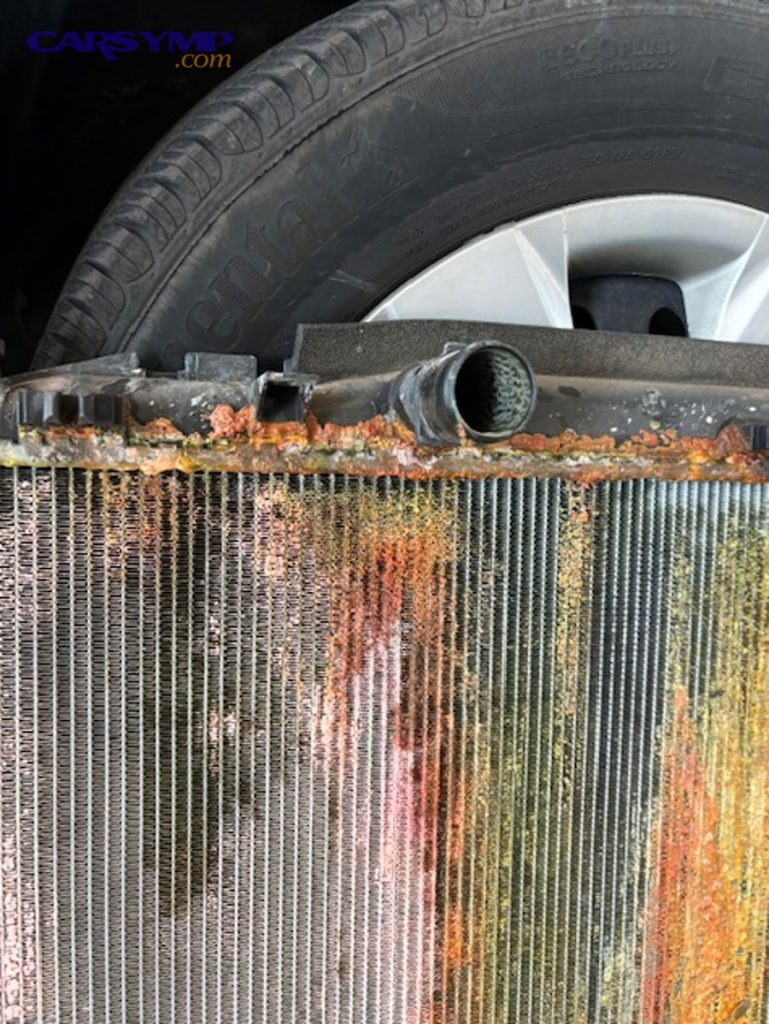
Low coolant and trapped air pockets at idle usually mean your cooling system is either losing coolant, not being filled/bleeded correctly, or building gas in the system, and the fix depends on which one is true. This guide walks you through a clear, owner-friendly path to stop the coolant level from dropping, remove trapped air, and prevent overheating at idle.
Next, you’ll learn how to recognize the exact symptom pattern that confirms trapped air (and when it’s not just air), because the same “bubbling” look can come from harmless purging or a serious internal issue. Then, we’ll map the most common causes—from small external leaks to radiator cap pressure loss—so you can check the right things in the right order instead of guessing.
Besides that, you’ll get a practical confirmation workflow: quick cold-engine checks, pressure testing logic, and bubble-pattern interpretation. That way, you can decide whether you should bleed again, replace a cap, repair a leak, or run a combustion-gas test before you throw parts at the problem.
Introduce a new idea: once you understand what the symptom means and what usually causes it, the rest becomes a step-by-step decision tree that turns “mystery coolant loss and bubbles” into a predictable fix.
What does “low coolant and trapped air pockets at idle” actually mean in a cooling system?
Low coolant and trapped air pockets at idle is a cooling-system condition where the coolant level is not stable and air accumulates at high points (radiator, thermostat housing, heater core), reducing heat transfer and coolant circulation most noticeably when the engine is idling.
Then, the reason idle exposes the problem is simple: the system has less airflow through the radiator, often lower pump flow, and any “air lock” can slow circulation enough to make the temperature climb even if the car seems fine at speed.
What symptoms confirm you have trapped air (not just low coolant)?
Trapped air has a recognizable “cluster” of symptoms, and the strongest confirmation is that coolant circulation and cabin heat behave inconsistently—especially when the engine is at idle.
Here are the most reliable signs, grouped the way technicians think about them (flow, heat, pressure, and sound):
- Heat-output pattern (heater core as the “air trap”)
- Heater blows warm while driving but goes cooler at idle
- Heat fluctuates when you blip the throttle (revving briefly improves heat)
- Temperature behavior
- Gauge climbs toward hot at idle but drops back down when moving
- Temperature swings rather than a steady rise (air pockets move and re-form)
- Reservoir/radiator neck behavior (where you can see air)
- You see burps of bubbles after warm-up, especially when the thermostat opens
- The level rises and falls sharply across heat cycles (more than a normal expansion change)
- Sounds and “feel”
- Gurgling behind the dash
- Sloshing after shutoff
- Upper hose stays cooler longer than expected because hot coolant isn’t moving consistently
This is exactly why “Car Symptoms” guides often emphasize symptom patterns instead of a single sign: air problems rarely show up as one clean clue—they show up as a chain.
Can trapped air alone cause overheating at idle?
Yes—trapped air alone can cause low coolant and overheating at idle for at least three reasons: (1) air reduces heat transfer where it sits, (2) air can block circulation (“air lock”), and (3) air lowers effective system pressure locally, allowing hot spots to form.
More importantly, trapped air can create a loop: hotter coolant expands, pushes into the reservoir, cools, contracts, then pulls air back in if the system isn’t sealed or the fill process was incomplete. As a result, you can “top off” repeatedly and still see the level drop.
A key physics point is that pressure suppresses bubble formation. According to a lecture by MIT from the Department of Materials Science and Engineering, in 2010, increasing pressure in the cooling system “represses bubble formation” and raises boiling temperature, which is why a functioning pressure cap matters when you’re chasing bubbling or idle overheating.
What are the most common causes of low coolant plus air pockets at idle?
There are three main groups of causes of low coolant plus air pockets at idle: (1) coolant is escaping (external leak or internal leak), (2) coolant is not being filled/bleeded correctly (trapped air remains), or (3) coolant is not circulating/controlling temperature properly at low speed (fan, thermostat, water pump, radiator restriction).
Then, the goal is to match your symptoms to the group so your checks stay efficient.
Is it usually a leak, an improper bleed, or something more serious?
Leak is most common when the coolant level keeps dropping across multiple days, improper bleed is most common right after service, and “more serious” (combustion gas intrusion) becomes likely when bubbles are continuous and the system pressurizes abnormally.
Here’s the comparison in the exact way it shows up in real life:
- Improper bleed / trapped air (most common after coolant work)
- Coolant level changes a lot for 1–3 heat cycles, then stabilizes
- Bubbles happen mainly right after warm-up / thermostat opening
- Heater improves after correct bleeding
- Slow external leak (most common overall cause of low coolant)
- Level drops gradually over days or weeks
- Sweet smell, dried residue, or a wet area appears somewhere—sometimes only under pressure
- Air returns because the system pulls air in as it cools
- Internal gas intrusion (more serious, less common)
- Continuous fine bubbles at idle after bleeding
- Hoses get hard quickly after startup
- Misfire on cold start, unexplained coolant loss, or repeated overflow
This comparison matters because it prevents “parts cannon” behavior—replacing thermostat, pump, and radiator when the real issue is a tiny hose seep or a cap that can’t hold pressure.
Which leak points most often cause slow coolant loss without a puddle?
Slow leaks often evaporate on hot parts or only appear under pressure, which is why you can lose coolant without seeing a clear puddle.
Common leak points include:
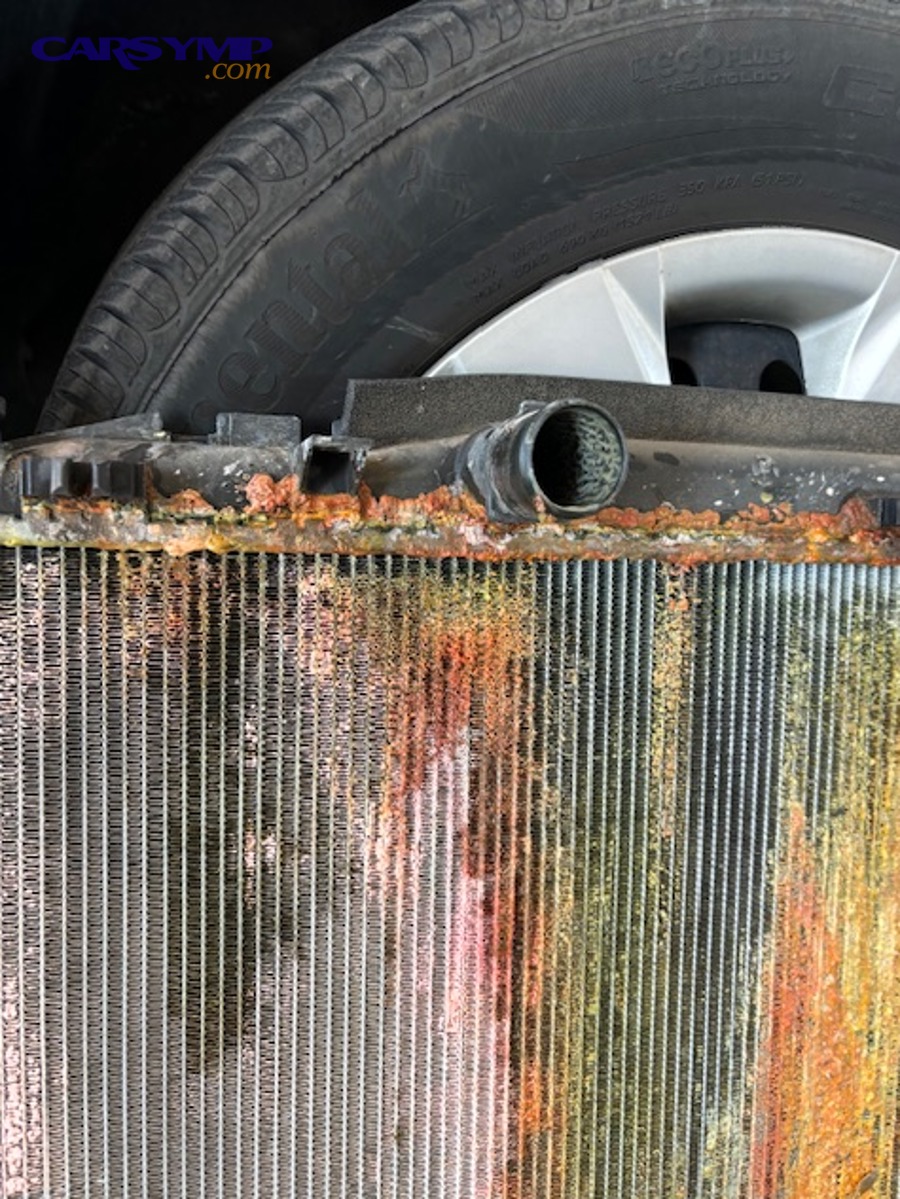
- Radiator end tanks and seams
- Look for crusty residue (white/green/orange depending on coolant type)
- Hose ends and clamps
- Seepage can be invisible until the system is hot and pressurized
- Water pump weep hole
- A classic slow leak; can sling coolant onto the timing cover where it evaporates
- This is also where many Water pump weak flow symptoms get misdiagnosed as “air”: the system can both leak and circulate poorly.
- Thermostat housing and gasket
- Leaks show up as staining down the front of the engine
- Reservoir (expansion tank) cracks
- Especially around seams and the neck where the cap seals
- Heater core
- Damp carpet, fogging windshield, sweet smell inside cabin
If you’re chasing “low coolant at idle,” always treat external sealing as the first checkpoint, because air pockets often return due to air being pulled in during cool-down.
Can a bad radiator cap or low system pressure create air pockets and idle bubbling?
Yes—a bad radiator cap can create low coolant and air pockets at idle for three reasons: (1) it can’t hold pressure so the coolant boils locally, (2) it can’t manage expansion and recovery correctly, and (3) it can allow air to enter as the system cools.
However, what makes a cap failure tricky is that it can look like multiple problems at once:
- The engine runs hotter at idle because the system can’t raise the boiling point and suppress bubble formation.
- The reservoir may overfill, then the radiator ends up low later.
- You “bleed it,” it’s okay for a short time, then bubbles come back.
So, when you see bubbling at idle, don’t assume head gasket first—verify the cap’s pressure rating and sealing condition early.
How do you safely confirm the root cause before replacing parts?
You can safely confirm the root cause by using a four-stage workflow—quick visual checks, pressure/holding checks, circulation checks, and bubble-pattern checks—so you only replace parts when the evidence points to them.
Next, this workflow matters because the same symptom (idle bubbling) can come from completely different faults, and the wrong repair wastes time and money.
What quick checks can you do in 10 minutes at home (cold engine)?
Do these checks only on a cold engine (so you avoid burns and get accurate observations):
- Check level correctly
- If you have a reservoir: compare to the “COLD” mark
- If you have a radiator cap: check the radiator is actually full (only when cold)
- Look for dried coolant evidence
- Crusty residue at hose joints, radiator seams, thermostat housing
- Inspect the cap sealing surfaces
- Cracked rubber seal, damaged spring, corrosion on the neck
- Look for “inside-cabin” clues
- Damp passenger floor, sweet smell, fogging windshield (heater core)
- Check oil and coolant visually
- Milky oil or oily sludge in coolant is a red flag (not always present, but important)
- Squeeze the upper hose (cold)
- It should be soft when cold; if it’s rock hard before warm-up, that’s abnormal
These checks tell you whether you’re likely dealing with loss (leak) or air left from fill/bleed.
What does it mean if you see continuous bubbles at idle after bleeding?
Continuous bubbles at idle after bleeding usually mean gas is entering the cooling system, not that “air is still trapped.” Specifically, trapped air tends to purge in bursts—especially when the thermostat opens—while gas intrusion tends to create a steady, repeating stream.
Here’s how to interpret what you see:
- Normal purge (more likely trapped air)
- Burps happen during warm-up
- Bubble activity decreases as temperature stabilizes
- Heater output becomes stable
- Concerning pattern (more likely ongoing gas entry)
- Fine bubbles keep appearing at idle continuously
- The system builds pressure quickly
- Coolant may be pushed out even when not overheated
This is the point where you stop guessing and choose tests that separate “air” from “gas.”
Should you do a cooling-system pressure test and a combustion-gas test?
Yes—when low coolant and air pockets keep returning, you should do these tests because (1) a pressure test finds external leaks that don’t drip, (2) a cap/hold test confirms the system can maintain pressure, and (3) a combustion-gas test helps rule in/out internal gas intrusion.
However, the decision depends on your symptom intensity:
- Do a pressure test first if:
- Coolant level drops over days
- You see residue but can’t find the exact leak
- You suspect the reservoir or a hose end
- Add a combustion-gas test if:
- You have continuous bubbling after a proper bleed
- Hoses go hard early
- You get repeated overflow with no obvious external leak
To better understand what the combustion test looks like in practice, here’s one clear walkthrough:
How do you bleed/burp the cooling system to remove trapped air and stabilize coolant level?
Bleeding the cooling system is a how-to process with 6 core steps—cold fill, heater set-up, controlled warm-up, air purge, correct topping, and post-cool recheck—designed to remove trapped air so coolant circulation becomes steady and the level stops “mysteriously” dropping.
Then, the key is to treat the heater core and thermostat opening as the two biggest moments when air moves.
What is the correct bleeding procedure for most cars (step-by-step)?
Here is a safe, broadly applicable method that works on many vehicles (but always follow your owner’s manual if it specifies a bleeder screw or special procedure):
- Start cold and set the cabin heater to HOT
- This opens the heater circuit so trapped air can escape
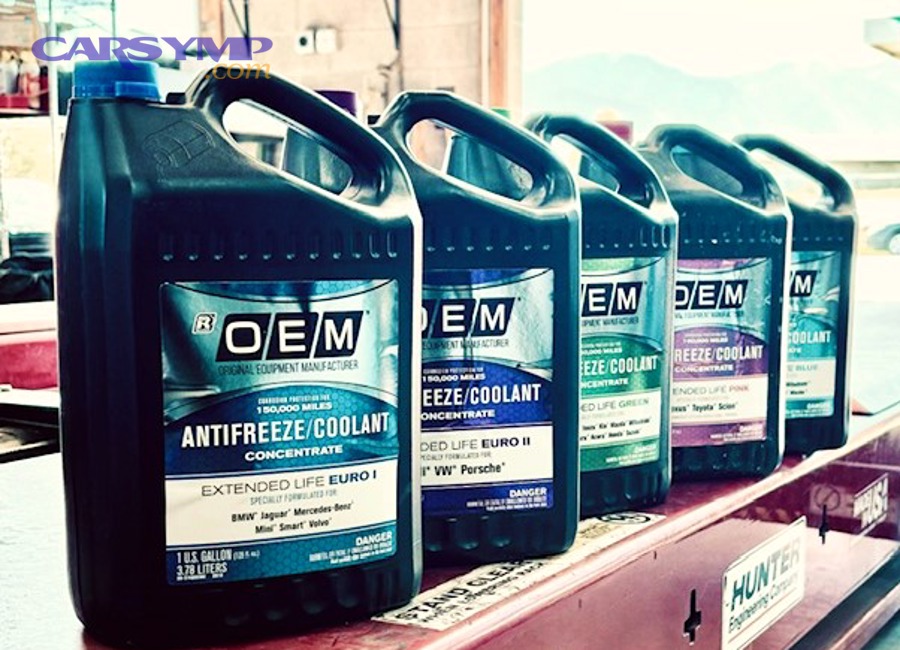
- Fill slowly with the correct coolant mix
- Pouring too fast can trap air; slow fill reduces turbulence
- Use a spill-free funnel or the correct fill point
- Keep the fill point as the highest point so air rises out
- Start the engine and let it idle
- Watch the level; expect it to drop as passages fill
- Wait for the thermostat to open
- You’ll often see a level change and a wave of bubbles
- Add coolant as needed to keep the system from sucking air
- Maintain temperature, then shut down and cool fully
- After cool-down, recheck to the cold mark and repeat if needed
Important cautions that prevent new air pockets:
- Do not open a hot radiator cap.
- Do not chase the level endlessly while the engine is hot—coolant expands, so it will look “high” when hot.
- If you have a bleeder screw, open it only as directed and close it once a bubble-free stream appears.
This process directly targets the problem behind “overheating at idle” caused by air locks: you are restoring continuous liquid contact so heat can transfer and circulate reliably.
Do you need to park on an incline, use a funnel, or use a vacuum fill tool?
A funnel works best for most DIYers, an incline helps when the radiator/fill neck isn’t the highest point, and a vacuum fill tool is optimal for stubborn systems or after major draining—because it fills without leaving air pockets.
Here’s the practical comparison:
- Spill-free funnel (best DIY default)
- Pros: Visible bubbles; easy topping; reduces mess
- Best for: Most standard systems
- Parking on an incline (useful sometimes)
- Pros: Makes the fill point higher than the engine/high spots
- Best for: Vehicles where the radiator sits lower than the engine
- Vacuum fill tool (best “professional” method)
- Pros: Pulls air out first, then draws coolant in; dramatically reduces re-bleed cycles
- Best for: Complex layouts, repeated air issues, heater-core air traps
If your system repeatedly re-traps air after multiple correct bleeds, that’s when you shift attention back to sealing and pressure integrity.
How do you know bleeding is complete and the system is truly stable?
Yes—you can know bleeding is complete when (1) cabin heat is steady at idle, (2) the temperature gauge stabilizes across multiple heat cycles, and (3) the coolant level returns to the same cold mark after cooling without repeated top-offs.
More specifically, stable looks like this:
- After a full warm-up, you no longer see ongoing bubbles.
- The upper radiator hose warms up in a predictable way when the thermostat opens.
- The radiator fan cycles normally (if electric fan).
- The reservoir level expands when hot and returns near the cold mark when cool—without needing additional coolant.
If you hit these criteria but coolant still drops later, that’s not “trapped air”—that’s a loss problem.
What repairs actually fix the problem once you know the cause?
There are two main repair paths that fix low coolant and trapped air pockets at idle: (1) stop coolant loss and restore pressure integrity, and (2) restore proper low-speed cooling performance (fan, thermostat, flow, radiator heat rejection).
Then, the repair only works long-term if it matches the confirmed cause—because trapped air is often a symptom of a leak, not the root problem itself.
If coolant is leaking, what should you repair first to stop air from returning?
Fix the leak and the pressure-control points first, because any leak can let coolant out and then pull air in during cool-down.
A practical priority order (because it’s fastest to confirm and most likely to solve it) is:
- Radiator cap + neck sealing surface
- Cheap, fast, and high-impact when bubbling/overflow is part of the story
- Reservoir cracks and hose connections
- Especially the small overflow/recovery hose that enables coolant return
- Hose ends, clamps, and thermostat housing
- Common seep points under pressure
- Radiator seam leaks
- Often show residue, especially at end tanks
- Water pump leaks
- Look for weep-hole staining; remember, leaks and weak flow can coexist
Once sealing is restored, bleeding becomes a one-time process instead of a repeated chore.
If it’s not a leak, what parts can mimic trapped air at idle (thermostat, fan, pump)?
If you’ve confirmed no loss and still get overheating at idle, the problem often shifts to low-speed cooling capacity—exactly where these faults show up.
Here are the most common “mimics,” including the exact phrase-level symptoms owners search for:
- Radiator fan not operating correctly
- Overheats at idle, improves while driving
- Fan never turns on, turns on too late, or runs weakly
- Thermostat issues
- Stuck closed or slow to open can cause rapid spikes
- Stuck open can cause long warm-up, but usually not idle overheat by itself
- Water pump issues
- Water pump weak flow symptoms can include poor heater output at idle, temperature creep at low RPM, and inconsistent circulation—especially if the impeller is worn or slipping.
- Sometimes you’ll see turbulence is minimal at the fill neck even as temperature climbs.
- Radiator restriction
- Clogged radiator symptoms at low speed include overheating at idle or in traffic, cooler temperature at highway speed, and uneven radiator temperature across the core (hot spots and cold spots).
- Internal clogging reduces heat rejection when airflow is low.
If the symptom is strongly speed-dependent (bad at idle, okay moving), don’t ignore airflow and heat rejection. Many “air pocket” complaints are actually low-speed cooling failures being misread.
What uncommon or vehicle-specific factors can cause “idle-only” air pockets—and what’s the opposite problem?
Uncommon or vehicle-specific idle-only air pocket issues usually involve system design (no radiator cap tanks, bleed screws), pump behavior (variable-speed/electric pumps), or pressure mismatch, while the opposite problem is not “too much air” but too much restriction/overfill behavior that creates similar overheating symptoms for different reasons.
Next, this section expands micro semantics so you can solve edge cases without confusing them with the main causes.
How do “no radiator cap” expansion-tank systems change bleeding and diagnosis?
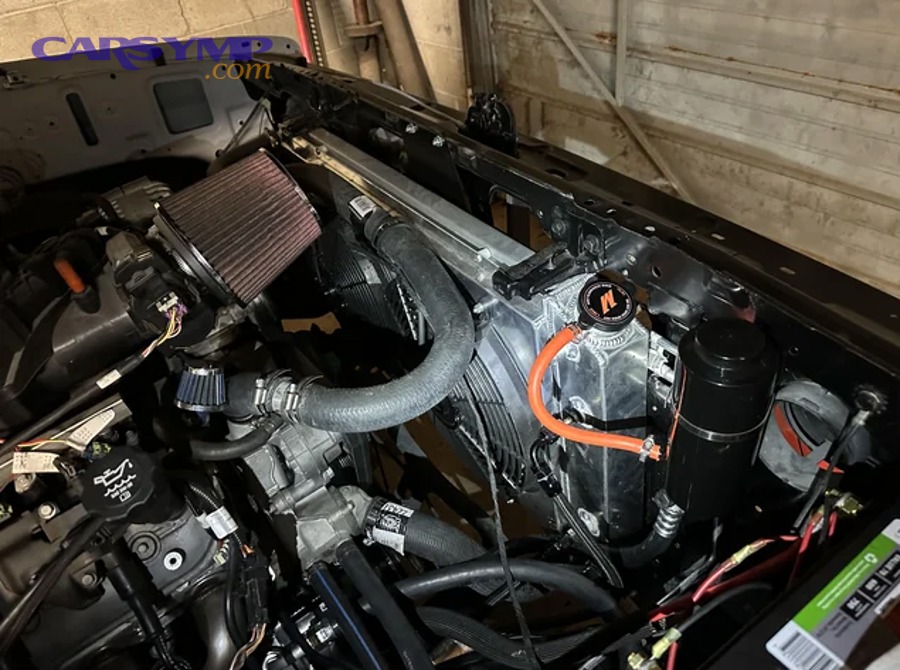
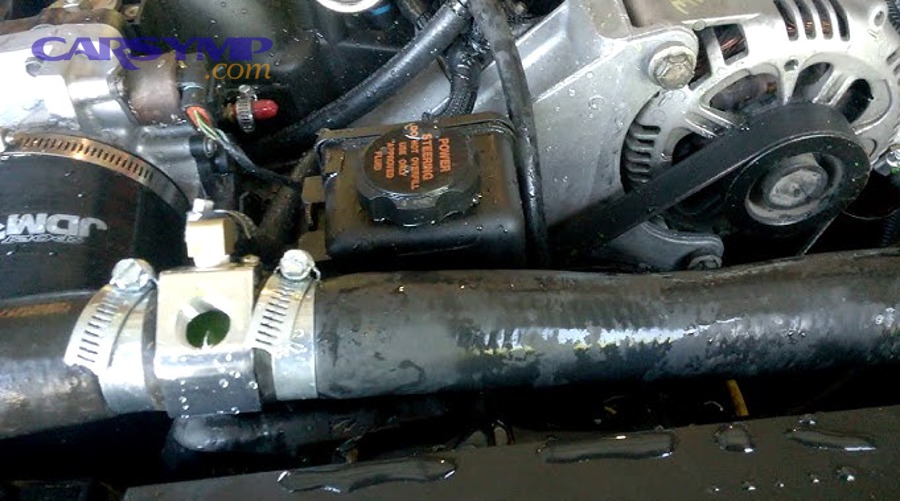
On expansion-tank systems, the tank is the pressure point and often the highest fill point, so bleeding depends on filling the tank correctly, ensuring the small return lines flow, and using any built-in bleed ports if equipped.
Specifically, owners get misled because:
- The visible “level” is in the tank, not necessarily the engine passages.
- Small return hoses can clog, preventing proper purge and recovery.
- A cap on the tank functions like a radiator cap—if it can’t hold pressure, bubbling and level swings follow.
So, if your vehicle has no radiator cap, treat the expansion tank cap and hoses as primary suspects when air returns.
Can electric or variable-speed water pumps create cavitation that looks like trapped air?
Yes—electric or variable-speed pumps can create cavitation-like aeration that resembles trapped air for three reasons: (1) pump inlet conditions can create local low pressure, (2) bubbles can form and collapse (noise/vibration), and (3) flow control strategies can change bubble behavior at idle.
However, most everyday “air pocket” complaints still come from leaks or incomplete bleeding. Cavitation becomes more plausible when the vehicle has an electronic pump, the issue is repeatable under specific operating conditions, and other causes have been ruled out.
What does a wrong radiator cap pressure rating change ?
A wrong cap pressure rating changes boiling behavior and bubble suppression, while a leak changes mass balance (coolant physically leaves the system).
Here’s the key difference:
- Wrong cap rating / weak cap
- Bubbling and overflow can happen without obvious coolant loss at first
- The system may act “fine” at speed but struggle in traffic
- Fix: correct cap rating + good sealing surfaces
- Leak
- Coolant level drops steadily over time
- Air returns after cool-down as the system pulls air in
- Fix: repair the leak, then bleed once
This contrast is the micro-semantic “synonym vs cause” trap: bubbles look like “air,” but the reason bubbles appear determines the fix.
What is the opposite of an “air-locked” system—can overfilling or blockage cause similar overheating?
The opposite of an air-locked system is not “perfect cooling,” but a system where coolant is present yet movement and heat rejection are limited by overfill behavior or blockage, creating overheating symptoms without classic air pockets.
Two common “opposites” that still feel similar from the driver’s seat:
- Overfilled expansion tank
- Coolant expands, pushes out the overflow, then cools and appears “low” later
- Owners keep adding coolant, creating a repeating cycle
- Flow restriction / blockage
- Radiator restriction or deposit buildup reduces heat shedding
- The symptom can mimic trapped air: temperature rises at idle, improves on the highway
If your top-offs never stabilize and you’ve bled correctly, revisit the basics: correct fill level when cold, correct cap function, and evidence of restriction.
Evidence (if any)
According to a lecture by MIT from the Department of Materials Science and Engineering, in 2010, increasing pressure in a closed system suppresses bubble formation and enables higher boiling temperatures, explaining why pressure integrity (cap + sealing) is central when diagnosing bubbling and overheating behaviors in automotive cooling systems.