


If your radiator cooling fan won’t turn on, you can diagnose it reliably by following a simple sequence—confirm the symptom, check power protection (fuses/relays), verify the fan motor, and then work backward through wiring and temperature-control inputs until one test clearly fails.
Then, you’ll want to understand what “fan not coming on” actually means on your specific vehicle, because normal fan behavior depends on temperature thresholds, A/C operation, and whether you have a single fan, dual fans, or a fan control module.
Next, this guide also helps you translate each test result into a likely root cause—so you don’t end up replacing parts at random when the real issue is a corroded ground, a melted connector, or a bad temperature signal.
Introduce a new idea: below, you’ll follow the same diagnostic flow a careful technician uses, while also learning when overheating risk is urgent enough to stop driving and switch from DIY checks to professional diagnosis.
What does it mean when a radiator cooling fan won’t turn on?
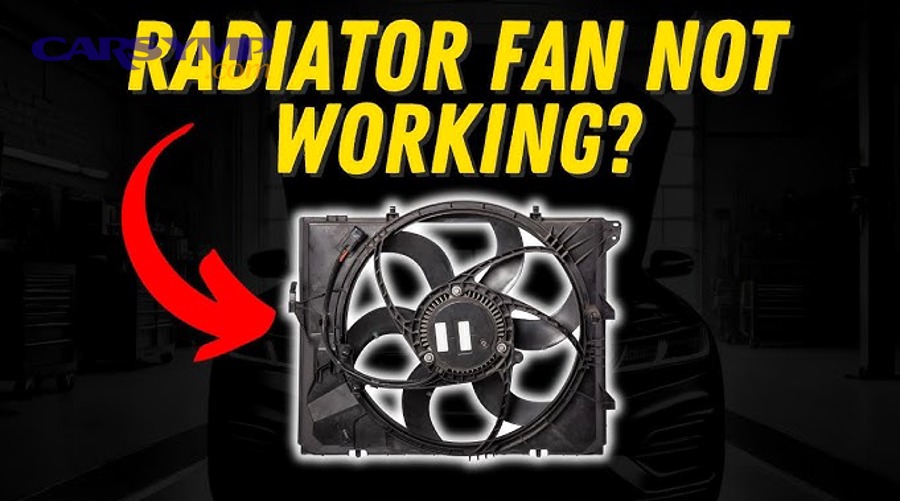
A radiator cooling fan that won’t turn on is an electric fan system that fails to activate when engine heat (or A/C demand) requires airflow through the radiator, usually due to a fault in power delivery, control signals, or the fan motor itself.
To better understand why this matters, you first need to separate “normal fan delay” from a true failure so you don’t chase a problem that isn’t there.
In most modern cars, the cooling fan is not designed to run constantly. The engine warms up, the thermostat regulates coolant flow, and the fan only turns on when coolant temperature climbs past a calibrated point, or when the A/C system needs condenser cooling. That’s why “I don’t see the fan running” is not always the same as “the fan never runs.”
Where “not coming on” becomes a real issue is when the engine temperature rises without the fan responding, especially in traffic. Many drivers notice overheating at idle first because low vehicle speed reduces natural airflow, and the fan becomes the primary source of airflow through the radiator.
Is it normal for the radiator fan to stay off until the engine gets hot?
Yes—it is normal for the radiator fan to stay off until the engine reaches its fan-on threshold, because (1) the thermostat must bring the engine to operating temperature efficiently, (2) the ECU avoids unnecessary electrical load when cooling is not needed, and (3) airflow at speed can cool the radiator without fan assistance.
Then, once you accept that “off” can be normal, the key is learning when “off” becomes abnormal.
Practical ways to judge “normal delay”:
- Temperature gauge behavior: A steady needle near the normal range during warm-up is typical. A needle that creeps upward at a stop and then drops once you drive again often points to fan or airflow issues.
- Fan cycle pattern: Many fans cycle on and off rather than running continuously.
- Ambient conditions: Hot weather, uphill climbs, towing, and A/C use raise the likelihood the fan should run.
One important nuance: some vehicles run the fan almost immediately when the A/C is commanded on, while others wait until pressures or temperatures cross a threshold. So “fan doesn’t run when A/C is on” can be a clue—but it isn’t universal proof of a fault.
Which symptoms confirm this is a fan-activation problem (not a cooling-system problem)?
There are 5 main symptom groups that confirm a fan-activation problem based on when overheating happens, what triggers it, and what changes it: (1) idle-only overheating, (2) A/C-related overheating, (3) fan never runs even when hot, (4) one fan works but the other doesn’t, and (5) intermittent fan operation tied to vibration or heat.
Next, use these symptom patterns to aim your diagnosis at the right system branch.
1) Idle-only overheating pattern
- Temperature climbs at long stops, then drops when you drive.
- This points strongly toward a fan activation issue because vehicle speed replaces the fan’s airflow.
- It can overlap with Clogged radiator symptoms at low speed, but a fan issue is the first, fastest check.
2) A/C-linked overheating pattern
- AC on causes overheating at idle: coolant temperature rises when A/C is on, especially at a stop.
- This can happen if the fan isn’t providing enough airflow for both the radiator and condenser heat load, or if the fan has lost a speed stage.
3) Fan never runs pattern
- Engine gets hot and the fan stays silent.
- Often a power issue (fuse, relay, wiring, ground) or a failed fan motor.
4) One-fan-only pattern (dual fan systems)
- One fan spins; the other doesn’t.
- Often a failed fan motor on one side, a resistor/control stage issue, or a control-module fault.
5) Intermittent operation pattern
- Fan works sometimes, then fails when hot.
- This can be heat-soaked relays, failing fan bearings, or connector resistance that worsens with temperature.
Also keep an eye out for cooling-system contributors that can mimic fan trouble—especially Low coolant and air pockets at idle. Low coolant can create steam pockets near the sensor or reduce heat transfer at idle, making the engine act “fan-defective” when the real issue is coolant level and bleeding.
How can you diagnose a cooling fan that won’t turn on step-by-step (from easiest to hardest)?
The most reliable method is a 7-step diagnostic flow—confirm conditions, check fuses, check relays, test fan command triggers, test the fan motor directly, inspect wiring/grounds for voltage drop, and finally verify control inputs (coolant temp/A/C pressure/ECU commands) to isolate the failure point.
Then, because each step depends on the one before it, you’ll avoid skipping ahead and misreading what the results mean.
Can you confirm the problem with a quick “A/C ON” or idle test?
Yes—you can often confirm a radiator fan activation problem quickly because (1) many cars command the fan when A/C is on, (2) idle heat load reveals weak airflow faster than driving, and (3) a simple observation test reduces guesswork before you touch wiring.
Below, this quick check sets your baseline so every later test has a clear “before and after.”
Quick confirmation sequence (safe, basic):
- Park the car, set the parking brake, keep hands/tools clear of the fan area.
- Start the engine and let it warm up. Watch the temp gauge.
- Turn the A/C on (max cold) and observe whether the fan runs within ~30–90 seconds.
- If the gauge climbs toward hot while the fan never activates, treat it as a strong failure signal.
How to interpret:
- Fan runs with A/C on: The fan motor, at least one speed stage, and some power delivery are likely OK. You may be dealing with a temperature-signal issue, thermostat/coolant flow issue, or a second fan/speed stage problem.
- Fan does not run with A/C on: Strongly suggests fuse/relay/power/command issue or failed fan motor—continue to electrical checks.
- Fan runs but overheating persists at idle: You may have weak airflow (fan spinning slowly), a partially blocked radiator, or coolant issues such as Low coolant and air pockets at idle.
Which fuses and relays should you check first, and how do you test them?
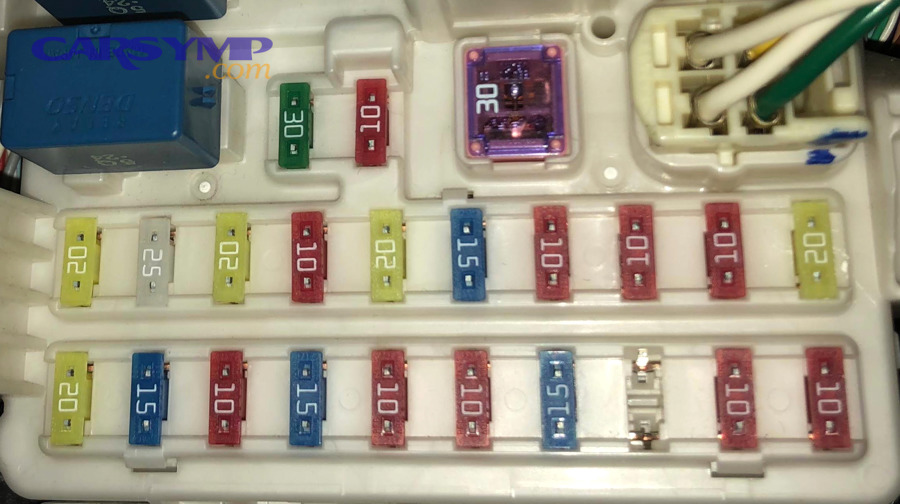
There are 3 first-priority protection items to check—(1) the cooling fan fuse(s), (2) the cooling fan relay(s), and (3) any high-current maxi-fuse feeding the fan circuit—because these are the most common “no fan” causes and the fastest to verify.
Next, once you confirm power protection, you’ll know whether you’re chasing a dead fan motor or a missing command.
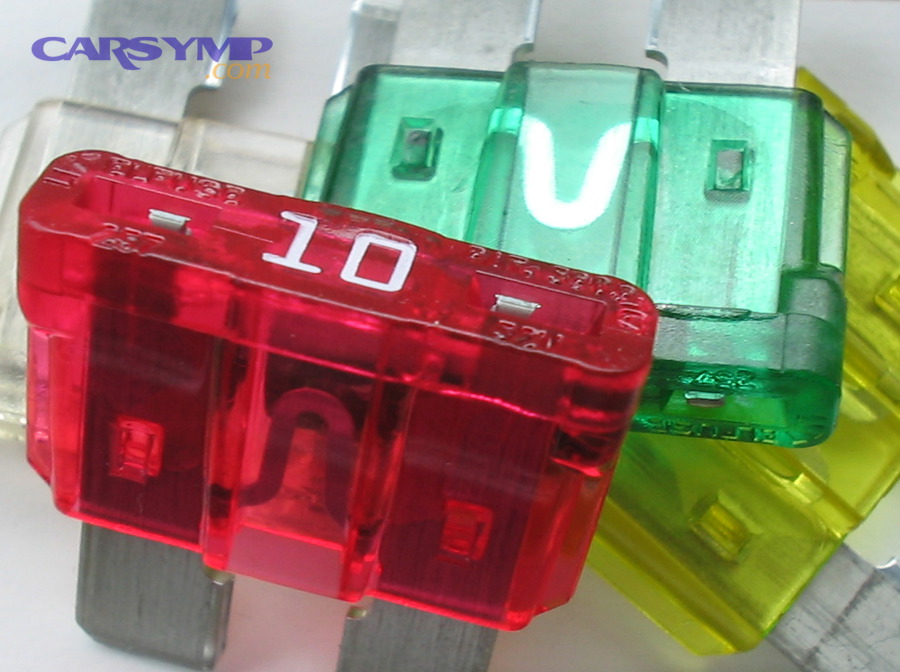
How to test a fuse correctly:
- Visual check is a start, but not enough. Some fuses crack invisibly.
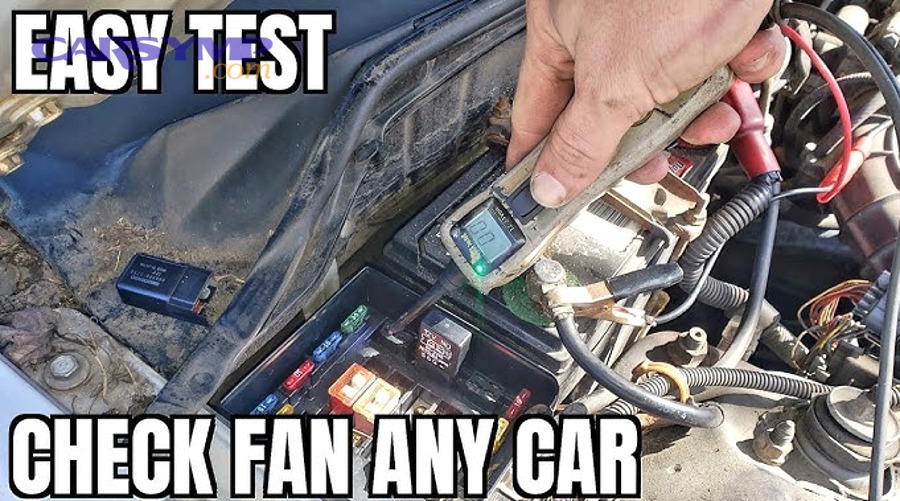
- Use a test light or multimeter:
- With key on (or engine running, depending on design), check both fuse test points.
- Power on one side only = blown fuse.
- No power on either side = upstream power supply issue (or the circuit only energizes under certain conditions).
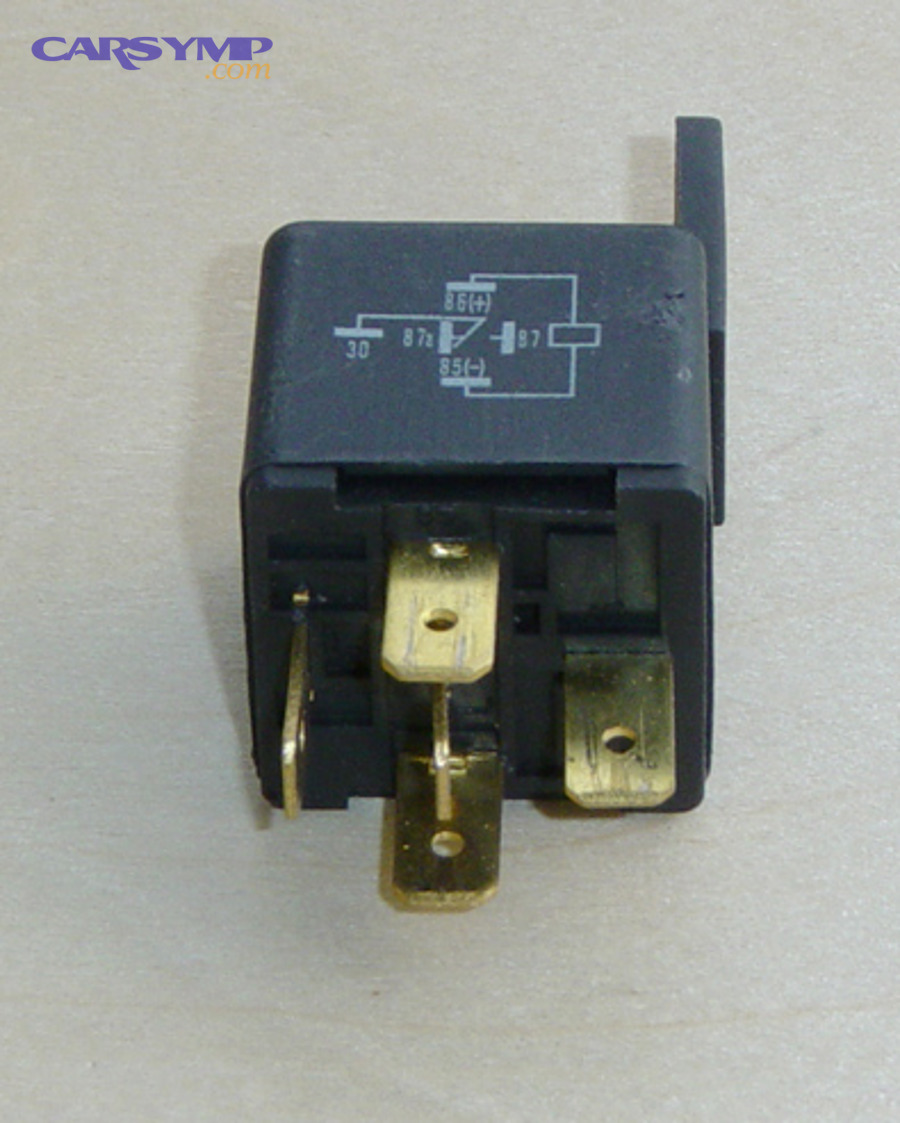
How to test a relay (practical approach):
- Swap test: If there’s an identical relay in the fuse box (horn, fog lamp, etc.), swap and see if the fan behavior changes.
- Bench test (if you’re comfortable):
- Confirm coil resistance is not open/short.
- Apply 12V to coil pins and listen/feel for a click.
- Check continuity across switched pins when energized.
If a fuse is blown, don’t stop at “replace it.” A cooling fan fuse usually blows for a reason:
- Fan motor is drawing too much current (worn bearings, failing motor windings).
- Wiring short to ground.
- Water intrusion in connectors/control module.
That’s why a blown fuse should push you toward direct fan motor testing and wiring inspection before you assume it’s “fixed.”
How do you test the fan motor directly to confirm whether it’s bad?
You can confirm a bad fan motor by performing a direct-power test that bypasses the vehicle’s control system, because a good motor will spin strongly and consistently when supplied proper voltage, while a failing motor will not start, will start slowly, or will stop when hot.
Then, once you know whether the motor itself can run, you can decide whether to diagnose “upstream” (command/power) or “downstream” (motor).
Direct fan motor test (high-level, safety-first):
- Engine OFF for the connection step.
- Identify the fan connector on the fan shroud.
- Use a fused jumper lead or a safe power source to supply 12V and ground to the motor pins (vehicle-specific pinout matters).
- Observe:
- Does it start immediately?
- Does it spin at full speed?
- Does it sound smooth (no grinding)?
- Does it keep running for 30–60 seconds without slowing?
Signs the motor is failing even if it “runs”:
- Starts only if you spin the blades by hand (bearing drag).
- Runs noticeably slow (weak motor, voltage drop, or wrong control).
- Surges or cuts out when warm (internal motor fault).
This is where overheating at idle can be explained by a “weak fan” scenario: the fan technically runs, but airflow is insufficient at low speed, so temperature climbs anyway.
How do you check wiring, connectors, and grounds for voltage drop or corrosion?
You check wiring and grounds by doing a voltage-drop test under load, because corroded connectors and weak grounds can show “12V present” with no load yet fail to deliver enough current when the fan tries to run.
More importantly, voltage drop explains many intermittent cases where parts test “good” on the bench but fail in the car.
What to inspect first (fast visual checks):
- Fan connector pins: melting, discoloration, looseness, green corrosion.
- Harness near radiator: chafing from movement, contact with sharp brackets.
- Ground points: rust, loose bolts, paint under eyelets.
How to do voltage-drop testing (simple concept):
- The fan draws high current, so even small resistance causes big voltage loss.
- With the fan commanded on (or during a direct-power test), measure:
- Battery positive to fan positive (should be low drop)
- Fan ground to battery negative (should be low drop)
- A high reading suggests resistance in that path.
Typical “real-world” failure patterns:
- Connector gets hot, plastic deforms, pin tension weakens, resistance rises, and the fan cuts out—especially when the engine bay is heat-soaked.
- Ground strap is loose or corroded; fan works sometimes, then fails after vibration.
At this stage, also consider cooling-system conditions that amplify the symptom: Low coolant and air pockets at idle can create uneven temperature readings and reduce heat transfer, making the fan problem appear worse (or appear when it’s marginal).
Which component is most likely at fault based on your test results?
There are 6 most-likely fault buckets—fan motor, fuse/maxi-fuse, relay, wiring/connector/ground, coolant temperature input, and fan control module/ECU command—based on which step fails first and whether the fan runs under direct power.
Next, you’ll map your outcomes to one likely cause instead of “everything could be wrong.”
A practical “results → likely cause” guide:
This table summarizes what each test outcome usually points to, so you can stop guessing and target the most probable failure point first.
| Test outcome | Most likely cause | Why it fits |
|---|---|---|
| Fan does not run with direct power | Failed fan motor / seized bearings | Motor itself can’t convert electrical power into rotation |
| Fan runs with direct power, but never runs normally | Relay, fuse feed, command signal, or control module | Motor is capable; problem is upstream |
| Fuse is blown repeatedly | Short-to-ground or overcurrent fan motor | A good fuse doesn’t “randomly” blow |
| Fan runs only with A/C on | Temperature input/ECT signal issue (or strategy) | A/C request triggers fan independently of ECT |
| One fan works, one doesn’t | One motor/stage failed or module output stage failed | Common in dual fan and two-speed systems |
| Fan runs slowly and overheating persists | Weak motor, voltage drop, airflow restriction | Low airflow is worst at idle |
If the fan runs with direct power, does that rule out the fan motor?
Yes—mostly it rules out the fan motor because (1) the motor proves it can spin under load, (2) the motor proves it can draw current without instantly failing, and (3) the symptom shifts to “control or delivery” rather than “actuator failure.”
However, to reconnect this to your original problem, a marginal motor can still pass a short test and fail in real heat.
Edge cases where the motor is still suspect:
- Heat-related failure: motor runs cold but stalls hot.
- Intermittent brushes (on brushed motors): starts sometimes, not always.
- Bearing drag: motor runs but slowly, causing overheating at idle even though it “technically works.”
So direct power is a powerful test, but it should be long enough to catch a heat-soak weakness if your symptoms appear only after time at a stop.
If the fuse blows again, what does that indicate (short vs overcurrent fan motor)?
If the fuse blows again, it usually indicates a short-to-ground or an overcurrent condition, and you can distinguish them because a short tends to blow immediately while overcurrent often appears as the fan begins to load up or when the motor is hot and dragging.
Then, once you identify which pattern you have, you’ll stop sacrificing fuses and start testing the real cause.
Short-to-ground indicators:
- Fuse blows instantly when the circuit is energized.
- Harness inspection reveals chafed insulation or pinched wiring near metal brackets.
- Moisture intrusion can create conductive paths in connectors.
Overcurrent indicators (fan motor/bearing drag):
- Fuse survives briefly, then blows during fan operation.
- Fan may sound strained, spin slow, or stop abruptly.
- Fan motor housing may be unusually hot.
This is where drivers sometimes confuse the issue with Clogged radiator symptoms at low speed because both problems show up in traffic. The difference is: a clogged radiator typically won’t blow a fuse, but a failing motor can.
If the fan never gets a command, is the coolant temperature sensor or ECM signal the likely cause?
The coolant temperature sensor (ECT) is often the likely cause when the fan never receives a command, while the ECM signal path is more likely when ECT readings look normal but the fan command output never changes—so ECT wins when input data is wrong, and ECM/control wins when command logic or output stages fail.
Next, you’ll confirm which side is failing by comparing “what the engine is doing” to “what the computer thinks is happening.”
Quick ways to tell ECT-signal problems:
- Gauge reads oddly (stays cold too long, jumps suddenly, behaves erratically).
- Fan behavior doesn’t match temperature reality (engine feels hot, but fan never triggers).
- Some vehicles show trouble codes for coolant temp sensor circuits.
Quick ways to suspect command/output problems:
- ECT appears reasonable (especially if verified with a scan tool or infrared thermometer at the thermostat housing).
- Fan is never commanded even when temperature is clearly high.
- Fan control module (if equipped) does not pass command through to the fan.
If you don’t have a scan tool, your best “real-life” clue is behavioral: if the car gets hot at stops (classic overheating at idle) yet the fan never responds, it’s either missing power delivery or missing the correct temperature/command signal.
When should you stop driving and treat this as an urgent overheating risk?
Yes—you should stop driving and treat it as urgent when a radiator fan not coming on leads to rising engine temperature, because (1) overheating can quickly damage gaskets and cylinder heads, (2) steam/coolant loss can cause sudden overheating spikes, and (3) continued operation can turn a minor electrical fault into major engine damage.
More importantly, once you understand the “stop now” signs, you can diagnose safely instead of gambling with the engine.
Immediate “stop driving” signs:
- Temperature warning light on, gauge in the red, or rapid climb.
- Steam from the hood or coolant smell.
- Engine misfire, loss of power, or knocking after overheating.
- Coolant leaking onto the ground.
Also note: some overheating at low speed can be made worse by A/C load—so AC on causes overheating at idle is a particularly strong warning sign that your cooling airflow is not keeping up.
Can you drive with a radiator fan not working if the car isn’t overheating yet?
Yes—sometimes you can drive briefly if the car isn’t overheating yet, because (1) airflow at highway speed can cool the radiator without the fan, (2) cool ambient temperatures reduce heat load, and (3) short, light-load trips may not trigger the fan threshold.
However, to reconnect to the risk, the margin disappears in traffic, heat, or with A/C on.
When it’s relatively safer (still not “ignore it”):
- Highway driving with steady speed and mild weather.
- No A/C use.
- Temperature gauge stays stable in the normal range.
When it’s not safe:
- Traffic/stop-and-go conditions (classic overheating at idle scenario).
- Hot weather, towing, steep climbs.
- AC on causes overheating at idle—turning A/C on and watching temps rise is a clear sign your cooling system needs airflow help immediately.
If you suspect coolant is low, don’t “test drive” it. Low coolant and air pockets at idle can cause sudden spikes and make overheating unpredictable.
What immediate steps reduce engine damage if overheating starts?
There are 6 immediate steps that reduce engine damage when overheating starts: (1) turn off A/C, (2) turn heater to max, (3) move to airflow or pull over, (4) shut the engine off if temp keeps rising, (5) let it cool before opening anything, and (6) check coolant level only when safe.
Then, once the immediate danger is controlled, you can resume diagnosis without compounding the problem.
- Turn off A/C to reduce heat load and fan demand.
- Turn heater to max to dump heat into the cabin (uncomfortable but effective).
- Increase airflow: gentle driving can help, but don’t keep driving if the gauge is climbing.
- Pull over and shut off if the needle approaches red.
- Do not open the radiator cap hot—pressure and steam can cause burns.
- Once cooled, check coolant and look for leaks. If coolant is low, suspect Low coolant and air pockets at idle and plan to bleed the system properly after repairs.
If overheating happened, treat diagnosis as higher stakes: you may now have secondary symptoms (misfires, coolant loss, codes) that weren’t present at first.
According to recall documentation published by NHTSA in 2019, cooling fan failures and electrical overloading can, in certain cases, create fire risk in addition to overheating risk.
What’s the most cost-effective repair path after diagnosis?
The most cost-effective repair path is to replace only the confirmed failed link (fuse/relay, connector/ground, fan motor, sensor, or control module), then re-test fan operation under the same conditions that caused the symptom, because targeted repairs prevent repeat failures and avoid unnecessary parts.
Next, you’ll choose the repair that matches your evidence so your fix is durable—not just temporary.
A cost-effective approach is “repair the failure point + repair the reason it failed.”
Common scenarios:
- Blown fuse only once + fan motor drags → replace fan motor (and often the connector pigtail if heat-damaged).
- Relay fails swap test → replace relay; inspect terminals for heat spread.
- Connector corrosion/heat melt → replace connector/pigtail and clean/tighten grounds.
- ECT signal wrong → replace sensor and verify coolant level/bleed to prevent false readings.
- Fan control module failure → replace module or fan assembly (depending on design) after confirming power/ground.
This is also where cooling system health matters: if the car runs hot mainly at low speed, don’t ignore Clogged radiator symptoms at low speed such as debris-packed fins or internal restriction. A perfectly working fan can’t cool a radiator that can’t exchange heat effectively.
Is replacing the relay/fuse enough, or do you need a fan assembly/control module?
It depends: replacing the relay/fuse is enough when the relay is proven bad and current draw is normal, but you need a fan assembly/control module when the motor is weak, current draw is excessive, or the control stage is not delivering power even with correct inputs—so the “winner” is whichever component fails a direct test.
Then, once you match the fix to the failed test, you prevent repeat blowouts and repeat overheating.
Use this decision logic:
- Replace relay/fuse if:
- Fuse was blown once and does not blow again after confirming no shorts.
- Relay swap clearly changes fan behavior.
- Fan runs strongly when commanded and current protection holds.
- Replace fan motor/assembly if:
- Fan fails direct power test.
- Fan runs slow or noisy and overheating persists (overheating at idle is common here).
- Fuse blows again and evidence points to overcurrent (bearing drag).
- Replace control module (or assembly with integrated module) if:
- Fan motor is good on direct power.
- Power and ground are present.
- Command logic should activate the fan, but module output never energizes the motor.
According to recall documentation published by NHTSA in 2019, inadequate circuit protection combined with cooling fan motor issues can overheat components in certain applications.
What should you re-check after the fix to confirm the fan operates correctly?
There are 5 re-checks to confirm a correct repair: (1) fan cycles at idle after warm-up, (2) fan responds to A/C demand, (3) temperature stabilizes in traffic, (4) no fuses overheat/blow, and (5) connectors stay cool and secure.
Then, by re-checking under the same stress conditions, you ensure the fix solved the real problem.
Re-check checklist:
- Warm the engine until it reaches operating temperature.
- Let it idle—confirm the fan turns on before the gauge climbs too high.
- Turn A/C on and confirm fan response (and stable temps).
- After a test drive, re-check:
- Any new warning lights or codes
- Smell of hot plastic near fuse/relay box
- Fan connector heat discoloration
Also re-check coolant level after cool-down if you had overheating or leaks. Low coolant and air pockets at idle can linger after repairs if the system wasn’t bled properly.
How do cooling fan control strategies differ across vehicles (single vs dual fans, PWM, and fan control modules)?
Cooling fan control strategies differ by system design—single vs dual fans, relay-switched speeds vs PWM variable speed, and standalone fan control modules vs ECU-direct control—so the same symptom can require different tests depending on how your vehicle commands and powers the fan.
In addition, once you understand strategy differences, you’ll avoid “good advice applied to the wrong system.”
Many newer vehicles use PWM (pulse-width modulation) to control fan speed smoothly rather than switching between just low and high speed. In PWM systems, a fan control module or smart fan assembly interprets a duty-cycle signal from the ECU. This is why a relay-only diagnostic mindset can miss the true failure: the motor might be fine, but the PWM control stage is dead.
According to a study by Politecnico di Torino from the Department of Mechanical and Aerospace Engineering, in March 2025, cooling auxiliaries such as fans can be controlled via PWM to regulate operation while managing energy consumption.
What’s the difference between a radiator fan and an A/C condenser fan, and can one fail without the other?
A radiator fan primarily manages engine coolant temperature, while an A/C condenser fan primarily manages refrigerant heat rejection, and yes—one can fail without the other because dual fan systems often use separate motors, separate control channels, or different activation triggers.
Then, once you know which fan is which, you can interpret “A/C behavior” without guessing.
Common patterns:
- A/C gets warm at idle, but engine temp seems okay → condenser fan problem or weak airflow.
- Engine temp climbs at idle, A/C also struggles → broader airflow problem (fan system or obstruction).
- One fan runs when A/C is on, the other never runs → single motor failure or a staged control issue.
This is where AC on causes overheating at idle becomes a meaningful clue: A/C adds heat load, and if the airflow system is marginal, coolant temps rise specifically during A/C use at low speed.
What is PWM fan control, and how does it change testing compared to a simple relay system?
PWM fan control is a method of varying fan speed by switching power rapidly and changing the duty cycle, and it changes testing because you may need to verify command signals and module behavior rather than just checking a relay click and a constant 12V feed.
Next, this shifts your focus from “does it get power?” to “does it get the right control signal and can the module convert it into motor drive?”
How testing changes:
- Relay systems: you mainly test fuses, relays, and motor power/ground.
- PWM/module systems: you still test power/ground and motor, but you also:
- verify module power/ground integrity
- look for command signal presence (often with scan tool or scope)
- confirm the module output stage can drive the motor under load
A practical tip: if the fan works in one mode (like A/C demand) but not in temperature-based demand, PWM logic or sensor inputs may be the real culprit, not the motor.
Which scan-tool live data points make diagnosis faster (ECT, fan command, A/C pressure)?
There are 4 scan-tool data groups that make diagnosis faster: (1) ECT (engine coolant temperature), (2) fan command or fan duty-cycle %, (3) A/C request and A/C pressure data, and (4) fault codes and freeze-frame data, because they show what the ECU thinks is happening versus what you observe physically.
Then, once you align “data” with “behavior,” you can pinpoint the failure to input, command, or output.
What to look for:
- ECT rises realistically with warm-up; sudden jumps can indicate sensor/wiring issues.
- Fan command changes when ECT rises or A/C turns on.
- A/C pressure climbs at idle; fans may be commanded to control condenser pressure.
- Codes related to fan control, ECT circuits, or module communication (vehicle-specific).
These data points also help separate electrical fan problems from cooling system limitations like Clogged radiator symptoms at low speed or airflow blockage, because you can see whether the ECU is commanding the fan and whether temperature is responding.
What are common rare failure patterns (melted connectors, water-intrusion modules, aftermarket mismatches)?
There are 4 common rare failure patterns that trip up otherwise solid diagnosis: (1) melted connectors causing intermittent high resistance, (2) water intrusion into a fan control module, (3) aftermarket fan assemblies with incorrect current draw or wiring/pinout, and (4) harness routing that causes intermittent shorts only when the engine moves.
In short, these rare patterns matter most when your basic tests “should” point to a fix—but the problem keeps returning.
Rare pattern clues:
- You replace a relay/fuse and it works briefly, then fails again → connector heat or overcurrent fan motor.
- Fan works sometimes, fails after rain or car wash → module water intrusion.
- New fan installed, but behavior is odd (slow, noisy, wrong activation) → aftermarket mismatch.
- Problem occurs only during acceleration or bumps → harness movement/chafe.
When these rare patterns appear, keep the hook back to the symptom: if overheating at idle happens repeatedly after “simple fixes,” it’s often because the real issue is resistance/heat at a connector or a weak motor drawing too much current—problems that hide until the system is stressed at low speed.