


A clogged radiator and restricted airflow can create the same scary result—temperature spikes—but they fail in different ways and leave different clues. The fastest diagnosis comes from separating coolant-flow restriction inside the radiator (clogging) from airflow restriction across the fins (blocked airflow), then matching your symptoms to a few simple tests.
Next, you’ll learn how each problem behaves at speed, including the classic overheating on highway pattern that makes many drivers assume “it can’t be airflow because the car is moving.” That assumption is a common Cooling fans vs ram air confusion trap, and we’ll clear it up with a practical airflow model.
Then, you’ll get hands-on checks—visual inspection, fan/shroud verification, and temperature mapping—so you can confirm the root cause without guessing or replacing parts blindly.
Introduce a new idea: Once you know whether the radiator is internally clogged or externally air-blocked, the fix becomes straightforward—and you can make better Safe-to-drive guidance for highway overheating decisions.
What’s the difference between a clogged radiator and restricted airflow?
A clogged radiator is a coolant-side restriction (blocked tubes, scale, sludge) while restricted airflow is an air-side restriction (debris, bent fins, blocked condenser/radiator face) that prevents air from passing through the radiator efficiently. Next, this distinction matters because the radiator is a heat exchanger that needs flow on both sides: coolant must move through the tubes, and air must move through the fins.
Clogged radiator (coolant-side restriction): what it really means
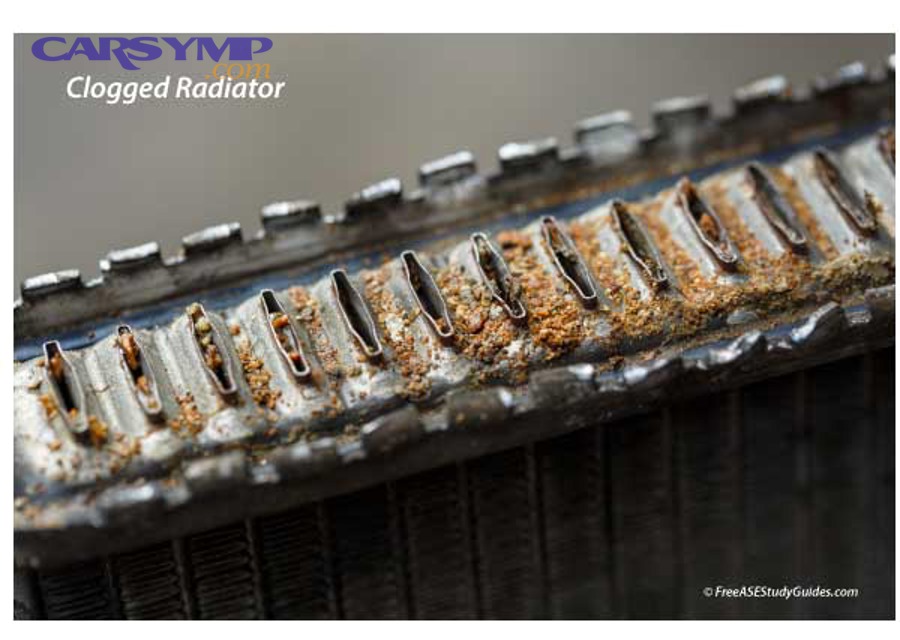
A radiator becomes “clogged” when coolant cannot move evenly through the core. That can happen from:
- Scale/mineral deposits from improper coolant mix or hard water
- Corrosion products (rust-like particles) from neglected coolant
- Stop-leak residues that congeal in narrow tubes
- Mixed coolant types that gel or form sludge
What you usually see in behavior:
- Hot inlet tank / hose, but poor heat drop across the core
- Temperature “striping” where parts of the radiator stay cooler because flow is uneven
- Overheating that can appear under load (highway, towing, long grades)
Restricted airflow (air-side restriction): what it really means
Airflow restriction means the radiator can’t “breathe.” Common causes:
- Mud, bugs, leaves, plastic bags stuck to the front face
- Bent fins that reduce air passage area
- Blocked condenser in front of the radiator (AC condenser packed with debris)
- Missing/broken shrouds or seals that let air bypass the core
What you usually see in behavior:
- Temperature rises when heat load is high (AC on, hills, hot day)
- Fans may run constantly but still can’t pull enough air through a blocked core
- The problem can show up on the highway if the restriction is severe or if air is bypassing the radiator rather than passing through it
Why does a clogged radiator or blocked airflow cause overheating on the highway?
A clogged radiator or blocked airflow causes overheating on highway because the engine is producing sustained heat under load while the cooling system cannot reject that heat fast enough—either coolant can’t carry heat through the core evenly (clogging) or air can’t carry heat away from the fins (airflow restriction). Then, understanding highway behavior requires clearing up the most common mistake: assuming “ram air” always solves cooling at speed.
The “Cooling fans vs ram air confusion” that leads to misdiagnosis
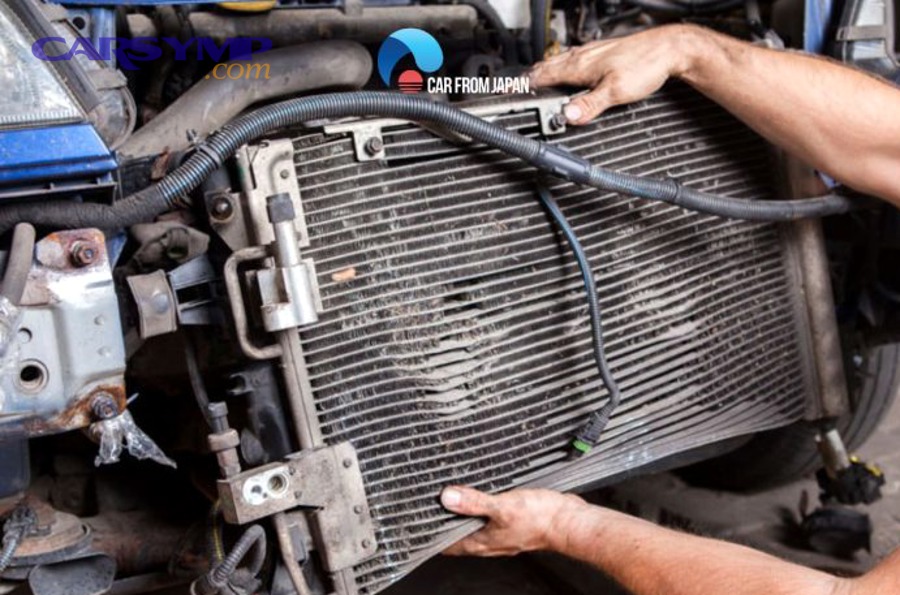
At highway speed, you do get higher potential airflow, but only if air actually passes through the heat exchangers:
- If fins are packed with debris, increased speed can’t force air through blocked passages.
- If the shroud/seals are missing, air can take the path of least resistance around the radiator instead of through it.
- If the condenser/radiator stack is dirty, airflow can choke before it reaches the radiator.
Meanwhile, a clogged radiator can also be “fine” at idle and fail on the highway:
- At idle, heat production is lower, and fans may keep the system barely stable.
- On the highway, engine load is sustained, and the radiator must shed a lot more heat; restricted coolant flow becomes a bottleneck.
Symptom patterns that hint which one you have
Use this quick pattern matching (not as proof—just as direction):
- Overheats mostly at speed/load (highway, hills, towing): often coolant flow restriction (clogged core) or severe airflow bypass.
- Overheats mostly at idle/traffic: often fan control, fan motor, shroud, or moderate airflow restriction.
- Overheats at both idle and highway: can be low coolant, bad cap, thermostat issues, water pump, severe clog, or severe airflow blockage.
How do you diagnose restricted airflow at the radiator (visual + airflow checks)?
You diagnose restricted airflow by checking for physical blockage across the radiator/condenser face, verifying fan + shroud integrity, and confirming that air is being pulled through the core rather than leaking around it. Next, start with the checks that cost nothing and often reveal the answer immediately.
Check the radiator/condenser face for debris and “fin sealing”
Pop the hood (engine cool) and inspect:
- Front grille openings and air guides
- AC condenser (usually in front of radiator)
- Radiator fins behind it
Look for:
- Packed bugs/mud/leaves
- Plastic bags or road film
- Bent fins forming “closed curtains”
- Aftermarket lights/plates blocking airflow
Practical tip: Shine a flashlight from the back side; you should see light through the fins fairly evenly. Large “dark patches” suggest clogging on the air side.
Verify the fan shroud and air dams are present and sealed
A fan without a proper shroud can move air, but much of it comes from the sides instead of through the radiator. Check:
- Shroud not cracked, not missing sections
- Shroud centered and close to the fan
- Rubber seals/foam strips that prevent bypass (where applicable)
- Undertray/air dam not missing (some vehicles rely on it for highway airflow)
Confirm fans engage when they should
Even on the highway, fans matter when:
- Climbing grades at lower road speed
- AC is running
- Ambient temps are high
- Vehicle design relies on fans to maintain airflow through a dense condenser/radiator stack
Do a basic functional check:
- With AC ON, many vehicles command at least low fan speed.
- Watch for both low/high speed operation if equipped.
- Listen for abnormal fan noises (bearing drag, rubbing shroud, intermittent operation).
How do you diagnose internal radiator clogging (coolant-flow restriction)?
You diagnose internal radiator clogging by looking for uneven heat transfer across the core, signs of contamination, and evidence that coolant flow is not distributing through the radiator tubes properly. Then, after checking coolant level and obvious leaks, move to flow-and-temperature clues.
Check coolant condition (not just coolant level)
With engine cold:
- Inspect overflow reservoir: is coolant clear and correct color?
- Look for sludge, oil sheen, rust-colored particles, or gel-like residue.
Clogging tends to correlate with:
- Long intervals between coolant changes
- Wrong coolant type mixed in
- Use of stop-leak
- Rust/corrosion in older systems
Feel the hoses and tanks for “heat drop logic”
When warmed up (use caution):
- Upper radiator hose should be hot when thermostat opens.
- Lower hose should be cooler—but not stone cold.
Patterns:
- Upper hose very hot + lower hose much cooler than expected + overheating at load: can indicate poor radiator heat rejection or restricted flow.
- Both hoses hot + overheating: can indicate airflow restriction, fan issues, or radiator capacity issues.
- Upper hose stays cool while engine overheats: thermostat may not be opening (separate diagnosis).
Look for pressure/flow behaviors that hint restriction
Clogging can show up as:
- Heat spikes under load
- Inconsistent temperature control (swings)
- Heater performance changes (sometimes weak heat if system is contaminated)
- History of repeated overheating events (which accelerates scale and deposits)
What temperature-pattern tests confirm a clogged radiator or airflow restriction?
Temperature-pattern testing confirms the cause by showing how heat is distributed across the radiator and where heat transfer stops working—cold spots often indicate flow blockage, while uniformly “too hot” can point to airflow limitation or insufficient overall cooling capacity. Next, the fastest tool for this is a non-contact infrared thermometer or a thermal camera.
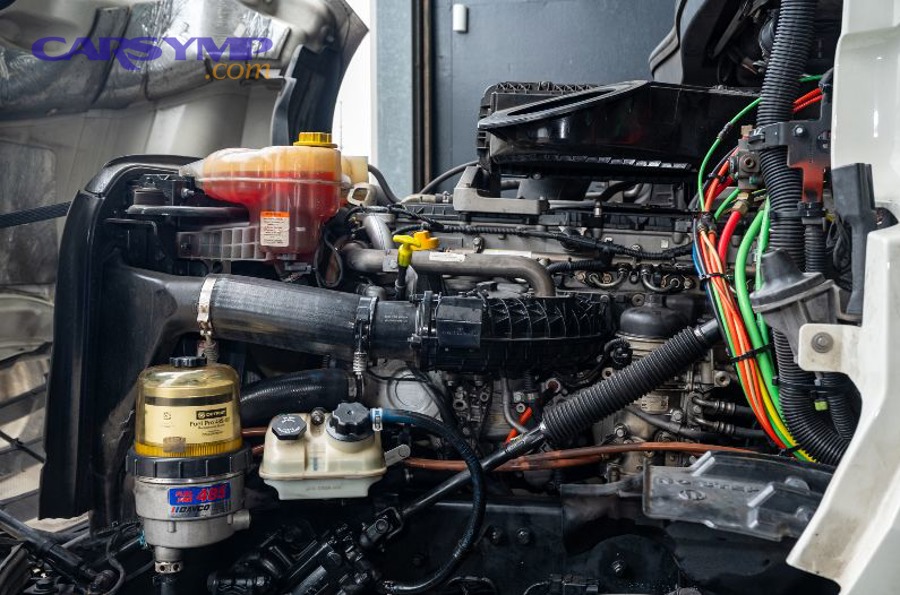
How to scan the radiator for cold spots (simple IR method)
Warm the engine to operating temp and let it idle (fans may cycle). Then:
- Stand safely away from belts/fans.
- Scan the radiator surface in a grid pattern: left-to-right, top-to-bottom.
- Compare temperatures across the face.
Interpretation:
- Distinct cold patches next to hot areas often suggest internal clogging where coolant isn’t flowing through those tubes.
- Overall high temperatures with little drop across the radiator can suggest airflow restriction or insufficient airflow through the stack.
A practical technician method is to scan for cold spots when blockage is suspected; a non-contact infrared thermometer can do this without touching hot components. According to UnderhoodService.com, an infrared thermometer can be used to spot cooling-system temperature differences that support diagnosing restricted flow in components.
How to test “airflow restriction” using temperature logic
Airflow restriction often creates:
- Higher average radiator surface temps
- Reduced temperature drop across the radiator
- Fans working harder (longer run time) but not stabilizing temperature
In contrast, internal clogging often creates:
- “Striping” patterns where some sections reject heat, others don’t
- Uneven radiator outlet temperatures
One video demonstration (IR/thermal technique)
According to a study by the University of North Texas from the Mechanical and Energy Engineering department, in 2014, radiator research summarized in a master’s thesis reports that increasing air flow can provide significant heat-transfer gains and can be more impactful than increasing coolant flow in many radiator designs.
What other tests confirm the root cause (before you buy parts)?
You confirm the root cause by combining temperature patterns with fan performance checks, cooling system integrity checks, and controlled load testing, so you don’t mistake a clogged radiator for a fan issue—or vice versa. Then, use these tests to rule out “look-alike” failures.
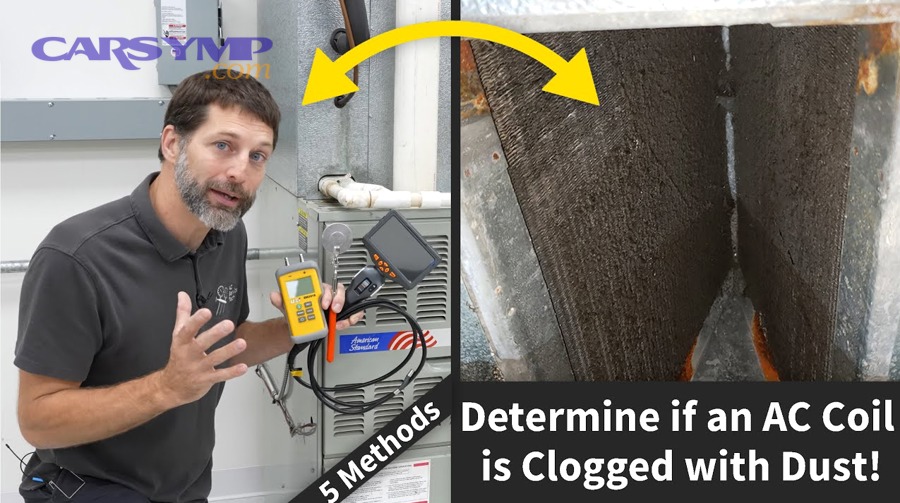
Rule out low coolant and trapped air (common imitators)
Low coolant reduces heat capacity and causes hot spots. Air pockets reduce circulation. Quick checks:
- Coolant level correct when cold
- No bubbling/foaming in reservoir during warm idle (persistent bubbling may indicate other issues)
- Heater output stable (a suddenly cold heater can indicate low coolant/air)
Confirm fan speed stages and control (especially for highway complaints)
Even if the car overheats on the highway, fans can still be part of the story:
- Some vehicles rely on fans to maintain airflow through a dense AC condenser stack.
- A weak fan motor may spin but not move enough air.
- A failed resistor/module can remove low-speed operation; the system then “falls behind” under certain conditions.
Pressure-test the system (leaks create overheating under load)
A slow leak can lower coolant over time and create intermittent overheating. A proper pressure test can reveal:
- Hose seepage
- Radiator seam leaks
- Water pump weep-hole leaks
- Cap that won’t hold pressure (lower boiling margin)
Use a controlled load test to reproduce the symptom safely
If you can do it safely:
- Monitor coolant temp with a scan tool.
- Note: does temp rise with AC ON? Does it rise on grades?
- Watch fan command/operation.
If temperature climbs rapidly under load and radiator surface shows cold patching, internal clogging becomes more likely.
How do you fix a clogged radiator or restricted airflow safely?
You fix restricted airflow by restoring clean, straight fins and proper ducting, and you fix a clogged radiator by restoring internal flow—either by professional cleaning (where applicable) or replacement—then refilling with the correct coolant and bleeding air properly. Next, choose the least invasive fix that matches what you confirmed in diagnosis.

Fix restricted airflow (air-side): clean and restore the “breathing surface”
- Remove debris from the front: leaves, bugs, mud.
- Wash from the back side outward (gentle water) to push debris out the way it entered.
- Straighten fins carefully with a fin comb if bent (avoid crushing tubes).
- Clean condenser + radiator stack (many airflow problems are actually condenser blockage).
- Repair missing shrouds/air guides so air can’t bypass.
Safety notes:
- Don’t use high-pressure spray close to fins; it bends them.
- Don’t work near fans with the engine running unless you’re positioned safely.
Fix internal clogging (coolant-side): flush vs replace (be realistic)
A chemical flush can help if the issue is light contamination, but:
- Heavy scale/plugging often doesn’t “flush out” evenly.
- Old radiators with significant tube blockage frequently require replacement to restore full capacity.
Good practice after fixing:
- Refill with correct coolant type and mixture.
- Bleed air per vehicle procedure.
- Verify operating temperature under load.
Safe-to-drive guidance for highway overheating
If you experience overheating on highway, treat it as high-risk:
- Pull over safely as soon as you can.
- Let the engine cool before opening anything in the cooling system.
- If the gauge is in the red or you see steam, driving further can warp heads or damage gaskets.
You may be able to limp short distances only if:
- Temperature stabilizes back to normal quickly,
- Coolant level is adequate,
- There are no signs of boiling/steam,
- And you can reduce load (no AC, slower speed, avoid hills).
But if it repeatedly climbs under load, assume the cooling system cannot reject heat—and stop driving until diagnosed.
How do you prevent restricted airflow and radiator clogging from coming back?
You prevent recurrence by keeping the radiator “two-sided healthy”: clean airflow paths outside and stable coolant chemistry inside, plus periodic inspections after dusty/muddy driving. Next, focus prevention on what caused your confirmed failure mode.
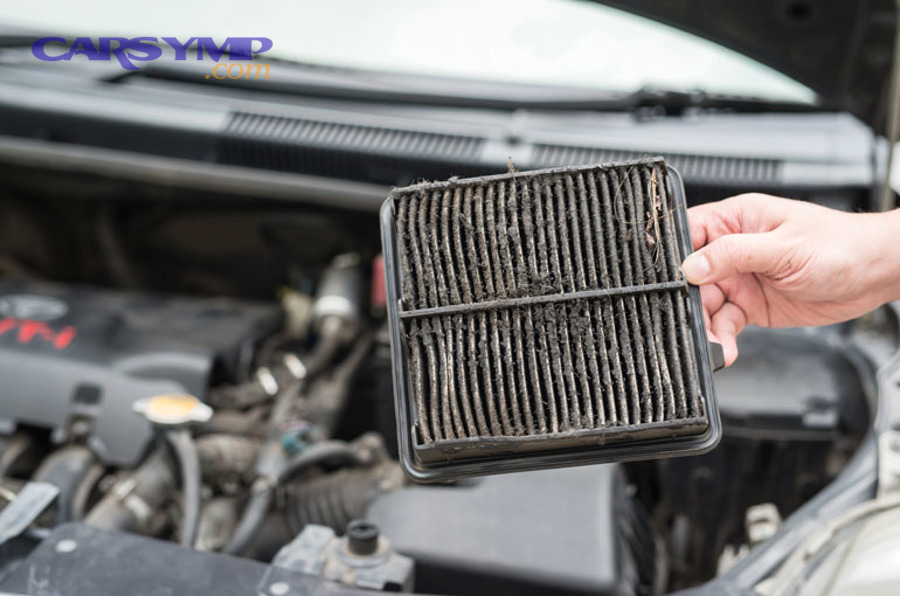
Prevention checklist (air + coolant)
- Rinse debris from the condenser/radiator face after bug seasons or off-road/muddy conditions.
- Ensure grille openings aren’t blocked by accessories.
- Keep shrouds, seals, and undertrays intact.
- Replace coolant at the recommended interval and use the correct type.
- Avoid mixing coolant chemistries.
- Use distilled water if you must mix concentrate yourself (helps reduce mineral deposits).
If you drive in dust/mud frequently (rare-but-real scenario)
Construction, farm, or trail environments can create extreme fouling quickly. When the radiator face gets coated, cooling performance can drop sharply—so add radiator/condenser cleaning to routine maintenance after those conditions.