Diagnose & Fix Overheating on Highway (Freeway Speeds): Cooling-System Causes Checklist for Car Owners
When overheating on the highway happens, the engine is making more heat than the cooling system can remove at sustained speed and load—so the fix is not guessing parts, but identifying whether the failure is coolant/pressure, coolant flow, radiator heat transfer/airflow, or engine load/combustion heat.
Next, this guide gives you a practical order of checks that matches real-world breakdown patterns—starting with the fastest confirmations, then moving to the most common causes of highway-only overheating, so you can stop wasting time on random replacements.
Then, you’ll learn how to read your symptoms like signals—what it means when the temperature climbs only on hills, when it spikes and falls, or when the heater turns cold—so you can connect the pattern to the right root cause.
Introduce a new idea: once the diagnosis is clear, you can choose the safest “drive or stop” decision and the smartest repair path—then move into prevention and rarer edge cases after the core checklist is complete.
What does “overheating on the highway (freeway speeds)” mean, and how is it different from overheating at idle?
Overheating on the highway is car overheating that appears during sustained cruising or load (typically 55–80 mph) because the system cannot reject heat fast enough under continuous demand, while idle overheating usually points to low airflow from fans or low coolant circulation at low RPM.
To better understand the problem, it helps to separate where the heat is created (engine load, hills, towing, lean operation) from where the heat is removed (radiator, airflow path, coolant flow, system pressure).
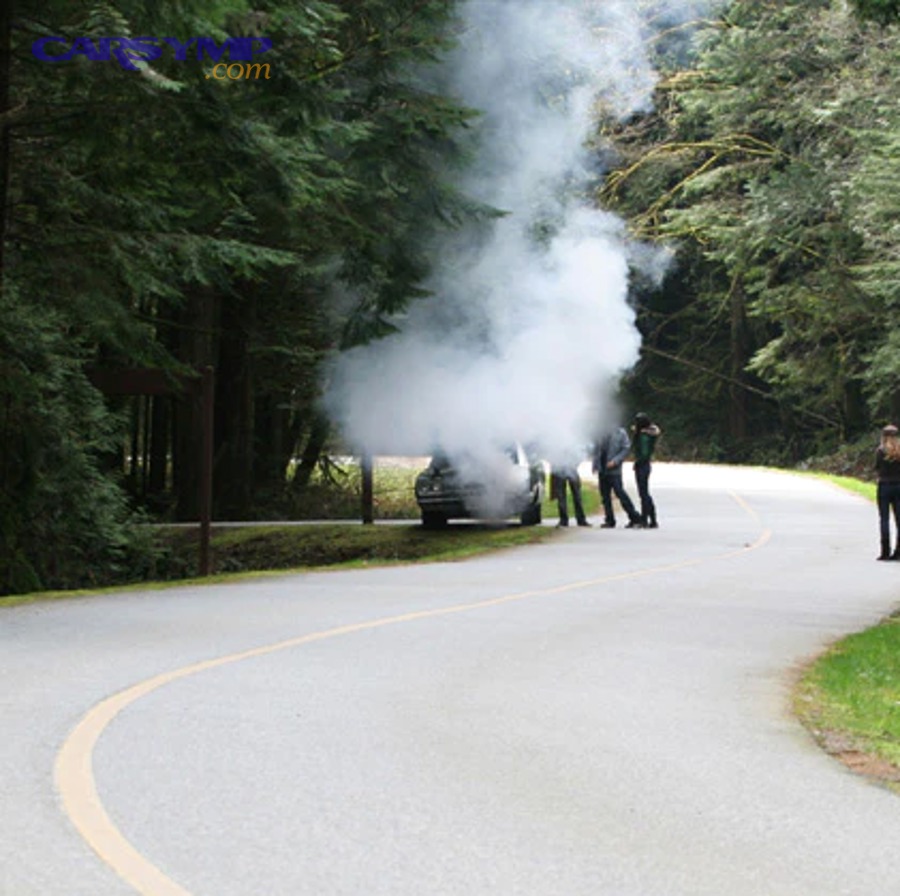
Why highway speed changes the overheating equation
Highway driving looks like it should cool better because of “ram air,” but the engine is also generating more heat for longer periods. At speed, the cooling system is operating near its designed limits: coolant is hotter, pressure is higher, and the radiator must continuously shed heat without the breaks that city driving provides.
Key reasons highway overheating behaves differently:
- Sustained heat production: A long grade, headwind, heavy cargo, or towing keeps the engine at higher load for minutes at a time.
- Pressure and boiling margin: At higher coolant temperatures, a weak radiator cap or small leak can reduce pressure and make boiling happen sooner.
- Flow and restriction sensitivity: A partially restricted radiator, a thermostat that’s slow to open, or a hose that collapses under suction may only reveal itself at higher RPM.
Why idle overheating is often a different problem
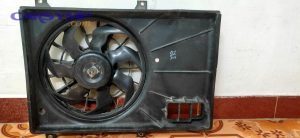
Idle overheating is commonly tied to fan operation, fan relays, fan control modules, or airflow through the radiator/condenser stack at low vehicle speed. Highway overheating can still involve airflow—but it’s often more about capacity (radiator efficiency), flow (thermostat/water pump), or pressure (cap/leaks) than “fan not running.”
That distinction matters because it stops you from falling into Cooling fans vs ram air confusion—a common mistake where people assume “it can’t be airflow at speed,” or the opposite, “it must be fans,” without checking the full system.
Is it safe to keep driving if your car is overheating on the highway?
No—driving while overheating on the highway is not safe in most cases because it can (1) warp cylinder heads and damage head gaskets, (2) trigger sudden coolant loss and steam events, and (3) cause a loss of power or engine shutdown that creates a traffic hazard.
Next, use Safe-to-drive guidance for highway overheating to decide quickly without panic.
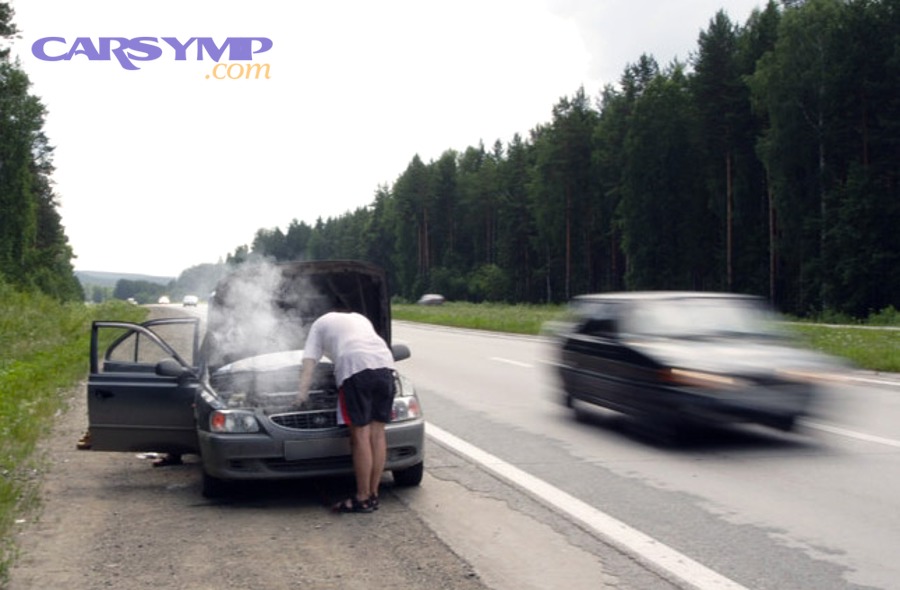
A simple “Yes/No” decision rule
You can continue only if all of the following are true:
- The temperature is only slightly above normal and stabilizes after reducing load.
- There is no steam, no boiling sounds, and no strong coolant smell.
- You can safely exit within a minute or two without the needle climbing further.
If any of these are true, you should stop as soon as it’s safe:
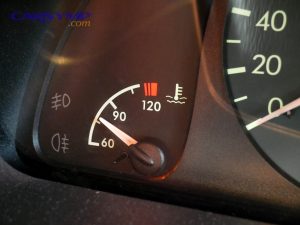
- The gauge is climbing toward the red or a “HOT” warning is on.
- Steam is visible, or coolant is pushing out/overflowing.
- The heater blows cold suddenly (possible low coolant/air pocket).
- You see a warning for engine temperature, coolant level, or you feel power loss.
What to do immediately on the highway (damage-control steps)
- Reduce engine load: Ease off the throttle, cancel cruise control, and avoid downshifts that spike RPM unless needed for safety.
- Turn off A/C: A/C adds heat load at the condenser and increases cooling demand.
- Turn the cabin heater to HOT + high fan: This can pull heat from coolant through the heater core. It’s uncomfortable, but it may buy time.
- Signal and exit safely: Use the next exit or a safe shoulder area—don’t stop in a live lane.
- Shut down if it keeps climbing: If the needle continues rising, shutting down can prevent catastrophic damage.
What not to do
- Don’t open the radiator cap when hot. Hot coolant under pressure can spray and burn.
- Don’t keep “limping” for 10–20 miles because you’re “almost home.” Heat damage compounds fast.
- Don’t pour cold water onto a hot engine or radiator; rapid temperature changes can crack components.
This decision-making is part of your checklist: a correct diagnosis is useless if the engine is damaged during the test drive.
What are the most common causes of overheating at highway speeds?
There are 4 main types of causes of overheating on highway speeds—coolant/pressure problems, coolant-flow problems, heat-transfer/airflow problems, and engine-load/combustion heat problems—based on which link in the cooling chain fails under sustained demand.
Next, use this Overheating at highway speed causes checklist to narrow the category before you chase parts.
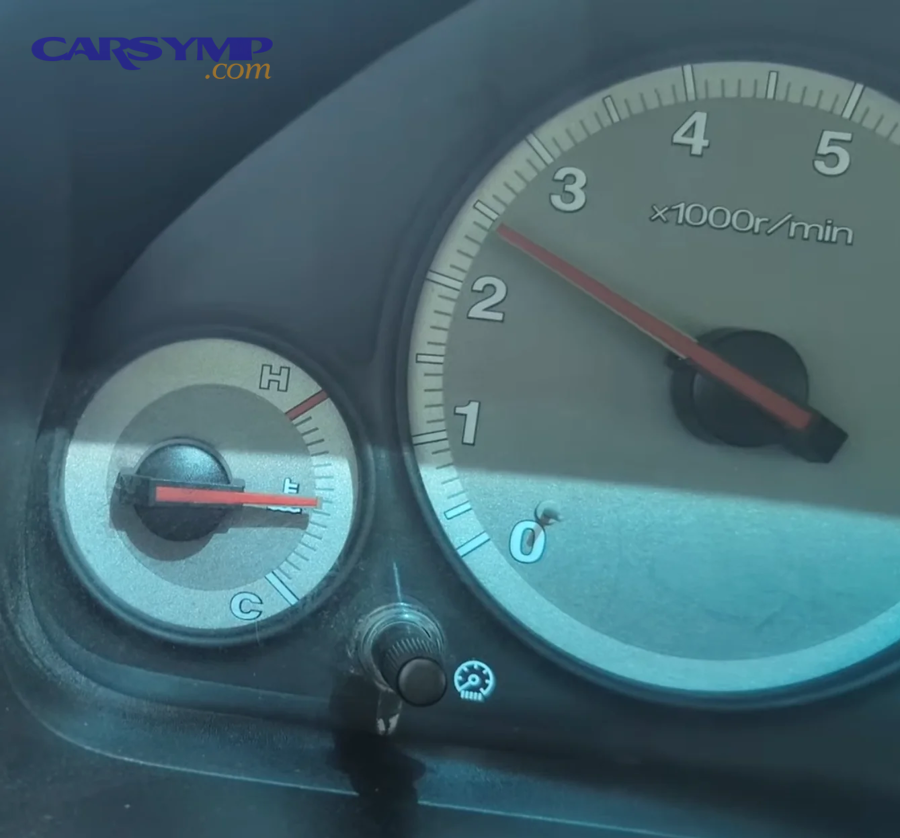
Which coolant-related problems cause highway overheating (low coolant, leaks, air pockets, wrong mix)?
Low coolant and leaks under load are a top reason highway overheating appears “suddenly” even if the car seemed fine around town. Under sustained heat, the system expands, pressure rises, and small leaks become bigger leaks.
Common coolant/pressure culprits:
- Low coolant level: Less volume means less heat capacity and more chances for air pockets.
- Small leaks that worsen hot: Hose clamps, radiator tanks, water pump weep hole, heater hoses, radiator seams.
- Weak radiator cap: It can’t hold pressure, reducing boiling margin so coolant starts to boil at a lower temperature.
- Air pockets after service: Trapped air reduces circulation and creates hot spots in the head.
- Wrong coolant concentration: Too much water can lower boiling protection; too much concentrate can reduce heat transfer in some cases.
What this looks like:
- Temp climbs gradually on the highway, then spikes near an exit.
- Coolant smell after the drive.
- Overflow bottle rises abnormally or vents.
Which coolant-flow problems cause overheating at speed (thermostat, water pump, collapsed hoses)?
When flow is marginal, the system can “seem okay” until it’s asked to move enough coolant for continuous load. Water pump and thermostat highway behavior becomes the deciding factor at freeway speeds.
Flow-related causes:
- Thermostat stuck partially closed or slow to open: It restricts flow when the engine needs maximum circulation.
- Water pump impeller erosion or shaft slip: Pump moves less coolant than expected, especially under load.
- Lower radiator hose collapse: At higher RPM, suction can flatten a weak hose (especially if the internal spring is missing).
- Belt slip (for belt-driven pumps): Heat and load can reveal a marginal belt/tensioner.
What this looks like:
- Overheats more on hills than flat highway.
- Heater output changes with RPM.
- Temperature rises, then drops when you back off (flow catches up).
Which heat-transfer/airflow problems cause overheating at speed (radiator clogging, debris, shroud issues)?
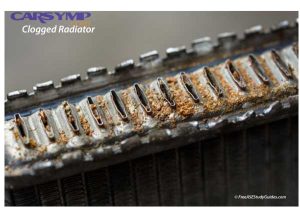
At highway speed, you’re relying on the radiator’s core efficiency and the airflow path through the radiator/condenser stack. Clogged radiator and restricted airflow diagnosis matters because you can have “plenty of air” but still poor heat transfer.
Heat-transfer and airflow culprits:
- External fin blockage: Bugs, leaves, mud, or road grime limiting airflow through fins.
- Internal radiator restriction: Scale, corrosion, or deposits reducing coolant passage area.
- Condenser/radiator stack contamination: Debris trapped between AC condenser and radiator.
- Broken shrouds/ducting: Air takes the path of least resistance around the radiator instead of through it.
- Aftermarket grille or light bars: They can disrupt airflow more than you’d expect.
What this looks like:
- Temperature slowly creeps up during steady highway cruising.
- A/C performance may worsen when temps rise.
- Overheating appears more on hot days or with A/C on.
Which engine-load issues can mimic cooling failure (towing, long hills, AC, mixture/timing)?
Sometimes the cooling system is “mostly okay,” but engine heat production is excessive or continuous.
Load/combustion contributors:
- Towing, heavy cargo, long grades: Normal systems can be pushed past capacity.
- Transmission overheating contribution: An overheating automatic can dump extra heat into the radiator via the transmission cooler, raising coolant temperatures.
- Lean fuel mixture and engine load overheating: A lean condition can raise combustion temperatures and increase heat rejection into the cooling system.
- Restricted exhaust or catalytic converter issues: Backpressure increases engine load.
- Incorrect ignition timing or knock control issues: Can increase heat under load.
What this looks like:
- Overheats mainly on hills, towing, or headwinds.
- Coolant level and airflow checks seem fine, but the heat production is consistently higher than normal.
How do you diagnose overheating on the highway using a step-by-step checklist?
A reliable diagnosis uses a 4-step checklist—confirm coolant/pressure, confirm circulation, confirm radiator heat transfer/airflow, then screen for internal engine/load contributors—so you reach the true cause instead of replacing parts randomly.
Then, follow the checks in order because the early steps can instantly reveal simple failures like low coolant, a weak cap, or a blocked radiator face.
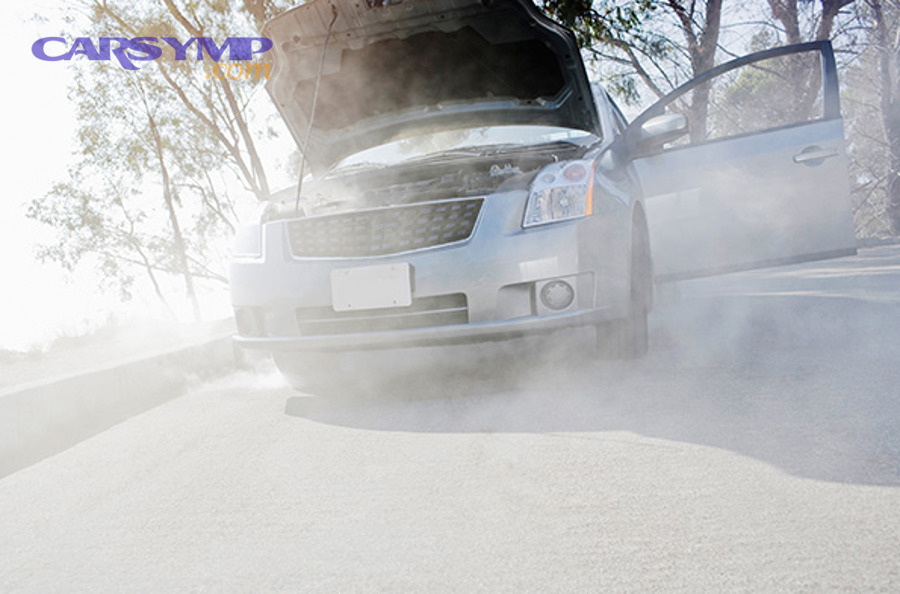
Do you have enough coolant and system pressure to prevent boiling at freeway speeds?
Yes/no test: Yes if coolant is at the correct level when cold, stays stable after a drive, and shows no signs of venting/overflow; No if it’s low, repeatedly drops, or pushes coolant out after highway runs.
How to check (cool engine):
- Verify radiator level (if accessible) and reservoir level.
- Inspect for dried coolant residue near hose ends, radiator seams, water pump area, and heater hose junctions.
- Look for a soft, cracked, or swollen upper hose and brittle plastic fittings.
Pressure clues without special tools:
- A cap that looks worn, corroded, or has a hardened seal may not hold pressure.
- Repeated overflow after highway driving suggests pressure loss or boiling.
If “No,” correct coolant level first, address leaks, and bleed air properly before deeper diagnosis.
According to a study by the University of California, Berkeley from the Department of Civil and Environmental Engineering, in 2015, researchers noted that light-duty vehicles circulate engine coolant at high pressure (about 2 bar) and temperatures up to 130 °C, showing how pressure and heat exposure make small leaks and pressure losses more consequential under sustained operation.
Is coolant circulating correctly at higher RPM (thermostat opening and pump flow)?
Yes/no test: Yes if the radiator warms evenly once at operating temperature and the heater remains consistently hot; No if you see uneven radiator temperatures, a heater that turns cold, or symptoms that worsen with RPM/load.
Practical checks:
- Warm the engine to operating temperature, then feel (carefully) for temperature differences:
- Upper hose should get hot as thermostat opens.
- Lower hose should be cooler, but not ice-cold if flow is normal.
- Watch for signs of a thermostat problem:
- Slow warm-up then sudden overheating.
- Temperature cycling: hot → cooler → hot again.
- Watch for signs of a weak water pump:
- Overheats at higher RPM/load more than at idle.
- A squealing bearing, wobble, or coolant residue near the pump.
If the lower hose is collapsing or feels unusually soft, replace it and ensure it has the proper internal support if required.
Is airflow and radiator efficiency adequate at speed (radiator/condenser cleanliness and fan strategy)?
Yes/no test: Yes if radiator fins are clean, airflow is directed through the core, and temperature stays stable at cruise; No if fins are blocked, ducting is missing, or you have an efficiency-limited radiator.
What to inspect:
- Radiator face: shine a light through it. If you can’t see light well, airflow is restricted.
- Between condenser and radiator: debris often hides there.
- Shrouds, seals, and undertrays: missing pieces let air bypass the radiator.
This is where Cooling fans vs ram air confusion hurts diagnosis. Fans matter most at idle and low speed, but at highway speeds the cooling system still needs a clean, sealed airflow path through the radiator core. If air bypasses the core, “more speed” won’t fix it.
Are you seeing signs of internal engine problems that worsen under load (combustion gas in coolant)?
Yes/no test: Yes if you see constant bubbles in the reservoir, unexplained coolant loss, repeated overheating despite good airflow/flow, or pressure building abnormally; No if coolant stays stable and symptoms track clearly to airflow/flow/pressure issues.
Red flags that suggest internal issues:
- Coolant loss without visible leaks.
- Exhaust-smelling bubbles in the reservoir.
- Milky oil (not always present).
- Overheating that returns quickly after cooldown.
At this point, a block test, compression test, or professional pressure test is often more efficient than continued guessing—because a small internal leak can mimic several external failures.
Which symptom patterns point to which causes?
Symptom patterns are a shortcut: overheating on hills usually points to capacity or flow limits, overheating with A/C often points to heat transfer/airflow margin, and temperature spikes then drops often indicate air pockets or thermostat cycling.
Next, use the pattern to choose the best branch of your Overheating at highway speed causes checklist and avoid chasing unrelated parts.
What does “overheats on hills/towing but normal on flat highway” suggest?
This pattern usually suggests one of these:
- Radiator capacity limit: The radiator can’t shed enough heat when engine load rises.
- Flow weakness: Thermostat not opening fully, weak water pump, or hose collapse under higher RPM.
- Transmission overheating contribution: Under towing, the transmission adds heat to the radiator, pushing coolant temps up.
How to separate them:
- If coolant level is stable and radiator fins are clean, suspect internal restriction or flow.
- If it only happens when towing, consider transmission temps and the condition of the transmission cooler path.
What does “overheats with A/C on at freeway speeds” suggest?
This often indicates your system has little margin and the condenser is pushing it over the edge:
- Condenser adds heat load: Hot condenser air hits the radiator.
- Restricted airflow/dirty stack: Debris between condenser and radiator is common.
- Radiator efficiency decline: Aging cores lose effectiveness.
A simple clue: if turning A/C off causes the temperature to stabilize within a few minutes, the system is close to its limit and needs efficiency restored—often through cleaning, correcting airflow sealing, or upgrading/renewing the radiator.
What does “temp spikes then drops” suggest?
Spikes then drops often suggest:
- Air pockets moving through the system
- Thermostat sticking then snapping open
- Intermittent flow restriction
If the heater alternates hot/cold during these events, air pockets or low coolant are high on the list. If the heater stays hot but the gauge spikes, thermostat behavior becomes more likely.
What are the best fixes, in priority order, for highway overheating?
There are 3 priority tiers of fixes for highway overheating—Tier 1 quick confirmations, Tier 2 high-probability part fixes, and Tier 3 deeper system or engine-load corrections—based on cost, likelihood, and diagnostic certainty.
Then, match the fix to your confirmed category so you don’t spend money twice, and include a Repair cost estimate for common causes to plan your next step.
Which fixes are low-cost and high-probability first?
Start here if you haven’t confirmed the basics:
Tier 1: Fast, low-cost fixes
- Correct coolant level and bleed air properly (especially after recent service).
- Replace a questionable radiator cap (cheap, high impact on boiling margin).
- Perform Clogged radiator and restricted airflow diagnosis and clean the radiator/condenser stack.
- Inspect and replace weak hoses (especially the lower hose) and clamps.
- Verify fans function correctly (even if the issue is at speed, fans still matter when you exit traffic or slow down).
If these change the symptom, you’ve learned something—and that learning is worth more than a random parts swap.
Which fixes require parts replacement and when should you do them?
Move to Tier 2 when tests point to a specific weakness:
Tier 2: Common replacements when confirmed
- Thermostat replacement: Do this when symptoms match slow opening, temperature cycling, or persistent high temps under load.
- Radiator replacement: Do this when you confirm internal restriction, persistent creeping at highway cruise, or an aging radiator with poor heat transfer.
- Water pump replacement: Do this when you have pump noise/leak, wobble, or strong signs of weak circulation.
- Fan control repairs: Do this when fans don’t run when they should, or control modules/relays fail.
Tier 3: Deeper contributors
- Address transmission overheating contribution with a service, cooler inspection, or auxiliary cooling (where appropriate).
- Fix lean fuel mixture and engine load overheating by diagnosing vacuum leaks, fuel delivery issues, or sensor faults (often requires scan data).
- Check exhaust restriction if load-based overheating persists.
A practical repair cost estimate for common causes (typical ranges)
The table below summarizes typical cost ranges people see for common fixes. Actual pricing varies by vehicle, labor rates, and access difficulty.
| Common cause | Typical fix | Typical cost range (parts + labor) |
|---|---|---|
| Low coolant / minor leak | Hose/clamp, small repair, refill/bleed | $50–$300 |
| Radiator cap failure | Cap replacement | $20–$60 |
| Thermostat stuck/slow | Thermostat + coolant service | $150–$450 |
| Radiator restriction/aging | Radiator replacement | $350–$1,200 |
| Water pump weak/leaking | Water pump replacement | $400–$1,500 |
| Fan control issue | Relay/module/motor | $150–$900 |
| Transmission heat load | Service / cooler work | $200–$1,200 |
What less-common (but important) factors can cause highway-only overheating, and how do you prevent it?
Less-common causes include airflow ducting failures, internal combustion-gas intrusion, transmission heat stacking, and engine-management heat spikes, and you prevent them by restoring airflow control, validating system pressure, and doing preventive service before long trips.
Moreover, this is where micro-level details matter—because a “mostly fine” system can still fail at freeway speeds if the margin is small.
Can airflow “ducting” problems (missing undertrays, shrouds, blocked grille paths) cause overheating at freeway speeds?
Yes—airflow ducting problems can cause highway overheating because air follows the easiest path, and missing seals or undertrays can let high-speed air bypass the radiator core instead of passing through it.
What to look for:
- Missing or broken radiator shrouds and side seals
- Damaged undertray/air dam pieces that normally manage pressure zones
- Aftermarket grille inserts, mesh, lights, or accessories blocking flow
- Gaps that allow air to spill around the radiator
This is the “hidden” version of Cooling fans vs ram air confusion: speed gives you more air, but not necessarily more air through the radiator.
How do pressure testing and an infrared temperature scan pinpoint restrictions better than guesswork?
Pressure testing and infrared scanning are diagnostic tools that convert suspicion into proof:
- A pressure test shows leaks that only appear hot or under pressure, helping confirm Low coolant and leaks under load issues.
- An infrared scan (or careful temperature mapping) reveals uneven radiator temperatures—cold spots often indicate internal restriction, while a uniformly hot radiator with rising temps can point to insufficient airflow or overall capacity limits.
If you’re using a “Car Symp” style workflow—symptom first, then proof-based tests—these tools are where you stop guessing and start confirming.
Could a head gasket or combustion-gas leak show up mainly during highway load?
Yes—combustion-gas intrusion can show up mainly under highway load because cylinder pressure rises with load, and that can push gas into the cooling system, creating localized boiling and pressure spikes.
Clues that elevate this suspicion:
- Rapid pressurization and repeated coolant overflow
- Persistent bubbles after warm-up
- Unexplained coolant loss with no external leak evidence
- Overheating that returns quickly even after cooling down
If these appear, stop doing long test drives. The safest route is a proper block test and a professional cooling-system evaluation.
What maintenance prevents overheating on highway trips (coolant service intervals, fin cleaning, hose aging)?
Preventive fixes before long trips reduce highway overheating because they restore cooling margin before the system is stressed continuously.
High-impact prevention list:
- Check coolant level and condition monthly; fix small leaks early.
- Clean the radiator/condenser face and remove debris between them.
- Replace aging hoses proactively, especially if they’re soft, swollen, or oil-soaked.
- Replace the radiator cap at sensible intervals if it’s old or the seal is hard.
- Service coolant per manufacturer schedule and bleed air correctly after any cooling work.
- If you tow, monitor transmission temperature (or add appropriate cooling support) to limit transmission overheating contribution.
- Address check-engine lights promptly; they can be tied to lean fuel mixture and engine load overheating under highway demand.
In short, highway overheating is rarely “random.” When you treat it like a system—pressure, flow, heat transfer, and load—you can diagnose it confidently, fix it once, and keep it from returning.