


Coolant loss under load is almost always a real cooling-system fault—and you can diagnose it quickly by separating “external leak that only shows at pressure/RPM” from “internal leak that pressurizes the system,” then confirming the cause with a simple test sequence (inspection → pressure/cap tests → dye or combustion-gas test).
The fastest way to stop guessing is to learn what the symptom pattern really means and why leaks can appear “hidden” at idle, because airflow, heat, and splash shields often erase the evidence before you ever see a puddle.
From there, a step-by-step checklist helps you reproduce the failure safely and prove the leak source—so you don’t replace parts blindly or miss serious problems like combustion gases entering the cooling system.
Introduce a new idea: once you understand the cause, you can also make a safe-to-drive decision and apply Preventive fixes before long trips—especially if your issue shows up as overheating on highway runs.
What does “coolant loss under load” mean, and why can the leak look “hidden”?
Coolant loss under load is a cooling-system condition where the coolant level drops primarily during high-demand driving (acceleration, highway cruising, towing) because system pressure, temperature, and flow rise enough to expose a leak that may not appear at idle.
Next, that “hidden” part matters because the same leak can leave no puddle if the coolant sprays onto hot surfaces and evaporates, or if it collects on undertrays and drips elsewhere later.
Under load, three things change at the same time:
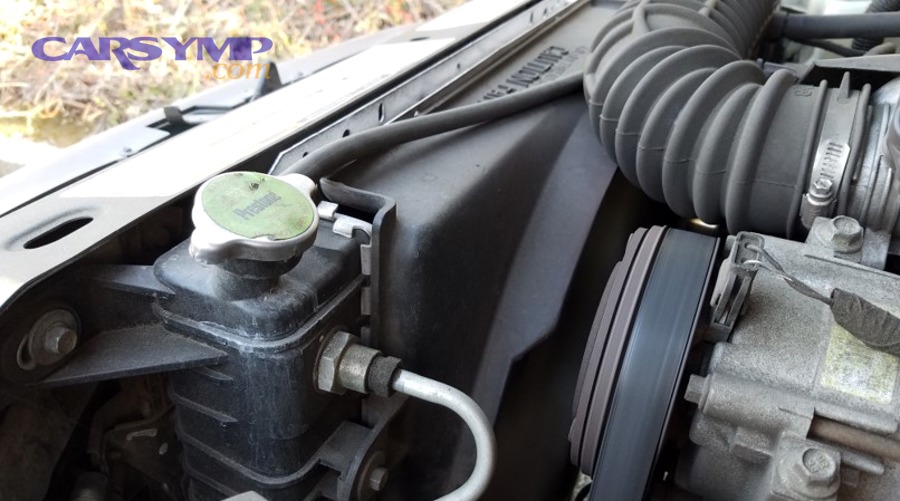
- Pressure rises inside the cooling system as coolant heats and expands, and as the cap regulates the peak pressure. A weak cap can vent early, pushing coolant out without leaving a clear trail. (macsmobileairclimate.org)
- Flow and vibration increase, so marginal hose clamps, cracked plastic fittings, and pump seals can start leaking only when everything is moving and flexing.
- Airflow increases, especially at highway speed, so a fine spray can be blown across the underbody and dry before you park.
The result is a classic pattern: you drive hard, the level drops, but your garage floor stays clean. That is why your diagnostic approach must focus on evidence that survives heat and airflow: dried residue, pressure decay on a tester, dye traces, and consistent level change after a known drive.
What are the most common signs that coolant is escaping specifically during acceleration or highway driving?
There are 6 common sign groups of coolant loss under load: level-behavior signs, smell signs, temperature signs, residue signs, cabin-heater signs, and post-shutdown signs—based on when symptoms appear and where evidence shows up.
Then, use this practical checklist to recognize the pattern:
- Level-behavior signs
- Reservoir drops after a single highway trip.
- You need to top off after strong acceleration or towing.
- The level looks “okay” cold but drops quickly after a hot run.
- Smell signs
- Sweet coolant odor only after a hard drive.
- Smell is strongest near the grille or wheel wells (airflow carries it).
- Temperature signs
- Temperature rises only at speed, climbs during long grades, or spikes after sustained load—classic overheating on highway behavior.
- Temperature drops when you back off the throttle (less heat generation).
- Residue signs
- White/green/orange crust at hose ends, radiator seams, or around the thermostat housing.
- Staining on splash shields or undertrays (leak is “masked” until you remove the cover).
- Cabin-heater signs
- Heat output fluctuates under load if the system draws air or loses coolant volume.
- Fogging/sweet smell in the cabin can indicate a heater-core seep (less common, but important).
- Post-shutdown signs
- A drip appears after you park because heat soak expands coolant and opens the leak.
- A hiss or venting sound near the cap/overflow after shutdown suggests pressure control issues.
A quick habit that prevents misreads: measure your level changes. Mark the reservoir line with a paint pen and record the drop after a specific drive (same route, similar speed). That turns “it seems low” into repeatable data you can match to test results.
Is coolant loss under load always a leak, or can it be “normal” consumption?
No—coolant loss under load is not normal consumption, because a sealed cooling system should not routinely lose coolant; it happens mainly due to (1) an external leak revealed by higher pressure, (2) an internal leak that burns or displaces coolant, or (3) a pressure-control fault that vents coolant under load.
To begin, that “almost always” is crucial because a few scenarios can mimic loss without a true leak.
The three most common “false leak” scenarios are:
- Improper bleeding / trapped air after service
Air pockets can purge during highway driving and make the reservoir level change. After a proper bleed cycle, the level should stabilize. - Overfilled reservoir
Overfilling leaves no expansion space, so normal heat expansion pushes coolant out of the overflow, which looks like a leak but is actually overflow from excess fill. - Wrong cap or weak cap
If the cap vents too early, coolant may escape during high temperature/load without a classic drip trail. The cap’s job is to maintain calibrated system pressure and return overflow when the system cools; if that fails, you can “lose” coolant repeatedly. (macsmobileairclimate.org)
If you did not recently service the cooling system and you must top off repeatedly, treat it as a real problem and move to the next decision: external vs internal loss.
Is it an external leak or an internal leak when coolant disappears under load?
External leaks win on “visible source,” internal leaks win on “pressure behavior,” and cap/overflow faults are optimal when you see loss with minimal wetness—so you diagnose best by comparing (1) where coolant can exit, (2) whether the system pressurizes abnormally, and (3) whether coolant shows signs of combustion exposure.
Then, this split matters because external leaks are usually straightforward repairs, while internal leaks can escalate quickly and often cause repeated overheating on highway pulls.
A reliable diagnostic frame:
- External leak: coolant exits to the outside world (hose, radiator, pump, housing) and may leave residue or wetness.
- Internal leak: coolant enters combustion chambers, oil, or exhaust path, or combustion gases enter the coolant, often under load.
- Pressure-control/overflow issue: coolant is vented or not recovered due to cap, reservoir, or hose routing faults.
What external-leak clues point to hoses, radiator seams, clamps, or the water pump?
There are 5 high-probability external leak zones under load: hose ends/clamps, radiator tank seams, thermostat housing/fittings, water pump seal/weep hole, and small bypass/heater hoses—based on pressure concentration and component flex.
More specifically, look for these external clues:
- Hose ends and clamps
- Wetness right at the clamp line.
- Dried crust that forms a “ring” around the fitting.
- Coolant mist pattern on nearby fans, belts, or splash shields.
- Radiator seams and plastic tanks
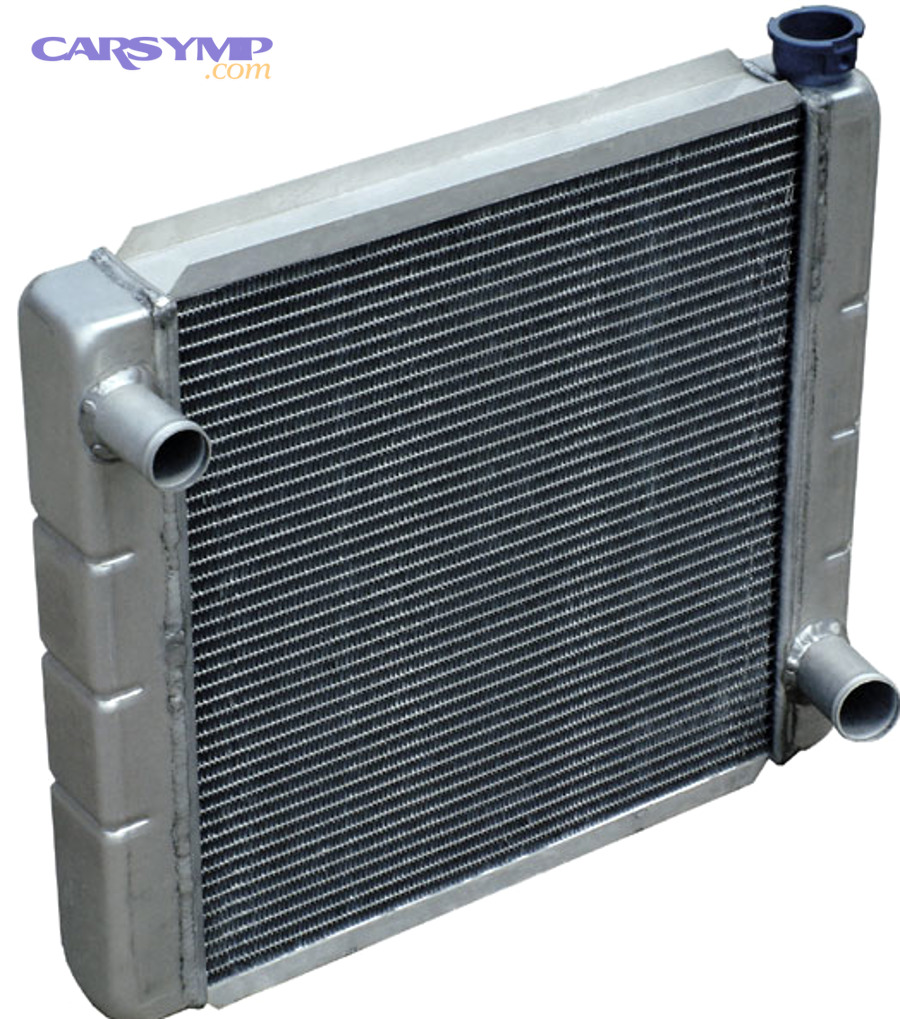
- Hairline seep along the crimp seam where the tank meets the core.
- Residue at the upper corners (high pressure + heat cycling).
- Leak appears only after hot highway runs because plastic expands with heat.
- Thermostat housing / quick-connect fittings
- Crust around the housing flange or plastic neck.
- Seep that worsens with temperature and pressure rise.
- Water pump
- Dried coolant trail down the front cover.
- Wetness near the pump pulley.
- Drip after shutdown (heat soak increases pressure). Weep-hole leakage is a common warning sign of seal failure. (shopownermag.com)
- Heater hoses and small bypass lines
- Leaks that spray under load and vanish quickly.
- Odor near the firewall area.
If you suspect an external leak but can’t see it, you don’t “look harder”—you change the method: pressure test it and/or add UV dye so the leak draws itself.
What internal-leak clues point to head gasket, cracked head/block, or EGR cooler issues?
There are 4 primary internal-leak indicators: abnormal cooling-system pressurization, persistent bubbling, coolant loss with no external residue, and combustion-related symptoms—based on where coolant can go when it doesn’t reach the ground.
In addition, internal leaks often show up under load because cylinder pressure peaks are higher, making it easier for gases to enter the cooling system through a weak sealing area.
Key internal clues include:
- Abnormal pressurization
- Upper radiator hose becomes rock-hard quickly after a cold start.
- Reservoir “burps” or pushes coolant out during acceleration.
- Repeated coolant venting after long climbs.
- Bubbles or continuous aeration
- Persistent bubbles in the reservoir after revving, not just brief burps during bleeding.
- Bubbling that continues after shutdown can suggest trapped pressure or gas intrusion.
- Exhaust and running behavior
- Sweet smell from exhaust (especially when warm).
- Misfire on cold start that clears (coolant intrusion into a cylinder overnight).
- Unexplained coolant loss paired with white smoke that doesn’t disappear.
- Contamination indicators
- Oil that looks milky (not always present—many head gasket failures don’t mix fluids).
- Coolant with oily sheen.
For internal leak confirmation, use a combustion gas (block) test: a chemical fluid changes color if combustion gases are present in the cooling system.
Which is more likely if there are no puddles but the level drops after every highway trip?
An external leak masked by airflow is more likely when you have residue on components or undertrays, while an internal leak is more likely when the system pressurizes abnormally or bubbles persist—so the “winner” depends on whether you can prove coolant exits externally or gases enter internally.
However, the most important move is to stop relying on puddles and instead rely on tests.
Use this quick comparison:
- More likely external (masked) when
- You smell coolant outside the car after a drive.
- You find dried residue at a joint or seam.
- A pressure tester shows a slow drop and reveals wetness at a component.
- More likely internal when
- The system builds pressure rapidly from cold.
- You see continuous bubbling that tracks engine RPM.
- A block test indicates combustion gases.
If you’re stuck between the two, run two tests back-to-back: a cooling system pressure test (external focus) and a block test (internal focus). That combination resolves most “no puddle” mysteries without replacing parts blindly.
What step-by-step diagnostic checklist finds hidden coolant leaks under load fastest?
A fast checklist uses 6 steps—baseline the symptom, inspect smartly, pressure test the system, test the radiator cap, trace intermittents with UV dye, and then confirm internal leaks—so you can locate hidden leaks under load with minimal guesswork.
Below, that sequence works because it matches the leak’s nature: pressure and heat expose it, so your tests must apply pressure and preserve evidence.
What should you check first before testing (coolant level, cap condition, overflow bottle, obvious wet spots)?
There are 5 first checks you should do before any tool-based test: coolant level baseline, cap condition, reservoir integrity, hose routing/clamps, and visible residue mapping—based on eliminating simple causes and creating a clear “before/after” comparison.
Specifically, do this in order:
- Baseline the level when cold
- Check reservoir level relative to the “COLD” mark.
- If your vehicle has a radiator cap and it’s safe/cold, confirm the radiator is full.
- Inspect the cap
- Look for torn rubber seals, corrosion, weak spring feel, or deposits on the sealing surfaces.
- Confirm the cap rating matches OEM spec (wrong cap can vent too early or too late). (macsmobileairclimate.org)
- Inspect the overflow bottle
- Look for cracks at the seam.
- Check the small hose between radiator neck and reservoir for splits.
- Map residue
- Use a flashlight and mirror to look for crust at hose ends, radiator seams, thermostat housing, and pump area.
- Check obvious airflow paths
- Splash shields can redirect leaks; note wet areas that don’t match the components above them.
This prep step often reveals a “free” win: a loose clamp, cracked overflow hose, or cap seal issue that only vents under load.
How do you do a cooling system pressure test, and what does a pass/fail mean?
A cooling system pressure test is a method where you pressurize the cooling system to the cap-rated pressure and watch for pressure drop and visible seepage, typically revealing external leaks that only open under load-like pressure.
Then, because your leak appears under load, the pressure test is your best “simulate the condition while parked” tool.
How to do it safely and effectively:
- Start with a cold engine
- Never remove a cap on a hot system; let it cool fully.
- Attach the tester to the radiator neck or reservoir adapter
- Use the correct adapter to seal properly.
- Pump to the specified pressure
- Do not exceed the cap rating; you want to replicate normal max pressure, not stress the system.
- Hold and observe
- A stable gauge suggests no significant external leaks at that pressure.
- A falling gauge indicates a leak or pressure loss path.
- Inspect while pressurized
- Use a bright light to check all joints, seams, and the pump area.
- Check the heater core drain area and under the dash for dampness if cabin smell exists.
Pass/fail interpretation:
- Pass: pressure holds steady and no seep is visible. (You may still have an intermittent leak that needs heat/RPM, so you move to dye or hot testing.)
- Fail: pressure drops and/or coolant appears. You fix what you find and retest.
How does a radiator cap test relate to leaks that only happen under load?
A radiator cap test determines whether the cap holds and releases pressure at the correct rating, and a failing cap can cause coolant loss under load by venting early, lowering effective boiling point, and pushing coolant into (or out of) the overflow system.
More importantly, a cap is not “just a lid”; it is a calibrated pressure regulator for the entire cooling system. (macsmobileairclimate.org)
Why this matters during hard driving:
- Under load, coolant temperature rises.
- If the cap can’t hold pressure, coolant can start to boil sooner and expand aggressively, pushing fluid out.
- That loss may happen as vapor/overflow—leaving little to no wet trail.
A practical rule of thumb cited by multiple technical references is that raising system pressure increases the boiling point, so a weak cap reduces that margin and makes “highway-only” problems worse. (macsmobileairclimate.org)
Evidence: According to a study by Nahrain University from the College of Engineering (Chemical Engineering), in 2007, increasing ethylene glycol concentration increased the boiling point of the coolant mixture, reinforcing why boiling control (mixture + pressure management) matters when systems are stressed under load. (nahrainuniv.edu.iq)
When should you use UV dye, and how do you trace an intermittent leak after a highway drive?
You should use UV dye when the pressure test doesn’t reveal a clear leak but coolant loss persists under load, because dye leaves a fluorescent trail that survives airflow and evaporation, making intermittent leaks visible after real driving conditions.
Next, dye is especially effective when splash shields hide the drip point and you only notice the level drop.
How to use dye effectively:
- Add the correct dye for engine coolant (verify compatibility with your coolant type).
- Drive to recreate the symptom
- Include the same highway conditions that trigger the loss.
- Inspect immediately after the drive
- Use a UV flashlight in a darker area.
- Follow the brightest trace backward
- Dye often appears downstream due to airflow; start from the strongest glow and track “upwind.”
- Inspect typical “under load only” zones
- Radiator upper seam, hose ends, thermostat housing, water pump weep area, small bypass lines.
If your vehicle has an undertray, remove it for the inspection. Many hidden leaks become obvious only after you expose the “catch basin” where coolant accumulates.
Which parts most commonly fail “only under load,” and how do you confirm each one?
There are 7 common parts that fail only under load—hoses/clamps, radiator seams, thermostat housing, water pump, radiator cap/overflow system, heater/bypass hoses, and internal sealing surfaces—and you confirm each by matching the failure mode to a specific test and evidence pattern.
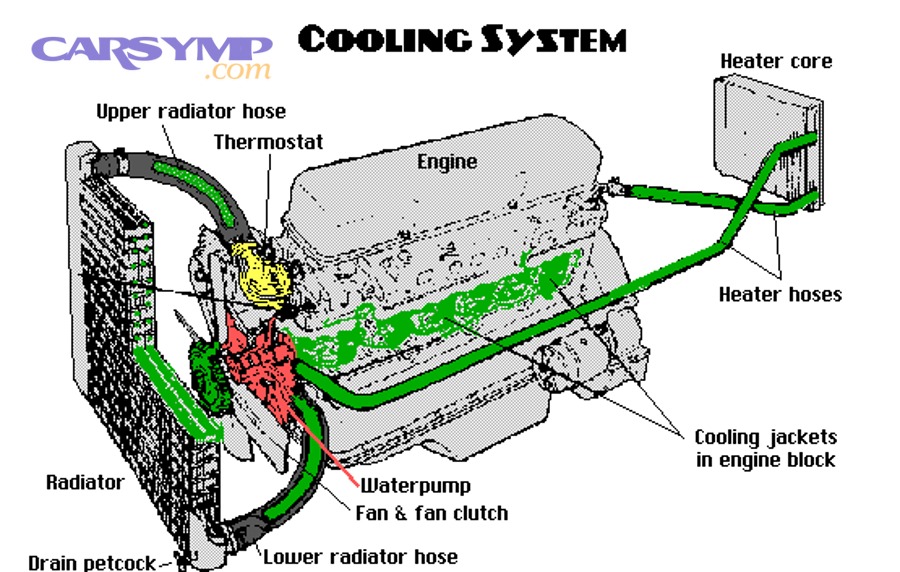
Then, this is where Water pump and thermostat highway behavior becomes useful: both parts can look “fine” at idle but fail at sustained speed when heat and flow demand rise.
Which hose and clamp failures worsen with RPM and pressure, and what’s the telltale evidence?
There are 3 frequent hose/clamp failure types under load: clamp tension loss, hose material breakdown/ballooning, and fitting neck cracks—based on how pressure and vibration act on connections.
Telltale evidence and confirmation:
- Clamp tension loss
- Evidence: crust at clamp line, dampness after pressure test.
- Confirm: pressure test + wipe dry + recheck; retorque/replace clamp if seep returns.
- Hose ballooning or internal delamination
- Evidence: hose feels unusually soft when hot, or visibly swells under rev/load.
- Confirm: inspect when hot (carefully), replace if swelling or softness is abnormal.
- Cracked plastic neck or quick-connect
- Evidence: hairline crack that opens only when hot.
- Confirm: dye inspection after highway drive is often the easiest proof.
A small but practical tip: if you suspect a hose end, wrap it with a clean paper towel after a drive and look for dampness. It makes tiny seeps visible.
How do radiator tank seams and plastic fittings leak at speed without leaving a puddle?
Radiator seams and plastic fittings can leak at speed without puddles because the leak often becomes a fine spray that airflow disperses, and heat evaporates the coolant before it can drip, leaving only dried residue at the seam.
However, the seam leak can still be proven with pressure and dye even if it never puddles.
Common seam-leak pattern:
- Residue at the crimp seam where plastic tank meets the core.
- Stronger evidence near upper corners (higher heat cycling).
- Leak worsens after long highway runs, then “disappears” when parked.
Confirmation method:
- Pressure test cold to find seep.
- If cold test passes, drive to full temp, then inspect quickly with UV dye before evaporation erases the trail.
How do you spot a water pump leak that only shows after a hard drive?
You spot a load-linked water pump leak by finding coolant residue or wetness at the pump’s weep hole or front cover area after a hard drive, because a failing shaft seal often leaks more when hot and spinning faster.
To illustrate, the weep hole exists specifically to show seal failure by allowing coolant to escape externally instead of contaminating bearings. (shopownermag.com)
What to look for:
- Dried coolant trail down the timing cover.
- Wetness around the pump snout/pulley.
- Drips that occur after shutdown (heat soak increases pressure).
How to confirm:
- Pressure test and inspect the pump area with a mirror.
- Use UV dye and inspect behind pulleys where splatter patterns form.
If your vehicle shows both coolant loss and overheating on highway climbs, a pump that leaks (loss) and/or has reduced impeller efficiency (flow) can create a compound failure that looks random until you test it.
How do you confirm an internal pressure intrusion (head gasket) that shows up mostly under load?
You confirm an internal pressure intrusion by showing that combustion gases enter the cooling system—most reliably using a combustion-gas (block) test and by observing abnormal pressurization and reservoir behavior under light revs—because cylinder pressure rises most under load and can force gases through a compromised seal.
Moreover, this is one of the most important confirmations because it often explains repeated overflow or coolant loss with few external clues.
A strong confirmation stack (use more than one):
- Block test (combustion-gas test)
- Positive color change indicates combustion gases in coolant.
- Behavior test
- With cap off (cool engine), start and watch: bubbles that increase with RPM can indicate gas intrusion (avoid hot testing with cap removed).
- Pressure behavior
- Hose pressurizes quickly from cold, or reservoir pushes coolant early in warm-up.
- Secondary signs
- Misfire on startup, unexplained coolant loss, or repeated overheating on highway pulls.
Evidence: According to a study by Nahrain University from the College of Engineering (Chemical Engineering), in 2007, measured boiling-point behavior of ethylene glycol/water mixtures showed boiling point increases with higher glycol percentage, highlighting that when systems still boil/vent under load, pressure loss or gas intrusion is often involved rather than “normal coolant behavior.” (nahrainuniv.edu.iq)
Is it safe to drive with coolant loss under load, and when should you stop immediately?
No, it is generally not safe to drive with coolant loss under load because it can (1) trigger overheating under sustained speed, (2) cause rapid coolant boil-over if pressure is lost, and (3) lead to severe engine damage from repeated thermal stress.
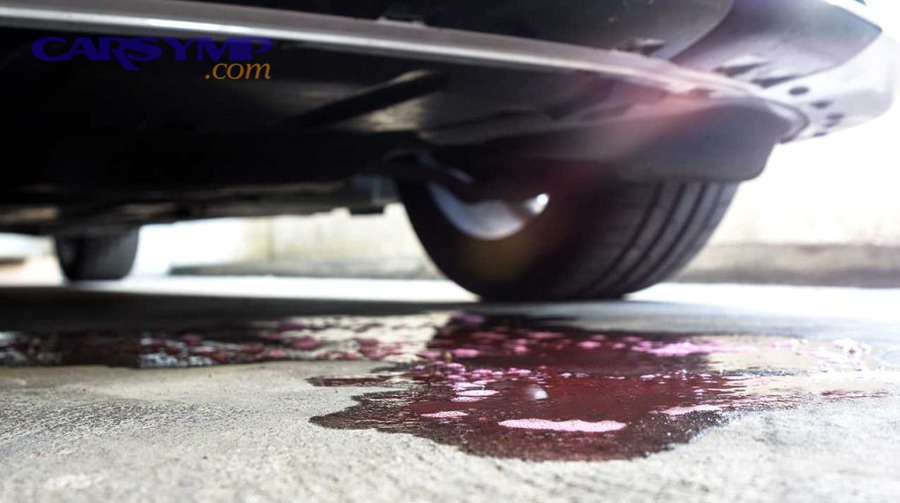
More importantly, the risk increases sharply during overheating on highway driving because you have continuous load and less time to react before temperatures spike.
A simple safety framework:
- If the temperature needle rises above normal and keeps climbing, you must treat it as an emergency.
- If coolant loss is measurable after each drive, you should diagnose before long trips, not during them.
What are the “stop now” red flags during highway overheating or coolant loss?
There are 6 stop-now red flags: rapid temperature climb, steam, heater goes cold, warning lights/messages, severe coolant smell with visible venting, and drivability changes—based on immediate risk of engine damage.
Stop immediately (safely) if you see any of the following:
- Temperature gauge climbs rapidly toward hot/red.
- Steam from the hood or visible coolant spray.
- Heater suddenly blows cold while the engine is hot (coolant level too low to feed the heater core).
- Warning light/message for engine temperature or coolant level (if equipped).
- Loud knocking, misfire, or power loss (overheat can damage components quickly).
- Coolant boils/vents aggressively from the reservoir.
If you must pull off on the highway, keep the engine running briefly only if it helps you reach a safe shoulder, then shut down. Never open the cap while hot.
Can you limp home, and what short-term precautions reduce risk if you must move the car?
Yes, you can sometimes limp home, but only if (1) the temperature stays stable, (2) you have enough coolant to maintain circulation, and (3) you can avoid load that triggers the leak—because limping is about reducing heat generation and preventing pressure spikes.
Besides, the safest option is a tow when the symptom involves overheating on highway conditions.
Short-term precautions (if movement is unavoidable):
- Reduce load
- Avoid highway speeds, hills, towing, and hard acceleration.
- Use cabin heat as an auxiliary radiator
- Turn heat to max and fan high (uncomfortable but can lower coolant temperature).
- Monitor temperature continuously
- If it rises above normal, stop early—do not “see if it comes back down.”
- Top off only when cool
- Add coolant/water only after the system cools enough to open safely.
- Plan “Preventive fixes before long trips”
- Replace a suspicious cap, cracked overflow hose, or weak clamp before you travel.
- If your symptoms suggest Water pump and thermostat highway behavior (heats at speed, fluctuates on grades), do not gamble—diagnose with pressure and flow checks first.
A practical recommendation: if you’re preparing for a long drive and you have any repeat coolant loss, do a pressure test and cap test first. Those two steps catch many highway-only problems early and can prevent a roadside overheat event.
What if you can’t find a leak—why is coolant low with no visible evidence, and what are the uncommon culprits?
Coolant can be low with no visible evidence when (1) the leak is intermittent and evaporates, (2) the cooling system vents due to cap/overflow faults, or (3) coolant is lost internally without classic mixing signs—so you expand diagnostics into the less obvious culprits only after the main checklist is exhausted.
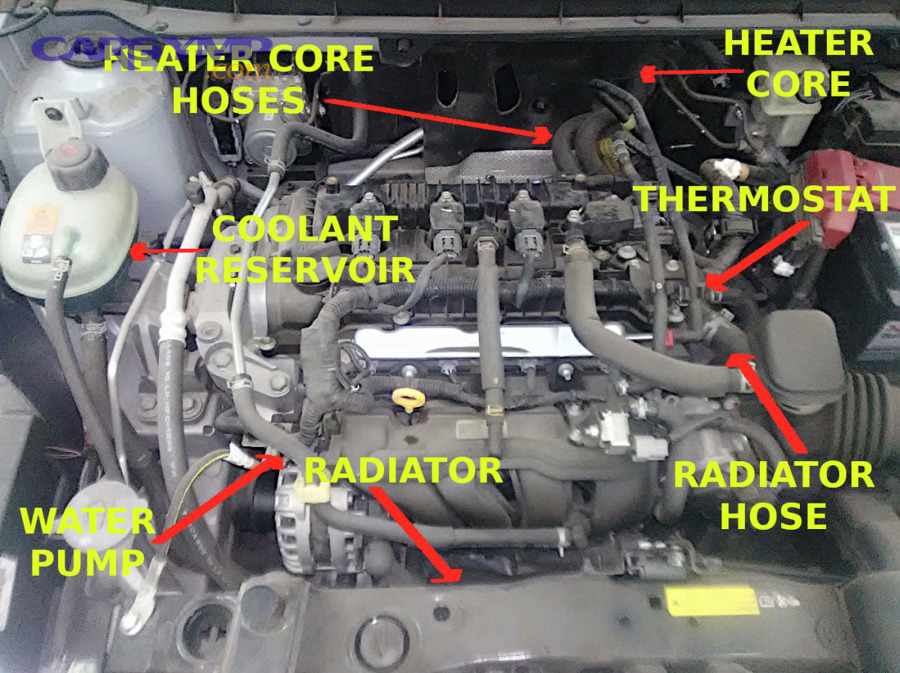
Especially, this “no leak found” scenario is where micro-details matter: test timing, heat soak, and the difference between “level movement” and “true loss.”
Can trapped air, improper bleeding, or a bad overflow bottle mimic “coolant loss under load”?
Yes, trapped air, improper bleeding, or a bad overflow bottle can mimic coolant loss under load because they can cause temporary level swings, coolant venting, or failure to recover coolant back into the system—yet they differ from true leaks by stabilizing after proper correction.
Then, the key is to compare “repeated loss after multiple drives” versus “one-time stabilization after bleeding.”
How to tell the difference:
- Mimic pattern
- Level changes early after service, then stabilizes.
- No residue, no smell, no pressure decay after bleeding.
- True loss pattern
- Level drops repeatedly and predictably after similar driving.
- Dye or pressure test eventually reveals evidence.
Reservoir and hose issues to check:
- Cracked overflow bottle seam.
- Split return hose.
- Wrong cap type (recovery vs non-recovery systems).
How can combustion gases push coolant out without mixing oil and coolant (and why tests can miss it)?
Combustion gases can push coolant out without mixing fluids when the failure path primarily allows gas to enter the coolant jacket under load, pressurizing the system and forcing coolant into the overflow, while the oil and coolant passages remain separated.
However, tests can miss it if you test cold only, test at idle only, or run the block test when the system hasn’t been stressed.
Why it “looks like a cap problem”:
- The reservoir overflows after hard driving.
- There’s little external residue.
- Oil looks normal.
How to avoid false negatives:
- Perform the block test after a drive that reproduces the symptom (while staying safe).
- Observe pressure behavior from cold start (abnormally fast pressurization is a strong clue).
- Combine with a pressure test and dye to rule out external causes.
Which rare components can leak coolant internally under load (EGR cooler, turbo coolant lines, auxiliary pumps)?
There are 3 rare internal-loss categories—EGR cooler leaks, turbo/charger coolant circuit leaks, and auxiliary coolant pump leaks—based on whether your vehicle has additional coolant-fed components beyond the basic radiator/engine loop.
Examples and clues:
- EGR cooler internal leak (platform-dependent)
- Coolant loss with white smoke or sweet exhaust smell under load.
- May be more common on certain diesel designs.
- Turbo coolant lines (if equipped)
- Small leaks that spray and evaporate near the turbo heat zone.
- Often only visible with dye and a quick post-drive inspection.
- Auxiliary electric coolant pump
- Leaks that occur after shutdown (pump can run during after-cooling).
- Coolant loss seems random until you inspect during heat soak.
If your vehicle is equipped with these systems, your diagnostic “map” must include them—especially when basic components test clean.
What is the opposite problem—overfilling coolant—and how can it cause overflow that looks like a leak?
Overfilling coolant is the opposite problem because it creates insufficient expansion space, so normal heat expansion pushes coolant out of the overflow during high-temperature driving, which looks like a leak even though the system is simply expelling excess fluid.
To sum up, this is one of the easiest fixes: correct the fill level to the proper cold mark and verify the recovery function.
How it mimics a leak:
- Overflow happens after a highway run.
- You see dampness near the overflow vent.
- The level drops back to “normal” afterward, but you think you lost coolant.
How to confirm:
- Set level to the correct cold line.
- Drive the same route.
- Recheck for repeatable loss versus one-time correction.
Evidence (selected)
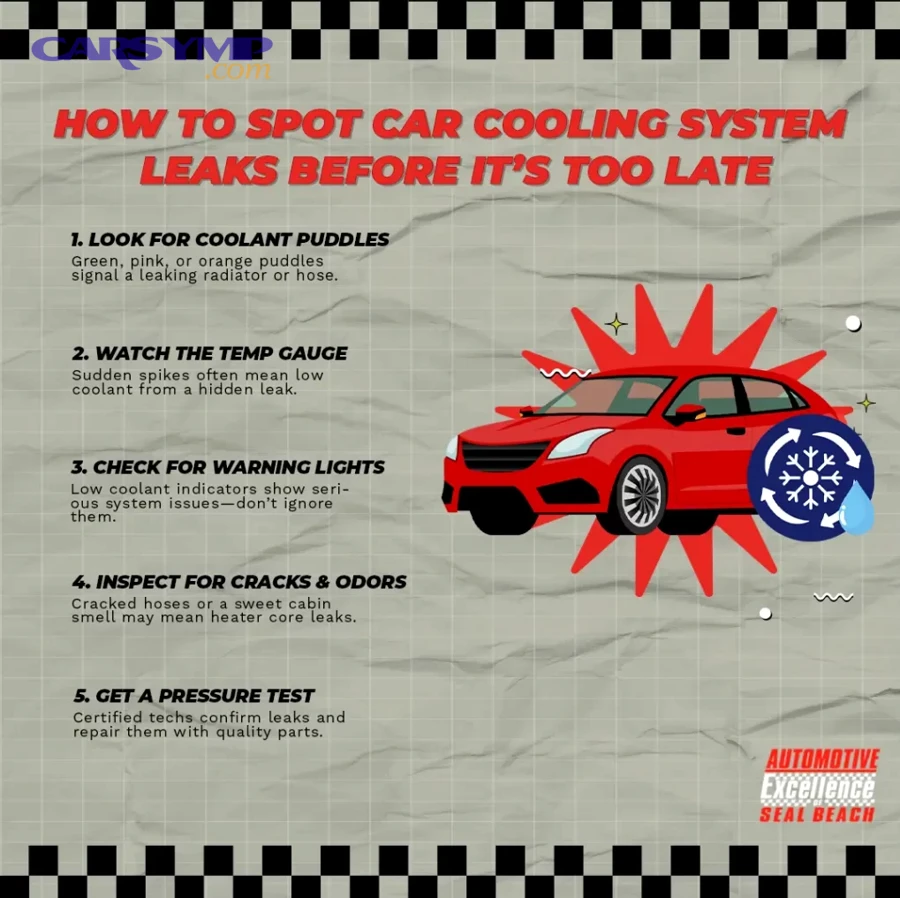
- A calibrated pressure cap helps raise boiling point and maintain cooling margin; common references cite approximately ~3°F increase per psi and typical ~15 psi cap ratings. (macsmobileairclimate.org)
- A combustion-gas/block test uses a chemical reaction (color change) to indicate combustion gases present in coolant.
- According to a study by Nahrain University from the College of Engineering (Chemical Engineering), in 2007, experiments on ethylene glycol/water mixtures showed boiling point increases as ethylene glycol concentration increases. (nahrainuniv.edu.iq)