


If your temperature gauge climbs into the hot zone or an overheat warning appears while you’re on the highway, it is not safe to keep driving except for the short, controlled distance needed to reach a safer stopping point—because continued overheating can quickly escalate into engine damage and roadside danger. (mwg.aaa.com)
Next, the safest decision hinges on clear “stop now” signals vs “limp briefly to safety” conditions, so you don’t overreact into a traffic hazard or underreact into a cooked engine. (mwg.aaa.com)
Then, you’ll need a practical set of immediate actions and “don’ts”—what to do while still moving, what to do once stopped, and what never to attempt when the cooling system is pressurized and hot. (firestonecompleteautocare.com)
Introduce a new idea: once you know how to make the right call in the moment, you can use the same logic to decide whether you can restart after cooling down and what to check so the problem doesn’t return on your next drive. (acg.aaa.com)
Is it safe to keep driving when the temperature gauge climbs into “Hot” on the highway?
No—highway engine overheating is not safe to keep driving because (1) heat can rise faster under load, (2) engine parts can be damaged by excessive temperature, and (3) stopping late can strand you in a more dangerous place. (mwg.aaa.com)
More importantly, the key is to trade a few seconds of controlled decision-making for a safer stop, not to “push through” and hope it cools down.
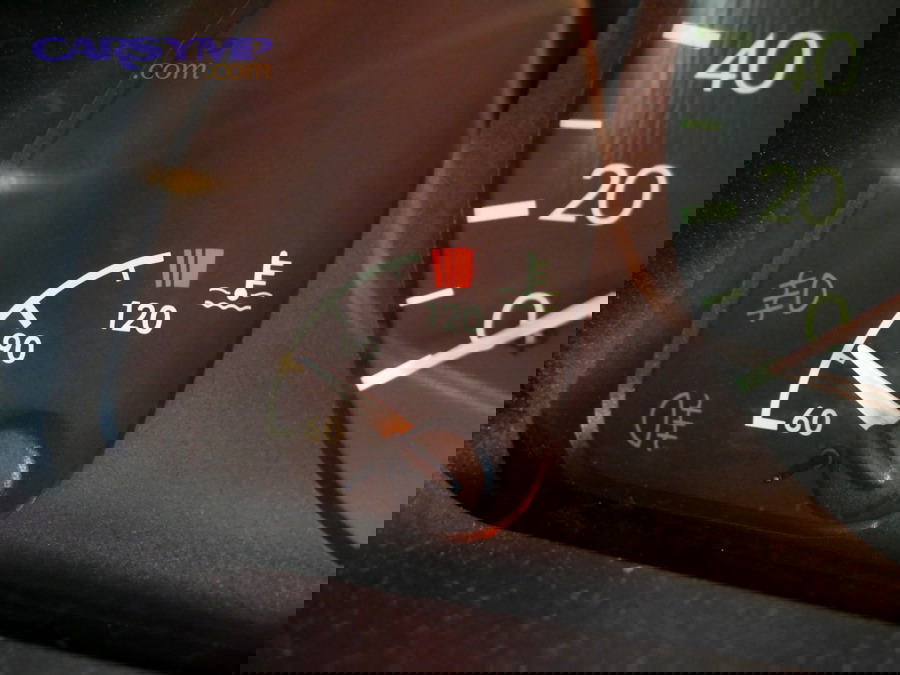
On the highway, “safe-to-drive” really means “safe-to-get-stopped.” Your goal is to reduce risk to people first (you, passengers, nearby drivers), and reduce risk to the engine second (avoid turning a cooling issue into a major repair). That’s why most reputable guidance follows the same backbone: pull over when it’s safe, shut the engine off, and let it cool before investigating. (mwg.aaa.com)
The tricky part is that highways don’t always give you a perfect shoulder at the exact moment the gauge spikes. So the practical answer is:
- If you can safely move to the shoulder or an exit immediately, do it.
- If you cannot stop safely at this exact second, you may continue only long enough to reach a genuinely safer spot—while taking specific load-reduction steps and watching for “stop now” signs.
That decision becomes much easier when you know the two sub-answers below.
Do you need to stop immediately if the overheat warning light comes on?
Yes—if the overheat warning light is on, you should treat it as an urgent stop situation because (1) warning systems often illuminate only when temperature is already high, (2) continued driving can cause severe damage, and (3) the condition can worsen rapidly if coolant is low or leaking. (mwg.aaa.com)
However, “immediately” still means safely: signal, reduce speed smoothly, hazards on, and move out of traffic without abrupt maneuvers.
A practical interpretation of the warning light on the highway:
- If the light appears and the gauge is climbing: assume active overheating and begin a controlled move to stop.
- If you also see steam, smell sweet coolant, or feel power loss: that’s “stop now” territory—aim for the closest safe shoulder, ramp, or parking area.
While you slow down and position the car, turn on hazards early to communicate to drivers behind you that you’re slowing abnormally. Hazard lights exist to indicate a vehicular hazard such as a stopped or slow-moving vehicle relative to traffic. (nhtsa.gov)
Can you drive 1–2 miles to the next exit if there’s no safe shoulder?
Yes—sometimes you can drive 1–2 miles to an exit if there is no safe shoulder, because (1) a controlled move to a safer stop reduces crash risk, (2) brief load reduction can slow temperature rise, and (3) stopping in a protected area can prevent secondary collisions—provided you meet strict conditions. (mwg.aaa.com)
However, this is only acceptable when you are not seeing “stop now” signs.
Conditions that can justify a short “limp-to-safety” distance:
- No steam billowing from the hood
- No knocking/pinging that suggests abnormal combustion
- No sudden loss of power that forces you to floor the accelerator
- Temperature is elevated but not rapidly climbing toward pegged hot
- You can keep the car moving gently without hard acceleration
Rules for limping briefly (if you must):
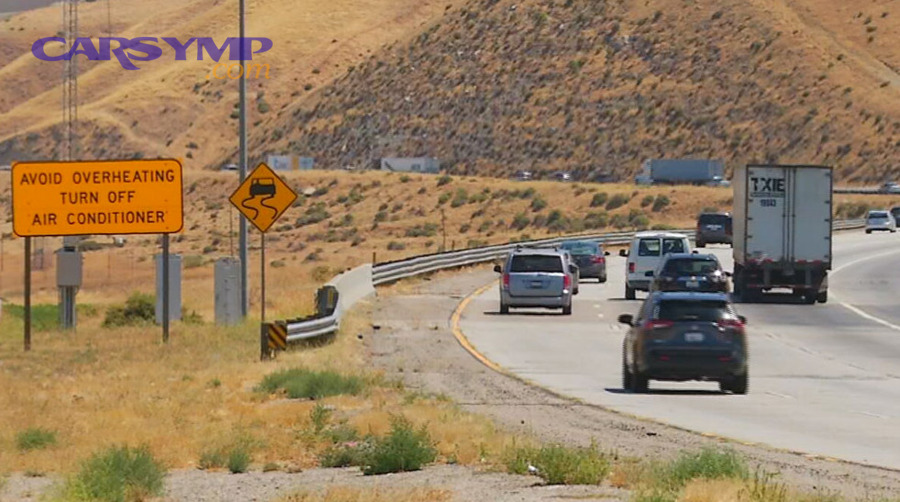
- Turn A/C off (reduces engine load).
- Turn heat on high + fan high (uses the heater core as a small auxiliary radiator).
- Ease off the throttle and avoid passing maneuvers.
- Stay in the right lane and prepare to stop the moment you see a safe spot.
- If the gauge continues to rise quickly, abort and stop as soon as you safely can.
Those tactics are not a “fix.” They are a risk-control bridge to a safer stop.
What does “engine overheating” mean compared with normal operating temperature?
Engine overheating is a condition where the cooling system can’t keep engine temperature within normal operating limits, usually because coolant flow, airflow, or heat rejection is compromised—causing temperatures to climb beyond safe parameters. (acg.aaa.com)
To better understand the decision you’re making on the highway, think in two zones: normal temp (stable, expected range) vs hot engine (rising beyond control).
Normal operating temperature varies by vehicle and design, but the driver-facing concept is consistent:
- The gauge typically sits around the middle when everything is stable.
- A warning message or red icon indicates the system believes temperature is outside safe operating parameters.
Overheating on the highway often feels more alarming because you’re moving fast—yet overheating can happen at speed when the cooling system is low on coolant, leaking under load, restricted, or not circulating properly. In other words, airflow alone can’t save a system that doesn’t have enough coolant or flow.
What are the most reliable signs that the engine is actually overheating (not just a sensor glitch)?
There are 6 main signs the engine is truly overheating: a rising/pegged temperature gauge, an overheat warning message or red light, steam or vapor from the hood, a sweet coolant smell, loss of cabin heat, and reduced power/limp behavior—based on the criterion of heat + cooling-system distress occurring together. (acg.aaa.com)
Specifically, the strongest signals combine temperature indication with physical symptoms:
- Gauge climbing toward hot or staying unusually high
- Warning message/light indicating engine/coolant temp issue
- Steam or visible vapor from the front of the vehicle
- Sweet smell (coolant) or hot, sharp odor near the hood area
- Cabin heater stops blowing hot air (often suggests low coolant flow)
- Engine feels weak, response delayed, or vehicle enters reduced power
If you only have a single indicator (for example, a warning light with zero other symptoms), it still deserves urgent caution—but the combined signals help confirm you’re not dealing with a simple sensor anomaly.
What are the “do not ignore” symptoms that mean “shut it down now”?
There are 5 “shut it down now” symptoms: heavy steam billowing, the gauge pegged in hot/red, rapid temperature rise that doesn’t slow with load reduction, loud knocking/pinging or misfire, and visible coolant dumping—based on the criterion of immediate risk of engine damage or driver safety. (mwg.aaa.com)
Moreover, these symptoms remove the “maybe I can make it” option:
- Steam billowing: you may be losing coolant; continued driving can accelerate failure.
- Pegged hot: you’re past “elevated”; you’re in an emergency zone.
- Knocking or harsh sounds: heat can push the engine into abnormal combustion or lubrication breakdown.
- Coolant puddle or spray: a leak can go from small to catastrophic quickly.
- Repeated overheating after a short cool-down: the underlying failure is active.
If any of these show up, the safest move is to stop as soon as you can do so without creating a crash risk.
What should you do immediately while still moving to reduce risk and reach a safe stop?
Use a simple method with 6 steps—signal and stabilize, turn A/C off, turn heat on high, reduce load, move to the safest stopping point, and shut the engine off—to reduce risk and reach a safe stop without escalating damage. (mwg.aaa.com)
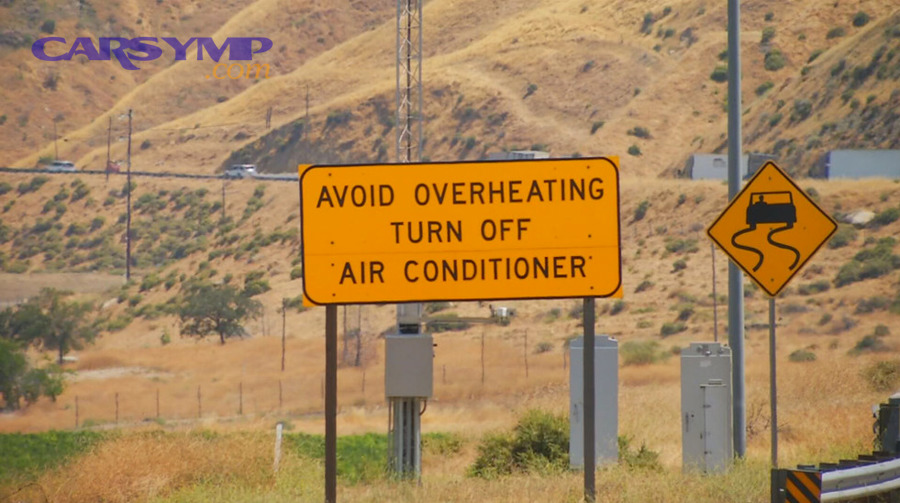
Then, reconnect to the core issue: you’re managing overheating on highway conditions where safety and heat rise happen at the same time.
Here’s the highway-safe sequence that prioritizes control:
- Hazards on early and signal your lane move.
- Smoothly reduce speed and avoid hard braking.
- A/C off to reduce engine load.
- Heat on max + fan on max to pull heat away from the engine through the heater core.
- Stay right and aim for a wide shoulder, exit ramp, or parking lot.
- Once stopped, shift to Park/Neutral and shut the engine off (in most situations).
Optional but helpful: if you’re in heavy traffic and cannot stop immediately, keep distance and avoid stop-and-go surges that raise load.
Should you turn the A/C off and turn the heater on to bring temperatures down?
Yes—turning the A/C off and the heater on can help because (1) it reduces engine load from the A/C system, (2) it uses the heater core as an extra heat exchanger, and (3) it can slow temperature rise long enough to reach a safe stop.
However, it’s a mitigation—not a cure—and it has limits.
Use this tactic when:
- The gauge is rising but not pegged
- You have no steam
- You’re trying to reach the next safe pull-off
Do not rely on it when:
- Steam is visible
- The gauge is pegged
- Temperature continues climbing rapidly
In those cases, the only meaningful mitigation is stopping and shutting down.
Should you idle, keep driving slowly, or shut the engine off once stopped?
Idling wins in rare, mild cases for short stabilization, keeping driving slowly is only for reaching a safer stop, and shutting the engine off is optimal when the gauge is hot because it stops heat generation and reduces the chance of severe damage. (mwg.aaa.com)
Especially once you’re safely stopped, the default move is engine off.
A practical comparison:
- Keep driving slowly: only if your current stopping point is unsafe (blind curve, narrow shoulder) and you can reach a safer area immediately.
- Idle briefly: only if temperature is elevated but stable and you suspect airflow/traffic is a factor—still risky if the gauge is high.
- Shut the engine off: best when the gauge is truly hot or rising, or you see warning messages/steam.
After shutdown, wait before opening the hood, and never rush the inspection.
What should you NOT do when your engine is overheating on the highway?
Do not keep driving, do not open the hood immediately, and do not pour cold water on a hot engine because (1) you can worsen damage, (2) you can cause thermal shock or cracks, and (3) you can expose yourself to burns from steam and pressurized coolant. (firestonecompleteautocare.com)
Besides, the fastest “fix” attempts are often the most dangerous ones on the roadside.
Firestone’s guidance is blunt for a reason: don’t keep driving, don’t open the hood immediately, and don’t dump cold water on a hot engine. (firestonecompleteautocare.com) Those “don’ts” map to the three biggest risks: (1) escalating engine damage, (2) personal injury, and (3) creating a secondary hazard on the highway shoulder.
Should you open the radiator cap or coolant reservoir immediately?
No—you should not open the radiator cap or coolant reservoir immediately because (1) the system may be pressurized, (2) hot coolant/steam can cause severe burns, and (3) sudden depressurization can trigger rapid boil-over. (firestonecompleteautocare.com)
However, you can inspect later—after cooling—using cautious steps.
Safer approach after shutdown:
- Wait until the temperature gauge drops back toward normal and the engine bay is no longer radiating extreme heat (often 30+ minutes, longer in hot weather).
- Open the hood carefully only when you’re confident steam isn’t venting.
- If you must check coolant, follow your owner’s manual guidance for your specific reservoir type, and treat any cap as potentially pressurized.
Is it okay to pour cold water on the radiator/engine to cool it faster?
No—pouring cold water on a hot radiator or engine is not okay because (1) sudden temperature change can crack components, (2) it can warp parts by uneven contraction, and (3) it doesn’t solve coolant loss or circulation failure. (firestonecompleteautocare.com)
Meanwhile, the “fast cool” instinct is understandable—but the cooling system needs controlled recovery, not thermal shock.
If you’re stranded, the safer path is: engine off, wait, call roadside help, and only add coolant/water mix after it’s cooled and you can do so safely.
How can you decide: pull over now vs continue briefly to an exit (hot engine vs normal temp)?
Pull over now wins for rapid temperature rise, warning messages, steam, or loss of power; continuing briefly to an exit is only best when the shoulder is unsafe and the temperature is elevated but stable—so you choose safety-first while minimizing engine stress. (mwg.aaa.com)
To better understand, use a decision tree that treats “hot engine” as an emergency and “normal temp” as the baseline you must return to before trusting the car again.
Here is a simple table that summarizes the decision logic and what it implies. It’s designed to help you decide within seconds without guessing.
| What you observe | What it likely means | Best action |
|---|---|---|
| Steam, gauge pegged hot, warning says “Stop safely,” power drops hard | Active overheating and/or coolant loss | Pull over ASAP (safely), shut off, tow |
| Gauge rising fast even after A/C off + heat on | Cooling system can’t recover | Pull over ASAP (safely), shut off |
| Gauge elevated but stabilizes after load reduction, no steam | Mild overheating trend | Proceed only to the nearest safe stop |
| Gauge returns toward normal quickly and stays stable | Possible transient/load-related spike | Still stop and inspect; don’t resume highway speed until confident |
Which situations require an immediate stop and a tow (no exceptions)?
There are 5 situations that require an immediate stop and tow: steam billowing, the gauge pegged hot/red, a “stop safely” warning, visible coolant dumping, or persistent overheating after restart—based on the criterion of high probability of damage or unsafe operation. (mwg.aaa.com)
More specifically, towing isn’t “overkill” when the cooling system is failing—because restarting and driving can simply repeat the overheat cycle.
Call for a tow when:
- You can’t keep temperature stable at idle after cooling
- You see significant coolant loss
- The engine runs rough, knocks, or misfires
- You have repeated overheating within minutes
Which situations might allow a short, controlled drive to safety—and how do you do it safely?
There are 3 situations where a short, controlled drive to safety might be allowed: no safe shoulder, temperature elevated but not pegged, and no steam or severe power loss—then you reduce load, use heat as a heat sink, and stop at the first safe opportunity. (mwg.aaa.com)
However, “allowed” here means “least bad option,” not “safe to continue your trip.”
Safe execution checklist:
- Hazards on
- Right lane only
- Gentle throttle, no passing
- Heat max, A/C off
- Watch the gauge continuously
- Stop immediately if temperature climbs again
If you’re in a state with “Move Over” rules that include vehicles with hazard lights, other drivers may be legally required to move over when safe—another reason to use hazards early and clearly when you’re forced to slow. (nhtsa.gov)
What damage can happen if you keep driving while overheating, and why is it so expensive?
Overheating can damage engines by warping cylinder heads, degrading gaskets, and increasing the likelihood of cracks or lubrication breakdown—so costs rise because repairs require precision labor, major disassembly, and sometimes engine replacement. (acg.aaa.com)
In short, heat is expensive because it doesn’t just “break one part”—it can distort surfaces that must seal perfectly.
The most common “expensive path” looks like this:
- Cooling problem begins (leak, low coolant, stuck thermostat, fan issue).
- Temperature rises under highway load.
- Metal expands beyond normal limits; sealing surfaces distort.
- Gasket sealing degrades; combustion gases and coolant can mix.
- The engine overheats faster the next time, compounding damage.
This is why guidance emphasizes stopping rather than “getting home.”
Is one overheating event enough to ruin an engine?
Yes—one overheating event can ruin an engine because (1) extreme heat can warp critical sealing surfaces, (2) coolant loss can cascade rapidly, and (3) a single severe event can trigger head gasket failure or cracking—though severity and duration determine the outcome. (acg.aaa.com)
However, not every overheat is catastrophic; the risk increases sharply when the gauge is pegged, steam appears, or the engine is driven hard while hot.
Practical rule: if you saw steam or pegged hot, assume a higher chance of internal damage and have it inspected rather than “testing your luck” on the next highway run.
What are the most common repairs after overheating (and what do they typically involve)?
There are 6 common repairs after overheating: fixing leaks and refilling/bleeding coolant, thermostat replacement, radiator repair/replacement, cooling fan/fan control repair, water pump replacement, and head gasket diagnostics/repair—based on the criterion of restoring coolant flow and heat rejection. (acg.aaa.com)
Especially relevant to highway problems is Low coolant and leaks under load: small leaks can become big leaks at speed due to heat and pressure, and the system can’t carry heat away if coolant volume is low.
Common repair paths:
- Leak repair + coolant service: hose, clamp, radiator end tank, reservoir, cap; refill and bleed air.
- Thermostat: restores proper coolant routing; a stuck thermostat can cause rapid overheating.
- Radiator: clogs or external blockage reduce heat shedding; internal restrictions limit flow.
- Fans and controls: more common for low-speed overheating, but still critical for post-highway cool-down and idle.
- Water pump: circulation failure causes overheating that airflow cannot fix.
- Head gasket/cylinder head work: pressure testing, compression/leak-down tests, machining, gasket replacement.
If you suspect Transmission overheating contribution, understand that additional heat load (especially in towing/grades) can compound stress on the radiator stack, because many vehicles shed transmission heat through a cooler integrated with or placed in front of the radiator. When that heat load rises, the engine cooling system may have less capacity margin—so the same small coolant issue becomes an overheat event sooner. (pure.psu.edu)
What should you check after the engine cools before driving again?
Check 6 items after cooling: coolant level, visible leaks, oil condition, warning messages, fan operation (if safe to observe), and whether temperature rises again on restart—so you don’t re-enter the highway with an active overheating fault. (acg.aaa.com)
Thus, the post-cooldown check is a filter: it tells you whether you can drive a short distance to service or need a tow.
Cooling-down basics:
- Park safely, hazards on.
- Keep passengers away from traffic-side.
- Wait for the engine bay to cool (often at least 30 minutes; longer in extreme heat).
- Avoid standing between your vehicle and passing traffic.
Then inspect in this order:
- Look for leaks under the car (green/orange/pink fluid, wet spots on hoses).
- Check coolant reservoir level if your vehicle allows a safe view without opening a pressurized cap.
- Check oil (dipstick) for level and appearance (milky or frothy can indicate coolant contamination).
- Scan the dash for repeated warnings.
- If you restart, watch the gauge immediately and be ready to shut down.
Can you drive again after topping up coolant, or should you call for a tow?
Topping up coolant wins only when the leak is minor and temperature stays stable; calling for a tow is best when you have steam, repeated overheating, rapid coolant loss, or warning messages—because stability and safety matter more than distance. (acg.aaa.com)
However, “top up and go” is often misunderstood.
You may be able to drive a short distance to a shop if:
- Coolant was slightly low (not empty)
- You see no active dripping or spraying
- The gauge stays normal at idle for several minutes
- It remains stable during gentle, low-speed driving
You should call for a tow if:
- Coolant level drops again quickly
- The gauge rises again within minutes
- Steam returns
- You can’t confidently confirm coolant is circulating and stable
AAA’s consumer guidance is consistent: pull over safely, let the engine cool, and if the issue persists or you can’t safely restart, get roadside assistance or a tow. (acg.aaa.com)
What warning signs after cooling mean you should not restart the engine?
There are 5 warning signs you should not restart: milky oil, persistent steam/smoke, obvious coolant dumping, loud abnormal noises, or temperature rising rapidly at idle—because each suggests ongoing failure or potential internal damage. (acg.aaa.com)
More importantly, restarting isn’t harmless: it reintroduces heat and pressure to a system that may already be compromised.
Watch for:
- Oil that looks like chocolate milk (possible coolant in oil)
- White exhaust that doesn’t dissipate like normal condensation
- A puddle forming quickly under the engine bay
- Knock/misfire on start
- Gauge climbing toward hot while parked
If you see any of these, towing is the safer and often cheaper outcome.
Contextual border: You now have a complete, safety-first framework to decide what to do in the moment and whether you can drive again after cooling; next, we expand into causes and prevention to reduce recurrence and broaden your diagnostic confidence.
Why does highway overheating happen, and how can you prevent it next time?
Highway overheating happens mainly because heat production exceeds heat removal—most often from low coolant, leaks, restricted flow, radiator heat-sinking limits, or added thermal load—so prevention focuses on restoring capacity and catching failures early. (acg.aaa.com)
Next, use micro-level thinking: you’re not just fixing “hot engine,” you’re restoring margin so “normal temp” stays stable under highway load.
If you want a practical tool for diagnosis, start with an Overheating at highway speed causes checklist:
- Coolant level and signs of Low coolant and leaks under load
- Radiator condition (external blockage, internal restriction)
- Thermostat operation (stuck closed/partially opening)
- Water pump function and belt condition
- Pressure cap integrity and system pressurization ability
- Air trapped in system after recent service
- Cooling fans (less likely at speed, but important at idle after exiting)
- Added thermal loads: towing, steep grades, high ambient temps, and Transmission overheating contribution
Evidence: According to a study by Penn State University researchers, in 2007, test and simulation results showed overheating can result from insufficient radiator heat-sinking capacity and coolant flow shortage, and a redesigned coolant flow path increased coolant average velocity by 168% and reduced peak temperature by 12.2°C. (pure.psu.edu)