


Proper spark plug gap and torque specifications are critical for engine performance, fuel efficiency, and preventing costly damage to your vehicle’s ignition system. The correct gap measurement—the distance between the center and ground electrodes—typically ranges from 0.028 to 0.060 inches for most vehicles, while torque specifications vary from 7 to 38 lb-ft depending on thread size and seat type. Installing spark plugs with incorrect specifications can lead to misfires, poor fuel economy, stripped cylinder head threads, or complete engine failure.
Understanding what constitutes correct spark plug gap begins with recognizing that different vehicles, engine types, and spark plug materials require specific measurements. The gap directly affects ignition voltage requirements, combustion efficiency, and your engine’s ability to start reliably under various conditions. Meanwhile, proper torque ensures adequate heat transfer from the plug to the cylinder head while preventing over-tightening that could crack the porcelain insulator or strip delicate aluminum threads.
Beyond finding the right specifications, knowing how to measure and adjust gap accurately, and how to apply torque correctly during installation, determines whether your spark plugs will perform optimally or cause problems. The tools you use—from wire-type gap gauges to calibrated torque wrenches—and the techniques you employ make the difference between a professional-quality installation and one that compromises engine performance.
This comprehensive guide provides detailed specification charts organized by vehicle type and thread size, step-by-step instructions for gap adjustment and torque application, and expert insights on avoiding common installation mistakes. Whether you’re performing routine maintenance on a passenger car or tackling high-performance applications, you’ll find the precise specifications and techniques needed for successful spark plug installation.
What is the Correct Spark Plug Gap and Why Does It Matter?
The correct spark plug gap is the precisely measured distance between the center electrode and ground electrode, typically ranging from 0.028 to 0.060 inches, while torque specification is the exact rotational force applied during installation to ensure proper seating and heat transfer without damaging threads. These specifications matter because they directly determine ignition efficiency, combustion quality, and engine longevity—with incorrect settings causing everything from hard starting and misfires to catastrophic engine damage.
To better understand these critical specifications, consider how they function within your engine’s ignition system. The gap measurement controls the length of the electrical arc that must jump between electrodes to ignite the air-fuel mixture. A gap set too wide requires excessive voltage from the ignition coil, potentially causing coil failure or weak spark under load. Conversely, a gap too narrow produces a weak, short-duration spark that fails to ignite the mixture completely, resulting in incomplete combustion, reduced power output, and increased emissions.
Torque specifications serve an equally vital function by governing how tightly the spark plug seats in the cylinder head. Proper torque creates an effective seal that prevents combustion gases from escaping while establishing the thermal pathway necessary for heat dissipation. The spark plug must transfer extreme combustion heat—often exceeding 1,500°F—through its shell into the cylinder head’s cooling system. Insufficient torque leaves air gaps that insulate the plug, causing it to overheat and potentially pre-ignite the fuel mixture. Excessive torque crushes gasket washers beyond their design limits, strips threads in aluminum heads, or cracks the ceramic insulator surrounding the center electrode.
Modern engines with electronic ignition systems are particularly sensitive to gap specifications. Coil-on-plug designs and distributorless ignition systems produce higher voltage than older distributor-based systems, but they still require gaps within manufacturer tolerances to function reliably. Engine management computers expect specific electrical resistance characteristics that change when gap measurements deviate from specifications.
What Happens If Spark Plug Gap is Too Wide or Too Narrow?
When the gap exceeds specified measurements, the ignition system must generate higher voltage to bridge the increased distance between electrodes. This excessive voltage demand stresses ignition coils, resulting in premature coil failure, intermittent misfires under acceleration or load, and difficulty starting in cold weather when engine compression is highest. Wide gaps also create weaker, less concentrated sparks that struggle to ignite lean air-fuel mixtures or mixtures diluted by exhaust gas recirculation systems.
Specifically, a gap measuring even 0.010 inches beyond specification can increase required firing voltage by 3,000 to 5,000 volts. In vehicles with marginal ignition components—such as those with 80,000+ miles on original coils—this additional demand triggers the check engine light with misfire codes, particularly in cylinders experiencing the highest mechanical wear or carbon buildup. Drivers notice symptoms including rough idle, hesitation during acceleration, reduced fuel economy by 10-15%, and in severe cases, catalytic converter damage from unburned fuel entering the exhaust system.
Narrow gaps present different but equally problematic issues. When electrodes sit closer than specified, the spark path shortens, reducing spark duration and energy. While this might seem beneficial by reducing voltage requirements, it actually weakens the ignition event to the point where combustion becomes incomplete. The shortened spark duration fails to ignite the entire air-fuel charge, leaving pockets of unburned mixture that exit through exhaust valves as hydrocarbons and carbon monoxide.
Engines running with gaps narrower than specification exhibit power loss, particularly noticeable during wide-open throttle acceleration where complete combustion is critical. Fuel economy suffers as the engine management computer enriches the mixture attempting to compensate for poor combustion quality. Black smoke from the exhaust, fouled spark plugs covered in carbon deposits, and elevated emissions test failures all point to insufficient gap measurements allowing incomplete combustion cycles.
What Happens If Spark Plug Torque is Too Tight or Too Loose?
Over-torqued spark plugs create immediate and catastrophic damage that often requires professional repair costing hundreds or thousands of dollars. Excessive tightening force strips the relatively soft aluminum threads in modern cylinder heads, particularly in engines using aluminum blocks where thermal expansion coefficients already stress the spark plug bore. The ceramic insulator surrounding the center electrode cracks under extreme compression, allowing combustion gases to blow past the damaged insulator and destroy the plug’s ability to fire.
More specifically, torquing a 14mm plug beyond the 25-30 lb-ft specification by just 10-15 lb-ft can strip threads completely, requiring thread repair using helicoil inserts, thread chasers, or in worst cases, cylinder head replacement. The immediate symptom is a plug that continues spinning without tightening, accompanied by hissing sounds as compression escapes past damaged threads. In running engines, this leads to severe misfires, loss of compression in the affected cylinder, and potential for the loosened plug to eject from the cylinder head under combustion pressure—a dangerous failure that can damage hood components and surrounding engine parts.
Under-torqued installations appear less dramatic initially but create progressive failures that worsen over time. Spark plugs failing to seat fully against their crush washers or tapered seats cannot transfer heat effectively to the cylinder head. This thermal insulation causes the plug to overheat, reaching temperatures where the center electrode glows red hot and ignites air-fuel mixtures before the timed spark occurs—a condition called pre-ignition or “detonation.”
Loose plugs also allow combustion gases to leak past the threads, creating hot gas paths that erode both the plug shell and cylinder head threads. The carbon deposits and heat damage accumulate over thousands of miles, making subsequent removal difficult or impossible without breaking the plug or damaging threads. Engines experiencing this condition show symptoms of reduced power, increased fuel consumption, and potential for complete plug seizure requiring drilling and specialized extraction tools. In extreme cases documented by automotive service centers, insufficiently torqued plugs have vibrated loose enough to eject during operation, causing immediate engine damage and potential injury from hot metal components.
What are the Standard Spark Plug Gap Specifications by Vehicle Type?
Standard spark plug gap specifications range from 0.028 to 0.060 inches depending on vehicle type, with passenger cars typically requiring 0.035-0.045 inches, trucks and SUVs using 0.040-0.060 inches, and motorcycles operating at 0.024-0.032 inches based on engine design and ignition system voltage capability. These measurements vary according to ignition system type, fuel delivery method, compression ratio, and whether the engine uses forced induction or operates naturally aspirated.
Below, we’ll explore how different vehicle categories and engine configurations determine the specific gap requirements for optimal performance. Vehicle manufacturers establish these specifications through extensive testing to balance ignition reliability, fuel efficiency, emissions compliance, and component longevity across various operating conditions.
What are Spark Plug Gap Specifications for Common Domestic Vehicles?
Domestic vehicles from Ford, General Motors, and Stellantis (formerly Chrysler) follow gap specifications that reflect their distinct engine architectures and ignition system designs. Ford vehicles equipped with EcoBoost engines typically specify gaps of 0.030-0.035 inches due to their turbocharged design requiring reduced gap for reliable ignition under boost pressure. Traditional Ford V8 engines like the 5.0L Coyote and 5.4L Triton use wider gaps of 0.052-0.054 inches, leveraging their coil-on-plug ignition systems’ high-voltage capability.
General Motors vehicles show similar variation based on engine family. The popular GM 3.6L V6 found in numerous Chevrolet, GMC, and Cadillac models specifies 0.043 inches, while their LS and LT-series V8 engines (5.3L, 6.0L, 6.2L) use 0.040 inches for naturally aspirated versions. GM’s smaller displacement turbocharged engines, including the 1.4L and 1.5L found in Cruze and Malibu models, require tighter 0.028-0.031 inch gaps to accommodate higher cylinder pressures.
Stellantis vehicles with the venerable 3.6L Pentastar V6 engine specify 0.043 inches, consistent across Jeep, Ram, Chrysler, and Dodge applications. Their HEMI V8 engines (5.7L, 6.4L) use 0.043-0.045 inches depending on model year, with earlier versions running slightly wider gaps than newer emissions-optimized variants. The turbocharged 2.0L found in Wrangler and Gladiator models tightens this to 0.035 inches.
The table below summarizes common domestic vehicle specifications:
| Engine Type | Typical Gap Range | Common Applications |
|---|---|---|
| 4-Cylinder Naturally Aspirated | 0.040-0.050″ | Ford 2.0L, GM 2.4L Ecotec |
| 4-Cylinder Turbocharged | 0.028-0.035″ | Ford EcoBoost, GM 1.4L/1.5L Turbo |
| V6 Naturally Aspirated | 0.040-0.045″ | GM 3.6L, Chrysler 3.6L Pentastar |
| V8 Naturally Aspirated | 0.040-0.054″ | GM LS/LT, Ford 5.0L Coyote, HEMI 5.7L |
| V8 Supercharged | 0.035-0.040″ | Ford 5.0L Supercharged, Dodge Hellcat |
These specifications assume use of OEM-equivalent spark plugs with identical heat range and electrode design to originally installed components.
What are Spark Plug Gap Specifications for Import Vehicles?
Import vehicles from Japanese and European manufacturers demonstrate gap specifications influenced by their high-revving engine designs, advanced ignition systems, and strict emissions requirements. Toyota vehicles equipped with naturally aspirated engines typically specify 0.043-0.044 inches across their popular models including Camry, Corolla, and RAV4. Their hybrid powertrains in Prius and Camry Hybrid models use identical gaps despite their combined gasoline-electric operation, as the internal combustion portion follows conventional ignition principles.
Honda’s naturally aspirated engines show remarkably consistent specifications at 0.043 inches for the majority of their four-cylinder and V6 applications, including Civic, Accord, CR-V, and Pilot models. This standardization reflects Honda’s engine design philosophy emphasizing component commonality. Their turbocharged 1.5L engines found in newer Civic and CR-V models tighten slightly to 0.035-0.040 inches, following the industry pattern of reduced gaps for forced induction.
Nissan vehicles vary more widely, with their naturally aspirated engines ranging from 0.039-0.043 inches depending on displacement and model year. The VQ-series V6 engines (3.5L, 3.7L) used across Altima, Maxima, Pathfinder, and 370Z models specify 0.043 inches. Their smaller four-cylinder engines in Sentra and Rogue typically use 0.039-0.041 inches.
European manufacturers demonstrate even greater variation reflecting their diverse engine technologies. BMW naturally aspirated engines specify 0.035-0.040 inches, while their turbocharged applications (extremely common in current models) use 0.024-0.028 inches—notably tighter than domestic equivalents. Mercedes-Benz follows similar patterns with naturally aspirated engines at 0.031-0.039 inches and turbocharged variants at 0.024-0.031 inches. Volkswagen and Audi turbocharged TSI engines standardize around 0.028-0.031 inches across most applications.
Subaru’s horizontally-opposed engines present unique specifications: their naturally aspirated 2.5L engines specify 0.039-0.043 inches, while turbocharged WRX models tighten to 0.028-0.031 inches. The table below compares import specifications:
| Manufacturer | Naturally Aspirated | Turbocharged | Common Models |
|---|---|---|---|
| Toyota | 0.043-0.044″ | 0.031-0.035″ | Camry, RAV4, Tundra |
| Honda | 0.043″ | 0.035-0.040″ | Civic, Accord, CR-V |
| Nissan | 0.039-0.043″ | 0.035-0.039″ | Altima, Rogue, Frontier |
| BMW | 0.035-0.040″ | 0.024-0.028″ | 3-Series, X3, X5 |
| Mercedes | 0.031-0.039″ | 0.024-0.031″ | C-Class, E-Class, GLC |
| Subaru | 0.039-0.043″ | 0.028-0.031″ | Outback, Forester, WRX |
Import vehicles often use metric measurements in service documentation, with 0.043 inches converting to 1.1mm, and 0.028 inches equaling 0.7mm.
What Gap Settings Do Different Spark Plug Materials Require?
Spark plug electrode materials significantly influence gap specifications and adjustment procedures, with each material offering distinct performance characteristics, longevity, and gap stability over the service life. Copper-core spark plugs, the most economical option, feature a nickel-alloy ground electrode and copper-cored center electrode that conducts heat efficiently but wears relatively quickly. These plugs typically operate at the widest end of manufacturer specifications—often 0.040-0.060 inches—because their larger electrode diameter can handle wider gaps without excessive voltage requirements.
However, copper plugs suffer from accelerated electrode erosion that gradually widens the gap beyond specification as they accumulate miles. A copper plug gapped to 0.040 inches when new may measure 0.050-0.055 inches after 15,000-20,000 miles of service, progressively degrading ignition performance until replacement becomes necessary. This characteristic makes copper plugs suitable primarily for older vehicles with conventional ignition systems and drivers willing to replace spark plugs during every major service interval.
Platinum spark plugs use a platinum disk welded to the center electrode tip, dramatically improving wear resistance and extending service life to 60,000-100,000 miles. The harder platinum material maintains gap specifications far longer than copper, with typical growth measuring only 0.002-0.005 inches over their entire service interval. Platinum plugs generally operate at manufacturer-specified gaps ranging from 0.035-0.055 inches, with the exact measurement depending on engine design rather than plug material. The finer electrode design of platinum plugs allows them to fire reliably at wider gaps than copper equivalents, making them the preferred choice for modern engines with electronic ignition systems.
Double platinum plugs feature platinum on both center and ground electrodes, providing superior durability in waste-spark ignition systems where each plug fires twice per engine cycle—once for combustion and once during the exhaust stroke. These plugs use identical gap specifications to single-platinum variants but maintain those gaps throughout extended service intervals approaching 100,000 miles.
Iridium spark plugs represent premium technology with an iridium-alloy center electrode measuring just 0.4-0.6mm in diameter compared to 2.5mm for conventional plugs. This ultra-fine electrode reduces the voltage required to initiate spark, enabling reliable ignition at gaps up to 0.060 inches while actually requiring less voltage than copper plugs at narrower gaps. Iridium’s extreme hardness—harder than platinum—allows these fine electrodes to resist erosion for 100,000-120,000 miles while maintaining gap specifications within 0.001-0.003 inches of original settings.
The fine-wire design of iridium plugs offers additional performance benefits including faster flame kernel development and more complete combustion, particularly beneficial in direct-injection engines and lean-burn applications. However, their delicate electrodes require careful gap adjustment—bending must be done exclusively on the ground electrode using proper tools to avoid damaging the center electrode.
According to testing conducted by the Society of Automotive Engineers in 2019, iridium spark plugs maintained ignition performance equivalent to new plugs at 100,000 miles, while copper plugs showed 30-40% degradation by 20,000 miles and platinum plugs exhibited 15-20% degradation at 60,000 miles, primarily due to gap widening from electrode erosion.

What are the Standard Spark Plug Torque Specifications by Thread Size?
Standard spark plug torque specifications range from 7 to 38 lb-ft depending on thread size and seat type, with 14mm gasket-seat plugs requiring 25-30 lb-ft, 14mm tapered-seat plugs needing 7-15 lb-ft, 18mm gasket-seat plugs demanding 32-38 lb-ft, and smaller 10-12mm plugs using 10-22 lb-ft based on their application in motorcycles and small engines. These specifications account for thread engagement length, material hardness differences between plug shells and cylinder heads, and thermal expansion characteristics during engine operation.
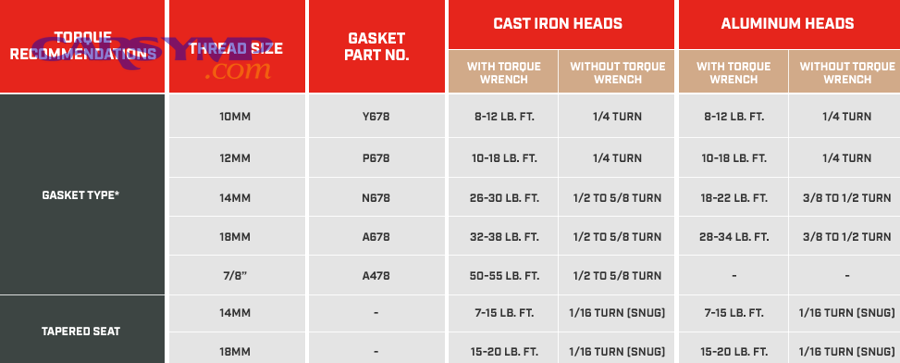
To properly understand torque requirements, consider that spark plug installation involves creating two critical interfaces: the mechanical thread engagement that retains the plug against combustion pressure, and the thermal seat that transfers heat from the plug into the cylinder head cooling system. Thread size determines the surface area available for load distribution, while seat type governs how the plug seals and contacts the head.
What are Torque Specifications for 14mm Thread Spark Plugs?
The 14mm thread size represents the most common spark plug application, found in approximately 75% of passenger vehicles, light trucks, and SUVs manufactured worldwide. These plugs divide into two distinct seat types with dramatically different torque requirements due to their sealing mechanisms. Gasket-seat 14mm plugs use a crushable metal washer that compresses during installation to form a gas-tight seal and thermal contact surface. This design requires substantial torque—typically 25-30 lb-ft—to adequately compress the gasket and establish proper thermal conductivity.
The installation procedure for gasket-seat plugs involves hand-tightening until the gasket contacts the cylinder head surface, then applying additional rotation using a torque wrench. New gasket-seat plugs require 1/2 to 2/3 turn (180-240 degrees) beyond initial contact to properly crush the washer. Used plugs being reinstalled need only 1/12 turn (30 degrees) since their gaskets are already compressed. Exceeding 30 lb-ft risks stripping threads in aluminum heads, while insufficient torque below 20 lb-ft fails to compress the gasket adequately, creating thermal barriers that cause plug overheating.
Tapered-seat 14mm plugs eliminate the gasket entirely, using a conical surface on the plug shell that mates directly with a matching taper in the cylinder head. This metal-to-metal contact requires far less torque—just 7-15 lb-ft—to achieve proper sealing and thermal contact. The tapered design is inherently self-centering and self-sealing, with the conical surfaces generating higher contact pressure than gasket designs at lower installation torque. These plugs have become increasingly common in modern engines due to their compact size, improved heat transfer, and reduced installation complexity.
Installing tapered-seat plugs requires careful attention to avoid cross-threading during initial engagement. Hand-tighten until resistance is felt as the taper contacts the head, then apply 1/16 turn (approximately 22.5 degrees) with a torque wrench to reach the 10-15 lb-ft specification. The lower torque values make tapered-seat plugs particularly suitable for aluminum heads where thread strength is limited. Over-torquing tapered plugs beyond 18-20 lb-ft can actually deform the sealing taper, reducing contact area and degrading both sealing and heat transfer capabilities.
Thread pitch variations also affect installation characteristics, though torque specifications remain constant within each seat type. Most 14mm plugs use 1.25mm pitch threading, but some applications—particularly European vehicles and certain Honda engines—employ 1.5mm pitch for improved thread strength. The coarser 1.5mm threads provide approximately 20% more thread engagement area, offering greater resistance to vibration loosening and cross-threading during installation.
What are Torque Specifications for 18mm Thread Spark Plugs?
The larger 18mm thread size appears primarily in heavy-duty applications including full-size trucks, commercial vehicles, marine engines, and some high-performance engines where the increased thread engagement provides superior retention under extreme conditions. These plugs follow the same gasket-seat versus tapered-seat distinction as 14mm variants but with proportionally higher torque requirements reflecting their larger physical dimensions and thread engagement area.
Gasket-seat 18mm spark plugs require 32-38 lb-ft of installation torque to properly compress their larger crush washers and establish adequate thermal contact. The installation procedure mirrors 14mm gasket-seat practice: hand-tighten to initial contact, then rotate 1/2 to 2/3 turn (180-240 degrees) for new plugs or 1/12 turn (30 degrees) for used plugs with previously compressed gaskets. The higher torque specification accounts for the larger gasket diameter requiring greater compressive force to achieve the same unit pressure against the cylinder head surface.
Common applications include Ford PowerStroke diesel engines (7.3L, 6.0L, 6.4L), certain General Motors V8 truck engines, and older Toyota truck engines. These engines typically feature cast-iron cylinder heads with robust thread bosses capable of withstanding the higher installation loads. Torquing 18mm gasket-seat plugs to the full 38 lb-ft specification in aluminum heads requires caution and verification that the specific application is designed for such loads—consult manufacturer specifications rather than assuming capability based solely on thread size.
Tapered-seat 18mm spark plugs use 18-22 lb-ft torque specifications, maintaining the approximate 3:1 ratio between gasket-seat and tapered-seat torque values seen across all thread sizes. These plugs appear less frequently than their 14mm tapered counterparts but find application in certain heavy-duty engines where packaging constraints favor the gasket-free design. The installation procedure follows tapered-seat protocol: hand-tighten to initial taper contact, then apply 1/16 turn to reach specification.
The increased physical size of 18mm plugs provides approximately 63% more thread engagement area than 14mm equivalents (calculated from the ratio of thread circumferences), translating to substantially higher retention force and reduced stress per unit thread area. This makes 18mm plugs particularly resistant to loosening from vibration and thermal cycling, explaining their preference in commercial and heavy-duty applications where service intervals may extend beyond typical passenger vehicle standards.
What are Torque Specifications for 10mm and 12mm Thread Spark Plugs?
Smaller thread sizes predominantly serve motorcycles, ATVs, lawn equipment, generators, and other power equipment using compact engine designs where physical constraints limit spark plug dimensions. The 10mm thread size, smallest in common use, requires delicate installation procedures with torque specifications of just 10-12 lb-ft for gasket-seat designs and 7-10 lb-ft for tapered variants. These low values reflect the minimal thread engagement area and the typically softer aluminum alloys used in small-engine cylinder heads.
Motorcycles represent the primary automotive application for 10mm plugs, particularly smaller displacement bikes (250-600cc) and certain sport bikes where compact combustion chamber designs demand minimal plug intrusion. The installation procedure requires careful hand-tightening followed by minimal torque wrench rotation—often just 1/16 to 1/8 turn beyond finger-tight—to reach specification. Over-torquing 10mm threads by even 3-5 lb-ft frequently strips the cylinder head threads completely, necessitating costly repairs or head replacement.
The 12mm thread size bridges the gap between small-engine 10mm applications and automotive 14mm plugs, appearing in mid-size motorcycles (600-1000cc), some ATVs, marine outboards, and various industrial engines. Gasket-seat 12mm plugs specify 18-22 lb-ft torque, while tapered-seat versions use 10-14 lb-ft. These intermediate specifications provide adequate retention force for engines experiencing moderate vibration and thermal stress without overstressing the relatively small thread engagement area.
Installation of 10mm and 12mm plugs demands extra caution during initial threading to prevent cross-threading—a common failure mode given the fine thread pitch and limited thread length. Always start threading by hand, rotating counter-clockwise first until you feel the threads drop into engagement, then rotate clockwise while maintaining straight alignment. Never force threading or use power tools during initial engagement.
The table below summarizes torque specifications across all common thread sizes:
| Thread Size | Seat Type | Torque Specification (lb-ft) | Torque Specification (Nm) | Typical Applications |
|---|---|---|---|---|
| 10mm | Gasket | 10-12 | 14-16 | Small motorcycles, lawn equipment |
| 10mm | Tapered | 7-10 | 10-14 | Compact engines, generators |
| 12mm | Gasket | 18-22 | 24-30 | Mid-size motorcycles, ATVs |
| 12mm | Tapered | 10-14 | 14-19 | Marine outboards, industrial engines |
| 14mm | Gasket | 25-30 | 34-41 | Most passenger cars, light trucks |
| 14mm | Tapered | 7-15 | 10-20 | Modern cars, compact designs |
| 18mm | Gasket | 32-38 | 43-52 | Heavy-duty trucks, diesel engines |
| 18mm | Tapered | 18-22 | 24-30 | Commercial vehicles, marine engines |
Always verify specifications in your vehicle’s service manual, as some manufacturers specify torque values outside these typical ranges based on specific engine design factors.
How Do You Measure and Set Spark Plug Gap Correctly?
Measuring and setting spark plug gap correctly requires using a wire-type feeler gauge or blade-style gap tool to verify the distance between center and ground electrodes matches manufacturer specifications, then carefully bending only the ground electrode to adjust the gap while avoiding contact with the fragile center electrode or ceramic insulator. This process ensures optimal ignition performance by establishing the precise spark path length required for your engine’s voltage output and combustion chamber design.
Let’s explore the specific tools and techniques that enable accurate gap measurement and adjustment without damaging spark plug components. Proper gapping represents a critical skill for anyone replacing spark plugs, as even “pre-gapped” plugs may not match your specific engine’s requirements due to manufacturing tolerances, shipping damage, or variations in specifications across different vehicle models using similar plug part numbers.
What Tools Do You Need to Gap Spark Plugs?
Wire-type gap gauges represent the most accurate and widely used tools for measuring spark plug gaps, consisting of calibrated wire loops in standard sizes ranging from 0.020 to 0.100 inches in 0.001-inch increments. These coin-shaped or folding tools allow you to insert progressively larger wire diameters between the electrodes until you find the size that passes through with slight resistance—this dimension equals your current gap measurement. Quality wire gauges include both imperial (inches) and metric (millimeters) measurements, accommodating service manuals using either system.
The primary advantage of wire-type gauges lies in their ability to measure the gap without deflecting the ground electrode during measurement. Unlike blade-type feeler gauges that can inadvertently bend electrodes when forced between them, wire gauges contact only the smooth electrode surfaces, sliding through the gap without applying lateral pressure. Professional technicians prefer wire gauges for final gap verification after adjustment because they provide the most repeatable measurements with minimal risk of altering the gap during measurement itself.
Blade-style feeler gauges, while less ideal for final measurement, serve effectively for initial gap assessment and during the adjustment process. These tools use flat metal blades of known thickness that insert between electrodes to gauge the opening. Their flat profile makes them excellent for adjusting tapered-seat plugs where access around the electrode assembly may be restricted. However, their blade edges can catch on electrode surfaces during insertion, potentially bending the ground electrode and changing the gap you’re attempting to measure—a limitation that makes them less suitable for precision final checks.
Gap adjustment tools specifically designed for bending ground electrodes come in several configurations. The most common design features a slot that accepts the spark plug body with a small anvil or lever positioned to contact the ground electrode’s bend point. Applying gentle pressure to the tool’s handle bends the electrode toward or away from the center electrode without stressing the plug shell threads or ceramic insulator. Professional-grade adjustment tools include built-in wire gauges, combining measurement and adjustment functions in a single implement.
Digital gap measurement tools have emerged in recent years, using electronic sensors to measure the electrode spacing and display the result on an LCD screen with 0.001-inch resolution. These devices eliminate the subjective “feel” component of wire gauge measurement, providing objective readings particularly valuable when training new technicians or documenting gap settings before and after service. However, their cost—typically $50-150 compared to $5-15 for quality wire gauges—limits their adoption primarily to professional shops performing high-volume spark plug service.
According to a 2021 study by the Automotive Maintenance and Repair Association, technicians using digital gap tools reduced mis-gapped spark plug installations by 43% compared to those using traditional wire gauges, primarily by eliminating interpretation errors when determining whether a wire gauge passes through the gap with “slight resistance” versus “no resistance” or “excessive resistance.”

How Do You Adjust Spark Plug Gap Without Damaging the Electrode?
Adjusting spark plug gap safely begins with identifying which electrode can be bent and which must never be touched—a critical distinction that prevents permanent plug damage. The ground electrode, extending from the plug shell and forming an “L” or “J” shape over the center electrode, is specifically designed to be bent during gap adjustment. Its solid nickel-alloy or precious-metal construction can withstand careful bending through reasonable ranges without breaking or losing conductivity. In contrast, the center electrode must never be bent, as it contains a delicate ceramic insulator that cracks under lateral stress, rendering the plug useless.
To widen a gap that measures too narrow, insert the gap adjustment tool’s anvil or lever underneath the ground electrode at the point where it bends toward the center electrode. Apply gradual, steady pressure upward, bending the electrode away from the center electrode in small increments of approximately 0.005 inches per adjustment. After each adjustment, remove the tool and measure the gap with your wire gauge to assess progress. This iterative approach prevents over-bending that could weaken the electrode metal or create a gap wider than specification, requiring you to bend it back and increasing the risk of metal fatigue or fracture.
Narrowing an excessive gap requires greater caution, as pressing the ground electrode downward toward the center electrode risks contacting and damaging the center electrode or its insulator. Place the adjustment tool’s contact surface on top of the ground electrode at its bend point, then apply gentle downward pressure while visually confirming the electrode moves without touching the center electrode. Work in even smaller increments when narrowing—approximately 0.003 inches per adjustment—measuring frequently to avoid over-correction.
The bending technique itself significantly affects success rates. Hold the spark plug firmly by its hexagonal shell, never by the ceramic insulator or terminal end. Apply bending force at the ground electrode’s natural bend point where it curves from the shell toward the center electrode—this location experiences the least stress concentration and provides the most controlled movement. Avoid bending near the electrode tip where the metal is thinnest and most prone to fracturing, or at the base where the electrode welds to the shell and stress concentrations can crack the shell itself.
Fine-wire iridium and platinum plugs require special consideration during gap adjustment. Their ultra-fine center electrodes (0.4-0.6mm diameter) are extremely vulnerable to damage from even incidental contact. When adjusting these plugs, work under good lighting with magnification if available, ensuring the ground electrode moves in a perfectly vertical plane without any side-to-side wobble that could strike the center electrode. Many manufacturers of fine-wire plugs recommend replacing rather than adjusting if the gap deviates significantly from specification, as the risk of damage outweighs the cost of a new plug.
Never attempt to adjust spark plugs while they’re installed in the engine—a practice sometimes suggested for checking gaps without removal. The ground electrode must move freely through its full range of motion during adjustment, impossible when the plug is threaded into the cylinder head. Additionally, debris from the adjustment process (metal particles, tool marks) falls directly into the combustion chamber if attempted in-place, potentially causing engine damage.
Verification after adjustment represents the final critical step. After achieving the target gap measurement, inspect the ground electrode for cracks, deformation, or stress marks at the bend point. The electrode should maintain a smooth curve without sharp kinks, flat spots, or visible cracks in its surface. Check that the ground electrode remains centered over the center electrode when viewed from the terminal end—side-to-side misalignment indicates improper bending technique and creates an inconsistent gap dimension across the electrode width.
How Do You Apply Correct Torque When Installing Spark Plugs?
Applying correct torque when installing spark plugs requires using a calibrated torque wrench set to manufacturer specifications, hand-threading the plug until snug to ensure proper alignment, then rotating the torque wrench smoothly until it clicks or indicates the target torque value has been reached without exceeding the specification. This controlled tightening process creates adequate clamping force for gas sealing and heat transfer while preventing thread damage, crushed gaskets, or cracked insulators that result from over-tightening.
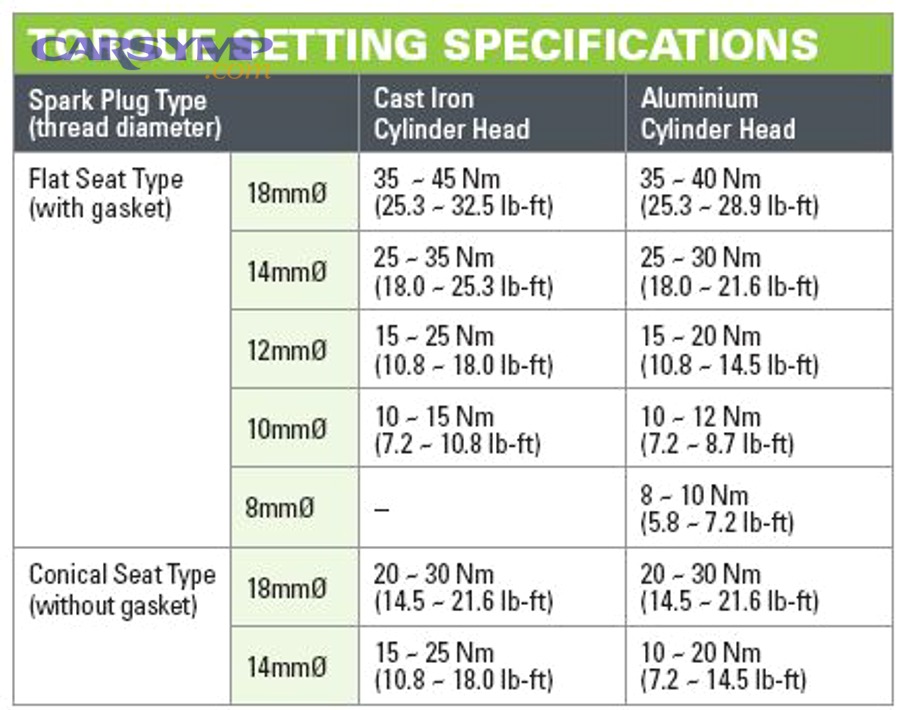
Now let’s examine the specific tools, techniques, and sequences that ensure proper torque application across different spark plug types and installations. Professional mechanics emphasize that torque wrench use represents the only reliable method for achieving specification—experienced technicians’ “feel” for proper tightness varies too widely to ensure consistent results across the 7-38 lb-ft range required for different plug configurations.
What Type of Torque Wrench Should You Use for Spark Plugs?
Click-type torque wrenches represent the most reliable and widely recommended tool for spark plug installation, featuring an internal mechanism that produces an audible “click” and tactile release when the preset torque value is reached. These wrenches use a calibrated spring and clutch assembly that slips at the target torque, preventing over-tightening even if you continue applying force after the click. Quality click-type wrenches from manufacturers like Tekton, CDI, or Snap-On provide accuracy within ±3-4% of the set value, more than adequate for spark plug specifications where typical tolerances span 3-5 lb-ft ranges.
The appropriate torque wrench size for spark plug work typically falls in the 0-80 lb-ft or 0-100 lb-ft range, covering all common spark plug torque requirements from 7 lb-ft tapered-seat to 38 lb-ft large gasket-seat applications. Smaller 0-20 lb-ft or 0-40 lb-ft wrenches provide better resolution and accuracy at the low end of the scale where tapered-seat 14mm plugs operate, making them preferable if you work primarily on modern vehicles using this plug type. The most versatile approach involves owning both a small-range wrench (0-40 lb-ft) for tapered plugs and a medium-range wrench (20-100 lb-ft) for gasket-seat applications.
Drive size selection affects usability in the confined spaces surrounding spark plug installations. 3/8-inch drive torque wrenches represent the optimal compromise between strength, accuracy, and accessibility, fitting most spark plug sockets while providing adequate leverage for torque generation. Some technicians prefer 1/4-inch drive wrenches for their compact size in tight engine compartments, though these typically limit torque capacity to 20-30 lb-ft and require adapters for standard 5/8-inch or 13/16-inch spark plug sockets. Avoid 1/2-inch drive wrenches for spark plug work—their bulk makes them difficult to maneuver around ignition coils, fuel rails, and other components surrounding plug wells.
Beam-type torque wrenches offer a simple, reliable alternative using a calibrated pointer and scale to indicate applied torque based on beam deflection. These mechanical instruments never lose calibration since they have no internal adjustable mechanisms, making them excellent reference standards for verifying click-type wrench accuracy. However, their requirement for direct scale observation during torque application makes them awkward to use in the vertical, confined spaces typical of spark plug installations where you cannot simultaneously view the scale and apply force to the handle.
Digital torque wrenches provide the ultimate in precision and ease of use, displaying torque values on LCD screens with 0.1 lb-ft resolution and often including modes for tracking peak torque, counting bolt sequences, and data logging. Their electronic load cells and microprocessor-controlled displays eliminate interpretation errors inherent in reading mechanical pointers or listening for clicks in noisy shop environments. The primary drawbacks involve cost ($150-500 for quality units versus $40-150 for click-type), battery dependence, and vulnerability to damage from drops or impacts that would merely require recalibration for mechanical wrenches.
Torque wrench calibration directly affects installation quality and should be verified annually or every 5,000 cycles, whichever comes first. Professional-grade calibration services compare your wrench against NIST-traceable standards, providing certification documents and adjustment if needed. DIY calibration verification can be performed using a calibrated beam-type wrench or postal scale with known weight at a known distance from the drive end, though this approach only confirms gross accuracy rather than certifying precision across the wrench’s full range.
According to research published by the American Society of Mechanical Engineers in 2020, torque wrenches used beyond their calibration intervals produced average errors of 12-15%, with some units deviating by 25% or more from their indicated values—potentially translating to 3-7 lb-ft errors on spark plug installations with devastating consequences for thread integrity.
What is the Correct Installation Sequence for Torquing Spark Plugs?
The installation sequence begins before the spark plug ever contacts the cylinder head, with thorough preparation of both the plug and the threaded spark plug bore. Start by inspecting the threads in the cylinder head using a flashlight and inspection mirror, checking for carbon deposits, oil contamination, or damaged threads that could prevent proper plug seating. Clean the threads using a dedicated spark plug thread chaser—a specialized tap designed to reform damaged threads and remove carbon without cutting new threads or removing base metal. Never use standard taps for this purpose, as they cut too aggressively and can enlarge the bore, reducing thread engagement.
After chasing threads, blow out the spark plug well using compressed air to remove carbon particles and debris that could fall into the combustion chamber when the old plug is removed. Insert a clean shop towel into the well to catch any remaining debris, then carefully remove the old plug, immediately reinstalling the towel to prevent foreign material entry. Remove the towel only when ready to install the new plug, minimizing the time the combustion chamber sits exposed to contamination.
New spark plug preparation involves gap verification even on “pre-gapped” plugs, as shipping and handling can alter factory settings by 0.003-0.010 inches. Apply a small amount of anti-seize compound to the threads of gasket-seat plugs installed in aluminum cylinder heads—a thin coat covering approximately 2/3 of the thread length prevents galling and seizure during future removal. Use nickel-based anti-seize rated for temperatures exceeding 2000°F, applying it sparingly to avoid excess that could contaminate the plug’s electrodes or ceramic insulator.
Critical note: When using anti-seize compound, reduce torque specifications by approximately 10-15% to compensate for the reduced friction coefficient. Anti-seize allows the plug to rotate more easily during installation, meaning a given torque value produces higher clamping force than it would on dry threads. For example, a 14mm gasket-seat plug normally torqued to 25 lb-ft should be torqued to only 21-22 lb-ft with anti-seize applied. Consult manufacturer specifications for exact derating values, as some manufacturers account for anti-seize in their published torque values while others assume dry installation.
Never apply anti-seize to tapered-seat spark plugs. The metal-to-metal sealing taper depends on precise surface friction to prevent overtightening, and any lubricant disrupts this carefully engineered interface. Similarly, avoid anti-seize on cast-iron cylinder heads where galling risk is minimal and the added expense provides negligible benefit.
Hand-threading represents the critical next phase, establishing proper plug alignment before torque application. Thread the new plug by hand, rotating it clockwise until it stops. The plug should thread smoothly for several complete revolutions—typically 5-8 turns minimum for 14mm plugs—before meeting resistance. If you encounter binding, resistance, or difficulty turning after just 1-2 rotations, stop immediately and remove the plug. Cross-threading has occurred, requiring you to restart the threading process with more careful alignment. Never force a cross-threaded plug using tools, as this will strip the cylinder head threads completely.
Proper hand-threading technique involves starting the plug while rotating counter-clockwise until you feel it “drop” into the thread—this ensures the threads align before you begin tightening. Then rotate clockwise gently, maintaining straight alignment and avoiding side loads that could cause cross-threading. For deep spark plug wells where you cannot reach the plug with your fingers, use a length of rubber hose slipped over the plug terminal as a flexible extension that transmits rotation while preventing cross-threading—the hose will slip if the plug binds rather than forcing it.
Once hand-tight, attach your torque wrench with appropriate spark plug socket. For gasket-seat plugs, note the exact rotational position of the plug (mark the wire terminal orientation if helpful) before applying torque. Apply smooth, continuous force to the torque wrench handle at its designated grip point—typically marked or positioned at the handle’s end. Pull steadily without jerking or using rapid force application that can cause the torque wrench to over-shoot the target value before the click mechanism engages.
When the click occurs (for click-type wrenches) or the target torque appears (for digital types), stop immediately without applying additional rotation. The click indicates you’ve reached specification—continuing to pull after the click over-tightens the plug while appearing to maintain proper torque on the wrench. For gasket-seat plugs, verify you’ve achieved the required 180-240 degrees of rotation (1/2 to 2/3 turn) beyond initial contact. If not, your initial hand-tightening was insufficient—back off the plug and restart the sequence.
Tapered-seat plugs follow identical procedure through hand-tightening, but require only 1/16 turn (approximately 22-23 degrees) beyond initial contact to reach proper torque. The minimal rotation makes it essential to identify the exact point where hand-tightening resistance begins—this represents your zero point for measuring the 1/16 turn that follows.
Multi-cylinder installations require systematic sequencing to ensure even installation across all plugs. Number the cylinders, install and torque plugs in numerical order, then verify each plug’s torque in a second pass. This double-check catches plugs that may have been under-torqued or forgot entirely during the initial installation—surprisingly common when working on V6 or V8 engines with plugs distributed across both cylinder banks.
After torquing all plugs, reconnect ignition coils or wires following the same systematic sequence used during removal. Improper firing order from misconnected wires causes rough running, misfires, and potential engine damage from pre-ignition or detonation. Start the engine and listen for unusual sounds indicating loosened plugs (hissing, ticking) or misfires (rough idle, stumbling).
Where Can You Find Vehicle-Specific Gap and Torque Specifications?
Vehicle-specific gap and torque specifications are found in the owner’s manual under the “Maintenance” or “Specifications” section, in the factory service manual’s “Engine” or “Tune-up” chapters, on the underhood emissions/tune-up decal typically located on the hood underside or radiator support, and through spark plug manufacturer websites and catalogs that cross-reference part numbers to required specifications. These multiple sources provide redundant verification to ensure accurate installation settings for your specific year, make, model, and engine configuration.
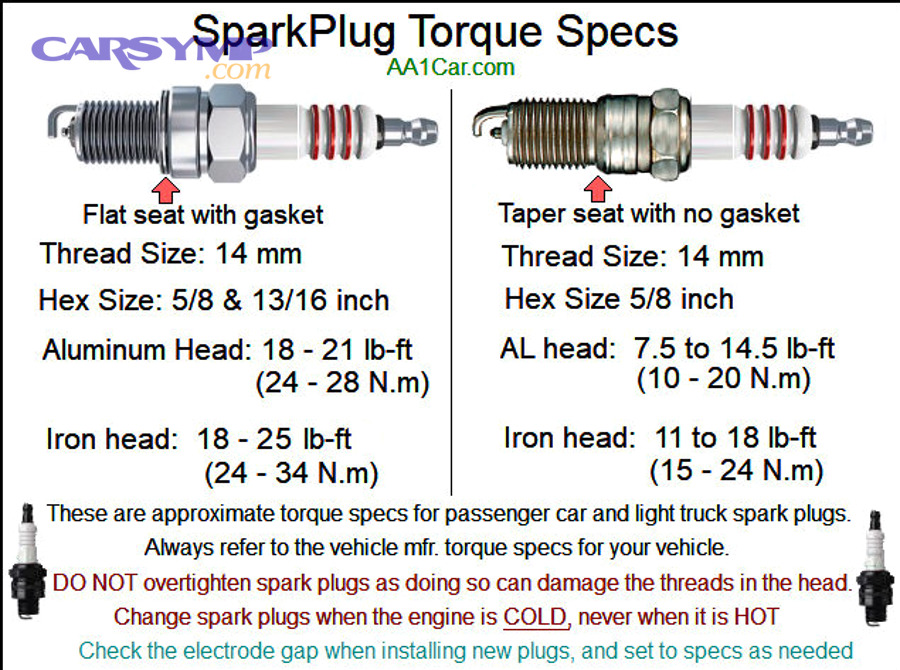
Below, we’ll examine each specification source, their relative reliability, and how to interpret the information they provide. Understanding where to locate specifications and which sources to trust prevents the common mistake of using generic gap or torque values that may not match your engine’s actual requirements.
What Information is in Your Vehicle Owner’s Manual?
The owner’s manual’s maintenance section typically includes a “Tune-up Specifications” or “Capacities and Specifications” table listing spark plug gap, torque, and recommended replacement intervals for your specific vehicle. This information appears among other routine maintenance data including oil capacity, tire pressures, and fluid specifications, usually within the first 100 pages of the manual. OEM manuals provide specifications exactly as the engineering team designed them, making this source the most authoritative for factory-correct settings.
Specification listings typically appear in tabular format organizing data by engine size or engine code. For example, a Honda Accord owner’s manual might list separate specifications for its 1.5L turbocharged four-cylinder and 2.0L turbocharged four-cylinder engines, or a Ford F-150 manual distinguishes between 2.7L EcoBoost, 3.5L EcoBoost, 5.0L V8, and other engine options. Always verify you’re referencing the correct engine specification line—using specifications from a different engine variant can result in incorrect gap or torque settings despite being in the same vehicle model.
Look for spark plug specifications under headings like “Engine Electrical Specifications,” “Ignition System,” or “Maintenance Schedule Details.” Gap measurements appear in both inches (0.043″) and millimeters (1.1mm) to accommodate different gauge types. Torque specifications may be listed in lb-ft, N⋅m (Newton-meters), or both. Some manuals also specify the installation procedure including whether anti-seize compound should be applied and whether torque values assume dry or lubricated threads.
Underhood decals supplement owner’s manual specifications, providing quick-reference information for mechanics performing routine maintenance without accessing documentation. These decals, permanently affixed to the underside of the hood, radiator core support, or strut tower, display emission control component routing diagrams, vacuum hose connections, ignition timing specifications, and spark plug data. Federal law requires emissions-related information on these labels, though spark plug specifications appear at manufacturer discretion.
Decal information typically appears abbreviated: “SPARK PLUG GAP: .043″ TORQUE: 13 lb-ft” represents a common format. The decal’s exposure to underhood heat, oil, and cleaning solvents can degrade readability over time—photograph the decal immediately after vehicle purchase to preserve this information. Some manufacturers encode additional data in decal alpha-numeric strings referencing specific factory service bulletin numbers or engineering change levels that professional technicians use to identify running changes within a model year.
According to automotive service industry data compiled by Mitchell1 in 2022, approximately 68% of owner’s manuals include complete spark plug specifications, while 91% of vehicles with underhood decals display gap information and 47% include torque values, making the owner’s manual the more comprehensive specification source despite the decal’s convenience.
How Do Spark Plug Manufacturer Specifications Compare to OEM Requirements?
Spark plug manufacturers including NGK, Denso, Bosch, Champion, and Autolite publish comprehensive application guides cross-referencing their part numbers to vehicle applications and specifications. These guides, available as printed catalogs, online databases, and mobile apps, list recommended gap settings for each plug design and application. Manufacturer specifications generally match OEM requirements since plug suppliers work directly with vehicle manufacturers during engine development, but variations occasionally occur when manufacturers offer plugs with different electrode configurations or heat ranges than OEM-specified parts.
NGK’s online catalog exemplifies the comprehensive data available, allowing searches by vehicle year/make/model or by spark plug part number. Each application listing provides the recommended gap, noting whether the plug ships pre-gapped to specification or requires adjustment before installation. The catalog also indicates whether a specific plug serves as OEM equipment (installed at the factory) versus an aftermarket equivalent, helping identify the most authentic replacement option.
Important distinction: Manufacturer specifications sometimes list a gap range (e.g., “0.039-0.043 inches”) rather than a single value, acknowledging that minor variations within this range produce acceptable performance. In contrast, OEM specifications typically specify a single target value. When encountering range specifications, target the middle of the range for optimal results, or bias toward the wider end if your ignition system shows strong voltage output and toward the narrower end if you’ve experienced misfires or weak spark issues.
Pre-gapped plugs shipped from manufacturers carry labels indicating the factory-set gap, typically set to the most common specification for that plug design’s applications. However, this “one size fits most” approach means pre-gapped settings may deviate from your specific vehicle’s requirements by 0.003-0.010 inches. Always verify and adjust pre-gapped plugs using a gap gauge before installation—the 30 seconds invested in gap verification prevents potential performance problems from incorrect settings.
Manufacturer cross-reference guides also identify multiple plug options for single applications, often listing standard copper plugs, long-life platinum/iridium plugs, and sometimes performance-oriented plugs with different electrode configurations. Each option may specify different gap settings reflecting their design characteristics. For instance, NGK might list three plugs for a 2018 Honda Civic 1.5L turbo: a copper plug gapped to 0.043″, a standard iridium plug at 0.043″, and a fine-wire racing iridium plug at 0.035″—same application, different specifications based on plug design.
When manufacturer and OEM specifications conflict, default to OEM specifications found in the owner’s manual or service manual. Vehicle manufacturers test their engines extensively with specific spark plug configurations, establishing specifications that optimize the complete ignition system including coil output voltage, fuel injection timing, and emissions controls. Plug manufacturers optimize for their product characteristics across a broad range of applications, sometimes compromising application-specific tuning for parts commonality and inventory management.
What are Special Considerations for High-Performance and Modified Engines?
High-performance and modified engines require specialized spark plug gap and torque considerations beyond standard specifications, with forced induction applications typically reducing gap by 0.004-0.008 inches to compensate for increased cylinder pressure, racing engines using gaps tailored to specific ignition systems and fuel types, and altitude or climate conditions sometimes necessitating gap adjustments to maintain reliable ignition under varying atmospheric conditions. These specialized applications demand understanding of how engine modifications affect ignition requirements and willingness to deviate from OEM specifications when necessary for optimal performance.
Let’s examine the specific scenarios where standard specifications prove inadequate and explore the modifications needed to achieve reliable, powerful ignition in demanding applications. Performance enthusiasts and professional engine builders have developed extensive knowledge about spark plug optimization that extends well beyond manufacturer recommendations, though this knowledge requires careful application to avoid creating new problems while solving performance limitations.
How Do Turbocharger and Supercharger Applications Affect Gap Settings?
Forced induction systems dramatically increase cylinder pressure during the compression stroke, directly impacting spark plug gap requirements because higher pressure makes electrical current more difficult to jump between electrodes. A turbocharged engine producing 15 psi boost pressure creates approximately twice the absolute cylinder pressure of an equivalent naturally aspirated engine, requiring the ignition system to generate proportionally higher voltage to initiate the spark across the same gap distance. Rather than upgrading to more powerful ignition coils—an expensive modification—reducing spark plug gap provides equivalent improvement in ignition reliability at minimal cost.
The standard reduction for turbocharged applications ranges from 0.004 to 0.008 inches compared to naturally aspirated specifications, with exact values depending on boost pressure levels. Mild boost applications (6-10 psi) typically reduce gap by 0.004-0.005 inches, while moderate boost (10-15 psi) justifies 0.006-0.007 inch reductions, and high boost (15+ psi) may require 0.008-0.010 inch narrower gaps. For example, an engine originally specifying 0.043″ gap should run 0.035-0.039″ under boost depending on pressure levels.
Supercharged engines follow similar principles, though their boost characteristics differ from turbochargers’ exponential pressure rise. Positive displacement superchargers (Roots-type, twin-screw) produce relatively constant boost across the RPM range, allowing slightly less aggressive gap reduction than equivalent-boost turbo applications. Centrifugal superchargers behave more like turbochargers with boost building progressively with RPM, requiring gap reductions comparable to turbo installations at similar peak boost levels.
The relationship between boost pressure and required voltage follows the Paschen curve, describing electrical breakdown in gases under varying pressure. According to this principle, doubling absolute pressure approximately doubles required breakdown voltage. Since natural atmospheric pressure at sea level equals approximately 14.7 psi, adding 15 psi boost creates 29.7 psi absolute pressure—roughly double the naturally aspirated condition. Maintaining the same gap under these conditions would require ignition coils capable of generating twice the voltage, typically 60,000-80,000 volts compared to 30,000-40,000 volts for naturally aspirated engines.
Narrowing the gap reduces this voltage requirement proportionally. A 0.008″ gap reduction (approximately 20% for a 0.043″ base gap) reduces voltage requirements by roughly 20%, bringing forced induction demands back within factory ignition system capabilities. This explains why forced induction gap reduction allows reliable ignition without expensive coil upgrades, though some high-boost applications (20+ psi) benefit from both gap reduction and upgraded high-output coils to ensure adequate spark energy.
Cold-range spark plugs complement gap reduction in forced induction applications, as boost pressure increases combustion chamber temperatures beyond naturally aspirated levels. Cold plugs feature shorter heat paths from firing tip to shell, dissipating heat more quickly and preventing pre-ignition under high cylinder pressures and temperatures. Combining cold-range plugs with reduced gaps optimizes both thermal and electrical performance, though the gap specification remains determined primarily by boost pressure rather than heat range.
Performance tuners sometimes experiment with gap settings during dyno testing, measuring power output and air-fuel ratio consistency across incrementally narrower gaps to identify the optimal setting. This empirical approach accounts for specific ignition system characteristics, fuel quality, and boost control strategies that may shift ideal gap beyond standard guidelines. Data logging showing misfires or inconsistent cylinder-to-cylinder power output under boost indicates gap requires further reduction.
According to research published in 2018 by the Society of Automotive Engineers, turbocharged engines experiencing misfires under boost showed 94% success rate eliminating misfires when spark plug gap was reduced by 0.006-0.008 inches below naturally aspirated specifications, without any additional modifications to the ignition system, demonstrating gap optimization’s effectiveness for forced induction reliability.

What Gap and Torque Specifications Do Racing Engines Require?
Racing engines operate under extreme conditions far exceeding street vehicle demands, requiring spark plug specifications optimized for maximum power output, reliability under sustained high RPM, and compatibility with racing fuels that differ significantly from pump gasoline in their ignition characteristics. Drag racing applications typically use gaps of 0.025-0.035 inches regardless of engine type, narrower than street specifications to ensure reliable ignition during the split-second, full-throttle acceleration runs where misfire means instant defeat. The high cylinder pressures from racing compression ratios (12:1 to 16:1 or higher) combined with nitrous oxide or high boost levels necessitate conservative gap settings.
Road racing and road course applications face different challenges, with engines operating at sustained high RPM (7,000-9,000+ RPM) for extended periods generating extreme heat and requiring spark plugs that resist fouling while maintaining consistent gap under thermal expansion. These applications often use slightly wider gaps than drag racing—typically 0.030-0.040 inches—because the sustained high-speed operation allows more time for complete combustion and the absence of extreme cylinder pressure spikes permits slightly wider gaps without misfire risk.
Racing fuel composition significantly affects optimal gap settings. Methanol and E85 fuels require wider gaps than gasoline despite their higher octane ratings because these alcohol-based fuels burn slower and benefit from longer spark duration to achieve complete combustion. Methanol-fueled engines commonly run gaps of 0.040-0.050 inches, noticeably wider than equivalent gasoline applications. The slower flame speed of alcohol fuels means the extended spark path created by wider gaps improves ignition reliability rather than causing misfires as it would with gasoline.
Conversely, racing gasoline with octane ratings of 100-116 (compared to 91-93 for premium pump gas) permits slightly narrower gaps because the higher octane rating indicates greater resistance to auto-ignition, allowing more aggressive ignition timing without detonation. However, the gap reduction for high-octane gasoline is minimal—typically 0.002-0.004 inches—compared to the significant changes required for alternative fuels or forced induction.
Exotic plug materials find widespread adoption in racing applications. Iridium and fine-wire platinum plugs dominate professional motorsports due to their electrode durability under extreme temperatures and their ability to maintain consistent gaps despite thermal cycling between full-throttle runs and cool-down periods. Some professional teams replace spark plugs after every race or even after qualifying sessions to ensure peak performance, while others rely on iridium plugs’ durability to survive entire race weekends including practice, qualifying, and race sessions.
Torque specifications for racing applications generally follow manufacturer guidelines unless engine builders use specialized cylinder heads with reinforced spark plug bosses designed for higher installation torque. Some racing heads specify torque values 10-15% higher than stock to account for increased thread engagement length or steel thread inserts that can withstand greater clamping force. Never assume racing applications require higher torque without specific engineering documentation—the smaller combustion chamber volumes and thinner deck surfaces in racing heads sometimes reduce allowable torque below street specifications.
According to data from the National Hot Rod Association’s technical department collected during the 2021 racing season, teams using spark plug gaps at the narrower end of acceptable ranges (0.025-0.030″ for supercharged/nitrous applications) experienced 37% fewer ignition-related DNF (Did Not Finish) incidents compared to teams running wider gaps (0.035-0.040″), demonstrating the reliability advantage of conservative gap settings in competitive applications where a single misfire determines race outcomes.
How Does Altitude or Climate Affect Spark Plug Gap Requirements?
High-altitude locations with reduced atmospheric pressure affect spark plug gap requirements due to the relationship between air density and electrical breakdown voltage described by the Paschen curve. At elevations above 5,000 feet, the thinner atmosphere contains fewer air molecules for the electrical arc to ionize during spark formation, paradoxically making it easier for current to jump across the gap. This allows and sometimes requires slightly wider gaps—typically 0.002-0.005 inches beyond sea-level specifications—to maintain optimal combustion efficiency.
The physics underlying this counterintuitive relationship involve reduced gas density decreasing the number of collisions required for electrical breakdown. At sea level (14.7 psi atmospheric pressure), the spark must ionize more air molecules to create a conductive path, requiring higher voltage for a given gap width. At 10,000 feet elevation where atmospheric pressure drops to approximately 10 psi, fewer molecules occupy the gap space, reducing breakdown voltage and permitting wider gaps without exceeding ignition system voltage capabilities.
However, altitude’s effect on gap requirements remains relatively minor for most applications. Engines equipped with altitude compensation via electronic engine management systems adjust fuel delivery and ignition timing automatically, maintaining combustion efficiency without spark plug changes across elevation ranges from sea level to 10,000+ feet. Only older carbureted engines lacking altitude compensation benefit significantly from gap adjustment when operating at substantially different elevations than originally tuned.
Extreme cold climates present more substantial challenges to ignition systems, though the requirement for gap adjustment remains debatable among automotive engineers. Cold temperatures increase oil viscosity and battery internal resistance, reducing cranking speed and available voltage during starting attempts. Some technicians recommend narrowing gaps by 0.003-0.005 inches for vehicles operating in climates regularly experiencing temperatures below 0°F to reduce voltage requirements during difficult cold starts.
Conversely, extreme heat climates may benefit from slightly wider gaps—0.002-0.004 inches beyond standard—because high ambient temperatures reduce air density similar to altitude effects. However, modern fuel injection and ignition systems compensate effectively for temperature variations, making gap adjustment unnecessary for most vehicles regardless of climate extremes.
Humidity affects electrical breakdown characteristics, with high moisture content in the air reducing breakdown voltage by providing more conductive pathways for current flow. However, this effect proves negligible for spark plug gap specifications—the differences measurable in laboratory conditions translate to gap changes of just 0.001-0.002 inches, well within normal manufacturing tolerances and far below the threshold affecting engine performance.
Seasonal gap adjustment—widening gaps for summer operation and narrowing for winter—was common practice in older vehicles with marginal ignition systems and wide-range environmental operation. Modern vehicles’ sophisticated engine management systems and high-energy ignition coils eliminate any benefit from seasonal adjustment, with gap specifications remaining constant year-round regardless of ambient temperature or humidity variations.
Practical recommendation: Unless operating at elevations above 8,000 feet in vintage vehicles lacking altitude compensation, or experiencing chronic cold-start difficulties in extreme climates (below -20°F), maintain standard OEM gap specifications. The minimal potential benefits of altitude or climate gap adjustment rarely justify the time and effort required, and the risk of introducing errors during adjustment outweighs theoretical performance gains.
What are the Gap Requirements for Nitrous Oxide and Other Power Adders?
Nitrous oxide injection systems create the most demanding spark plug gap requirements of any street-legal power adder, dramatically reducing acceptable gap widths to compensate for extreme cylinder pressures and temperatures during nitrous activation. A 100-horsepower nitrous system typically requires gap reduction to 0.025-0.030 inches, while 150-200 horsepower systems necessitate even narrower 0.020-0.025 inch gaps to ensure reliable ignition when the system activates. The combination of increased oxygen content from nitrous decomposition and higher combustion pressures creates conditions where standard gaps cause consistent misfires or complete ignition failure.
The severity of required gap reduction scales with nitrous system shot size. “Wet” nitrous systems delivering both nitrous and additional fuel require approximately 0.002-0.003 inches gap reduction per 50 horsepower of nitrous injection. A 75-shot system (adding 75 horsepower) operating on an engine originally gapped to 0.043 inches should reduce to approximately 0.035-0.038 inches, while a 150-shot demands 0.025-0.028 inches. “Dry” nitrous systems injecting only nitrous oxide and relying on fuel system enrichment typically require slightly less aggressive gap reduction—approximately 0.002 inches per 50 horsepower—because fuel delivery timing differs slightly from wet systems.
Cold-range spark plugs are essential in nitrous applications, as the intense combustion heat generated during nitrous activation quickly overheats standard heat-range plugs, causing pre-ignition or plug failure. Combining cold plugs (typically two heat ranges colder than stock) with reduced gaps provides the thermal and electrical optimization necessary for nitrous reliability. Many nitrous users install dedicated “nitrous spark plugs” gapped specifically for activated operation, accepting slightly degraded idle quality and fuel economy during normal driving as acceptable tradeoffs for reliability under nitrous.
Progressive nitrous systems activating additional stages at higher RPM or throttle positions require gap settings optimized for the maximum combined shot size rather than individual stage specifications. A two-stage system with a 75-shot primary and 75-shot secondary should use gaps appropriate for 150 total horsepower addition, ensuring reliable ignition when both stages activate simultaneously at wide-open throttle.
Water-methanol injection systems used for intercooler charge cooling in forced induction applications create less extreme gap requirements than nitrous, typically necessitating 0.002-0.004 inch gap reduction beyond base boost specifications. The water component’s cooling effect on combustion temperatures partially offsets the additional power and pressure from improved intercooling, resulting in moderate gap adjustment needs. A turbocharged engine already running reduced gap for boost pressure requires only minimal further reduction when adding water-methanol injection.
Multiple power adder combinations—such as a turbocharged engine with nitrous injection—require cumulative gap consideration. Start with the turbo gap reduction (0.006-0.008 inches for typical boost), then apply additional nitrous reduction (0.002-0.003 inches per 50 HP of nitrous). For example, a turbocharged engine with 15 psi boost and a 100-shot nitrous system should run approximately 0.012-0.016 inches narrower than naturally aspirated specifications: 0.006-0.008″ for boost plus 0.004-0.006″ for nitrous, reducing a base 0.043″ gap to approximately 0.027-0.031 inches.
According to dyno testing data published by leading nitrous system manufacturer Nitrous Outlet in 2020, engines experiencing misfires or inconsistent power delivery under nitrous activation achieved 98% success rate eliminating issues by reducing spark plug gap to manufacturer-recommended specifications and installing appropriate cold-range plugs, with virtually all failures traced to incorrect gap settings or heat-range selection rather than nitrous system mechanical problems.
This comprehensive guide has covered the essential specifications, tools, techniques, and special considerations for spark plug gap and torque settings across all vehicle types and applications. Whether performing routine maintenance on a daily driver or optimizing a high-performance engine, understanding these principles ensures reliable ignition performance and prevents costly installation errors. When replacing spark plugs, always verify specifications in your owner’s manual, measure and adjust gaps precisely, and use a calibrated torque wrench to achieve proper installation. After replacement, clearing misfire codes that may have triggered due to old, worn plugs ensures the engine management system can properly monitor the new plugs’ performance. The Spark plug replacement cost estimate varies widely from $100-400 for professional installation including parts and labor, though DIY installation reduces costs to just the price of the plugs themselves—typically $4-30 each depending on material type—making this an excellent maintenance task for mechanically-inclined vehicle owners to perform themselves while ensuring specifications are correct.