


Choosing between all-season and winter tires fundamentally depends on your climate’s winter severity, with winter tires delivering superior traction in temperatures below 45°F through specialized rubber compounds and tread patterns, while all-season tires offer year-round convenience for moderate climates with minimal snow and ice exposure. The performance gap becomes critical in safety-critical situations: winter tires can reduce braking distances on ice by up to 30% compared to all-season alternatives, making them essential rather than optional for regions experiencing regular freezing conditions, heavy snowfall, or icy roads.
Understanding the technical differences between these tire types reveals why one excels in cold weather while the other prioritizes versatility. Winter tire tread compounds remain flexible in freezing temperatures, allowing the rubber to conform to road irregularities and grip ice crystals, whereas all-season tire compounds harden below 45°F, significantly reducing their ability to maintain traction on slippery surfaces. This fundamental material science difference translates directly into measurable performance variations in braking distance, cornering stability, and acceleration control.
The decision framework extends beyond simple performance metrics to encompass cost-benefit analysis, storage logistics, and driving patterns. Drivers in regions with predictable, severe winters often find that investing in dedicated winter tires and managing a seasonal tire change schedule provides superior safety margins that justify the additional expense and inconvenience. Conversely, those in temperate zones with occasional light snow may determine that high-quality all-season tires equipped with the M+S (mud and snow) rating adequately address their limited winter driving needs without requiring twice-yearly tire swaps.
Climate zone classification serves as the primary determining factor, but individual circumstances including daily commute routes, vehicle type, and risk tolerance also influence the optimal tire strategy. Let’s explore the comprehensive performance comparison that will help you make an informed decision based on your specific driving environment and safety priorities.
What Is the Performance Difference Between All-Season and Winter Tires?
All-season tires are designed for year-round versatility in moderate climates, offering balanced performance across varied conditions, while winter tires are specialized equipment engineered specifically to excel in temperatures below 45°F with superior traction on snow, ice, and cold pavement through softer rubber compounds and aggressive tread patterns. The fundamental trade-off centers on the jack-of-all-trades philosophy versus dedicated specialization: all-season tires compromise maximum winter capability for extended tread life and acceptable warm-weather performance, whereas winter tires prioritize cold-weather safety at the expense of accelerated wear and reduced handling precision in temperatures above their optimal operating range.
To better understand these differences, we must examine the core engineering distinctions that define each tire category. The design philosophy diverges at the molecular level of rubber formulation and extends through every aspect of tread architecture, from block geometry to sipe density.
How Do Tread Compounds Affect Performance in Different Temperatures?
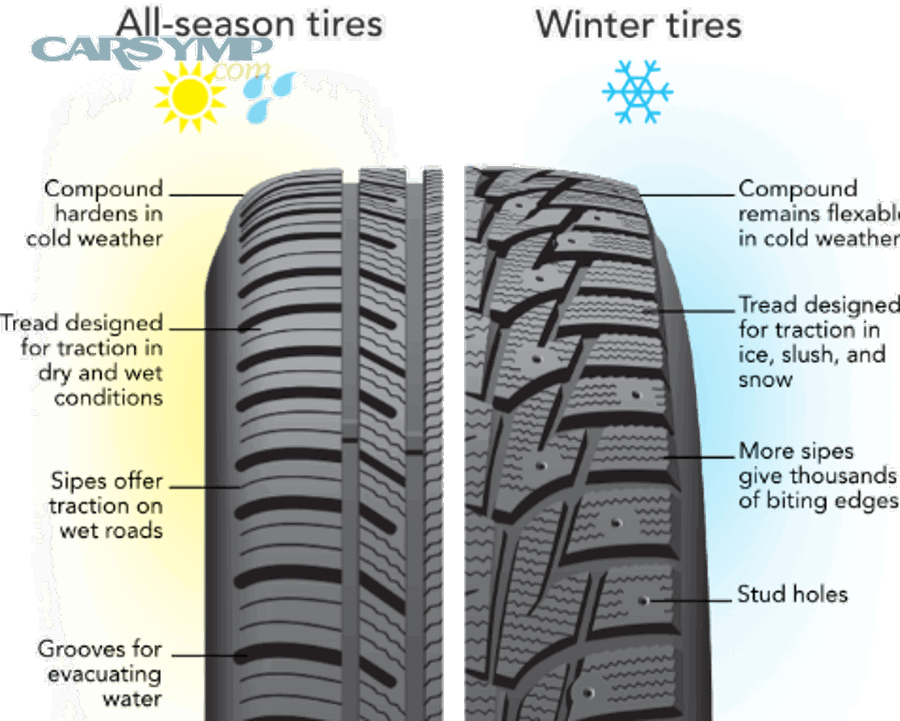
The rubber compound chemistry represents the most critical performance differentiator between all-season and winter tires. Winter tire compounds incorporate higher concentrations of natural rubber and specialized polymers that maintain flexibility when temperatures drop below 45°F (7°C), allowing the tread blocks to conform to microscopic road surface irregularities and create mechanical grip even on smooth ice. This pliability comes from silica-enhanced formulations that resist the molecular stiffening effect of cold temperatures.
In contrast, all-season tire compounds use harder rubber blends optimized for a broader temperature range, balancing cold-weather grip with warm-weather stability and tread longevity. When exposed to freezing temperatures, these harder compounds undergo a glass transition phase where the rubber loses elasticity and becomes rigid, dramatically reducing the tire’s ability to generate friction against icy or snow-covered surfaces. The compound essentially transforms from a grippy, conforming material into a relatively hard, slippery surface with minimal mechanical engagement.
The temperature threshold of 45°F serves as the critical inflection point where performance characteristics reverse. Above this temperature, winter tire compounds become excessively soft, leading to accelerated tread wear, reduced steering precision, and longer braking distances on dry pavement due to excessive tread squirm. The softer rubber generates more rolling resistance and heat buildup, which further degrades the compound and can reduce fuel efficiency by 10-15% compared to properly matched all-season tires in warm conditions.
All-season tires maintain their structural integrity and provide optimal performance in the temperature range of 45°F to 95°F, delivering consistent wet and dry traction without the seasonal performance penalties that winter tires experience outside their intended operating window. The harder compound resists wear more effectively, typically providing 60,000 to 80,000 miles of tread life compared to 30,000 to 40,000 miles for winter tires when used year-round.
What Makes Winter Tire Tread Patterns Superior for Snow and Ice?
Winter tire tread patterns feature significantly deeper tread depths (typically 10/32″ to 12/32″ when new compared to 8/32″ to 10/32″ for all-season tires) with wider grooves designed to channel away snow, slush, and water from the contact patch. This aggressive void ratio—the percentage of the tread surface area occupied by grooves and channels—reaches 30-35% in winter tires compared to 20-25% in all-season designs, providing critical evacuation pathways that prevent snow from packing into the tread and causing loss of traction.
Siping technology distinguishes premium winter tires through thousands of thin slits cut into each tread block, creating hundreds of additional biting edges that grip snow and ice. These sipes function like tiny squeegees, wiping away the microscopic water film that forms on ice surfaces due to pressure and friction, while simultaneously providing mechanical interlock with snow crystals and ice irregularities. High-density siping patterns can incorporate 1,500 to 2,000 individual sipes across the tire’s contact patch, multiplying the gripping surfaces exponentially compared to all-season tires with 500 to 800 sipes.
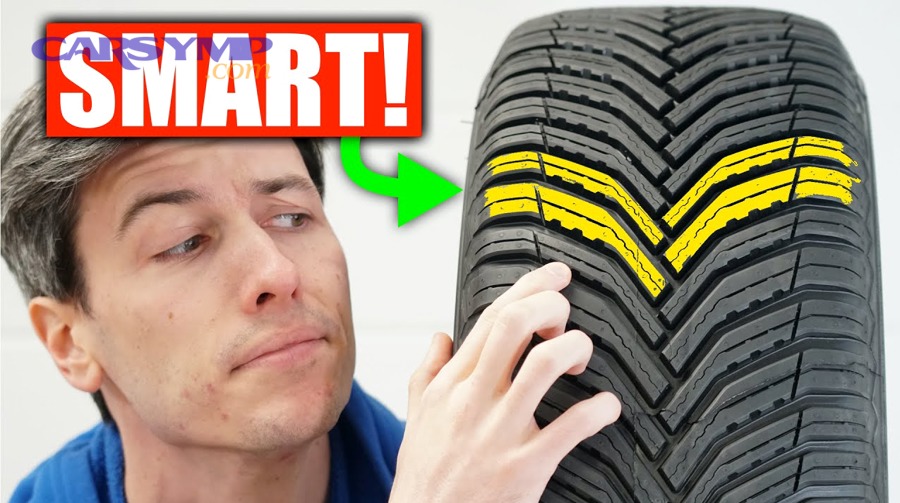
The tread block geometry in winter tires employs three-dimensional interlocking designs where blocks support each other laterally, preventing excessive squirm while maintaining independent movement for enhanced surface conformity. Many advanced winter tire designs incorporate zigzag or chevron-shaped grooves that actively bite into snow and propel it rearward, creating a self-cleaning effect that maintains tread void availability even during continuous operation in deep snow conditions.
All-season tire tread patterns prioritize a more conservative approach with shallower grooves, fewer sipes, and larger, more rigid tread blocks optimized for dry pavement stability, cornering precision, and quiet operation. While these patterns include circumferential grooves for water evacuation and some lateral sipes for light snow traction, they lack the aggressive multi-directional bite and deep snow evacuation capability that define winter tire performance in severe conditions.

Which Tire Type Delivers Better Traction on Snow and Ice?
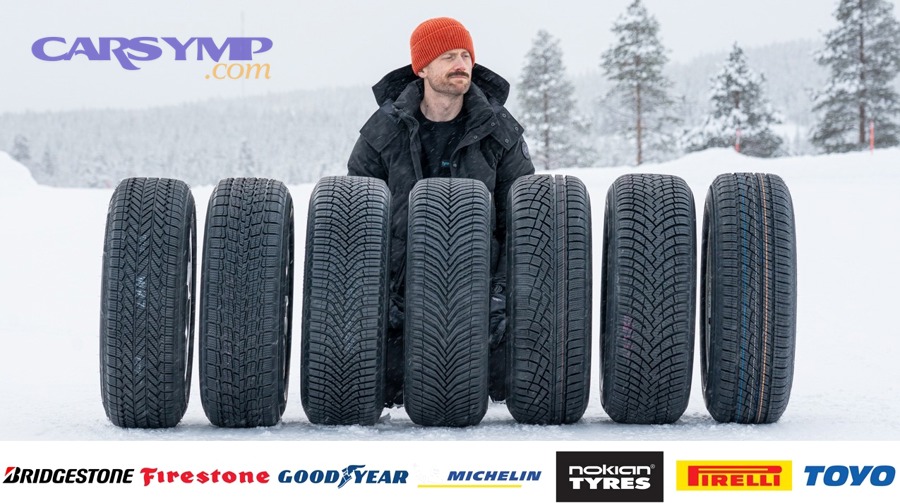
Winter tires deliver demonstrably superior traction on snow and ice, with independent testing showing 25-50% shorter braking distances and 30-40% better acceleration traction compared to all-season tires in temperatures below freezing. This performance advantage stems from the synergistic combination of specialized rubber compounds that remain flexible in cold temperatures, high-density siping that creates thousands of biting edges, and aggressive tread patterns with deep voids that mechanically interlock with snow and evacuate slush.
Specifically, the traction gap becomes most pronounced in the most dangerous conditions where driver safety hangs in the balance. Let’s examine the empirical evidence across different winter driving scenarios.
Do Winter Tires Stop Faster on Ice Than All-Season Tires?
Yes, winter tires stop significantly faster on ice than all-season tires, with testing consistently demonstrating 15-40% reductions in braking distance depending on ice conditions, temperature, and vehicle speed. In real-world terms, a vehicle traveling 30 mph on glare ice might require 200-250 feet to stop with all-season tires but only 140-180 feet with winter tires—a difference of 60-70 feet that could mean avoiding a collision entirely versus experiencing a severe impact.
This stopping distance advantage translates directly to the margin of safety available when unexpected hazards appear. The difference between all-season and winter tire braking performance on ice represents the equivalent of approximately 3-4 car lengths at moderate speeds, potentially providing the critical space needed to avoid rear-ending stopped vehicles, pedestrians entering crosswalks, or debris in the roadway.
The braking distance improvement results from multiple factors working in concert. The softer compound conforms to microscopic ice surface irregularities, creating mechanical grip where harder all-season rubber simply slides across the smooth surface. High-density siping creates hundreds of additional contact edges that bite into ice crystals and disrupt the thin water film that naturally forms on ice surfaces under pressure and friction. Advanced winter tire designs incorporate specialized sipe geometries with three-dimensional wave patterns that interlock when braking force is applied, preventing excessive tread block movement that would reduce contact pressure and grip.
Temperature profoundly influences the performance gap: testing at 10°F typically shows more dramatic differences than testing at 30°F because all-season tire compounds become progressively harder and less effective as temperatures drop further below the 45°F threshold. According to comprehensive testing conducted by Consumer Reports in partnership with the Automotive Testing Center, winter tires reduced stopping distances by an average of 31% compared to all-season tires when tested on ice at 15°F, with some premium winter tire models achieving up to 42% improvement in the most extreme conditions.
How Do All-Season Tires Perform in Light vs Heavy Snow?
All-season tires perform acceptably in light snow accumulations of 1-3 inches on paved roads, maintaining adequate traction for cautious driving at reduced speeds, but their performance deteriorates rapidly in heavy snow exceeding 4-6 inches or when encountering unplowed roads, packed snow, or icy underlayers. The critical distinction lies in snow depth, density, and underlying surface conditions: light, fresh powder on relatively clear pavement allows all-season tread patterns to find purchase, while deep, heavy, or compacted snow overwhelms their limited void capacity and sipe density.
In light snow scenarios, all-season tires with M+S (mud and snow) ratings can provide sufficient traction for low-speed commuting and neighborhood driving, assuming drivers exercise appropriate caution by reducing speed, increasing following distance, and avoiding sudden steering or braking inputs. The tread pattern’s circumferential grooves channel away loose snow while the limited siping provides some biting edge engagement. Vehicles equipped with all-wheel drive or four-wheel drive can partially compensate for all-season tire limitations in light snow by distributing power to multiple wheels, though this advantage applies only to acceleration—braking and cornering remain tire-dependent regardless of drivetrain configuration.
Heavy snow conditions expose the fundamental limitations of all-season tire design. When snow depth exceeds the tread depth and fills the grooves completely, all-season tires lose their ability to evacuate snow from the contact patch, resulting in snow-on-snow friction rather than tire-on-road contact. This scenario creates a dramatic traction loss where the vehicle essentially rides on a compressed layer of snow between the tire and pavement, providing minimal grip for braking, steering, or acceleration.
Packed snow and ice underlayers represent the most dangerous conditions for all-season tires. These surfaces require the specialized compound flexibility and aggressive siping that only winter tires provide. All-season tires on packed snow behave similarly to summer tires on ice—they may provide some marginal grip at walking speeds, but any significant braking, acceleration, or cornering force exceeds available traction and results in loss of vehicle control. The hardened rubber compound cannot conform to the irregular packed snow surface, and the limited siping provides insufficient biting edges to generate mechanical grip.
Drivers relying on all-season tires should consider heavy snow (4+ inches of accumulation), ice, or packed snow conditions as circumstances requiring delayed travel, alternative transportation, or acceptance of significantly elevated risk. The performance deficit in these conditions cannot be compensated through driving technique, vehicle technology, or increased caution—the fundamental tire-to-surface interface simply lacks the necessary characteristics to generate adequate traction for safe vehicle control.
Which Tire Type Performs Better on Wet and Dry Roads?
All-season tires deliver superior performance on wet and dry roads in temperatures above 45°F, offering shorter braking distances, more precise steering response, and better high-speed stability compared to winter tires operated outside their optimal temperature range. The harder rubber compound maintains its structure under cornering loads and braking forces, preventing excessive tread squirm that would reduce contact patch pressure and compromise grip, while the optimized tread pattern balances water evacuation with maximum rubber-to-road contact area for dry pavement traction.
However, the performance equation shifts when temperatures approach the 45°F threshold even on dry pavement, as winter tire compounds begin operating within their designed temperature range while all-season compounds start their transition toward cold-weather hardening. Understanding these nuanced performance transitions helps drivers optimize tire selection for their specific climate patterns.
Are All-Season Tires Superior for Year-Round Driving?
Yes, all-season tires are superior for year-round driving in temperate climates where winter temperatures rarely drop below 40°F and snow accumulation is infrequent or minimal, providing optimal wet and dry traction, predictable handling, extended tread life, and convenient operation without seasonal tire changes. The year-round superiority of all-season tires applies specifically to geographic regions including most of California, the southern United States, coastal Pacific Northwest areas with marine climate influence, and other zones where freezing temperatures and snowfall represent rare exceptions rather than regular winter occurrences.
In these moderate climate zones, all-season tires deliver balanced performance across the full range of normal driving conditions. Their harder compound provides excellent wet road traction through well-designed hydroplaning resistance and water evacuation channels, maintaining grip even during heavy rainfall when road surfaces are slick. The tread pattern typically incorporates continuous center ribs for stable highway tracking and responsive steering feel, while shoulder blocks with lateral siping provide cornering grip on both wet and dry pavement.
Dry pavement performance represents a particular strength of all-season tire design. The harder compound resists deformation under cornering loads, maintaining larger contact patch area and more consistent pressure distribution compared to winter tires, which exhibit excessive tread block squirm in warm temperatures. This stability translates to more predictable handling, shorter dry braking distances, and better high-speed capability—critical factors for highway commuting and longer-distance travel that comprises the majority of annual mileage for most drivers.
Temperature range versatility allows all-season tires to operate efficiently across the broad spectrum from 40°F to 95°F without significant performance degradation. Unlike winter tires, which lose effectiveness and wear rapidly above 45°F, or summer tires, which become dangerously slippery below 45°F, all-season tires maintain acceptable performance throughout this range, making them the practical choice for climates with temperature fluctuations but without extended periods of subfreezing conditions.
The convenience factor cannot be overstated for drivers in moderate climates. Eliminating seasonal tire changes saves the cost of twice-yearly installation service (typically $80-$120 per change including mounting, balancing, and TPMS sensor handling), removes the logistical challenge of storing a second set of tires or wheels, and prevents the risk of delayed changeover timing that might leave winter tires on vehicles during warm spring weather or force drivers to navigate unexpected early-season snowfall on summer tires.
How Does Temperature Affect Winter Tire Performance in Summer?
Temperature dramatically degrades winter tire performance in summer conditions, with the specialized soft rubber compound experiencing accelerated wear rates 2-3 times faster than normal, reduced fuel efficiency by 10-15% due to increased rolling resistance, compromised handling precision from excessive tread block movement, and significantly longer braking distances on hot, dry pavement compared to properly matched all-season or summer tires. Operating winter tires in temperatures consistently above 50°F fundamentally contradicts their design parameters and creates measurable safety and economic penalties.
The soft compound that provides winter tires with their cold-weather grip advantage becomes a liability in warm weather. As ambient and road surface temperatures rise, the rubber becomes progressively softer and more pliable, generating excessive heat through flexing and deformation. This heat buildup accelerates the chemical breakdown of the rubber compound, causing rapid tread wear that can consume 50% or more of the tire’s usable tread depth in a single summer season of daily driving—tread depth that represents significant financial value and winter performance capability.
Handling characteristics deteriorate noticeably as tread blocks become too soft to maintain their shape under cornering loads and braking forces. The excessive squirm creates a vague, imprecise steering feel where driver inputs don’t translate immediately to directional changes, and the vehicle’s response becomes delayed and less predictable. During emergency maneuvers requiring maximum grip and instant response, this delayed reaction time can mean the difference between avoiding a collision and experiencing an impact.
Braking distance increases on dry pavement operate counterintuitively—drivers might assume softer rubber provides better grip, but the excessive compound softness actually reduces braking performance. The overheated, overly soft tread surface deforms excessively under braking force, reducing the effective contact patch pressure and creating an unstable interface between tire and road. Testing has demonstrated that winter tires on dry pavement at 75°F can require 10-20% longer stopping distances compared to all-season tires in identical conditions.
Rolling resistance increases substantially as the soft compound continuously deforms and generates heat during normal operation. This resistance translates directly to reduced fuel economy, with drivers typically experiencing 1-2 miles per gallon decrease in efficiency when operating winter tires during summer months. Over a typical driving season, this fuel penalty can cost $150-$300 in additional fuel expenses while simultaneously contributing to accelerated tire wear.
The recommendation from tire manufacturers and safety organizations remains consistent: winter tires should be removed when spring temperatures consistently rise above 45-50°F and stored properly for the next winter season. This practice maximizes tire longevity, maintains optimal performance year-round through appropriate tire selection, and provides the best safety outcomes across all driving conditions.

What Climate Conditions Determine Which Tire Type You Need?
Your climate’s average winter temperatures, frequency of snow and ice events, and total seasonal snowfall accumulation determine whether winter tires are essential safety equipment or an unnecessary expense, with winter tires becoming critical in regions experiencing regular temperatures below 45°F, frequent snowfall exceeding 4 inches per event, or persistent icy road conditions. Geographic location serves as the primary indicator, but microclimates, elevation differences, and local weather patterns create significant variations even within the same general region, requiring individualized assessment based on actual driving conditions rather than broad geographic generalizations.
The decision framework requires examining multiple climate factors simultaneously rather than relying on any single metric. Let’s break down the specific scenarios where each tire type provides optimal safety and value.
Should You Use Winter Tires in Regions with Mild Winters?
No, winter tires are generally unnecessary in regions with mild winters characterized by average winter temperatures remaining above 45°F, infrequent snow events producing less than 2 inches of accumulation 1-2 times annually, and rare ice formation limited to isolated early-morning frost, making all-season tires the more practical and cost-effective choice for these temperate climate zones. Mild winter regions include most of coastal California, the Gulf Coast states, southern Arizona and New Mexico, and areas west of the Cascade Range in Washington and Oregon where marine climate influence moderates winter temperatures.
In these temperate zones, the rare snow or ice events that do occur typically affect roads for only a few hours before melting, and most drivers can simply delay travel during these brief periods rather than investing in specialized winter equipment. The occasional inconvenience of staying home during the 1-2 days of poor winter weather each year represents a more economical approach than purchasing, installing, storing, and maintaining a dedicated set of winter tires that would see minimal use.
All-season tires in mild winter regions provide adequate safety for the occasional light frost or brief morning ice that might appear on shaded road sections or bridges. The M+S rating found on most all-season tires indicates sufficient capability for these minimal winter challenges, particularly when combined with appropriate driver caution including reduced speed, increased following distance, and avoidance of sudden maneuvers.
However, drivers in mild winter regions who regularly travel to nearby mountain areas, ski resorts, or higher elevations where snow and ice are common should consider winter tire investment. The dramatic elevation changes found in states like California, where coastal areas remain temperate while nearby mountain passes require chains or winter tires, create scenarios where the same vehicle might encounter completely different winter conditions within a single day’s drive. For these situations, winter tires provide the flexibility to safely access mountain destinations without the inconvenience and limitations of tire chains.
The economic analysis strongly favors all-season tires in truly mild climates. A set of quality winter tires costs $600-$1,200 depending on vehicle size, plus installation costs of $80-$120 per seasonal change, storage fees if applicable, and the accelerated wear on both tire sets from switching. This investment makes sense when winter tire usage spans 4-6 months annually, but becomes difficult to justify for 2-3 weeks of potential use in mild winter regions.
Are Winter Tires Necessary for Heavy Snow and Ice Regions?
Yes, winter tires are necessary—not merely recommended—for heavy snow and ice regions including the northern tier states, mountainous areas, and locations experiencing regular temperatures below 32°F and frequent snow accumulation exceeding 6 inches per event, providing essential safety capabilities that all-season tires simply cannot match in severe winter conditions. Regions where winter tires transition from optional to mandatory include New England states, the upper Midwest (Minnesota, Wisconsin, Michigan), mountainous Colorado and Wyoming, interior Alaska, and much of Canada where winter driving represents not occasional challenges but sustained seasonal conditions lasting 4-6 months.
In these severe winter climates, the performance gap between winter and all-season tires exceeds the realm of mere convenience and enters the domain of fundamental safety. The combination of sustained subfreezing temperatures, regular snow events, packed snow on roadways, and black ice formation creates driving conditions where all-season tires lack sufficient traction for safe vehicle control. Attempting to operate with all-season tires in these regions during winter months represents a safety risk not only to the driver and passengers but to other road users who may be endangered by a vehicle’s inability to stop or steer effectively.
The braking distance differences become particularly critical in heavy snow regions where stop-and-go traffic, intersections, and pedestrian crossings require frequent controlled stops. The 30-50% braking distance advantage that winter tires provide translates directly to collision avoidance in real-world situations. A vehicle unable to stop before entering an intersection, rear-ending a stopped school bus, or crossing into oncoming traffic due to inadequate tire traction creates catastrophic consequences that far exceed the cost of winter tire investment.
All-wheel drive (AWD) and four-wheel drive (4WD) systems, while valuable for acceleration traction in snow, create a false sense of security that misleads many drivers into believing they can safely operate with all-season tires. These drivetrain systems provide zero advantage for braking or cornering—the two most critical safety maneuvers in winter driving. An AWD vehicle with all-season tires may accelerate adequately from stops but will slide through intersections and off roads just as easily as a two-wheel-drive vehicle when braking or cornering traction is insufficient. Conversely, a two-wheel-drive vehicle equipped with winter tires on all four wheels typically outperforms an AWD vehicle with all-season tires in both stopping and cornering scenarios.
Many heavy snow regions have implemented winter tire requirements or chain control laws during severe weather, with enforcement including roadway checkpoints and potential liability implications for drivers involved in collisions while operating with inadequate tire equipment. Quebec, for example, requires winter tires on all vehicles from December 1 through March 15, while many mountain pass highways in Washington, Oregon, and California enforce traction device requirements that winter tires satisfy but all-season tires do not.
According to research published by the Quebec Ministry of Transport following implementation of mandatory winter tire legislation, winter-related collision rates decreased by 17% in the first year and serious injury collisions decreased by 36%, demonstrating the measurable safety impact of appropriate tire equipment in severe winter driving conditions. These statistics translate from abstract numbers to real families avoiding traumatic collisions and life-altering injuries.
What Are All-Weather Tires and How Do They Compare?
All-weather tires are a specialized tire category designed to provide year-round convenience with enhanced winter capability beyond standard all-season tires, distinguished by the Three-Peak Mountain Snowflake (3PMSF) certification that indicates they meet specific snow traction performance standards while maintaining acceptable warm-weather characteristics for continuous use. All-weather tires occupy the performance middle ground between all-season and dedicated winter tires, offering 70-80% of winter tire snow and ice capability while delivering 85-90% of all-season tire warm-weather performance, making them an optimal compromise for drivers in moderate winter regions who want to eliminate seasonal tire changes while gaining meaningful winter safety improvements.
The 3PMSF certification distinguishes all-weather tires from standard all-season tires through objective testing standards. To earn this certification, tires must demonstrate a snow traction index of at least 110 compared to a standardized reference tire (assigned value of 100) when tested according to specific protocols established by the American Society for Testing and Materials (ASTM). This certification means all-weather tires have passed the same snow traction threshold testing required for dedicated winter tires, though they achieve this performance through different design compromises that allow year-round operation.
All-weather tire construction employs rubber compounds intermediate in hardness between all-season and winter formulations, remaining more pliable than all-season tires in cold temperatures while resisting excessive wear in warm conditions better than winter tire compounds. The tread patterns incorporate higher sipe density and deeper tread depths than typical all-season designs, providing enhanced biting edge engagement with snow and ice while maintaining enough structural rigidity for acceptable dry and wet pavement performance.
The performance profile shows all-weather tires excelling in moderate winter conditions—temperatures between 20°F and 40°F, snow accumulations of 2-6 inches, and occasional icy patches—while not quite matching dedicated winter tire capability in severe conditions below 10°F, deep snow exceeding 8 inches, or extensive ice coverage. Conversely, their warm-weather performance lags slightly behind premium all-season tires in metrics like dry braking distance, cornering grip at higher speeds, and tread life, though the differences remain relatively modest for normal driving.
Best-fit scenarios for all-weather tires include:
- Transitional climate zones where winter brings regular but not severe snow, such as the mid-Atlantic states, lower Midwest, and Pacific Northwest interior areas
- Urban and suburban drivers who face plowed roads rather than remote uncleared routes, where enhanced traction assists with intersection stops and moderate snow rather than deep accumulation driving
- Single-vehicle households where managing seasonal tire changes becomes logistically difficult or where storage space for a second tire set is unavailable
- Moderate annual mileage drivers (under 12,000 miles annually) where the slightly accelerated tread wear compared to all-season tires remains economically acceptable
- Budget-conscious drivers in moderate winter areas who want winter safety improvements without the full cost of dedicated winter tires plus seasonal change expenses
All-weather tires should not replace dedicated winter tires in severe winter climates where temperatures regularly fall below 10°F, snow accumulation frequently exceeds 6-8 inches, or icy roads persist for extended periods. The performance compromises that enable year-round operation prevent all-weather tires from achieving the maximum cold-weather capability that dedicated winter tires provide—a capability that may be critical for safety in extreme conditions.
The tire industry has embraced all-weather tires as a growth category, with major manufacturers including Michelin (CrossClimate series), Goodyear (WeatherReady), Bridgestone (WeatherPeak), and others introducing competitive offerings. This market expansion provides consumers with increasing choices and price points, making all-weather tires an increasingly attractive option for drivers seeking to balance year-round convenience with enhanced winter safety beyond standard all-season capability.
How Do You Know When to Switch Between Tire Types?
The optimal time to switch to winter tires occurs when average daily temperatures consistently fall below 45°F (typically late October through November in northern regions), while the return to all-season or summer tires should happen when spring temperatures consistently exceed 50°F (typically March through April), with both transitions requiring attention to regional climate patterns, elevation-dependent temperature variations, and forecast trends rather than rigid calendar dates. The temperature threshold of 45°F represents the critical inflection point where winter tire compounds begin outperforming all-season alternatives due to increased rubber flexibility, while all-season tires start experiencing the hardening effect that reduces their cold-weather traction capability.
Beyond simply knowing when to switch, understanding the practical implementation details ensures the process maximizes tire life, maintains vehicle safety, and addresses technical considerations that many drivers overlook. Let’s examine the specific guidance for each seasonal transition.
What Is the Best Time to Install Winter Tires?
The best time to install winter tires is when daytime high temperatures consistently remain below 50°F and nighttime lows approach or fall below 40°F, typically occurring in late October in northern tier states, mid-November in mid-Atlantic regions, and December in moderate winter areas, with the installation scheduled 2-3 weeks before the first expected snowfall to ensure adequate preparation. This proactive timing prevents the common mistake of reactive installation after the first snow event, which often overwhelms tire shops with demand, creates extended wait times for appointments, and may leave drivers operating with inadequate tires during the critical early winter period when unexpected snow or ice can catch unprepared motorists.
Temperature-based switching proves more reliable than calendar-based approaches because seasonal weather patterns vary significantly year-to-year and region-to-region. A rigid November 1st installation date might prove too early in years with extended warm fall weather (wasting winter tire tread life on warm pavement) or too late when early-season Arctic outbreaks bring subfreezing temperatures and snow in mid-October. Monitoring long-range weather forecasts for sustained temperature drops provides better switching timing than arbitrary dates.
Regional climate patterns create substantial variation in optimal installation timing:
- Northern tier states (Montana, North Dakota, Minnesota, northern Maine): Late October to early November as winter conditions often establish by early November
- Great Lakes region (Michigan, Wisconsin, upstate New York): Early to mid-November before lake-effect snow becomes prevalent
- Mid-Atlantic and lower Midwest (Pennsylvania, Ohio, Indiana): Mid to late November as winter typically arrives later
- Mountain regions (regardless of latitude): October to early November due to elevation effects and early-season mountain snowfall
Tire pressure considerations accompany seasonal tire change timing. Cold temperatures cause air molecules to contract, reducing tire pressure by approximately 1 PSI for every 10°F temperature drop. When winter tires are installed during 50°F autumn weather but then operated in 10°F winter conditions, they may lose 4-5 PSI from temperature effects alone. Installers should set pressures 2-3 PSI above the vehicle’s recommended pressure when installing winter tires in relatively warm autumn conditions, anticipating the pressure drop that will occur as temperatures continue falling through early winter.
TPMS considerations when changing wheels require attention to avoid dashboard warning lights and ensure proper functionality. Vehicles with direct TPMS use sensors mounted inside each wheel that must either be transferred between wheel sets (time-consuming and requiring sensor dismounting) or duplicated with a second sensor set mounted in the winter wheels (additional cost of $200-$400 for four sensors). Many drivers with dedicated winter wheels opt for the second sensor set approach to streamline seasonal changes and prevent repeated sensor handling that risks damage. Vehicle computer systems may require TPMS sensor relearning procedures when switching wheels, typically accomplished through specific drive cycles or manual programming with specialized tools available at tire shops.
Preventing lug nut and stud damage during seasonal tire changes requires proper torque specification and pattern. Over-tightening lug nuts can stretch wheel studs and warp brake rotors, while under-tightening creates dangerous wheel detachment risk. Professional installers should torque lug nuts to manufacturer specifications (typically 80-100 ft-lbs for passenger cars, 100-120 ft-lbs for trucks) using a calibrated torque wrench in a star pattern, and drivers should verify proper torque after the first 50-100 miles of operation when wheel and hub surfaces have fully seated together.
When Should You Remove Winter Tires in Spring?
Winter tires should be removed when spring temperatures consistently exceed 50°F for daytime highs with nighttime lows remaining above 40°F, typically occurring in late March in southern regions, mid-April in mid-latitude areas, and early May in northern climates, with removal scheduled before sustained warm weather causes accelerated tread wear and performance degradation. The spring changeover window requires more precision than fall installation because delayed removal rapidly consumes winter tire tread life on warm, dry pavement, while premature removal risks unexpected late-season snow or ice events that could leave the vehicle with inadequate tires for dangerous spring weather.
Signs of excessive wear from delayed winter tire removal include:
- Rapid tread depth decrease: Measuring 1-2/32″ tread depth loss per month of warm-weather operation compared to 0.5-1/32″ during proper winter use
- Chunking or tearing of tread blocks, particularly on shoulder areas, from the excessive heat and flexing of overheated soft rubber
- Irregular wear patterns showing cupping or scalloping as tread blocks deform inconsistently under warm-weather cornering loads
- Increased road noise as the aggressive tread pattern and degrading rubber create more tire roar on dry pavement
Late-season snow events represent the primary risk of early winter tire removal. Many regions experience significant April snowfalls even after extended warm periods—the mid-Atlantic and New England states regularly see 4-6 inch snow accumulations in early to mid-April, the Rockies and northern Plains can receive substantial snow through May, and isolated mountain areas may see snow events through June. Monitoring long-range weather forecasts for the 2-week period following planned winter tire removal helps avoid being caught with summer or all-season tires during unexpected late-season winter weather.
The spring changeover provides an opportunity for important vehicle maintenance. When to switch between summer and winter tires involves removing winter wheels, and drivers should:
- Inspect brake components including pad thickness, rotor condition, and caliper operation, as winter salt and debris accelerates brake system corrosion
- Clean wheel wells and undercarriage of accumulated salt, sand, and winter debris that contributes to corrosion
- Check suspension components for damage from winter potholes and road hazards
- Verify summer/all-season tire condition including tread depth, age (manufacture date on sidewall), and absence of dry rot, bulges, or damage from storage
Proper winter tire storage extends tire life and maintains performance for the next season. Tires should be cleaned to remove road salt and contaminants, completely dried to prevent moisture-induced degradation, and stored in a cool, dry, dark location away from direct sunlight, ozone sources (electric motors, welders), and petroleum products. Tires stored mounted on wheels can be stacked flat or hung on wall-mounted tire racks, while unmounted tires should be stored vertically (standing upright) and rotated quarterly to prevent flat spotting. Storage bags or tire totes provide additional protection from environmental exposure and make handling easier.
What Is the Difference Between Studded and Studless Winter Tires?
Studded winter tires incorporate small metal pins (typically 60-100 studs per tire) protruding slightly from the tread surface to penetrate ice and provide mechanical grip, delivering superior traction on glare ice and hard-packed snow but creating increased road noise, pavement wear, and reduced effectiveness on bare pavement compared to studless winter tires which rely entirely on advanced rubber compounds and tread patterns to achieve winter traction without pavement-damaging metal components. The studded versus studless decision depends primarily on road surface conditions, with studded tires excelling on ice-covered roads common in northern Scandinavia, Alaska, and remote northern Canada, while studless technology has advanced to the point where it provides comparable or superior performance in most North American winter conditions.
Performance differences manifest across various surface conditions:
On glare ice (smooth, bare ice surface):
- Studded tires provide 10-20% shorter braking distances than studless alternatives
- The metal studs penetrate the ice surface and create mechanical anchoring points
- Performance advantage is most pronounced on smooth ice at temperatures near 0°F
On packed snow:
- Studless and studded tires perform similarly, with some premium studless designs actually outperforming studded options
- Snow’s structure allows studless tire sipes and compound to generate adequate grip without metal penetration
- Studless tires’ more flexible tread patterns may conform better to irregular packed snow surfaces
On bare or dry pavement:
- Studless tires dramatically outperform studded alternatives, providing 15-25% shorter braking distances
- Metal studs reduce contact patch area and create a hard, slippery interface with pavement
- Studded tires produce significantly more road noise and vibration on bare pavement
State laws and restrictions significantly impact studded tire viability. Many states prohibit studded tires entirely or restrict their use to specific winter months due to pavement damage concerns:
- Prohibited states: Wisconsin, Hawaii, Illinois (with limited exceptions), Louisiana, Minnesota, Mississippi, and Texas
- Allowed year-round: Colorado (though not recommended outside winter), Kentucky, New Hampshire, North Carolina, New Mexico, Vermont, Wyoming
- Seasonal restrictions: Most remaining states allow studded tires approximately October through April, with specific dates varying by state
Pavement damage from studded tires creates ongoing controversy. The metal studs gradually wear grooves and rutting in roadway surfaces, particularly in areas with frequent stopping and starting like intersections and highway toll plazas. This wear accelerates pavement deterioration, increases maintenance costs, and can create dangerous rutting that affects vehicle handling during wet conditions. The pavement damage issue drives many transportation departments to restrict or prohibit studded tire use.
Noise and ride quality differences make studded tires noticeably less comfortable on bare or dry pavement. The metal studs create a distinctive clicking, buzzing sound as they contact pavement, with noise levels increasing proportionally to vehicle speed. This noise becomes tiresome during extended highway driving, particularly for drivers who frequently encounter bare pavement conditions during winter months.
Modern studless winter tire technology has largely eliminated the historical performance advantage of studded tires except in the most extreme ice-prevalent conditions. Premium studless designs from Bridgestone (Blizzak), Michelin (X-Ice), Continental (VikingContact), and others incorporate advanced compound formulations with microscopic bite particles, high-density 3D sipe technology, and aggressive tread patterns that approach or match studded tire performance on ice while dramatically outperforming studs on all other surfaces.
The recommendation for most North American drivers points toward studless winter tires unless operating in extremely ice-prevalent conditions with legal studded tire allowance. The versatility, reduced noise, absence of pavement restrictions, and superior bare pavement performance make studless designs the practical choice for typical winter driving encompassing mixed surface conditions.
How Much Does It Cost to Switch Between All-Season and Winter Tires?
The total cost to switch between all-season and winter tires ranges from $800-$2,000 for initial setup including winter tire purchase ($600-$1,200 for four tires), optional dedicated winter wheels ($400-$800 for steel or alloy rims), and seasonal installation services ($80-$120 per changeover twice annually), with ongoing annual expenses of $160-$240 for spring and fall changeovers or $200-$400 for storage if second wheel set is not purchased. The cost equation varies substantially based on vehicle size (compact car tires cost less than truck or SUV tires), tire quality selection (budget vs premium brands), wheel decision (mounting winter tires on existing wheels versus purchasing dedicated winter wheel set), and installation approach (DIY versus professional service).
Breaking down the comprehensive cost analysis:
Initial winter tire investment:
- Compact car winter tires: $100-$200 per tire × 4 = $400-$800
- Midsize sedan/crossover winter tires: $120-$250 per tire × 4 = $480-$1,000
- Full-size truck/SUV winter tires: $150-$300 per tire × 4 = $600-$1,200
- Performance vehicle winter tires: $200-$400 per tire × 4 = $800-$1,600
Dedicated winter wheel investment (optional but recommended):
- Steel wheels: $50-$100 per wheel × 4 = $200-$400
- Basic alloy wheels: $100-$200 per wheel × 4 = $400-$800
- Higher-end alloy wheels: $200-$300+ per wheel × 4 = $800-$1,200+
Installation and service costs:
- Tire mounting, balancing, and installation: $20-$30 per tire × 4 = $80-$120 per changeover
- TPMS sensor installation (if purchasing dedicated winter wheels with new sensors): $50-$75 per sensor × 4 = $200-$300 one-time cost
- Wheel changeover only (if winter tires already mounted on dedicated wheels): $40-$80 for all four wheels, significantly faster process
Storage costs (if not purchasing dedicated wheel set):
- Seasonal tire storage at tire shops or storage facilities: $50-$100 per season × 2 seasons = $100-$200 annually
- Home storage: No recurring cost but requires dedicated space (basement, garage, shed)
The dedicated winter wheel set purchase, while increasing initial investment, provides substantial long-term value through multiple mechanisms:
- Reduced installation costs: Wheel-to-wheel changeovers cost $40-$80 versus $80-$120 for tire mounting/dismounting
- Eliminated storage costs: No need to pay for professional tire storage when tires remain mounted
- Preserved tire bead and wheel seating surfaces: Repeated mounting and dismounting eventually damages tire beads and wheel surfaces
- DIY capability: Simple wheel changes with a jack and lug wrench enable self-service changeovers
- Faster changeovers: 30-minute wheel swap versus 1-2 hour tire mounting appointment
Long-term cost analysis favors the dedicated wheel approach. Over a typical 5-year winter tire lifespan:
With dedicated wheels:
- Initial: $600 winter tires + $300 steel wheels + $100 TPMS sensors = $1,000
- Annual changeovers: $60 × 5 years = $300
- Total 5-year cost: $1,300
Without dedicated wheels (mounting on existing wheels):
- Initial: $600 winter tires = $600
- Annual changeovers: $200 mounting/dismounting × 5 years = $1,000
- Annual storage: $150 × 5 years = $750
- Total 5-year cost: $2,350
The nearly $1,000 savings over five years clearly demonstrates the value proposition of the dedicated wheel investment despite higher initial outlay.
Tire replacement frequency affects long-term budgeting. Winter tires typically provide 3-5 winter seasons of service depending on annual winter mileage, storage practices, and driving style. All-season tires generally last 4-6 years or 60,000-80,000 miles. The seasonal tire change pattern means both sets wear more slowly than if operated year-round, potentially extending total tire expenditure across longer periods and reducing annual tire costs compared to operating a single set year-round.
For drivers committed to winter tire safety in appropriate climates, the investment delivers measurable value through enhanced safety margins, reduced collision risk, potentially lower insurance premiums (some insurers offer winter tire discounts), and peace of mind during winter driving. The costs, while significant, pale in comparison to potential collision repair expenses, insurance deductible payments, injury medical bills, or tragic loss-of-life scenarios that adequate tire traction can prevent.
For those seeking additional information on tire maintenance, seasonal considerations, and vehicle care, automotive resources like carsymp.com provide comprehensive guides covering tire selection, maintenance schedules, and seasonal vehicle preparation to help drivers make informed decisions about their vehicle safety equipment.
Conclusion
The choice between all-season and winter tires ultimately depends on honest assessment of your climate’s winter severity, your driving patterns during winter months, and your risk tolerance. Winter tires represent essential safety equipment—not optional accessories—for drivers facing regular subfreezing temperatures, frequent snow accumulation, or icy road conditions. Their superior traction can mean the difference between safely arriving at destinations and experiencing collision consequences.
Conversely, drivers in temperate zones with minimal winter weather can confidently rely on quality all-season tires, investing their money in other vehicle maintenance priorities while enjoying year-round convenience. The emerging all-weather tire category offers a compelling middle ground for those in moderate winter regions seeking enhanced cold-weather capability without full seasonal tire change commitment.
Whatever your choice, make it based on objective assessment of actual driving conditions rather than assumptions, anecdotes, or false confidence in vehicle technology that cannot overcome inadequate tire traction. Your tires represent the only contact points between your vehicle and the road—choosing the right tires for your climate isn’t just a performance decision, it’s a fundamental safety investment.