


Changing your own tires can save money and give you independence, but improper technique causes thousands of preventable injuries each year—from crushed hands to vehicles falling off jacks. The seven essential safety tips to prevent injuries during DIY tire changes include choosing stable ground, engaging the parking brake, positioning the jack correctly, loosening lug nuts before lifting, using proper lifting techniques, following the star pattern for tightening, and performing final torque verification after lowering the vehicle.
Understanding why safety matters during tire changes helps you appreciate each precaution. Jack failures alone account for numerous emergency room visits annually, with many incidents involving home mechanics who skipped critical steps or used equipment incorrectly. The difference between a routine maintenance task and a trip to the hospital often comes down to following established safety protocols.
Proper equipment selection and preparation separate successful DIY tire changes from dangerous situations. Before you even touch a lug wrench, you need the right jack for your vehicle’s weight, appropriate personal protective equipment, and a suitable work surface. Many DIYers underestimate how quickly things can go wrong when working beneath a multi-ton vehicle supported only by mechanical devices.
The specific techniques you use at each stage of the tire change process directly impact your safety and your vehicle’s condition. From the initial positioning through final inspection, each step builds on the previous one to create a comprehensive safety system. Below, we’ll explore each critical aspect of safe DIY tire changing, including special considerations for seasonal tire changes and emergency situations.
Why Is Safety Critical When Changing Tires Yourself?
Safety is critical when changing tires yourself because improper technique can result in severe injuries including crushed limbs, back injuries, and cuts, while also risking thousands of dollars in vehicle damage from broken wheel studs, damaged brake components, and suspension harm. This seemingly straightforward maintenance task involves working beneath a heavy vehicle supported only by mechanical lifting equipment, creating multiple points where things can go catastrophically wrong.
To better understand the risks, consider the mechanics of what you’re doing. You’re supporting a vehicle weighing between 3,000 and 6,000 pounds on a single jack point, removing the only components keeping that weight from crashing down. The margin for error is razor-thin—a jack positioned incorrectly can slip, causing the vehicle to fall. Even experienced mechanics treat tire changes with respect because they’ve witnessed or experienced close calls.
What Are the Most Common Injuries During DIY Tire Changes?
The most common injuries during DIY tire changes include crushed hands and fingers from jack failures, lower back strains from improper tire lifting, lacerations from sharp wheel edges and brake components, and impact injuries when vehicles fall unexpectedly. These injuries range from minor cuts requiring stitches to severe crushing injuries that result in permanent disability or amputation.
Crushed hand injuries typically occur when someone reaches under a vehicle supported only by a jack, or when they position their hand between the wheel and hub during installation. The weight of even a compact car can instantly crush bones and soft tissue. Lower back injuries develop from bending incorrectly while lifting tires that weigh 20-50 pounds depending on the vehicle. Many people don’t realize that combining the twisting motion with lifting creates exponentially higher stress on spinal discs.
Lacerations happen more frequently than you might expect because wheels have sharp edges, brake rotors can slice skin easily, and rust creates jagged surfaces. Emergency room physicians regularly treat DIYers who’ve slashed their hands on these components. The most serious injuries occur when jacks fail completely, allowing the full weight of the vehicle to fall. This can happen if the jack is positioned on soft ground, placed incorrectly on the vehicle, or if a hydraulic jack loses pressure.
Can Improper Tire Changing Damage Your Vehicle?
Yes, improper tire changing can damage your vehicle through cross-threaded lug nuts that ruin wheel studs, brake component damage from incorrect jack placement, suspension harm from jacking at non-designated points, and wheel stud breakage from over-tightening or uneven torque application. These damages often cost hundreds to thousands of dollars to repair, far exceeding the cost of professional tire mounting services.
Cross-threading occurs when lug nuts aren’t aligned properly with the wheel studs during installation. Once you’ve started a lug nut at the wrong angle, forcing it further strips the threads on both the nut and the stud. Replacing a single wheel stud requires removing the wheel hub assembly and sometimes even the brake rotor—a repair that can easily exceed $200 per wheel. Many DIYers don’t realize they’ve cross-threaded until they feel unusual resistance, and by then the damage is done.
Brake components are particularly vulnerable during tire changes. If you place the jack on brake lines, calipers, or rotors instead of the designated jack points, you can crush brake lines (requiring immediate replacement for safety), crack calipers (costing $100-300 per caliper), or warp rotors (causing vibration and requiring resurfacing or replacement). Suspension damage from incorrect jacking typically affects control arm bushings or the subframe itself, with repair costs ranging from $300 to over $1,000 depending on the component and vehicle.
Wheel stud breakage represents another expensive consequence of improper technique. Over-tightening lug nuts beyond the manufacturer’s specified torque can stress studs to their breaking point. When a stud breaks, it usually happens while driving, causing the wheel to vibrate and potentially come loose if multiple studs fail. According to automotive safety research published by the National Highway Traffic Safety Administration in 2023, improper lug nut torque contributes to approximately 2,000 wheel separation incidents annually in the United States.
What Equipment Do You Need for Safe Tire Changes?
You need five essential pieces of equipment for safe tire changes: a jack rated for your vehicle’s weight, a lug wrench or breaker bar, wheel chocks to prevent rolling, work gloves to protect your hands, and jack stands if working beneath the vehicle for extended periods. Optional but highly recommended equipment includes a torque wrench for proper final tightening, eye protection for debris, and reflective clothing for roadside changes.
Specifically, the quality and appropriateness of your equipment directly determines your safety level. Many vehicles come with minimal emergency equipment—a scissor jack and basic lug wrench—designed only for temporary roadside use. These tools work in emergencies but aren’t ideal for regular seasonal tire changes or routine maintenance. Investing in proper equipment pays dividends in both safety and convenience.
How Do You Choose a Safe Jack for Your Vehicle?
Choose a safe jack for your vehicle by selecting one rated for at least 1.5 times your vehicle’s weight, preferably a floor jack for stability over a scissor jack, with the lifting range appropriate for your vehicle’s ground clearance and a wide, stable base to prevent tipping. The jack’s weight capacity appears on a label affixed to the jack body—never exceed this rating.
Floor jacks offer superior stability compared to scissor jacks because they have four contact points with the ground instead of two, and their hydraulic systems provide controlled lifting and lowering. A quality floor jack for a standard sedan should have a minimum 2-ton (4,000-pound) capacity, while SUVs and trucks require 3-ton or higher ratings. The saddle—the part that contacts your vehicle—should be at least 3 inches in diameter and made of steel with a rubber pad to prevent slipping and paint damage.
Scissor jacks, while compact and included with most vehicles, have significant limitations. They’re designed for emergency use only, not regular maintenance. Their narrow base makes them unstable on anything other than perfectly level, hard surfaces. The mechanical advantage created by the screw mechanism also means they can fail catastrophically if the threads strip or the handle slips. If you regularly perform seasonal tire changes, a floor jack is a worthwhile investment in your safety.
When evaluating jacks, check for safety certifications from organizations like ASME (American Society of Mechanical Engineers) or compliance with ANSI standards. Quality jacks feature bypass valves that prevent over-pumping, safety locks that engage automatically, and dual-pump systems for faster lifting. Avoid jacks with plastic components in critical load-bearing areas, as these can crack under stress or in cold weather.
What Personal Protective Equipment Should You Wear?
You should wear cut-resistant work gloves to protect against sharp edges, safety glasses to shield your eyes from falling debris, closed-toe shoes with good traction (steel-toed boots are ideal), and reflective clothing if changing tires near traffic. This equipment creates multiple layers of protection against the most common injury mechanisms.
Cut-resistant gloves protect your hands from lacerations when handling wheels with sharp edges, rusty brake components, and metal wheel weights. Look for gloves rated ANSI A4 or higher for cut resistance while maintaining enough dexterity to handle lug nuts. Mechanics’ gloves with reinforced palms and fingers offer a good balance between protection and tactile feedback. Avoid loose-fitting gloves that can catch on rotating components or slip when gripping tools.
Safety glasses prevent eye injuries from brake dust, rust particles, and debris that dislodges when removing wheels. Even if you’re careful, simply removing a wheel that’s been on the vehicle for months releases a shower of fine particles. These contaminants can cause corneal abrasions or, in the case of brake dust containing asbestos in older vehicles, long-term health concerns. Wrap-around safety glasses provide better protection than standard glasses because they seal around the orbital area.
Footwear matters more than most people realize. Steel-toed boots protect your feet if you drop a wheel or if the vehicle falls. A standard passenger car tire and wheel assembly weighs 30-50 pounds—enough to break bones in your foot. Even without steel toes, closed-toe shoes with non-slip soles prevent injuries from stepping on sharp objects in your work area and provide stable footing when using your body weight to loosen tight lug nuts.

How Do You Prepare Your Vehicle Safely Before Changing Tires?
You safely prepare your vehicle before changing tires by parking on level, solid ground, engaging the parking brake firmly, shifting into Park (automatic) or first gear (manual), turning off the engine, and placing wheel chocks behind and in front of the tires you’re not changing. These five preparation steps work together to prevent the vehicle from rolling or shifting during the tire change process.
Moreover, proper preparation addresses the reality that vehicles want to move when you’re working on them. Loosening lug nuts creates rotational forces, lifting the vehicle changes the weight distribution, and removing a wheel eliminates one of the four points preventing movement. Each preparation step counteracts a specific risk factor.
What Type of Ground Surface Is Safe for Tire Changes?
Safe ground surfaces for tire changes are level, solid materials including concrete, asphalt, and compacted gravel, while unsafe surfaces include soft soil, grass, sand, dirt, and any sloped or uneven terrain. The ground must support not only the vehicle’s weight but also the concentrated pressure exerted by the jack’s base without sinking or shifting.
Concrete represents the ideal surface because it’s level, solid, and won’t compress under the jack’s weight. A typical floor jack concentrates the vehicle’s weight onto a base of perhaps 6-8 square inches. That’s several hundred pounds per square inch of pressure—enough to sink into softer materials. Asphalt works well in most conditions, though on extremely hot days, the surface can become soft enough for a jack to sink slightly. Always place a solid board under the jack base if you suspect surface softness.
Compacted gravel can work if it’s been properly prepared and has minimal loose material on top. Test the surface by pressing down hard with your jack in the spot where you’ll work—if the jack base sinks more than a quarter inch, the surface isn’t suitable. Grass and soil are dangerous because they compress unpredictably. What appears solid may have voids underneath, or may compress differently as you lift the vehicle’s weight. Many jack failures and vehicle falls occur because someone tried to change a tire on their lawn for convenience.
Slopes present a special danger even if the surface material is suitable. Any grade greater than 2-3 degrees (about half an inch drop per foot) creates lateral forces that can cause a jack to tip or a vehicle to roll. If you must work on a slight slope, position the vehicle so it can’t roll downhill if the jack fails, and use additional wheel chocks. However, the safest practice is to simply not perform tire changes on sloped surfaces—move the vehicle to level ground first.
How Do You Properly Secure Your Vehicle Before Jacking?
You properly secure your vehicle before jacking by engaging the parking brake until it offers firm resistance, shifting automatic transmissions into Park or manual transmissions into first gear, placing wheel chocks on both sides of the tire diagonally opposite to the one you’re changing, turning off the engine completely, and removing the keys from the ignition. This multi-layered approach ensures the vehicle cannot roll in any direction.
The parking brake, also called the emergency brake, typically locks the rear wheels through a mechanical cable system independent of the hydraulic brakes. Engage it firmly—not just one or two clicks, but until you feel strong resistance. On vehicles with electronic parking brakes, ensure the indicator light confirms engagement. The parking brake alone isn’t sufficient for safety because cable systems can stretch or fail, but it provides your first layer of protection against rolling.
Transmission position creates a second barrier to movement. Automatic transmissions in Park engage a pawl that locks the transmission output shaft, preventing the drive wheels from rotating. Manual transmissions don’t have a Park position, so first gear provides the most resistance against rolling. Never leave a manual transmission in neutral when performing tire changes—the vehicle can roll freely. Some mechanics prefer to use first gear when jacking the front and reverse when jacking the rear, but first gear generally provides adequate resistance in both situations.
Wheel chocks represent your critical third layer of protection. Position them tightly against the tires diagonally opposite to the one you’re changing—if changing the front right tire, chock the rear left. Use chocks on both sides (front and rear) of that tire to prevent movement in either direction. Purpose-made wheel chocks are preferable to improvised items like bricks or wood blocks, which can slip or break. According to a safety analysis by the Tire Industry Association published in 2022, proper wheel chock usage reduces vehicle movement incidents during tire service by 89% compared to relying solely on parking brakes.
What Are the 7 Essential Safety Steps for DIY Tire Changes?
The seven essential safety steps for DIY tire changes are positioning the jack at manufacturer-designated jack points, loosening lug nuts before lifting the vehicle, raising the vehicle to proper clearance height, removing and installing tires with correct lifting technique, tightening lug nuts in a star pattern while elevated, lowering the vehicle gradually while maintaining clear surroundings, and performing final torque verification with a torque wrench. Following these steps in order creates a systematic approach that minimizes injury risk and vehicle damage.
Specifically, each step builds on the previous one to maintain control throughout the process. Skipping steps or performing them out of order introduces risk. For example, trying to loosen lug nuts after lifting the vehicle causes the wheel to spin freely, making removal nearly impossible and potentially causing the vehicle to fall off the jack. The sequential nature of these steps reflects decades of automotive service experience distilled into best practices.
Step 1: How Do You Safely Position the Jack?
You safely position the jack by locating the manufacturer-designated jack points in your owner’s manual, placing the jack saddle directly beneath these reinforced frame points, ensuring the jack sits perpendicular to the ground, and verifying stability before applying lifting pressure. These jack points are specifically engineered to handle the vehicle’s concentrated weight without causing damage.
Jack points vary by vehicle manufacturer and model, but they’re always reinforced areas of the frame or unibody structure designed to handle lifting loads. Common locations include pinch welds along the rocker panels, dedicated jack pads on the frame rails, or reinforced sections of the subframe. Never place a jack under body panels, suspension components, the engine oil pan, or the differential—these parts will deform or break under the vehicle’s weight, potentially causing the vehicle to fall or requiring expensive repairs.
Your owner’s manual contains diagrams showing exact jack point locations. If you’ve lost the manual, most manufacturers provide PDFs online, or you can often find the information by looking for small notches or markings on the underside of the vehicle near the wheels. The pinch weld—the seam where the floor pan meets the rocker panel—features a groove or slot where the jack saddle fits on many vehicles. Some vehicles have plastic covers over the jack points that you may need to remove.
Position the jack completely perpendicular to the ground before lifting. A tilted jack can slip sideways as weight loads it. Pump the jack handle slowly and watch the saddle as it rises—ensure it maintains full contact with the jack point and doesn’t slip to the side. If you hear creaking or groaning sounds, or if the vehicle starts to tilt abnormally, immediately lower it and reposition the jack. Never crawl under a vehicle supported only by a jack, even briefly.
Step 2: Should You Loosen Lug Nuts Before or After Jacking?
You should always loosen lug nuts before jacking the vehicle because the wheel’s contact with the ground prevents it from spinning, allowing you to apply the considerable force needed to break lug nuts free without causing the vehicle to fall off the jack. Attempting to loosen lug nuts after lifting creates dangerous instability and often proves impossible.
The physics of this principle are straightforward: lug nuts are typically torqued to 80-120 foot-pounds depending on the vehicle, which requires significant force to overcome. When the wheel is on the ground, friction between the tire and surface holds it stationary while you apply torque to the lug wrench. Once the vehicle is lifted, that friction disappears. Attempting to loosen lug nuts causes the entire wheel to rotate instead of the lug nut turning, and the lateral forces can push the vehicle off the jack.
Use a star pattern (also called a criss-cross pattern) when loosening lug nuts. Rather than going around the wheel in a circle, loosen the lug nut, then move to the one directly opposite, then to another non-adjacent nut. For a five-lug wheel, this creates a star shape. This pattern prevents warping the brake rotor by releasing pressure evenly. Only loosen the lug nuts about one full turn at this stage—don’t remove them completely. They need to remain engaged to keep the wheel positioned on the hub.
Breaking free stubborn lug nuts sometimes requires extra leverage. A breaker bar provides more mechanical advantage than a standard lug wrench. Position the wrench so you can push down with your body weight rather than pulling up—pushing down is safer because if the wrench slips, you won’t fall backward. Some mechanics use the “step method,” carefully stepping on the lug wrench with one foot while holding the vehicle for balance, but this technique requires caution to avoid applying so much force that you damage the lug nut or break a wheel stud.
Step 3: How High Should You Raise the Vehicle?
You should raise the vehicle to a height that provides 3-6 inches of clearance between the tire and ground—just enough to remove the wheel and install a new one without excessive lifting, as raising too high increases instability while insufficient height makes wheel removal difficult. The minimum safe height allows the tire to clear the ground by about two inches, accounting for the fact that inflated replacement tires have larger diameters than flat or deflated ones.
More importantly, many DIYers make the mistake of over-lifting because they think more clearance is safer. The opposite is true. Every inch you raise the vehicle raises its center of gravity and increases the leverage on the jack point. A vehicle lifted 12 inches off the ground is exponentially more unstable than one lifted 4 inches. Lift only as high as necessary to perform the specific task.
If you’re performing a seasonal tire change where you’re swapping wheels with properly inflated tires, you need less clearance than if you’re changing a flat tire. An inflated tire may be an inch or more larger in diameter than a deflated one. Test-fit by raising the vehicle slightly, then checking if the new wheel will clear before lifting to full height. You can always pump the jack a few more times if you need additional clearance, but lowering an already-lifted vehicle to reduce height wastes effort and adds unnecessary jack cycles.
For extended work where you’ll be working underneath the vehicle—such as when rotating tires during a seasonal change and want to inspect brakes or suspension components—you must use jack stands. Position them at designated support points, raise them to contact the vehicle, then slowly lower the jack slightly so the vehicle’s weight transfers to the stands. Never rely solely on a jack for extended work, even for a few minutes. Hydraulic jacks can lose pressure, mechanical jacks can slip, and either can fail catastrophically.
Step 4: How Do You Safely Remove and Install Tires?
You safely remove and install tires by using proper lifting technique (bending knees and keeping back straight), supporting the wheel from underneath rather than by the sides, positioning your hands away from the wheel’s inner edge near brake components, and rolling the tire rather than carrying it whenever possible. A typical passenger car wheel and tire assembly weighs 30-50 pounds, while truck and SUV assemblies can exceed 70 pounds.
The most common injury during this step is lower back strain from improper lifting. Your legs contain much stronger muscles than your back, so let them do the work. Before lifting, position yourself close to the wheel, bend your knees to lower your body, grip the tire at the 3 and 9 o’clock positions (sides), and lift by straightening your legs while keeping your back straight. Avoid twisting your torso while holding the weight—if you need to turn, move your feet instead.
When removing the wheel, it may be seized to the hub by rust and corrosion, especially on vehicles that have gone through winter seasons. If the wheel doesn’t slide off easily after removing all lug nuts, don’t force it. Instead, thread two lug nuts back on (leaving several turns of clearance), then tap the tire firmly at the 12 and 6 o’clock positions with a rubber mallet. The lug nuts prevent the wheel from falling unexpectedly when it breaks free. Never kick the tire or hit it with a metal hammer, as this can damage the wheel.
Installing the wheel requires careful alignment. Lift the wheel into approximate position, then tilt it slightly to align the top holes with the top wheel studs. Once you have two studs threaded through holes, the wheel will support itself while you align the remaining holes. Thread lug nuts on by hand first—if a lug nut won’t thread easily by hand, it may be cross-threaded or the wheel may not be fully seated on the hub. Never use power tools or excessive force to start lug nuts, as this virtually guarantees cross-threading.
Position your fingers carefully when handling wheels near the hub area. Brake rotors have sharp edges, and calipers have pinch points. Rust creates jagged surfaces that can slice through skin. Keep your hands on the tire’s rubber surface when possible, and be conscious of where your fingers are when tilting the wheel during installation. This awareness prevents the majority of laceration injuries during tire changes.
Step 5: What Is the Correct Way to Tighten Lug Nuts?
The correct way to tighten lug nuts is to hand-tighten all nuts while the wheel is still elevated, then snug them in a star pattern with your lug wrench using moderate force, waiting to apply final torque specification until after lowering the vehicle to the ground. This two-stage process ensures even pressure distribution and prevents warping the brake rotor or wheel.
Hand-tightening serves multiple purposes. First, it verifies that each lug nut threads smoothly onto its stud—if you feel resistance or cross-threading, you can back off and realign before damage occurs. Second, it seats the wheel fully against the hub, ensuring all the mounting surfaces make proper contact. Hand-tighten means using only your fingers on the lug wrench, not your whole hand or arm strength. The nuts should thread on smoothly with minimal effort if everything aligns correctly.
The star pattern prevents warping by distributing clamping force evenly. On a five-lug wheel, tighten one lug nut moderately (maybe 50% of full tightness), then move to the one across from it, then to another non-adjacent nut, creating a star shape. On wheels with four or six lugs, the pattern is straightforward—simply tighten opposite nuts in sequence. This pattern is crucial because tightening adjacent nuts in a circle creates uneven pressure that can warp the brake rotor, leading to vibration when braking.
At this stage, while the vehicle is still elevated, only snug the lug nuts with moderate force—enough to pull the wheel tight against the hub but not full torque. You’ll notice the wheel seats itself more firmly as you follow the star pattern. Make several passes, gradually increasing tightness. If you apply full force while elevated, you risk shifting the vehicle on the jack, and you can’t achieve proper torque anyway because the wheel can still rotate slightly.
Step 6: How Do You Safely Lower the Vehicle?
You safely lower the vehicle by ensuring the area around all four wheels is clear of tools, parts, and people, pumping or releasing the jack slowly and steadily, watching the vehicle’s stability as weight transfers to the wheels, and ensuring the tire seats properly on the ground before fully removing the jack. Rapid or jerky lowering can shift the vehicle position or cause the wheel to misalign on the hub.
Before beginning to lower, perform a complete circle walk around the vehicle. Check that wheel chocks are still in place on the opposite wheel. Verify that no tools are under the vehicle or near the wheels. Confirm that the replacement wheel is fully seated and all lug nuts are present and threaded. This walk-around takes only 15 seconds but prevents the common mistake of lowering the vehicle onto a tool or with missing lug nuts.
Lower the vehicle smoothly by reversing the jack mechanism slowly. For floor jacks, turn the release valve gradually—never fully open it, which causes the vehicle to drop rapidly. For scissor jacks, turn the handle counterclockwise slowly and steadily. As the vehicle descends, watch the wheel to ensure it remains centered on the hub and doesn’t shift laterally. If you notice any misalignment, stop lowering, raise slightly, and correct the issue before continuing.
As the tire contacts the ground, you’ll feel the vehicle’s weight transfer from the jack to the wheels. Continue lowering until the jack is completely unloaded but still touching the vehicle slightly. At this point, shake the vehicle gently by pushing down on the fender above the wheel you changed—this helps the wheel settle fully onto the hub. Then continue lowering the jack until it’s completely clear of the vehicle. Never leave the jack partially engaged thinking you’ll use it again soon, as someone could bump the vehicle, causing it to fall off the jack.
Step 7: What Final Safety Checks Must You Perform?
Final safety checks you must perform include torquing all lug nuts to manufacturer specifications using a torque wrench, visually inspecting that all lug nuts are fully seated and properly tightened, checking tire pressure in the newly installed tire, and conducting a short test drive at low speeds while listening for unusual sounds or vibrations. These checks verify that the tire installation is safe for normal driving conditions.
Torque specification is not optional—it’s a critical safety requirement. Lug nuts that are too loose can allow the wheel to wobble or even detach while driving. Lug nuts that are too tight stress wheel studs beyond their designed limits, causing them to stretch or break. Your vehicle’s owner’s manual lists the specific torque value, typically ranging from 80 to 140 foot-pounds depending on the vehicle. SUVs and trucks generally require higher torque than sedans.
A torque wrench measures the rotational force you’re applying, clicking or indicating when you’ve reached the preset value. Set the torque wrench to your vehicle’s specification, then tighten each lug nut in the same star pattern you used earlier. When the wrench clicks or signals, stop immediately—continuing to tighten can damage the threads. Make at least two complete passes following the star pattern, as tightening one nut can slightly loosen the pressure on others.
After torquing, perform a visual inspection. Look at each lug nut to ensure it’s seated flush against the wheel, not tilted or only partially threaded. On steel wheels, you’ll see a small conical seat; on aluminum wheels, there’s often a washer. The lug nut should contact this seat completely around its circumference. If a lug nut looks different from the others—sitting higher, tilted, or recessed differently—remove it and inspect the threads for damage.
Check tire pressure using a reliable gauge. Even if the tire was properly inflated when removed, temperature changes and time can affect pressure. Refer to the sticker on your driver’s door jamb (not the maximum pressure stamped on the tire sidewall) for the correct pressure. Improper pressure affects handling, tire wear, and fuel economy. Add or release air as needed to match specifications.
The test drive reveals problems that aren’t apparent during static inspection. Drive slowly in an empty parking area or quiet street, reaching perhaps 15-20 mph. Pay attention to vibrations felt through the steering wheel or seat—these can indicate improper lug nut torque or wheel imbalance. Listen for clicking, thumping, or scraping sounds that might suggest a problem. Apply the brakes gently and note any pulsation, which could indicate a warped rotor from improper tightening. If you notice any concerning symptoms, stop and recheck your work before driving normally.
According to research published by the Society of Automotive Engineers in 2024, approximately 15% of DIY tire installations have at least one lug nut that falls outside the recommended torque specification, with 8% being dangerously under-torqued. This data underscores why the final torque check with a calibrated tool is essential, not optional.

What Safety Mistakes Should You Never Make During Tire Changes?
Safety mistakes you should never make during tire changes include working under a vehicle supported only by a jack, cross-threading lug nuts by forcing them, placing the jack on incorrect contact points, skipping wheel chocks, and failing to verify final torque specifications. Each of these mistakes can result in serious injury or expensive vehicle damage, yet they remain surprisingly common even among experienced DIYers.
In addition, these mistakes often compound each other. Someone who skips wheel chocks may rationalize that they’re being careful, but then they position themselves under the vehicle to retrieve a dropped tool, combining two dangerous practices. Understanding why each mistake is dangerous helps you maintain discipline even when you’re in a hurry or working in less-than-ideal conditions.
Why Should You Never Work Under a Vehicle Supported Only by a Jack?
You should never work under a vehicle supported only by a jack because hydraulic jacks can lose pressure through seal failure or release valve issues, mechanical scissor jacks can slip on smooth surfaces or strip their threads, and all jacks can shift position under load, causing the multi-ton vehicle to fall and crush anyone underneath. Jack stands provide a secondary mechanical lock that doesn’t rely on hydraulics or continuous mechanical advantage.
The mechanics of jack failure are straightforward but often misunderstood. Hydraulic floor jacks maintain vehicle height through fluid pressure contained by rubber seals. These seals deteriorate over time, especially in garages with temperature fluctuations. A seal can develop a microscopic leak that slowly releases pressure—too slowly to notice immediately but fast enough that a vehicle sitting on the jack for 20 minutes gradually lowers. If you’re underneath when this happens, you have no time to react.
Scissor jacks fail differently but just as catastrophically. The threaded rod that provides the lifting action can strip if contaminated with dirt, rust, or if the threads are damaged. The jack’s base can also slip on smooth concrete, especially if there’s any fluid contamination or if the jack wasn’t positioned perpendicular to the ground. Unlike hydraulic jacks that lower gradually, scissor jack failures are typically sudden and complete.
Jack stands work on a completely different principle—mechanical engagement where a pin or pawl locks into a ratchet or series of holes. Once set, jack stands can’t lower on their own. They don’t rely on hydraulic pressure or threaded mechanisms. Quality jack stands are rated for specific weight loads and meet ASME or ANSI safety standards. Position them at designated support points, raise them until they contact the vehicle solidly, then lower the hydraulic jack slightly to transfer weight to the stands.
The industry-standard safety practice is simple: use the jack to lift, use jack stands to support, and only then work underneath the vehicle. This applies even if you’re just reaching under briefly to adjust something. It takes only 30 seconds to position a jack stand but those 30 seconds can save your life. Professional shops universally follow this practice, and DIYers should too.
What Happens If You Cross-Thread Lug Nuts?
If you cross-thread lug nuts, the threads on the wheel stud and lug nut permanently damage each other, causing the nut to bind or feel tight while not actually securing the wheel properly, potentially allowing the wheel to loosen while driving and requiring expensive stud replacement ranging from $150 to $400 per wheel depending on vehicle type and labor complexity. Cross-threading occurs when the lug nut starts at an angle to the stud rather than perfectly aligned.
The damage mechanism works like this: threads are precisely machined helixes that must engage at exactly the right angle. When you start a lug nut crooked, the first thread cuts into the stud at the wrong point, creating a new path. As you continue tightening, each thread carves deeper into the wrong position, destroying both the nut’s internal threads and the stud’s external threads. The damage is immediate and irreversible—there’s no way to “fix” cross-threaded components; they must be replaced.
You can detect cross-threading by paying attention during the initial threading process. A correctly threaded lug nut should spin on easily by hand for the first several turns. If you feel resistance, binding, or if the nut requires force after just one or two turns, stop immediately. Back the nut completely off, ensure the mating surfaces are clean, and realign carefully. Never use power tools or excessive force to start lug nuts—if it doesn’t thread easily by hand, something is wrong.
Replacing a wheel stud requires either removing the hub assembly entirely or, on some vehicles, accessing the back of the hub through the brake assembly. The process typically involves removing the brake caliper and rotor, pressing out the damaged stud, installing a new one, and reassembling everything. Labor time alone can be 1-2 hours per stud, and if you’ve damaged multiple studs on a wheel, costs multiply quickly. Prevention—simply taking 10 extra seconds to carefully hand-start each lug nut—is clearly worth the effort.
Some vehicles use left-hand threaded studs on one side (usually the driver’s side) to counteract the rotational forces of the wheels. These are increasingly rare but still exist on some older vehicles and certain specialty applications. The studs and wheels are marked with an “L” or arrows, and the lug nuts often have grooves or different shapes. If you have a vehicle with left-hand threads, remember that “lefty-tighty, righty-loosey” applies—the opposite of normal threading. Cross-threading is even easier on these because the motion feels counterintuitive.
How Does DIY Tire Change Safety Differ in Special Situations?
DIY tire change safety differs in special situations because seasonal tire swaps involve temperature-related challenges and timing considerations, run-flat tires require specialized equipment and techniques beyond typical DIY capability, roadside emergencies introduce traffic hazards and limited tool access, and different wheel materials demand varying handling approaches. Each situation modifies the standard safety procedures to address specific risk factors.
Recognizing these special situations helps you prepare appropriately or decide when professional service is the safer choice. Not every tire-related task is suitable for DIY execution, and understanding your limitations is itself a safety practice. The following sections detail how to adapt your approach for these specific scenarios.
What Are the Unique Safety Concerns for Seasonal Tire Swaps?
Unique safety concerns for seasonal tire swaps include working in cold temperatures that make metal tools slippery and hands numb, handling TPMS (Tire Pressure Monitoring System) sensors that can break if improperly removed, storing off-season tires safely to prevent trips and falls, and accounting for torque specification changes in extreme temperatures. Seasonal tire change timing also matters—performing the swap too early or late in the season can leave you with inappropriate tires for current conditions.
Cold weather creates multiple hazards during seasonal tire changes. When temperatures drop below 40°F, metal tools become uncomfortable to hold even with gloves, reducing grip strength and manual dexterity. Your hands may become numb, making it difficult to feel whether lug nuts are threading correctly, increasing cross-threading risk. Hydraulic jack fluid thickens in cold temperatures, making the jack operate more slowly and sometimes less predictably. If working outdoors, warm your hands periodically and wear insulated gloves thin enough to maintain dexterity.
TPMS sensors add complexity to wheel removal and installation. These electronic sensors monitor tire pressure and transmit data to your vehicle’s computer system. They’re typically mounted on the valve stem inside the wheel, and they’re fragile. When removing a wheel, avoid dropping it or hitting it against hard surfaces, as the impact can damage the sensor. During installation, ensure the valve stem isn’t bent or kinked. Some TPMS systems require relearning or programming after a seasonal tire change, a process that varies by manufacturer.
Storage of off-season tires presents an often-overlooked safety issue. A set of four mounted tires and wheels can weigh 150-200 pounds total. Stacking them creates a tip hazard—if the stack falls, it can cause serious injury. Store tires either lying flat (stacked no more than four high) or standing upright in a tire rack designed for the purpose. Keep them away from high-traffic areas in your garage where they could be tripped over or where they might fall onto someone.
A seasonal tire change checklist helps ensure you don’t miss critical steps. The checklist should include: checking the condition of both tire sets for wear or damage, verifying that lug nuts and studs are in good condition, confirming torque specifications for the current ambient temperature (some manufacturers specify different values for extreme cold), and planning the timing to complete the swap before weather conditions make the current tires unsafe.
Regarding timing, many safety experts recommend following the “seven-degree rule” for seasonal changes. Switch to winter tires when daytime temperatures consistently stay below 45°F (7°C), as this is the temperature where winter tire compounds begin outperforming all-season compounds. For rotating tires during a seasonal change, perform the rotation according to your vehicle manufacturer’s recommended pattern—this is often a good opportunity to inspect all four wheels, brakes, and suspension components while you have the wheels off.
How Is Changing Run-Flat Tires Different from Regular Tires?
Changing run-flat tires is different from regular tires because they have ultra-stiff sidewalls that make bead seating extremely difficult without specialized tire changing machines, they’re heavier than conventional tires (increasing injury risk during handling), the tight bead-to-rim fit often requires lubricant and significant force, and many run-flats should not be reused after being driven while flat. Most automotive professionals recommend against DIY run-flat tire changes.
The fundamental challenge with run-flat tires lies in their construction. The reinforced sidewalls that allow you to drive 50 miles at reduced speed after a puncture make the tire much stiffer than conventional tires. This stiffness means the tire bead—the edge that seals against the wheel rim—is extremely difficult to break loose from the rim and equally difficult to seat when installing. Professional tire shops use specialized machines with high-force bead-breakers and bead-seaters that can handle these forces safely.
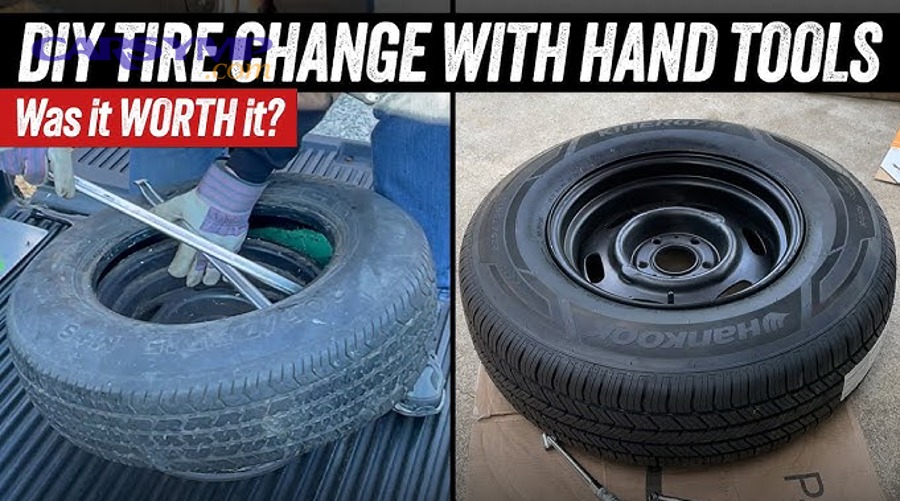
Attempting to change a run-flat tire with hand tools presents multiple hazards. The force required to break the bead can slip, causing you to strike yourself with the tool or damage the wheel. The stiff sidewall can spring back unexpectedly when the bead breaks, potentially causing injury. During installation, getting the bead over the rim often requires tire irons and significant force, making it easy to pinch your fingers between the tire and rim. Even if you manage removal, seating the bead properly during installation typically requires an air compressor capable of delivering a high-volume blast of air—more than most home compressors can provide.
Weight is another factor. Run-flat tires typically weigh 8-12 pounds more than comparable conventional tires due to the sidewall reinforcement. Combined with the wheel, you’re handling 40-60 pounds of awkward, unwieldy weight that wants to roll away. The additional weight increases back strain risk and makes the tire harder to control during installation.
Many run-flat tire manufacturers recommend replacement rather than repair after being driven while deflated. The heat generated by driving on a flat tire, even at low speeds, can compromise the internal structure in ways that aren’t visible externally. If you’re changing a run-flat that was driven while flat, it should go to a tire disposal facility, not into storage for later reuse. This differs from conventional tires, where driving a short distance on a flat might allow for repair in some cases.
For these reasons, run-flat tire service is one situation where DIY approaches should generally defer to professional service. The specialized equipment, training, and safety procedures required make this a task better left to tire shops. If you have a vehicle equipped with run-flats and want to maintain DIY capability, consider switching to conventional tires with a spare or tire repair kit, assuming your vehicle’s design allows this modification.

What Safety Precautions Are Needed for Roadside Emergency Tire Changes?
Safety precautions needed for roadside emergency tire changes include positioning your vehicle far from traffic lanes on a level shoulder, activating hazard lights and placing warning triangles or flares 100 feet behind your vehicle, wearing reflective clothing, working quickly but carefully, and calling for professional assistance if conditions are unsafe. Traffic represents the primary hazard in roadside changes—you’re working near vehicles traveling at high speeds with drivers who may be distracted or impaired.
Location selection is critical for roadside safety. If you experience a flat tire, don’t stop immediately unless driving is impossible. Continue carefully at reduced speed until you find the safest possible location—ideally a wide, level shoulder, parking lot, or side street. Driving on a flat tire for a quarter mile is better than changing it alongside highway traffic. Once stopped, position your vehicle as far from the travel lane as possible without getting stuck in soft ground.
Visibility determines whether approaching drivers see you in time to avoid your work area. Activate your hazard lights immediately. If you have warning triangles or road flares, place them in a line starting about 100 feet behind your vehicle, with additional markers at 50 and 25 feet. This gives approaching drivers progressive warning. At night or in low visibility, these warning devices are essential. Many emergency kits include battery-powered LED beacons that are more visible than traditional triangles.
Reflective clothing makes you visible to approaching drivers. A reflective safety vest (available for under $10 at auto parts stores) should be in every vehicle. The fluorescent fabric makes you visible during daylight, while the reflective strips show up brightly in headlights at night. Position yourself so you can monitor traffic while working—never become so focused on the tire change that you’re unaware of approaching vehicles.
Work efficiency becomes a safety factor in roadside situations. Have your tools organized and ready before starting. Skip non-essential steps like detailed cleaning or adjustments—the goal is to install the spare tire and leave the hazardous location, not to perform perfect work. You can fine-tune torque and inspect everything thoroughly once you reach a safe location. Many roadside tire changes can be completed in 10-15 minutes if you work systematically.
Some situations are simply too dangerous for DIY roadside changes. If you’re on a narrow shoulder with high-speed traffic, if visibility is poor due to weather or road geometry, if the vehicle is on a slope, or if you’re alone in an isolated area with security concerns, the safer choice is professional roadside assistance. Most insurance policies and cell phone plans include or offer affordable roadside assistance coverage. The cost of a service call is negligible compared to the risk of being struck by traffic or injured while working in unsafe conditions.
Are There Safety Differences Between Changing Steel vs. Aluminum Wheels?
Yes, there are safety differences between changing steel and aluminum wheels—steel wheels are more durable and scratch-resistant but heavier (increasing back injury risk), while aluminum wheels are lighter but more susceptible to corrosion between the wheel and hub (making removal difficult), more prone to damage from over-torquing, and require careful handling to prevent cosmetic damage. The torque specifications may also differ slightly between wheel types.
Steel wheels, often called “steelies,” are the basic wheels typically found on base model vehicles or used as winter wheel options. Their primary advantage is durability—they can withstand impacts from potholes, curbs, and road debris better than aluminum wheels. From a safety perspective during changes, steel wheels don’t crack or chip from tire iron contact, and lug nut seats are less likely to deform from slight over-torquing. However, steel wheels for passenger cars typically weigh 5-10 pounds more than equivalent aluminum wheels, increasing the physical strain of lifting and positioning them.
Aluminum alloy wheels (often called “mag wheels” or “alloy wheels”) require more careful handling. The softer metal scratches and gouges more easily, so you must be careful when using tire irons or placing the wheel on rough surfaces. The cosmetic damage isn’t just aesthetic—deep gouges can create stress concentration points that may eventually crack under load, though this is rare with normal use. More importantly for safety, the aluminum material around lug nut seats can deform if you significantly over-torque the nuts, creating uneven pressure distribution.
Corrosion between aluminum wheels and steel hubs creates a galvanic reaction that can effectively weld the two metals together over time, especially in climates where road salt is used. When removing aluminum wheels that have been on the vehicle for an extended period, expect to use the rubber mallet technique more frequently. The corrosion makes wheels much harder to remove than on a vehicle with steel wheels. Before installation, clean the hub mounting surface and apply a thin coat of anti-seize compound to the hub face—this prevents corrosion and makes future removal easier.
Torque specifications can vary between steel and aluminum wheels on the same vehicle, though this is less common with modern vehicles. Always consult your owner’s manual for the specific torque value for your wheel type. Some manufacturers specify slightly lower torque for aluminum wheels to prevent seat deformation. Using a torque wrench is especially important with aluminum wheels, as over-tightening can cause invisible damage that accumulates over multiple tire changes.
The lug nuts themselves differ between wheel types. Steel wheels typically use tapered (conical) seat lug nuts, while aluminum wheels often use washer-style or ball-seat lug nuts that distribute pressure over a larger area. Never interchange lug nuts between wheel types—using steel wheel lug nuts on aluminum wheels or vice versa can damage the wheel and create an unsafe mounting condition. If you’re switching between winter steels and summer alloys during seasonal tire changes, keep each set’s lug nuts with the respective wheels to avoid confusion.
According to testing data from the Tire and Rim Association published in 2023, properly torqued aluminum wheels show no measurable difference in safety performance compared to steel wheels, but aluminum wheels that have been over-torqued by more than 20% show a 34% higher incidence of lug nut seat deformation over five years of use, potentially leading to improper wheel mounting in the future.
This comprehensive guide to DIY tire change safety covers the essential knowledge and techniques needed to perform this common maintenance task without injury or vehicle damage. The seven core safety steps—proper jack positioning, loosening nuts before lifting, appropriate vehicle height, correct tire handling, star-pattern tightening, controlled lowering, and final torque verification—create a systematic approach that minimizes risk when followed consistently.
Remember that safety equipment and preparation are just as important as technique. Invest in quality tools including a properly rated jack, torque wrench, and personal protective equipment. Never compromise on safety steps even when you’re in a hurry or working in less-than-ideal conditions. The few extra minutes spent on proper procedure can prevent injuries that affect you for a lifetime and vehicle damage that costs hundreds or thousands of dollars to repair.
For special situations including seasonal tire changes, run-flat tires, roadside emergencies, or working with different wheel materials, adapt these core principles to address the specific challenges each scenario presents. Know your limitations—some situations genuinely require professional service, and recognizing when to call for help is itself a mark of competence, not weakness.