


Temperature gauge fluctuations indicate potential cooling system problems ranging from a faulty thermostat to low coolant levels, requiring systematic diagnosis to identify the specific component failure. When your dashboard gauge moves erratically between hot and cold readings, understanding the root cause determines whether you face a simple fix or serious engine damage risk.
The diagnostic process involves checking seven common failure points: thermostat malfunction, coolant level issues, temperature sensor failure, coolant leaks, water pump problems, radiator blockage, and cooling fan defects. Each component plays a critical role in maintaining optimal engine temperature, and identifying which one has failed requires specific testing procedures and observation of symptom patterns.
Safety considerations become paramount when gauge readings fluctuate wildly, as continued driving with certain failures can lead to catastrophic engine damage within minutes. Knowing when to stop immediately versus when you can safely drive to a repair shop protects both your engine and your wallet from unnecessary damage.
Modern diagnostic tools like OBDII scanners allow car owners to distinguish between actual temperature problems and simple gauge malfunctions, empowering you to make informed decisions about repairs. Below, we’ll explore each potential cause, provide step-by-step diagnostic methods, and outline practical solutions for every scenario.
What Does Temperature Gauge Fluctuation Mean in Your Car?
Temperature gauge fluctuation means your cooling system is experiencing inconsistent coolant temperatures or your gauge is receiving irregular signals from the temperature sensor. The gauge monitors coolant temperature flowing through the engine block, not the engine metal itself, providing an indirect measurement of overall engine heat levels.
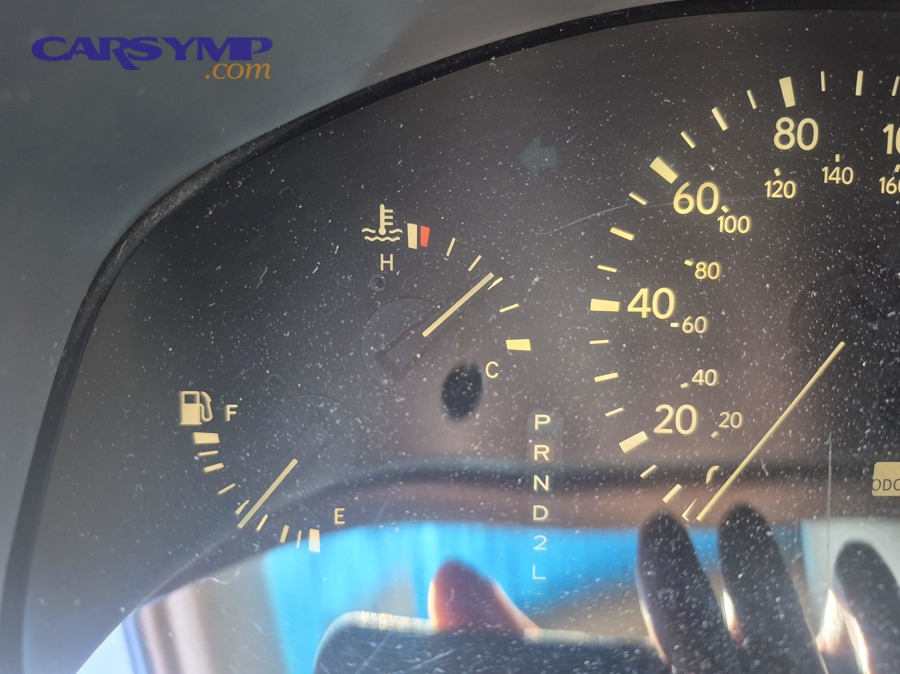
Your car’s cooling system maintains an ideal operating temperature between 190°F and 220°F under normal conditions. The temperature gauge translates sensor readings into a visual display, typically showing “C” (cold) on the left, normal operating range in the middle, and “H” (hot) on the right. When the needle remains steady in the middle zone after warm-up, your cooling system functions properly.
Fluctuations become problematic when the needle swings more than one-quarter of the gauge range repeatedly or moves rapidly between temperature extremes. A properly functioning system may show minor movement (representing actual 5-10 degree temperature changes) during demanding conditions like climbing steep hills or sitting in heavy traffic. However, wild swings from cold to hot within seconds signal mechanical failure rather than normal thermal cycling.
Understanding what your gauge monitors helps you interpret its behavior correctly. The coolant temperature sensor sits in direct contact with engine coolant, sending electrical resistance signals to your dashboard gauge. As coolant temperature rises, sensor resistance changes proportionally, moving the gauge needle. This means gauge behavior reflects either actual coolant temperature changes or electrical signal problems from the sensor or wiring.
Is It Normal for Your Car’s Temperature Gauge to Move Up and Down?
Yes, minor temperature gauge movement is normal, with fluctuations of 5-10 degrees Fahrenheit representing typical thermostat cycling and varying engine loads. However, wild swings exceeding one-quarter of the gauge range or rapid movements between hot and cold indicate serious cooling system failures requiring immediate attention.
To better understand normal versus problematic behavior, consider how modern versus older gauges display temperature information. Many contemporary vehicles use “buffered” or “dead zone” programming where the gauge needle stays centered across a wider temperature range (180-230°F), masking minor fluctuations that would be visible on older mechanical gauges. This programming prevents driver anxiety over normal thermal cycling but can also delay recognition of developing problems.
When Fluctuation Signals a Problem
Movement becomes concerning when you observe these specific patterns:
Rapid cycling: The needle swings from normal to hot and back within 30-60 seconds repeatedly. This behavior indicates thermostat malfunction, air pockets in the cooling system, or failing water pump impeller creating inconsistent coolant flow.
Climbing during idle: Temperature rises steadily when stopped at lights but drops when driving. This pattern strongly suggests cooling fan failure, as highway speeds force air through the radiator mechanically, while idle conditions require electric fan operation.
Persistent high readings: The gauge climbs toward “H” and stays there or continues rising. This dangerous condition demands immediate engine shutdown to prevent head gasket failure, warped cylinder heads, or complete engine seizure.
Erratic jumping: The needle bounces randomly without pattern correlation to driving conditions. This typically indicates electrical problems with the temperature sensor, damaged wiring, or gauge mechanism failure rather than actual temperature changes.
Modern vehicles equipped with digital temperature displays in the driver information center often reveal fluctuations that traditional needle gauges mask. If your vehicle has both analog and digital temperature readouts, compare them for consistency. Matching fluctuations on both displays confirm actual temperature problems, while discrepancies suggest gauge or sensor electrical issues.
Aftermarket temperature gauges installed by enthusiasts or in modified vehicles display real-time temperature changes without factory buffering, making normal 5-10 degree fluctuations clearly visible. Owners often mistake this normal behavior for problems because they’re accustomed to factory gauges that remain artificially steady. Understanding your specific gauge type prevents unnecessary diagnostic work and expense.
What Are the 7 Most Common Causes of Temperature Gauge Fluctuations?
There are seven primary causes of temperature gauge fluctuations: faulty thermostat, low coolant levels, failing temperature sensor, coolant leaks, water pump failure, clogged radiator, and cooling fan problems, each identifiable through specific symptom patterns and diagnostic tests. These failures represent the overwhelming majority of fluctuating gauge issues, with thermostat and coolant level problems accounting for approximately 60% of cases.
Systematic diagnosis starts with the simplest, most common causes before progressing to complex mechanical failures. This approach saves time and money while preventing misdiagnosis. Below, we examine each cause in detail, providing symptom identification, testing procedures, and solution recommendations.
Is a Faulty Thermostat Causing Your Gauge to Fluctuate?
A malfunctioning thermostat causes temperature gauge fluctuations when the valve sticks partially open, fully closed, or cycles erratically between positions, disrupting normal coolant flow regulation. The thermostat acts as the cooling system’s primary control valve, opening at a specific temperature (typically 195°F) to allow coolant circulation between the engine and radiator.
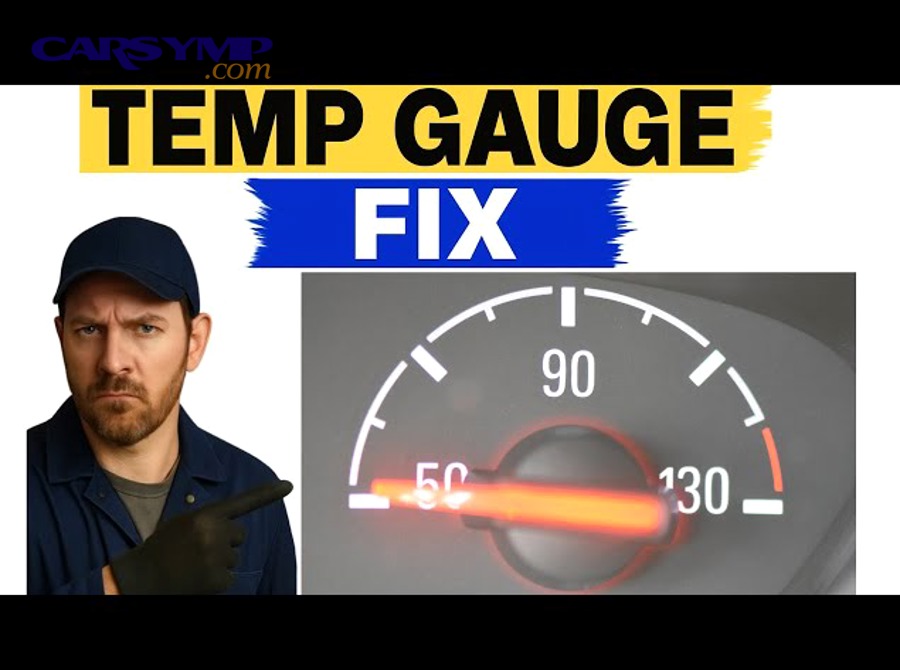
Thermostat failure manifests through distinct symptom patterns that help identify this specific component as the culprit. When stuck partially open, the engine never reaches full operating temperature, causing the gauge to read below normal (often in the lower third of the gauge range) even after 15-20 minutes of driving. You’ll also notice poor heater performance, reduced fuel economy, and potentially illuminated check engine lights with diagnostic codes for “thermostat performance” or “engine temperature too low.”
Thermostat stuck closed symptoms appear more dangerous, as the gauge climbs rapidly toward “H” since coolant cannot circulate to the radiator for cooling. The upper radiator hose remains cold to the touch even when the engine reaches operating temperature, while the lower hose and radiator stay cold. This condition causes overheating within 5-10 minutes of operation and will damage the engine if you continue driving.
The most common pattern with fluctuating gauges involves a thermostat that sticks intermittently, cycling between partially stuck and normal operation. The gauge needle rises normally during warm-up, then suddenly drops when the thermostat sticks open briefly before rising again when it returns to normal function. These cycles repeat every 2-5 minutes, creating the characteristic “bouncing” behavior many drivers report.
Quick tests to confirm thermostat behavior include monitoring both radiator hoses during warm-up. Start with a cold engine and run it while carefully feeling both the upper and lower radiator hoses (avoiding hot engine components and moving belts). The upper hose should remain cool until the engine reaches approximately 195°F (usually 5-10 minutes), then quickly become hot as the thermostat opens and hot coolant rushes to the radiator. If the hose becomes hot immediately or stays cold beyond 10-15 minutes, the thermostat has failed.
Professional technicians use infrared thermometers to measure exact temperatures at the thermostat housing, comparing actual temperature to the rated opening temperature stamped on the thermostat. When replacement becomes necessary, always use the correct temperature-rated thermostat specified by your vehicle manufacturer—installing a lower-temperature unit may reduce overheating but causes poor fuel economy, increased emissions, and premature engine wear.
Can Low Coolant Levels Make Your Temperature Gauge Go Up and Down?
Low coolant levels absolutely cause temperature gauge fluctuations because insufficient fluid creates air pockets that prevent consistent heat transfer from the engine to the temperature sensor. When coolant levels drop below the sensor location, the gauge receives intermittent readings as remaining coolant sloshes around during acceleration, braking, and cornering.
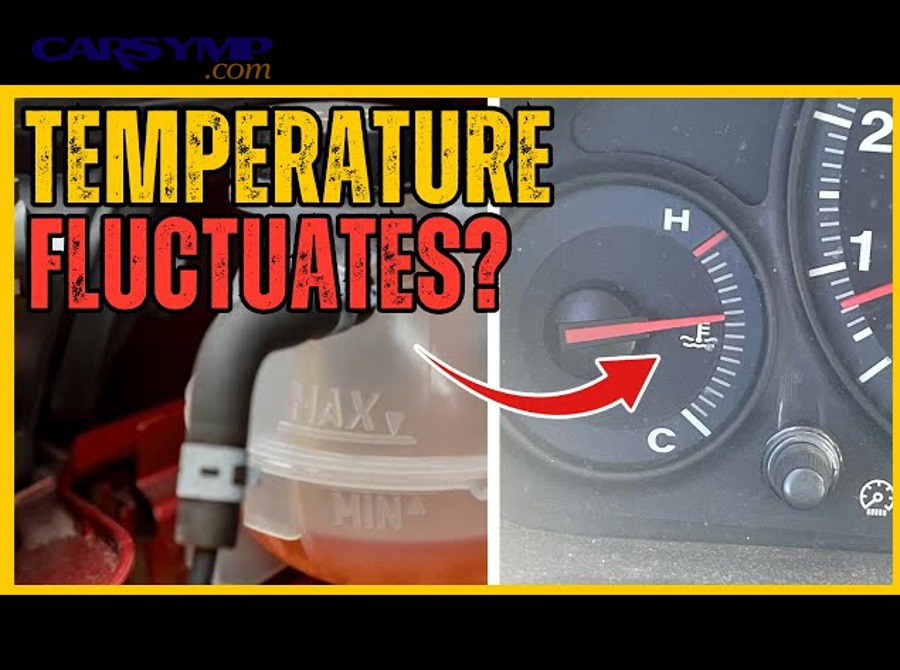
Checking your coolant level requires examining the coolant reservoir (also called overflow tank or expansion tank) when the engine is completely cold. This translucent plastic tank, typically located near the radiator, features “MIN” and “MAX” fill lines molded into the plastic or marked with stickers. Proper coolant level should rest between these marks when cold, rising slightly toward MAX as the engine warms and coolant expands.
Never open the radiator cap or coolant reservoir cap when the engine is hot, as pressurized coolant can erupt violently, causing severe burns. Wait at least two hours after the last drive before checking levels. If coolant sits below the MIN line, you’re operating with insufficient fluid for proper cooling system function.
The coolant mixture ratio significantly impacts cooling efficiency and gauge behavior. Manufacturers specify a 50/50 mixture of antifreeze (ethylene glycol) and distilled water for most climates, providing freeze protection to -34°F and boil-over protection to 265°F when the system is pressurized. Some owners mistakenly add excessive water to save money, creating a mixture that absorbs and transfers heat less efficiently than proper coolant, leading to higher operating temperatures and gauge fluctuations.
When refilling coolant, use premixed 50/50 coolant or mix concentrated coolant with distilled water (never tap water, which contains minerals that cause corrosion and deposits). Add coolant slowly to prevent air pocket formation, and run the engine with the radiator cap off (when safe to do so) to allow trapped air to escape through the radiator neck. Some vehicles have dedicated “bleeder valves” at high points in the cooling system specifically designed to release air during refilling.
Color-coded coolant types (green, orange, pink, blue) represent different chemical formulations with varying corrosion inhibitors and lifespan expectations. Never mix different coolant types, as incompatible chemistries create gel-like sludge that blocks narrow passages and causes overheating. When topping off, use the same coolant type already in your system, or completely flush and replace the entire system if switching formulations.
Could a Failing Coolant Temperature Sensor Be the Problem?
A failing coolant temperature sensor causes gauge fluctuations by sending erratic electrical resistance signals to the dashboard gauge, even when actual engine temperature remains stable. This sensor, sometimes called the coolant temperature sending unit, screws into the engine block or cylinder head with its tip submerged in engine coolant.
Temperature sensors operate on the thermistor principle—internal electrical resistance decreases predictably as temperature rises. The engine computer or gauge circuit supplies a reference voltage (typically 5 volts) to the sensor, and the sensor’s changing resistance modifies this voltage proportionally to temperature. A healthy sensor produces smooth, predictable voltage changes, while a failing sensor generates erratic signals causing wild gauge movements.
Symptoms distinguishing sensor failure from actual cooling problems include gauge fluctuations that don’t correlate with driving conditions. For example, the needle might jump suddenly while cruising at steady highway speeds (when actual temperature should be rock-steady), or show random movements during cold start when the engine hasn’t generated significant heat. Multiple electrical accessories (headlights, radio, climate control) turning on simultaneously might cause gauge movement if the sensor has marginal wiring connections.
Testing a temperature sensor requires a digital multimeter capable of measuring resistance (ohms). With the engine cold, disconnect the sensor’s electrical connector and measure resistance between the sensor’s terminal and a good engine ground. Compare your reading to manufacturer specifications (typically 2,000-3,000 ohms at 70°F, dropping to 200-300 ohms at 200°F). Sensors showing infinite resistance (open circuit) or near-zero resistance (short circuit) have failed completely.
For intermittent failures, monitor sensor resistance while gently wiggling the wiring harness and connector. Resistance values should remain stable—jumping numbers indicate damaged wiring, corroded connector terminals, or internal sensor deterioration. Inspect the sensor’s mounting location for corrosion, particularly where the metal sensor body grounds to the engine block, as poor ground connections cause identical symptoms to sensor failure.
Temperature sensor replacement costs typically range from $20-$50 for the part plus 15-30 minutes labor, making this one of the least expensive cooling system repairs. The sensor usually threads into the thermostat housing, intake manifold, or cylinder head, accessible with basic hand tools. Apply thread sealant or Teflon tape to the threads during installation to prevent coolant leaks around the sensor base.
Are Coolant Leaks Responsible for Temperature Fluctuations?
Coolant leaks cause temperature gauge fluctuations by reducing system fluid volume and introducing air into the cooling circuit, creating inconsistent heat transfer and sensor contact. Even small leaks allowing one cup of coolant loss per week can introduce enough air to affect gauge readings, while major leaks cause rapid overheating and obvious fluid loss.
Common leak locations include radiator seams and end tanks, radiator hose connections, heater hoses under the dashboard, water pump weep hole, thermostat housing gasket, head gasket, and freeze plug deterioration. Each location presents distinct visual clues during inspection. Fresh coolant appears bright green, orange, or pink (depending on type) and feels slippery between your fingers, distinguishing it from water condensation or oil leaks.
Inspecting for leaks begins with checking the ground under your parked car after overnight storage. Coolant pools or stains directly under the engine bay indicate active leaks, while dry pavement suggests the leak occurs only under pressure when the engine runs. Place clean cardboard under the engine to capture drips overnight, making small leaks visible against the white cardboard surface.
Visual inspection with the engine running (and warmed to operating temperature) often reveals active leaks as coolant seeps, drips, or sprays from failed components. The pressurized system forces fluid through any opening, making leaks more obvious under operating conditions than when cold. Use a flashlight to inspect all hose connections, particularly the small heater hoses that deteriorate from heat cycling and often hide behind other components.
Internal leaks into the engine oil or combustion chambers require different diagnostic approaches. Check your engine oil dipstick for milky, chocolate-colored oil indicating coolant contamination. Inspect the radiator cap or coolant reservoir for an oily film floating on the coolant surface, suggesting oil entering the cooling system through a head gasket failure. White smoke from the exhaust (with a sweet smell) indicates coolant burning in the combustion chambers—a serious condition requiring immediate repair.
Minor external leaks from hose connections often respond to hose clamp tightening or replacement. Deteriorated rubber hoses develop surface cracks, soft spots, or bulges requiring complete hose replacement. Radiator leaks fall into two categories: small seeps that temporary sealant products can address, and major failures requiring radiator replacement. Professional assessment helps determine which repair approach suits your specific situation.
Head gasket leaks represent the most expensive coolant leak scenario, with repair costs ranging from $1,500 to $3,000 depending on vehicle complexity. Confirming head gasket failure before authorizing expensive repairs requires professional testing with combustion gas detection equipment that identifies exhaust gases in the cooling system—a definitive indicator of head gasket breach.
Is Your Water Pump Failing?
Water pump failure causes temperature gauge fluctuations when the impeller deteriorates, shaft bearings wear, or the pump housing develops internal bypass leaks, compromising consistent coolant circulation. The water pump serves as the cooling system’s heart, using an engine-driven impeller to force coolant through the engine block, cylinder heads, radiator, and heater core.
Identifying water pump failure involves observing several telltale symptoms. Coolant leaks from the pump’s “weep hole”—a small drain opening in the pump housing designed to prevent bearing damage when seals fail—provide the most obvious indication. This leak appears as coolant dripping from the lower engine front, often accompanied by white or colored coolant residue staining the pump body and surrounding components.
Bearing wear produces characteristic noises ranging from subtle bearing whine to loud grinding, scraping, or squealing sounds that increase with engine RPM. These noises emanate from the water pump location (front-center of the engine, driven by the serpentine belt) and often worsen as the pump warms up. Severe bearing wear allows the pump shaft to wobble, causing visible serpentine belt misalignment or flutter that you can observe with the engine running.
A failing impeller creates the most insidious water pump problem because external symptoms may be minimal while cooling effectiveness deteriorates significantly. Impeller blades can erode from cavitation (bubble formation and collapse in the coolant), break off entirely, or slip on the pump shaft. When this occurs, the pump spins but moves little or no coolant, causing overheating and gauge fluctuations despite the pump appearing externally functional.
Testing water pump function involves several approaches. Start by observing the upper radiator hose behavior as the engine warms up. When the thermostat opens (around 195°F), you should feel the hose firm up as coolant flows under pressure. A soft hose or delayed firming suggests weak pump pressure. More definitively, professional technicians use pressure gauges or flow meters to measure actual coolant pressure and flow rate, comparing results to specifications.
Water pump replacement timing varies by vehicle design. Timing belt-equipped engines require water pump replacement during timing belt service (every 60,000-100,000 miles) since accessing the pump requires timing belt removal anyway. Serpentine belt-driven pumps typically last 100,000+ miles but can fail earlier due to contaminated coolant, improper tension, or manufacturing defects.
Could a Clogged Radiator Cause Gauge Readings to Jump?
A clogged radiator causes temperature gauge fluctuations when internal tube blockage or external fin debris restricts coolant flow and airflow, preventing efficient heat dissipation from the cooling system. The radiator functions as a heat exchanger where hot coolant from the engine flows through narrow tubes while air passing through thin aluminum fins absorbs heat and carries it away.
Internal radiator blockage develops gradually as mineral deposits, rust particles, deteriorated hose material, and coagulated coolant additives accumulate in the narrow cooling tubes. This buildup restricts coolant flow, causing higher-than-normal operating temperatures and fluctuating gauge readings as some tubes remain open while others clog completely. Vehicles with neglected coolant maintenance (no flushes for 100,000+ miles) suffer the highest clogging risk.
External radiator blockage occurs when leaves, plastic bags, paper, mud, or insect nests accumulate between the radiator fins and condenser (air conditioning radiator) or in the grille opening. This debris blocks airflow essential for heat transfer, causing overheating at idle or low speeds when ram air doesn’t force debris aside. Highway driving may show normal temperatures as high-speed airflow pushes through the blockage, while city driving produces climbing gauge readings.

Diagnosing radiator blockage starts with visual inspection of the radiator face, examining both sides (front and back) for debris accumulation. Remove leaves, bugs, and trash carefully to avoid bending the delicate aluminum fins. A bright flashlight shined through the radiator from behind should show significant light transmission through the fins—minimal light passage indicates heavy blockage requiring professional cleaning or replacement.
Internal blockage assessment requires more involved testing. An infrared thermometer allows temperature measurement across the radiator’s surface area. Point the thermometer at multiple locations on the radiator when the engine reaches operating temperature—you should see relatively uniform temperatures across the entire radiator surface. Cold spots indicate blocked tubes preventing coolant flow through those sections, while isolated hot spots suggest localized restriction.
Radiator flushing addresses mild to moderate internal blockage by forcing cleaning solution through the cooling system under pressure. This service typically costs $100-$150 at repair shops and can restore function to moderately clogged radiators. Severely restricted radiators require replacement, as heavy blockage cannot be safely removed without damaging the thin internal tubes.
When replacement becomes necessary, consider upgrading to a higher-capacity radiator if your vehicle frequently tows trailers, operates in extremely hot climates, or has modified engine components producing more heat than stock configuration. Enhanced radiators feature additional rows of cooling tubes or larger surface areas, improving heat dissipation capacity beyond original equipment specifications.
Can Cooling Fan Problems Lead to Temperature Swings?
Cooling fan failures cause temperature gauge fluctuations characterized by rising temperatures at idle or in traffic followed by temperature drops when driving at highway speeds. This pattern occurs because the electric cooling fan provides necessary airflow through the radiator when vehicle motion doesn’t generate sufficient air movement, particularly during stationary operation or slow-speed driving.
Modern vehicles use electric cooling fans controlled by the engine computer based on temperature sensor inputs. The computer energizes the fan when coolant temperature exceeds the programmed threshold (typically 205-215°F) and deenergizes it when temperature drops below the lower threshold (typically 195-200°F). This cycling creates normal temperature variation, but fan system failures disrupt this regulation.
Common cooling fan failures include burned-out fan motors, failed fan relays, deteriorated fan resistors (on multi-speed systems), broken fan control modules, damaged wiring, and blown fuses. Each failure type produces distinct symptom patterns. Complete fan motor failure prevents any fan operation, causing overheating whenever the vehicle sits still. Failed relays create intermittent operation where the fan works sometimes but not others, producing erratic temperature behavior.
Multi-speed cooling fan systems use resistors to control fan speed—low speed for moderate cooling needs, high speed for maximum cooling during extreme conditions. Resistor failure typically leaves the fan operating only at one speed (usually high) or prevents low-speed operation entirely. This causes either insufficient cooling during mild overheating or the fan running constantly at high speed even when minimal cooling is needed.
Testing cooling fan operation requires observing fan behavior as the engine warms. Turn on the air conditioning—the fan should activate immediately on most vehicles since AC operation requires condenser cooling. If the fan runs for AC but not when the engine temperature climbs, the problem lies in the engine temperature sensor, fan relay, or control module rather than the fan motor itself.
When diagnosing fan issues, verify both the fan motor and control circuit. With the engine off, locate the fan relay (usually in the engine compartment fuse box) and remove it. Using a jumper wire, bridge the relay socket terminals that connect battery power to the fan motor—the fan should run at high speed. If it does, the fan motor works properly and the problem exists in the relay, temperature switch, or computer control circuit. If the fan doesn’t run, the motor has failed or power supply wiring is damaged.
How Do You Diagnose Which Component Is Causing the Fluctuation?
Diagnosing temperature gauge fluctuations requires systematic testing starting with visual inspection, progressing through OBDII scanning to compare actual versus displayed temperature, and concluding with component-specific tests to isolate the failed part. This methodical approach prevents misdiagnosis and unnecessary part replacement while quickly identifying the true failure source.
The diagnostic workflow follows a logical sequence from easiest to most complex: check coolant level, inspect for visible leaks, verify cooling fan operation, scan for diagnostic codes, compare OBDII temperature to gauge reading, test thermostat operation, assess sensor function, and finally evaluate water pump and radiator performance. Each step either identifies the problem or eliminates a potential cause, narrowing the diagnostic focus.
What Tools Do You Need to Diagnose Temperature Gauge Issues?
You need four essential tools to diagnose temperature gauge fluctuations: an OBDII scanner with live data capability, a digital multimeter for electrical testing, an infrared thermometer for measuring actual component temperatures, and basic hand tools for component access and inspection. These tools enable comprehensive diagnosis without specialized automotive equipment, making troubleshooting accessible to dedicated DIY mechanics.
The OBDII scanner serves as your primary diagnostic tool, connecting to the vehicle’s diagnostic port (usually located under the dashboard near the steering column) and displaying real-time engine data. Budget OBDII Bluetooth adapters ($20-40) pair with smartphone apps like Torque Pro, providing coolant temperature readings, diagnostic trouble codes, and sensor data streams. Professional-grade scanners ($100-500) offer faster response, graphing capabilities, and access to manufacturer-specific codes beyond generic OBDII protocols.
Digital multimeters measure electrical resistance, voltage, and current—critical for testing temperature sensors, fan relays, and wiring integrity. Quality multimeters cost $30-100 and should include auto-ranging resistance measurement, continuity testing with audible beep, and voltage measurement capability. These features enable sensor resistance testing at various temperatures, relay coil testing, and wiring continuity verification.
Infrared thermometers measure surface temperatures without contact, allowing safe temperature assessment of radiator surfaces, hoses, thermostat housing, and other cooling system components while the engine runs. Point the thermometer at the target surface, pull the trigger, and read the instant temperature display. Quality infrared thermometers cost $20-60 and eliminate guesswork when comparing theoretical component temperatures to actual measurements.
Basic hand tools including combination wrenches, socket sets, screwdrivers, and pliers enable component removal for inspection and testing. A flashlight or rechargeable work light illuminates dark engine compartment areas where cooling system components hide. Specific specialized tools like radiator pressure testers or cooling system vacuum fill tools help with advanced diagnosis but aren’t essential for identifying most fluctuation causes.
How to Use an OBDII Reader to Check Real Engine Temperature
Using an OBDII reader to check real engine temperature involves connecting the scanner, navigating to live data display, selecting engine coolant temperature parameter, and comparing the displayed value to your dashboard gauge reading to determine whether fluctuations represent actual temperature changes or gauge/sensor electrical problems. This comparison provides the critical first diagnostic step separating mechanical cooling failures from electrical instrumentation issues.
Start with a cold engine to observe the complete warm-up cycle. Connect your OBDII scanner or Bluetooth adapter, turn the ignition to “ON” without starting the engine, and establish communication with the vehicle computer. Navigate to the “live data” or “data stream” menu and locate “Engine Coolant Temperature” or “ECT” in the parameter list. Most scanners allow selecting multiple parameters for simultaneous display—add “Intake Air Temperature” and “Engine RPM” for reference.
Start the engine and monitor the OBDII temperature reading as the engine warms. It should begin at ambient temperature (60-80°F typically) and climb steadily at roughly 10-15 degrees per minute until reaching operating temperature (195-220°F depending on vehicle). Simultaneously watch your dashboard temperature gauge. Both should rise at similar rates and stabilize at similar final positions.
If your dashboard gauge fluctuates while the OBDII reading remains steady, you’ve identified an electrical problem between the temperature sensor and gauge—likely corroded connectors, damaged gauge wiring, or a failing dashboard instrument cluster. The cooling system itself functions properly and the temperature sensor sends accurate data to the computer; only the gauge display circuit has issues.
Conversely, when both OBDII and dashboard readings fluctuate together, you’re observing actual coolant temperature changes caused by mechanical cooling system failures. This confirms thermostat problems, low coolant, air pockets, water pump failure, or other physical issues preventing stable temperature maintenance. Focus subsequent diagnosis on mechanical components rather than electrical circuits.
Advanced OBDII apps and scanners offer data logging and graphing features that capture temperature behavior over extended drives. Record a 20-30 minute drive including highway and city conditions, then review the temperature graph. Normal operation shows rapid warm-up followed by stable temperature with minimal variation (±5 degrees). Significant fluctuations (15+ degrees), failure to reach normal temperature, or overheating patterns all indicate specific failure modes requiring targeted diagnosis.
What Are the Solutions and Fixes for Each Cause?
Solutions for temperature gauge fluctuations range from simple DIY coolant refills costing under $20 to complex professional repairs like head gasket replacement exceeding $2,000, with repair selection depending on accurate diagnosis of the underlying cause. Matching the correct solution to the identified problem prevents wasted money on unnecessary repairs while ensuring complete problem resolution.
The repair approach follows the diagnostic findings—each identified cause has specific recommended fixes with varying cost, complexity, and urgency levels. Below, we categorize repairs by DIY feasibility and professional requirements, helping you decide whether to attempt repairs yourself or seek professional assistance.
Which Fixes Can You Do Yourself?
You can personally handle four common temperature gauge fluctuation repairs: refilling coolant, replacing the thermostat, changing the temperature sensor, and cleaning external radiator debris—each requiring basic tools and moderate mechanical skill without specialized equipment or extensive engine disassembly. These repairs address the majority of fluctuation causes while keeping costs minimal and avoiding expensive shop labor charges.
Refilling coolant represents the simplest fix when low levels cause fluctuation. Purchase premixed 50/50 coolant matching your vehicle’s specification (check owner’s manual or existing coolant color), allow the engine to cool completely, and add coolant to the reservoir until reaching the MAX line. Run the engine with the heater on maximum to circulate new coolant and check for leaks. If the level drops again within days, you have a leak requiring further diagnosis. Cost: $15-25 for coolant. Time: 15-30 minutes.
Thermostat replacement suits moderately skilled DIYers comfortable draining coolant and working with basic hand tools. Purchase the correct thermostat (verify temperature rating matches OEM specifications), drain the cooling system into a catch pan, remove the thermostat housing (typically two bolts), replace the gasket and thermostat, refill with fresh coolant, and bleed air from the system. Critical: Install the thermostat in the correct orientation—the temperature-sensing element faces toward the engine block. Cost: $20-40 for parts. Time: 1-2 hours including refill and bleeding.
Temperature sensor replacement requires locating the sensor (usually near the thermostat housing or in the cylinder head), disconnecting the electrical connector, unthreading the old sensor, and installing the new sensor with thread sealant. The sensor typically uses a 19mm or 22mm deep socket for removal. Expect minor coolant spillage when removing the sensor—have a small catch pan ready. Cost: $20-50 for sensor. Time: 30-45 minutes.
External radiator cleaning involves removing debris from the radiator face and between the radiator and condenser. Use compressed air, soft brush, or gentle water spray to dislodge leaves, bugs, and dirt. Work carefully to avoid bending the fragile aluminum cooling fins. This maintenance task costs nothing if you have compressed air or a water hose and takes 15-30 minutes.
Common DIY mistakes include over-tightening the thermostat housing (cracking the housing or distorting the gasket), forgetting to apply thread sealant to temperature sensor threads (causing coolant leaks), failing to properly bleed air from the cooling system (creating new air pockets), and mixing incompatible coolant types (forming gel deposits). Follow manufacturer torque specifications, use appropriate thread sealants where specified, and follow proper bleeding procedures to avoid these pitfalls.
When Should You Take Your Car to a Mechanic?
You should take your car to a professional mechanic when diagnosis reveals head gasket failure, water pump replacement on timing belt engines, radiator replacement, cooling fan motor replacement, or when fluctuations persist after DIY repairs—situations requiring specialized tools, extensive disassembly, or professional diagnostic expertise. These repairs exceed typical home garage capabilities or risk causing expensive secondary damage if performed incorrectly.
Head gasket replacement demands professional attention due to extensive engine disassembly, precision torque requirements, and potential cylinder head machining needs. This repair requires removing the cylinder head, inspecting for warpage, replacing the multi-layer steel gasket, and reassembling with precisely calibrated torque specifications. Head gasket replacement costs $1,500-3,000 depending on engine configuration (V6 and V8 engines cost more due to dual cylinder heads). Attempting this repair without proper tools, expertise, and torque specifications risks catastrophic engine damage.
Water pump replacement on timing belt engines necessitates professional service because accessing the water pump requires timing belt removal and reinstallation—a procedure demanding precise cam and crank timing alignment. Incorrect timing during reassembly causes valve-to-piston collision and severe engine damage. Even when paying for labor, combining water pump replacement with scheduled timing belt service (typically every 90,000-100,000 miles) makes economic sense since labor costs overlap. Cost: $400-800 including timing belt, water pump, and related seals.
Radiator replacement requires draining the entire cooling system, disconnecting multiple hoses and transmission cooler lines (on automatic transmissions), removing fan shroud and cooling fan assembly, and properly supporting/removing the radiator without damaging fins or mounting brackets. Professional shops have quick-connect tool sets for various hose fittings and proper radiator support equipment. Cost: $300-600 including parts and labor.
Cooling fan motor replacement involves electrical diagnosis to confirm motor failure versus control circuit problems, removing fan shroud assembly, and proper fan blade removal/installation. On some vehicles, fan replacement requires radiator removal or extensive disassembly. Additionally, professional shops can verify proper fan operation after replacement using scan tool commands to activate the fan. Cost: $200-500 depending on accessibility.
Professional diagnosis becomes necessary when DIY efforts don’t resolve the fluctuation, multiple potential causes exist without clear symptoms, or you lack tools and skills for component testing. A reputable shop charges $100-150 for diagnostic testing but applies this fee toward repairs when you authorize work. Professional technicians use advanced scan tools, pressure testers, cooling system chemical test equipment, and component-specific test procedures beyond home mechanic capabilities.
When selecting a repair shop, prioritize ASE-certified technicians (Automotive Service Excellence certification indicates proven technical knowledge), shops offering written estimates with parts and labor breakdown, and establishments willing to show you failed parts and explain why replacement was necessary. Avoid shops pushing unnecessary services or unable to clearly explain diagnostic findings and repair recommendations.
Is It Safe to Drive with a Fluctuating Temperature Gauge?
No, driving with a fluctuating temperature gauge is unsafe when readings approach the “H” zone or show rapid swings between cold and hot, as these patterns indicate imminent overheating risk that can cause catastrophic engine damage within minutes. However, minor fluctuations remaining within the normal operating range (center third of the gauge) allow continued driving to a repair facility with heightened monitoring.
To better understand when to stop immediately versus when cautious driving remains acceptable, consider the specific fluctuation pattern and accompanying symptoms. Below, we outline different scenarios and appropriate responses.
Immediate shutdown scenarios demand stopping the engine within 30-60 seconds to prevent permanent damage:
- Gauge climbing into the red “H” zone or beyond three-quarters full scale
- Temperature warning light illuminated (red thermometer symbol or “TEMP” warning)
- Steam or coolant spray visible from under the hood
- Sweet smell (burning coolant) in the cabin or outside the vehicle
- Loud knocking, clicking, or rattling sounds from the engine (indicating severe overheating damage)
- Loss of engine power or rough running coinciding with high temperature
These symptoms indicate active overheating that will warp cylinder heads, blow head gaskets, seize pistons, or crack engine blocks if you continue operating the engine. Pull safely to the roadside, turn off the engine, and arrange for towing rather than attempting to drive further.
Cautious driving scenarios allow continued operation with careful monitoring:
- Gauge fluctuating within the normal range (lower third to middle third of the scale)
- Slight movement coordinated with driving conditions (rising during climbs, falling during highway cruising)
- No warning lights illuminated
- Normal engine power and sound
- No visible steam, smoke, or coolant leaks
Under these conditions, you can carefully drive to a repair facility while monitoring the gauge constantly. Avoid aggressive acceleration, maintain moderate speeds, and turn off the air conditioning to reduce engine load. Watch for any progression toward dangerous territory—be prepared to stop immediately if temperature begins climbing toward “H.”
Emergency cooling measures when overheating begins but you must reach safety:
Turn the heater to maximum temperature and fan speed (this uses the heater core as an auxiliary radiator, pulling heat from the engine). Turn off the air conditioning to eliminate compressor load on the engine. If stopped in traffic, shift to neutral and gently increase engine RPM to 1500-2000—this accelerates water pump speed and increases coolant circulation. Never remove the radiator cap when the engine is hot, as pressurized coolant will erupt violently.
Long-term driving with temperature fluctuations, even if not entering dangerous zones, causes cumulative damage. Repeated thermal cycling (expansion and contraction) stresses head gaskets, warps cylinder heads, deteriorates oil effectiveness, and accelerates bearing wear. Address temperature gauge fluctuations promptly rather than adopting a “wait and see” approach that compounds damage and repair costs.
How Can You Prevent Temperature Gauge Fluctuations?
You can prevent temperature gauge fluctuations through regular cooling system maintenance including coolant flushes every 30,000-50,000 miles, thermostat replacement every 10 years, periodic inspection of hoses and connections, and monitoring coolant levels monthly. Proactive maintenance costs significantly less than repairs while preventing roadside breakdowns and expensive engine damage.
Preventive maintenance shifts your approach from reactive repairs to scheduled service intervals that address component wear before failures occur. This strategy provides multiple benefits: reduced total ownership costs, improved reliability, extended engine life, and elimination of unexpected breakdowns during inconvenient times.
What Is the Recommended Cooling System Maintenance Schedule?
The recommended cooling system maintenance schedule includes coolant replacement every 30,000-50,000 miles or 3-5 years (whichever comes first), thermostat replacement every 100,000 miles or 10 years, hose replacement every 60,000-80,000 miles or when showing deterioration, and pressure testing every 30,000 miles to identify developing leaks before they cause problems. Following these intervals prevents the majority of temperature-related failures.
Modern long-life coolants (often called extended-life or organic acid technology coolants) last significantly longer than traditional green ethylene glycol formulations. Orange, pink, or yellow extended-life coolants provide corrosion protection for 5 years or 150,000 miles in new vehicles, though this interval decreases to 30,000-50,000 miles after the initial factory fill expires. Always verify your vehicle’s specific coolant type and replacement interval in the owner’s manual, as recommendations vary significantly between manufacturers.
Complete cooling system flushes remove accumulated rust particles, mineral deposits, deteriorated hose material, and contaminated coolant that reduces heat transfer efficiency and promotes corrosion. Professional flush services cost $100-150 and include draining old coolant, flushing with cleaning solution, refilling with proper coolant type and mixture, and pressure testing for leaks. This service pays for itself by preventing water pump, radiator, and thermostat failures caused by contaminated coolant.
Thermostat replacement follows time-based intervals rather than mileage alone, as thermostats deteriorate from thermal cycling and corrosion even in low-mileage vehicles. The thermostat’s wax element (which expands with temperature to open the valve) degrades over years of heat exposure, causing erratic operation. Replace thermostats every 10 years or 100,000 miles regardless of whether symptoms appear, particularly during timing belt service when labor costs overlap.
Radiator hoses deteriorate from the inside out, developing internal cracks invisible from external inspection. Replace hoses every 60,000-80,000 miles or whenever you notice surface cracking, soft spots, bulging, or hardening. Quality hoses cost $10-30 each, making preventive replacement far cheaper than roadside breakdown towing and emergency repairs.
Pressure testing identifies developing leaks before they cause coolant loss and overheating. Professional shops use specialized cooling system pressure testers that pressurize the system to operating pressure (typically 14-18 PSI) without running the engine, revealing slow leaks from hose connections, radiator seams, water pump seals, and head gaskets. Request pressure testing during oil change services or annual inspections.
How Does Coolant Quality Affect Gauge Stability?
Coolant quality directly affects gauge stability because degraded coolant loses heat transfer capacity, promotes corrosion that damages sensors and restricts passages, and forms deposits that block radiator tubes and water pump impeller cavities. Fresh coolant maintains optimal pH balance (typically 8.0-11.0), corrosion inhibitor concentration, and boiling point elevation that together ensure consistent temperature regulation.
The coolant mixture ratio significantly impacts both freeze protection and heat transfer efficiency. While pure water transfers heat more effectively than antifreeze, it freezes at 32°F, boils at 212°F (lower with altitude), and provides zero corrosion protection. Pure antifreeze prevents freezing to -67°F but transfers heat poorly and boils at only 387°F. The optimal 50/50 mixture balances these properties, providing freeze protection to -34°F, boil-over protection to 265°F (in pressurized systems), and adequate heat transfer with excellent corrosion protection.
Coolant degradation occurs through several mechanisms. Antifreeze (ethylene glycol or propylene glycol) oxidizes over time, becoming acidic and losing corrosion inhibitor effectiveness. This acidification attacks aluminum components, generating aluminum oxide particles that circulate through the system causing abrasive damage. Contamination from external sources—dirt entering through the radiator cap, combustion gases from head gasket leaks, transmission fluid from internal cooler leaks—accelerates degradation and introduces particles that block narrow passages.
Testing coolant condition requires coolant test strips or refractometer measurements that assess freeze point, pH, and reserve alkalinity. Test strips cost $5-15 for a package and provide quick pass/fail assessment of coolant health. Insert a strip in the coolant reservoir, wait the specified time, and compare color changes to the reference chart. Failing test results indicate immediate replacement needs regardless of mileage or time intervals.
Using incorrect coolant types or mixing incompatible formulations creates serious problems. Mixing conventional green coolant with orange extended-life formulations can form gel deposits that block cooling passages and damage water pump seals. Always use the coolant type specified by your vehicle manufacturer, clearly identified in the owner’s manual and usually on a sticker in the engine compartment. When uncertain, completely drain and flush the system before adding new coolant rather than topping off with potentially incompatible fluid.
Quality differences exist between coolant brands, though all must meet minimum industry standards. Premium coolants feature enhanced corrosion inhibitor packages, longer service life, and better temperature stability. While budget coolants suffice for basic protection, premium products provide superior long-term engine protection—a worthwhile investment given cooling system repairs cost hundreds or thousands of dollars.
What Are the Warning Signs Before Fluctuations Start?
Warning signs appearing before obvious gauge fluctuations include slow engine warm-up taking 15+ minutes to reach operating temperature, slight gauge movement during extended idle periods, reduced heater output on cold days, gradual coolant level decrease requiring periodic top-offs, and occasional sweet coolant smell when exiting the vehicle. Recognizing these early indicators allows addressing problems before they progress to complete failures.
Slow warm-up indicates thermostat beginning to stick partially open, allowing excessive coolant circulation before reaching proper operating temperature. You’ll notice the gauge taking longer to reach the normal position and may experience reduced fuel economy as the engine computer enrichens the fuel mixture compensating for low temperature. Address this by replacing the thermostat before it fails completely.
Slight gauge movement during extended idle—where the needle creeps slightly upward after 10-15 minutes of stationary operation with the engine running—suggests marginal cooling fan performance or developing radiator restriction. The fan may run but at reduced speed due to resistor deterioration, or the radiator may have partial internal blockage reducing heat dissipation efficiency. Catching this early allows preventive radiator flushing or fan repair before complete failure causes overheating.
Reduced heater output manifests as lukewarm air from heating vents rather than hot air, or delayed heating requiring longer engine operation before warm air appears. This indicates low coolant level, air pockets in the cooling system, or partial thermostat failure preventing full operating temperature achievement. Check coolant level first, then consider thermostat replacement if levels remain proper but heating underperforms.
Gradual coolant level decrease requiring monthly top-offs signals developing leaks too small to leave obvious puddles but large enough to deplete coolant over time. This slow loss introduces air into the system and eventually causes overheating when levels drop critically low. Pressure test the cooling system to identify leak sources before depletion causes gauge fluctuations or overheating damage.
Sweet coolant smell when opening the hood or exiting the vehicle indicates small external leaks where coolant evaporates on hot engine surfaces without dripping to the ground. Common sources include weeping water pump seals, thermostat housing gasket seepage, and radiator cap deterioration. Identify the source through careful visual inspection with a flashlight, looking for coolant residue stains or wetness around components.
Do Aftermarket vs. Factory Temperature Gauges Read Differently?
Yes, aftermarket temperature gauges read differently than factory gauges because aftermarket units display real-time temperature changes without “dead zone” buffering, while factory gauges use computer-controlled damping that keeps the needle artificially centered across a wide temperature range (typically 180-230°F) to prevent driver alarm over normal fluctuations. This fundamental difference in display philosophy causes confusion when owners install aftermarket gauges and observe movement they never noticed with stock instrumentation.
Factory gauge buffering serves a specific purpose: preventing customer anxiety over normal temperature cycling. Engineers program the gauge control module to hold the needle steady in the “normal” position unless temperature moves outside acceptable limits (typically below 175°F or above 235°F). Within this 60-degree window, the needle barely moves despite actual coolant temperature varying 15-20 degrees during normal operation. Only when temperature moves toward problematic extremes does the factory gauge needle respond proportionally.
This buffering strategy works well for average drivers who might panic over visible gauge movement and make unnecessary service appointments for normal cooling system operation. However, it prevents enthusiasts and informed drivers from monitoring actual temperature trends that could reveal developing problems before they become serious. A factory gauge might show “normal” while actual temperature climbs from 195°F to 225°F—a significant change that an unbuffered gauge would clearly display.
Aftermarket gauges installed by enthusiasts, mechanics, or in modified vehicles connect directly to a temperature sensor (often a dedicated sensor installed specifically for the aftermarket gauge) and display actual coolant temperature without computer buffering. This creates two important differences: you’ll see normal temperature fluctuations that the factory gauge hides, and you’ll observe actual temperature trends that help diagnose developing problems.
When to replace thermostat vs sensor becomes clearer with aftermarket gauge data. If your aftermarket gauge shows temperature fluctuating rhythmically (climbing over 2-3 minutes, dropping quickly, then climbing again in a repeating pattern), this strongly indicates thermostat cycling between stuck-open and normal operation. Replace the thermostat. If the gauge shows erratic jumping without pattern or correlation to driving conditions, suspect sensor or wiring issues rather than thermostat problems.
Understanding your gauge type prevents unnecessary alarm over normal behavior. Owners who install aftermarket gauges often report temperature “problems” when their vehicle simply displays normal cycling invisible on factory gauges. If your aftermarket gauge shows temperature varying 10-15 degrees during normal driving—rising slightly during climbs or traffic, dropping during highway cruising—this represents completely normal operation requiring no service.
For maximum insight into cooling system health, consider installing both a digital temperature display (reading from the factory sensor via OBDII) and comparing it to your factory gauge behavior. This comparison reveals whether your factory gauge uses buffering and helps you understand what temperature variations are truly normal for your specific vehicle under various operating conditions.
Temperature gauge fluctuations demand systematic diagnosis and prompt attention to prevent expensive engine damage. By understanding the seven common causes, applying appropriate diagnostic techniques, and implementing either DIY or professional repairs based on your findings, you’ll restore proper cooling system function while avoiding catastrophic overheating failures. Regular preventive maintenance—including scheduled coolant replacement, thermostat renewal, and cooling system inspections—keeps your gauge stable and your engine protected for years of reliable operation.