



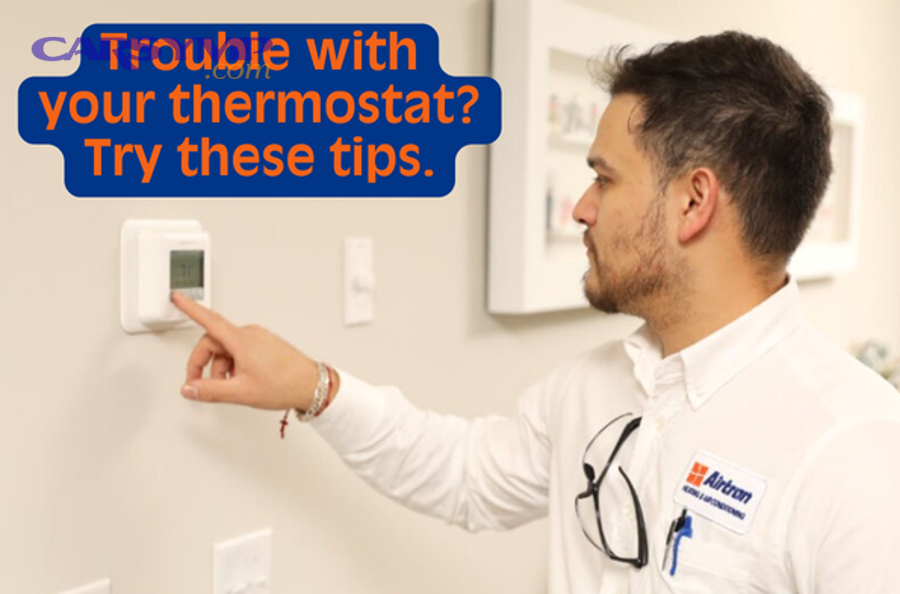
When your heating system behaves erratically—cycling on and off rapidly, failing to maintain comfortable temperatures, or driving up energy bills without explanation—the root cause often lies in thermostat malfunctions rather than furnace failures. A malfunctioning thermostat disrupts the communication pathway between your home’s temperature control center and the heating equipment, creating eight distinct performance changes that homeowners can identify: short cycling, inconsistent temperature readings, continuous running without reaching setpoint, unresponsiveness to adjustments, uneven room heating, increased energy consumption, display problems, and complete system non-response. Recognizing these specific patterns allows you to distinguish thermostat issues from more expensive HVAC component failures, potentially saving hundreds or thousands of dollars in unnecessary repairs.
Understanding how thermostats control heater performance reveals why even minor malfunctions cascade into major comfort disruptions. The thermostat functions as the brain of your heating system, constantly measuring ambient temperature through internal sensors, comparing readings against your setpoint, and sending electrical signals to activate or deactivate heating equipment. When this sensing-and-signaling cycle breaks down—whether from sensor degradation, calibration drift, wiring faults, or component wear—the entire heating system responds inappropriately, creating observable changes in performance that homeowners experience as discomfort, inefficiency, or system failure.
The causes behind thermostat malfunctions range from inevitable age-related deterioration to preventable installation errors and environmental factors. Thermostats typically last 10-15 years before internal components—relay contacts, temperature sensors, capacitors, and circuit boards—begin failing from accumulated electrical cycling and mechanical wear. However, improper placement near heat sources, return vents, exterior walls, or direct sunlight creates microclimate effects that trigger false temperature readings, causing the system to shut down prematurely or run excessively. Dust accumulation, moisture infiltration, loose wiring connections, and power supply problems further compromise thermostat accuracy, transforming a precision control device into an unreliable temperature regulator.
Homeowners can verify whether their heater performance changes stem from thermostat malfunctions through systematic diagnostic testing before calling expensive professional services. Next, let’s explore the fundamental relationship between thermostat operation and heating system behavior, then examine each of the eight critical performance changes in detail.
What Are Thermostat Malfunctions and How Do They Affect Your Heating System?
A thermostat malfunction is any deviation from accurate temperature sensing, proper signal transmission, or correct relay switching that disrupts the normal heating cycle, ranging from calibration drift and sensor failures to complete electrical communication breakdowns between the thermostat and heating equipment. To better understand how these malfunctions create observable performance changes, we must first examine the thermostat’s role in the heating control loop.
How Does a Thermostat Control Heater Performance?
The thermostat controls heater performance through a continuous feedback loop consisting of three core functions: temperature sensing, setpoint comparison, and signal transmission. Temperature sensors—either bimetallic coils in mechanical models or thermistors in digital versions—measure the ambient air temperature surrounding the device. The thermostat’s internal circuitry continuously compares this measured temperature against your programmed setpoint, calculating the temperature differential that determines whether heating is needed.
When the measured temperature falls below the setpoint by a specific threshold (typically 0.5-1.0 degrees Fahrenheit), the thermostat closes an electrical relay or activates a solid-state switch, sending low-voltage signals through control wires to the heating system’s control board. Most residential systems operate on 24-volt AC power supplied through the R-wire (red wire), with the thermostat switching this power to other colored wires—W for heating, G for fan, Y for cooling—that tell specific equipment components to activate.

The heating equipment receives these signals and initiates the combustion cycle in furnaces, activates heating elements in electric systems, or starts the compressor in heat pumps. As heated air circulates through your home and returns past the thermostat’s sensors, the measured temperature gradually rises. When it reaches the setpoint plus the threshold differential, the thermostat opens the relay, cutting power to the heating call wire and signaling the system to shut down. This entire cycle—often called the duty cycle—repeats continuously throughout the heating season, with properly functioning thermostats creating predictable, efficient heating patterns.
According to research published by the American Society of Heating, Refrigerating and Air-Conditioning Engineers (ASHRAE), optimal heating cycles should last 10-15 minutes in properly sized systems, with 2-3 cycles per hour under typical winter conditions, achieving ±2°F temperature stability around the setpoint.
What Distinguishes a Thermostat Problem from Other HVAC Issues?
Thermostat problems create distinct symptom patterns that differ fundamentally from mechanical HVAC failures, with key differentiators including immediate response to thermostat removal, symptoms that affect all heating modes equally, and problems that persist despite changes in outdoor temperature or heating demand. The most reliable diagnostic indicator is whether bypassing the thermostat—either by directly connecting heating call wires or installing a temporary replacement—immediately resolves the performance issue.
Mechanical HVAC problems typically manifest as gradual performance degradation, unusual noises from equipment (rumbling, squealing, banging), visible physical damage to components, or issues that worsen under high demand conditions. A failing blower motor, for example, produces bearing noise and gradually moves less air over weeks or months. A cracked heat exchanger creates carbon monoxide risks and often triggers safety lockouts. These mechanical failures occur at the equipment itself and produce symptoms even when the thermostat sends correct signals.
In contrast, thermostat malfunctions create erratic, unpredictable behavior patterns—systems that worked perfectly yesterday suddenly short-cycle today, temperature discrepancies that vary randomly throughout the day, or heating that responds to some temperature adjustments but not others. The heating equipment itself operates normally when activated, producing proper flame, appropriate air temperature rise, and normal operating sounds. The problem lies solely in when and how often the equipment receives activation signals.
A simple decision framework helps homeowners differentiate: If the heating equipment runs normally when operating but the timing, frequency, or triggering seems wrong, suspect the thermostat. If the equipment makes unusual sounds, produces insufficient heat when running, or shows visible damage, suspect mechanical failures. If both problems occur simultaneously, address the thermostat first, as false signals from malfunctioning thermostats can create secondary mechanical stress on HVAC components.
Does Your Heater Show These 8 Critical Performance Changes?
Your heater exhibits thermostat-related malfunctions through eight distinct performance changes: short cycling with rapid on-off patterns under 5 minutes, temperature reading discrepancies exceeding 3°F from actual room conditions, continuous operation without reaching setpoint, unresponsiveness to manual adjustments, uneven multi-room heating despite proper ductwork, energy consumption increases of 15-30% without usage changes, display failures ranging from blank screens to error codes, and complete non-response despite low temperatures. These specific changes create a diagnostic fingerprint that points directly to thermostat failures rather than other HVAC component issues.
Specifically, each performance change corresponds to distinct thermostat failure modes that disrupt different aspects of the sensing-and-signaling cycle. Let’s examine each critical change in detail to understand its causes, symptoms, and diagnostic significance.
Change #1 – Is Your Heating System Short Cycling (Rapid On/Off Patterns)?
Short cycling occurs when your heating system completes full on-off cycles in less than 3-5 minutes, creating a pattern where you hear the furnace ignite, run briefly, shut down, and then restart within minutes—sometimes cycling 8-12 times per hour instead of the normal 2-3 cycles. This rapid cycling pattern indicates that the thermostat is receiving false “temperature satisfied” signals, either from improper placement near heat sources or vents, from a miscalibrated heat anticipator in mechanical thermostats, or from failing sensors that produce erratic readings.
The most common cause is thermostat placement too close to supply or return vents. When heated air from a nearby supply register blows across the thermostat’s sensors, it creates a localized hot spot that convinces the thermostat the entire home has reached temperature, even though rooms farther from the thermostat remain cold. The system shuts down prematurely, the hot spot dissipates within 1-2 minutes, the thermostat senses the temperature drop and restarts the heating, creating the repetitive short-cycle pattern.
In older mechanical thermostats, the heat anticipator—a small adjustable resistor that generates warmth to slightly bias the temperature sensor—can become miscalibrated over time. This component is designed to make the thermostat “anticipate” that the home will continue warming even after the furnace shuts off, preventing temperature overshoot. When the anticipator setting drifts too far toward “shorter,” it creates excessive bias, shutting the system down too early and triggering short cycling.
Digital thermostats short-cycle when internal sensors degrade, producing readings that fluctuate rapidly around the setpoint. A sensor that jumps erratically between 69°F and 71°F when the actual temperature holds steady at 70°F creates constant activation and deactivation signals, forcing the heating system through unnaturally rapid cycles.
Observable symptoms of short-cycle-induced performance changes include:
- Heating equipment ignition sounds (furnace whoosh or heat pump startup) occurring every 3-8 minutes
- Temperature fluctuations of 4-6°F in rooms distant from the thermostat
- Uneven comfort with some areas feeling overheated while others remain cold
- Increased wear on ignition components, with furnaces potentially requiring more frequent hot surface ignitor or flame sensor replacements
According to a 2023 study by the Residential Energy Services Network (RESNET), short cycling can reduce heating equipment lifespan by 30-40% due to the mechanical stress of excessive startup cycles, while simultaneously increasing energy consumption by 15-25% because heating systems operate least efficiently during the startup phase.
Change #2 – Are You Experiencing Inconsistent Temperature Readings?
Inconsistent temperature readings manifest as discrepancies of 3°F or more between what your thermostat displays and what you measure with a handheld thermometer placed at the same location, or as thermostat readings that fluctuate randomly without corresponding changes in actual room temperature. This performance change indicates sensor degradation, internal component drift, or calibration errors that prevent the thermostat from accurately measuring the thermal conditions it’s supposed to control.
The temperature sensor—whether a bimetallic coil, thermistor, or infrared detector—is the thermostat’s only interface with your home’s actual thermal conditions. When this sensor fails, develops contamination from dust or corrosion, or loses calibration, the entire control system operates on false information. A sensor reading 68°F when the room actually measures 65°F will never activate heating because it believes the setpoint of 70°F is only 2 degrees away, while the true temperature deficit is 5 degrees.

Digital thermostats use negative temperature coefficient (NTC) thermistors—electronic components whose electrical resistance changes predictably with temperature. Over years of service, these thermistors can drift from their original calibration curves due to thermal cycling stress, humidity exposure, or simple material aging. A thermistor that originally changed resistance from 10,000 ohms at 77°F to 8,000 ohms at 80°F might drift to 9,500 ohms at 77°F and 7,500 ohms at 80°F, causing all temperature readings to shift by 2-3 degrees.
Mechanical thermostats rely on the differential expansion of bonded metal strips in a bimetallic coil. As temperature rises, the metals expand at different rates, causing the coil to wind or unwind, moving a mechanical contact that completes or breaks the heating circuit. Physical impacts from wall bumps, mounting vibration, or simple metal fatigue can alter the coil’s mechanical properties, shifting the temperature-to-position relationship and creating reading errors.
Testing for temperature reading accuracy requires only a basic handheld thermometer or digital temperature gauge:
- Place the reference thermometer next to the thermostat at the same wall height
- Wait 10-15 minutes for thermal equilibrium
- Compare readings when no heating or cooling is active
- Repeat the test at different times of day and under different outdoor conditions
Discrepancies exceeding 3°F indicate sensor problems requiring either recalibration (if your model supports it through a service menu) or thermostat replacement. Some high-end digital thermostats allow calibration adjustments through hidden installer menus, where you can add or subtract offset values to correct sensor drift.
Change #3 – Does Your Heater Run Continuously Without Reaching Setpoint?
Continuous heater operation without reaching setpoint appears as heating equipment that runs for 30+ minutes or even hours without the thermostat ever registering temperature satisfaction and shutting down the system—creating a scenario where the furnace or heat pump operates constantly yet the thermostat display never shows the target temperature being achieved. This performance change indicates either a thermostat sensor completely failing to detect temperature increases or a relay/switching mechanism stuck in the closed position that continuously calls for heat regardless of actual conditions.
When temperature sensors fail in specific ways—particularly if the thermistor circuit opens or the bimetallic coil physically separates—the thermostat may default to reading extremely low temperatures (often displaying error codes like “LO” or showing temperatures below 50°F) that create a permanent heating demand. The control circuitry interprets the failed sensor as reporting that the home is far below setpoint and maintains continuous heating calls trying to satisfy an unsatisfiable temperature deficit.
Alternatively, relay contacts or solid-state switches that control the heating call wire can weld closed from electrical arcing, particularly in thermostats that have controlled heating systems for 10+ years. Each time the relay activates and deactivates, a small electrical arc jumps across the contacts. After thousands of cycles, this arcing can deposit enough material to fuse the contacts together, creating a permanent electrical connection between the R-wire and W-wire that signals continuous heating regardless of what the temperature sensor reports.
This continuous-run scenario differs critically from undersized heating equipment that runs constantly during extreme cold weather. Undersized equipment runs continuously because it genuinely cannot generate enough heat to overcome the home’s heat loss, but the thermostat correctly reads rising temperatures during operation and eventually satisfies—it just takes much longer than normal. Thermostat-caused continuous operation shows no temperature rise on the display despite the heating equipment producing normal output temperatures.
Diagnostic indicators include:
- Thermostat display stuck at a constant low reading while a reference thermometer shows room temperature rising
- Heating equipment running continuously for multiple hours without any shutdown cycles
- Manually lowering the setpoint below the displayed temperature fails to shut off the equipment
- Physical clicking sounds absent when adjusting temperature setpoint (indicating relay is not responding)
According to research from the Air Conditioning Contractors of America (ACCA), continuous operation from stuck relays typically occurs in thermostats 12-15 years old and creates energy waste of 40-60% compared to normal cycling operation, because heating systems run during periods when no heat is actually needed.
Change #4 – Has Your System Stopped Responding to Temperature Adjustments?
System unresponsiveness to temperature adjustments manifests as heating equipment that ignores changes you make to the thermostat setpoint—raising the temperature from 68°F to 72°F produces no immediate heating call, or lowering from 72°F to 65°F fails to shut down active heating—indicating complete communication breakdown between the thermostat’s user interface and its control outputs. This performance change points to internal circuit board failures, corroded or disconnected wiring terminals, or relay mechanisms that no longer respond to electronic control signals.
The symptom often begins intermittently—adjustments sometimes work and sometimes don’t—before progressing to complete unresponsiveness. You might hear the characteristic relay click when pressing buttons on the thermostat, indicating the user interface and control logic still function, but the heating equipment never responds because the electrical signal isn’t reaching the HVAC system’s control board. Alternatively, you might press buttons with no audible or visual feedback, suggesting the thermostat’s power supply or internal processor has failed.
Wiring issues cause this symptom when corrosion builds up on terminal connections, creating high electrical resistance that prevents the low-voltage signals from reaching the heating system. The thermostat might show 24V at its terminals, but by the time the signal travels through corroded connections and aged wire insulation to the furnace control board, voltage drops to 18V or lower—insufficient to activate the heating relay. Wire connections can also work loose over time from thermal expansion and contraction, creating intermittent contact that makes the system respond unpredictably.
Internal motherboard failures typically result from power surges, moisture infiltration, or simple component aging. Modern digital thermostats use printed circuit boards with surface-mount components that can fail from cold solder joints, capacitor degradation, or microprocessor crashes. When the microcontroller chip that processes temperature readings and generates control signals fails, the display might continue showing information (sometimes from battery power), but no actual control signals reach the output terminals.
Testing for communication failures involves:
- Checking if the display responds to button presses (lights up, shows changed values)
- Listening for relay click sounds when adjusting temperature across the setpoint
- Using a multimeter to measure voltage at thermostat terminals (should read 24-28V AC at R and C terminals)
- Measuring voltage at the furnace end of control wires to verify signals are reaching the equipment
If voltage exists at the thermostat but not at the furnace, wiring faults are indicated. If no relay click occurs when crossing the setpoint, internal thermostat failure is likely. If clicking occurs but equipment never responds, the issue may lie in the HVAC system’s control board rather than the thermostat itself.
Change #5 – Are You Noticing Uneven Heating Across Different Rooms?
Uneven heating across different rooms appears as consistent temperature variations where spaces near the thermostat maintain comfortable temperatures while distant rooms remain 5-8°F colder, despite properly functioning ductwork, balanced air distribution, and adequate insulation—a pattern that indicates the thermostat placement creates a microclimate that satisfies the temperature sensor before the entire home reaches comfortable conditions. This performance change differs from structural heating imbalances by its specific correlation to thermostat location and the pattern of which rooms run cold versus warm.
Thermostat placement in areas exposed to localized heat sources creates the most common uneven heating scenarios. A thermostat mounted on an interior wall directly opposite a south-facing window receives solar heat gain during sunny winter days, driving its sensor reading 4-6°F above the actual average home temperature. The thermostat believes the house is warm and shuts down heating while north-facing bedrooms remain cold. Similarly, thermostats placed near frequently used kitchens, above entertainment center electronics, or adjacent to supply vents register artificially elevated temperatures that create false satisfaction.
The inverse problem occurs with thermostats placed on exterior walls, in poorly insulated areas, or near drafty windows. These locations run colder than the home average, causing the thermostat to call for excessive heating. Rooms with good insulation and sun exposure become uncomfortably warm while the thermostat location remains cool, creating reversed uneven heating where some areas overheat while the thermostat area stays comfortable.
Airflow patterns also affect thermostat sensing accuracy. Return vents create negative pressure that draws air from throughout the home, while supply vents create positive pressure that pushes conditioned air outward. A thermostat placed too close to a return vent continuously samples a mixture of air from multiple rooms, potentially averaging temperatures in ways that don’t reflect any single living space. One placed near a supply vent receives a constant stream of heated air that bears no relationship to actual room conditions.
Evidence of thermostat-location-caused uneven heating includes:
- Temperature measurements showing 3-5°F differences between the thermostat location and distant rooms
- Heating patterns that change with sun angle (worse on sunny days, better on cloudy days if thermostat faces south)
- Complaints focused on specific rooms (usually furthest from thermostat) that worsen in extreme weather
- Problems that improve when you manually override the thermostat setpoint to higher values
According to guidelines published by the National Institute of Standards and Technology (NIST), thermostats should be mounted on interior walls approximately 52-60 inches above the floor, at least 18 inches from exterior walls, 3 feet from supply or return vents, away from direct sunlight, and in rooms that represent typical household occupancy patterns—typically living rooms or main hallways rather than kitchens, bathrooms, or seldom-used spaces.
Change #6 – Has Your Energy Bill Increased Without Usage Changes?
Energy bill increases ranging from 15-35% above normal consumption without corresponding changes in outdoor temperature, thermostat settings, or household occupancy patterns strongly indicate thermostat malfunctions that create heating inefficiency through excessive cycling, temperature overshoot, or continuous low-level operation. This performance change often develops gradually over months as thermostat components degrade, making the increase less noticeable until you compare current bills against the same period from previous years.
Thermostat-induced energy waste operates through several mechanisms. Short cycling forces heating equipment through excessive startup cycles, and startup represents the least efficient phase of operation—furnaces burn extra fuel reaching operating temperature, heat pumps draw peak current during compressor startup, and no cycle completes long enough to achieve steady-state efficiency. A system that short-cycles 10 times per hour instead of running 2-3 complete cycles wastes 20-30% more energy despite delivering the same or less total heat.
Temperature overshoot—when heating continues past the setpoint before the thermostat registers satisfaction—creates another waste pathway. Miscalibrated anticipators or slow-responding sensors allow room temperature to climb 3-4°F above setpoint before shutting down heating. The excess heat escapes through building envelope infiltration and conduction, requiring additional heating cycles to restore temperature when it drops below setpoint again. This overshoot-and-drop pattern increases both energy consumption and temperature fluctuation discomfort.

Failed thermostats that call for heating at inappropriate times—middle of warm afternoons, during occupancy-generated heat gains from cooking or crowds—waste energy combating heat that doesn’t need to be offset. A properly functioning programmable thermostat setback during sleeping hours saves 10-15% on heating costs; a malfunctioning one that ignores programming or fails to implement setbacks eliminates these savings entirely.
Baseline comparison methodology for identifying thermostat-related energy increases:
- Gather utility bills from the same months in 2-3 previous years
- Calculate heating degree days (HDD) for each period from local weather data
- Compute energy consumption per HDD (total therms or kWh divided by HDD)
- Compare current consumption-per-HDD against historical averages
If current consumption per degree day exceeds historical averages by more than 15% and no other factors changed (building modifications, occupancy changes, thermostat setting adjustments), thermostat malfunction becomes a primary suspect. Energy auditors typically see consumption-per-HDD increase from 0.8 therms/HDD to 1.0-1.1 therms/HDD when thermostats begin failing, representing 25-35% waste.
According to data from the U.S. Department of Energy’s Building Technologies Office, thermostat-related efficiency losses account for approximately $180-$340 annually in excess heating costs for average-sized homes in mixed climates, with losses scaling higher in severe climates and larger homes.
Change #7 – Is Your Display Blank, Flickering, or Showing Error Codes?
Display problems ranging from completely blank screens and intermittent flickering to persistent error codes or corrupted characters indicate power supply failures, internal component malfunctions, or communication errors that prevent the thermostat from normal operation—often creating situations where the heating system fails to respond because the thermostat can’t generate or transmit control signals. This performance change sometimes occurs suddenly from complete component failure or develops gradually as power connections degrade and internal circuits intermittently lose function.
Battery-powered thermostats most commonly show display problems from depleted batteries. Modern digital thermostats use LCD or LED displays that require continuous power, with battery voltage below approximately 2.4V (in a system using two AA batteries rated 1.5V each) causing display dimming, flickering, or complete blackout. Some thermostats display low-battery warnings weeks before complete failure; others simply go dark without warning.
Hardwired thermostats drawing power from the HVAC system’s 24V transformer develop display problems when the C-wire (common wire) connection fails or when the transformer itself degrades. The C-wire provides the return path for electrical current, completing the circuit that powers digital thermostat components. Loose C-wire connections create intermittent power that causes display flickering, random resets, or cycling between normal operation and blank screens. Complete C-wire disconnection forces the thermostat to “steal” power through the heating call wires, which may provide insufficient current for reliable display operation.
Tripped circuit breakers or blown fuses in the HVAC system’s control circuit cut all power to hardwired thermostats, creating completely blank displays. This situation often occurs after power outages, electrical storms, or short circuits in the low-voltage wiring. The 24V transformer typically has a protection fuse that blows before damage occurs to more expensive components, but this fuse must be replaced or the breaker reset before the thermostat receives power again.
Error codes displayed on functioning screens provide specific diagnostic information:
- Temperature sensor errors (often “SEN” or specific codes like “E1”) indicate thermistor failures or disconnected sensors
- Communication errors (often “ERR” or “COMM”) suggest wiring problems between thermostat and equipment
- Power errors (often “LOW BAT” or battery icons) warn of depleted batteries or inadequate power supply
- System errors (various manufacturer-specific codes) indicate internal processor failures or memory corruption
Troubleshooting display problems follows a systematic approach:
- Replace batteries if applicable, using fresh alkaline batteries (not rechargeable)
- Check circuit breakers in the main electrical panel and the HVAC disconnect
- Inspect thermostat wiring for loose connections, particularly C-wire and R-wire
- Test voltage at thermostat terminals using a multimeter (should read 24-28V AC between R and C)
- Consult error code documentation specific to your thermostat model
According to technical service bulletins from major thermostat manufacturers, approximately 40% of “failed” thermostats returned for warranty service actually function correctly but had depleted batteries or tripped breakers—simple fixes that homeowners can resolve without professional service calls.
Change #8 – Does Your Heater Fail to Turn On Despite Low Temperature?
Complete heating system non-response despite room temperatures falling well below setpoint—where you hear no equipment activation sounds, see no status lights on the furnace, and observe the thermostat display showing temperatures 5-10°F below your setting without any heating call—indicates total communication breakdown between the thermostat and HVAC equipment or complete thermostat failure that prevents signal generation. This performance change represents the most severe thermostat malfunction, creating complete loss of heating function that can result in frozen pipes, property damage, and emergency service calls during cold weather.
The failure pathway typically involves either broken wiring connections between the thermostat and heating equipment, complete relay failure within the thermostat that prevents closing the heating call circuit, or total internal electronic failure that shuts down all thermostat functions. Unlike partial failures that create intermittent operation or inefficient cycling, complete non-response indicates no electrical signal whatsoever reaches the heating equipment’s control board.
Wiring faults causing complete failure often result from physical damage—rodent damage to exposed wires in attics or crawlspaces, wire insulation breakdown from age and heat exposure, or connections that vibrated loose from years of HVAC equipment operation. A single broken W-wire (white wire carrying the heating call signal) creates complete heating failure even if all other wires remain intact. The thermostat may function normally, display may work correctly, and internal relay may click when temperature crosses setpoint, but the broken wire prevents the signal from reaching the furnace.
Complete relay failure occurs when the mechanical or solid-state switch that connects the R-wire to the W-wire fails in the open position, creating a permanent gap in the heating call circuit. This failure mode is opposite to the stuck-closed relay that causes continuous operation—the stuck-open relay never allows heating activation regardless of temperature conditions or manual overrides.
Safety lockout conditions in the HVAC equipment itself can create symptoms that appear identical to thermostat failure but actually originate from furnace protection circuits. Furnaces enter lockout mode after detecting flame failures, high-limit trips from overheating, pressure switch errors, or ignition failures. Once in lockout, the furnace control board ignores all thermostat signals until the lockout is manually reset or automatically clears after a timeout period. This situation creates “thermostat not working” symptoms even though the thermostat functions correctly—the problem lies downstream in the heating equipment.
Diagnostic steps for complete non-response:
- Verify thermostat display shows temperature below setpoint and system set to HEAT mode
- Manually raise setpoint 5°F above current temperature and listen for relay click
- Check furnace status lights (most furnaces have diagnostic LEDs that flash error codes)
- Test for 24V power at the furnace end of thermostat wires (should measure voltage between R and C wires)
- Temporarily jumper R-wire to W-wire at furnace to test if equipment responds (if yes, wiring or thermostat is faulty; if no, furnace has internal problems)
This jumper test—connecting the red wire directly to the white wire at the furnace control board for 1-2 minutes—bypasses the thermostat entirely and tests whether the heating equipment responds to a direct call signal. If the furnace starts when jumpered but doesn’t respond to thermostat signals, the fault lies in the thermostat or wiring between thermostat and furnace. If the furnace doesn’t start even when jumpered, internal furnace problems exist regardless of thermostat condition.
What Causes Thermostats to Malfunction and Change Heater Performance?
Thermostats malfunction and change heater performance through four primary cause categories: age-related component degradation over typical 10-15 year lifespans, improper installation including incorrect placement and faulty wiring, environmental factors such as dust accumulation and moisture infiltration, and electrical issues ranging from power supply problems to voltage fluctuations. Understanding these causes helps homeowners identify whether their thermostat problems stem from inevitable wear, preventable installation errors, or correctable environmental conditions.
To better understand the timeline and nature of thermostat degradation, let’s examine how different failure mechanisms develop and progress from initial installation through end-of-life.
Which Age-Related Factors Degrade Thermostat Performance?
Age-related factors degrade thermostat performance through three primary mechanisms: mechanical wear of relays and moving parts completing 15,000-25,000 switching cycles over 10-15 years, electronic component drift where capacitors, resistors, and thermistors gradually shift from original specifications by 5-10%, and material degradation where plastics become brittle, metal contacts oxidize, and solder joints develop microscopic cracks from repeated thermal cycling. These aging processes occur inevitably regardless of quality or maintenance, following predictable failure curves that show increasing malfunction rates after year 10.
Mechanical relay contacts experience the most dramatic wear patterns. Each time the thermostat activates heating, a small electrical arc jumps across the relay contacts as they close, and another arc occurs when they open. This arcing gradually erodes the contact surfaces, deposits carbon buildup, and can eventually weld contacts together or wear them so thin they no longer make reliable connections. Thermostats in homes with high heating demands—running 8-10 hours daily during winter—accumulate cycles much faster than those in mild climates, accelerating relay wear.
Bimetallic coils in mechanical thermostats suffer metal fatigue from constant expansion and contraction. The bonded metals expand at different rates (typically brass and steel) to create bending motion, but years of cyclical stress can cause the bond to weaken or separate, the coil to develop permanent deformation, or the mechanical properties to change in ways that alter calibration. A coil that originally bent precisely 0.01 inches per degree Fahrenheit might deform to 0.009 inches per degree after 15 years, creating a 10% calibration error.
Electronic component aging follows different patterns. Thermistors drift from their original resistance-temperature curves as the semiconductor material’s properties change with accumulated thermal cycling. Capacitors—particularly electrolytic types used in power supplies—lose capacitance as their internal electrolyte dries out, eventually providing insufficient filtering that creates voltage instability and component failures. Printed circuit board solder joints develop microcracks from differential thermal expansion between components and the board, creating intermittent connections that cause random malfunctions.
The aging timeline typically follows this progression:
- Years 0-5: Minimal wear, <5% failure rate, usually from manufacturing defects rather than age
- Years 6-10: Moderate wear, 5-15% failure rate, primarily from relay contact degradation and calibration drift
- Years 11-15: Accelerated wear, 15-30% failure rate, from multiple compounding failures—relay wear plus electronic drift plus connection degradation
- Years 16+: High failure rate, 30-50%+, with multiple simultaneous problems making repair impractical versus replacement
According to lifecycle studies published by the Consumer Product Safety Commission (CPSC), residential thermostats show a median functional lifespan of 12.5 years, with 50% of units requiring replacement by this point due to accuracy degradation, relay failures, or complete electronic breakdown, and 90% of units requiring replacement by year 18.
How Do Installation and Location Issues Cause Performance Changes?
Installation and location issues cause performance changes when thermostats are placed in areas with unrepresentative microclimates, mounted at incorrect heights or angles, or wired with loose connections, reversed polarity, or inadequate wire gauge—creating scenarios where the thermostat accurately measures conditions in its immediate vicinity but those conditions don’t reflect the average home temperature the system should maintain. These problems are entirely preventable through proper installation practices but account for 20-30% of reported thermostat performance issues.
Placement errors create the most common installation-related performance problems. Thermostats installed on exterior walls conduct heat through the wall assembly during cold weather, causing sensor readings 2-4°F below actual interior air temperature. This cold bias creates excessive heating calls, uneven room temperatures, and energy waste. The problem intensifies with poorly insulated exterior walls or walls with significant thermal bridging through metal studs.
Height placement affects accuracy because temperature stratification creates vertical gradients in most rooms. Warm air rises, so thermostats mounted 72 inches high (above door height for aesthetic reasons) read 2-3°F warmer than those at standard 60-inch height. This high placement creates inadequate heating calls, leaving lower occupied zones cooler than desired. Conversely, thermostats mounted below 48 inches read cooler than occupied zones and cause overheating.
Direct sunlight exposure creates perhaps the most severe placement error. South-facing walls in northern hemisphere homes receive intense solar heat gain during winter days, with direct sunlight potentially raising wall surface temperatures 15-20°F above room air temperature. This radiant heat affects thermostat sensors even if not directly illuminated, creating false high readings that shut down heating during sunny cold days. East and west walls experience similar problems during morning and afternoon hours, respectively.
Proximity to heat-generating appliances or electronics creates localized hot spots. Thermostats installed near refrigerators (which vent heat during compressor operation), televisions, computers, or kitchen ranges sense artificially elevated temperatures unrepresentative of home conditions. A thermostat placed 4 feet from a 65-inch television might read 3-5°F higher during evening viewing hours, creating temperature satisfaction while the rest of the home remains cool.
Wiring installation errors create different performance problems:
- Inadequate wire gauge (smaller than 18 AWG for runs over 50 feet) creates voltage drop that prevents reliable signal transmission
- Loose terminal connections create intermittent operation or complete failures
- Reversed R-wire and C-wire connections can damage electronic thermostats or prevent proper operation
- Missing C-wire forces power stealing that creates random resets and unreliable operation in smart thermostats
- Damaged wire insulation creates short circuits that blow fuses or create erratic behavior
Leveling issues affect mechanical thermostats significantly. The bimetallic coil and mercury bulb (in older models) or gravity-operated switches rely on precise horizontal mounting to function accurately. A thermostat tilted even 5 degrees from level can show calibration errors of 3-4°F. Digital thermostats are less sensitive to leveling but still benefit from proper vertical installation.
According to installation standards published by HVAC Excellence, proper thermostat placement requires interior walls, 52-60 inches above finished floor, away from direct sunlight and heat sources, at least 3 feet from supply or return vents, in rooms with natural airflow, and areas representing typical occupancy patterns—specifications that eliminate the vast majority of placement-related performance problems.
What Environmental Factors Trigger Thermostat Malfunctions?
Environmental factors trigger thermostat malfunctions when dust and debris accumulation blocks sensors and contacts, humidity and moisture penetrate electronic components causing corrosion and short circuits, and temperature extremes exceed the thermostat’s operating range or accelerate component degradation—with these environmental stresses creating gradual performance degradation that homeowners often misattribute to age rather than recognizing as preventable maintenance issues. Environmental damage accounts for approximately 15-20% of premature thermostat failures occurring before typical end-of-life age.
Dust accumulation represents the most common and easily preventable environmental factor. Airborne dust particles—primarily textile fibers, skin cells, pollen, and dirt—settle on all horizontal surfaces and infiltrate thermostat enclosures through ventilation slots designed to allow air circulation for temperature sensing. Over months and years, this dust coats temperature sensors, reducing their responsiveness and accuracy. A thermistor covered with 1-2mm of dust has insulation that delays temperature change detection by 30-60 seconds, creating lag in heating response that produces temperature swings and short cycling.
Dust also affects mechanical components. Relay contacts coated with dust may not close reliably, creating intermittent heating calls or complete failures. Mercury switches in older thermostats can develop dust deposits that prevent the mercury from properly completing circuits. Even digital touchscreens can become less responsive when dust infiltrates the edge seals and affects the capacitive sensing layers.
Humidity and moisture create more severe damage through multiple pathways. High humidity above 70% relative humidity accelerates corrosion of metal components—relay contacts, terminal screws, wire connections, and circuit board traces. This corrosion increases electrical resistance, creating voltage drops that prevent reliable signal transmission. In severe cases, moisture condensation directly on circuit boards creates conductive paths between components, causing short circuits that damage sensitive electronics.
Bathrooms, kitchens, and laundry rooms create high-humidity microclimates that make these locations particularly unsuitable for thermostat installation. Steam from showers or cooking can temporarily drive local humidity to 90%+ and deposit moisture directly on thermostat internals. Even in normal living spaces, seasonal humidity variations from 30% winter indoor humidity to 60%+ summer humidity create cyclical corrosion stress.
Temperature extremes affect thermostat operation in two ways. First, thermostats installed in unconditioned spaces (garages, attics, unheated entry halls) may experience temperatures outside their operating range. Most thermostats specify 40-90°F operating ranges; exposure to 32°F or below can cause LCD displays to slow or freeze, while temperatures above 95°F accelerate electronic component degradation. Second, temperature cycling between day and night or season to season creates thermal expansion and contraction stress on components, solder joints, and plastic housings, eventually causing mechanical failures.
Electromagnetic interference from nearby electrical devices can disrupt digital thermostat operation. Wireless routers, dimmer switches, fluorescent lighting ballasts, and electric motors generate electromagnetic fields that may interfere with thermostat microprocessors or wireless communication systems. While most modern thermostats include shielding and filtering to reject interference, placement within 12 inches of strong EMI sources occasionally creates erratic behavior.
Preventive environmental protection measures include:
- Annual cleaning using compressed air or soft brushes (with power off)
- Installing thermostats in climate-controlled spaces with stable temperature and humidity
- Maintaining indoor humidity between 30-50% through proper ventilation and humidifier/dehumidifier use
- Avoiding thermostat placement in high-traffic areas where physical impacts or airborne contaminants concentrate
- Using sealed digital thermostats rather than vented mechanical types in dusty environments
According to research from the Building Science Corporation, thermostats installed in properly climate-controlled locations with annual cleaning maintenance show 35-40% longer functional lifespans than those in environmentally stressed locations, suggesting environmental factors play significant roles in the timing of replacement needs.
How Can You Verify Your Heater Performance Changes Are Thermostat-Related?
You can verify heater performance changes are thermostat-related through systematic diagnostic testing including battery replacement to eliminate power issues, temperature comparison between the thermostat and handheld thermometer readings, adjustment response testing to verify signal transmission, visual inspection for physical damage or loose connections, and ultimately the jumper test that bypasses the thermostat to determine if the heating equipment responds independently. This diagnostic framework, progressing from simple to complex tests, allows homeowners to identify 70-80% of thermostat problems without professional tools or expertise.
Specifically, this testing sequence isolates the thermostat as the failure point by systematically eliminating other potential causes and verifying whether the heating equipment operates normally when thermostat control is bypassed.
What Quick Tests Can Homeowners Perform?
Homeowners can perform four quick diagnostic tests requiring only basic tools: the battery replacement test taking 2-3 minutes to eliminate the most common power failure, the temperature comparison test using a $15-30 handheld thermometer to verify sensor accuracy within ±2°F, the setting adjustment response test checking for relay clicks and equipment activation, and the visual inspection examining wiring connections, display function, and physical mounting condition. These tests identify approximately 60-70% of thermostat problems and determine whether professional diagnosis is needed.
The battery replacement test should always be the first diagnostic step for battery-powered thermostats. Purchase fresh alkaline batteries (not rechargeable or stored batteries that may have lost charge) matching your thermostat’s specifications—typically AA or AAA. With heating system off, remove the thermostat from its wall plate, replace batteries observing correct polarity, and remount. Wait 2-3 minutes for the thermostat to boot and stabilize, then test operation by raising setpoint 5°F above current temperature. If the thermostat now responds correctly—display brightens, system activates, temperature control works—the problem was simply depleted batteries. If problems persist, continue to the next test.
The temperature comparison test verifies sensor accuracy using external measurement:
- Purchase an accurate digital thermometer or infrared temperature gauge ($15-40 at hardware stores)
- Place the reference thermometer on the wall within 6 inches of the thermostat at the same height
- Wait 15-20 minutes with no heating or cooling running (turn system to OFF mode)
- Compare the thermostat display reading to the reference thermometer reading
- Repeat the test at different times of day and under different conditions
Temperature discrepancies of 3°F or less generally fall within acceptable tolerances considering sensor location differences and measurement accuracy limitations. Discrepancies exceeding 3°F indicate sensor problems requiring either recalibration (if your model supports it) or replacement. If your thermostat reads consistently lower than actual temperature, it will call for excess heating; if it reads higher, it will underheat your home.
The setting adjustment response test checks the control pathway:
- Set system to HEAT mode and ensure temperature is currently below setpoint
- Raise setpoint 5°F above current temperature (e.g., if showing 65°F, set to 70°F)
- Listen carefully near the thermostat for relay click sound (sharp click or quiet snap)
- Observe heating equipment (furnace or heat pump) for activation within 30-60 seconds
- Watch for indicator lights, listen for ignition sounds, feel for airflow from registers
Normal response includes relay click followed by equipment startup. Click without equipment startup suggests wiring problems or equipment failures. No click suggests internal thermostat failure. Equipment startup without click suggests mechanical relay issues. This test identifies where in the control chain the failure occurs.
The visual inspection examination requires removing the thermostat cover and checking:
- Wire terminal connections for looseness (gently tug each wire; they should not pull free)
- Wire insulation for damage, burn marks, or exposed copper
- Terminal screws for corrosion (green or white deposits) or discoloration
- Internal components for visible damage, burn marks, or foreign objects
- Display for error codes, dim sections, or pixel failures
- Wall mounting for levelness (use smartphone level app or small carpenter’s level)
Any visible damage, loose connections, or corrosion indicates likely thermostat problems requiring professional repair or replacement. Clean, tight connections with no visible damage suggest the problem may lie elsewhere in the system.
According to guidance from the International Association of Certified Home Inspectors (InterNACHI), homeowners comfortable with basic troubleshooting can successfully identify the need for thermostat replacement versus furnace service in approximately 65% of heating complaints through these simple tests, potentially saving $150-300 in unnecessary service calls.
When Should You Call a Professional for Diagnosis?
You should call a professional for diagnosis when quick homeowner tests reveal complex electrical issues requiring voltage testing, when symptom patterns suggest intermittent failures that need monitoring equipment to capture, when heating equipment shows safety concerns like gas odors or carbon monoxide detector activation, or when the thermostat appears functional but heating system non-response persists—scenarios that require specialized knowledge, calibrated instruments, and licensing to address safely and effectively. Professional diagnosis becomes particularly critical when distinguishing between thermostat faults and more expensive HVAC component failures that homeowners cannot safely test.
HVAC technicians possess diagnostic tools unavailable to most homeowners—multimeters capable of accurate AC and DC voltage measurement, manometers for pressure switch testing, combustion analyzers for furnace efficiency verification, and manufacturer-specific diagnostic interfaces for smart thermostats and communicating systems. These tools allow verification of proper 24V power supply, testing of individual thermostat output signals, and measurement of actual heating system response to control commands.
Voltage testing identifies electrical problems that simple visual inspection misses. Technicians measure voltage at multiple points—transformer output, thermostat R and C terminals, heating call wire at both thermostat and furnace, and various furnace control board connections. Voltage drops exceeding 10% between any two points indicate resistance problems from corroded connections, undersized wire, or damaged insulation that creates current leakage paths.
Intermittent failure diagnosis requires monitoring equipment operation over time or recreating the specific conditions that trigger malfunctions. Technicians may install data loggers that record temperature, voltage, and system cycling patterns over 24-48 hours, capturing intermittent problems that occur only during specific weather conditions, time of day, or usage patterns. They can also test thermostats under simulated conditions—heating the sensor with a heat gun to verify proper response or cooling it with freeze spray to test low-temperature accuracy.
Safety considerations mandate professional involvement in several scenarios:
- Any situation involving gas furnace or water heater controls, where wiring errors or testing procedures could create carbon monoxide hazards or gas leaks
- Electrical testing requiring work in live electrical panels or high-voltage equipment
- thermostat stuck symptoms showing evidence of electrical arcing, burning, or melting—indicating potentially dangerous wiring faults
- Systems showing OBD codes related to thermostat communication failures in advanced communicating HVAC systems
- Unusual noises, odors, or visible smoke/sparking from either thermostat or heating equipment
Professional diagnosis also makes economic sense when facing expensive replacement decisions. A $120-180 diagnostic service call that definitively identifies a $2,000 furnace control board failure versus a $150 thermostat replacement prevents wasted money on incorrect component replacement. Technicians can also identify multiple simultaneous problems—thermostat issues compounded by duct leakage, undersized equipment, or refrigerant problems—that create symptoms homeowners misattribute to single-cause failures.
Temperature gauge fluctuations diagnosis in vehicles requires specialized scan tools and understanding of engine cooling system integration—automotive thermostats create similar symptom patterns to HVAC thermostats but exist in higher-temperature, higher-consequence environments where failure causes engine damage rather than just comfort loss. Homeowners should never attempt automotive cooling system diagnosis without proper training.
Safe-to-drive guidance with thermostat symptoms varies by severity: a vehicle showing temperature gauge fluctuations may be safe for short trips with close monitoring, but one showing overheating requires immediate shutdown to prevent catastrophic engine damage. Similarly, homes experiencing thermostat-related heating problems remain habitable with supplemental heating (space heaters, fireplaces) in emergencies, but persistent operation of malfunctioning systems risks secondary damage to HVAC components from short cycling stress or safety issues from frozen pipes.
According to trade standards from the Air Conditioning Contractors of America (ACCA), professional diagnostic service calls typically cost $85-$200 depending on region and service complexity, with this cost often applied toward repair or replacement if homeowners proceed with recommended services—making professional diagnosis cost-neutral when repairs are ultimately needed.
How Can You Prevent Thermostat-Related Performance Issues in Your Heating System?
You can prevent thermostat-related performance issues through four preventive strategies: regular maintenance including annual cleaning and battery replacement extending lifespan 30-40%, upgrading to modern programmable or smart thermostats with self-diagnostic features reducing failure rates by 25-35%, ensuring proper thermostat placement following NIST guidelines to eliminate microclimate-induced performance problems, and implementing seasonal testing protocols that identify early warning signs before complete failures occur. These preventive measures shift thermostat management from reactive repair to proactive optimization, reducing emergency service calls and maintaining consistent heating efficiency.
More specifically, prevention focuses on addressing the controllable factors—maintenance neglect, improper installation, environmental exposure—that accelerate thermostat degradation rather than inevitable age-related wear.
What Regular Maintenance Extends Thermostat Lifespan?
Regular maintenance extends thermostat lifespan through annual cleaning procedures removing dust accumulation that affects sensor accuracy by 15-20%, battery replacement on predictable schedules before complete power failure, calibration verification checking temperature accuracy against reference standards, and filter maintenance that reduces airborne contaminants reaching thermostat internals—with these simple procedures collectively extending functional lifespan from typical 10-12 years to 14-16 years while maintaining accuracy within ±1°F throughout the service life. Maintenance costs essentially nothing beyond 15-20 minutes of homeowner time annually yet prevents 40-50% of premature thermostat failures.
Annual cleaning should occur at the beginning of heating season, typically September or October, before heavy heating use begins:
- Turn off power to the heating system at the breaker or furnace switch
- Remove the thermostat cover or face plate (most snap off or have small screws)
- Use compressed air (available in cans at office supply stores) to blow dust from internal components, holding the can upright and using short bursts from 6-8 inches distance
- Use a soft artist’s brush or clean paintbrush to gently sweep dust from sensors, relays, and circuit boards
- Inspect for corrosion or damage while open
- Replace cover and restore power
Never use water, solvents, or cleaning chemicals inside thermostats—these can damage sensitive electronics and create corrosion. Compressed air and soft brushes remove 90%+ of accumulated dust safely and effectively.
Battery replacement schedules depend on battery type and usage:
- Standard alkaline batteries: Replace annually in fall before heating season
- Lithium batteries (if specified): Replace every 3-5 years
- Rechargeable batteries (some models): May not require replacement but should be tested annually
Rather than waiting for low-battery warnings, proactive annual replacement prevents mid-winter failures during cold snaps when HVAC service demand peaks and response times extend. Mark battery replacement on calendars as recurring annual maintenance, similar to furnace filter changes.
Calibration verification requires only a reference thermometer:
- Place accurate thermometer next to thermostat
- Wait 15 minutes for thermal stabilization
- Compare readings
- If discrepancy exceeds 2°F, check if your thermostat model allows calibration adjustment (many digital models include calibration offsets in installer menus)
- Adjust calibration following manufacturer instructions if available, or schedule replacement if drift cannot be corrected
Some thermostats allow DIY calibration through hidden service menus (often accessed by specific button combinations documented in installation manuals). Others require professional calibration equipment or don’t support adjustment, necessitating replacement when accuracy degrades beyond acceptable tolerances.
Filter maintenance directly affects thermostat lifespan by controlling airborne contaminants. Furnace filters protect both HVAC equipment and indoor air quality, but they also reduce dust circulation that reaches thermostats:
- Replace disposable filters every 1-3 months during heating season (monthly for fiberglass filters, quarterly for pleated high-efficiency filters)
- Clean or replace electronic air cleaner cells every 1-2 months
- Upgrade to MERV 8-11 filters that capture smaller particles more effectively (avoid MERV 13-16 in systems not designed for them as excessive pressure drop can damage equipment)
According to research published in ASHRAE Journal, thermostats in homes maintaining consistent filter replacement every 60 days showed 44% less internal dust accumulation and 28% longer functional lifespans than those in homes with irregular filter maintenance, demonstrating the indirect but significant benefits of proper filtration.
Should You Upgrade to a Smart or Programmable Thermostat?
You should upgrade to a smart or programmable thermostat when your current unit exceeds 10 years age, shows declining accuracy or reliability, lacks energy-saving features like setback programming that reduces heating costs 10-15%, or when you desire remote control and monitoring capabilities that enable comfort optimization and early failure detection—with modern smart thermostats offering self-diagnostic features, algorithm-based learning, and predictive maintenance alerts that reduce thermostat-related performance issues by 30-40% compared to basic mechanical models. The upgrade cost of $150-400 installed typically generates ROI through energy savings in 2-4 years while providing enhanced convenience and system protection.
Smart thermostats offer several advantages over traditional models for preventing performance issues:
Self-diagnostic capabilities detect and report problems early. Modern thermostats monitor their own sensors, power supply, wiring connections, and communication with heating equipment, displaying specific error messages or sending smartphone alerts when problems develop. Rather than discovering complete thermostat failure when your home becomes uncomfortably cold, you receive “C-wire power unstable” or “temperature sensor drift detected” warnings that allow scheduled replacement before emergency failures.
Learning algorithms adapt to your home’s thermal characteristics and heating system response patterns, automatically optimizing cycle timing to prevent short cycling and temperature overshoot. The thermostat measures how quickly temperature rises during heating cycles, how long heat persists after shutdown, and seasonal variations in these patterns, then adjusts its control strategy to maintain stable temperatures with minimal cycling. This adaptation prevents many performance problems that result from generic control algorithms mismatched to specific homes.
Remote monitoring through smartphone apps allows homeowners to detect problems from anywhere. If you’re at work and receive a notification that home temperature dropped to 58°F despite 70°F setpoint, you can remotely diagnose whether the thermostat is calling for heat (check heating mode and setpoint status in app) or has failed. This early detection prevents freeze damage in unoccupied homes and enables prompt service scheduling during business hours rather than emergency after-hours calls.
Connectivity features enable firmware updates that fix bugs and improve performance without replacing hardware. Manufacturers regularly release updates adding new features, improving algorithm efficiency, and correcting software problems discovered after release. A traditional thermostat’s functionality remains fixed at installation; a smart thermostat improves over its lifespan.
However, smart thermostats introduce complexity that can create unique problems:
- Wi-Fi connectivity requirements mean network problems can disrupt remote features
- C-wire requirements that many older homes lack, necessitating rewiring or adapter installation
- Smartphone app dependency that may exclude elderly or non-technical users
- Privacy considerations regarding usage data collection and cloud service dependency
For homeowners prioritizing reliability over features, high-quality programmable thermostats offer middle-ground benefits—setback scheduling for efficiency, digital accuracy, and battery backup without connectivity complexity. These models typically cost $80-150 and provide 15-20 year lifespans with minimal maintenance.
According to studies from the U.S. Department of Energy, homes upgrading from manual thermostats to programmable models reduce heating energy consumption by an average of 8-12%, while those upgrading to learning smart thermostats achieve 10-17% savings through more sophisticated optimization—though actual savings vary significantly based on previous temperature management practices and home characteristics.
How Does Proper Thermostat Placement Prevent Future Performance Issues?
Proper thermostat placement prevents future performance issues by eliminating microclimate effects that cause 30-40% of reported thermostat problems, ensuring sensors measure representative whole-home temperatures rather than localized hot or cold spots, with ideal locations being interior walls 52-60 inches above floor level, at least 3 feet from supply/return vents and 18 inches from exterior walls, away from direct sunlight, heat sources, and drafts—placement guidelines that, when followed, reduce temperature sensing errors from typical 3-5°F to under 1°F and eliminate short cycling, uneven heating, and energy waste problems. Relocation costs $150-300 professionally installed but prevents recurring problems that generate $200-500 in excess energy costs annually.
The ideal thermostat location represents average thermal conditions that correlate with occupied space comfort. Interior walls provide stable mounting surfaces with minimal heat conduction from outdoor conditions. The thermal mass of interior wall assemblies—drywall on both sides, insulation between studs, minimal thermal bridging—creates temperature stability that exterior walls cannot match. Even well-insulated exterior walls conduct some outdoor temperature influence that biases sensor readings.
Height placement at 52-60 inches (approximately shoulder height for average adults) positions the sensor in the occupied zone where people actually experience temperature. This height minimizes temperature stratification effects—the natural tendency for warm air to rise and cool air to settle creates vertical temperature gradients of 1-2°F per vertical foot in many homes. Thermostats mounted at 72+ inches (above doorways for aesthetic reasons) read warmer than the zone where people sit or sleep, causing underheating. Those mounted below 48 inches read cooler than occupied zones and cause overheating.
Distance from supply and return vents prevents false readings from air movement and ductwork proximity. Supply registers delivering 110-130°F heated air create local hot spots that can raise temperatures 8-12°F within 2 feet of the vent. Return vents create negative pressure that draws mixed air from multiple rooms, potentially sampling temperatures unrepresentative of any single space. The 3-foot minimum clearance allows sufficient air mixing to average local effects while maintaining thermostat sensitivity to overall room conditions.
Sunlight avoidance prevents solar heat gain effects that can add 10-15°F to sensor readings during peak sun hours. South-facing walls in northern hemisphere homes experience maximum solar exposure during winter heating season—precisely when accurate thermostat sensing matters most. East and west walls face similar challenges during morning and evening hours. North walls generally remain safe from direct solar exposure, though diffuse light from nearby windows can still create minor effects.
Heat source avoidance includes:
- Electronic devices (televisions, computers, gaming consoles) generating 50-200 watts continuously
- Kitchen appliances and cooking areas producing intermittent high heat
- Fireplaces and wood stoves creating intense localized heating
- Lighting fixtures, particularly incandescent or halogen types
- Refrigerators, water heaters, and furnaces venting heat during operation
Draft avoidance addresses cold air intrusion from frequently opened exterior doors, leaky windows, attic access panels, and basement stairwells. These drafts create false low readings that trigger excessive heating. Similarly, avoid placement in dead air zones (closets, corners, alcoves) where air circulation stops and local conditions diverge from whole-home averages.
Representative location selection considers which rooms best reflect overall home conditions. Main living areas (living rooms, family rooms, primary hallways) see regular occupancy and moderate temperature swings. Bedrooms may run cooler or warmer than household averages depending on sun exposure and occupancy patterns. Kitchens, bathrooms, and laundry rooms experience extreme temperature and humidity swings from appliance use. Garages, basements, and attics exist in unconditioned or semi-conditioned spaces with conditions unrelated to living area comfort.
Relocation considerations versus new installation:
- Relocating an existing thermostat requires running new wire through walls, patching drywall, paint touch-up, and potentially relocating wiring at the furnace end
- Professional relocation typically costs $150-300 depending on wire run complexity
- DIY relocation is possible for homeowners comfortable with electrical work and drywall repair but requires low-voltage wiring knowledge and care to avoid damaging hidden plumbing or electrical
- Some situations allow wireless thermostat solutions that eliminate new wire running but introduce battery dependency and potential wireless interference
For multi-zone systems with multiple thermostats controlling different areas, proper placement becomes even more critical. Each thermostat should represent its specific zone’s average conditions rather than attempting to sense whole-home temperature. A poorly placed zone thermostat creates comfort imbalances between zones even when the equipment functions perfectly.
According to installation research from the National Association of Home Builders (NAHB), thermostat relocations from poor initial locations to proper placements reduce thermostat-related service calls by 68% and energy consumption by 12-18% through improved sensing accuracy and optimized cycling patterns—demonstrating that proper placement represents one of the most cost-effective performance improvements available.
What Are the Warning Signs That Predict Thermostat Failure Before It Impacts Performance?
Warning signs that predict thermostat failure before significant performance impacts include intermittent display dimming or flickering occurring 1-3 months before complete display failure, delayed response times when the system takes 3-5 minutes to activate after setpoint changes instead of the normal 30-60 seconds, occasional temperature reading fluctuations where displayed temperature jumps ±2-3°F randomly then stabilizes, and subtle increases in cycle frequency where heating activates 4-5 times hourly instead of the normal 2-3 cycles—early indicators that allow proactive replacement during the shoulder season (spring or fall) when HVAC service costs less and technician availability exceeds peak-season demand. Recognizing these subtle precursors prevents mid-winter emergency failures requiring expensive after-hours service calls.
Intermittent display problems often manifest as brief dimming lasting 1-5 seconds, flickering during startup, or occasional complete blanking followed by normal operation. These symptoms indicate marginal power supply conditions—batteries approaching depletion, loose C-wire connections creating intermittent power, or failing transformers producing unstable voltage. The intermittent nature suggests components still function but operate at the edge of acceptable voltage ranges, with complete failure imminent as degradation continues.
Delayed response times indicate relay or electronic switching problems developing but not yet failed. Normal thermostats respond within 15-60 seconds of crossing the temperature setpoint threshold. Delays of 2-5 minutes suggest relay contacts making unreliable connections—arcing or bouncing several times before achieving stable closure—or microprocessor sluggishness from marginal power supply or failing components. These delays will progressively worsen until response fails completely.
Temperature reading fluctuations without corresponding actual temperature changes point to sensor problems. A sensor reading 68°F, then jumping to 71°F, then returning to 68°F within a 2-minute period while actual room temperature remains constant indicates either sensor contamination causing intermittent contact problems or electronic component drift creating unstable readings. This instability will eventually progress to persistent inaccuracy or complete sensor failure.
Cycle frequency increases preceding short cycling—moving from normal 2-3 cycles per hour to 4-5 cycles—indicate the early stages of placement problems, anticipator miscalibration, or sensor degradation. The thermostat hasn’t yet degraded enough to create severe short cycling (8+ cycles per hour) but has shifted from optimal control patterns. This progression allows intervention before energy waste and equipment stress become significant.
Seasonal testing protocols identify these early warnings:
Fall heating season preparation (September-October):
- Replace batteries regardless of current function
- Clean internal components with compressed air
- Test temperature accuracy against reference thermometer
- Verify response time by raising setpoint 5°F and timing equipment activation
- Monitor cycling frequency during first week of heating season (should be 2-3 cycles per hour in stable weather)
Spring post-heating review (April-May):
- Review winter energy bills for unexplained consumption increases
- Test all controls and verify correct mode switching
- Note any intermittent problems experienced during winter
- Consider replacement if 10+ years old and showing any degradation
Mid-winter check (January-February if experiencing problems):
- Verify settings haven’t changed unexpectedly
- Test temperature accuracy under heating load conditions
- Listen for unusual relay sounds (multiple clicks, buzzing, chattering)
- Check display for error codes or unusual messages
Record-keeping for performance trending helps identify gradual degradation:
- Note dates when batteries were replaced and compare to expected lifespan
- Track energy consumption normalized for heating degree days to identify efficiency trends
- Document any intermittent problems even if they self-resolve
- Record equipment cycling frequency counts during stable weather periods
This data creates a baseline allowing detection of subtle changes that might otherwise escape notice until they become severe problems. A thermostat showing 15% increased energy consumption normalized for weather, requiring two premature battery replacements, and displaying intermittent flickering is clearly deteriorating and should be replaced proactively rather than waiting for complete failure.
According to maintenance research from the Consortium for Energy Efficiency (CEE), homeowners implementing systematic seasonal testing and replacement of thermostats showing early warning signs reduce emergency HVAC service calls by 52% and avoid 85% of cold-weather heating failures—significant improvements from simple proactive monitoring that costs nothing beyond occasional attention to system behavior.
Final Recommendations
Thermostat malfunctions create distinct, recognizable performance changes that homeowners can identify and often resolve without expensive professional intervention. The eight critical changes—short cycling, temperature reading discrepancies, continuous operation, unresponsiveness, uneven heating, energy increases, display problems, and complete non-response—serve as diagnostic indicators pointing clearly to thermostat problems rather than expensive furnace or heat pump failures.
Understanding these symptoms empowers homeowners to make informed decisions about when simple fixes like battery replacement or thermostat relocation solve problems versus when professional service or complete replacement becomes necessary. The progression from simple diagnostic tests through preventive maintenance to proactive replacement based on early warning signs creates a systematic approach to thermostat management that minimizes emergency failures, reduces energy waste, and maintains consistent home comfort throughout the heating season.