


The TPMS warning light turns on when your Tire Pressure Monitoring System detects that one or more tires are at least 25% below — or significantly above — the manufacturer’s recommended PSI. This federal safety standard, mandatory on all U.S. vehicles since 2008, exists to alert drivers before an underinflated or overinflated tire leads to a blowout, poor handling, or accelerated tread wear. In most cases, the fix is straightforward: check your pressure, inflate to the correct PSI, and the light resets on its own. But not always.
The behavior of the light itself tells you a great deal about the severity of the problem. A solid, steady warning light almost always points to a tire pressure issue — one or more tires are outside the safe range. A flashing light, however, signals something different entirely: a fault within the TPMS system itself, such as a dead sensor battery or a module communication error. Knowing which pattern you’re dealing with is the first step toward diagnosing the problem correctly.
Beyond the light pattern, the root cause matters enormously — because different causes require completely different fixes. Low tire pressure from a slow puncture needs patching. A light triggered purely by cold weather may resolve itself as the day warms up. A dead sensor battery requires professional replacement. Treating every TPMS alert the same way — by simply adding air — leads to frustration when the light stays on despite correct inflation.
The seven causes covered in this article represent every common reason drivers encounter a TPMS warning light, from the mundane to the mechanical. Each cause is paired with a specific, actionable fix so you can diagnose the problem accurately, resolve it efficiently, and understand when a DIY approach is enough versus when you need a professional. To begin, it helps to understand exactly what the TPMS warning light is and what it’s actually measuring.
What Is the TPMS Warning Light and What Does It Mean When It Comes On?
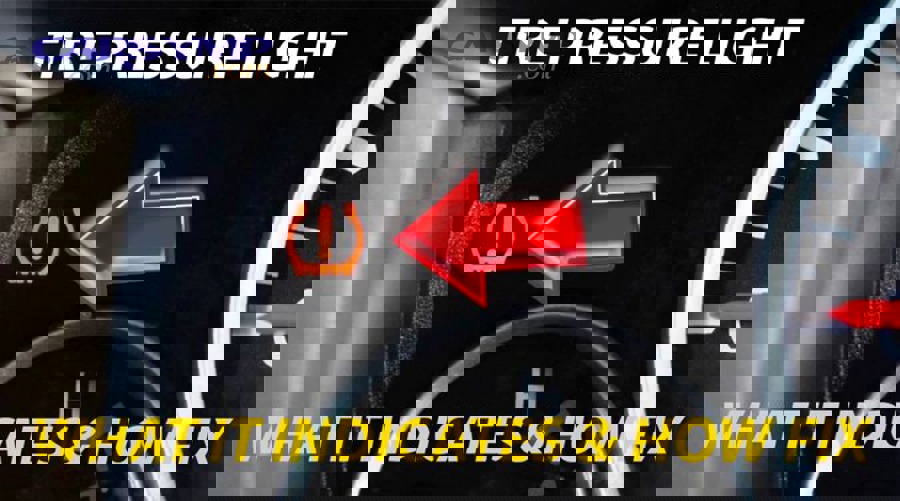
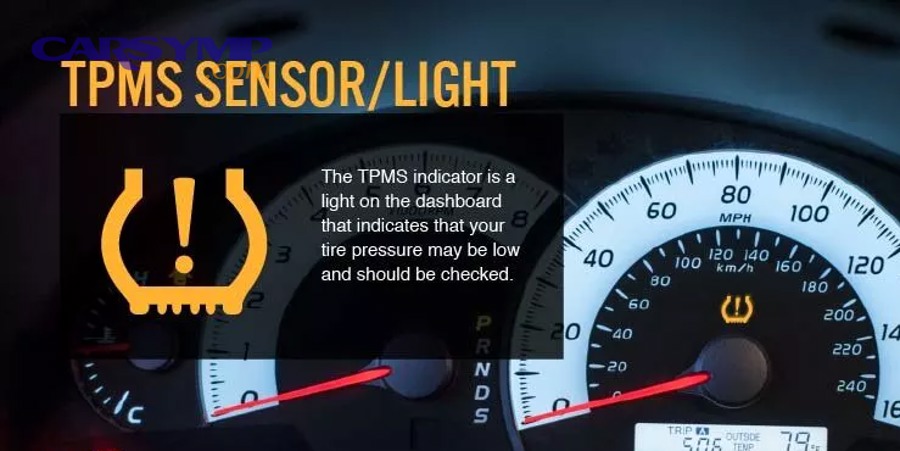
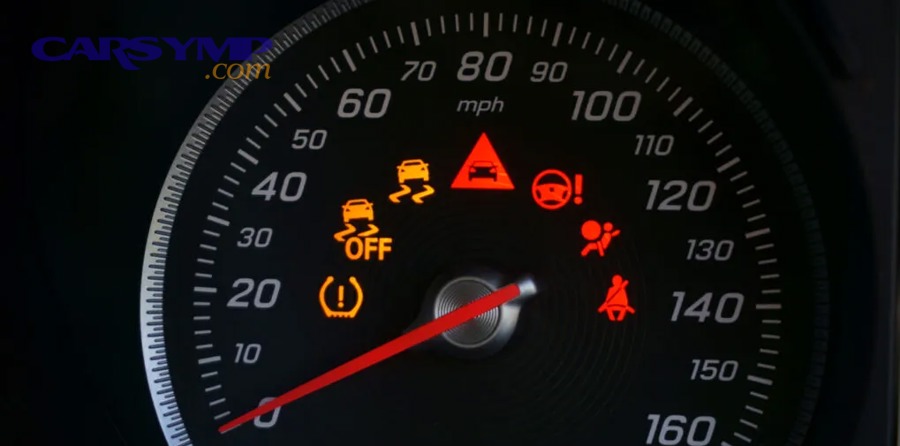
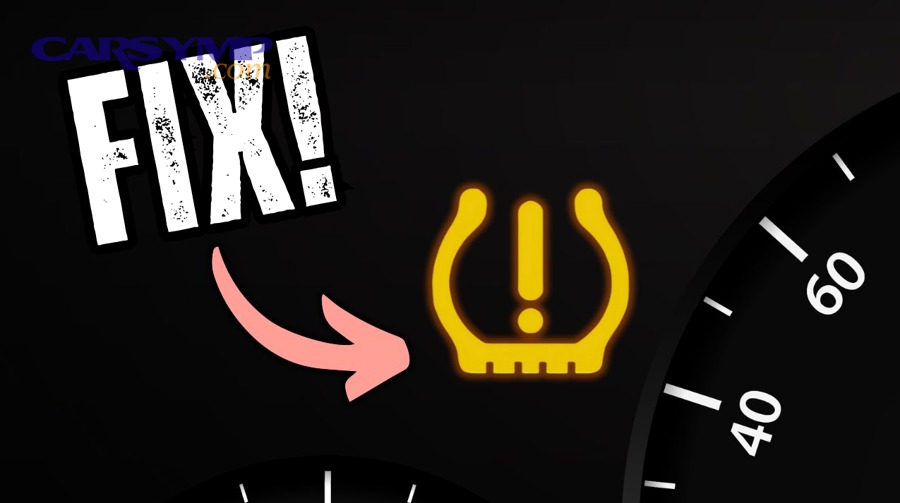
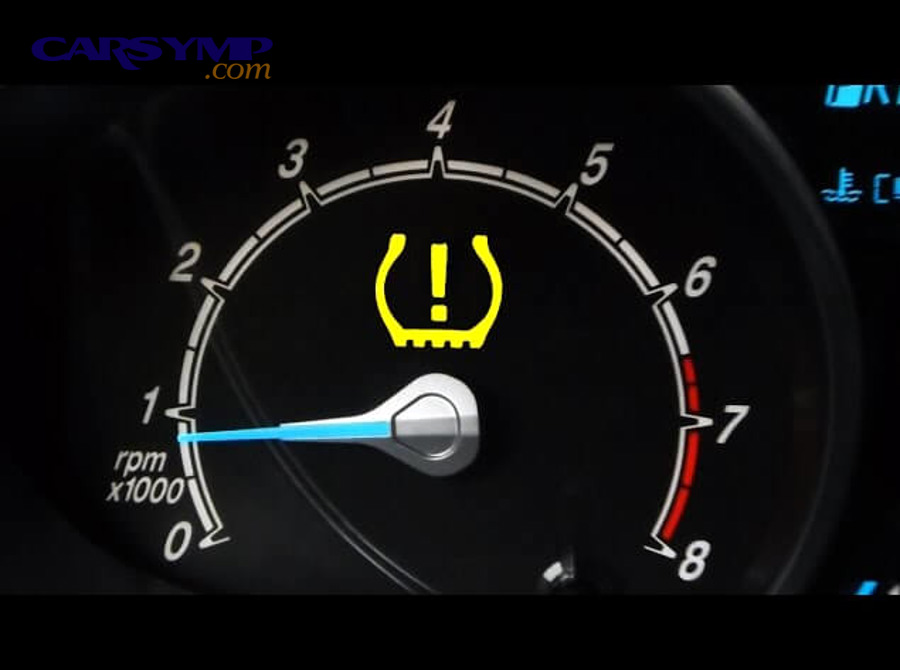
The TPMS warning light is a dashboard safety indicator — shaped like a horseshoe cross-section of a tire with an exclamation point in the center — that activates when one or more tires deviate significantly from the manufacturer’s recommended inflation pressure.
Specifically, U.S. federal law (TREAD Act, 2000) requires all passenger vehicles manufactured after September 2007 to be equipped with a TPMS that triggers this light when any tire reaches 25% below the recommended PSI. That threshold exists because tire performance degrades significantly at that pressure — grip, fuel efficiency, and structural integrity are all compromised before a driver would typically notice any handling change. The system uses sensors mounted inside each wheel (or, in some vehicles, the anti-lock braking system) to continuously monitor pressure and transmit data to the vehicle’s onboard computer. When pressure falls outside the acceptable range, the ECU activates the warning symbol on the instrument cluster.
It is important to understand that the TPMS warning light is an alert threshold system, not a real-time pressure gauge. Some vehicles with direct TPMS do display individual tire PSI on the dashboard screen — but the warning light itself only activates at a defined danger level, not the moment pressure begins to drop. This means a tire can already be meaningfully underinflated before the light appears, which is why monthly manual pressure checks remain essential even when your TPMS is functioning perfectly.
Is It Safe to Drive With the TPMS Warning Light On?
Yes, driving a short distance with the TPMS warning light on is generally acceptable, but continuing to drive without checking your tire pressure as soon as safely possible is not recommended for at least three reasons: risk of blowout, accelerated tire damage, and reduced vehicle control.
The most critical concern is structural tire failure. When a tire is significantly underinflated, the sidewall flexes excessively with every rotation, generating heat that can break down the tire’s internal structure rapidly. At highway speeds, this process accelerates dramatically, and a sudden blowout — particularly on a front tire — can cause loss of steering control. The second concern is tire damage cost: an underinflated tire driven even a few miles can suffer sidewall damage that makes the tire unrepairable, turning a simple top-off into a full replacement. Third, underinflated tires increase rolling resistance, meaning your engine works harder and fuel consumption rises measurably — typically 0.2% for every 1 PSI drop across all four tires, according to the U.S. Department of Energy.
What to do immediately:
- Pull over safely when traffic allows — do not brake suddenly
- At highway speeds, grip the steering wheel firmly before slowing (in case of blowout)
- Use a tire pressure gauge to check all four tires and the spare
- Inflate any low tires to the PSI listed on the driver’s door jamb sticker
- Do not rely on the tire sidewall for recommended pressure — that number is the tire’s maximum, not the vehicle’s specification
What Does a Flashing TPMS Light Mean Compared to a Solid Light?
A solid TPMS light means a tire pressure issue; a flashing TPMS light means a system fault. These two conditions require completely different responses, and confusing them is one of the most common TPMS diagnostic mistakes drivers make.
The table below summarizes the three main TPMS light behavior patterns, their likely causes, and the correct action for each:
| Light Behavior | Likely Meaning | Recommended Action |
|---|---|---|
| Solid, stays on | One or more tires are under or over-inflated | Check and adjust all tire pressures immediately |
| Flashes 60–90 sec on startup, then stays on | TPMS system fault — sensor battery, damaged sensor, or module error | Schedule TPMS diagnostic at a repair shop |
| Flashes 1 sec ON / 3 sec OFF continuously | Onboard computer communication error | Dealership service required — cannot be resolved with a reset |
The flashing pattern distinction matters because if your TPMS has a system fault, it is no longer actively monitoring your tire pressure. That means the light will stop warning you if a tire genuinely goes low — leaving you with a false sense of security. A flashing TPMS light should always be treated as a priority repair, not an annoyance to ignore.
What Are the Most Common Causes of the TPMS Warning Light Turning On?
There are 7 main causes of the TPMS warning light activating: low tire pressure, temperature change, dead sensor battery, faulty sensor, overinflation, improper post-rotation reset, and incompatible tires — classified based on whether the root cause is pressure-related or system-related.
Understanding which category your situation falls into is the most efficient path to a correct fix. Pressure-related causes (causes 1, 2, and 5) are typically DIY-resolvable in under ten minutes with a quality tire gauge. System-related causes (causes 3, 4, 6, and 7) may require professional tire pressure monitoring system service, specialized diagnostic tools, or sensor replacement. The sections below address each cause individually with its corresponding fix.
Cause 1 — Is Low Tire Pressure the Most Common Reason the TPMS Light Comes On?
Yes, low tire pressure is the most common reason the TPMS light comes on because normal air permeation through rubber, minor valve stem leaks, and undetected punctures all cause gradual pressure loss that accumulates over weeks and months.
Every tire loses a small amount of pressure naturally — typically 1 to 3 PSI per month under normal conditions — simply because air molecules permeate slowly through the rubber compound. This means that a tire inflated correctly in summer can be noticeably underinflated by winter without a single puncture or external event. Add in the possibility of a slow nail puncture (which can cause a tire to lose pressure over days rather than instantly) or a mildly damaged valve stem, and low pressure becomes a near-constant maintenance challenge.
How to fix it:
- Purchase a reliable digital tire pressure gauge (more accurate than the stick-style gauge included with many vehicles)
- Check tire pressure when tires are cold — meaning the vehicle has been parked for at least three hours and driven fewer than one mile
- Locate the correct PSI on the driver’s door jamb sticker or in the owner’s manual
- Remove the valve stem cap, press the gauge firmly onto the valve, and read the PSI
- Add air with a compressor until you reach the target PSI — fill slightly above if checking in cold weather, as pressure will rise slightly once driving begins
- Recheck each tire after inflating and replace all valve caps
- Drive the vehicle — the TPMS light should extinguish within a minute or two once the sensors register the corrected pressure
Cause 2 — Can Cold or Hot Weather Trigger the TPMS Warning Light?
Yes, temperature changes can trigger the TPMS warning light because air pressure inside tires is directly tied to ambient temperature — cold air contracts and hot air expands, shifting PSI without any air entering or leaving the tire.
The physics principle at work is Gay-Lussac’s Law: pressure is proportional to temperature when volume remains constant. In practical terms, tire pressure drops approximately 1 to 2 PSI for every 10°F decrease in ambient temperature. This means a tire properly inflated at 35 PSI on a 70°F afternoon can read as low as 31–33 PSI on a 30°F morning — potentially enough to cross the TPMS alert threshold if that tire was already near the minimum. This explains the common experience of a TPMS light appearing overnight in autumn or winter and then turning off as the day warms and the tire pressure rebounds.
How to fix it:
- Top off tire pressure on cold mornings, slightly above the door-jamb specification (no more than 2–3 PSI over) to provide a buffer against morning cold
- If the light appeared due to overnight temperature drop and turns off as the day warms, still check and adjust pressure — the light’s temporary appearance indicates you were operating near the lower tolerance threshold
- If the light stays on even after the car warms up, perform a full pressure check — the weather may have revealed a tire that was already marginally underinflated
Cause 3 — Can a Dead or Failing TPMS Sensor Battery Cause the Warning Light?
Yes, a failing or dead TPMS sensor battery can trigger the warning light because each wireless sensor contains a non-replaceable internal battery with a finite lifespan, and as that battery weakens, the sensor begins transmitting unreliable or absent pressure data to the vehicle’s ECU.
TPMS sensor batteries typically last between 5 and 10 years, depending on climate (cold shortens battery life), driving frequency (more wheel rotation = more sensor transmissions = faster drain), and sensor design. Because the battery is sealed inside the sensor unit and cannot be replaced independently, a dead battery means the entire sensor must be replaced. This is a situation where DIY vs. shop TPMS service considerations become relevant: while technically possible for experienced DIYers with the right tools, sensor replacement typically requires dismounting the tire, programming the new sensor to the vehicle’s ECU, and performing a relearn procedure — tasks that most drivers are better off delegating to a professional.
Symptoms of a failing sensor battery:
- TPMS light flashes for 60–90 seconds at startup, then remains solid
- Intermittent TPMS alerts even when tire pressure is correct
- One tire’s PSI is missing from the dashboard display (on vehicles with individual tire readouts)
How to fix it: Schedule a TPMS diagnostic at a tire shop or dealership. The technician will use a TPMS scan tool to communicate with each sensor, identify which one has a weak or dead battery, and replace that sensor. The TPMS service cost estimate for a single sensor replacement typically ranges from $50 to $150 per sensor including parts and labor, though this varies by vehicle make, model, and sensor type.
Cause 4 — Does a Faulty or Damaged TPMS Sensor Trigger the Light?
Yes, a physically damaged or malfunctioning TPMS sensor will trigger the warning light because the vehicle’s ECU cannot receive valid pressure data from that wheel, causing the system to register a fault condition and alert the driver.
Sensor damage is distinct from battery failure: a damaged sensor has suffered physical harm — from a pothole impact, corrosion at the valve stem base, improper tire mounting (a common cause when tire shops use aggressive equipment near the sensor unit), or simply age-related internal component failure. A corroded sensor may still transmit data, but that data may be inaccurate — reporting a different pressure than the tire actually contains. This is particularly dangerous because it can either suppress a genuine low-pressure warning or create false alarms.
How to fix it: Bring the vehicle to a shop equipped with a TPMS scan tool. The technician will interrogate each sensor’s signal, identify the faulty unit, and replace it. If corrosion at the valve stem is the cause (common in regions that use road salt), a valve stem service kit — replacing the rubber seal, nut, and cap — may resolve a minor leak without full sensor replacement.
What Are the Other Causes of the TPMS Warning Light Staying On?
There are 3 additional causes of the TPMS warning light staying on — overinflation, improper post-rotation reset, and incompatible tire or sensor installation — each of which is frequently overlooked because drivers default to assuming the light always means a tire needs more air.
These remaining causes are particularly important to understand because they represent situations where adding air will either make the problem worse (in the case of overinflation) or do nothing at all (in the case of a failed relearn procedure or an incompatible sensor). Recognizing the specific scenario that applies to your situation saves time, prevents unnecessary tire wear, and in some cases avoids spending money on a shop visit for a problem you can solve in your driveway.
Cause 5 — Can Overinflated Tires Set Off the TPMS Warning Light?
Yes, overinflated tires can set off the TPMS warning light because the system monitors both under and over-inflation, and exceeding the manufacturer’s recommended maximum PSI by a significant margin crosses the system’s upper alert threshold.
Overinflation is less common than underinflation but carries its own set of risks. When tires are overinflated, the contact patch — the portion of the tire touching the road — shrinks and concentrates in the center of the tread. This causes accelerated center tread wear, reduced wet-road traction, and a harsher ride as the tire loses its ability to absorb road impacts. In extreme cases, an overinflated tire is more susceptible to sudden failure from impact — a pothole or curb strike that a properly inflated tire would absorb can cause an immediate blowout on an overinflated one.
How to fix it: Use a tire gauge to check all four tires. If any tire exceeds the recommended PSI (found on the door jamb sticker), use the small pin inside your tire gauge’s relief valve, or a pen-tip tool, to depress the center of the valve stem and release air slowly until you reach the correct PSI. Recheck pressure and repeat until the reading stabilizes at the target number.
Cause 6 — Does an Improperly Reset TPMS After Tire Rotation Cause the Light to Stay On?
Yes, an improperly reset TPMS after tire rotation can cause the light to stay on because many vehicles with direct TPMS require a relearn procedure to re-associate each sensor’s unique ID with its new wheel position after the tires are moved.
When tires are rotated, the sensors travel with the wheels — a sensor that was on the front left is now on the rear left, for example. On vehicles with indirect TPMS (which uses wheel speed rather than individual sensors), this is not an issue. But on vehicles with direct TPMS, the ECU tracks which sensor ID corresponds to which corner of the car. If that mapping isn’t updated after rotation, the ECU may flag a positional discrepancy as a system fault, illuminating the warning light even though all tires are perfectly inflated.
How to fix it:
- Auto-relearn method: On many vehicles, simply driving at 50–60 mph for 10–20 minutes allows the system to detect the new sensor positions and update automatically
- Manual button reset: Some vehicles have a TPMS reset button (commonly found under the steering wheel or in the glove compartment) — consult your owner’s manual for the specific procedure
- Scan tool relearn: For vehicles that don’t support auto-relearn, a technician uses a TPMS activation tool to trigger each sensor in a specific sequence (typically: driver front → passenger front → passenger rear → driver rear → spare) so the ECU maps them correctly
This is one of the most common causes of a TPMS light appearing immediately after a tire rotation that was otherwise performed correctly. If your light came on within hours of having your tires rotated, this is almost certainly the explanation.
Cause 7 — Can Wrong or Incompatible Tires Trigger the TPMS Warning Light?
Yes, incorrect or incompatible tires can trigger the TPMS warning light because tire size directly affects the calibration of both direct and indirect TPMS systems, and aftermarket wheels installed without proper OEM-compatible sensors leave those wheel positions unmonitored.
For indirect TPMS systems — which infer pressure loss by comparing wheel rotation speeds — installing a tire of the wrong diameter alters the rotational frequency the ECU expects to see from a correctly inflated tire. The system may misinterpret this normal (but unexpected) rotation speed as a pressure anomaly and trigger the warning. For direct TPMS systems, the problem is simpler: if aftermarket wheels are installed without TPMS sensors, or with sensors that aren’t programmed to communicate with that specific vehicle’s ECU, the system simply has no data from those positions and treats the silence as a fault.
How to fix it:
- Always verify that replacement tires match the vehicle’s OEM tire size specification exactly — found on the door jamb sticker and in the owner’s manual
- When purchasing aftermarket wheels, confirm with the seller that OEM-compatible TPMS sensors are included and will be programmed before installation
- If sensors were not transferred or installed during an aftermarket wheel swap, a tire shop can supply, mount, and program compatible sensors; expect a TPMS service cost estimate in the range of $200–$400 for a full set of four sensors including programming
How Do You Fix and Reset the TPMS Warning Light for Each Cause?
The most effective method to fix and reset the TPMS warning light involves 3 stages: correct the underlying cause first, then reset the system using one of four available methods, with the expected outcome being a permanently extinguished warning light within minutes of driving.
Attempting to reset the light without addressing the root cause is the single most common TPMS mistake. The reset procedure itself is simple — but if the tire is still flat, the sensor is still dead, or the rotation mapping is still wrong, the light will return within seconds. The table below provides a consolidated reference for diagnosing and resolving all seven TPMS warning light causes:
| Cause | DIY Fix | Professional Fix Needed? |
|---|---|---|
| Low tire pressure | Inflate to correct PSI | No |
| Temperature-related drop | Top off pressure, monitor | No |
| Dead sensor battery | N/A | Yes — sensor replacement |
| Faulty/damaged sensor | N/A | Yes — diagnostic + replacement |
| Overinflation | Release air to correct PSI | No |
| Post-rotation relearn needed | Auto-relearn drive or button reset | Sometimes |
| Wrong tires / missing sensors | Verify tire spec | Yes — sensor installation + programming |
How Do You Check Tire Pressure Correctly to Turn Off the TPMS Light?
Checking tire pressure correctly involves 5 steps — gathering a quality gauge, checking tires cold, locating the correct PSI specification, measuring each tire, and adjusting until target pressure is reached — with the expected outcome being accurate readings and a light that extinguishes after a short drive.
Step-by-step process:
- Wait for cold tires: Park the vehicle for at least 3 hours before checking. Driving generates heat, which temporarily increases tire pressure by 4–6 PSI and will cause you to underinflate if used as the baseline.
- Locate your target PSI: Open the driver’s door and read the tire placard sticker on the door jamb. This will list the front and rear tire PSI specifications separately — they are sometimes different. Do not use the PSI molded into the tire sidewall; that is the tire’s maximum pressure limit, not the vehicle’s recommended operating pressure.
- Remove the valve stem cap from the first tire and set it somewhere it won’t roll away.
- Press the gauge firmly and squarely onto the valve stem. A hissing sound means the seal isn’t complete — adjust until the hiss stops and you get a stable reading.
- Compare to the target PSI. If the tire is low, add air with a compressor in 5-PSI increments, rechecking after each addition. If overinflated, depress the center pin in the valve to release air, then recheck.
- Repeat for all four tires and the spare (if your spare has a TPMS sensor, which full-size spares sometimes do).
- Drive the vehicle at normal speed for 1–2 minutes. The TPMS sensors will detect the corrected pressure and send the updated data to the ECU, which will extinguish the warning light.
According to the U.S. Department of Energy, properly inflated tires improve fuel economy by up to 3% compared to underinflated tires, and the National Highway Traffic Safety Administration estimates that underinflation contributes to approximately 11,000 tire-related crashes annually in the United States.
When Should You See a Mechanic for a TPMS Warning Light?
You should see a mechanic for a TPMS warning light when the light stays on after correct inflation, flashes at startup and remains on, shows no individual tire PSI on a direct TPMS display, or reappears immediately after a reset — because each of these scenarios indicates a system-level fault that cannot be resolved by adding air alone.
The following are clear red-flag scenarios where professional tire pressure monitoring system service is the appropriate next step:
- Light stays on after inflating all tires correctly: The sensor may be faulty, the relearn procedure may be needed, or there is a module communication error
- Light flashes 60–90 seconds at startup and stays solid: A sensor battery is weak or dead — confirmed only with a TPMS scan tool
- No PSI reading for one tire on the dashboard display: That specific sensor has stopped transmitting — either battery failure or physical damage
- Light appeared immediately after tire rotation or new tire installation: A relearn procedure was not performed — the shop should complete this at no additional charge
- Light reappears within minutes of a reset: The underlying pressure or sensor issue was not resolved before the reset was attempted
A professional TPMS diagnostic typically costs $20–$75 at a tire shop, with OBD-II TPMS scan tools capable of reading individual sensor status, battery health, and fault codes. This initial diagnostic fee is usually credited toward any repair work performed. For those considering DIY vs. shop TPMS service, a consumer-grade TPMS activation tool costs approximately $30–$80 and can read sensor data and trigger relearn procedures on many vehicles — a worthwhile investment if you manage your own tire service regularly.
What Else Should Drivers Know About TPMS to Prevent Future Warning Lights?
Beyond fixing the immediate cause, there are 4 key areas of TPMS knowledge — system type differences, seasonal tire management, nitrogen inflation, and OBD-II fault codes — that help drivers prevent future warning lights and make more informed decisions when servicing their tires.
Understanding your specific TPMS system type is foundational because it determines how your system detects pressure changes, how resets work, and what repairs are involved when something goes wrong. The supplementary information below expands on each of these areas to give you a more complete picture of how your TPMS operates beyond the warning light itself.
What Is the Difference Between Direct TPMS and Indirect TPMS?
Direct TPMS wins for accuracy and real-time data; indirect TPMS is best for low-cost implementation; direct is optimal for vehicles where individual tire PSI monitoring adds meaningful safety value.
Direct TPMS uses a physical pressure sensor mounted on each wheel’s valve stem. Each sensor contains a pressure transducer, a temperature sensor, a small microprocessor, and a radio transmitter — all powered by that sealed internal battery. The sensor reads actual air pressure in real time and transmits the data wirelessly to the vehicle’s ECU several times per minute while driving. The result is precise: on vehicles with a dashboard tire display, you can see 32 PSI on your front left and 33 PSI on your rear right simultaneously.
Indirect TPMS takes a fundamentally different approach. It uses the existing wheel speed sensors from the anti-lock braking system rather than dedicated pressure sensors. The logic is that an underinflated tire has a slightly smaller effective rolling radius — causing it to rotate fractionally faster than a properly inflated tire. When the ECU detects a wheel spinning faster than expected relative to the others, it infers that tire may be losing pressure. The trade-off is meaningful: indirect TPMS cannot measure actual PSI, cannot display individual tire pressures, and may not detect simultaneous pressure loss in multiple tires at the same rate.
The table below outlines the key practical differences between the two system types:
| Feature | Direct TPMS | Indirect TPMS |
|---|---|---|
| Measures actual PSI | Yes | No |
| Shows individual tire PSI | Yes (on most vehicles) | No |
| Affected by sensor battery life | Yes | No |
| Requires relearn after rotation | Yes | Requires reset/recalibration |
| Repair cost when faulty | Higher ($50–$150/sensor) | Lower (software reset) |
| Accuracy | High | Moderate |
How Does Tire Rotation and Seasonal Tire Swapping Affect Your TPMS?
Tire rotation and seasonal tire swapping both interact with direct TPMS systems in ways that can trigger false warning lights if the relearn procedure is not performed after service — making TPMS recalibration a mandatory step in any complete tire service.
For tire rotations, the relearn issue has already been covered in Cause 6. But seasonal swapping — switching between a set of summer tires and a set of winter tires — introduces an additional complication: sensor ownership. If your winter tires are mounted on a separate set of steel or alloy wheels, those wheels either need their own set of TPMS sensors or you need to transfer the sensors from your summer wheels each time. Both options add labor cost to the seasonal swap, and transferring sensors carries a small risk of valve stem damage if not done carefully.
Practical recommendations for seasonal tire users:
- Buy a second set of sensors for your winter wheels. This eliminates transfer labor, reduces risk of damage, and allows each set to be swapped independently. The upfront cost is offset by long-term convenience and lower per-swap labor fees.
- Always request TPMS recalibration as part of any tire service. A reputable shop will include this automatically, but it’s worth confirming verbally — especially after a rotation.
- Store your off-season tires in a cool, dry location. Sensors left on stored tires continue to transmit intermittently; minimizing temperature extremes in storage extends battery life.
Can Nitrogen-Filled Tires Reduce How Often the TPMS Light Comes On?
Yes, nitrogen-filled tires can reduce how often the TPMS light comes on because nitrogen is less susceptible to pressure fluctuations caused by temperature changes than standard compressed air, resulting in more stable PSI across a wider range of ambient conditions.
The reason nitrogen behaves more stably is rooted in its molecular composition. Standard compressed air is approximately 78% nitrogen already, but the remaining 22% includes oxygen and water vapor. Water vapor is hygroscopic and expands significantly with temperature — meaning an air-filled tire experiences more pressure variation as temperature changes than a pure nitrogen-filled tire does. Nitrogen also permeates through rubber more slowly than oxygen, which means nitrogen-filled tires lose pressure at a slower rate over time.
In practical terms, drivers who use nitrogen inflation — common on high-performance vehicles, aircraft, and race cars — report less frequent TPMS warnings triggered by temperature-driven borderline pressure fluctuations. However, the benefit for everyday drivers is modest rather than dramatic. Nitrogen does not make TPMS maintenance unnecessary: pressure still needs to be checked regularly, leaks and punctures still occur, and the TPMS system itself still requires the same upkeep. It is an incremental improvement in stability, not a replacement for routine tire management.
What OBD-II Fault Codes Are Associated With TPMS Sensor Failures?
OBD-II fault codes associated with TPMS sensor failures are typically found in the C0750–C0800 range for sensor-specific faults and the U-code range (U0415, U0126) for communication and network-related TPMS failures, with the exact codes varying by vehicle manufacturer.
For drivers or technicians using an OBD-II scanner to diagnose a TPMS warning light, understanding the code structure saves significant diagnostic time. The C-codes (Chassis codes) in the C0750–C0800 range typically identify which specific sensor has failed — often structured as C07XX where XX corresponds to a specific wheel position. For example, C0775 on some platforms indicates a right front TPMS sensor fault. These codes allow a technician (or a knowledgeable DIYer with a TPMS-capable scan tool) to identify the failing sensor without guessing or replacing all four.
U-codes indicate a network communication failure — the sensor may be physically intact but unable to communicate with the ECU. These can result from wiring harness issues, a failed TPMS module (the receiver unit in the vehicle body), or radio frequency interference in environments with dense electronic activity. U-code faults are typically resolved by the dealership’s service department rather than a general tire shop, as they often involve reprogramming or module replacement rather than sensor hardware.
Practical value for DIY users:
- A Bluetooth OBD-II adapter ($20–$40) paired with a smartphone app that supports TPMS reading can display these codes on many vehicles
- More advanced TPMS-specific activation tools ($30–$80) can both read sensor data and trigger the relearn procedure, making them a practical investment for drivers who manage their own tire service
- Always clear the fault code after performing the repair and confirm the light does not return within a normal drive cycle before considering the repair complete
In short, the TPMS warning light is one of the most misunderstood — and most frequently dismissed — alerts on a modern dashboard. The seven causes explored in this article cover every common scenario, from a simple cold-morning pressure drop to a dead sensor requiring professional replacement. The most important takeaway is this: the light’s behavior pattern (solid vs. flashing) and the context in which it appeared (weather change, recent tire service, time since last pressure check) together point directly to the correct cause and the right fix. Address the root cause first, reset second — and you’ll spend far less time, money, and frustration managing this critical safety system.