


Yes, new tires absolutely need both balancing and alignment — and skipping either service is one of the most common and costly mistakes drivers make after a tire replacement. Even brand-new tires carry microscopic manufacturing imperfections that create uneven weight distribution from the very first mile. Without balancing, those imperfections translate directly into vibration, premature tread wear, and added stress on your suspension. Without alignment, any pre-existing angle errors in your suspension will immediately begin grinding down your new tires unevenly — turning a smart investment into a short-lived one.
Understanding the difference between these two services is just as important as knowing you need them. Balancing and alignment are not the same procedure, do not use the same equipment, and do not solve the same problems. Balancing corrects uneven weight around each individual wheel-and-tire assembly. Alignment corrects the angles at which your tires make contact with the road. Confusing the two — or assuming one covers the other — leaves your vehicle with an unresolved issue that quietly destroys your tires over thousands of miles.
Knowing when to schedule each service is the practical knowledge that protects your tires long after installation day. Balancing should follow a regular interval tied to your rotation schedule, while alignment checks follow an annual rhythm — with exceptions triggered by road impacts, suspension repairs, or the telltale pull and vibration that signals something has shifted. Both services follow recommended intervals that most drivers simply are not aware of.
Your vehicle will also tell you when something is wrong, and learning to read those signals can save you hundreds of dollars in premature tire wear. A vibrating steering wheel, a car that drifts left without input, or tires that wear faster on one edge are all diagnostic messages your vehicle is sending. Below, this guide covers every dimension of balancing and alignment for new tires — from the foundational definitions to advanced considerations for EVs, ADAS-equipped vehicles, and performance drivers.
Do New Tires Need to Be Balanced and Aligned?
Yes, new tires need both balancing and alignment for three critical reasons: manufacturing imperfections create weight imbalances from the start, pre-existing misalignment will immediately degrade new tires, and combining both services at installation maximizes tire lifespan and driving safety.
This foundational question is the one most drivers ask at the shop counter — and the answer never changes regardless of tire brand, vehicle type, or how recently the previous set was serviced. To better understand why both services are non-negotiable at new tire installation, it helps to look at each reason in detail.
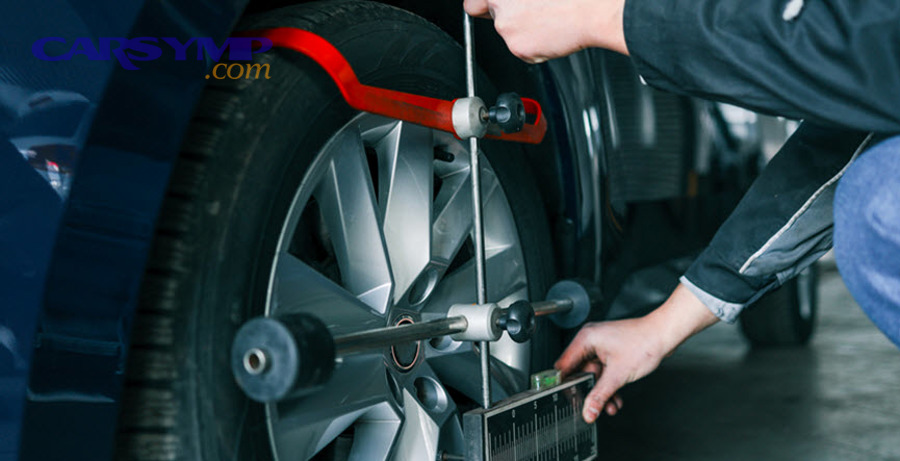
Why Is Balancing Required When Installing New Tires?
Tire balancing is required at new tire installation because no tire — regardless of price or brand — leaves the manufacturing process with perfectly uniform weight distribution. Even small variations of just a fraction of an ounce are enough to cause measurable imbalance once the wheel is spinning at highway speeds.
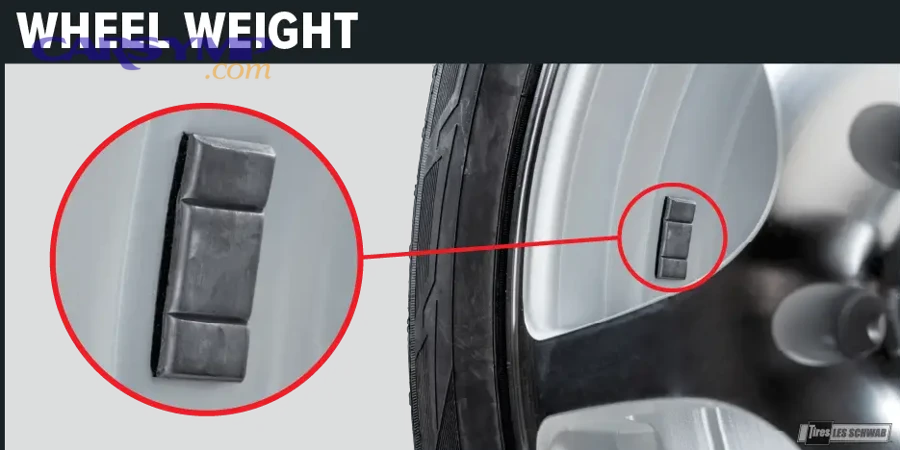
Specifically, the balancing process works by mounting each wheel-and-tire assembly onto a computerized spin-balancing machine. The machine rotates the assembly and precisely measures where weight concentrations exist around the circumference. A trained technician then attaches small metal counterweights — typically clip-on or adhesive — to the inner or outer lip of the rim to offset those concentrations. The result is an assembly that spins with even force distribution at all points.
When new tires are driven without balancing, the consequences appear quickly. The most immediate symptom is vibration felt through the steering wheel, seat, or floorboard — typically most noticeable between 55 and 70 mph. Over time, unbalanced rotation creates cupped or scalloped wear patterns on the tread, shortens the life of wheel bearings, and accelerates wear in shocks and struts. What begins as a minor imperfection compounds with every mile driven.
According to Les Schwab Tire Centers, balancing should always be part of the new tire installation process — and the company recommends re-balancing with every subsequent tire rotation to maintain even wear throughout the tire’s service life.
Why Is Wheel Alignment Recommended with New Tires?
Wheel alignment is recommended with new tires because any pre-existing suspension misalignment will begin degrading fresh tread immediately — making alignment a protective measure for the investment just made in new rubber.
To understand this clearly: alignment does not adjust the tires themselves. It adjusts the angles of your vehicle’s suspension system — specifically the geometry that determines how your tires sit relative to the road and to each other. If those angles are off, your tires are essentially being dragged at a slight angle with every rotation, wearing the inner or outer edges far faster than the center.
The three primary alignment angles are camber (the vertical tilt of the tire when viewed from the front), toe (whether the tires point inward or outward when viewed from above), and caster (the angle of the steering axis viewed from the side). Each angle affects handling, tire wear, and fuel efficiency in different ways. A computerized alignment rack measures all three simultaneously and allows a technician to adjust them to the vehicle manufacturer’s exact specifications.
Critically, alignment can be knocked out of specification by everyday events — hitting a pothole, clipping a curb, or even normal wear on suspension components over time. This means there is a reasonable chance that any vehicle coming in for new tires is already slightly out of alignment. Installing new tires without correcting that misalignment wastes the new tread from the very first drive.
What Is the Difference Between Tire Balancing and Wheel Alignment?
Tire balancing corrects uneven weight in individual wheel-tire assemblies; wheel alignment corrects the angles at which all four tires meet the road — these are two entirely separate services solving two distinct problems, and neither replaces the other.
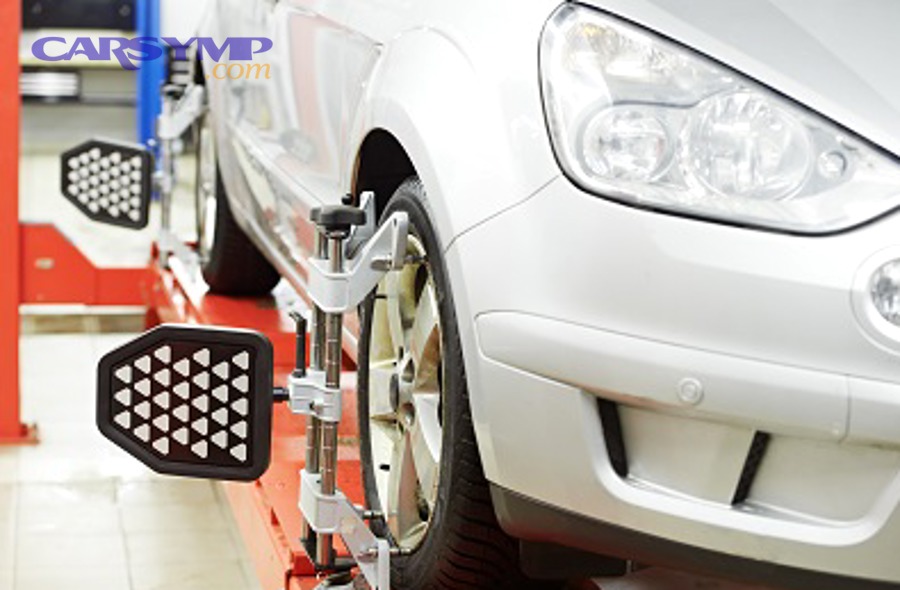
This is one of the most persistent points of confusion in automotive maintenance, and it matters because assuming one service covers both leads drivers to leave a real problem unaddressed. However, once the distinction is clear, it becomes easy to recognize which service a given symptom requires. To better understand each procedure on its own terms, the following sections break them down individually.
What Does a Tire Balancing Service Actually Do?
A tire balancing service corrects the uneven distribution of weight around a wheel-and-tire assembly by adding precisely calculated counterweights to the rim, ensuring the assembly spins smoothly without vibration.
More specifically, there are two types of imbalance a balancing machine can detect. Static imbalance occurs when a heavy spot exists at a single point on the tire, causing the wheel to hop or bounce vertically. Dynamic imbalance occurs when weight is unevenly distributed across the width of the tire, causing the wheel to wobble from side to side. Modern computerized spin balancers detect both types simultaneously and calculate exactly how much weight to add and precisely where to place it.
The outcomes of properly balanced tires extend well beyond eliminating vibration. Even weight distribution ensures that no single section of tread receives disproportionate road contact force, which directly extends tread life. It also reduces the micro-stresses on wheel bearings, hub assemblies, and suspension components that would otherwise accumulate from the rhythmic force of an unbalanced rotation.
What Does a Wheel Alignment Service Actually Do?
A wheel alignment service adjusts the suspension geometry of a vehicle — specifically the camber, toe, and caster angles — so that all four tires make correct, even contact with the road surface under all driving conditions.
During a professional alignment, a technician places the vehicle on an alignment rack equipped with sensors attached to each wheel. The computerized system reads the current angles in real time and compares them to the vehicle manufacturer’s specifications. The technician then makes physical adjustments to tie rods, control arms, or other suspension components to bring each angle within specification.
The benefits of correct alignment are significant and measurable. Proper alignment ensures that all four tires share the vehicle’s load equally, which prevents the accelerated inner- or outer-edge wear that misalignment causes. It also reduces rolling resistance — because tires pointed even slightly off-axis are fighting their own direction of travel with every rotation — which translates to measurable improvements in fuel efficiency. Additionally, correct alignment improves steering response, straight-line stability, and braking performance.
Can You Get Balancing Without Alignment (and Vice Versa)?
Yes, balancing and alignment can be performed independently — and there are scenarios where only one service is genuinely needed — but when installing new tires, performing both simultaneously is the best practice recommended by tire professionals.
On the other hand, there are legitimate standalone situations. A driver who recently had an alignment but feels new vibration after hitting a pothole may need balancing only. A driver whose car pulls to one side but rides smoothly may need alignment only. The key is matching the service to the symptom.
The practical argument for combining both services at new tire installation is straightforward: the vehicle is already on the lift, both services take roughly one to two hours total, and the combined cost is far lower than the cost of replacing tires prematurely due to uneven wear. Most reputable tire shops offer both as part of a bundled new-tire package, and many include balancing in the purchase price of the tires themselves. Best practices for replacing 2 vs 4 tires also factor in here — if only two tires are being replaced, alignment becomes even more critical to ensure the new and existing tires wear at a compatible rate and maintain balanced vehicle handling.
How Often Should You Balance and Align New Tires?
There are two distinct maintenance schedules to follow after new tire installation: balancing every 5,000 to 6,000 miles (or at every tire rotation), and alignment checked annually or every 10,000 to 12,000 miles — with both requiring earlier attention when specific triggering events occur.
Next, understanding the reasoning behind these intervals helps drivers internalize them as genuine vehicle care rather than arbitrary shop recommendations. The following table summarizes the recommended service schedules at a glance before each interval is explored in detail.
| Service | Standard Interval | Event-Based Triggers |
|---|---|---|
| Tire Balancing | Every 5,000–6,000 miles / every rotation | Pothole impact, new vibration, flat tire repair |
| Wheel Alignment | Annually / every 10,000–12,000 miles | Collision, suspension repair, uneven wear detected |
| Both Combined | At new tire installation | Post-accident, post-suspension work |
How Often Should Tires Be Balanced After Installation?
Tires should be balanced every 5,000 to 6,000 miles after installation — which in practice means at every scheduled tire rotation — as well as any time a significant road impact occurs or vibration symptoms return.
Specifically, tying balancing to the rotation schedule is the most practical approach for most drivers, because both services can be performed during the same shop visit with minimal added time or cost. Tire rotation itself redistributes wear across all four tires, and re-balancing at the same time ensures each re-positioned tire is spinning evenly in its new location.
Event-based re-balancing is equally important. Hitting a pothole at highway speed can dislodge a balancing weight from the rim, instantly creating an imbalance that the driver will feel within the next few miles. Similarly, repairing a flat tire — particularly if the repair involves dismounting the tire — requires re-balancing before the wheel is reinstalled. Drivers who notice a new vibration that wasn’t present before a specific road event should not delay having the balance checked.
How Often Should Wheel Alignment Be Checked After New Tires?
Wheel alignment should be checked at least once a year or every 10,000 to 12,000 miles after new tire installation — and more frequently for drivers who regularly navigate rough roads, unpaved surfaces, or high-pothole urban environments.
Most carmakers build annual alignment checks into their maintenance schedules, and for good reason: even on smooth roads, normal driving gradually introduces micro-changes to suspension component positions that accumulate into meaningful misalignment over a year. For drivers with longer annual mileage, a mileage-based trigger of 10,000 to 12,000 miles is a more reliable guide.
Event-based alignment checks follow a different logic. Any collision — even a minor parking lot impact — can shift suspension geometry. Any steering-related repair, such as replacing a tie rod end or steering rack, requires an alignment immediately afterward because those components directly affect wheel angles. Drivers who notice their vehicle pulling consistently to one side, or who observe accelerated wear on one edge of their new tires, should treat those symptoms as immediate triggers for an alignment check rather than waiting for the next scheduled interval.
Should Balancing and Alignment Be Done Together Every Time?
No — balancing and alignment do not need to be combined at every maintenance visit, but yes, they should always be combined at new tire installation and after any event that could affect both services simultaneously.
For routine maintenance, the two services follow their own separate schedules as outlined above. Balancing follows the rotation cycle; alignment follows an annual or mileage-based cycle. These cycles will occasionally align at the same visit, but not every time.
The scenarios that justify combining both services again after the initial installation include: any collision that involves wheel impact, any complete suspension overhaul or significant suspension component replacement, and any situation where both vibration and directional pulling symptoms appear together. More importantly, Mixing tire brands and tread patterns risks creating a situation where pre-existing imbalances and misalignment compound each other — making it even more critical that both services are verified any time the tire configuration changes.
What Are the Warning Signs That New Tires Need Balancing or Alignment?
There are four primary warning signs that new tires need balancing or alignment: steering wheel vibration (balance), vehicle pulling to one side (alignment), cupped tread wear (balance), and uneven inner or outer edge wear (alignment) — each symptom pointing to a specific service needed.
To illustrate why reading these symptoms correctly matters: a driver who feels vibration and incorrectly assumes it is an alignment issue may get an alignment and still experience the vibration, because the actual cause — imbalance — was never addressed. Matching the symptom to the correct service is the diagnostic skill that saves time and money. The following sections break down the two categories of symptoms clearly.
What Symptoms Indicate Your Tires Are Out of Balance?
Three clear symptoms indicate that tires are out of balance: vibration or shimmy felt through the steering wheel, seat, or floorboard (especially between 55–70 mph); cupped or scalloped wear patterns on the tread surface; and an unusual low humming or droning noise that increases with vehicle speed.
The speed-dependency of balance-related vibration is an important diagnostic clue. Unlike alignment-related pulling, which is present at all speeds, imbalance vibration typically appears at a specific speed range and may diminish above or below that range. This is because an imbalance creates a resonance frequency — a speed at which the rotation rate of the tire matches the natural frequency of the suspension — producing the most intense vibration at that particular speed.
Cupped wear — where the tread develops alternating high and low spots around the circumference — is the visible evidence of a tire that has been bouncing against the road rather than rolling smoothly. This pattern is distinctive and should not be confused with alignment-related wear, which typically appears as a diagonal feathering or concentrated edge wear rather than the rhythmic cupping pattern of an imbalance.
What Symptoms Indicate Your Wheels Are Out of Alignment?
Four symptoms indicate that wheels are out of alignment: the vehicle consistently pulls to one side on a flat, straight road; the steering wheel sits noticeably off-center while driving straight; tires wear rapidly and unevenly on their inner or outer edges; and tires squeal during normal, low-speed turns.
The pulling symptom is the most immediately noticeable and actionable. A properly aligned vehicle should track straight with minimal steering wheel input on a flat road. When a driver must continuously apply slight steering correction to maintain a straight path, misalignment is the most likely cause — though it is worth noting that a crowned road surface can mimic mild pulling, so the test is most reliable on a flat surface.
Edge wear is the most expensive consequence of ignored misalignment. When camber or toe is out of specification, the load is no longer distributed evenly across the full tread width — one edge carries disproportionate weight and wears at a multiple of the normal rate. Drivers who notice that their new tires already show more wear on one shoulder than the center should have alignment checked immediately, as this pattern will only accelerate if left uncorrected. According to Firestone Complete Auto Care, untreated alignment issues can shorten a tire’s usable life by thousands of miles and can simultaneously cause progressive damage to steering and suspension components.
What Are the Benefits of Balancing and Aligning New Tires?
Balancing and aligning new tires deliver five measurable benefits: extended tire lifespan, improved fuel efficiency, enhanced ride comfort, better steering response, and reduced long-term maintenance costs — all of which make both services a high-return investment relative to their cost.
In addition, these benefits compound over the life of the tire. A tire that is balanced and aligned correctly from day one does not just wear more slowly — it wears more predictably, making rotation and replacement planning more accurate and cost-effective. The following sections examine the two most significant benefit categories in detail.
How Does Proper Balancing Extend the Life of New Tires?
Proper balancing extends the life of new tires by eliminating the repetitive, localized road impact that uneven weight distribution creates — preventing the cupped wear patterns that reduce a tire to irregular, unsafe tread long before it reaches its intended mileage rating.
More specifically, the physics are straightforward: an unbalanced tire does not roll — it bounces. Each revolution causes the heavy spot to strike the road with greater force than the rest of the tread, creating a concentrated wear point. Over thousands of revolutions, this creates the cupped pattern that cannot be corrected by rotation or alignment — it is structural damage to the tread itself that requires early replacement.
Beyond tread life, balanced tires reduce the cumulative load on wheel bearings and suspension components. Wheel bearings are engineered to handle the radial load of a smoothly rotating wheel. The additional dynamic load from an unbalanced rotation accelerates bearing wear, and bearing replacement is significantly more expensive than a routine balancing service. In this way, the cost of a balancing service pays for itself multiple times over in avoided bearing and suspension repairs.
How Does Correct Alignment Improve Vehicle Safety and Performance?
Correct alignment improves vehicle safety and performance by ensuring all four tires work in coordinated geometry — maximizing braking contact, cornering stability, and straight-line tracking while simultaneously reducing rolling resistance to improve fuel economy.
Specifically, the safety dimension of alignment is most apparent in emergency braking and evasive maneuvers. When all four tires are aligned to manufacturer specifications, braking force is applied evenly across all four contact patches simultaneously, producing the shortest possible stopping distance. A misaligned vehicle, by contrast, applies uneven braking force — the out-of-spec tires either dig in harder or contribute less, destabilizing the vehicle under hard braking.
The fuel efficiency benefit, while less dramatic, is financially meaningful over a tire’s lifespan. Tires pointed even a small fraction of a degree off-axis are working against their direction of travel with every rotation — effectively dragging rather than rolling freely. Studies in vehicle dynamics have consistently shown that correcting toe misalignment alone can recover measurable fuel efficiency, with improvements that accumulate to meaningful savings over tens of thousands of miles of driving. For fleet operators and high-mileage commuters, alignment is not just a maintenance item — it is a direct fuel cost management tool.
Advanced Balancing and Alignment Considerations for Specific Drivers and Vehicles
Beyond the standard balancing and alignment recommendations that apply to all drivers, there are four specialized scenarios where additional considerations apply: road force balancing for persistent vibration cases, unique requirements for electric vehicles, cost benchmarks for budgeting purposes, and ADAS recalibration needs on modern sensor-equipped vehicles.

Moreover, as vehicles become more technologically sophisticated, the relationship between wheel service and vehicle electronics grows more complex. Drivers of late-model vehicles — particularly those with advanced safety systems — need to understand that a wheel alignment is no longer purely a mechanical service. The following sections address each of these advanced considerations in sequence.
What Is Road Force Balancing and When Do New Tires Need It?
Road force balancing is an advanced tire balancing method that uses a load roller to simulate the weight of the vehicle pressing on the tire while it spins — detecting imbalances that a standard spin balancer cannot identify, including stiff spots in the tire carcass itself.
To illustrate the difference: a standard dynamic balancer measures weight distribution while the tire spins freely in the air. Road force balancing replicates real-world conditions by pressing a weighted roller against the tire as it spins, measuring not just weight distribution but also tire stiffness variation around the circumference. A tire can be perfectly weighted yet still cause vibration if one section of the carcass is significantly stiffer than the rest — a condition called radial force variation that standard balancing cannot detect or correct.
Drivers who should specifically consider road force balancing at new tire installation include those with luxury sedans or performance vehicles where NVH (noise, vibration, harshness) standards are high, drivers who have experienced persistent vibration that was not resolved by standard balancing, and anyone installing run-flat tires, which are known for higher radial force variation due to their reinforced sidewall construction. The cost premium over standard balancing is typically modest — often $10 to $20 per wheel — and represents excellent value when the alternative is ongoing vibration and repeated shop visits.
Do Electric Vehicles Have Different Balancing and Alignment Requirements for New Tires?
Yes, electric vehicles have meaningfully different balancing and alignment requirements compared to traditional internal combustion engine vehicles — driven by their greater curb weight, unique torque delivery characteristics, and tighter manufacturer alignment tolerances for range optimization.
Specifically, most battery electric vehicles carry between 400 and 1,200 pounds more than comparable ICE vehicles due to the weight of the battery pack, which is typically mounted low in the vehicle floor. This additional weight increases the load on tires with every rotation, making precise balancing even more critical — an imbalance that might produce mild vibration in a lighter vehicle creates noticeably stronger forces in a heavy EV.
The regenerative braking system present in electric vehicles also creates wear patterns that differ from conventional friction braking. Because regenerative braking applies deceleration force through the drivetrain rather than purely through the brakes, the front tires often experience different wear dynamics than the rear — making regular rotation and re-balancing at each rotation even more important. Additionally, EV manufacturers including Tesla and Rivian publish alignment specifications with tighter tolerances than most ICE manufacturers, because even small misalignment angles increase rolling resistance and reduce the vehicle’s range per charge.
How Much Do Tire Balancing and Wheel Alignment Cost for New Tires?
Tire balancing for a full set of four tires typically costs between $40 and $100 at an independent shop, while a standard four-wheel alignment costs between $75 and $150 — with both services frequently bundled or discounted when performed as part of a new tire purchase package.
The following table provides a practical cost reference for planning purposes, covering both services across common vehicle categories and service providers.
| Service | Economy/Compact | SUV/Truck | Luxury/Performance | Dealership Premium |
|---|---|---|---|---|
| Balancing (4 wheels) | $40–$60 | $60–$80 | $80–$120 | +20–30% |
| 4-Wheel Alignment | $75–$100 | $100–$130 | $120–$180 | +20–30% |
| Road Force Balancing | $80–$120 | $100–$140 | $140–$200 | +20–30% |
Several factors influence where a specific service falls within these ranges. Dealerships typically charge 20 to 30 percent more than independent tire shops for the same services. Vehicles with all-wheel drive or those requiring rear-axle alignment adjustments (not all vehicles have adjustable rear alignment) cost more due to the additional labor involved. Geographic location also affects pricing, with urban markets generally commanding higher rates than rural areas.
It is worth noting that many major tire retailers — including Discount Tire, Les Schwab, and Firestone — include balancing in the price of new tires purchased from their locations. Drivers who factor this into their tire-purchase decision can effectively receive the balancing service at no additional cost, reducing the out-of-pocket total for full installation to the alignment fee alone.
Does Wheel Alignment After New Tires Require ADAS Recalibration?
Yes, wheel alignment on vehicles equipped with Advanced Driver Assistance Systems (ADAS) may require sensor and camera recalibration after the alignment is complete — because the cameras and radar sensors that power ADAS features are calibrated to the vehicle’s pre-existing wheel geometry.
ADAS features including lane-keeping assist, automatic emergency braking, forward collision warning, and adaptive cruise control rely on forward-facing cameras and radar sensors that are mounted to the vehicle body and calibrated to a specific relationship with the road surface. When a wheel alignment changes the geometry of how the vehicle sits — even by a small amount — the sensors’ calculated field of view shifts relative to the road, which can cause these systems to respond incorrectly.
Specifically, there are two types of ADAS recalibration: static calibration, performed in a controlled shop environment using targets placed at precise distances from the vehicle, and dynamic calibration, performed by driving the vehicle on a straight road at a specified speed while the system self-calibrates using live sensor input. Not every alignment will require recalibration — small adjustments within a narrow range may not affect sensor performance meaningfully — but drivers with vehicles manufactured after approximately 2016 should ask their alignment technician directly whether recalibration is needed for their specific make and model.
In short, the complete service picture for a modern ADAS-equipped vehicle receiving new tires may include: new tire installation, wheel balancing, four-wheel alignment, and ADAS sensor recalibration — a comprehensive package that ensures every system interacting with road contact is properly configured for safe, optimal performance from the first mile forward.