


Mixing tire brands and tread patterns is dangerous because it breaks the fundamental requirement that all four tires on a vehicle work as a unified, balanced system. When tires from different manufacturers or with different tread designs are installed together, they grip the road at inconsistent rates, brake with unequal force, and wear down at different speeds — creating a vehicle that behaves unpredictably precisely when predictability matters most. The risks are not theoretical; they are mechanical, measurable, and in many jurisdictions, legally prohibited. To understand why, it helps to start at the beginning: what mixing actually means, and what the industry standard baseline looks like.
The dangers of mismatched tires extend well beyond a rough ride or uneven wear. For drivers of AWD and 4WD vehicles, mixing tire brands or tread depths introduces serious risk of permanent drivetrain damage — an outcome that is expensive to repair and, in many cases, not covered under the vehicle’s powertrain warranty. Understanding how differentials and transfer cases respond to rolling circumference mismatches is essential for any driver who relies on all-wheel traction.
Not every mixing scenario carries the same level of risk, and industry guidance does acknowledge certain situations — budget constraints, emergency replacements, limited availability — where some mixing is unavoidable. However, even in those cases, strict rules apply: the same-axle rule, tread depth tolerance limits, and speed rating hierarchy must all be observed. Knowing the difference between acceptable and prohibited combinations is what separates an informed tire replacement decision from a dangerous one.
Beyond the well-known risks, there are specific tire combinations that are never safe under any circumstances — seasonal mixing, run-flat and standard tire pairing, and staggered OEM fitments on performance or EV platforms. These edge cases represent the outer boundary of tire safety knowledge, and they affect a growing number of drivers as vehicle technology evolves. Next, let’s explore the full picture, starting with what “mixing” actually means in technical terms.
What Does Mixing Tire Brands and Tread Patterns Actually Mean?
Mixing tire brands and tread patterns refers to the practice of installing tires from different manufacturers, with different tread designs, or with differing internal constructions on the same vehicle — rather than using four identical tires across all wheel positions.
To better understand the risks, it helps to first establish what the industry considers the baseline standard. Tire manufacturers including Continental, Michelin, and Bridgestone uniformly recommend that all four tires on a vehicle be identical in brand, model, tread pattern, load index, speed rating, and size. This recommendation exists because tires are not independent components — they function as a system. When one element of that system behaves differently from the others, the entire vehicle’s performance envelope shifts in ways the driver may not anticipate.
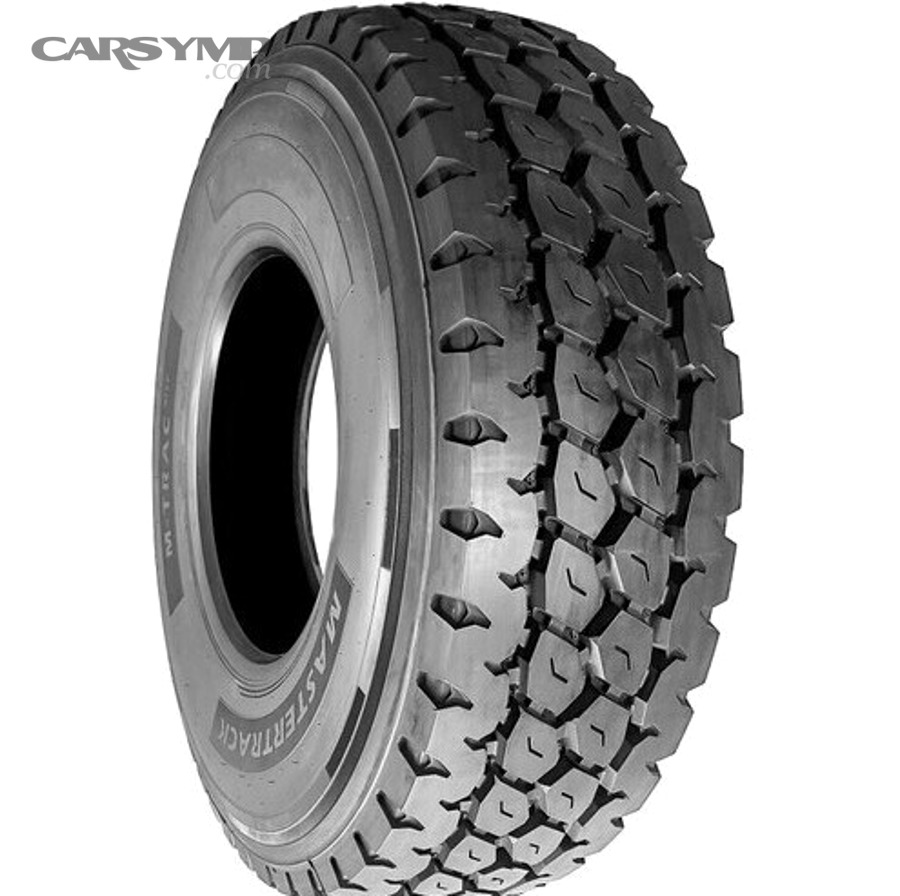
Mixing can occur in several ways. A driver might replace only one flat tire with a different brand. They might buy two new tires that happen to carry a different tread design than the two remaining on the vehicle. In some cases, mixing happens gradually — one tire replaced here, another there — until the vehicle is running on four tires of four different ages, brands, and patterns. Each scenario carries a different level of risk, but all represent a departure from the industry-recommended standard.
What Are the Main Types of Tire Tread Patterns?
There are 3 primary tread pattern types used in modern passenger tires: symmetric, asymmetric, and directional — classified based on how the tread blocks are arranged and how water is channeled away from the contact patch.
- Symmetric tread patterns feature the same design on both the inner and outer halves of the tire. They are the most common type, found on standard all-season and touring tires. Symmetric tires are versatile and can be rotated in any direction, but they are not optimized for high-performance wet or dry conditions.
- Asymmetric tread patterns divide the tire into distinct inner and outer zones. The inner zone handles water evacuation and wet traction, while the outer zone provides larger tread blocks for cornering stability and dry grip. Asymmetric tires must be mounted with a specific side facing outward and cannot be swapped from left to right.
- Directional tread patterns feature a V-shaped or arrow-like groove design engineered to channel water outward at speed, dramatically improving wet-road hydroplaning resistance. Directional tires must rotate in one designated direction, which limits rotation options and means left and right tires cannot be swapped.
These three categories are not interchangeable. Mounting a directional tire on one axle and an asymmetric tire on another forces the vehicle to manage two completely different water evacuation systems simultaneously — a mismatch that becomes critically dangerous in heavy rain.
How Do Tire Brands Differ Even Within the Same Size and Category?
Even when two tires share the same size, category, and tread classification, they are not equivalent products — and this distinction is central to understanding why brand mixing carries real risk.
Tire manufacturers develop their own proprietary rubber compounds, steel belt configurations, sidewall reinforcement structures, and contact patch geometries. A 225/50R17 all-season tire from Brand A and a 225/50R17 all-season tire from Brand B may appear identical on paper, but their actual rolling circumference, flex characteristics under load, wet-braking distances, and wear rates will differ measurably. These differences emerge from the fact that each brand engineers its tires around its own performance targets and testing protocols, not a universal standard.
More specifically, even a small difference in rolling circumference between two tires — sometimes as little as a few millimeters — causes one tire to rotate faster than the other at the same vehicle speed. When this happens, the vehicle’s stability control systems, ABS, and on AWD platforms the differential, receive conflicting signals from wheel speed sensors. The result is a vehicle that is always slightly fighting itself, even on a straight road.
Is It Dangerous to Mix Tire Brands and Tread Patterns on Your Car?
Yes, mixing tire brands and tread patterns is dangerous for at least three concrete reasons: it creates inconsistent grip levels across the vehicle, impairs braking performance, and accelerates uneven tire wear — all of which reduce the driver’s ability to maintain control in emergency situations.
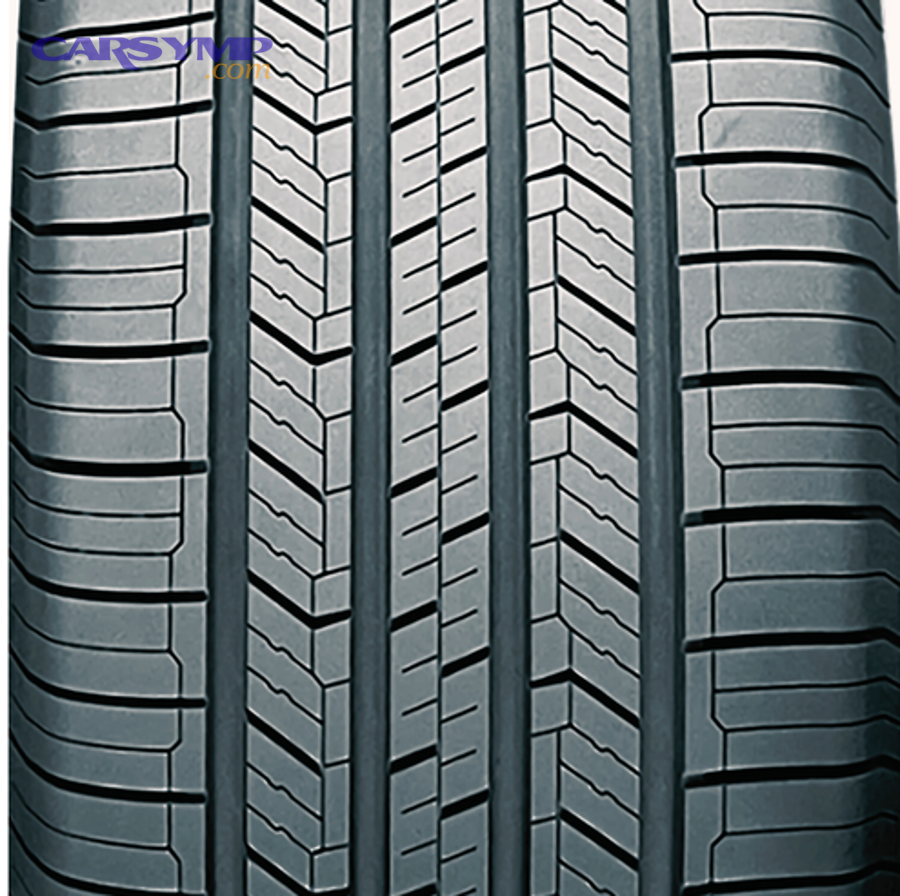
The safety risks associated with mixing are not marginal edge cases. They are well-documented outcomes that occur because tires are designed to function as a matched system, and breaking that system introduces variables the driver cannot reliably predict or compensate for. Specifically, the three most immediate dangers are handling instability, compromised braking, and accelerated deterioration.
What Safety Risks Come From Mixing Different Tread Patterns?
Mixing different tread patterns generates 4 categories of safety risk: inconsistent cornering grip, unequal braking response, elevated hydroplaning vulnerability, and noise and vibration that signals mechanical imbalance.
Specifically, when one axle carries a directional tire engineered to evacuate water efficiently and the other axle carries a symmetric tire with shallower drainage channels, the two axles respond to wet pavement at fundamentally different rates. The axle with better wet traction grips first; the other follows. In a straight-line stop on dry pavement this difference may go unnoticed. On a wet curve at highway speed, it can trigger a spin.
- Inconsistent cornering grip: The axle with the higher-performance tread pattern will generate more lateral force during a corner, causing the vehicle to understeer or oversteer depending on which axle is mismatched.
- Unequal braking response: When different tread patterns are paired across axles, the braking force generated by each axle differs. This can cause the vehicle to pull to one side under hard braking or trigger ABS intervention on a dry road.
- Elevated hydroplaning risk: Tires with shallower or less aggressive water-evacuation grooves will lose contact with the road surface at lower speeds on wet roads. If these are on the front axle, the driver loses steering. If on the rear, the back of the car can step out.
- Noise and vibration: Audible tire noise and steering wheel vibration are the first measurable indicators that tread patterns are mismatched. These symptoms indicate that the tires are not sharing load evenly.
How Does Mixing Tire Brands Affect Vehicle Handling and Braking?
Mixing tire brands affects vehicle handling and braking by introducing differences in rolling resistance, contact patch size, and rubber compound response — all of which cause the vehicle to behave asymmetrically under load.
Different brands engineer their tires with different rubber compound hardness levels. A softer compound grips faster but wears more quickly; a harder compound lasts longer but requires more heat to reach peak grip. When one axle runs on a softer-compound tire and the other on a harder compound, the softer axle generates maximum grip first during acceleration and braking, while the harder axle lags. The vehicle’s electronic stability systems attempt to compensate, but they are calibrated for matched tires, not mismatched ones.
On braking specifically, the tire industry’s tread depth guidance is instructive: a tread depth variance of more than 2/32″ between tires on the same axle measurably degrades braking stability. Brand mixing frequently introduces tread depth differences far exceeding this threshold, particularly when new tires are paired with partially worn ones of a different brand.
What Happens to Tire Wear When You Mix Brands or Tread Patterns?
Mixing brands and tread patterns causes uneven and accelerated tire wear because each tire’s compound, stiffness, and load-sharing behavior differs — forcing the higher-performing or softer-compound tire to absorb disproportionate stress.
When one tire grips more aggressively than its axle partner, it does more of the friction work during every acceleration, braking, and cornering event. Over thousands of miles, this imbalance compounds. The overworked tire wears down faster, widens the tread depth gap between the two axles, and creates a progressively worsening handling imbalance. Drivers who mix brands to save money often find that the mismatched tire needs replacement far sooner than expected — eliminating the cost savings the decision was meant to achieve in the first place. Best practices for replacing 2 vs 4 tires consistently recommend replacing in matched axle pairs at minimum precisely to avoid this compounding wear cycle.
What Are the Specific Dangers of Mixing Tires on AWD and 4WD Vehicles?
Mixing tires on AWD and 4WD vehicles poses 3 specific dangers: differential overload from rolling circumference mismatch, transfer case binding from torque wind-up, and potential voiding of the powertrain warranty — making mismatched tires a far more costly mistake on these platforms than on standard front- or rear-wheel-drive vehicles.
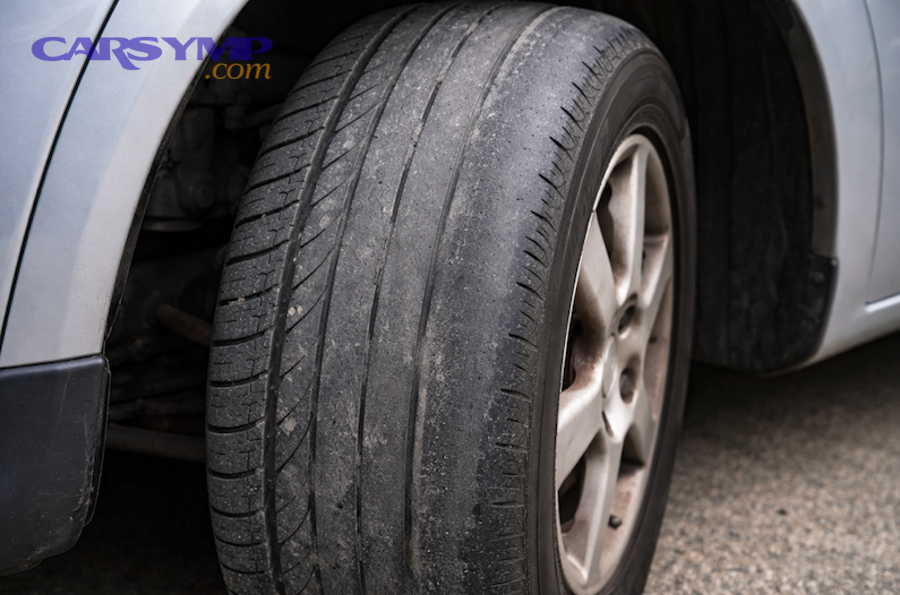
The drivetrain architecture of AWD and 4WD systems is engineered around one core assumption: that all four tires rotate at the same speed under normal driving conditions. The moment that assumption breaks down — because one tire has a different diameter, a different tread depth, or a different rolling circumference than the others — the differential and transfer case are forced to work continuously to compensate, even on a straight, dry road.
Why Is Mixing Tires on an AWD Vehicle Especially Risky?
Mixing tires on an AWD vehicle is especially risky because AWD differentials are hydraulically or electronically calibrated to a specific rolling circumference ratio — and even a small deviation forces continuous and unnecessary mechanical compensation.
More specifically, AWD systems distribute torque between the front and rear axles based on wheel speed sensor data. When one tire’s rolling circumference differs from the others — which happens when tires of different brands, tread depths, or sizes are mixed — the system registers a constant wheel speed discrepancy. It interprets this as the beginning of a slip event and begins redistributing torque accordingly, every second the vehicle is moving. This continuous micro-adjustment places sustained thermal and mechanical stress on the differential clutch packs, viscous couplings, or electronic actuators, depending on the AWD system type.
Over time, this results in overheating of differential fluid, premature clutch pack wear, and ultimately differential failure — a repair that can cost between $1,500 and $4,000 depending on the vehicle. Some AWD manufacturers, including Subaru and Audi, explicitly state in their owner’s manuals that all four tires must match in brand, model, and tread depth, and that differential damage caused by tire mismatch is not covered under the powertrain warranty.
Can Mixing Tires Damage a 4WD Transfer Case?
Yes, mixing tires on a 4WD vehicle can damage the transfer case — specifically when the vehicle is operated in a locked 4WD mode with tires of different rolling circumferences, causing drivetrain binding known as torque wind-up.
In locked 4WD, the front and rear driveshafts are mechanically connected and forced to rotate at the same speed. On a loose surface like gravel or mud, the surface compliance allows the tires to slip slightly and relieve any speed difference. On pavement — or when tires of different sizes or depths are used — there is no slip available, and the drivetrain binds. This torque wind-up generates extreme stress inside the transfer case, which can crack gear teeth, damage chain drives, or seize the case entirely.
The practical recommendation from tire size and load rating guidance is unambiguous: on any 4WD platform, replace all four tires simultaneously with identical units, and if only two tires are being replaced as part of a tire replacement, choose a brand and model that exactly matches the remaining two tires in size, rolling circumference, and tread depth to within the 2/32″ industry tolerance.
When Is It Acceptable to Mix Tire Brands — And What Are the Rules?
Mixing tire brands is acceptable only under limited circumstances and only when three strict conditions are met: the same brand and tread pattern are used across the same axle, tread depth variance does not exceed 2/32″, and load index and speed rating meet or exceed the vehicle manufacturer’s minimum specifications.
However, it is critical to frame this correctly: acceptable in these cases means “less dangerous than an uncontrolled mismatch” — not “equal in safety to four matched tires.” The industry baseline remains four identical tires. The rules below represent the minimum standard for situations where that baseline cannot be met, such as an emergency tire replacement or a budget-driven partial replacement.
The following table summarizes what is permitted and what is prohibited under industry-accepted mixing guidelines:
| Mixing Scenario | Permitted? | Conditions |
|---|---|---|
| Different brands, same axle | Yes, with caution | Must match tread pattern and size on the same axle |
| Different tread patterns, same axle | No | Symmetric, asymmetric, directional cannot be mixed on one axle |
| Different tread depths | Yes, with limits | Variance must not exceed 2/32″ between tires on the same axle |
| Different speed ratings | Conditionally | Both must exceed vehicle minimum; higher rating goes to rear axle |
| Different load indexes | Conditionally | Both must meet or exceed vehicle manufacturer specification |
| Run-flat with standard tires | No | Never permitted under any circumstances |
| Winter with summer tires | No | Must be fitted as a complete set of four |
This table reflects the combined guidance of Continental, Michelin, and Tire Agent industry standards. Drivers should treat the “conditionally permitted” rows as last-resort options, not preferred choices.
What Is the Same-Axle Rule for Mixing Tire Brands?
The same-axle rule states that if mixing is unavoidable, both tires on any single axle must be identical in brand, tread pattern, and size — and newer, deeper-tread tires must always be installed on the rear axle.
This rule exists because tires on the same axle share a mechanical relationship: they are driven by the same shaft, braked by the same caliper pressure, and must generate equal lateral force during cornering. If one tire grips significantly better than the other on the same axle, the vehicle will pull, track unevenly, and become difficult to control during emergency maneuvers.
The rear-axle preference for new tires is equally important. When newer tires with deeper tread are placed on the rear, they resist hydroplaning better on wet surfaces and prevent oversteer — the condition where the rear of the vehicle swings outward in a corner. Placing worn tires on the rear while using newer tires on the front creates the opposite effect: the rear breaks traction first, often resulting in a spin that the driver cannot correct. This is one of the most dangerous and well-documented consequences of incorrect tire replacement placement.
Can You Mix Tires With Different Load Indexes or Speed Ratings?
Mixing tires with different load indexes or speed ratings is conditionally acceptable only when both values on every tire meet or exceed the vehicle manufacturer’s minimum threshold — and higher-rated tires must always be placed on the rear axle.
Tire size and load rating explained: the load index is a numerical code on the tire sidewall that indicates the maximum weight the tire can support at full inflation. The speed rating is a letter code indicating the maximum sustained speed the tire is designed to handle. These are not stylistic specifications — they are engineering safety limits. Installing a tire with a load index lower than the vehicle manufacturer’s specification means the tire is literally not rated to carry the weight placed on it.
When speed ratings are mixed — for example, H-rated (130 mph) and V-rated (149 mph) tires on the same vehicle — the lower-rated tire defines the vehicle’s maximum safe speed, regardless of where it is positioned. The higher-rated tires should go to the rear axle to ensure the more capable tires are managing the propulsive forces that most affect rear stability.
Is Mixing Tire Brands Illegal?
Yes, in many countries mixing tire brands or sizes in ways that violate vehicle manufacturer specifications is a legal violation — one that can result in a failed roadworthiness inspection, a voided insurance policy, and personal liability in the event of an accident.
In the European Union, for example, tires must conform to the load index and speed rating specified in the vehicle’s Certificate of Conformity. In the United Kingdom, mixing radial and cross-ply tire constructions on the same axle is explicitly illegal under the Road Vehicles (Construction and Use) Regulations. In the United States, while federal law does not prescribe specific brand-matching requirements, state vehicle inspection standards and insurance policy terms frequently require that tires meet OEM specifications — and insurers can deny claims if an accident is linked to non-compliant tire fitment.
The practical advice for any driver is to consult the vehicle owner’s manual, which contains the manufacturer’s official tire specification, and to verify local road authority requirements before making any tire replacement decision that involves mixing brands, sizes, or constructions.
Are There Specific Tire Combinations That Are Never Safe to Mix?
Yes, there are 4 specific tire combinations that are never safe to mix under any circumstances: summer tires with winter tires, run-flat tires with standard tires, non-OEM tires on staggered fitment platforms, and tires that fall below the vehicle manufacturer’s minimum load index or speed rating.
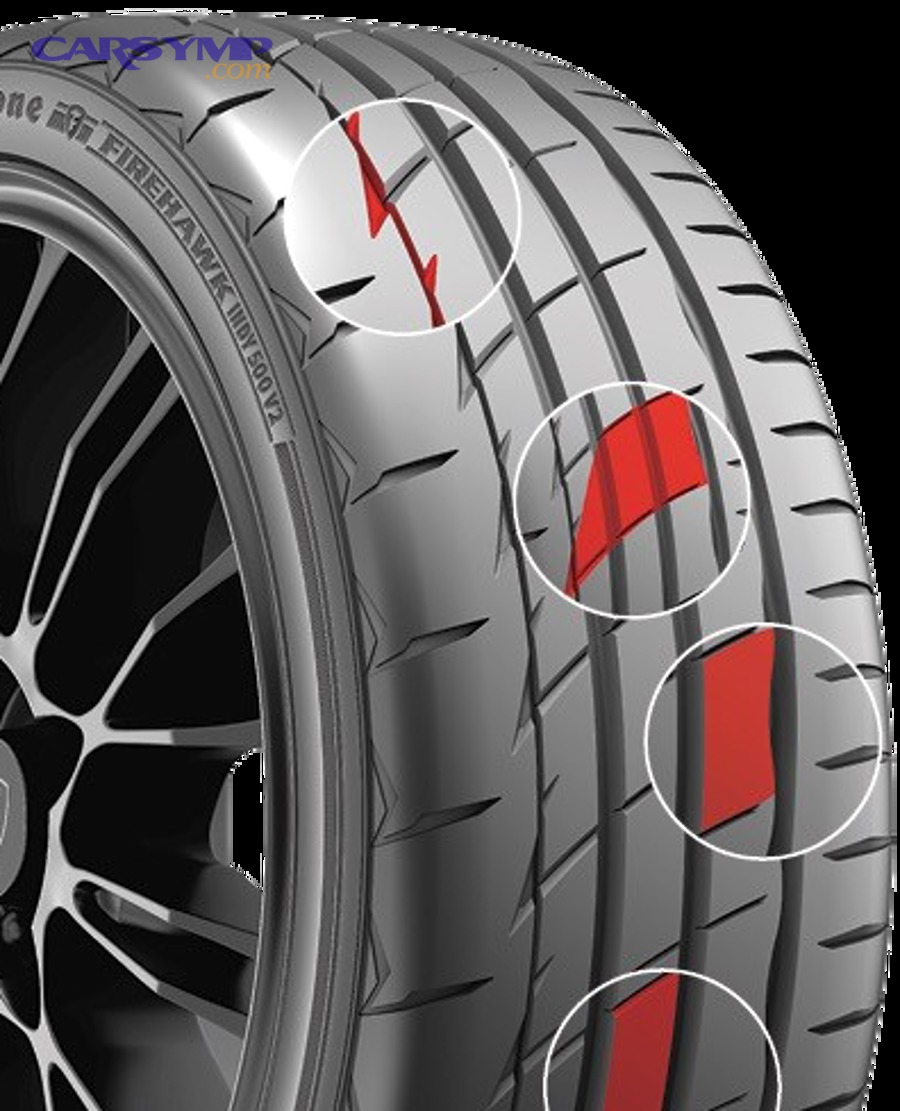
Unlike the conditionally acceptable mixing scenarios covered in the previous section, these combinations carry absolute prohibitions because the performance differences between the tire types are so fundamental that no axle-pairing rule or tread-depth guideline can offset them. Each combination introduces a specific and severe failure mode that occurs precisely in the high-stress driving conditions — wet roads, emergency braking, high-speed cornering — where tire performance matters most.
Can You Mix Summer Tires and Winter Tires on the Same Vehicle?
No, summer tires and winter tires should never be mixed on the same vehicle — they must always be fitted as a complete set of four, because their rubber compounds and tread depths are engineered for mutually exclusive temperature ranges.
Summer tires use a harder rubber compound optimized for grip above 7°C (45°F). Winter tires use a softer compound that remains pliable below that threshold, with deeper tread blocks and sipe patterns designed to bite into snow and channel slush. When the two are mixed, the vehicle operates with one axle in its optimal thermal range and one axle outside it — at all times, regardless of season.
Specifically, fitting summer tires on the front axle and winter tires on the rear during cold weather creates a scenario where the front axle loses grip first in a corner, causing severe understeer. The opposite configuration — winter tires at the front, summer at the rear — creates oversteer risk in warm weather as the softer rear tires generate insufficient lateral force at higher temperatures. Michelin’s technical guidance explicitly documents this oversteer failure mode and designates any seasonal mixing as unsafe and inadvisable.
Is It Safe to Mix Run-Flat Tires With Regular Tires?
No, mixing run-flat tires with standard tires is never safe — run-flat tires have reinforced sidewalls capable of supporting the vehicle’s weight without air pressure, and combining them with standard tires creates a catastrophic asymmetry in how the vehicle responds to a blowout.
A run-flat tire, when it loses air pressure, maintains its load-bearing structure through rigid sidewall reinforcement and continues to function — at reduced speed — for up to 50 miles. A standard tire, under the same conditions, collapses immediately. If a run-flat is installed on one axle and a standard tire on the other, a blowout of the standard tire causes sudden, complete loss of support on that corner of the vehicle, while the run-flat corner remains rigid. The vehicle will lurch violently toward the failed tire.
Beyond the blowout scenario, most Tire Pressure Monitoring Systems (TPMS) in vehicles factory-equipped with run-flat tires are calibrated to detect the gradual pressure loss pattern of run-flats. Standard tires lose pressure differently, which can cause TPMS false readings or missed warnings. Most vehicle manufacturers that specify run-flat tires as OEM equipment explicitly prohibit any mixing with standard tires and consider doing so a safety violation.
What About Mixing Tires on Vehicles With Staggered OEM Fitments?
Mixing non-OEM tires on vehicles with staggered factory fitments disrupts the vehicle’s engineered handling balance — and on EV platforms, can interfere with regenerative braking calibration and range calculations.
A staggered fitment is a factory configuration where the rear tires are intentionally wider and often larger in diameter than the front tires. This setup is found on performance vehicles like the Porsche 911, BMW M3, and certain Tesla Model S and Plaid configurations. The stagger is not cosmetic — it is an integral part of how the vehicle distributes lateral load in corners, manages rear traction under power, and achieves its rated handling characteristics.
Substituting non-OEM sizes on a staggered platform alters the rolling circumference ratio between the front and rear axles. On a conventional vehicle, this is damaging to the differential. On an EV with torque vectoring or a dual-motor configuration, the consequences extend further: regenerative braking systems measure wheel speeds to distribute energy recovery. Mismatched rolling circumferences cause the system to misread wheel speeds, generating incorrect torque distribution during deceleration and reducing regenerative braking efficiency — effectively reducing the vehicle’s range per charge. Drivers operating staggered-fitment vehicles should only replace tires with exact OEM-specified units and should consult a certified tire specialist before any substitution.
Does Mixing Tire Brands Void Your Vehicle Warranty?
Yes, mixing tire brands can void specific portions of your vehicle warranty — particularly the powertrain warranty on AWD and 4WD vehicles — if the manufacturer can demonstrate that tire mismatch caused or contributed to a mechanical failure.
Warranty terms vary by manufacturer, but several major OEMs include explicit tire specification compliance language in their powertrain coverage. Subaru, for instance, states in its owner’s manuals for Symmetrical AWD vehicles that all four tires must be the same brand, model, and tread depth, and that differential damage resulting from non-compliant tire fitment is not a covered warranty repair. Audi’s quattro system documentation carries similar language, as do many premium and performance brands.
The mechanism by which warranty coverage is denied is straightforward: when a differential, transfer case, or AWD coupling fails and is brought in for warranty service, the dealer technician will inspect the tires. If the tires are mismatched in brand, model, or tread depth beyond the 2/32″ tolerance, the manufacturer has documented grounds to attribute the mechanical failure to the tire mismatch and deny coverage. Drivers should review their warranty documentation carefully before any tire replacement decision — particularly on AWD or 4WD platforms — and consult a certified tire specialist to ensure that any substitution maintains compliance with the specifications required to preserve coverage.
In short, mixing tire brands and tread patterns is one of the most consequential and underestimated decisions a driver can make. The risks span every dimension of vehicle safety — handling, braking, wear, drivetrain integrity, legal compliance, and warranty coverage. Four matched tires, identical in brand, pattern, size, load index, and speed rating, remain the only configuration that delivers the full safety system the vehicle was engineered to provide. When full matching is impossible, the same-axle rule and the rear-axle-first placement standard represent the minimum acceptable standard — not a preferred alternative, but a controlled compromise. And for seasonal tires, run-flats, and OEM staggered fitments, there is no acceptable compromise: those combinations must always be treated as absolute restrictions.