
When to Replace Your Car Tires: Signs, Cost & Expert Tips for Every Driver
Knowing when to replace your car tires is one of the most important safety decisions a driver can make. Tires degrade in two distinct ways — through tread wear that reduces grip, and through rubber aging that weakens structural integrity — and either condition alone is enough to warrant replacement. Most drivers need new tires every 25,000 to 50,000 miles depending on tire type, driving habits, and maintenance consistency, but mileage alone is never the only signal to watch. The moment a tire falls below 2/32 of an inch of tread depth or shows visible structural damage, it must be replaced regardless of how new it looks.
Identifying the right time to replace tires requires knowing what warning signs to look for, how to test tread depth at home, and how to recognize damage that goes beyond what a simple repair can fix. From sidewall bulges to dry rot cracks, from uneven wear patterns to the DOT age code stamped on every tire sidewall, each signal carries specific meaning — and missing any one of them puts every occupant of the vehicle at risk.
Beyond the question of when, choosing the right replacement tires matters just as much as the timing. Tire size and load rating explained on your vehicle’s door jamb placard form the baseline for any replacement decision, and understanding the difference between all-season, performance, and winter tires ensures the new set actually matches how and where the vehicle is driven.
Cost is the practical concern that shapes every tire replacement decision. A single tire can range from $60 to well over $300, and the total bill climbs when installation, balancing, alignment, and disposal fees are added in. Understanding How to read a tire quote and fees before agreeing to service prevents surprises at the register. Next, a full breakdown of every key topic — from warning signs to expert maintenance tips — helps every driver make confident, informed decisions about their tires.
What Is Tire Replacement and Why Does It Matter for Driver Safety?
Tire replacement is the service process of removing a worn, damaged, or aged tire from a vehicle’s wheel and installing a new one — classified as a fundamental tire & wheel service that directly governs vehicle safety, handling, and braking performance on every road surface.
To better understand why this service carries such high stakes, it helps to consider that tires are the vehicle’s only four contact patches with the ground, each roughly the size of a human hand.

Tires perform four simultaneous jobs: generating traction for acceleration, providing grip for cornering, enabling controlled braking, and channeling water away from the contact patch to prevent hydroplaning. When tread wears down or rubber degrades, every one of these functions weakens. The relationship between tire condition and stopping distance is measurable and significant — a vehicle traveling at 60 mph with worn tires can require up to 40 additional feet to stop compared to the same vehicle on new tires, according to testing data published by the National Highway Traffic Safety Administration (NHTSA).
What Role Do Tires Play in Vehicle Safety?
Tires are the foundational safety component of any vehicle because no other system — not brakes, not stability control, not all-wheel drive — can compensate for a tire that has lost the physical ability to grip the road.
Specifically, tread depth determines how effectively a tire evacuates water from beneath the contact patch. A new tire with full tread depth can channel roughly 1.5 gallons of water per second away from the contact area at highway speed. As tread wears down, that capacity drops, and the risk of hydroplaning increases sharply. The consequences extend beyond wet roads: worn rubber also generates less friction on dry pavement, meaning braking distances increase and cornering limits drop even in ideal conditions.
According to NHTSA crash data, tire-related problems are a contributing factor in approximately 11,000 crashes annually in the United States, with tread wear and blowouts identified as the two leading mechanical causes.
What Is the Difference Between Tire Repair and Tire Replacement?
Tire repair and tire replacement are not interchangeable options — the location, size, and type of damage determine which service is appropriate, and choosing the wrong one creates a dangerous false sense of security.
However, many drivers assume any puncture can be patched, which is not accurate. A puncture located in the central three-quarters of the tread area, caused by an object no wider than 1/4 inch in diameter, can typically be repaired using a patch-plug combination from the inside of the tire. Any puncture in the sidewall, shoulder area, or outer tread edge cannot be safely repaired under any circumstances, because these zones flex during driving and a repair cannot hold under that stress. Similarly, a tire that has been driven while flat — even for a short distance — has almost certainly suffered internal structural damage that makes it unrepairable regardless of external appearance.
The cost difference makes the decision feel consequential: a professional patch-plug repair typically costs between $15 and $30, while a single replacement tire starts around $60 and climbs significantly from there. Nevertheless, attempting to repair a tire that requires replacement is a safety compromise no cost savings can justify.
What Are the Signs That Your Car Tires Need to Be Replaced?
There are five primary categories of signs that indicate car tires need to be replaced: insufficient tread depth, excessive tire age, physical structural damage, abnormal vibration or handling symptoms, and uneven wear patterns — each identifiable through visual inspection or simple at-home testing.
Specifically, understanding each category prevents drivers from either replacing tires too early or, more dangerously, continuing to drive on tires that have already crossed the safety threshold. Car Symptoms such as pulling to one side, vibrating at highway speeds, or sluggish wet-weather braking are often the first signals drivers notice, and each one traces back to a specific tire condition.

How Do You Check Tread Depth to Know If Tires Need Replacing?
Tread depth is checked using one of three reliable methods: the built-in wear indicator bars molded into the tire grooves, the penny test using a standard U.S. cent, or a digital tread depth gauge that provides an exact measurement in 32nds of an inch.
To begin, locate the wear indicator bars — small rubber bridges running perpendicular across the main tread grooves. These bars are positioned precisely at 2/32 of an inch. When the surrounding tread has worn down to the same level as these bars, the tire has reached the legal minimum and must be replaced immediately. For the penny test, insert a penny into the deepest tread groove with Lincoln’s head pointing downward into the tire. If the top of Lincoln’s head is visible at any point, tread depth is at or below 2/32 of an inch and replacement is required. The quarter test applies the same method using a quarter with Washington’s head — if the top of Washington’s head is visible, tread has reached 4/32 of an inch, which many safety organizations recommend as the practical replacement threshold for wet-weather safety, not just the legal minimum.
A digital tread depth gauge provides the most precise reading and costs less than $15 at any auto parts store. Checking all four tires and all four quadrants of each tire — front, back, inside, outside — gives a complete picture, since tread rarely wears at a perfectly even rate across the full contact surface.
According to research published by the AAA Foundation for Traffic Safety, braking distances on wet roads at 4/32 of an inch tread depth are significantly longer than at full tread depth, reinforcing the case for replacing tires before reaching the legal 2/32-inch minimum.
Is Tire Age a Reason to Replace Tires Even If Tread Looks Fine?
Yes, tire age is an independent reason to replace tires even when tread depth appears adequate, because rubber compounds degrade chemically over time through a process called oxidation that weakens the tire’s structural integrity from the inside out — regardless of how much tread surface remains.
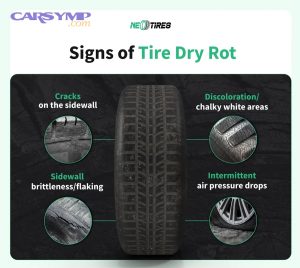
Most major vehicle manufacturers and tire industry organizations recommend replacing tires at six to ten years from the date of manufacture, irrespective of visual condition or mileage. Tire age and dry rot signs often appear together: look for fine surface cracking across the tread blocks or sidewall, a grayish or faded color instead of deep black, or a dry, brittle texture when pressing a fingernail lightly against the rubber. These are the classic indicators of rubber oxidation, and a tire displaying them is at elevated risk of sudden structural failure.
Every tire carries a DOT (Department of Transportation) identification number on its sidewall. The final four digits of this code identify the tire’s manufacture date: the first two digits indicate the week of the year (01–52) and the last two indicate the year. For example, a tire stamped “2419” was manufactured in the 24th week of 2019. If a tire displays a date code more than six years old, it should be evaluated by a tire professional regardless of tread depth, and replaced if any cracking or stiffness is present.
What Types of Tire Damage Require Immediate Replacement?
There are four types of tire damage that require immediate replacement without exception: sidewall bulges or bubbles, exposed structural cords or steel belts, severe cracking from dry rot, and any tire that has been driven while completely flat.
More specifically, a sidewall bulge indicates that the internal plies holding the tire’s structure together have separated or ruptured, and the visible bubble is air escaping into the outer rubber layers under pressure. This condition represents an imminent blowout risk and the tire must be removed from service immediately — no repair is possible. Exposed cords or steel fabric visible through worn or damaged tread indicate that the tire’s protective layers have been fully compromised. Similarly, deep sidewall cuts that penetrate more than surface level cannot be repaired and must be replaced. Driving on a flat tire, even briefly at low speed, generates enough heat and internal pressure to destroy the tire’s internal structure in ways that are invisible from outside but make the tire irreparable and unsafe.
Can Uneven Tire Wear Signal It’s Time to Replace?
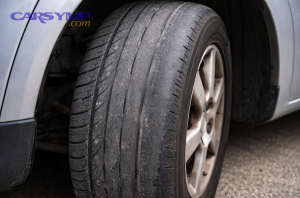
Yes, uneven tire wear is both a replacement signal and a diagnostic indicator, because specific wear patterns point directly to identifiable vehicle problems that must be corrected before new tires are installed — otherwise the same problem will destroy the new tires as well.
The table below summarizes the four most common uneven wear patterns, their causes, and the corrective action required before replacement:
| Wear Pattern | Description | Likely Cause | Corrective Action Before Replacing |
|---|---|---|---|
| Center wear | Tread worn more in the middle | Chronic overinflation | Correct tire pressure to spec |
| Edge wear (both sides) | Tread worn on both outer edges | Chronic underinflation | Correct tire pressure; check TPMS |
| One-sided wear | Tread worn on one edge only | Wheel alignment issue | Full alignment service required |
| Cupping/scalloping | Wavy, uneven depth across tread | Worn shocks or struts | Suspension inspection and repair |
Installing new tires on a vehicle with uncorrected alignment, improper inflation habits, or worn suspension components will accelerate wear on the new tires from the first mile. Mixing tire brands and tread patterns risks compounding these problems, since tires with different construction respond differently to the same vehicle inputs, creating handling imbalances that can be particularly dangerous in emergency maneuvers.
How Many Tires Should You Replace at One Time?
Best practices for replacing 2 vs 4 tires follow clear guidelines: replacing all four tires simultaneously delivers the most balanced handling, traction, and braking response, but replacing in matched pairs on the same axle is acceptable when budget or condition requires it — with specific mounting rules that must be followed for safety.
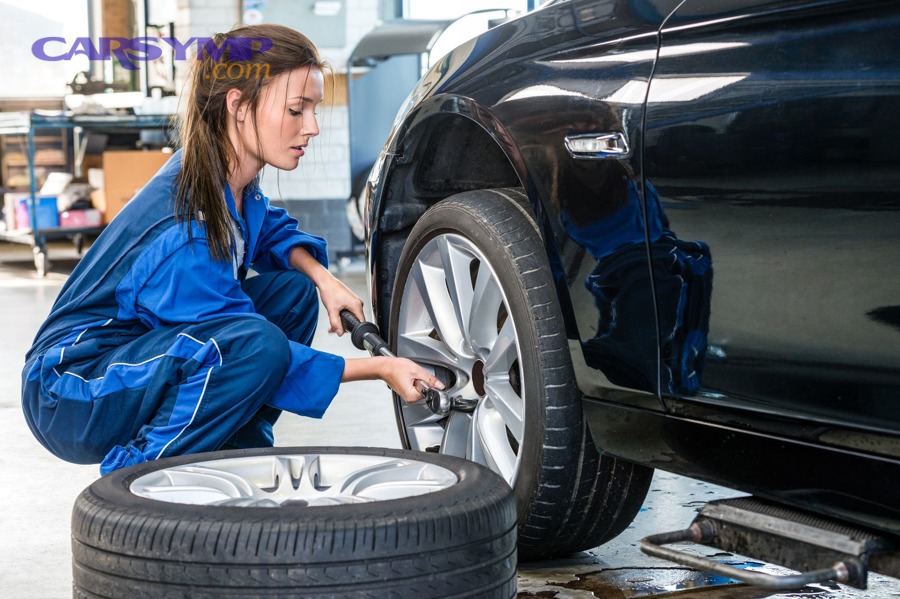
However, the right answer depends on the vehicle’s drivetrain, the tread depth difference between old and new tires, and whether the vehicle is an all-wheel-drive system that is sensitive to tread diameter variation.
Should You Replace All 4 Tires at the Same Time?
Yes, replacing all four tires simultaneously is the recommended best practice because it ensures uniform tread depth, balanced traction on all corners, and consistent handling response across the full contact surface of the vehicle.
When all four tires wear at the same rate from the same point of installation, the vehicle’s stability control, ABS, and traction control systems receive consistent input from all four corners. This consistency is particularly important for AWD vehicles, where traction is distributed between axles based on wheel speed signals. A significant tread depth difference between front and rear tires — or between left and right — creates a diameter mismatch that forces the AWD system to work constantly against an apparent slip condition, generating heat and potentially damaging the center differential or transfer case. Most AWD manufacturer manuals specify a maximum allowable tread depth difference of 4/32 of an inch between any two tires on the vehicle.
Is It Okay to Replace Only One Tire?
Yes, replacing only one tire is acceptable in specific circumstances — primarily when a newer tire set has sustained damage to a single tire — but it requires careful attention to tread depth matching and correct mounting position to maintain vehicle safety.
The replacement tire must match the remaining tires as closely as possible in brand, model, construction type, and size. More importantly, the new tire’s tread depth should be within 4/32 of an inch of the remaining tires’ depth. When this match is not achievable with a new tire, some tire shops offer a tire shaving service that mechanically reduces new tread depth to match the existing set — particularly relevant for AWD vehicles where even small diameter differences create drivetrain stress. When replacing only one or two tires, the newer tires with greater tread depth must always be mounted on the rear axle, regardless of which axle is driven. This positioning keeps the vehicle stable during emergency braking and reduces the risk of rear-end oversteer in wet conditions.
How Do You Choose the Right Replacement Tires for Your Car?
Choosing the right replacement tires involves matching five core specifications to the vehicle’s requirements: tire size, load index, speed rating, tire type, and UTQG treadwear rating — all of which are either mandated by the vehicle manufacturer or selected based on the driver’s primary use case.
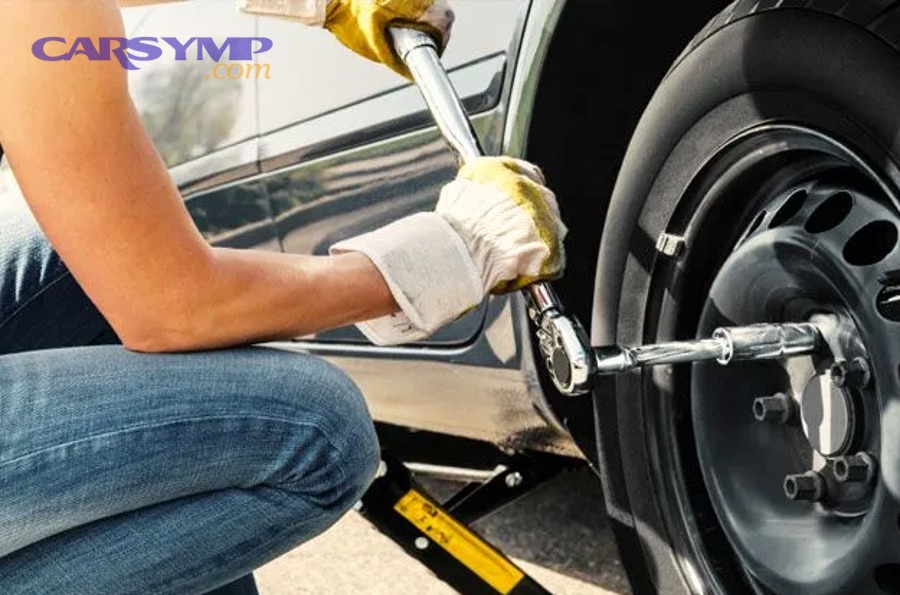
To begin, the vehicle’s tire information placard — located on the driver’s door jamb or inside the fuel door — lists the exact tire size and load rating approved by the manufacturer. Departing from these specifications without professional guidance can affect handling, fuel economy, speedometer accuracy, and load capacity.
What Do the Numbers on a Tire Sidewall Mean?
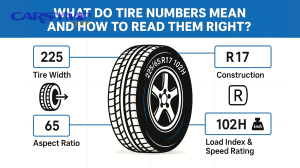
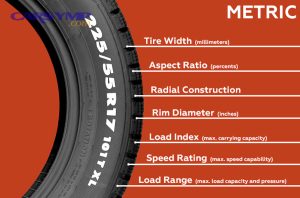
The numbers on a tire sidewall encode five essential specifications: section width in millimeters, aspect ratio as a percentage, construction type, wheel diameter in inches, load index, and speed rating — and reading them correctly is the foundation of every replacement decision.
Specifically, a tire marked 225/65R17 99H breaks down as follows: 225 is the tire’s section width in millimeters from sidewall to sidewall; 65 is the aspect ratio, meaning the sidewall height equals 65% of the section width; R indicates radial construction; 17 is the wheel diameter in inches; 99 is the load index, corresponding to a maximum load capacity of 1,709 pounds per tire; and H is the speed rating, indicating a sustained maximum speed of 130 mph. Tire size and load rating explained through these codes ensure that any replacement tire delivers at least the same load capacity and performance envelope as the original equipment tire. Selecting a tire with a lower load index or speed rating than the OEM specification is unsafe and should never be done.
What Are the Different Types of Replacement Tires and Which Is Right for You?
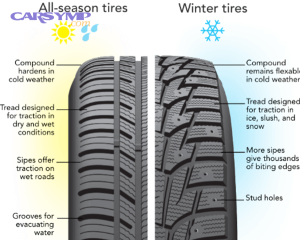
Choosing tire type: all-season vs performance vs winter comes down to three primary use cases: year-round moderate-climate driving favors all-season tires, maximum dry and wet grip in warm conditions favors summer performance tires, and consistent cold-weather traction below 45°F demands dedicated winter tires.
The table below compares each tire type across the criteria that matter most to everyday drivers:
| Tire Type | Best Conditions | Tread Life | Winter Performance | Wet Grip | Noise Level |
|---|---|---|---|---|---|
| All-Season | Year-round, mild climates | 50,000–70,000 mi | Moderate | Good | Low |
| Summer / Performance | Warm weather, sporty driving | 20,000–40,000 mi | Poor (unsafe below 45°F) | Excellent | Moderate |
| Winter / Snow | Cold weather, snow, ice | 30,000–50,000 mi | Excellent | Very Good | Moderate–High |
| All-Terrain | Off-road + highway mixed use | 40,000–60,000 mi | Good | Moderate | High |
On the other hand, no single tire type excels in every condition. Drivers in regions with harsh winters who want maximum safety should operate two sets — summer or all-season for warm months, dedicated winter tires for cold months — rather than relying on all-season tires as a year-round compromise in severe conditions.
What Is the UTQG Rating and How Does It Help You Choose Tires?
The UTQG (Uniform Tire Quality Grading) rating is a standardized government-mandated grading system that scores every passenger tire across three dimensions — Treadwear, Traction, and Temperature resistance — giving consumers a consistent comparative benchmark across all brands and models.
More specifically, the Treadwear number is a relative index: a tire rated 400 is expected to last approximately twice as long as a tire rated 200, measured against a reference tire rated at 100 under standardized test conditions. This number is the most actionable for budget planning. The Traction grade (AA, A, B, or C) rates the tire’s wet-pavement braking performance in controlled straight-line testing — AA is the highest rating. The Temperature grade (A, B, or C) indicates how well the tire dissipates heat at sustained speeds — Grade A tires sustain speeds above 115 mph without structural breakdown, while Grade C tires meet only the minimum federal standard. When comparing replacement options across similar price points, a tire with a higher Treadwear number, AA traction rating, and A temperature grade delivers more long-term value and safety performance.
How Much Does Tire Replacement Cost in 2025?
Tire replacement cost estimate for a single passenger vehicle tire in 2025 ranges from approximately $60 on the low end for a budget economy tire to $350 or more per tire for a premium performance or specialty tire — with installation, balancing, alignment, and disposal fees adding $50 to $150 or more to the total per tire installed.
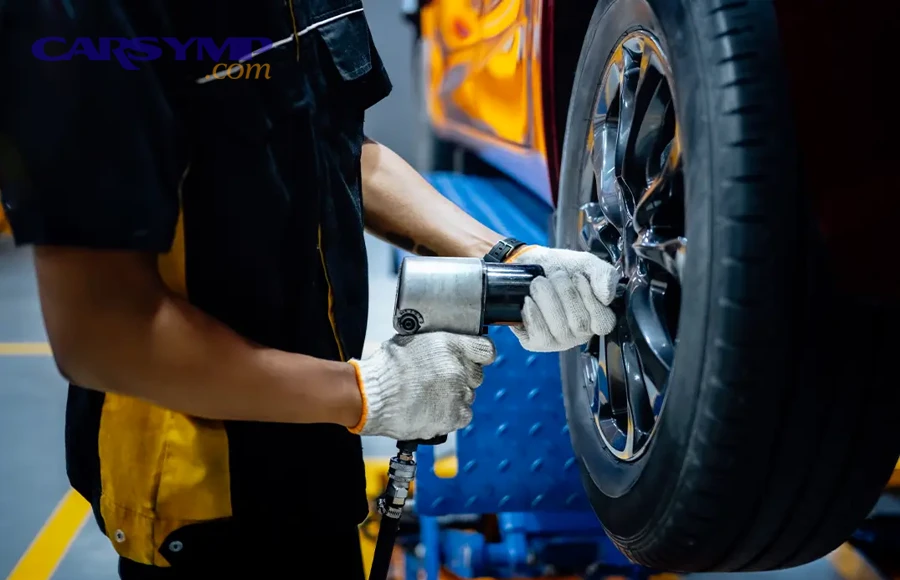
Specifically, most drivers replacing a standard set of four all-season tires on a mid-size sedan or crossover can expect a total installed cost between $400 and $900, depending on brand tier, vehicle size, and service provider. Understanding the full cost structure before approving any work helps drivers budget accurately and avoid unexpected charges.
What Factors Affect the Cost of Replacing Car Tires?
There are six primary factors that affect tire replacement cost: tire size, brand tier, vehicle type, tire category, geographic location, and whether one, two, or four tires are being replaced simultaneously.
Tire size has a direct and significant impact on price — larger diameter tires (19-inch and above) cost substantially more than standard 16- or 17-inch options because they require more material and more complex construction. Brand tier creates the widest price range: budget brands such as Sentury or Westlake start around $60–$80 per tire, mid-tier brands like Cooper, Nexen, and Falken range from $90 to $160, and premium brands including Michelin, Bridgestone, and Continental often run $180 to $300 or more per tire. Vehicle type also matters — trucks and SUVs require larger, load-rated tires that cost more than passenger car tires across all brand tiers. Replacing a full set of four tires often unlocks manufacturer rebates and retailer discounts that reduce the per-tire cost compared to buying one or two at a time.
What Is the Average Cost to Replace Tires at Major Service Centers?
The average cost to replace tires varies meaningfully across major national service providers, with warehouse clubs and online-plus-install programs consistently offering the lowest total installed pricing and dealerships charging the most.
The following table provides representative pricing ranges for a standard 225/65R17 all-season tire, fully installed, at major U.S. service centers in 2025:
| Service Provider | Tire Price Range (per tire) | Installation Fee (per tire) | Notes |
|---|---|---|---|
| Discount Tire | $90–$250 | $0 (included) | Price match guarantee available |
| Costco Tire Center | $100–$220 | Included with road hazard warranty | Members only; includes rotation |
| Walmart Auto Center | $65–$180 | $15–$20 | Budget and mid-tier brands |
| Firestone Complete Auto Care | $100–$280 | $20–$35 | Financing available |
| Jiffy Lube | $90–$220 | $20–$40 | Convenient multi-service visit |
| Dealership | $150–$350+ | $30–$50 | OEM-matched tires; highest cost |
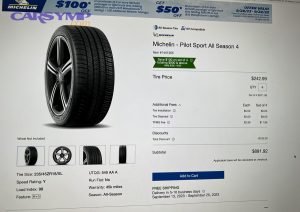
How to read a tire quote and fees: always ask for an itemized breakdown that separates the tire price, installation fee per tire, balancing fee (typically $10–$20 per tire), valve stem replacement ($5–$10 per tire), tire disposal fee ($3–$5 per tire), and any alignment recommendation. A full set of four tires can carry $80 to $150 in fees beyond the base tire price, and knowing each line item prevents billing surprises.
Are There Ways to Reduce the Cost of Tire Replacement?
Yes, there are four proven strategies to reduce tire replacement cost: timing purchases to seasonal sales cycles, using manufacturer mail-in rebates, purchasing tires online and using a local installer, and maintaining tires properly to extend service life.
The most predictable savings come from seasonal tire sales, which typically occur in April–May (spring changeover) and September–October (winter prep season) when retailers discount outgoing inventory. Most major tire brands — Michelin, Goodyear, Bridgestone — offer mail-in rebates of $50 to $100 on sets of four tires multiple times per year, often stackable with retailer promotions. Buying tires online from retailers like Tire Rack or SimpleTire and having them shipped to a local installer can save $40 to $100 per tire compared to buying at a brick-and-mortar shop, though the buyer assumes responsibility for confirming correct sizing and compatibility. Tire financing options from retailers like Discount Tire, Firestone, and Mavis allow drivers to spread replacement cost over 6 to 12 months, often at zero interest during promotional periods. Finally, the single most cost-effective strategy is proactive maintenance: rotating tires every 5,000 to 7,500 miles, maintaining correct inflation, and keeping wheels aligned can extend tire life by 10,000 to 20,000 miles, directly reducing how often replacement is necessary.
How Can You Extend the Life of Your Tires and Delay Replacement?
There are four core maintenance practices that extend tire service life and delay the need for replacement: consistent rotation on schedule, maintaining correct inflation pressure, keeping wheels properly aligned, and recognizing when vehicle symptoms signal emerging tire or suspension issues before damage accelerates.
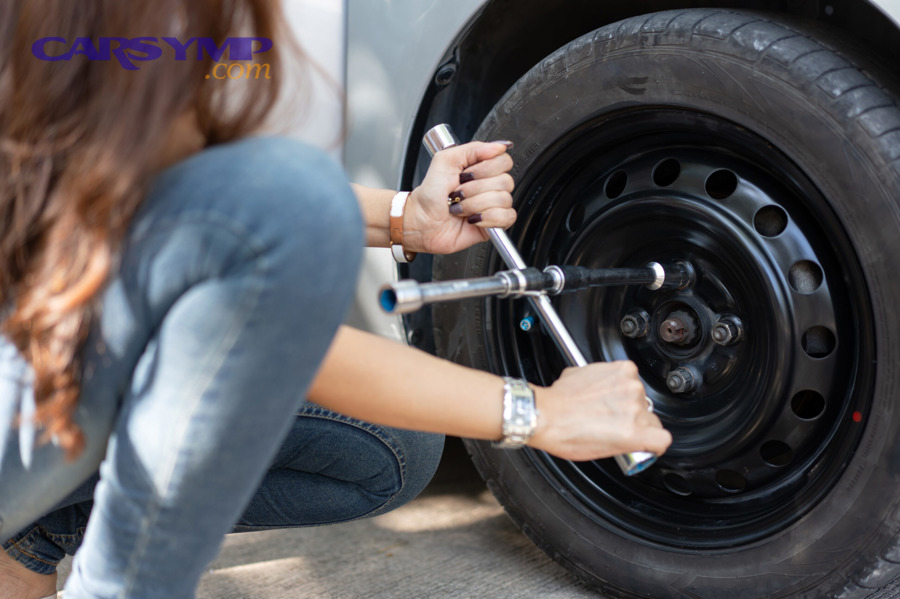
Moreover, these practices compound over time — a driver who follows all four consistently throughout the life of a set of tires can realistically add 15,000 to 25,000 miles of additional service life compared to a driver who neglects them entirely.
How Often Should You Rotate Your Tires to Prevent Uneven Wear?
Tires should be rotated every 5,000 to 7,500 miles — or with every oil change on modern vehicles — because rotation redistributes wear load across all four tires, equalizing tread depth and dramatically extending the usable life of the full set.
Specifically, front tires on front-wheel-drive vehicles wear significantly faster than rear tires because they handle both steering and drive forces simultaneously. Without rotation, front tires may reach the replacement threshold 10,000 to 15,000 miles before the rears, forcing a split replacement that costs more than replacing all four together. The correct rotation pattern depends on drivetrain: front-to-back (straight rotation) works for same-size non-directional tires on RWD vehicles, while a cross or X-pattern rotation is preferred for FWD vehicles to balance wear more evenly. Directional tires — those with a V-shaped tread pattern designed to rotate in one direction — can only be moved front-to-rear on the same side of the vehicle and cannot be crossed. Staggered fitments (different tire sizes front and rear) on some performance vehicles eliminate front-to-rear rotation entirely, making alignment and inflation management even more critical on those applications.
Does Tire Pressure Affect How Quickly Tires Wear Out?
Yes, tire pressure has a direct and measurable impact on wear rate, fuel economy, and handling, because both underinflation and overinflation distort the shape of the tire’s contact patch in opposite ways — each creating its own accelerated and damaging wear pattern.
An underinflated tire flattens and spreads its contact patch, causing the outer edges to carry disproportionate load and wear faster than the center. Underinflation also generates excess heat through increased flexing of the sidewall, which is the leading cause of blowouts in highway driving conditions. An overinflated tire rounds its contact patch, placing all load on the center tread strip and causing rapid center wear while reducing grip on both edges. The TPMS (Tire Pressure Monitoring System) warning light illuminates when any tire drops 25% below its recommended pressure — but by the time the light activates, the tire has already been operating underinflated long enough to have caused measurable wear acceleration and heat damage. For this reason, checking tire pressure manually with a gauge once per month and before any long trip is a more reliable maintenance habit than relying on the TPMS light alone as a maintenance trigger.
According to the U.S. Department of Energy, proper tire inflation improves fuel economy by up to 3% and extends tire life proportionally — a small habit with meaningful long-term financial and safety returns.
Do Electric Vehicles Need More Frequent Tire Replacement Than Gas Cars?
Yes, electric vehicles require more frequent tire replacement than comparable gasoline-powered vehicles, because the instant torque delivery of electric motors — combined with the significantly heavier battery pack — accelerates tread wear at a rate estimated to be 20% to 30% faster than on equivalent ICE vehicles.
New tires on EVs should specifically be EV-rated or EV-compatible tires engineered for the unique demands of electric vehicles. Standard passenger tires lack the load rating to safely support the additional weight of a battery pack, and their tread compounds are not optimized to handle the abrupt, high-torque acceleration events that EVs routinely produce. EV-specific tires are constructed with reinforced sidewalls, denser tread compounds that resist rapid wear under high-torque conditions, and lower rolling resistance rubber formulations that partially offset the efficiency penalty of the additional vehicle weight. For context, a Tesla Model 3 Long Range weighs approximately 4,000 pounds — 700 to 1,000 pounds more than a comparable gasoline sedan — and that additional weight is present on the tire contact patch at all times, not just during acceleration. Break-in and first 500 miles tips for new EV tires include avoiding aggressive acceleration and high-speed cornering during the initial break-in period, as new tire compounds need moderate stress exposure to cure the mold release agents applied during manufacturing and reach their designed friction coefficient.
What Are the Special Rules for Replacing Run-Flat Tires?
Run-flat tires follow a distinct set of replacement rules: they cannot be repaired under any circumstances after being driven flat, must be replaced as a matched pair on the same axle, and are not interchangeable with standard tires without confirming rim compatibility and TPMS sensor calibration.
In addition, run-flat tires are engineered with reinforced sidewall inserts that allow the vehicle to continue driving at up to 50 mph for up to 50 miles after complete air pressure loss. This self-supporting capability comes at a structural cost: the internal sidewall reinforcement sustains damage when compressed under load during flat operation, and that damage is invisible from the outside. Even a run-flat tire that “looks fine” after a flat event must be replaced, because the internal structure cannot be inspected visually and cannot be trusted after compression failure. New tires: balancing and alignment recommendations apply with particular importance to run-flat replacements, since the stiff sidewall construction of run-flat tires is more sensitive to imbalance than standard tires and will transmit vibration more aggressively if the wheel and tire assembly is not perfectly balanced. The cost premium for run-flat tires is significant — typically 30% to 50% higher per tire than comparable standard tires — and drivers converting from run-flat to standard tires must ensure their vehicle was not sold without a spare tire (as is common on run-flat-equipped vehicles), and must add a spare or roadside assistance coverage to maintain emergency preparedness.
According to a 2022 industry report from the Tire Industry Association, consumer interest in run-flat technology continues to grow alongside EV adoption, as electric vehicles are disproportionately equipped with run-flat tires from the factory due to their lack of spare tire storage in the battery-floor platform design.