


Tire dry rot is one of the most dangerous and overlooked forms of tire deterioration — and it often goes unnoticed until a blowout forces the issue. Your tires can look acceptable from a distance while quietly losing the structural integrity needed to keep you safe at highway speeds. Recognizing the warning signs of tire age and dry rot early is not just a maintenance task; it is a fundamental safety responsibility for every driver. The seven warning signs covered in this article will give you a clear, practical framework for diagnosing rubber deterioration before it leads to failure on the road.
Understanding what dry rot actually is — and why tire age plays such a central role in its development — helps drivers make sense of what they are seeing during a visual inspection. Tire rubber is not a static material. It contains oils, antioxidants, and plasticizers that gradually evaporate over time, leaving the compound brittle, inflexible, and prone to cracking. This chemical breakdown accelerates under UV exposure, extreme temperatures, atmospheric ozone, and long periods of inactivity. Knowing the root cause is the first step toward accurate diagnosis.
The safety question is equally critical. Many drivers assume that tires with mild cracking are still road-worthy, especially if the tread depth appears adequate. That assumption is dangerously wrong. Dry-rotted tires are structurally compromised at a level that tread depth alone cannot reveal. A crack that looks shallow on the surface may already extend deep into the tire’s internal layers, where belt separation and blowouts originate. The article addresses this question directly, with a clear severity framework to help you determine when to monitor, when to plan a replacement, and when to stop driving immediately.
Finally, replacement timing is the practical endpoint every driver needs. Learning to read the DOT date code on your tire’s sidewall tells you exactly how old your tires are — and that number matters more than mileage when it comes to dry rot. Next, this guide walks you through every layer of the topic: from the chemistry of rubber aging to the seven visible warning signs, from the safety implications of driving on cracked tires to a step-by-step replacement decision framework, and into the preventive strategies that extend tire life for drivers who want to stay ahead of the problem.
What Is Tire Dry Rot and How Does Tire Age Cause It?
Tire dry rot is a form of chemical rubber deterioration — not biological decay — characterized by cracks, discoloration, and brittleness that develop as protective compounds inside the tire evaporate over time, typically accelerating after the six-year mark.
To better understand why this happens, it helps to look at what tire rubber actually contains. Fresh tires are engineered with a blend of natural and synthetic rubber, carbon black, sulfur-based vulcanizing agents, and critically, antioxidants and plasticizing oils. These additives keep the rubber supple, flexible, and resistant to cracking under stress. The problem is that these compounds do not last forever. As years pass — particularly when tires are exposed to heat, sunlight, and atmospheric ozone — these protective ingredients gradually leach out of the rubber matrix. What remains is a harder, drier, more brittle compound that can no longer flex and recover the way new rubber does. The result is the cracking, flaking, and structural weakening that collectively define dry rot.
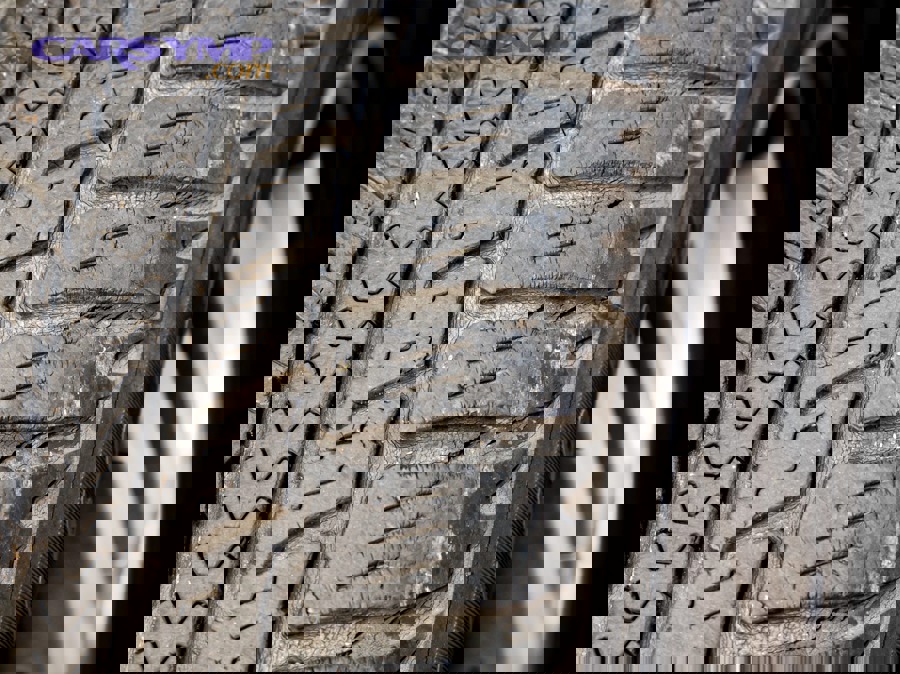
A common misconception is that dry rot resembles the biological fungal decay that affects wood. In reality, it is purely a chemical process — one that affects even tires stored in a garage and never driven a single mile. The term “dry rot” is borrowed from the visual similarity to decaying wood, but the mechanism is entirely different. This distinction matters because it means no biological treatment, sealant, or repair compound can reverse the damage once it sets in.
What Causes Tire Dry Rot Beyond Just Age?
There are five primary causes of tire dry rot, and in most real-world cases, it is a combination of several factors rather than any single one working alone.
- UV radiation and sunlight: Ultraviolet light breaks down the polymer chains in rubber, stripping away the protective oils that maintain flexibility. Tires parked outdoors in sunny climates — particularly in the Sun Belt states — deteriorate significantly faster than those kept in shaded or covered environments.
- Atmospheric ozone: Ozone is present naturally in air, but it is especially concentrated in urban and industrial environments. It reacts aggressively with the double bonds in rubber compounds, causing surface cracks to develop even in tires that are properly inflated and lightly used.
- Extreme temperature fluctuations: Rubber expands in heat and contracts in cold. In climates with wide seasonal temperature swings, this repeated expansion and contraction cycle stresses the rubber at a microscopic level, accelerating crack formation over time.
- Prolonged inactivity: When a tire is in regular use, the flexing motion of driving helps distribute the protective oils throughout the rubber. A tire sitting stationary for months — as with stored seasonal tires, RV tires, or a rarely driven second vehicle — loses this natural distribution mechanism, allowing oils to pool or evaporate unevenly.
- Underinflation: Running tires at lower than recommended pressure increases sidewall flex, which generates excess heat. That heat accelerates the breakdown of rubber compounds and can speed up the onset of dry rot symptoms.
Lower-quality tires with thinner rubber compounds and fewer antioxidant additives are also more susceptible, which is why investing in reputable brands from established manufacturers provides a meaningful layer of protection.
How Does Tire Age Accelerate Rubber Deterioration?
Tire aging begins at the moment of manufacture — not at the point of purchase or first use — and the DOT date code stamped on every tire’s sidewall is the most reliable tool for tracking it.
The DOT code is a series of letters and numbers molded into the sidewall. The last four digits are what matter for age calculation: the first two digits represent the week of manufacture, and the second two represent the year. For example, a tire stamped 1422 was manufactured in the 14th week of 2022. A tire with the code 0318 was made in the 3rd week of 2018 — meaning that as of today in 2026, it is already eight years old and well past the point requiring immediate inspection regardless of how it looks.
The industry-standard guidance, supported by most major tire manufacturers and organizations including the National Highway Traffic Safety Administration (NHTSA), is as follows:
| Tire Age | Recommended Action |
|---|---|
| 0–5 years | Normal use; routine visual inspections |
| 6 years | Professional inspection recommended; monitor closely |
| 7–9 years | High priority for replacement; replace if any dry rot signs are present |
| 10+ years | Replace immediately, regardless of tread depth or visual condition |
One critical point: a tire that has been sitting in a warehouse for two years before you purchased it is already two years into its lifespan. Always check the DOT code at the point of purchase, not just when you notice a problem years later.
What Are the 7 Warning Signs of Tire Dry Rot?
There are 7 main warning signs of tire dry rot, identifiable through visual inspection and physical feel: sidewall cracking, rubber discoloration, crazing across the tread, chronic air pressure loss, surface brittleness, rubber peeling or flaking, and visible tread distortion.
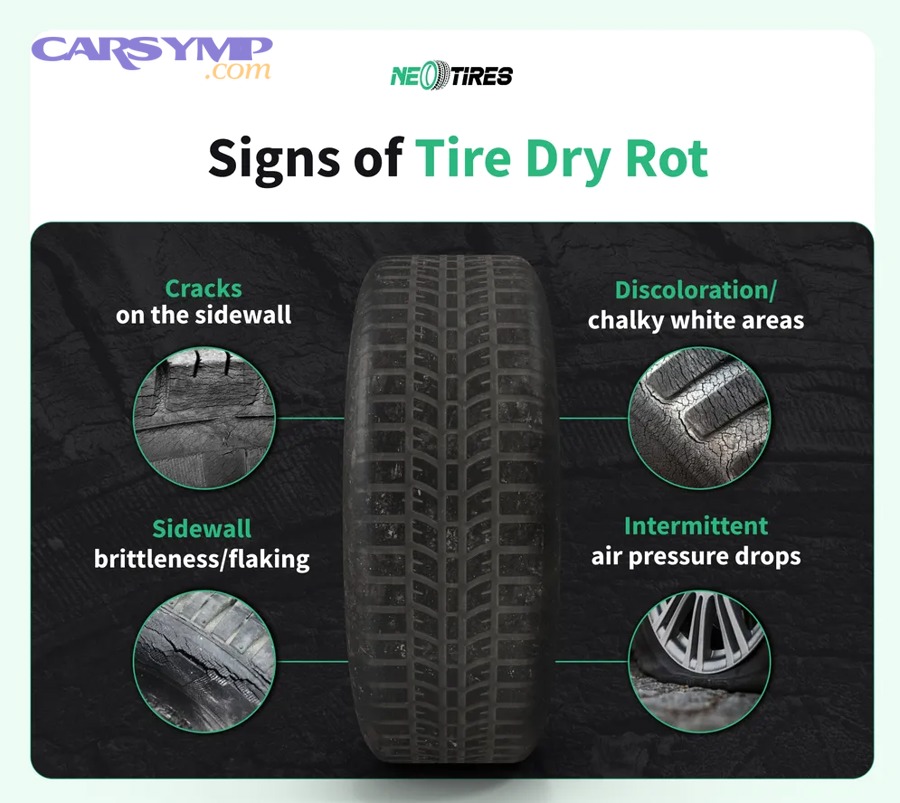
Specifically, these signs range from subtle early indicators — such as slight fading of the rubber’s black color — to severe structural warnings like crumbling tread edges and deep sidewall fissures. Understanding each sign individually, and knowing where it falls on the severity spectrum, is what separates a driver who catches the problem early from one who discovers it during a highway blowout. Below is a detailed breakdown of what to look for.
What Do Sidewall Cracks on Tires Look Like?
Sidewall cracks are the single most recognized and structurally significant sign of tire dry rot, appearing as hairline fractures, vein-like fissures, or deep splits running along or across the tire’s outer sidewall surface.
These cracks begin small — sometimes so fine that they are only visible under direct light at a low angle. Early-stage sidewall cracks may appear as a faint network of superficial lines, similar to cracked paint on an old wall. At this stage, the tire may still hold air and function, but the clock has started. Over time, and with continued exposure to heat, UV, and load stress, those hairline cracks deepen and multiply. Once cracks become clearly visible to the naked eye from a standing position, the tire is already in moderate-to-severe dry rot territory.
What makes sidewall cracking particularly dangerous is the structural role the sidewall plays. It is the load-bearing wall of the tire — the component that supports the vehicle’s weight and absorbs road impact. When it is compromised by cracking, the risk of sudden catastrophic failure, including complete sidewall separation at highway speed, becomes very real. A good rule of thumb: if you can fit a fingernail into any sidewall crack, the tire needs to be replaced immediately — not monitored, not re-inspected in a month.
Is Tire Discoloration a Sign of Dry Rot?
Yes, tire discoloration — particularly a shift from deep black to grey or brownish tones — is a genuine early warning sign of dry rot, indicating that the rubber’s protective antioxidant compounds are depleting.
Fresh tires have a rich, dark black appearance because of the carbon black content and the presence of active antioxidant additives in the rubber compound. As these additives evaporate through UV exposure and oxidation, the rubber loses its characteristic deep color. The result is a faded, chalky, grey-brown surface that visually signals chemical deterioration is underway.
It is important to note that discoloration alone does not mean the tire is immediately dangerous. It is an early-stage indicator, best understood as the first flag that the rubber’s protective chemistry is wearing out. However, a tire that has turned noticeably grey should be inspected carefully for the other signs on this list — because discoloration rarely travels alone. It typically precedes or accompanies the early stages of surface cracking.
One important caution: tire shine sprays and silicone-based dressings can temporarily restore the dark appearance of an aging tire without addressing the underlying chemistry. Drivers who regularly use these products may inadvertently mask discoloration that would otherwise prompt them to inspect more closely. If you use tire dressings, make sure you are still performing tactile inspections — feeling the sidewall for stiffness and brittleness — rather than relying solely on color as your indicator.
What Does Crazing or Tread Cracking Look Like on a Dry Rotted Tire?
Crazing is a distinctive dry rot symptom characterized by a web of fine, intersecting cracks appearing across the tread surface and between tread lugs, indicating that the rubber is losing its essential flexibility and grip capability.
Unlike sidewall cracks, which run along the tire’s side, crazing appears on the contact patch — the part of the tire that actually touches the road. The cracks typically form a network pattern, resembling the craquelure seen on aged oil paintings or dried mud. At first glance, they may seem cosmetic, but they represent a meaningful loss of tread rubber elasticity.
Functionally, crazing is significant because tire traction depends on the rubber’s ability to deform slightly and grip road surface micro-textures. A tire with crazed tread cannot flex the way it should. In wet conditions, this translates to reduced hydroplaning resistance and longer stopping distances. In cold conditions, the already-brittled rubber becomes even less pliable, further degrading grip. It is worth noting that tread crazing is distinct from normal tread wear: wear is the gradual loss of tread depth through friction, while crazing is surface deterioration of the rubber itself — a tire can have adequate tread depth and still be severely crazed and unsafe.
Can Dry Rot Cause a Tire to Lose Air Pressure?
Yes, dry rot can cause a tire to lose air pressure even in the absence of a visible puncture, because the network of micro-cracks in the rubber allows air molecules to seep through the compromised compound gradually.
This is one of the more insidious symptoms of tire dry rot because it mimics the behavior of a slow puncture. Drivers who find themselves repeatedly topping up the pressure in a tire — without finding any nail, screw, or visible damage — should consider dry rot as a potential cause, particularly if the tire is older than six years. The micro-cracks are often too small to be detected by a standard visual inspection or water submersion test, but they are large enough at a molecular level to allow continuous air seepage.
Chronic underinflation caused by dry rot creates a compounding problem. A tire running below its recommended pressure flexes more aggressively with each revolution, generating additional internal heat. That heat accelerates the chemical breakdown of the rubber, deepening existing cracks and initiating new ones. The tire effectively accelerates its own deterioration through the air loss that dry rot caused in the first place. According to the NHTSA, tire-related crashes result in approximately 11,000 accidents per year in the United States, with underinflation and age-related deterioration cited as key contributing factors.
Are Dry Rotted Tires Safe to Drive On?
No, dry rotted tires are not safe to drive on — because the structural integrity of the rubber has been permanently compromised, making sudden blowout, tread separation, and loss of vehicle control real and unpredictable risks at any speed.
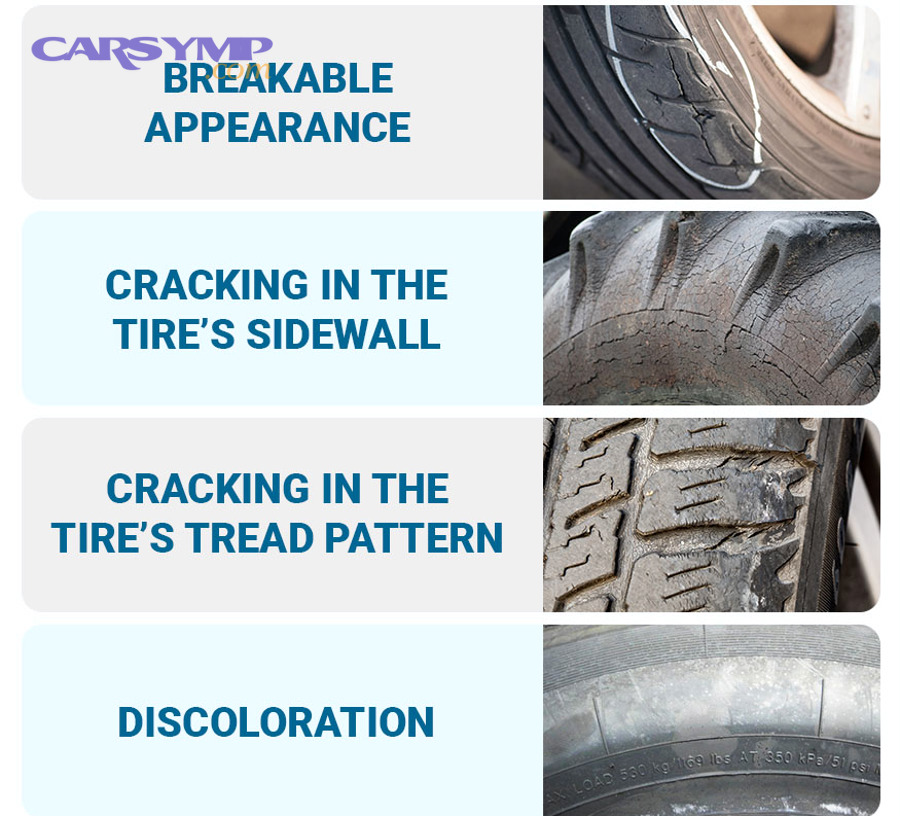
The core issue is that dry rot damage is not superficial. What appears as a surface crack on the outside of a tire often represents a much deeper rupture within the internal layers — the carcass plies, steel belts, and bead wire that give a tire its shape and strength under pressure. Once those internal components are compromised, the tire can fail catastrophically with virtually no advance warning. A routine pothole, a sharp corner at speed, or even the heat buildup of a long highway drive can be enough to trigger complete failure in a dry-rotted tire. Car Symptoms like unusual vibration, pulling to one side, or a sudden soft feel in the steering can sometimes precede tire failure — and when combined with visible dry rot, these signs demand immediate attention.
What Happens If You Drive on Tires With Dry Rot?
Driving on tires with dry rot exposes you to three primary failure modes: sudden sidewall blowout, gradual deflation leading to rim damage and loss of control, and tread separation at speed — each of which can result in a serious accident.
A sudden blowout is the most dramatic and dangerous outcome. When a severely cracked sidewall can no longer contain the air pressure under load and heat, it ruptures. At highway speeds, this can cause immediate and violent loss of vehicle control. A gradual deflation scenario is less dramatic but equally dangerous over time: the tire slowly loses air through its cracks, the driver gradually loses steering responsiveness and braking efficiency without realizing why, and the tire eventually runs flat or separates. Tread separation occurs when the compromised bond between the tread layer and the steel belts gives way — often suddenly and without warning — resulting in chunks of tread peeling away from the tire, creating a severe handling hazard and potential damage to the vehicle.
It is essential to understand that no tire conditioner, crack filler, or sealant on the market restores a dry-rotted tire to safe operating condition. Products that claim to “rejuvenate” old rubber only affect the surface appearance. They do nothing to repair the internal structural damage that dry rot causes. If a tire is dry rotted, the only safe action is tire replacement.
How Severe Does Dry Rot Have to Be Before a Tire Is Unsafe?
Dry rot severity exists on a three-stage scale — and the decision to monitor, plan replacement, or replace immediately depends on which stage the tire has reached based on the depth, extent, and location of cracking.
The following table provides a practical severity guide for drivers inspecting their own tires:
| Stage | Visual Signs | Physical Signs | Recommended Action |
|---|---|---|---|
| Stage 1 – Early | Slight discoloration; hairline cracks barely visible | Rubber still pliable; minor surface dryness | Monitor closely; inspect monthly; plan replacement |
| Stage 2 – Moderate | Clear cracks on sidewall or tread; visible fading | Rubber noticeably stiffer; cracks deepen under finger pressure | Schedule replacement within weeks; avoid long trips |
| Stage 3 – Severe | Deep fissures; crumbling or peeling rubber; crazing across tread | Rubber brittle; pieces flake off when touched | Stop driving immediately; replace before next trip |
This three-stage framework helps drivers make objective decisions rather than guessing at a tire’s condition. The guiding principle is this: if you are uncertain which stage a tire has reached, treat it as Stage 3. The cost of a premature replacement is far lower than the cost — human and financial — of a tire-related crash.
According to a 2012 analysis reported by Edmunds, 250 incidents of loss-of-control and rollover crashes were attributed to vehicles with tires older than six years, all of which showed visible belt and tread separation — a direct consequence of age-related rubber deterioration.
When Should You Replace Tires with Dry Rot?
You should replace tires with dry rot as soon as Stage 2 or Stage 3 symptoms are confirmed — and regardless of visual condition, tires that are 10 years or older from their manufacture date must be replaced immediately, with professional inspection strongly recommended at the 6-year mark.
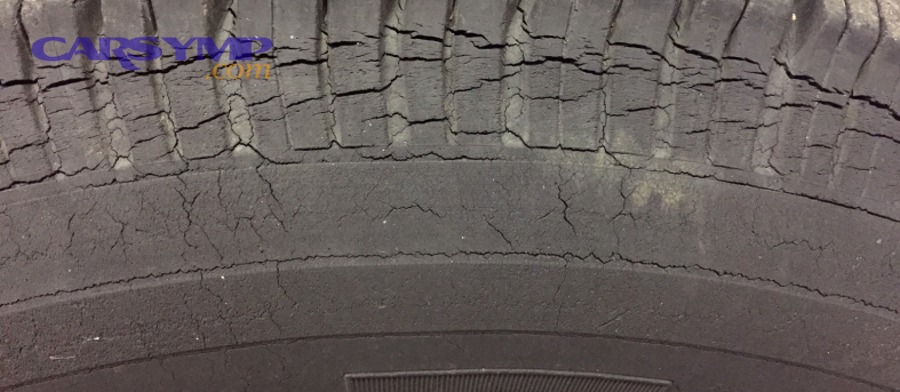
The decision framework for tire replacement timing should be based on two parallel tracks: the DOT-age track and the visual-symptom track. Whichever track triggers the replacement threshold first is the one that governs. In other words, a tire that looks fine but is nine years old should still be inspected by a professional and likely replaced — just as a tire that is only four years old but shows Stage 2 cracking should be replaced without delay. When the time comes for tire replacement, it is also worth asking your tire service provider about New tires: balancing and alignment recommendations, since installing new tires on a vehicle with misaligned wheels or unbalanced rims will accelerate uneven wear and reduce the life of the fresh rubber significantly.
How Do You Read a Tire’s DOT Code to Check Its Age?
Reading a tire’s DOT code requires locating the last four digits of the alphanumeric string stamped on the sidewall, where the first two digits indicate the week of manufacture and the final two indicate the year.
Here is a step-by-step guide:
- Locate the DOT stamp: Look on the outer sidewall of the tire for the letters “DOT” followed by a series of letters and numbers. The full DOT code is typically 11–13 characters long.
- Find the last four digits: These are the only digits you need for age calculation. Everything before them relates to the manufacturer, plant code, and tire size.
- Decode week and year: The first two of the four digits = week of manufacture (01–52). The second two = year of manufacture.
- Calculate age: Subtract the manufacture year from the current year (2026). If the result is 6 or more, the tire warrants professional inspection. If it is 10 or more, replace immediately.
Example: DOT code ending in 2319 → manufactured in the 23rd week of 2019 → as of 2026, this tire is 7 years old → high priority for replacement, especially if any cracking is present.
Note that tires manufactured before 2000 used a three-digit week/year code, but these should unquestionably be off the road by now.
Should You Replace All Four Tires If Only One Has Dry Rot?
Yes, in most cases you should replace all four tires when one shows dry rot — because tires of the same age will typically be at similar stages of deterioration, and mismatched tire conditions create handling imbalances that stress your suspension and compromise vehicle stability.
When one tire has developed visible dry rot, its three siblings almost certainly have the same age and have been exposed to the same environmental conditions. The fact that one tire is showing symptoms more prominently may simply reflect a difference in positioning — a tire on the sun-exposed side of a parked car may crack faster than one on the shaded side. But all four are aging at a similar rate.
Replacing only one or two tires while leaving older, deteriorating ones in place creates a significant performance mismatch. Newer tires have more grip, more flexibility, and better pressure retention than aged ones. This difference — particularly between front and rear axles — can cause unpredictable handling during hard braking or emergency maneuvers. Most tire professionals and vehicle manufacturers recommend replacing tires in full sets, or at minimum in axle pairs (both fronts or both rears together), to maintain balanced traction and even suspension loading.
After installing new tires, it is also worth following proper Break-in and first 500 miles tips: avoid aggressive acceleration, hard braking, and sharp cornering during the initial period, as new tires have a light release compound on the surface that needs to wear away before full grip is achieved.
How Can You Prevent Tire Dry Rot and Extend Tire Life?
Preventing tire dry rot involves four main strategies: proper storage away from UV and ozone sources, regular driving to circulate protective rubber oils, correct inflation maintenance, and routine visual inspections every 30 days — all working together to slow the inevitable chemical aging process.
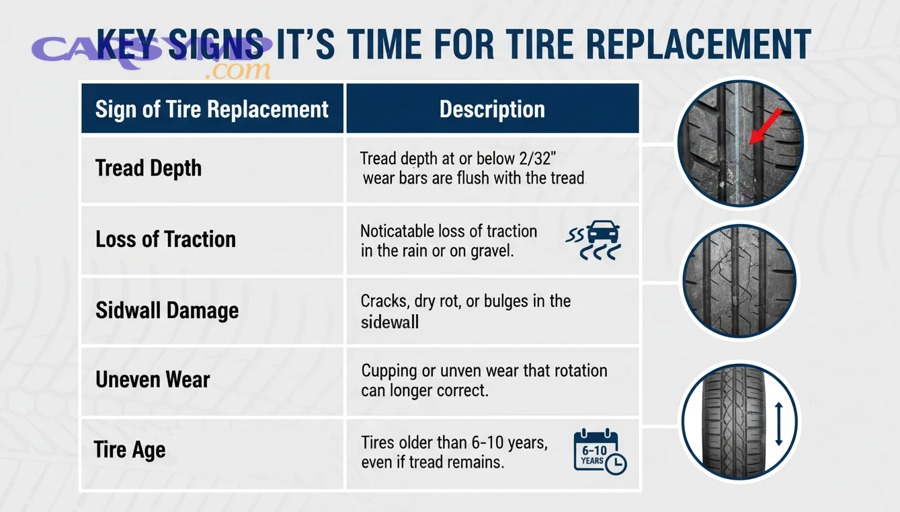
In addition, when scheduling service or considering tire options, it helps to understand How to read a tire quote and fees so you can compare prices accurately — factoring in mounting, balancing, valve stem replacement, and disposal fees, which are often listed separately from the tire price itself. Prevention is ultimately about extending the safe service window of your tires, but it does not eliminate the need for eventual replacement. No tire lasts forever, and no maintenance regimen fully stops the aging clock.
What Is the Best Way to Store Tires to Prevent Dry Rot?
The best way to store tires and prevent dry rot is to clean them thoroughly, wrap each tire individually in an airtight plastic bag, and store them stacked horizontally in a cool, dark, dry location away from direct sunlight, ozone-generating equipment, and heat sources.
Each step in this process serves a specific chemical purpose:
- Cleaning before storage: Removes road grime, brake dust, and chemical residues that can accelerate rubber degradation during long storage periods.
- Airtight individual bags: Limits the tire’s exposure to atmospheric oxygen and ozone, which are two of the primary agents driving rubber oxidation. Large black contractor bags sealed with tape work effectively for this purpose.
- Cool, dark storage location: UV exposure and heat are the two most potent accelerants of dry rot. A climate-controlled basement or indoor garage is ideal. An outdoor shed with significant temperature swings is one of the worst storage environments.
- Away from electric motors: Electric motors — including HVAC units, compressors, and generators — produce ozone as a byproduct of their operation. Storing tires near these devices significantly accelerates ozone-induced cracking.
Mounted tires (on rims) should be stored vertically, leaning against a wall or in a tire rack, to prevent deformation of the bead. Unmounted tires can be stacked horizontally, but no more than four high to avoid excessive pressure on the bottom tire.
Does Driving Regularly Actually Prevent Tire Dry Rot?
Yes, driving regularly genuinely helps prevent tire dry rot — because the flexing motion of an actively used tire redistributes the protective oils within the rubber compound, slowing the rate at which the rubber dries out and becomes brittle.
This is a particularly important consideration for owners of RVs, trailers, collector cars, and seasonal vehicles. These vehicles often sit stationary for months at a time, and their tires are especially vulnerable to dry rot despite having very low mileage. The tires may look structurally new based on tread depth, but the sidewalls can show severe cracking after just a few years of inactivity. Moving a stored vehicle — even just 20–30 feet forward and back every month — is enough to flex the tires and redistribute the internal oils.
For trailer and RV tires in particular, this is a recognized niche risk. Many RV owners address it by using tire covers that block UV exposure while the vehicle is parked. These UV-blocking covers are a worthwhile investment for any vehicle that spends extended time stationary outdoors, as they directly address one of the most potent causes of sidewall weathering in static tire applications.
Is There a Difference Between Dry Rot on Driven Tires vs. Stored Tires?
Driven tires and stored tires develop dry rot through different primary mechanisms — driven tires are primarily damaged by UV, heat cycling, and road-induced wear, while stored tires deteriorate mainly through ozone exposure, chemical stagnation, and moisture interaction — but both result in the same structural cracking and rubber brittleness.
On a daily-driven tire, the deterioration profile tends to show more uniform aging across the tread contact patch and upper sidewall — the areas most exposed to UV and road heat. The damage accumulates gradually through normal use, and the DOT date code reliably predicts the risk window.
On a stored or inactive tire, the deterioration is often more concentrated on the sidewalls, particularly the lower sidewall near the bead area where moisture can accumulate. Ozone cracking on stored tires tends to produce a finer, more uniform network of surface cracks rather than the deeper fissures associated with mechanical stress. This pattern is sometimes called “ozone checking” in the tire industry and is most commonly seen on trailer tires, spare tires, and classic or collector car tires.
Climate plays a significant role in both cases. In arid, hot climates such as Arizona or Nevada, both driven and stored tires can show significant dry rot within as few as four to five years. In cooler, humid climates, the same tires might last seven to eight years before showing comparable deterioration. This regional variation is why generic replacement timelines should always be adjusted based on your specific climate environment — drivers in the Sun Belt should inspect and consider replacing tires on the earlier end of the 6–10 year window.
Can Tire Conditioners or Sealants Fix Dry Rot?
No, tire conditioners and sealants cannot fix dry rot — because these products only affect the surface appearance of the rubber and do not restore the internal structural integrity that dry rot has compromised.
This is one of the most persistent myths in tire maintenance, and it is worth addressing directly. Products marketed as “tire rejuvenators,” “rubber restorers,” or “dry rot treatments” typically work by coating the surface of the rubber with a silicone or petroleum-based compound that temporarily darkens and softens the outer layer. The result looks better. The cracks may appear less pronounced. But the underlying chemistry has not changed — the internal compound is still brittle, the plasticizers are still depleted, and the structural cracks that are invisible from the outside are still there.
Worse, some of these products can actually accelerate deterioration over the long term. Petroleum-based dressings can interact with the rubber’s molecular structure in ways that strip out remaining protective oils rather than replenishing them. Silicone-based products are generally safer cosmetically, but they offer no structural benefit.
The practical takeaway is clear: if a tire has reached Stage 2 or Stage 3 dry rot, no product will make it safe to drive on. The only correct action is replacement. Conditioners have a legitimate, limited role in the very early stages of surface drying — when used as part of a broader tire care routine that includes proper inflation, regular driving, and UV protection — but they are a maintenance supplement, not a repair solution.
In short, tire age and dry rot are safety issues that demand honest assessment and timely action. The seven warning signs covered in this guide — sidewall cracking, discoloration, crazing, air pressure loss, surface brittleness, rubber peeling, and tread distortion — give every driver a clear inspection checklist they can apply in their own driveway. Pair that with a habit of reading the DOT date code on your tires, following age-based replacement thresholds, and using proper storage and maintenance practices, and you have a comprehensive strategy for staying ahead of one of the most underestimated hazards on the road.